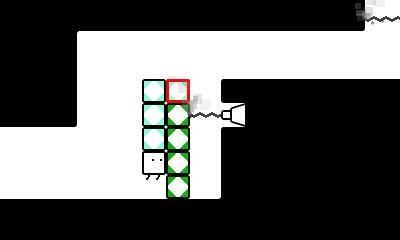
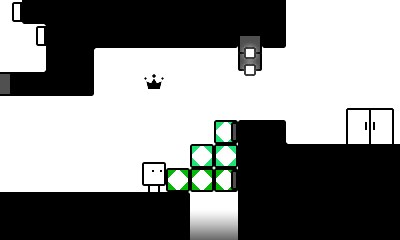
BoxBoxBoy! is the sequel to the hit downloadable puzzle game BoxBoy! for the 3DS that expands on the original, quite literally, as this time around you use two sets of boxes instead of one. While no prior experience with the original is needed, it really helps as the mechanics you learn over the course of an entire game you learn in a few levels. You’ll still be hopping on and throwing boxes, along with hooking onto ledges and snaking your way through narrow paths, and it’s all still a lot of fun.
Hooked on a feeling.
The only new idea is creating two sets of boxes, but that’s okay as it completely changes the way you have to solve the puzzles and sometimes significantly ramps up the difficulty. There’s still plenty of switches, spikes, and lazers to deal with and it definitely had me stumped for a while on more than one occasion. There are usually a few levels in a row where you use the same mechanic in increasingly difficult puzzles, only to ditch it for a long while and come back to it when you’ve forgotten about it. Absolutely fantastic level design and it made feel dumb for not realizing the solution much soon than I had. There are bonus levels in which you replay chunks of levels you previously completed except this time with either the ninja or the bunny costume from the first game, but you have a lot less boxes at your disposal.
Two sets of boxes, twice the challenge.
The collectible crowns are back once again. If you’re not familiar, think hidden coins from Mario, except you have a limit of boxes you can create until it disappears. Being the OCD gamer I am, I had to get all of them, and a few were extremely difficult. It adds a lot to the way you approach levels and to the overall replay-ability.
BoxBoxBoy! really stacks up to the competition!
The more crowns you get, the more coins you get at the end of every level, which can be spent in the games shop. There you are able to purchase new costumes, short a quirky comics, and music from the game. All of the costumes you unlock from the original BoxBoy! transfer over too, which is a neat little addition.
There’s quite a lot of content for the price and is a great buy for the puzzle and platformer fan alike. While I recommend playing the original game first, this is a sequel that lives up to the original and shouldn’t be missed.
There was one clip that didn’t make it in because there was a tree between Scott and the camera, but he did his Arwing impression and flew right inbetween that Instagram girl and her poor boyfriend!
Join us for a trip through the Lylat system! We are speaking to strangers ONLY on Star Fox quotes!
Shot by Alex Campbell
“Reformat” Kevin MacLeod (incompetech.com) Licensed under Creative Commons: By Attribution 3.0 http://creativecommons.org/licenses/by/3.0/
WARNING:The following blog post contains spoilers for Metroid: Other Mand Metroid Fusion.
It’s tough being a Metroid fan. After a promising start, the series goes on hiatus for nearly a decade. Then after a resurgence and several great additions to the franchise, Metroid: Other M comes out and sends everyone into a tizzy. Cue another hiatus, and then after years of waiting, Nintendo finally announces a new entry into the series…and everyone loses it all over again. I don’t particularly like controversies, they have an odd propensity to throw gentlemanly discourse out the window and reduce (presumably) otherwise intelligent individuals to their embarrassingly base, vitriolic nature. That said, there is an issue regarding Metroid: Other M that seems to have slipped through the cracks, and with the aesthetically controversial Metriod Prime: Federation Force releasing this August, I think now would be a good time to get it off my chest and discuss what I think Metroid: Other M‘s real flaw is.
People have criticized Other M for a variety of things: potentially sexist undertones, awkward non-analog controls, Samus’s emotionless voice acting, etc. I, however, either didn’t notice or didn’t mind most of the commonly cited issues when I first played the game. No, there was something else. Something I couldn’t ignore. Something that kept scratching at the back of my mind in the same annoying fashion a house cat lazily paws at its sleeping owner’s face. Something that is never brought up when discussing the game’s flaws. Something that kept running through my moderately attractive head every time I played the game: I’ve seen this before.
To put it bluntly, Metroid: Other M is a rehash of Metroid Fusion.
No seriously, there are just too many similarities. Oddly enough, despite all of the discussion the game has (shine) sparked, no one ever discusses the Goyagma in the room and mentions how suspiciously similar the two games are, even when they’re listing reasons they don’t think the game is good. The only time I’ve seen it brought up was a forum post made shortly after the game was released, and that was quickly dismissed by the site’s other members. So let’s switch to our scan visors and take a closer look.
The Setting
Both games are set shortly after the masterpiece that is Super Metroid. The similarities between settings are more than chronological, however.
In Fusion, the game starts with our girl Sammy escorting a team of xeno-biologists on a mission to survey the metroid home-world, SR-388. After mercilessly blasting a hornoad that could’ve made for a valuable specimen, the creature reveals itself to be an X-parasite in disguise. Samus is infected, hospitalized, and eventually saved by a vaccine made from a DNA sample from the now dead last metroid. Deciding not to question the medical team’s severe misuse of the term vaccine, Samus immediately gets back to work and heads out on her next mission: to investigate a distress signal coming from the BSL (Biological Space Laboratories) Research Station.
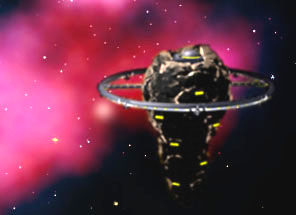
The BSL Research Station is a space station-based research facility designed with the study of alien lifeforms in mind. It is equipped with top-of-the-line containment facilities that recreate the environments of the creatures that live in them. Each of these areas are referred to as sectors, are numbered one through six, and recreate a different biome (SR-388, jungle, desert/volcanic, aquatic, ice, and nocturnal).
The B.S.L. Research Station serves as the setting of Metroid Fusion.
Other M opens with Samus in a Federation quarantine bay being attended to by Federation medics after her harrowing escape at the end of Super Metroid. After a dry internal monologue and debriefing, Samus is off on her own to…I don’t know, hunt bounties? Anyway, she picks up a “baby’s cry” distress signal and—being the mercenary bounty-hunter that she is—goes to assist with no promise of financial compensation what-so-ever.
Upon arriving at the source of the transmission, Samus finds herself at the Bottle Ship. The Bottle Ship is a space station-based research facility designed with the study of alien lifeforms in mind. It is equipped with top-of-the-line containment facilities that recreate the environments of the creatures that live in them. Each of these areas are referred to as sectors, are numbered one through three, and recreate a different biome (jungle, volcanic, and ice). Sound familiar?
The Bottle Ship serves as the setting of Metroid Fus–OTHER M! I was going to say Other M!
[They are] equipped with top-of-the-line containment facilities that recreate the environments of the creatures that live in them. Each of these areas are referred to as sectors, are numbered […], and recreate a different biome.
To top it all off, even the chamber from which the sectors are accessed are the same: a large room situated below the crew quarters and command center with color coordinated elevators.
The Antagonists
Both games also have similar antagonists. Anyone who’s played Fusion can tell you about the paranoia inducing terror that is SA-X. Heck, I still sometimes have nightmares about it. For readers who don’t know, SA-X is the X-Parasite’s mimicry of Samus: it has all of her powers, her knowledge, and—most of all—her suit. Throughout the game, it wanders the BSL, constantly attempting to sabotage Samus’s mission. It destroys machinery, doorways, it even tries to induce a meltdown in the station’s reactor. While the being makes a few onscreen appearances, it usually sticks to the shadows. Throughout the game, SA-X is a threat that seems to be around every corner, just out of sight.
Metroid Fusion is rated E? Man, when is Nintendo going to stop making kid’s games?!
Other M has a similar enemy: the Deleter. The Deleter is a mysterious entity that operates in the shadows. He/she/it constantly attempts to thwart Samus and her allies’ efforts to get to the bottom of what went down on the Bottle Ship by sabotaging equipment, jamming communications, and even systematically eliminating Adam Malkovich’s soldiers one-by-one. Trying to identify and stop the Deleter is one of the major plot elements of the game, much like stopping SA-X is in Fusion.
Surely, uncovering this criminal mastermind’s true identity will be the ultimate payoff!
But Other M doesn’t just have similar antagonists to Fusion, it even goes so far as to copy one of Fusion‘s most iconic bosses: Nightmare. Nightmare is a large, gravity-warping bio-weapon that gave Samus the gravity suit in Fusion. Its battle is one of the longest and most difficult in the game, and as to be expected the fight occurs near the end of the game. The boss returns in Other M, and just like in Fusion is fought near the end of the game. The only real difference is that Fusion bothers to build it up as a major threat, while Other M just shoe horns it into the game.
And then there’s Ridley…who’s in almost every game, so he isn’t worth mentioning. Moving on!
Adam Malkovich
Yet another of the similarities between Fusion and Other M is Adam and his role. In Fusion, Samus’s new ship comes with an on board A.I. that she nicknames Adam after a former commanding officer. Adam is Samus’s guide throughout the game, offering objectives and providing suit upgrades. Adam is eventually revealed to be an uploaded personality and is—in fact—the real (artificially simulated) Adam Malkovich. The real (not artificially-simulated) Adam appears in Other M. In that game he points out objectives to Samus and authorizes use of her various suit features, similar to in Fusion.
The two games also both depict him as potentially untrustworthy. Fusion shows that Adam, and the Federation at large, have a hidden agenda that they’re keeping a secret from Samus. This can also be said of Other M, though it is more ambiguously framed. Adam clearly knows more about the situation at hand than Samus, which is a major source of tension in the game’s story. Other M even goes so far as to depict Adam as a candidate for the true identity of the Deleter. All of this conspiracy mumbo-jumbo leads to my final point…
Surprise! It’s Full of Metroids!
Both game’s have a secret, hidden sector. It’s full of metroids. The Federation is cloning them. They want to use them as bio-weapons. The secret part of the space station is jettisoned into space. Samus fights an adult metroid.
Imagine this in 3D and then replace SA-X with Adam and you basically have what happens in Other M.
Despite what my very critical overview may suggest, I rather enjoyed Metroid: Other M. It certainly had a number of problems, but the end product still had tight controls, good gameplay, and great production values; overall an enjoyable experience. Unfortunately, as a prequel to Fusion, it’s an abysmal mess that introduces many, many plot-holes. I’d go so far to say it serves as a cautionary tale of how not to do a prequel. All of the similarities make Samus’s reaction to the events of Fusion completely unbelievable. She acts like it’s her first time stumbling across a secret metroid cloning project, or dealing with an enigmatic saboteur, or fighting Nightmare! It’s almost as if Other M was an attempt to rewrite Fusion in hopes of removing the latter from the series continuity like a lab full of metroids from a space-station. But I’ll admit, that’s a bit of a stretch. It’s not like the Big N is some sort of large, secretive collective that would conspire to do something like repeatedly clone Metroids to further their own ends, right?
Glen is a lifelong Nintendo fan whose first foray into the Metroid Franchise was Metroid Fusion. His love of video games has inspired him to pursue a career in computer programming and is currently studying to get a masters in computer science. And yes, he really does sometimes have nightmares about SA-X.
What do we call these things? What should we call them? Does it matter? It’s the great genre debate! … NOTE: Upon further research, Kyle Bosman was referring to Miyamoto’s words when he said that Star Fox guard “defied genre”. It seems as if he is as confused at Nintendo’s redefinition of genre as we are. So, basically, ignore anything we say about Kyle Bosman in this video, as it was under false pretenses. You’re great, Bosman. Keep doing your thing.
Shot by Alex Campbell
“Reformat” Kevin MacLeod (incompetech.com) Licensed under Creative Commons: By Attribution 3.0 http://creativecommons.org/licenses/by/3.0/
It’s a special 4th of July episode (not really – but do watch until the end)! The Crew continues the treacherous trek through Chariot’s slippery ice world.
Shot by Alex Campbell
“Reformat” Kevin MacLeod (incompetech.com) Licensed under Creative Commons: By Attribution 3.0 http://creativecommons.org/licenses/by/3.0/
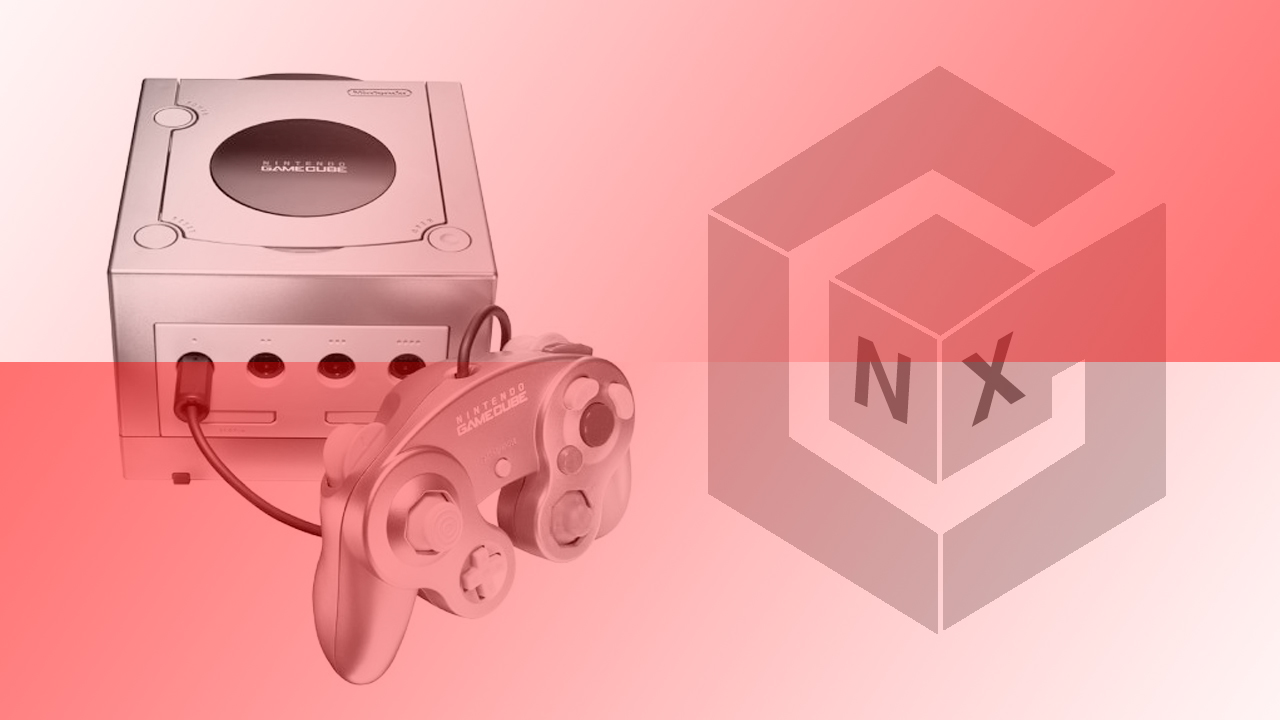
Somewhere in Japan, Nintendo’s Research & Development staff members are pulling overtime and long nights to create Nintendo’s next console, codenamed NX. Soon we will have our first official details on the console and it will be off to the production lines. I predict that NX will bear some striking similarities to one of their past consoles, the Nintendo GameCube.
I think that Nintendo’s next console will be taking a leaf out of the GameCube’s book.
• • •
It is good to be a Nintendo fan. During E3 2016 we were treated to a monumental information and footage dump of a brand new Zelda game: Breath of the Wild. This new open world adventure is our first confirmed NX game.
NX just had its first game confirmed
Yet, as the excitement of E3 dies down in the weeks following the convention, Nintendo fans are still restless with excitement. Why? Because Nintendo didn’t show all of the cards in their hand like some of their competitors did at E3 this year. No, Nintendo is still playing things rather close to the chest as they gear up for a full-blown NX reveal event which should take place within a few months if indeed this new hardware will launch in March of 2017.
One question is burned into every Nintendo fan’s mind: what is NX?
That’s the question that causes our thumbs to navigate to fan-sites for news every morning. That’s the question that allows attention-starved trolls to mock up fake leaks of the console. I don’t put much stock in rumors that circulate outside of the few days before events, but that doesn’t stop me from coming up with my own theories.
I think that the NX will be a home console constructed with the same sensibilities that gave birth to the GameCube. I have some compelling arguments to present, but keep in mind that I know just as much about the NX as the next guy on the Internet: absolutely nothing.
Standard Controller
I’m willing to bet pretty heavily on this one. Why? Nintendo has been rebranding. Corporate rebrands are expensive (hit me up – I’m a graphic designer and I will charge you a lot of money). Reconstructing the image that a company projects of themselves is much like turning a gigantic ship; it takes a lot of time and effort to go in a new direction.
Nintendo just spent that time and effort on a corporate rebrand – they’re going red themed down to their Twitter Avatar, and they have a new slogan to go with it: There’s No Play Like It.
Nintendo’s new slogan, with which they will march into Holiday 2016 and into 2017
4 buttons: A, B, X, and sometimes Y.
No, wait – always Y.
These are the symbols that Nintendo has chosen to represent them for the next generation, and they will be on the NX controller.
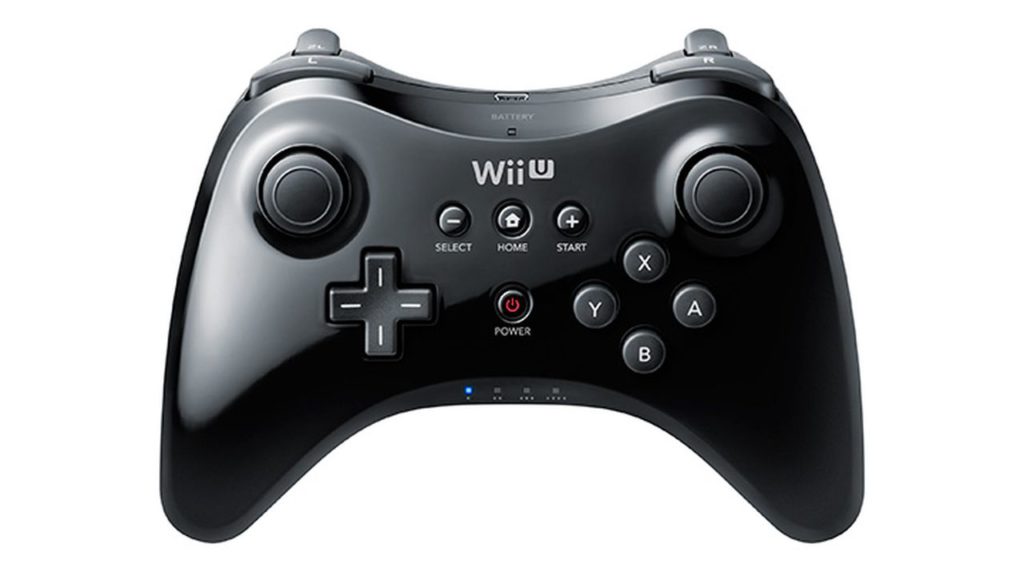
We only know of one NX game and it’s Breath of the Wild, which is controlled by the standard buttons of the Wii U GamePad, and is also compatible with the Pro controller. Nintendo has stated that the game is the “same experience” on NX and therefore suggests that we will not be playing with a remote, a glass surface, or other non-traditional methods of input.
Buttons are all you need to control NX’s first confirmed game, Breath of the Wild
Keeping the cost low on the controller (by minimizing sensors) is also a lesson that Nintendo learned from the Wii U’s commercial failure. Any development dollars left over could be directly applied to the console’s internal specs, which will be needed in order to stay in the same league as Nintendo’s competition.
Not the Strongest Kid on the Block
Every time Nintendo is due for a new console, these rumors kick into gear: It’s going to be the most powerful console on the market! As much as I dislike to break it to you…
NX will not be a powerhouse 4K VR juggernaut.
Nintendo doesn’t have the experience in high-end computing that would be required to go head-to-head (or headset-to-headset) with the likes of Facebook’s Oculus or Sony’s PSVR. What Nintendo DOES have a great track record of doing is this: implementing affordable tech, optimizing its performance, and marketing it to all ages and audiences.
The Nintendo Gamecube did not outclass its contemporaries with impressive specs, but it was home to many creative innovations (within a set of limitations) that produced groundbreaking titles like Metroid Prime and Wind Waker, which were marvels for their time.
Different Media Format
Nintendo is not comfortable with doing things the same way. You won’t catch them copying themselves or others… very often. *cough*amiibo*cough*
Just like the GameCube featured its own unique media format, NX is likely to pivot away from those smooth Blu-Ray discs we’ve come to love on Wii U.
Rumor has it, NX will utilize cartridges.
Don’t think clunky N64 games – carts can be the size of an SD card these days.
Why move from a disc format? Well, solid state media (as opposed to spinning discs) would be quite beneficial for transporting the unit and, dare I suggest, all-around portability? The absence of moving parts is what enables portables to be taken on the go, and cartridges provide other benefits like being more durable, not getting scratches and smudges, etc.
It’s also important to remember that the amount of systems Nintendo has put out that featured discs is far outnumbered by the ones with cartridges… this would not be out of left field.
Emphasis on Portability
You know where this is going in regards to NX, but how does it relate back to the GameCube approach?
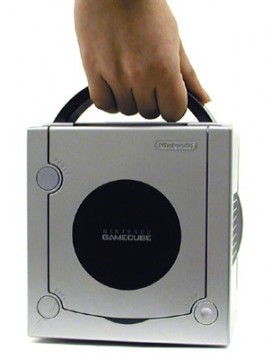
^ Did no one, ever
Yep – that. That strange lunchbox handle fixed to the back of the GameCube, meant to help you carry the console around. Sure, there was no gaming on-the-go associated with this feature, but we’ve come a long way since then.
Not only was the Gamecube physically constructed to be carried, but the console offered many different opportunities to link up and cross over with handled gaming – even more than the Wii and Wii U have done.
Now that Nintendo has moved their Portable and Console divisions under one roof, we should see a strong push in the arena of portability, mobility, and connectivity.
So, What is the NX?
I think it will be a home console that is not tethered to a TV screen. It may come with a miniature portable screen and stand; it may connect via Bluetooth or adapters to your smartphone or tablet for display purposes, or it might have a small, personal projector bulb.
Whatever NX is, it will certainly be unique.
Nintendo needs a game-changer. Nintendo needs to capture a new generation of children that are growing up on Minecraft and the App Store. It’s time for Nintendo to get back in the game!
Two Button Crew will be eagerly awaiting further details on Nintendo’s NX console, and we will continue to cover all things Nintendo on our Daily Show for Nintendo Fans.