The Power of Personality

Nintendo is known for many things: innovation, quality, terrible third party relations, etc. Throughout the years, the company has cultivated a reputation as highly creative, exacting master artisans. It’s one of the many reasons they’re so beloved by fans around the world. They don’t just make games, they make worlds and characters that are instantly recognizable and overflowing with personality. Creativity is a fundamental part of their identity as a company.

However, in recent years they’ve garnered a reputation among some as a bunch of corporate stiffs who keep churning out the same-old-same-old that they’ve always been, like Activision with Call of Duty, Ubisoft with Assassin’s Creed, or Capcom with…well take your pick. So what’s different? What makes the Nintendo titles of today “corporate cash-ins” instead of visionary, artistic masterpieces? If I had to give my two rupees on the subject, I’d say the issue isn’t that the games are bad or mechanically unsound, it’s that they lack personality.

So what even is personality? What makes it so important? What happens when a game doesn’t have it? Let’s take a look, shall we?

What I Mean by Personality

What is personality? Well, typically the word refers to the psychological concept of a collection of behavioral traits that determine how one sets priorities and reacts to different situations. Seeing as I’m writing about video games, however, that definition isn’t really of much use. For the sake of this article, I’ll just define it as the interplay between a game’s aesthetic choices (visual design, music, story, etc.) and its gameplay that give each game its identity.

Huh…that’s pretty vague, isn’t it? Maybe a visual aid is in order; consider the following image:

Only after cobbling this image together did I realize the small Mario sprite for the All Stars versions of Mario 1 and 3 were palette swaps of each other.
Even when packed onto the same cartridge, each game is easily distinguishable.

Clearly, these are all Mario games, but because each one has a unique visual style, even people unfamiliar with the franchise can easily tell that each one is a different game (Okay, technically you can get them all on one cartridge, but that’s beside the point). Furthermore, those who’ve played the games will tell you that despite each game staying true to the Mario formula, each game has its own unique mechanics and gameplay quirks that makes the gameplay feel different. That’s basically what I’m getting at when I say personality: a game’s unique look, sound, and feel. It’s why the first Paper Mario is cute and colorful while it’s sequel, The Thousand Year Door, is wry and occasionally dark, or how the claustrophobic corridors and eerie music give the Metroid series its trademark sense of isolation and unease, and so forth.

That’s basically what I’m getting at when I say personality: a game’s unique look, sound, and feel.

For the Want of an Identity

What happens when you have a mechanically airtight game that lacks the personality to set itself apart? You get the New Super Mario Bros. series.

When New Super Mario Bros. first came out on the DS, its deliberately vanilla presentation was—I dare say—welcome, considering it had been roughly fifteen years since Mario’s last new 2D outing. The aesthetic was familiar but modernized, making it a great choice for a game meant to be just that: a throwback with modern graphics and design sensibilities that epitomized what it meant to be “Mario”.

PROTIP: If you're having trouble telling screenshots apart, look at the game's U.I.
When you eliminate differences in graphical quality and resolution, these games are almost impossible to tell apart at a glance.

So what’s the problem? Nintendo made three nearly identical sequels, that’s what. Make no mistake, each game is excellent in its own right, but they’re all so ridiculously similar in terms of their visuals, gameplay, level themes, and music that they’re practically the same game! The New Super Mario Bros. series is proof that too much of a good thing is entirely possible. I honestly believe that if Nintendo had taken the time to give each game its own unique style—visually, setting-wise, musically, or otherwise—each game would be fondly remembered as classics, but because each game used the same “New” style, each one was more forgettable than the last. Ironically, between this and the lukewarm reception of Yoshi’s New Island, the word new has become Nintendo fan jargon for “safe” and “uninspired”.

The New Super Mario Bros. series is proof that too much of a good thing is entirely possible.

Making Okay Games Great

Alright, so an otherwise great game can lose its appeal without personality, but let’s be real for a moment, a game riddled with questionable design can’t really catch on just because of its personality, right? As proof of the contrary—and possibly of me secretly having a death wish—I present the 1995 cult-classic, EarthBound.
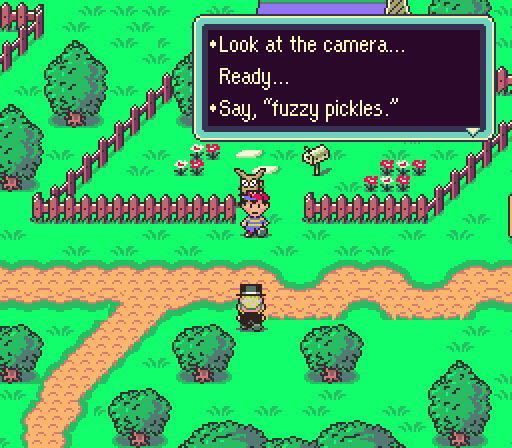
"Fuzzy pickles"? What even are those?
A man falls from the sky, tells you to say “fuzzy pickles”, takes your picture, and flies away. This is relatively normal by EarthBound standards.

Are you still reading? Okay, good.

If I had to summarize the gameplay of EarthBound in one word, I would say it’s serviceable. As R.P.G.s go, there are certainly more streamlined experiences on the Super Nintendo. In terms of core gameplay, EarthBound is very traditional. There are some minor mechanics which distinguish the game, but they honestly don’t affect the overall experience that often.

On top of that, EarthBound features some questionable design. EarthBound‘s interface is archaic, even for the time it was made. Simple actions like talking to people or investigating an object (which are separate actions) take multiple button presses with the default controls. Admittedly, there is a way to automatically do all of that in a single press, but if you didn’t read the manual or hear about it from someone else, you’d never know it’s there, likely because it’s unintuitively mapped to the L-trigger. Aside from that, inventory management is downright tedious, with actions like trading items between party members—or just buying and selling for that matter—taking many more windows, confirmations, and button presses than needed.

EarthBound‘s interface is archaic, even for the time it was made.

The game also has some difficulties with difficulty. Simply put, the game’s difficulty curve is as wild as its enemy designs. The beginning is particularly rough, with grinding being a must. Things do get easier once the other party members start showing up (several hours in), but the game loves to throw curveballs at the player.

And yet, the game is heralded as a masterpiece, and for good reason! Ask any EarthBound fan what makes the game so great, and I guarantee you they’ll mention the game’s quirky atmosphere long before they talk about the mechanics. EarthBound is full of humor, thought provoking themes, and obscene amounts of heart. In a fitting twist, EarthBound defies the usual mantra of “gameplay first” and sells itself almost entirely on its personality. If the game was just another fantasy epic about orphans saving the world from the physical manifestation of darkness—or whatever—I highly doubt anyone would remember it. Personality is what elevates EarthBound above its mechanics and earns it the title of classic.

Stay Fresh!

As I’ve stated prior, Nintendo’s struggled with getting personality right in their games of late. Some franchises—like Mario—are suffering from overexposure while others from Nintendo over-simplifying them in an attempt to be more accessible—thus removing the fun quirks that made them stand out in the first place. Fortunately, many of the Big N’s recent titles show that they haven’t completely lost their creative mojo: the urban, 90’s kid aesthetic of Splatoon, the jazzy sound and Geisel-esque environments of Super Mario 3D World, and the beautiful Ghibli styled world of the up-coming Legend of Zelda: Breath of the Wild, to name a few.

Next to gameplay, personality is the most important aspect of a game. Even if a game has great mechanics, it will quickly be forgotten if it doesn’t have the charm and appeal to leave a lasting impression. Likewise, a game with a lot of character can convince players to look past many of its flaws and hold it as a classic. And while Nintendo sometimes screws up and turns out games that don’t feel like they had much heart put into them, let’s be honest: there’s something about Nintendo that makes us willing to look past such missteps.


About the Author: Glen Straughn is a life-long Nintendo fan whose love of video games has inspired to pursue a career in computer programming. Currently, he is studying to get his masters in Computer Science at Oklahoma State University. He’s an INTJ on the Meyers-Briggs personality spectrum, which in fiction is the personality most often associated with evil geniuses like Professor Moriarty.

Best Nintendo Christmas Present Reactions

Fun exercise for the day: Decide which children depicted in the videos you would adopt into your family.


Ah, Christmas. The most wonderful time of the year. We’re just a few days away from Nintendo fans all over the globe, tearing into neatly wrapped packages of NES Classic Editions, amiibo, and 3DS consoles. Before that time we’d like to take a few moments and reflect on the past, when some of the most excitable kids in existence received their own Nintendo gifts that left an unforgettable mark on history. We have these children to thank for entertaining us with their over-the-top displays of joy and gratitude. Let’s get in the Christmas spirit and eagerly anticipate the joy that Nintendo gifts bring!

Shot by Alex Campbell

“Escape the Premises” Kevin MacLeod (incompetech.com)
Licensed under Creative Commons: By Attribution 3.0
http://creativecommons.org/licenses/by/3.0/

All Nintendo Console’s Final Games

Depper. Large. These are the words you must put in the title of your game if you want it to be a success in Japan.


Some games get the honor of singing the sweet swan song for their console as it passes into history. We’ve found each game that Nintendo and 3rd parties published last for every console – enjoy!

Shot by Alex Campbell

“Escape the Premises” Kevin MacLeod (incompetech.com)
Licensed under Creative Commons: By Attribution 3.0
http://creativecommons.org/licenses/by/3.0/

There was A Mario Paint 3D?!

As we always love to remind you, look up the Donald Trump / Mario face-puller mash-up.


Another canceled game from the mysterious mind of Miyamoto has come to light! It was an N64 follow-up game to the SNES Mario Paint. How intriguing!

Shot by Alex Campbell

“Escape the Premises” Kevin MacLeod (incompetech.com)
Licensed under Creative Commons: By Attribution 3.0
http://creativecommons.org/licenses/by/3.0/

A Debatably Brief Overview of Homebrew

I want to make Nintendo games.

Let’s face it, we’ve all thought that at one point or another. Usually it doesn’t go any further than wishful thinking, though. Sure, some of us might doodle concept art or gameplay ideas in a notebook, a few might even learn to program, but even for those with all of the skills there’s another, more tangible hurdle: the tools. Game development isn’t free and procuring a software development kit (SDK or devkit for short) is often a costly proposition. For those of you not familiar with the game development process, a devkit is a collection of specialized software and hardware used to make and test games. They’re quite expensive: the Wii’s devkit cost around $5000, which at the time was rather cheap compared to the XBox 360’s and PS3’s $20,000 price tag. Now, those of you who are used to making do with free software—like me—are probably thinking, “do I really need all of those fancy tools?”

No.

Homebrew is the process of making software for a system without the original development kit or system distributor’s blessing (more commonly known as a “license”). The term originated among beer aficionados for beer brewed by an individual instead of a commercial brewing house, but now is used in many hobbies—including video games—to refer to unofficial/amateur produced content. Homebrewering shouldn’t be confused with modding or ROM hacking: homebrewing is concerned with making new content for a system, while modding and ROM hacking only intend to change or manipulate an existing game (sometimes to the point where it’s arguably a different game made from the parts of the original).

Homebrew is the process of making software for a system without the original development kit…

What’s Homebrew Like?

Homebrew provides a surprisingly diverse selection of content. There’s homebrew for almost all Nintendo systems, though the type of content varies greatly from system to system. Older systems mostly focus on games, while newer ones–from about the Wii onward–have homebrew for everything from games to system utilities. Let’s take a quick look at some examples.

Games

Blade Buster

Just as “all toasters toast toast [sic]” Nintendo homebrewers homebrew games…duh. Sadly, most of the homebrew games I found in my research are simple, forgettable diversions much like the flash games of the early days of the internet. It’s not that surprising, considering game development on any level is an intricate and time consumptive process. That isn’t to say that all homebrewers lack diligence and ambition. There are still many quality original titles. Notice that I said original titles; a large number of homebrew game projects are simply ports, usually of games whose creators have released the source code to the general public. In fact, the Wii alone has ports of P.C. classics such as Tyrian, Quake, and Jazz Jackrabbit.


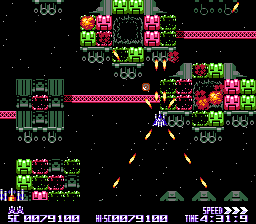
N-Warp ScreenshotI’m not going to try to enumerate every homebrew project released for a Nintendo system, but for the sake of being thorough, there are some that warrant mention. First up is Blade Buster, a Famicom shoot-em-up notable for its screen filling boss sprites (on an 8-bit console mind you), an insane number of sprites on the screen at a time, and unique time-attack styled gameplay. Next for the Super Nintendo is N-Warp Daisakusen, a game that allows eight—yes, eight—players to compete in a free-for-all brawl. Lastly, I want to mention a puzzle game for the DS named Negative Space which has the player drawing paths to guide two opposite colored blobs to their respective goal flags. The catch? They can only travel through the other’s color, meaning every path you draw for one is an obstacle to the other.

Negative Space
This game is also available as a free download on Android.

Emulators

After games, the most common type of homebrew is emulators. I’m not exactly sure why when emulators are already so prolific on P.C. Maybe people make them because they like the challenge of getting an emulator to function on the constraints of a game console. Maybe it’s to prove that more fully featured emulation is possible on Nintendo systems. Maybe people just think it’s funny to play Playstation games on their Wii. Whatever the reason, most of Nintendo’s modern systems have a multitude of homebrewed emulators available on them.

WiiSX
I can’t be the only one who thinks this is hilarious.

Obviously, many of the homebrewed emulators available online for Nintendo consoles are for older Nintendo systems. As I alluded to in the previous paragraph, however, the homebrewed emulator scene isn’t exclusively concerned with Nintendo systems. On the just Wii alone there are emulators for Sega Genesis/Mega-Drive, Sega Saturn, Playstation 1, CalecoVision, Commodore 64, Atari Lynx, and many, many, many, many, many more. Also, there’s a Super Nintendo emulator that runs on the original 3DS (I knew it!).

Whatever the reason, most of Nintendo’s modern systems have a multitude of homebrewed emulators available on them.

Miscellaneous Software

Not all homebrew projects are game related. Some are just the sort of software you’d find on any computer: music players, web browsers, etc. One such program of note is an art program called Colors! Which was originally developed as homebrew for the DS but has since gotten an official release on multiple systems, including the 3DS eshop. Then there’s software that changes system behaviors. For example, the 3DS has an application that removes the cap on the number of play coins a player can receive in a day. More impressive is a Wii hack that let’s the user change the region of the console—y’know, to play region locked games.

Linux

Where there’s hardware, there’s Linux. Much like the speed of light or the certainty of death and taxes, it’s one of the constants of our universe. Seriously, any system that’s powerful enough to run Linux sooner or later will. There’s Linux for the GameCube, Linux on the 3DS, Linux for the Wii, a distro is in development for the N64, there’s a version for the DS; heck, even the GameBoy Advance has…Unix?

…Wait, what?

GameBoy Advance Unix
What?

Any system that’s powerful enough to run Linux sooner or later will.

Cool! Let me try!

For those of you who don’t know, I happen to be a programmer, so when I write an article that gives me the opportunity to talk about programming, I’m going to talk about programming. If you think programming is some kind of voodoo (which it isn’t: it’s sorcery), you may want to skip this part.

Still here? Great! Believe it or not, if you’re already comfortable with programming it’s almost as simple as picking the system you want to develop for and a few Google searches. While homebrewing isn’t exactly the go-to past-time among bored nerds, there are several online guides and communities dedicated to the craft: forums, YouTube videos, blogs, and wikis galore! Heck, there’s an entire free book on WikiBooks about Super Nintendo programming.

Even though you’re not going to be using The Man’s toolkit, you can’t exactly make a game with just your imagination and wishful thinking (trust me, I’ve tried). You will need software to compile the code you write and, if you’re developing for one of Nintendo’s more recent systems, an API library to interface with the system (getting controller input and such). You’ll also want an emulator. Fortunately, all of these tools can be easily acquired on the internet for free.

 There are several online guides and communities dedicated to the craft: forums, YouTube videos, blogs, and wikis galore!

As for the coding itself, it’s mostly the same as regular programming. For example, I—out of curiosity—browsed through a tutorial on GameBoy Advance homebrewing and was quite relieved (and just a little surprised) to find that the code was hardly distinguishable from any other program written in C. There are certainly nuances to keep in mind—like in the case of the GBA, some memory addresses are reserved for the screen’s RGB values, tracking whether buttons are pressed, and so on. You may also need to go without some modern conveniences (hope you like compiling your code from command-line!). But by-and-large, anyone who’s sufficiently experienced with C and/or C++ should be fine.

Unless you’re developing for an 8 or 16-bit system. In that case I hope you really like 65c816 Assembly!


We Haven’t Even Touched the Red Pill

Instead of starting on a proper summation, I’d like to cover my backside real quick and stress that despite this being the longest article I’ve written for Two Button Crew to date, I have only given the barest of overviews of the subject. I encourage you to look further into this, either as someone interested in finding new games to play or someone hoping to make such games. More over, there’s a lot I omitted for length, like how some retail games have been pulled from store shelves because of homebrewers.

Having said all that, it’s a shame homebrew isn’t more popular. I understand why, though: if someone’s going to go to all the trouble to make a game, why make it for a dead system? And if it’s for a modern system, why make a game that they can’t license and sell? But, hey, who knows? Many Nintendo fans have grown up and started making games of their own. As time goes on and more fans get old enough to take an interest in game development, maybe some of them will try to make a few for the systems they played on as kids. Wouldn’t that be something, a flood of new old games?


About the Author:

Glen is a lifelong Nintendo fan whose love of video games has inspired him to pursue a career in computer programming; so much so that he is now studying to get a masters in computer science. He doesn’t understand that the average person isn’t interested in programming and won’t shut up about how awesome it is.

No Cross-Buy? No Buy!

The year is 2016. Competing consoles have full-fledged online efforts backing their console and software. Purchases are tracked digitally, automatically, and conveniently. It’s not much different in the smartphone and tablet arena either: buy a game on your iPhone, play it on your iPad. Pretty simple! Pretty commonsensical!

That is until you step foot into the realm of Nintendo, where it’s like pulling teeth to get consoles and handhelds to talk to each other. The realm of Nintendo, where we all have Nintendo Accounts, My Nintendo accounts, and NNIDs, and we only have a vague idea of how those all fit together.

The realm where you buy an old SNES game on your Wii U and it’s not there on your 3DS.

We’re talking about cross-buy, and more specifically, the lack of cross-buy.

Nintendo’s Virtual Console service is celebrating its tenth anniversary this year. After a decade of offering their classic titles for sale digitally, how has Nintendo’s service expanded? Well, the answer is unfortunate: barely.

Virtual Console made a small jump from Wii to 3DS with restore points. The next real iteration was on the Wii U, which implemented the 3DS improvements plus customizable controls and a few other small perks.

The nice thing was, it was really easy to transfer your VC games from Wii over to your Wii U console!

Oh – wait… no, it wasn’t. You had to buy them all over again. Sure, Nintendo gave you a slight discount for owning the same software on Wii, and the service recognized that, but rather than letting you access your VC games on Wii U’s home menu with the new perks, you had to pay again or just deal with the outdated features and slog through old emulated Wii menus.

Nintendo doesn’t charge for operating system software updates, why should they charge when Virtual Console technology is upgraded?

I couldn’t believe my ears when I heard the news that Super Nintendo games were coming specifically to the New 3DS as an exclusive feature over the previous generation’s model. You can’t expect me to believe that the original 3DS couldn’t run Super Nintendo games – that would be absurd. But they desperately needed some unique features for the handheld (because they couldn’t make more than one exclusive game for it), so SNES VC titles were the answer.

I own quite a few SNES games on my Wii U, and by this time, Nintendo Network IDs were a thing. They have already been implemented. NNIDs were supposed to be the answer to all our 21st century problems with Nintendo’s online systems – it was supposed to track our purchases, unify the different Nintendo platforms… it was supposed to bring balance to the force!

Yet another implementation of the Virtual Console had arrived with no mention, no promise, not a peep about cross-buy.

I had been frustrated about Nintendo attempting to sell us the same exact retro software over and over again for quite some time, but I held onto hope that Nintendo was going to make good on their word to use NNIDs and make the whole Virtual Console experience more cohesive. When they came out with NNIDs in March (launching alongside Miitomo) and then put SNES games on the handheld, it was finally the straw that broke the camel’s back.

The straw being the terrible value proposition from Nintendo that shows they have a broken business model for their classic titles.
The camel’s back being my willingness to put up with it.

I boycotted SNES Virtual Console titles on 3DS, and in fact, I haven’t bought a single VC title in the time since. I’m through with it. I don’t have $8 (per game) x 10 (titles) for every new console iteration they come out with… for the same games!

Let me rephrase that… I do have the money, but I don’t have the will to spend it on this stuff time and time again. I have plenty of nostalgia for Nintendo’s older games, but I won’t allow them to keep using that against me.

It’s not $8 – it’s the principal.

Okay, maybe I am planning on buying the NES Classic Edition! But that’s different…

The point is, I’ve been burned too many times. I’ve invested too much in this broken, excuse for a digital platform called the Virtual Console and seen it count for nothing when new hardware comes out. Nintendo’s online systems and their business sense isn’t smart enough to allow my purchases to carry over, but I am smart enough to avoid the same traps over and over again!

Nintendo, listen closely: You don’t burn your early adopters. You don’t make your die-hard fans pay twice.

You don’t punish people for buying your games early!

You reward these customers. You say: here, you have a big collection of VC games on your Wii? We spent 700 man hours figuring out how to make those transfer over to your Wii U home menu, for free, and now you can keep enjoying those titles just as easily.

You reward your loyal customers. You take the information about their SNES purchases connected with their NNID and you download those games automatically onto their 3DS, so they open it up and see a surprise gift on their menu screen. I know you can do this stuff – you send me random demos all the time.

Because of so many bad past experiences with the Virtual Console, I’ve turned a deaf ear to the service. I won’t be playing another classic Nintendo game digitally until they address this issue.

I’m waiting eagerly for the Nintendo Direct where Kimishima, Reggie, or Bill Trinen takes the stage and announces the new direction for Virtual Console, a cohesive experience where Nintendo respects my investments in their software.

Until then, I’ll be ignoring all press-releases and the insignificant drip-feed of the same old games every week.

Ranking All Nintendo Controllers

I love every Nintendo controller, but some are easily better than others. Today we’ll take a look at my personal ranking of Nintendo’s controllers from best to worst, and the reasoning behind it. Remember, this list is entirely my opinion and yours could be completely different.


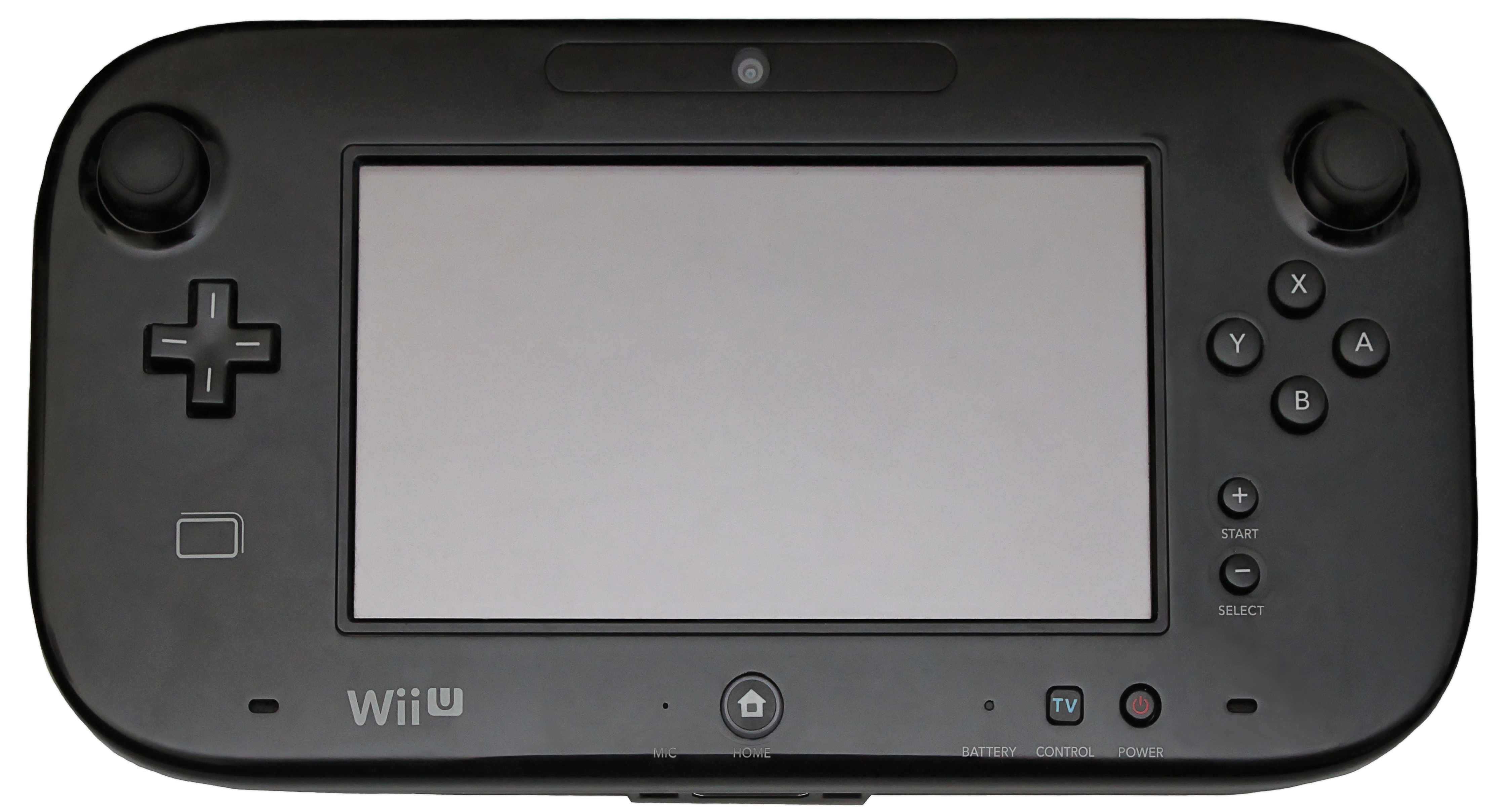
7. Wii U

Wii U Gamepad

The main problem I have with the Wii U gamepad is when a game gives me the option to use the Wii U Pro Controller, I use the Pro Controller every time. While the touch screen is insanely helpful for a map in Splatoon, or item management in The Legend of Zelda, the gamepad never had a very compelling reason to justify the second screen in my mind. I only ever used the off TV play a handful of times, because the resolution on the gamepad leaves much to be desired.


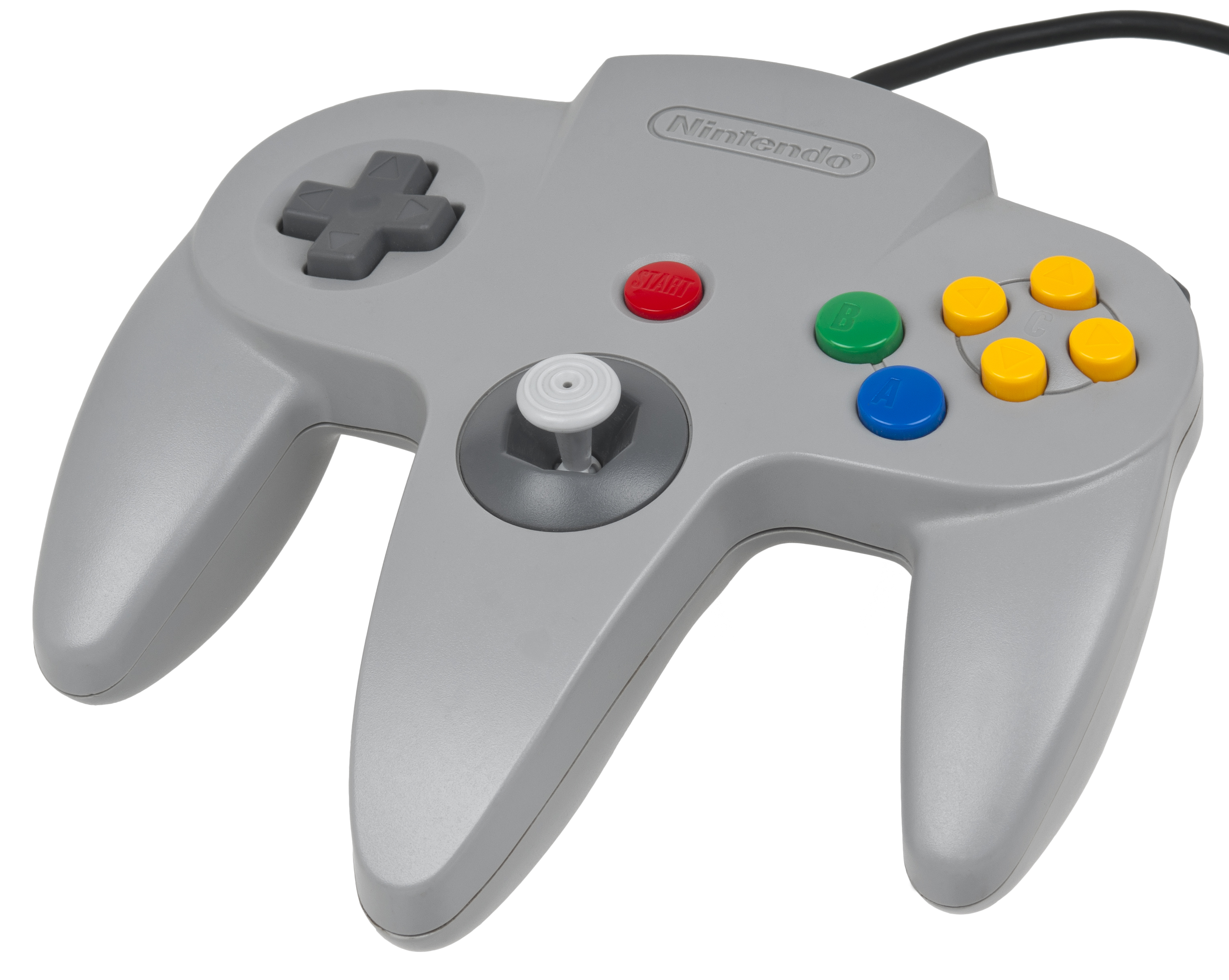
6. Nintendo 64


The Nintendo 64 controller was designed for people with 3 hands. I only ever knew of a few games that even used the D-Pad because it was located off to the side, but I loved the control stick and the Z-button as a trigger was amazing.


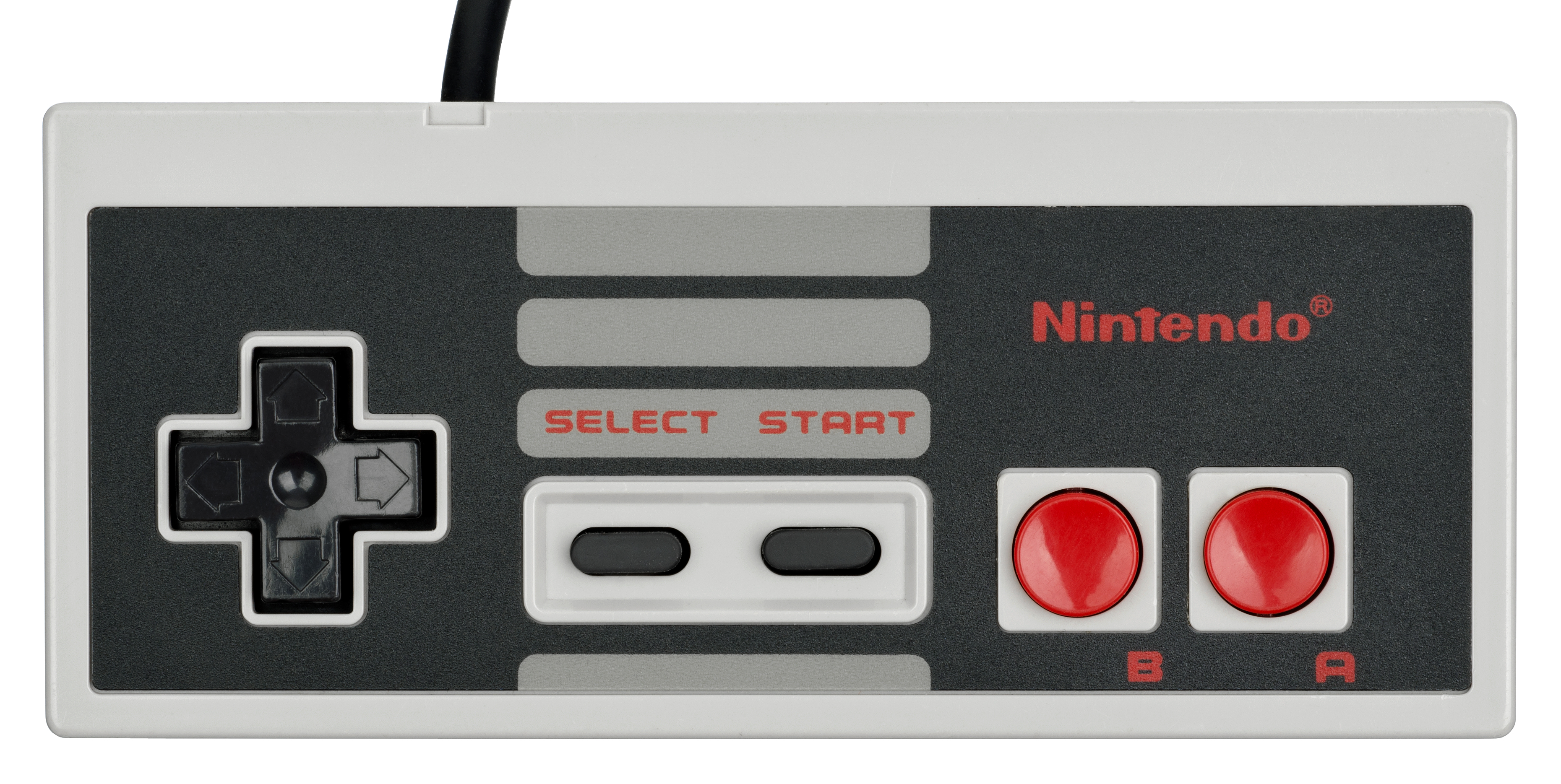
5. NES

NES-Controller-Flat

Simple. Clean. Classic. It doesn’t get much easier than this. The fact that almost anyone can pick up an NES controller and play because of its simplicity is amazing. Truly a monumentous achievement when your original controller still holds up so well today. The only thing holding this one back is the square design. While it looks amazing, it can become uncomfortable to hold during extended play sessions.


4. Virtual Boy

Only used to its full potential a couple times, but easily the best part of the console. The L and R buttons located on the back is fantastic and the dual D-pad was great for added control. Created with a mirrored design meant that games that only used one D-pad let the players pick which one they wanted to use, so whether you were left or right handed you could pick what felt comfortable.


3. Wii

242196-nintendo-wii-remote-plus


Not everyone loves motion control gaming, but the Wii did it right. The controller was designed to be similar to a TV remote for ease of use with all demographics. They nailed it. The main thing I didn’t like about it was the 1 and 2 buttons were far down on the controller, but they were usually used for menus and map anyhow. As an added bonus you can plug in the nunchuck attachment for added control-ability or turn the controller sideways and it essentially becomes an NES controller. Brilliant.


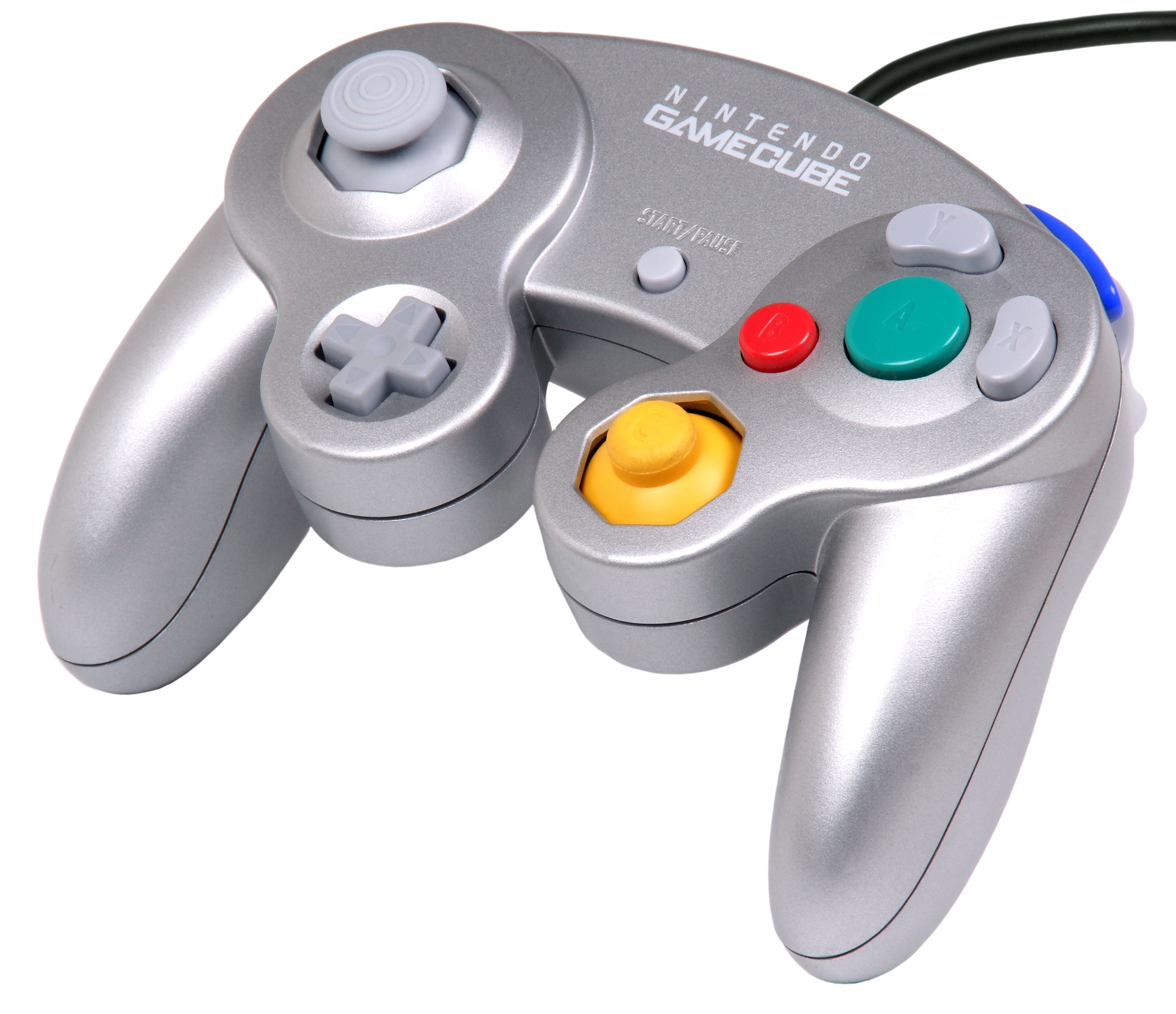
2. GameCube


ABXY? Check. L and R? Check. Dual analog? So close! The main thing holding this controller back in my mind is the tic-tac C-stick. There’s a very good reason it’s many peoples go to controller for Smash Bros. to this day. Very comfortable and great button placement. You could even update your default controller to the Wavebird for wireless gaming.


1. SNES

SNES-Controller-Flat


Nintendo took the NES controller and improved on it in every way. Rounded so it was more comfortable, added buttons for more functionality, but still incredibly simple and user friendly. It really doesn’t get any better than this.


That’s all of them, folks… for now! I can’t wait to see where the NX will end up on this list. Be sure to let me know how your list compares!


Scott and Simeon recently ranked all of Nintendo’s consoles! Check out Part 1 and Part 2 to see how they stack up!

SNES Classic Edition 30 Game Wish List

One can only hope for Star Fox 2.


With the announcement of the NES Classic, it’s inevitable that the big N is going to come out with an SNES Classic sooner or later. Today we’re talking about its inevitable library!

Shot by Alex Campbell

“Reformat” Kevin MacLeod (incompetech.com)
Licensed under Creative Commons: By Attribution 3.0
http://creativecommons.org/licenses/by/3.0/

Ranking All Nintendo Consoles Worst to Best (Pt. 1)

We didn’t include the Pokemon Pikachu because… well… It’s embarrassing.


It’s a two-part spectacular! Today, Scott and Simeon agree on the worst of Nintendo’s systems.

Shot by Alex Campbell

“Reformat” Kevin MacLeod (incompetech.com)
Licensed under Creative Commons: By Attribution 3.0
http://creativecommons.org/licenses/by/3.0/

Ranking All Nintendo Consoles Worst to Best (Pt. 2)

It was tough saying one Nintendo console was better than the others.


Today the crew disagrees on the best of what Nintendo has to offer! It’s part 2 of ranking Nintendo’s consoles!

Shot by Alex Campbell

“Reformat” Kevin MacLeod (incompetech.com)
Licensed under Creative Commons: By Attribution 3.0
http://creativecommons.org/licenses/by/3.0/

Watching Old Nintendo Commercials

Fist pump! Fist pump!


Ready for a trippy blast from the past? (Trippy is Slippy’s Aunt, by the way.)

Shot by Alex Campbell

“Reformat” Kevin MacLeod (incompetech.com)
Licensed under Creative Commons: By Attribution 3.0
http://creativecommons.org/licenses/by/3.0/

Quoting Star Fox to Strangers

There was one clip that didn’t make it in because there was a tree between Scott and the camera, but he did his Arwing impression and flew right inbetween that Instagram girl and her poor boyfriend!


Join us for a trip through the Lylat system! We are speaking to strangers ONLY on Star Fox quotes!

Shot by Alex Campbell

“Reformat” Kevin MacLeod (incompetech.com)
Licensed under Creative Commons: By Attribution 3.0
http://creativecommons.org/licenses/by/3.0/

Debate: 8-Bit vs. 16-Bit

Caves. It’s always the caves.


Retro, or MORE retro; who will be victorious? You decide! Will it be the classic 8-bit, or the classy 16-bit?

Shot by Alex Campbell

“Reformat” Kevin MacLeod (incompetech.com)
Licensed under Creative Commons: By Attribution 3.0
http://creativecommons.org/licenses/by/3.0/

What Makes A Mega Man Game?

Oh! I forgot to mention potentially culturally insensitive stereotypes under boss design!


Welcome to Mega Man week! A full week of talking about everyone’s favorite fighting robot! But just what made Mega Man the franchise we love?

Shot by Alex Campbell

“Reformat” Kevin MacLeod (incompetech.com)
Licensed under Creative Commons: By Attribution 3.0
http://creativecommons.org/licenses/by/3.0/

Mega Man X – Newb Vs. Pro


In our previous Mega Man Trivia episode, we proved that Simeon is a master of Mega Man knowledge. This video, today, is here to prove that Simeon’s got just as much skill in-game as he does outside. And for your comparison pleasure, we have Scott, who will contrast Simeon’s awesomeness with pure newbishness.

“Escape the Premises” Kevin MacLeod (incompetech.com)
Licensed under Creative Commons: By Attribution 3.0
http://creativecommons.org/licenses/by/3.0/

Nintendo’s Making Lots of Excuses


Nintendo, supply, and demand. Three words that don’t always mesh together very well. They’re at it again, this time with the SNES Classic Edition. And when the Public Relations dude at Nintendo seems lost for words, well, the situation must not be pretty. Also, Sonic Forces isn’t shaping up too well on Switch. Unfortunately, a bit of a downer this News week. However, we round things out by talking about the awesome Nintendo World Championships!

“Escape the Premises” Kevin MacLeod (incompetech.com)
Licensed under Creative Commons: By Attribution 3.0
http://creativecommons.org/licenses/by/3.0/

Are We Any Good at Star Fox 2?


Star Fox 2 is a divisive game. Media outlets tried scoring it, but that was met with much strife over how a cancelled SNES game should be scored in 2017. Let’s put all that aside and actually play the game, shall we? Scott actually makes it way farther than he expected to in this run. Thoughts on the game? Comment below.

“Escape the Premises” Kevin MacLeod (incompetech.com)
Licensed under Creative Commons: By Attribution 3.0
http://creativecommons.org/licenses/by/3.0/

Donkey Kong Country: To Hate, or Not to Hate?


Simeon and Scott are trying to give Donkey Kong Country a fair shake here, even though they’ve never touched the game because of its graphics. Spoiler alert: they end up having a lot of fun and discovering some really challenging parts of the game. Extra spoilers: mine carts are involved. Beware the mine carts.

“Escape the Premises” Kevin MacLeod (incompetech.com)
Licensed under Creative Commons: By Attribution 3.0
http://creativecommons.org/licenses/by/3.0/

What if Classic Editions were Switch Cartridges? Scott’s Thoughts

“It’s so hard to find the NES Classic Edition! Why can’t Nintendo just put all those games on a cartridge and call it a day?”
It was the same story with the Super Nintendo version.

Nintendo fans and collectors, left baffled by supply issues, often bemoan the fact that these collections of retro games aren’t made available for Switch.

What if Classic Editions weren’t miniature reproductions of the original consoles, but simple game carts or eShop downloads?

Pros:
+ More convenient
+ Cheaper
+ Portable
+ Easier to purchase
+ Less clutter

Cons:
– You don’t get the original controllers
– Only lasts one console generation
– Less of a collector’s item
– Not as nostalgic
– Well… you can’t hack it to add more games.

Personally, I’m really glad Nintendo chose to recreate the consoles. I’ve been wanting NES to return to store shelves for a decade, but I never predicted the genius of shrinking it down to the size of your palm and preloading it with games.

I can also now say that I own an SNES, which is the only console I missed while growing up.

It’s easy to beg Nintendo to make things more convenient and cut some corners, but the experience just wouldn’t be the same.