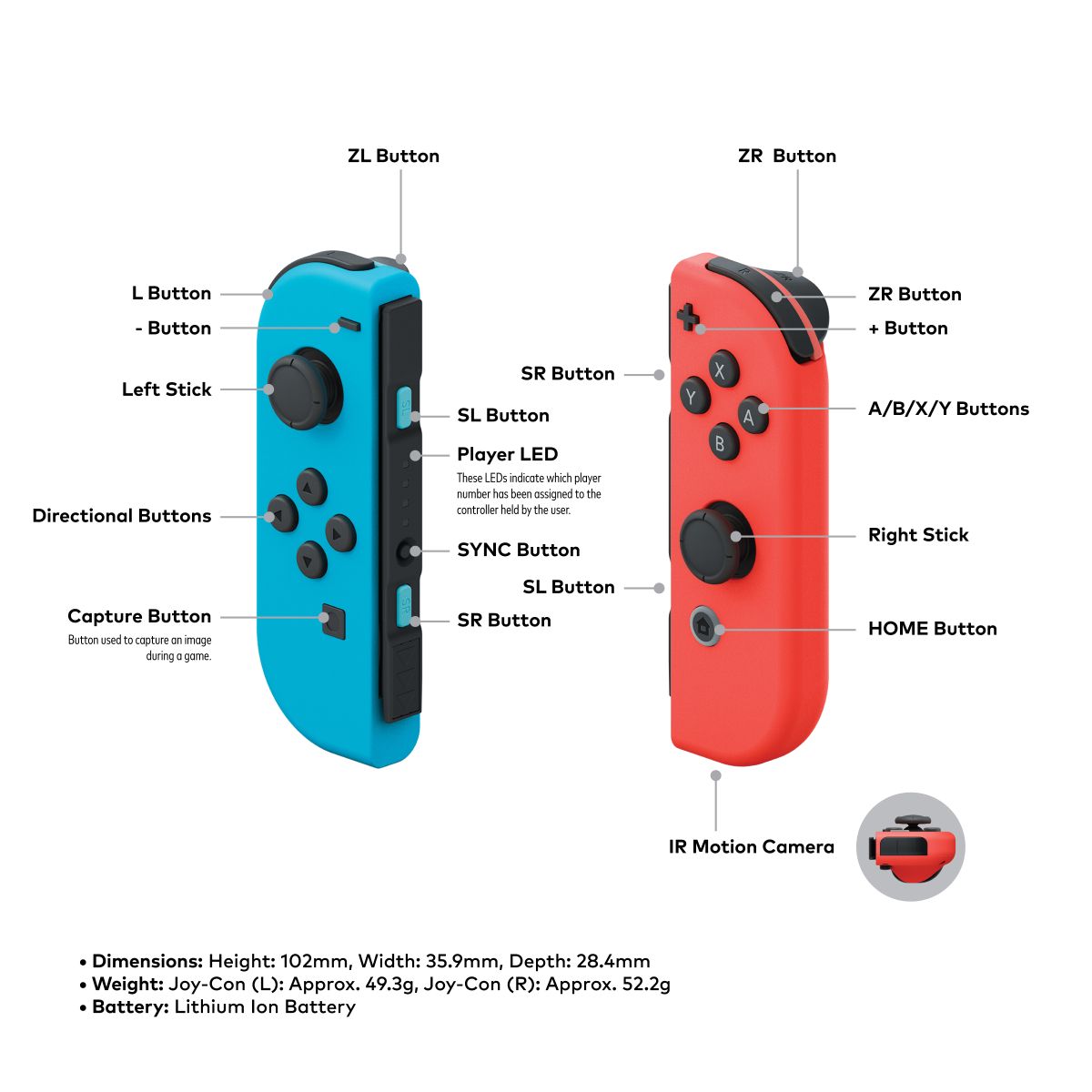
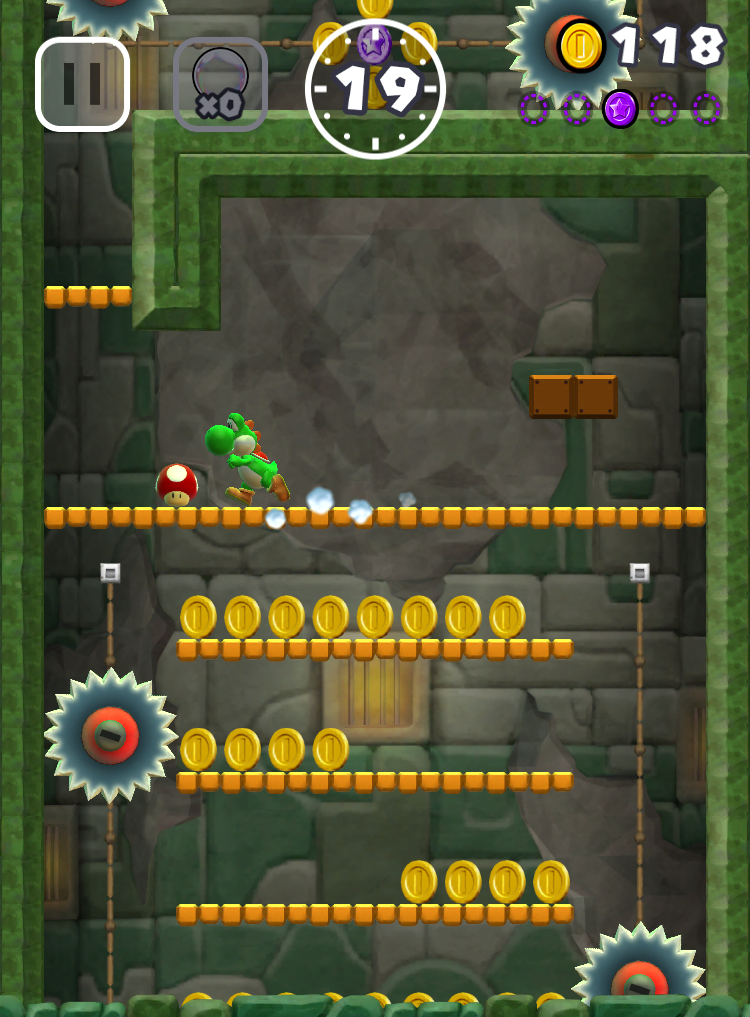
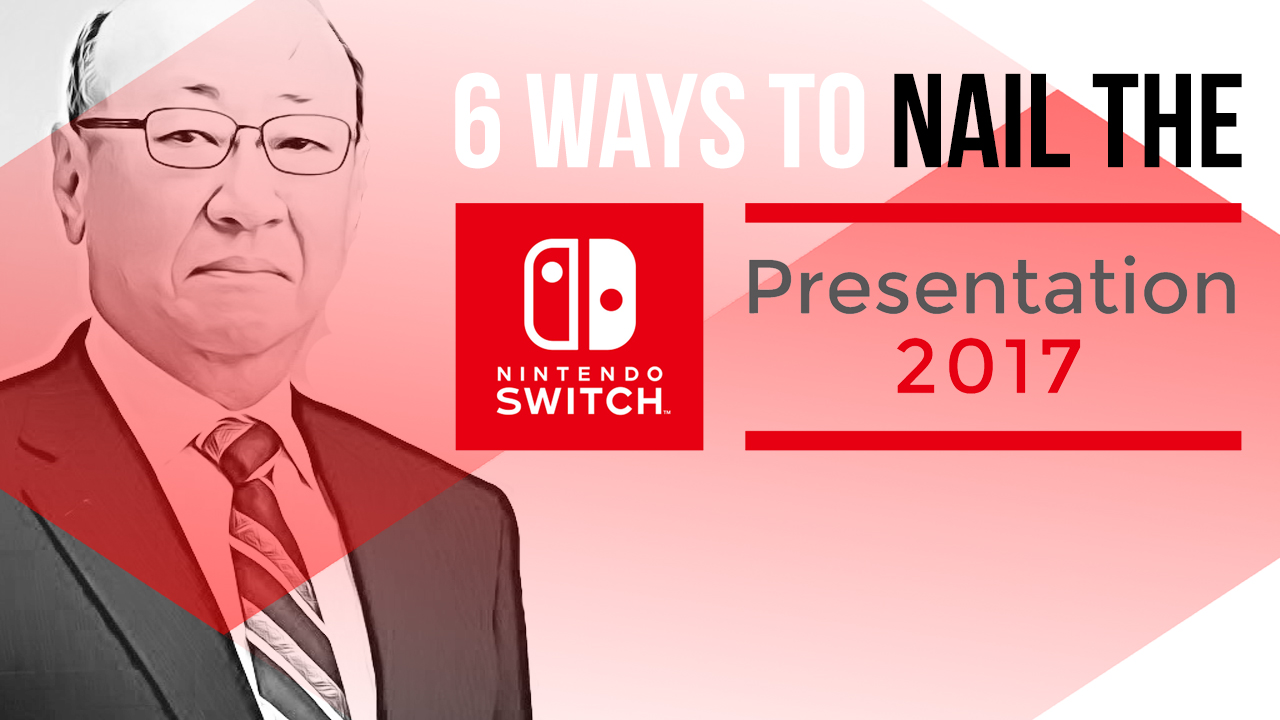
We did it. We finally know what the Switch is. We had a minor reveal late last year that provided a few answers, but it also brought up a lot more questions. There’s one thing in the long road of the Nintendo NX that completely astounds me: how on Earth did Nintendo keep a secret this long?
How did Nintendo keep a secret this long?
In this day and age, and with all the technology and leaks that happen constantly, it’s absolutely amazing that while a general idea of what Nintendo was cooking up was touched upon, up until the presentation we were still left guessing. So many times come E3 big reveals are ruined, but not this time. It was rumored that the Switch had a touch screen and motion controls, but we only now just confirmed it. We still had a few surprises that weren’t even guessed upon such as HD rumble, colored Joy-cons and the games for the Switch (excluding officially announced titles).
A lot of this was a mystery until less then two months from launch.
I don’t know how they did it, but I hope it’s a trend that continues. I loved being left in the dark. Not while it was happening, mind you, but it only strengthened the hype after the fact. Here’s hoping E3 can bring as much excitement and anticipation as the console reveal. Now excuse my insomnia while I wait (impatiently) until March 3rd…
It seemed like it was just yesterday; that snowy November day back in 2012. The day I picked up my Wii U, brought it home, opened it, and hooked it up with anticipation and excitement. The Wii brought my family countless hours of joy, so I was expecting this system to get the same type of love. I started with Nintendo Land and then downloaded Little Inferno. Little did I know, Little Inferno would be a fairly accurate representation of what the Wii U would produce. That is; a cold, empty fireplace with short but powerful bursts of fire. Just beyond 4 years later, and while I write this, I hate to say the system was overall a disappointment for me. That being said, some of my favorite games of all time were released on this system, albeit they were few and far between. Here is my top 5 favorite game list for the Wii U:
Honorable Mentions: Splatoon; Captain Toad: Treasure Tracker; The Legend of Zelda: The Windwaker HD; Super Mario Maker
Kirby and the Rainbow Curse
The number 5 spot was a pretty even tie between Kirby and the honorable mentions. Any game could have gotten it. The reason I chose Kirby was because I fell in love with the clay style visuals and controls the second I started playing. Not to mention, this game really took advantage of the unique gamepad the Wii U had to offer. Not too many games took advantage of it, which is a shame.
Donkey Kong Country: Tropical Freeze
The Donkey Kong Country series is one of my all-time favorites, and I like this entry just as much as any of the games in the original trilogy for the Super Nintendo. The visuals are astonishing, and the soundtrack is beautifully composed by original Donkey Kong Country Composer David Wise. These two things come together to make an extremely atmospheric adventure that I still go back to on occasion.
Super Smash Bros. Wii U
Well, it’s Super Smash Bros. I have spent countless hours playing this game with friends, and it has brought me plenty of fun times and memories. The control scheme was tweaked and tightened from the Wii version, and this, in my opinion, makes it easier to pick up and play.
Mario Kart 8
Mario Kart 8 takes everything that makes the series great and amplifies it with great tracks, an assortment of new characters, a brand new physics mechanic, and DLC. My only gripe with this one is the lack of battle tracks, but it looks like the Switch is going to pick up the slack in that department with a set of battle maps, old and new alike with Mario Kart 8 Deluxe.
Pikmin 3
My all-time favorite game for the Wii U. As I was playing this game, I felt as though I was a part of the world. It may not be the longest game out there, but as a self-proclaimed completionist, I found myself constantly coming back for more. Even the bingo battle multiplayer is a blast, and there are a number of ways to win, which only adds to the strategy. If you own a Wii U and have not played this game, please do yourself a favor.
Well, those are my favorites of the Wii U. I would love to hear what yours are. In the meantime, let’s raise a glass to the Wii U. Cheers.
After being released in 1993, and re-released in color in 1998, The Legend of Zelda: Link’s Awakening DX is now available on the 3DS Virtual Console. It is developed and published by Nintendo.
Unlike most of the other Legend of Zelda games, Link’s Awakening does not involve you finding or rescuing Princess Zelda. Instead, Link’s ship has crashed on an island after a storm. It’s up to Link to find the eight instruments of the sirens to wake the Wind Fish so he can escape the island. Little does he know, the island holds a secret…
Puzzle solving in the dungeon.
If you’ve played any 2D Legend of Zelda game you know exactly how this plays. If not, it’s pretty basic. You start off in a main overworld and must find your sword. With sword in hand, you make your way to the various dungeons collecting the different instruments. In these dungeons you also collect a large variety of tools to help you along your journey, such as Roc’s Feather which allows you to jump, or the Power Bracelet which helps you move large rocks and pots. The dungeons are filled with puzzles and enemies with each one containing at least one mini-boss and one main boss. There are two main collectibles in Link’s Awakening, Pieces of Heart and Secret Seashells. The pieces of heart increase your overall health for every four you find and every time you collect a Secret Seashell it simply says, “If you find enough of them, something good is bound to happen.”
The DX version of the game includes and extra ‘Color Dungeon’, which if completed instead of rewarding Link with and instrument or Heart Container, gives him a choice between a Blue tunic (Cuts all damage Link takes in half) or a Red Tunic (Doubles all damage Link deals out). These tunics are extremely helpful.
It’s our old pal, Boo!
There are lots of references to other Nintendo games such as Kirby, a Yoshi doll, and a large variety of Mario’s enemies which are seen in wonderfully-done platforming sections.
The graphics are that of almost any Gameboy Color game. I found that this game’s visuals in particular still look simply fantastic and drew me in as much as the newer games.
If you enjoy Zelda games, or even adventure games at all, you owe it to yourself to play this game. The mystery of the story kept me wanting to play more to see everything unfold and captured me more than any other 2D Zelda. I can’t recommend this game enough.
The Legend of Zelda: Link’s Awakening gets 5 opening chests out of 5.
I’ve been playing a lot of NES Classic Edition around the Holidays, and it’s a big hit. I think Nintendo hit it out of the park for multiple reasons, and I’m going to go in depth on each one!
Brand Top of Mind (in Absence of Switch)
Nintendo wouldn’t be kidding anyone if they told us that they didn’t want the Nintendo Switch to be released this holiday season. The November weekend before Thanksgiving is their favorite day to launch their biggest hardware and software, year over year. Yet they couldn’t quite make it in time for the 2016 Holidays, so the Switch will be releasing on their second-favorite slot: March. That left kind of a gaping hole in November, so Nintendo brilliantly filled it with the NES Classic Edition.
What’s going to be on every Christmas list? What is going to get brought out at family gatherings? The NES, or even simply, “the Nintendo.”
The brand might not have the benefit of the buzz through their new console this winter, but everyone’s going to be repeating their name thanks to their throwback console.
Nostalgia is Big Right Now
Who knew that 2016 would be such a perfect year to be a ’90s kid? Everything that was old is new again, and gaming, film, and TV industries have all wizened up and they’re repackaging our memories of old and selling them to us all over again. Nintendo is no different. Their stable of IPs is in the top 5 strongest in the world, among the likes of Disney, Marvel, and Star Wars (or should I say, Disney, Disney, and Disney).
The NES Classic Edition was a very calculated move. Down to the packaging on the box and each and every commercial, the marketing has been a complete throwback. There’s not a young-to-middle-aged adult alive who wouldn’t want to pick up the perfect replica of that controller. Nintendo didn’t wait too long for this and they didn’t do it too soon – the timing is just right.
It’s Not Just 3rd Parties
Nintendo has been working on this console rerelease for quite awhile. Want to know how I know? Because of all the licensing deals that went into it! They could have scraped together 25 or 30 first-party IPs and shipped it out, but instead they held meetings and struck deals with other companies, allowing third-parties to get in on the action. In my experience, Contra has been one of the most recognizable names on the system (albeit in the game Super C), so it’s a good thing that Nintendo branched out and expanded the library through its partners. The Big N doesn’t get to keep 100% of the profits anymore, but I think it was well worth it. I’m just surprised news of the mini-console didn’t leak with other companies being brought into the circle.
It Has Spot-On Emulation
I didn’t realize just how bad the NES emulation was on Wii U until I saw it in contrast to the NES Classic Edition.
Trust me, if you haven’t seen the difference in emulation quality, you will be appalled. Nintendo didn’t do so hot with NES games on Wii U, but we really couldn’t ask for better than the Classic Edition. With the three different display options and the boost in brightness and clarity over Wii U, it just can’t be beaten.
It’s Literally a Stocking-Stuffer
This thing is so small. I know that the first image Nintendo released of this console, it showed the mini-NES sitting in a model’s hand. Still, my mind didn’t quite grasp the size. It wasn’t until I opened up the tiny box and held the even-tinier console replica that I understood just how small it is! It’s absolutely fun-sized. And I think it could actually fit in kids’ stockings this Christmas. This thing has the potential to be the #1 impulse-buy of 2016, if Nintendo could only just produce enough to fill up store’s end-caps.
Also, the price is perfect. You see that the thing is $60, you see that 30 games are included, you do a little quick math in your head and you exclaim “That’s only $2 per game!” That’s literally every consumer’s thought process. Everyone feels like they are getting a steal of a deal. If there were only 25 games included or if the console was $70, the story would be completely different. Nintendo hit the bulls-eye on this one.
I’m really happy about this product. I’m a huge NES fan and I’ve actually been wanting Nintendo to reproduce the system for many years. I never had the idea of it being miniature and coming with packed-in games, but they absolutely made the right choice with that design. There’s no bulky consoles or rows of cartridges taking up shelf-space, just this little joy of a system. I hope all the TBC fans who want one are able to find a console of their own! Nintendo really needs to stop playing so conservative with their supplies and just make more of these things. But Foxconn is probably busy making Switch parts, and I won’t complain about that.
It’s no surprise that one of Nintendo’s main Holiday 2016 experiences has to do with Mario doing what he does best: running. Except this time, he is not being controlled by a controller, but the touch of a finger. Mario games have never been very complex in terms of gameplay, and that is likely why Nintendo made their most iconic figure transfer over to iOS devices (Android sometime next year). Mario running and jumping is a Nintendo staple, and even people who could not be more disconnected from video games surely are at least familiar with the physics behind the game. That is why I think it was brilliant for Nintendo to do this. The price point for the full game will turn some of the crowd away, but I predict this is going to be a massive success for Nintendo, and long term, they will be a big contributor to mobile gaming.
So, what’s next? I feel that some franchises will migrate over to mobile better than others. I have a tough time picturing a mobile Zelda game that brings the expansiveness and feeling of adventure that we are all used to with a console. I could possibly see Nintendo bringing it back to the classic style (per Link Between Worlds), but the mobile limitations alone would most likely water down what could be an otherwise rich experience.
Another direction Nintendo could take this would be to remake classic games (Ice Climbers, Balloon Fight, Excitebike, etc.) on mobile devices, since these games tend to have a simpler play style. With the recent release of the NES Classic Edition, these games are on the forefront of Nintendo’s radar, so maybe it’s a possibility that one day they will hit the mobile market. Of course, this is purely speculation, and Nintendo has proven time and time again that speculation usually amounts to no more.
Whatever the case, it will be interesting to see exactly where Nintendo goes with this, because right now, the market is still being tested. Are mobile devices better suited for $1.99 puzzle games, or $9.99 games that have had much more development invested in them. The money will talk, and Nintendo will surely respond. This season, however, the more Mario runs, the happier Nintendo will be. Who knows, he may even pave the way for other franchises.
Nintendo is known for many things: innovation, quality, terrible third party relations, etc. Throughout the years, the company has cultivated a reputation as highly creative, exacting master artisans. It’s one of the many reasons they’re so beloved by fans around the world. They don’t just make games, they make worlds and characters that are instantly recognizable and overflowing with personality. Creativity is a fundamental part of their identity as a company.
However, in recent years they’ve garnered a reputation among some as a bunch of corporate stiffs who keep churning out the same-old-same-old that they’ve always been, like Activision with Call of Duty, Ubisoft with Assassin’s Creed, or Capcom with…well take your pick. So what’s different? What makes the Nintendo titles of today “corporate cash-ins” instead of visionary, artistic masterpieces? If I had to give my two rupees on the subject, I’d say the issue isn’t that the games are bad or mechanically unsound, it’s that they lack personality.
So what even is personality? What makes it so important? What happens when a game doesn’t have it? Let’s take a look, shall we?
What I Mean by Personality
What is personality? Well, typically the word refers to the psychological concept of a collection of behavioral traits that determine how one sets priorities and reacts to different situations. Seeing as I’m writing about video games, however, that definition isn’t really of much use. For the sake of this article, I’ll just define it as the interplay between a game’s aesthetic choices (visual design, music, story, etc.) and its gameplay that give each game its identity.
Huh…that’s pretty vague, isn’t it? Maybe a visual aid is in order; consider the following image:
Even when packed onto the same cartridge, each game is easily distinguishable.
Clearly, these are all Mario games, but because each one has a unique visual style, even people unfamiliar with the franchise can easily tell that each one is a different game (Okay, technically you can get them all on one cartridge, but that’s beside the point). Furthermore, those who’ve played the games will tell you that despite each game staying true to the Mario formula, each game has its own unique mechanics and gameplay quirks that makes the gameplay feel different. That’s basically what I’m getting at when I say personality: a game’s unique look, sound, and feel. It’s why the first Paper Mario is cute and colorful while it’s sequel, The Thousand Year Door, is wry and occasionally dark, or how the claustrophobic corridors and eerie music give the Metroid series its trademark sense of isolation and unease, and so forth.
That’s basically what I’m getting at when I say personality: a game’s unique look, sound, and feel.
For the Want of an Identity
What happens when you have a mechanically airtight game that lacks the personality to set itself apart? You get the New Super Mario Bros. series.
When New Super Mario Bros. first came out on the DS, its deliberately vanilla presentation was—I dare say—welcome, considering it had been roughly fifteen years since Mario’s last new 2D outing. The aesthetic was familiar but modernized, making it a great choice for a game meant to be just that: a throwback with modern graphics and design sensibilities that epitomized what it meant to be “Mario”.
When you eliminate differences in graphical quality and resolution, these games are almost impossible to tell apart at a glance.
So what’s the problem? Nintendo made three nearly identical sequels, that’s what. Make no mistake, each game is excellent in its own right, but they’re all so ridiculously similar in terms of their visuals, gameplay, level themes, and music that they’re practically the same game! The New Super Mario Bros. series is proof that too much of a good thing is entirely possible. I honestly believe that if Nintendo had taken the time to give each game its own unique style—visually, setting-wise, musically, or otherwise—each game would be fondly remembered as classics, but because each game used the same “New” style, each one was more forgettable than the last. Ironically, between this and the lukewarm reception of Yoshi’s New Island, the word new has become Nintendo fan jargon for “safe” and “uninspired”.
The New Super Mario Bros. series is proof that too much of a good thing is entirely possible.
Making Okay Games Great
Alright, so an otherwise great game can lose its appeal without personality, but let’s be real for a moment, a game riddled with questionable design can’t really catch on just because of its personality, right? As proof of the contrary—and possibly of me secretly having a death wish—I present the 1995 cult-classic, EarthBound.
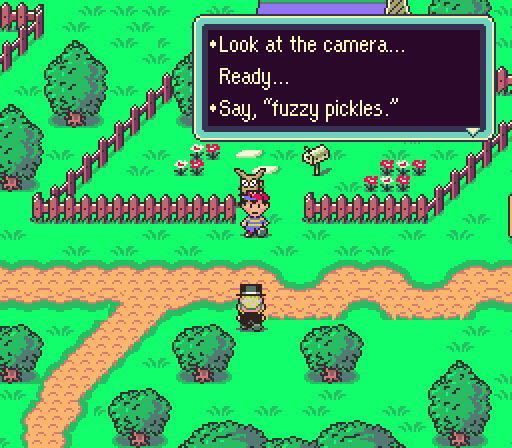
A man falls from the sky, tells you to say “fuzzy pickles”, takes your picture, and flies away. This is relatively normal by EarthBound standards.
Are you still reading? Okay, good.
If I had to summarize the gameplay of EarthBound in one word, I would say it’s serviceable. As R.P.G.s go, there are certainly more streamlined experiences on the Super Nintendo. In terms of core gameplay, EarthBound is very traditional. There are some minor mechanics which distinguish the game, but they honestly don’t affect the overall experience that often.
On top of that, EarthBound features some questionable design. EarthBound‘s interface is archaic, even for the time it was made. Simple actions like talking to people or investigating an object (which are separate actions) take multiple button presses with the default controls. Admittedly, there is a way to automatically do all of that in a single press, but if you didn’t read the manual or hear about it from someone else, you’d never know it’s there, likely because it’s unintuitively mapped to the L-trigger. Aside from that, inventory management is downright tedious, with actions like trading items between party members—or just buying and selling for that matter—taking many more windows, confirmations, and button presses than needed.
EarthBound‘s interface is archaic, even for the time it was made.
The game also has some difficulties with difficulty. Simply put, the game’s difficulty curve is as wild as its enemy designs. The beginning is particularly rough, with grinding being a must. Things do get easier once the other party members start showing up (several hours in), but the game loves to throw curveballs at the player.
And yet, the game is heralded as a masterpiece, and for good reason! Ask any EarthBound fan what makes the game so great, and I guarantee you they’ll mention the game’s quirky atmosphere long before they talk about the mechanics. EarthBound is full of humor, thought provoking themes, and obscene amounts of heart. In a fitting twist, EarthBound defies the usual mantra of “gameplay first” and sells itself almost entirely on its personality. If the game was just another fantasy epic about orphans saving the world from the physical manifestation of darkness—or whatever—I highly doubt anyone would remember it. Personality is what elevates EarthBound above its mechanics and earns it the title of classic.
Stay Fresh!
As I’ve stated prior, Nintendo’s struggled with getting personality right in their games of late. Some franchises—like Mario—are suffering from overexposure while others from Nintendo over-simplifying them in an attempt to be more accessible—thus removing the fun quirks that made them stand out in the first place. Fortunately, many of the Big N’s recent titles show that they haven’t completely lost their creative mojo: the urban, 90’s kid aesthetic of Splatoon, the jazzy sound and Geisel-esque environments of Super Mario 3D World, and the beautiful Ghibli styled world of the up-coming Legend of Zelda: Breath of the Wild, to name a few.
Next to gameplay, personality is the most important aspect of a game. Even if a game has great mechanics, it will quickly be forgotten if it doesn’t have the charm and appeal to leave a lasting impression. Likewise, a game with a lot of character can convince players to look past many of its flaws and hold it as a classic. And while Nintendo sometimes screws up and turns out games that don’t feel like they had much heart put into them, let’s be honest: there’s something about Nintendo that makes us willing to look past such missteps.
About the Author: Glen Straughn is a life-long Nintendo fan whose love of video games has inspired to pursue a career in computer programming. Currently, he is studying to get his masters in Computer Science at Oklahoma State University. He’s an INTJ on the Meyers-Briggs personality spectrum, which in fiction is the personality most often associated with evil geniuses like Professor Moriarty.
In less than a week, Nintendo will be blowing the lid off the Nintendo Switch secrecy container and giving us a complete look at their upcoming console. Nintendo fans are getting an early-E3 gift this year because Nintendo isn’t waiting until the industry’s standard slot for big reveals – they’re launching the console before the summer!
We’re going to see the Switch’s launch games, release date, pricing, and hidden features in just a matter of days.
Like any good Nintendo fan, I’m crossing my fingers for the Big N and hoping that they smash this Presentation out of the park. They’ll be taking the stage and streaming live from Japan (that’s why the broadcast is coming to us at such an odd, late time of night on a Thursday) – and they’re a bit out of practice on the live show front.
I’m relieved to hear that they’re stepping up to the plate and introducing some showmanship to their full Switch unveiling, but I’m equally nervous. Nintendo’s president, Kimishima, has had next to no contact with Nintendo fans since he stepped into the late Iwata’s office. Reggie and Aonuma have been appearing mostly in recorded formats, where multiple takes are allowed to get messaging across right… but not so on a live broadcast. On Reggie’s live appearance with Jimmy Fallon, you could feel a lot of that nervousness in his presentation and hear the stuttering that comes with a lack of practice.
I hope everyone is rehearsing right now – that should be priority #1.
Misgivings aside, what will be the most important part of the presentation is the information, and I’ve arranged a simple list of things Nintendo can do to knock this one out of the park. Their initial reveal trailer was well-crafted and received positively, so here’s what they can do to maintain that momentum and keep the positive buzz around their console-portable hybrid:
Virtual Console Done Right
The launch lineup needs to be strong in quality, but I’ve grown to expect only a handful of games. On a console which almost surely cannot be backwards-compatible via hardware, the VC service is going to need to step in and keep us busy on our shiny new Switches.
Library
The Virtual Console should be the Netflix of gaming.
Something has to be done about the historically abysmal Virtual Console library. The slow drip-feed of mediocre games with email notifications sent weekly just isn’t doing it – and surely Nintendo’s digital sales figures reflect that.
Open this thing up, Nintendo! I would encourage the company to look at a subscription model as opposed to piecemeal sales. The VC should be the Netflix of gaming, where we’re sending them $10 a month to have access to a growing catalog. I guarantee their profits would increase.
Purchase History
If they make me repurchase my digital games one more time, I’ll… well, I won’t. I’ve already boycotted the SNES games on 3DS and I’m sending the message that I won’t double dip for them.
You must reward your loyal customers, not punish them for being early adopters.
Emulation
The NES Classic Edition blows Wii U out of the water as far as emulation goes – the NERD team at Nintendo (Nintendo Europe Research & Development) nailed it, and I don’t think I’ll be able to go back to the dim and muddy appearance of Nintendo’s other methods. Let’s not go halfway with the Switch – go all out and make it a service worth paying for!
Muti-SKU Positioning
Do you forget sometimes, that Wii U was sold in Basic and Deluxe models at launch? This was a new move for Nintendo, but it certainly paid off. What may have seemed like a really high entry price at $350 instead seemed like a worthy upgrade over the Basic console. And what true Nintendo fan (who actually watches these presentations) wants to be “basic”? Sure, the white Wii U sold a handful of consoles but it was primarily there for positioning, and I can’t blame Nintendo for implementing that marketing tactic. In fact, I think it’s smart. It provides a logical choice for casual and hardcore fans alike – and consumers love having choices between product models.
I hope Nintendo continues this trend and offers Basic and Deluxe switch packages.
The basic one would have a console with less storage, Joy-Cons, and a tech-demo game (think Wii Sports/Nintendo Land) packed in, while the deluxe version would have larger storage, a Joy-Con grip, and Breath of the Wild packed in.
Zelda at Launch
Nothing has been more frustrating to me than the messaging around this game’s release. Nintendo announced this game in 2014 and has sent nothing but mixed signals since then, delaying the game, saying trust us this will be out in 2015 just after Star Fox (also delayed) and delaying it again. Fine – I actually believe that delays can actually benefit a game – but they STILL aren’t committing to March for us to see Zelda! Yet. It needs to be confirmed for Switch launch day and release on Wii U at the same time.
I don’t even need a whole lot of coverage on the game during this presentation – we’ve been seeing more and more of it for a few years now. It was the only thing at E3. We’re just ready for the game to be available to purchase! The ambiguous “2017” release date that they’ve been very careful to not expound on has got me worried. In order to nail this Switch Presentation, Nintendo needs to confirm that the development is not in fact as troubled as it seems. Imagine the negative buzz around yet another Breath of the Wild delay.
Leave Handholding to the Parents
Alright Nintendo – in the Switch reveal trailer you marketed this console to adults, so you won’t be restricting our online communication, RIGHT?
If they want this game to be popular with the crowd that it looks like they’re targeting, then let’s see it. Let’s see this console come unrestricted out of the box – voice chat, parties, etc. All the features that have been staples in competing products for the last decades.
If parents want to implement controls – great – let them. It is their job, not Nintendo’s.
Preorders The Day Following
Rather self-explanatory. No one is going to want to run out to their store at midnight on a Thursday evening with work the next day – but Friday, that’s a different story! We’re gonna be all hyped up on the Switch from the Presentation and Nintendo better be ready to receive our money! (Well, the retailers – but you know what I mean.)
Over-Produce
This is absolutely critical. Most of Nintendo’s missteps in the last few years have been production related.
Pokemon Go Plus
amiibo
NES Classic Edition
That bullet list right there represents literally millions of dollars left on the table (and/or scooped up by scalpers) due to under-production.
Nintendo’s been playing far too conservative with their production runs.
They have the capital, so they need to make more of these consoles. 2 million worldwide (the rumored figure) is not enough at launch – the Switch reveal trailer already has that many views! Sure, not everyone who watches the video will get one at launch but the same can be said in reverse for the people that will buy it who have not yet watched the trailer.
Up that number. Fill those shelves. Not being able to get a Switch on launch-day when you’re a die-hard Nintendo fan would be a huge red-flag, and that’s what has happened with the aforementioned hardware launches!
And those are my thoughts! I think my blog post came across in a negative tone, but I’m actually truly excited for this presentation. I think Nintendo will nail it, and I think they’ll surprise me to boot.
Of course, stay tuned at TBC for full coverage of the event. We’ll be making shows and live streaming this weekend!
One of the most frustrating things we gamers have to deal with is the idea of delays.
Game delays. Console delays. ANNOUNCEMENT DELAYS (hashtag not bitter about NX at all). It happens all of the time in our beloved industry.
I am of the opinion that release dates are shared too early. Developers should keep their cards close to their chest until they are almost ready to play them. It would sure cut down on fan disappointment; that feeling of annoyance and dread when a game you have been looking forward to was about to come out and then gets pushed back into the next year.
This pattern is not going to change any time soon. In fact, most gaming companies are announcing their games ever further ahead of time now: two, three, four, or even five years ahead of when the actual launch ends up taking place.
Game delays are something that we have to learn to deal with.
However, we should not just learn to tolerate these situations, but actually look to the bright side. There are a number of upshots to having release dates moved, and we are going to take a look at each one of them:
Longer to Save Up
As much as we might like to say that gaming is a necessity, we both know that it’s a luxury. Gaming isn’t the cheapest of hobbies, with consoles requiring a considerable chunk of change to purchase and each game being the better half of a Benjamin.
There is a long list of things that my money has to be used for in life before it funnels out into video games. My 3DS and my Wii U often gets what’s left after the more essential things.
NX originally looked like it was slated for holiday 2016… now picture what your finances would look like if you had a brand new console to buy in November. I know that I would have had to make some tough calls earlier in the year if that were the case. Now we have an extra three months to save up, and that should help us have the ability to pad the launch experience with a nice little collection of launch games to take home as well. And with NX coming out after Christmas (and my Birthday in January!) we will have that sweet extra gift cash to apply toward it as well. We’re in good shape.
See, that feels kind of nice, doesn’t it?
Time to Play Backlog
We’ve discussed the finances that come into consideration around the topic of game release delays, but you know what an even more precious and expensive commodity is, more so than money itself?
That would be your time. There’s a fixed amount that you are allotted in a day, a week, a year, and even in your lifetime. We can never buy back the time that we’ve spent.
Game delays keep us a little less busy. We get to take our time, slow down, and enjoy some things that we’ve missed. Nintendo must have one of the most expansive libraries of any publisher out there, and many of us who even call ourselves Nintendo fans have only scratched the surface in many areas of their catalog.
When the game release calendar is sparse for Nintendo, it’s like an invitation from an old friend to come back and enjoy some of those titles that you missed when they first came out. For me, it would be a lot of the Gameboy/Color/Advance library as well as the SNES. I really need to go back and get an education on the 16-bit era games – the rest of the home consoles I have pretty well buttoned up. This “lackluster” holiday lineup from Nintendo should afford me the opportunity to do that!
And hey – if the game is new to you, what’s really the difference?
The Games Get Better
Delays don’t happen just to annoy you. Nintendo probably hates them even more than you yourself. They don’t want to redo release dates and let their fans down. It’s always a tough call.
Games are delayed only when they need it. The developers determine that the experience you would be getting on launch day would not live up to their standards, and they hold it back.
Think of all the respect you have for Nintendo. Think of their reputation. They put out wonderful experiences; polished pieces of software that perform well and rarely get patched. (Note: The same can’t be said for many others in the industry.) If they were to never delay games when the tough calls needed to be made, we would not think of Nintendo and their games the same way that we do today.
You can bet that the time between the original release date and the actual launch are spent with employees working overtime into the evenings and weekends. There’s no twiddling of thumbs happening. Longer development cycles mean more paychecks have to be written before any return on investment or profit is collected. Nintendo takes development time very seriously and does what is best for us – their fans.
We Get to Learn a Little Thing Called Patience
It’s really good for us. Our world tells us to enjoy instant gratification – stream things instantly, get all of our stuff on demand… But game delays are contrary to that mentality. They tell us to wait. Waiting is something that our parents could tell us a lot about – they had to experience it on the daily. Waiting in lines, waiting for movies to come out on VHS to watch them, etc. And they didn’t have cellphones to occupy them during their periods of waiting, either.
If you can become the kind of person that doesn’t get upset about video game delays, you will be a happier person. You can apply that patience to many areas of your life, and you will glean better enjoyment from your days.
It Pays Off in the End
We already talked about game quality above. Here, I’m talking about the actual feeling you get when you come home with the game. If everything went smoothly all the time and games came out exactly when they were initially expected to, we would almost have things too easy.
I was hyped for Super Smash Bros. Brawl, but each time Sakurai had to extend the wait, it heightened my anticipation even more. That game was delayed like two or three times, substantially, and it made my desire grow. Finally getting to release day and getting my hands on that game felt like I had already won some sort of battle before I even took the wrapper off.
***
There are plenty of good reasons that video games are delayed, and there are an equal amount of benefits that we get to experience on the receiving end as gamers. So sit back, enjoy the slower holiday season… play some old games, and cheer on Nintendo, because they’re working hard for us!
As I was considering a topic for this blog, I realized two things. Firstly, I realized that I had already written a blog titled “October’s Nintendo Experience“, so it would be either redundant or I would have to lie and call it “November’s Nintendo Experience.” Secondly, I realized, of course, that the publication of this blog will arrive on the eve of two holidays, and it would be culturally ignorant of me not to address them.
Matt wrote a blog recently called “Seasonal Gaming” (a recommended read), and he spoke about how he enjoys certain games during certain times of year. Sometimes this is due to seasonal weather (Sun, snow, etc.), but sometimes it is due to the holidays surrounding the season. For instance, he enjoys Luigi’s Mansion this time of year because of the spooky theme paralleling the Halloween holiday. This got me thinking: If we celebrate Halloweeen with certain video games, why not other festivities?
Certainly, many people associate Halloween with all sorts of creepy stuff: spooky decorations and costumes, horror movies and scary games. Be it Resident Evil or Slender, if it’s scary, it’s in season this time of year. But to me it begs the question: Why don’t we do the same with other holidays?
Sure, Christmas has its movies and a handful of games… kind of (if you consider “Elf Bowling” a game…?). But we don’t say, “This game is about hope and cheer, ergo, we shall play this game during Christmas!” Many games have “ice” or “snow” sections, but very few (on Nintendo consoles, at least) that are focused on said climates or seasons. For New Years, we do not go, “Okami is a game about rebirth and fresh starts. Let’s pop it in!” Or, at least, I’ve never heard anyone say that. I’ve yet to play New Super Luigi U on St. Patrick’s day (my wife’s favorite holiday), nor have I ever played Whack-A-Mole on Groundhog’s Day. The only holidays I could see myself celebrating with a certain kind of game are holidays created by games: Wii day (November 19th), and Dreamcast Day (September 9th, which, sadly, I missed this year).
This train of thought has led me to two realizations. First, even though I’m not a fan of it, Halloween has an interesting distinction as a holiday in relation to media. Its themes tie into whole genres of both films and video games, enough that it creates a special opportunity to enjoy them. Second, it has opened my eyes to the fact that there is a vast, unexplored territory of holiday gaming. Maybe this year, as a Crew, we’ll play Okami for New Years. Perhaps I’ll celebrate Boxing Day with a few of my favorite fighting games. And you can bet that I’ll be playing Mega Man x Street Fighter on Memorial Day.
Maybe this will never be a thing, and a certain spooky festival will always be the exception to the rule, but I couldn’t let the moment to point out this anomaly pass. So, If you are celebrating Halloween, I hope you party safely and responsibly. Or, if you’re like me, happy Reformation Day! Now, if you’ll excuse me, I’m going to rent Luther and hammer some nails into doors.
Let’s face it, we’ve all thought that at one point or another. Usually it doesn’t go any further than wishful thinking, though. Sure, some of us might doodle concept art or gameplay ideas in a notebook, a few might even learn to program, but even for those with all of the skills there’s another, more tangible hurdle: the tools. Game development isn’t free and procuring a software development kit (SDK or devkit for short) is often a costly proposition. For those of you not familiar with the game development process, a devkit is a collection of specialized software and hardware used to make and test games. They’re quite expensive: the Wii’s devkit cost around $5000, which at the time was rather cheap compared to the XBox 360’s and PS3’s $20,000 price tag. Now, those of you who are used to making do with free software—like me—are probably thinking, “do I really need all of those fancy tools?”
No.
Homebrew is the process of making software for a system without the original development kit or system distributor’s blessing (more commonly known as a “license”). The term originated among beer aficionados for beer brewed by an individual instead of a commercial brewing house, but now is used in many hobbies—including video games—to refer to unofficial/amateur produced content. Homebrewering shouldn’t be confused with modding or ROM hacking: homebrewing is concerned with making new content for a system, while modding and ROM hacking only intend to change or manipulate an existing game (sometimes to the point where it’s arguably a different game made from the parts of the original).
Homebrew is the process of making software for a system without the original development kit…
What’s Homebrew Like?
Homebrew provides a surprisingly diverse selection of content. There’s homebrew for almost all Nintendo systems, though the type of content varies greatly from system to system. Older systems mostly focus on games, while newer ones–from about the Wii onward–have homebrew for everything from games to system utilities. Let’s take a quick look at some examples.
Games
Just as “all toasters toast toast [sic]” Nintendo homebrewers homebrew games…duh. Sadly, most of the homebrew games I found in my research are simple, forgettable diversions much like the flash games of the early days of the internet. It’s not that surprising, considering game development on any level is an intricate and time consumptive process. That isn’t to say that all homebrewers lack diligence and ambition. There are still many quality original titles. Notice that I said original titles; a large number of homebrew game projects are simply ports, usually of games whose creators have released the source code to the general public. In fact, the Wii alone has ports of P.C. classics such as Tyrian, Quake, and Jazz Jackrabbit.
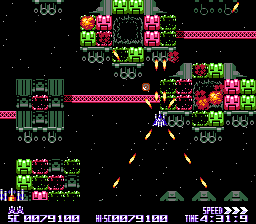
I’m not going to try to enumerate every homebrew project released for a Nintendo system, but for the sake of being thorough, there are some that warrant mention. First up is Blade Buster,a Famicom shoot-em-upnotable for its screen filling boss sprites (on an 8-bit console mind you), an insane number of sprites on the screen at a time, and unique time-attack styled gameplay. Next for the Super Nintendo is N-Warp Daisakusen, a game that allows eight—yes, eight—players to compete in a free-for-all brawl. Lastly, I want to mention a puzzle game for the DS named Negative Space which has the player drawing paths to guide two opposite colored blobs to their respective goal flags. The catch? They can only travel through the other’s color, meaning every path you draw for one is an obstacle to the other.
This game is also available as a free download on Android.
Emulators
After games, the most common type of homebrew is emulators. I’m not exactly sure why when emulators are already so prolific on P.C. Maybe people make them because they like the challenge of getting an emulator to function on the constraints of a game console. Maybe it’s to prove that more fully featured emulation is possible on Nintendo systems. Maybe people just think it’s funny to play Playstation games on their Wii. Whatever the reason, most of Nintendo’s modern systems have a multitude of homebrewed emulators available on them.
I can’t be the only one who thinks this is hilarious.
Obviously, many of the homebrewed emulators available online for Nintendo consoles are for older Nintendo systems. As I alluded to in the previous paragraph, however, the homebrewed emulator scene isn’t exclusively concerned with Nintendo systems. On the just Wii alone there are emulators for Sega Genesis/Mega-Drive, Sega Saturn, Playstation 1, CalecoVision, Commodore 64, Atari Lynx, and many, many, many, many, many more. Also, there’s a Super Nintendo emulator that runs on the original 3DS (I knew it!).
Whatever the reason, most of Nintendo’s modern systems have a multitude of homebrewed emulators available on them.
Miscellaneous Software
Not all homebrew projects are game related. Some are just the sort of software you’d find on any computer: music players, web browsers, etc. One such program of note is an art program called Colors! Which was originally developed as homebrew for the DS but has since gotten an official release on multiple systems, including the 3DS eshop. Then there’s software that changes system behaviors. For example, the 3DS has an application that removes the cap on the number of play coins a player can receive in a day. More impressive is a Wii hack that let’s the user change the region of the console—y’know, to play region locked games.
Linux
Where there’s hardware, there’s Linux. Much like the speed of light or the certainty of death and taxes, it’s one of the constants of our universe. Seriously, any system that’s powerful enough to run Linux sooner or later will. There’s Linux for the GameCube, Linux on the 3DS, Linux for the Wii, a distro is in development for the N64, there’s a version for the DS; heck, even the GameBoy Advance has…Unix?
…Wait, what?
What?
Any system that’s powerful enough to run Linux sooner or later will.
Cool! Let me try!
For those of you who don’t know, I happen to be a programmer, so when I write an article that gives me the opportunity to talk about programming, I’m going to talk about programming. If you think programming is some kind of voodoo (which it isn’t: it’s sorcery), you may want to skip this part.
Still here? Great! Believe it or not, if you’re already comfortable with programming it’s almost as simple as picking the system you want to develop for and a few Google searches. While homebrewing isn’t exactly the go-to past-time among bored nerds, there are several online guides and communities dedicated to the craft: forums, YouTube videos, blogs, and wikis galore! Heck, there’s an entire freebook on WikiBooks about Super Nintendo programming.
Even though you’re not going to be using The Man’s toolkit, you can’t exactly make a game with just your imagination and wishful thinking (trust me, I’ve tried). You will need software to compile the code you write and, if you’re developing for one of Nintendo’s more recent systems, an API library to interface with the system (getting controller input and such). You’ll also want an emulator. Fortunately, all of these tools can be easily acquired on the internet for free.
There are several online guides and communities dedicated to the craft: forums, YouTube videos, blogs, and wikis galore!
As for the coding itself, it’s mostly the same as regular programming. For example, I—out of curiosity—browsed through a tutorial on GameBoy Advance homebrewing and was quite relieved (and just a little surprised) to find that the code was hardly distinguishable from any other program written in C. There are certainly nuances to keep in mind—like in the case of the GBA, some memory addresses are reserved for the screen’s RGB values, tracking whether buttons are pressed, and so on. You may also need to go without some modern conveniences (hope you like compiling your code from command-line!). But by-and-large, anyone who’s sufficiently experienced with C and/or C++ should be fine.
Unless you’re developing for an 8 or 16-bit system. In that case I hope you really like 65c816 Assembly!
We Haven’t Even Touched the Red Pill
Instead of starting on a proper summation, I’d like to cover my backside real quick and stress that despite this being the longest article I’ve written for Two Button Crew to date, I have only given the barest of overviews of the subject. I encourage you to look further into this, either as someone interested in finding new games to play or someone hoping to make such games. More over, there’s a lot I omitted for length, like how some retail games have been pulled from store shelves because of homebrewers.
Having said all that, it’s a shame homebrew isn’t more popular. I understand why, though: if someone’s going to go to all the trouble to make a game, why make it for a dead system? And if it’s for a modern system, why make a game that they can’t license and sell? But, hey, who knows? Many Nintendo fans have grown up and started making games of their own. As time goes on and more fans get old enough to take an interest in game development, maybe some of them will try to make a few for the systems they played on as kids. Wouldn’t that be something, a flood of new old games?
About the Author:
Glen is a lifelong Nintendo fan whose love of video games has inspired him to pursue a career in computer programming; so much so that he is now studying to get a masters in computer science. He doesn’t understand that the average person isn’t interested in programming and won’t shut up about how awesome it is.
We need to talk. I’ve been a part of the Nintendo community for a long time now, and what used to be something to be proud of has me quite ashamed from time to time. The actions I see online are absolutely ridiculous and seem to get more out of hand every Nintendo Direct. Of course, not everyone acts the ways described below, but far, FAR too many do.
Make up your minds, please.
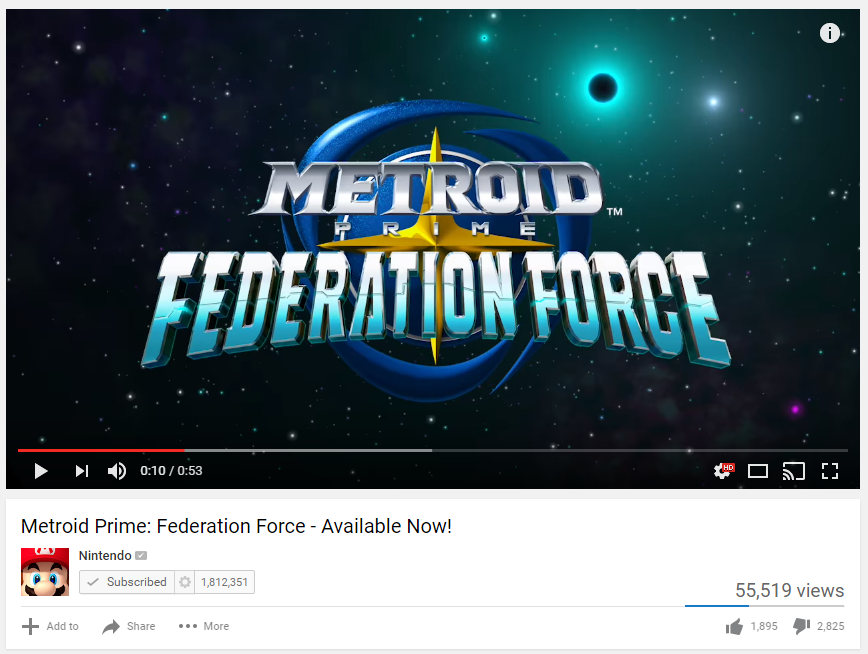
When Nintendo releases new games in the same franchise (Mario, Zelda, etc.) a lot of what I hear is whining for new ideas and new IPs. When Nintendo releases a new game or new IP (Federation Force, Codename: S.T.E.A.M., etc.) I’m also hearing a ton of complaints and hate. If you try a game and decide you don’t like it, that’s completely justified, but when Nintendo announces a game and it’s suddenly the apocalypse… not okay. Nintendo is completely aware you want a new Metroid game, I assure you.
No unreleased game deserves this much hate.
I’m a HUGE fan of the first two Paper Mario games, but couldn’t get into Sticker Star at all. While Color Splash looks more like Sticker Star than a traditional RPG, that doesn’t mean I’m going to attack the game. I’m going to do something revolutionary instead: I’m not going to buy the game. If reviews come out and the game happens to be incredible maybe I’ll change my mind, but there’s no reason whatsoever to throw punches at Nintendo for simply making a game I’m not interested in.
Nintendo is a business.
Why make Paper Mario: Color Splash when Sticker Star wasn’t as well received as the other games in the series? It sold well. Nintendo makes decisions that will first and foremost make them money. They try to please as many people as possible, but you’ll certainly never please everyone, and they know that. If Sticker Star hadn’t sold well either they would have taken a different approach for the next Paper Mario game or the franchise would cease to exist.
Enjoy your (extra) life!
So many people act like the decisions Nintendo makes will make or break their quality of life. Just take a deep breath and calm down. It’s completely possible to not be interested in any games Nintendo is releasing for months (possibly years) on end. Luckily they have such an amazing backlog of games that it should be easy to find something you’ll enjoy. So bust out that dusty N64 and 4 controllers, because Mario is always ready to party with you.
I wont stop being a part of the Nintendo community – it’s in my blood – but I sure hope the overall attitude changes soon.
The year is 2016. Competing consoles have full-fledged online efforts backing their console and software. Purchases are tracked digitally, automatically, and conveniently. It’s not much different in the smartphone and tablet arena either: buy a game on your iPhone, play it on your iPad. Pretty simple! Pretty commonsensical!
That is until you step foot into the realm of Nintendo, where it’s like pulling teeth to get consoles and handhelds to talk to each other. The realm of Nintendo, where we all have Nintendo Accounts, My Nintendo accounts, and NNIDs, and we only have a vague idea of how those all fit together.
The realm where you buy an old SNES game on your Wii U and it’s not there on your 3DS.
We’re talking about cross-buy, and more specifically, the lack of cross-buy.
Nintendo’s Virtual Console service is celebrating its tenth anniversary this year. After a decade of offering their classic titles for sale digitally, how has Nintendo’s service expanded? Well, the answer is unfortunate: barely.
Virtual Console made a small jump from Wii to 3DS with restore points. The next real iteration was on the Wii U, which implemented the 3DS improvements plus customizable controls and a few other small perks.
The nice thing was, it was really easy to transfer your VC games from Wii over to your Wii U console!
Oh – wait… no, it wasn’t. You had to buy them all over again. Sure, Nintendo gave you a slight discount for owning the same software on Wii, and the service recognized that, but rather than letting you access your VC games on Wii U’s home menu with the new perks, you had to pay again or just deal with the outdated features and slog through old emulated Wii menus.
Nintendo doesn’t charge for operating system software updates, why should they charge when Virtual Console technology is upgraded?
I couldn’t believe my ears when I heard the news that Super Nintendo games were coming specifically to the New 3DS as an exclusive feature over the previous generation’s model. You can’t expect me to believe that the original 3DS couldn’t run Super Nintendo games – that would be absurd. But they desperately needed some unique features for the handheld (because they couldn’t make more than one exclusive game for it), so SNES VC titles were the answer.
I own quite a few SNES games on my Wii U, and by this time, Nintendo Network IDs were a thing. They have already been implemented. NNIDs were supposed to be the answer to all our 21st century problems with Nintendo’s online systems – it was supposed to track our purchases, unify the different Nintendo platforms… it was supposed to bring balance to the force!
Yet another implementation of the Virtual Console had arrived with no mention, no promise, not a peep about cross-buy.
I had been frustrated about Nintendo attempting to sell us the same exact retro software over and over again for quite some time, but I held onto hope that Nintendo was going to make good on their word to use NNIDs and make the whole Virtual Console experience more cohesive. When they came out with NNIDs in March (launching alongside Miitomo) and then put SNES games on the handheld, it was finally the straw that broke the camel’s back.
The straw being the terrible value proposition from Nintendo that shows they have a broken business model for their classic titles. The camel’s back being my willingness to put up with it.
I boycotted SNES Virtual Console titles on 3DS, and in fact, I haven’t bought a single VC title in the time since. I’m through with it. I don’t have $8 (per game) x 10 (titles) for every new console iteration they come out with… for the same games!
Let me rephrase that… I do have the money, but I don’t have the will to spend it on this stuff time and time again. I have plenty of nostalgia for Nintendo’s older games, but I won’t allow them to keep using that against me.
It’s not $8 – it’s the principal.
Okay, maybe I am planning on buying the NES Classic Edition! But that’s different…
The point is, I’ve been burned too many times. I’ve invested too much in this broken, excuse for a digital platform called the Virtual Console and seen it count for nothing when new hardware comes out. Nintendo’s online systems and their business sense isn’t smart enough to allow my purchases to carry over, but I am smart enough to avoid the same traps over and over again!
Nintendo, listen closely: You don’t burn your early adopters. You don’t make your die-hard fans pay twice.
You don’t punish people for buying your games early!
You reward these customers. You say: here, you have a big collection of VC games on your Wii? We spent 700 man hours figuring out how to make those transfer over to your Wii U home menu, for free, and now you can keep enjoying those titles just as easily.
You reward your loyal customers. You take the information about their SNES purchases connected with their NNID and you download those games automatically onto their 3DS, so they open it up and see a surprise gift on their menu screen. I know you can do this stuff – you send me random demos all the time.
Because of so many bad past experiences with the Virtual Console, I’ve turned a deaf ear to the service. I won’t be playing another classic Nintendo game digitally until they address this issue.
I’m waiting eagerly for the Nintendo Direct where Kimishima, Reggie, or Bill Trinen takes the stage and announces the new direction for Virtual Console, a cohesive experience where Nintendo respects my investments in their software.
Until then, I’ll be ignoring all press-releases and the insignificant drip-feed of the same old games every week.
Note From the Author: The game discussed in this article, Phoenix Wright: Ace Attorney – Duel Destinies, has been rated M for Mature (ages 17+) by the ESRB for the following: violence, blood, suggestive themes, and language. That said, this article focuses only on the game’s mechanics and should be appropriate for all audiences. Please use care and caution when deciding what games are right for you and your family.
I typically don’t play story-heavy games during the school year: they take a long time to beat and all of that pesky suspense and intrigue makes them hard to pull myself away from. So when summer rolled around earlier this year, I decided it was high time I got around to playing a game I’ve been meaning to tackle ever since it came out way back in 2013, Ace Attorney: Dual Destinies.
After slogging through other plot-driven games in the past solely out of pride (I beat games, not the other way around), I figured that I—a busy adult with things to do—simply had grown out of those types of games. As such, I went in to Dual Destinies with fairly low expectations.
It didn’t take me long to remember one crucial piece of information: I like the Ace Attorney series…a lot. This game is no different. While not the strongest entry in the franchise (clumsy writing in places, too much hand-holding, and not nearly enough Trucy Wright), Dual Destinies still managed to impress me, especially where I least expected it: the game mechanics.
The game does have an annoying habit of spoon-feeding the player.
The Ace Attorney series is no stranger to introducing new gameplay mechanics and gimmicks, but until Dual Destinies, I honestly can’t think of a game in the franchise that took existing elements and trimmed the fat. Overall, the game has the best pacing and flow of the entire series, which is why I think it’s the perfect candidate for a case study on how to streamline gameplay mechanics. Court is now in session!
Dual Destinies managed to impress me, especially where I least expected it: the game mechanics.
Opening Statement: The Investigation Phase
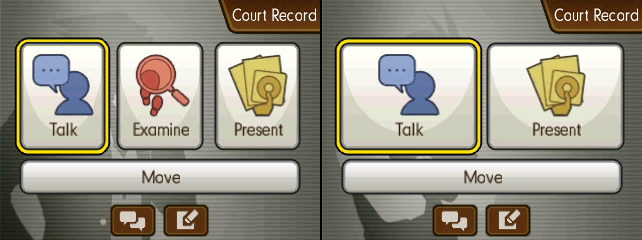
Cases in the Ace Attorney franchise are generally split into two distinct parts: investigations and court sessions. For anyone not familiar with the franchise, defense attorneys in the Ace Attorney universe are two parts lawyer and one part private investigator. They question witnesses, search for clues, and sneak evidence out of crime scenes when the cops aren’t looking, all to prove their client’s innocence. This portion of the job is represented in gameplay with what’s known as the investigation phase and plays much like a traditional adventure game in the vein of the Monkey Island series or Princess Tomato in the Salad Kingdom. These segments of the game are often the longest, and fittingly, most of the trimming the game does is in these portions.
Defense attorneys in the Ace Attorney universe are two parts lawyer and one part private investigator.
Exhibit A: The Search Command
Like many adventure games, players in Ace Attorney games must search the environment to find items they can use, in this case evidence to prove their client’s innocence. The examine command brings up a cursor that the player can then use to click on objects in the environment to investigate them. Now, not everything the player sees in an area is going to be evidence (Phoenix’s office plant, Mr. Charlie, for instance), and when clicked these objects, instead of advancing the plot, will just trigger some flavor text wherein the protagonist and his plucky sidekick humorously palaver on about the object in question (#TeamStepLadder).
A typical investigation from the first game.
Now, in games prior to Dual Destinies, every location was searchable, even if there wasn’t any evidence there (I’m looking at you Wright & CO. Law Offices). This meant players were expected to search every area. Just because a murder occurred in, say, a public park doesn’t mean the player won’t end up searching an abandoned doctors office for clues on the whereabouts of the true killer’s lost shoes.
In games prior to Dual Destinies, every location was searchable, even if there wasn’t any evidence there.
While conventional wisdom looks down on limiting what the player can do, sometimes it can improve the overall experience.The search cursor before and after examining an object.
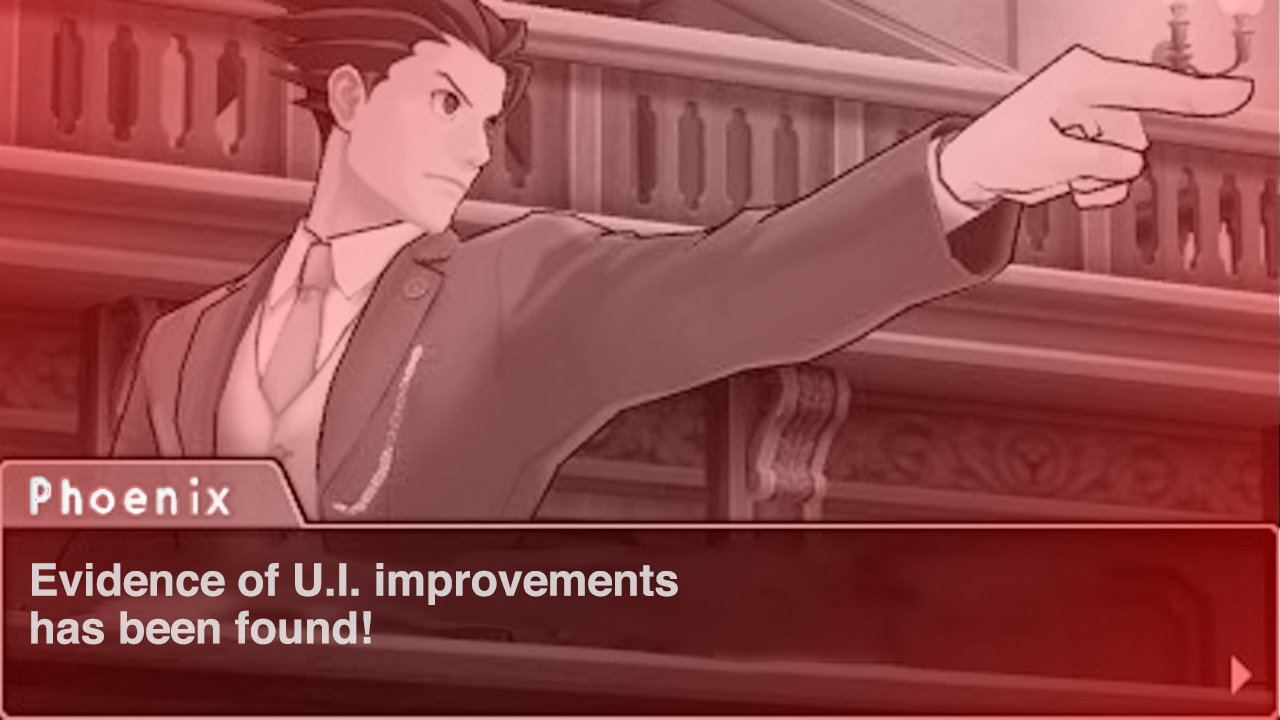
Dual Destinies improves on this feature in several ways. First, the game limits use of the examine command strictly to crime scenes. This means that there’s only ever one searchable location for the player to worry about at a time, unlike previous games that let the player switch between searching multiple areas, each of which could change depending on event flags. More over, the game now has the courtesy to inform players when they’ve found everything they need, which too often wasn’t clear in previous titles. Lastly, Dual Destinies introduced the ever so subtle—but oh-so-useful—addition of having the cursor take the shape of a check mark if the object being highlighted by the player has already been investigated. Considering that many of the conversations triggered when clicking on something could be quite long, even with fast forwarding, this U.I. feature is something longtime fans can appreciate.
And to top it all of, despite the newly imposed restrictions there’s still plenty of that sweet, sweet flavor text.
Exhibit B: The Travel Menu
Locations in the Ace Attorney series are normally static, disconnected, one-screen “rooms” that the player travels between via selection from a menu. It’s about as utilitarian as it gets, and yet Dual Destinies still managed to smooth out the rough edges. See, for whatever reason, previous games in the franchise had a four option limit on the travel menu, meaning the player could only travel to four other locations from any given area. The way the developers got around this—quite frankly arbitrary—limit was to have each area have its own list of destinations. So, for example, if the player wanted to go from the detention center to the crime scene, they may have to travel to back to Wright’s Office, then to the front door of the building the body was found in, and then to the actual crime scene.
Of course, a sleek, afigimatiko-dynamic game like Dual Destinies isn’t about to put the player through all that for something as simple as getting from point A to point B! Enter the magic that is “scrolling”! With this space-aged technique, players now have the uncanny ability to pick any location from anywhere in the game simply by “scrolling” between options! (Restrictions may apply in accordance to plot demands.)
The Ace Attorney series is known for its inclusion of supernatural elements; scrolling was only a matter of time.
Exhibit C: The Notebook
Anyone who’s played an old-school adventure game can tell you that the worst thing that’s guaranteed to happen to the player at some point is getting stuck without any clear directions. This is why many modern games of all genres keep an objectives list or provide a character who the player can ask for advice at any time. Unfortunately, until Dual Destinies the Ace Attorney games fell into the old adventure game trap of not always giving the player clear directions on what to do next. To make matters worse, N.P.C.s had an annoying tendency to just up and disappear until the player triggered the right event flag. This led to the player constantly going back and forth after every event to see which N.P.C.s had returned to their post and who had new dialog options.
Oh right, I was investigating a murder! I should really get back to that…
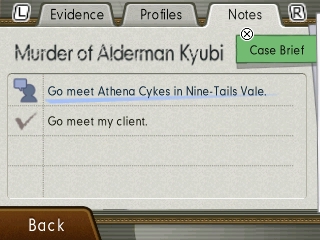
Dual Destinies introduced an extra section to the court record (basically the player’s inventory screen) for notes—which in this case is more of a checklist than a place for the player to jot down information. Any time the player isn’t sure what to do next, they can just open the court record, hit the notes tab, and be on their way. Admittedly, Dual Destinies’ plot is structured in such a way that the player rarely needs extra input, especially once you factor in the previously listed enhancements, but the handful of times I did need it, I greatly appreciated the fact that I could just hit a few buttons and continue the game instead of wandering around in circles for ten minutes.
Any time the player isn’t sure what to do next, they can just open the court record, hit the notebook tab, and be on their way.
Closing Thoughts
What I hope to get across is how seemingly small changes eventually add up. Small U.I. improvements can help better communicate information to the player, which leads to less time spent on tasks that slow progression. Moreover, limiting when a player can perform certain actions—like investigating their environment—can keep them from getting side-tracked or lost. In Dual Destinies’ case, the end result is the first Ace Attorney game that didn’t have me at a complete loss for what to do next at any point. As I mentioned in the beginning of this article, it’s not necessarily the best game in the series (my personal favorite is Apollo Justice), but I will say right here and now that it’s the best structured and paced, all because the developers weren’t afraid to make some compromises regarding many of the accepted, long-standing conventions of the series. I’ll miss you, dear glut of humorous flavor text, but I can’t deny the game’s pacing is better off without you.
About the author:
Glen is a lifelong Nintendo fan and has been an Ace Attorney enthusiast ever since he first played Apollo Justice: Ace Attorney back in 2008. His love of video games has inspired him to pursue a career in computer programming and is currently studying to get a masters in computer science. Despite his name and choice of professions, he is in no way related to Glen Elg.
Recently I got the opportunity to go to a Pokémon Go meet-up in Grand Rapids, Michigan, and let me tell you: it was an absolute blast!
What started out as a Facebook event for a few friends quickly got shared by an astounding amount of people and turned into thousands. The creator of the event had intended it to be 25-30, but the end result was 5,300 going and 7,500 interested. I would easily estimate 6,000 people ended up attending, if not more.
If there are 4 Pokéstops in one area, they will come.
The corner pictured above was standing room only, and was quite a scene to behold. Teams wore clothing and glow-sticks to match their team color and every once in a while trainers would chant their team names.
The best way I can describe it was civilized mayhem. It was awesome.
Everyone was in on Pokémon Go that night. All the local news outlets were there, people made t-shirts and stickers to sell, even the local businesses (if they were smart) were getting in on the action with discounts for hungry or thirsty trainers. Both businesses and trainers were turning almost every Pokéstop into a lure. Everywhere you went Pokémon were popping up constantly. Luckily there are plenty of spots to refill all those Pokéballs you were bound to throw.
Lures galore!
The sense of community this game brought out in everyone was a really great thing to behold as well. If a rare Pokémon had spawned, someone would always yell it out so others could join in. I was lucky enough to do it once for a Dratini that had spawned by a bridge, and boy did they come running.
If you have a Pokémon Go meet-up near you I highly recommend you check it out. Plus, the more people playing in a given area, the more chance for a rare Pokémon to spawn! I’m more of an introverted person with people I don’t know, but I had a lot of fun talking to fellow trainers I had only just met. This night will easily be going into my (non-existent) gaming scrapbook.
I love every Nintendo controller, but some are easily better than others. Today we’ll take a look at my personal ranking of Nintendo’s controllers from best to worst, and the reasoning behind it. Remember, this list is entirely my opinion and yours could be completely different.
7. Wii U
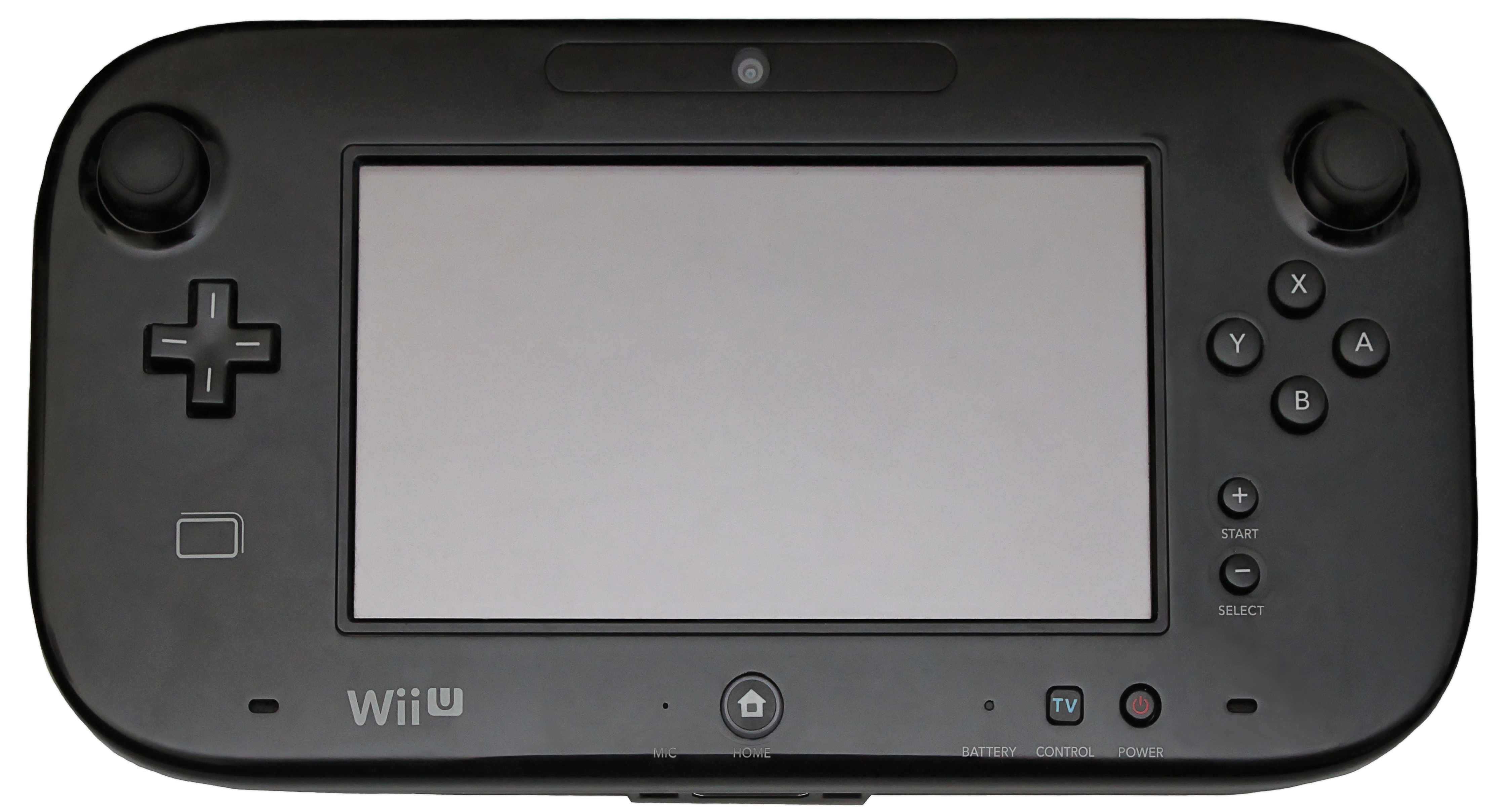
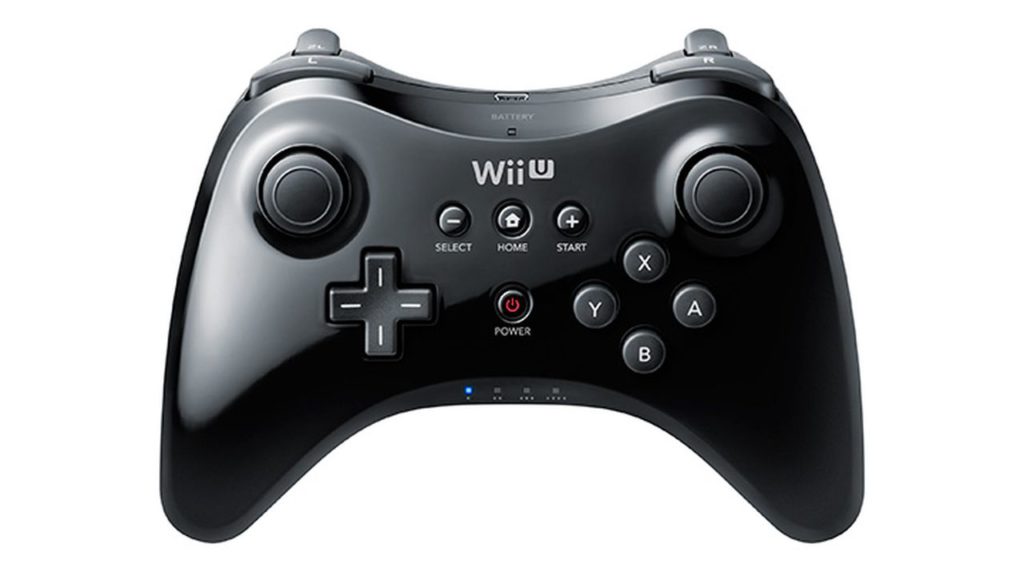
The main problem I have with the Wii U gamepad is when a game gives me the option to use the Wii U Pro Controller, I use the Pro Controller every time. While the touch screen is insanely helpful for a map in Splatoon, or item management in The Legend of Zelda, the gamepad never had a very compelling reason to justify the second screen in my mind. I only ever used the off TV play a handful of times, because the resolution on the gamepad leaves much to be desired.
6. Nintendo 64
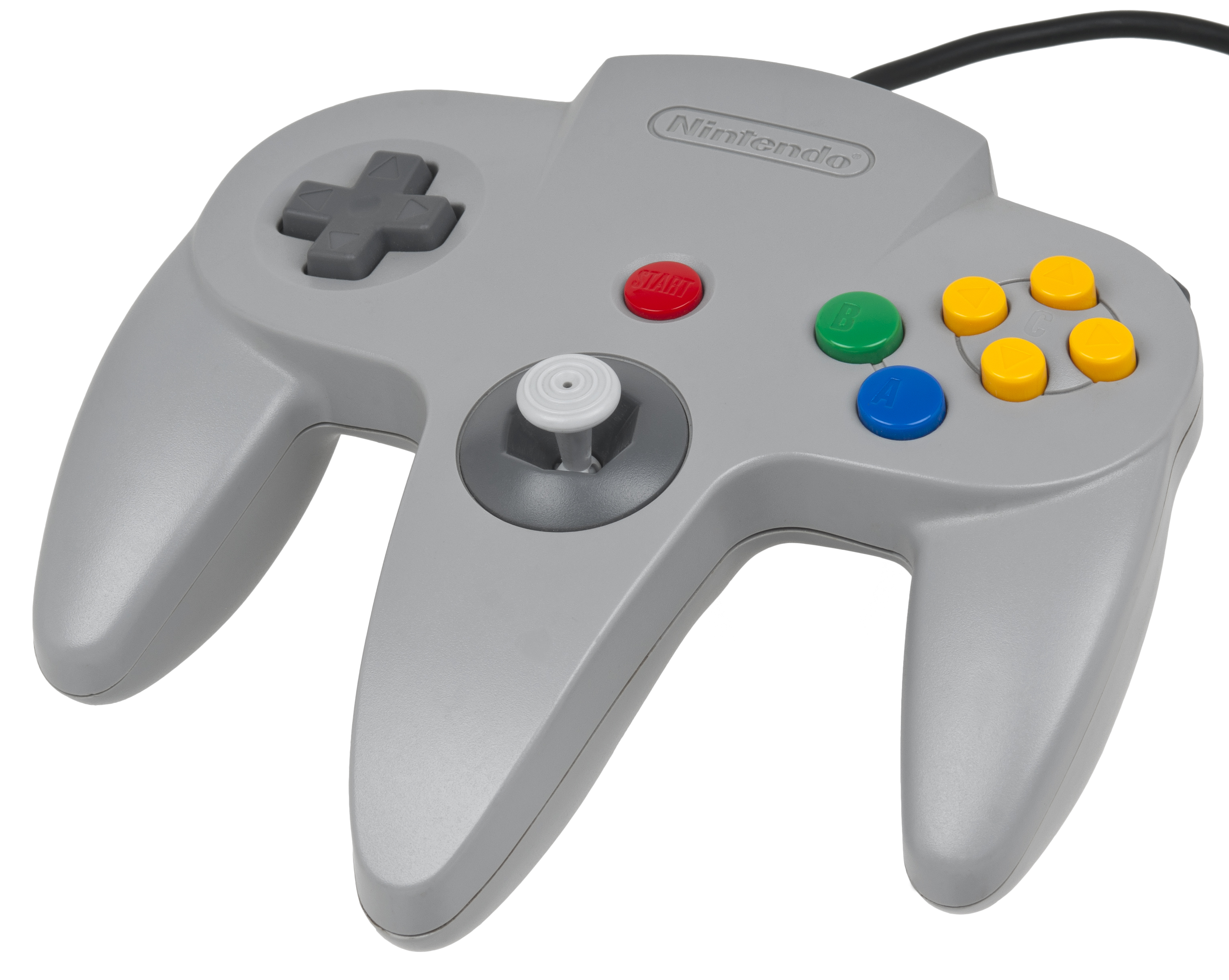
The Nintendo 64 controller was designed for people with 3 hands. I only ever knew of a few games that even used the D-Pad because it was located off to the side, but I loved the control stick and the Z-button as a trigger was amazing.
5. NES
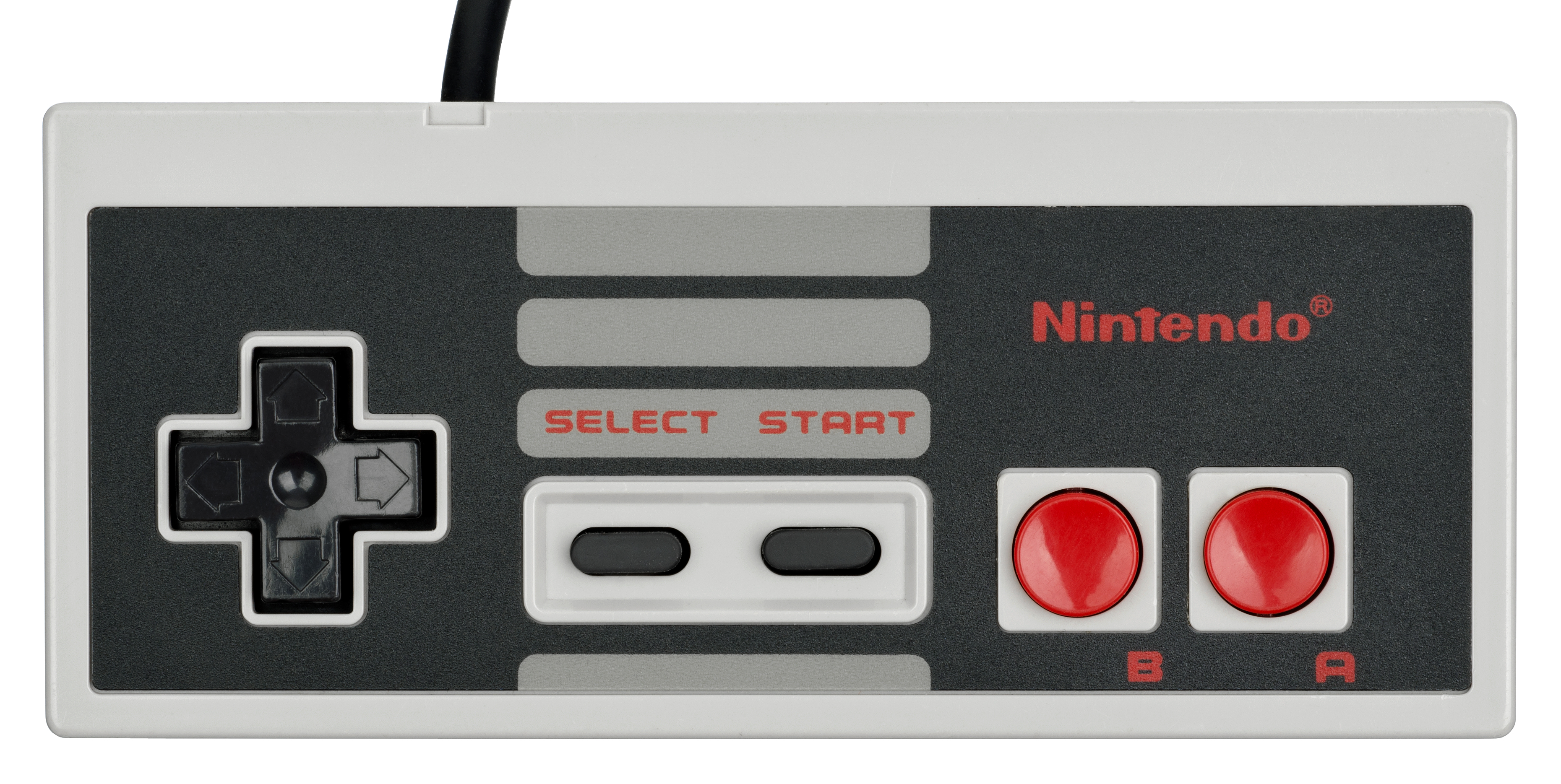
Simple. Clean. Classic. It doesn’t get much easier than this. The fact that almost anyone can pick up an NES controller and play because of its simplicity is amazing. Truly a monumentous achievement when your original controller still holds up so well today. The only thing holding this one back is the square design. While it looks amazing, it can become uncomfortable to hold during extended play sessions.
4. Virtual Boy
Only used to its full potential a couple times, but easily the best part of the console. The L and R buttons located on the back is fantastic and the dual D-pad was great for added control. Created with a mirrored design meant that games that only used one D-pad let the players pick which one they wanted to use, so whether you were left or right handed you could pick what felt comfortable.
3. Wii
Not everyone loves motion control gaming, but the Wii did it right. The controller was designed to be similar to a TV remote for ease of use with all demographics. They nailed it. The main thing I didn’t like about it was the 1 and 2 buttons were far down on the controller, but they were usually used for menus and map anyhow. As an added bonus you can plug in the nunchuck attachment for added control-ability or turn the controller sideways and it essentially becomes an NES controller. Brilliant.
2. GameCube
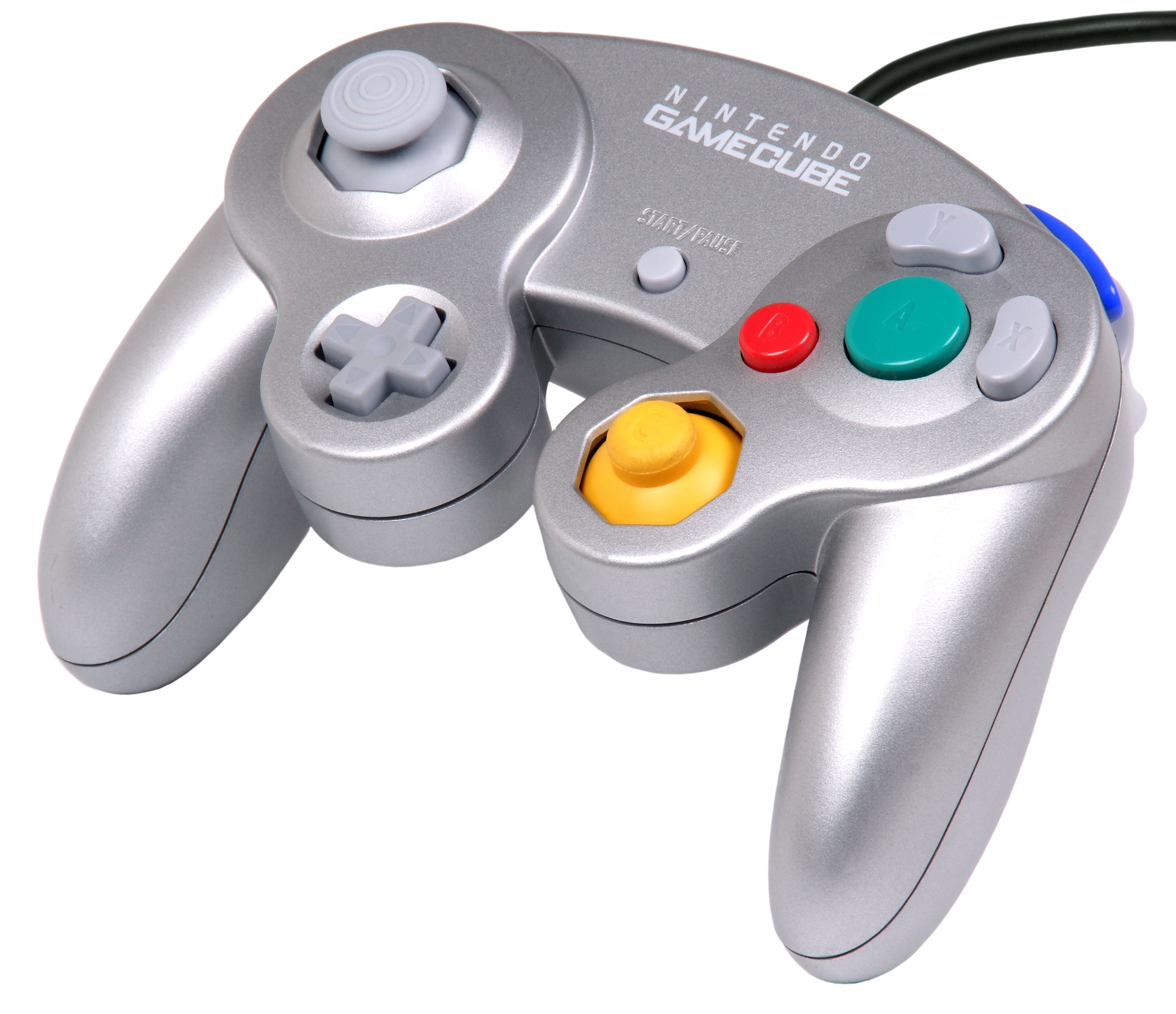
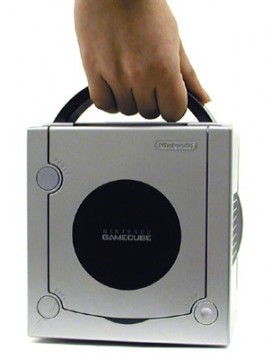
ABXY? Check. L and R? Check. Dual analog? So close! The main thing holding this controller back in my mind is the tic-tac C-stick. There’s a very good reason it’s many peoples go to controller for Smash Bros. to this day. Very comfortable and great button placement. You could even update your default controller to the Wavebird for wireless gaming.
1. SNES
Nintendo took the NES controller and improved on it in every way. Rounded so it was more comfortable, added buttons for more functionality, but still incredibly simple and user friendly. It really doesn’t get any better than this.
That’s all of them, folks… for now! I can’t wait to see where the NX will end up on this list. Be sure to let me know how your list compares!
Scott and Simeon recently ranked all of Nintendo’s consoles! Check out Part 1 and Part 2 to see how they stack up!
As someone who has been a Nintendo fan since I was old enough to hold a controller, I have never seen the company attempting to juggle so many different projects at the same time.
With Nintendo dabbling in so many areas, is it only a matter of time until they start dropping the ball?
Let’s take a moment and examine everything that Nintendo has on their plate, so we can determine if they’ve bitten off more than they can chew:
It makes me anxious just thinking about all of the things that Nintendo management must deal with on a regular basis, and each and every one of those projects comes with their own set of challenges: public relations, marketing, quality assurance, customer service, and more.
Wisely, Nintendo is not embarking on all of these endeavors alone. With the help of other established companies like DeNA, VANS, and Universal Studios, Nintendo is only shouldering a partial load for some of these projects. Still…
The load adds up quickly.
How many different ways can Nintendo’s attention be split before their products begin to suffer?
We’ve already begun to see the affects of an unfocused Nintendo, I’m afraid. The publisher was banking on a hit success with the Wii U, but the console performed below expectations, causing Nintendo to focus on attaining cash flow through additional means. The key to this extra revenue? Intellectual Property (or IP). Nintendo has invested in their character for decades, and finally decided that the time to cash in… is now.
Nintendo’s famous stable of characters can now be seen in places previously untouched by the company: mobile games, figurine toys, and more.
Is this a bad thing? No. But does it mean that we will get fewer software releases? Inevitably, it must. You’ve felt it on the Wii U and 3DS for the past couple of years.
Can we fault Nintendo for outsourcing some of these projects, like with DeNA and VANS?
Perhaps.
The risk with partnerships is the very integrity of your brand.
There are more companies trying to turn a profit with Nintendo’s own IP now than ever before, and Nintendo has less control over them.
Remember when 5th Cell was given permission to add Mario characters to their Scribblenauts game? It was called Scribblenauts Unlimited, because you could modify whatever nouns you wanted with any adjectives you would like. Except for the Mario characters.
Angry sweater? Check. Loose goose? Check. Green Mario? No go.
Nintendo’s IP used to be sacred, but now it’s plastered on tie-dye, Hawaiian VANS apparel with abandon.
Nintendo can make money through video games, theme parks, apparel and frozen yogurt… but they shouldn’t have done it all at once, with plummeting hardware sales.
The NX should have been priority 1, it should have been unveiled at E3, because it should be on store shelves this Holiday.
WARNING:The following blog post contains spoilers for Metroid: Other Mand Metroid Fusion.
It’s tough being a Metroid fan. After a promising start, the series goes on hiatus for nearly a decade. Then after a resurgence and several great additions to the franchise, Metroid: Other M comes out and sends everyone into a tizzy. Cue another hiatus, and then after years of waiting, Nintendo finally announces a new entry into the series…and everyone loses it all over again. I don’t particularly like controversies, they have an odd propensity to throw gentlemanly discourse out the window and reduce (presumably) otherwise intelligent individuals to their embarrassingly base, vitriolic nature. That said, there is an issue regarding Metroid: Other M that seems to have slipped through the cracks, and with the aesthetically controversial Metriod Prime: Federation Force releasing this August, I think now would be a good time to get it off my chest and discuss what I think Metroid: Other M‘s real flaw is.
People have criticized Other M for a variety of things: potentially sexist undertones, awkward non-analog controls, Samus’s emotionless voice acting, etc. I, however, either didn’t notice or didn’t mind most of the commonly cited issues when I first played the game. No, there was something else. Something I couldn’t ignore. Something that kept scratching at the back of my mind in the same annoying fashion a house cat lazily paws at its sleeping owner’s face. Something that is never brought up when discussing the game’s flaws. Something that kept running through my moderately attractive head every time I played the game: I’ve seen this before.
To put it bluntly, Metroid: Other M is a rehash of Metroid Fusion.
No seriously, there are just too many similarities. Oddly enough, despite all of the discussion the game has (shine) sparked, no one ever discusses the Goyagma in the room and mentions how suspiciously similar the two games are, even when they’re listing reasons they don’t think the game is good. The only time I’ve seen it brought up was a forum post made shortly after the game was released, and that was quickly dismissed by the site’s other members. So let’s switch to our scan visors and take a closer look.
The Setting
Both games are set shortly after the masterpiece that is Super Metroid. The similarities between settings are more than chronological, however.
In Fusion, the game starts with our girl Sammy escorting a team of xeno-biologists on a mission to survey the metroid home-world, SR-388. After mercilessly blasting a hornoad that could’ve made for a valuable specimen, the creature reveals itself to be an X-parasite in disguise. Samus is infected, hospitalized, and eventually saved by a vaccine made from a DNA sample from the now dead last metroid. Deciding not to question the medical team’s severe misuse of the term vaccine, Samus immediately gets back to work and heads out on her next mission: to investigate a distress signal coming from the BSL (Biological Space Laboratories) Research Station.
The BSL Research Station is a space station-based research facility designed with the study of alien lifeforms in mind. It is equipped with top-of-the-line containment facilities that recreate the environments of the creatures that live in them. Each of these areas are referred to as sectors, are numbered one through six, and recreate a different biome (SR-388, jungle, desert/volcanic, aquatic, ice, and nocturnal).
The B.S.L. Research Station serves as the setting of Metroid Fusion.
Other M opens with Samus in a Federation quarantine bay being attended to by Federation medics after her harrowing escape at the end of Super Metroid. After a dry internal monologue and debriefing, Samus is off on her own to…I don’t know, hunt bounties? Anyway, she picks up a “baby’s cry” distress signal and—being the mercenary bounty-hunter that she is—goes to assist with no promise of financial compensation what-so-ever.
Upon arriving at the source of the transmission, Samus finds herself at the Bottle Ship. The Bottle Ship is a space station-based research facility designed with the study of alien lifeforms in mind. It is equipped with top-of-the-line containment facilities that recreate the environments of the creatures that live in them. Each of these areas are referred to as sectors, are numbered one through three, and recreate a different biome (jungle, volcanic, and ice). Sound familiar?
The Bottle Ship serves as the setting of Metroid Fus–OTHER M! I was going to say Other M!
[They are] equipped with top-of-the-line containment facilities that recreate the environments of the creatures that live in them. Each of these areas are referred to as sectors, are numbered […], and recreate a different biome.
To top it all off, even the chamber from which the sectors are accessed are the same: a large room situated below the crew quarters and command center with color coordinated elevators.
The Antagonists
Both games also have similar antagonists. Anyone who’s played Fusion can tell you about the paranoia inducing terror that is SA-X. Heck, I still sometimes have nightmares about it. For readers who don’t know, SA-X is the X-Parasite’s mimicry of Samus: it has all of her powers, her knowledge, and—most of all—her suit. Throughout the game, it wanders the BSL, constantly attempting to sabotage Samus’s mission. It destroys machinery, doorways, it even tries to induce a meltdown in the station’s reactor. While the being makes a few onscreen appearances, it usually sticks to the shadows. Throughout the game, SA-X is a threat that seems to be around every corner, just out of sight.
Metroid Fusion is rated E? Man, when is Nintendo going to stop making kid’s games?!
Other M has a similar enemy: the Deleter. The Deleter is a mysterious entity that operates in the shadows. He/she/it constantly attempts to thwart Samus and her allies’ efforts to get to the bottom of what went down on the Bottle Ship by sabotaging equipment, jamming communications, and even systematically eliminating Adam Malkovich’s soldiers one-by-one. Trying to identify and stop the Deleter is one of the major plot elements of the game, much like stopping SA-X is in Fusion.
Surely, uncovering this criminal mastermind’s true identity will be the ultimate payoff!
But Other M doesn’t just have similar antagonists to Fusion, it even goes so far as to copy one of Fusion‘s most iconic bosses: Nightmare. Nightmare is a large, gravity-warping bio-weapon that gave Samus the gravity suit in Fusion. Its battle is one of the longest and most difficult in the game, and as to be expected the fight occurs near the end of the game. The boss returns in Other M, and just like in Fusion is fought near the end of the game. The only real difference is that Fusion bothers to build it up as a major threat, while Other M just shoe horns it into the game.
And then there’s Ridley…who’s in almost every game, so he isn’t worth mentioning. Moving on!
Adam Malkovich
Yet another of the similarities between Fusion and Other M is Adam and his role. In Fusion, Samus’s new ship comes with an on board A.I. that she nicknames Adam after a former commanding officer. Adam is Samus’s guide throughout the game, offering objectives and providing suit upgrades. Adam is eventually revealed to be an uploaded personality and is—in fact—the real (artificially simulated) Adam Malkovich. The real (not artificially-simulated) Adam appears in Other M. In that game he points out objectives to Samus and authorizes use of her various suit features, similar to in Fusion.
The two games also both depict him as potentially untrustworthy. Fusion shows that Adam, and the Federation at large, have a hidden agenda that they’re keeping a secret from Samus. This can also be said of Other M, though it is more ambiguously framed. Adam clearly knows more about the situation at hand than Samus, which is a major source of tension in the game’s story. Other M even goes so far as to depict Adam as a candidate for the true identity of the Deleter. All of this conspiracy mumbo-jumbo leads to my final point…
Surprise! It’s Full of Metroids!
Both game’s have a secret, hidden sector. It’s full of metroids. The Federation is cloning them. They want to use them as bio-weapons. The secret part of the space station is jettisoned into space. Samus fights an adult metroid.
Imagine this in 3D and then replace SA-X with Adam and you basically have what happens in Other M.
Despite what my very critical overview may suggest, I rather enjoyed Metroid: Other M. It certainly had a number of problems, but the end product still had tight controls, good gameplay, and great production values; overall an enjoyable experience. Unfortunately, as a prequel to Fusion, it’s an abysmal mess that introduces many, many plot-holes. I’d go so far to say it serves as a cautionary tale of how not to do a prequel. All of the similarities make Samus’s reaction to the events of Fusion completely unbelievable. She acts like it’s her first time stumbling across a secret metroid cloning project, or dealing with an enigmatic saboteur, or fighting Nightmare! It’s almost as if Other M was an attempt to rewrite Fusion in hopes of removing the latter from the series continuity like a lab full of metroids from a space-station. But I’ll admit, that’s a bit of a stretch. It’s not like the Big N is some sort of large, secretive collective that would conspire to do something like repeatedly clone Metroids to further their own ends, right?
Glen is a lifelong Nintendo fan whose first foray into the Metroid Franchise was Metroid Fusion. His love of video games has inspired him to pursue a career in computer programming and is currently studying to get a masters in computer science. And yes, he really does sometimes have nightmares about SA-X.
Somewhere in Japan, Nintendo’s Research & Development staff members are pulling overtime and long nights to create Nintendo’s next console, codenamed NX. Soon we will have our first official details on the console and it will be off to the production lines. I predict that NX will bear some striking similarities to one of their past consoles, the Nintendo GameCube.
I think that Nintendo’s next console will be taking a leaf out of the GameCube’s book.
• • •
It is good to be a Nintendo fan. During E3 2016 we were treated to a monumental information and footage dump of a brand new Zelda game: Breath of the Wild. This new open world adventure is our first confirmed NX game.
NX just had its first game confirmed
Yet, as the excitement of E3 dies down in the weeks following the convention, Nintendo fans are still restless with excitement. Why? Because Nintendo didn’t show all of the cards in their hand like some of their competitors did at E3 this year. No, Nintendo is still playing things rather close to the chest as they gear up for a full-blown NX reveal event which should take place within a few months if indeed this new hardware will launch in March of 2017.
One question is burned into every Nintendo fan’s mind: what is NX?
That’s the question that causes our thumbs to navigate to fan-sites for news every morning. That’s the question that allows attention-starved trolls to mock up fake leaks of the console. I don’t put much stock in rumors that circulate outside of the few days before events, but that doesn’t stop me from coming up with my own theories.
I think that the NX will be a home console constructed with the same sensibilities that gave birth to the GameCube. I have some compelling arguments to present, but keep in mind that I know just as much about the NX as the next guy on the Internet: absolutely nothing.
Standard Controller
I’m willing to bet pretty heavily on this one. Why? Nintendo has been rebranding. Corporate rebrands are expensive (hit me up – I’m a graphic designer and I will charge you a lot of money). Reconstructing the image that a company projects of themselves is much like turning a gigantic ship; it takes a lot of time and effort to go in a new direction.
Nintendo just spent that time and effort on a corporate rebrand – they’re going red themed down to their Twitter Avatar, and they have a new slogan to go with it: There’s No Play Like It.
Nintendo’s new slogan, with which they will march into Holiday 2016 and into 2017
4 buttons: A, B, X, and sometimes Y.
No, wait – always Y.
These are the symbols that Nintendo has chosen to represent them for the next generation, and they will be on the NX controller.
We only know of one NX game and it’s Breath of the Wild, which is controlled by the standard buttons of the Wii U GamePad, and is also compatible with the Pro controller. Nintendo has stated that the game is the “same experience” on NX and therefore suggests that we will not be playing with a remote, a glass surface, or other non-traditional methods of input.
Buttons are all you need to control NX’s first confirmed game, Breath of the Wild
Keeping the cost low on the controller (by minimizing sensors) is also a lesson that Nintendo learned from the Wii U’s commercial failure. Any development dollars left over could be directly applied to the console’s internal specs, which will be needed in order to stay in the same league as Nintendo’s competition.
Not the Strongest Kid on the Block
Every time Nintendo is due for a new console, these rumors kick into gear: It’s going to be the most powerful console on the market! As much as I dislike to break it to you…
NX will not be a powerhouse 4K VR juggernaut.
Nintendo doesn’t have the experience in high-end computing that would be required to go head-to-head (or headset-to-headset) with the likes of Facebook’s Oculus or Sony’s PSVR. What Nintendo DOES have a great track record of doing is this: implementing affordable tech, optimizing its performance, and marketing it to all ages and audiences.
The Nintendo Gamecube did not outclass its contemporaries with impressive specs, but it was home to many creative innovations (within a set of limitations) that produced groundbreaking titles like Metroid Prime and Wind Waker, which were marvels for their time.
Different Media Format
Nintendo is not comfortable with doing things the same way. You won’t catch them copying themselves or others… very often. *cough*amiibo*cough*
Just like the GameCube featured its own unique media format, NX is likely to pivot away from those smooth Blu-Ray discs we’ve come to love on Wii U.
Rumor has it, NX will utilize cartridges.
Don’t think clunky N64 games – carts can be the size of an SD card these days.
Why move from a disc format? Well, solid state media (as opposed to spinning discs) would be quite beneficial for transporting the unit and, dare I suggest, all-around portability? The absence of moving parts is what enables portables to be taken on the go, and cartridges provide other benefits like being more durable, not getting scratches and smudges, etc.
It’s also important to remember that the amount of systems Nintendo has put out that featured discs is far outnumbered by the ones with cartridges… this would not be out of left field.
Emphasis on Portability
You know where this is going in regards to NX, but how does it relate back to the GameCube approach?
^ Did no one, ever
Yep – that. That strange lunchbox handle fixed to the back of the GameCube, meant to help you carry the console around. Sure, there was no gaming on-the-go associated with this feature, but we’ve come a long way since then.
Not only was the Gamecube physically constructed to be carried, but the console offered many different opportunities to link up and cross over with handled gaming – even more than the Wii and Wii U have done.
Now that Nintendo has moved their Portable and Console divisions under one roof, we should see a strong push in the arena of portability, mobility, and connectivity.
So, What is the NX?
I think it will be a home console that is not tethered to a TV screen. It may come with a miniature portable screen and stand; it may connect via Bluetooth or adapters to your smartphone or tablet for display purposes, or it might have a small, personal projector bulb.
Whatever NX is, it will certainly be unique.
Nintendo needs a game-changer. Nintendo needs to capture a new generation of children that are growing up on Minecraft and the App Store. It’s time for Nintendo to get back in the game!
Two Button Crew will be eagerly awaiting further details on Nintendo’s NX console, and we will continue to cover all things Nintendo on our Daily Show for Nintendo Fans.
BoxBoxBoy! is the sequel to the hit downloadable puzzle game BoxBoy! for the 3DS that expands on the original, quite literally, as this time around you use two sets of boxes instead of one. While no prior experience with the original is needed, it really helps as the mechanics you learn over the course of an entire game you learn in a few levels. You’ll still be hopping on and throwing boxes, along with hooking onto ledges and snaking your way through narrow paths, and it’s all still a lot of fun.
Hooked on a feeling.
The only new idea is creating two sets of boxes, but that’s okay as it completely changes the way you have to solve the puzzles and sometimes significantly ramps up the difficulty. There’s still plenty of switches, spikes, and lazers to deal with and it definitely had me stumped for a while on more than one occasion. There are usually a few levels in a row where you use the same mechanic in increasingly difficult puzzles, only to ditch it for a long while and come back to it when you’ve forgotten about it. Absolutely fantastic level design and it made feel dumb for not realizing the solution much soon than I had. There are bonus levels in which you replay chunks of levels you previously completed except this time with either the ninja or the bunny costume from the first game, but you have a lot less boxes at your disposal.
Two sets of boxes, twice the challenge.
The collectible crowns are back once again. If you’re not familiar, think hidden coins from Mario, except you have a limit of boxes you can create until it disappears. Being the OCD gamer I am, I had to get all of them, and a few were extremely difficult. It adds a lot to the way you approach levels and to the overall replay-ability.
BoxBoxBoy! really stacks up to the competition!
The more crowns you get, the more coins you get at the end of every level, which can be spent in the games shop. There you are able to purchase new costumes, short a quirky comics, and music from the game. All of the costumes you unlock from the original BoxBoy! transfer over too, which is a neat little addition.
There’s quite a lot of content for the price and is a great buy for the puzzle and platformer fan alike. While I recommend playing the original game first, this is a sequel that lives up to the original and shouldn’t be missed.
Two months ago I wrote about why Smash Bros. is stupid. While I stand by what I said, I think it is time to balance out the conversation. There are so many problems with the Smash Bros. series, but there are so many things to love as well. These are just a few reasons to love these games.
The Characters. While there are a few characters on everyone’s wishlist that have not made it to a game yet (I’m looking at you, real Geno), Nintendo has done a pretty awesome job bringing out the best fighters from their own games as well as characters from other companies. When they confirmed Sonic in Brawl, I completely lost my mind. The same thing happened again when they showed Mega Man in Smash 4. They even polled the players to ask what characters they wanted to see as DLC, and they listened! Even if you were not familiar with a character when they introduced them (like the Fire Emblem characters), it would be nearly impossible to think of playing these games without them.
The uniqueness of each game. Many people complain about Melee being too fast-paced, or Brawl being too janky, but, honestly, I do not think the series would be complete without every single (official) iteration. The original demonstrated that fighting games did not have to be put in a box. Melee showed just how serious a Nintendo fighter could be. Brawl showed how a fighting game’s story mode could be fun and interesting, and gave us the ability to customize it to no end. The 3DS version allowed us to take it on the go (also, one of the top players in our region used his 3DS as a controller on the Wii U version because he was more comfortable with it at the time). The Wii U offering gave us everything we want in a modern fighting game, including online play, balancing patches, and worthwhile DLC.
Custom combos. Any fighting game worth its salt has some sort of combo system; one attack leads into another to create a devastating string of hits. Smash Bros is like that, but there isn’t a set system. Any combo has to be “discovered”, and not only that, but almost all of them are situational and can be performed at certain damage percentages. This means that you have to be creative as time progresses; you cannot just use the same combo over and over without any chance of dropping it. Smash Bros. is exciting, dynamic, and will never be formulaic because of this custom combo system.
Killing people with Luigi’s down taunt. Hahahaha… Hahaha… HAHAHA! That is great.
Low tier heroes. Now, I know that this is nothing new to the fighting game scene, but there is always something exciting about seeing a player do well who plays a character you do not see played often, or a character often considered “bad”. Watching someone tear through the bracket with Ganondorf or seeing Nairo switch to Bowser for certain matchups gets everyone hype! One of my all time favorite memories was a thrown-together tournament in the Brawl days at my college. I made it to grand finals with Ike, and I was up against one of the top players in the region, playing Peach. I ended up winning the match, using my low-tier character. Years later, Scott had the chance to talk with him, and he still recalled the event, mentioning I had a great Ike. That victory meant so much to me, not just for who my opponent was, but for the obstacle I overcame as someone who played a “bad” character.
Jank. Yes, I know this was on my list of things that made Smash Bros. stupid, but who does not love to see a nice jank compilation? Things happen in Smash Bros. that would never happen in other fighting games, simply because of the variables involved. A hitbox that extends far past what it should? OK. Characters that randomly start glowing? Sure! Samus’s Up-B killing at 15% or less?Why not?! Part of the fun of Smash Bros. is wondering what unpredictable thing you’re going to see next…. and then raging about it.
The Subspace Emissary. I already mentioned this, but, did you know that Brawl had a story mode? It was even pretty good! In fact, probably the most common complaint I hear about Smash 4’s transition from Brawl is that it did not carry over a story mode. It felt like they put time and effort into the stages and the bosses, and might have made a complete game by itself (maybe at a discounted price). I have not played it in a long time, but I can still remember specific parts of the story and how epic the scale of it was.
D1. Who does not like D1? No one, that’s who. (He’s the guy that we get the DEEEESSSSSTTTRRRRRRUCTION meme from. If you’ve never heard of it, well, I can’t help you!)
A million ways to play. When I play Smash Bros. I typically play it one of two ways: tournament rules singles and tournament rules doubles. I enjoy that. But even if I did not, I would never run out of ways to play Smash Bros.! Break the targets, arcade mode, all items on, custom stages, events, eight players, amiibo, weird token-pushy-offy game, story, board the platforms, Crazy Orders (or whatever it is called), coins, All-Star, multi-man, handicaps, three-on-one, metal+stamina… the list goes on! You could play the different Smash modes forever and never see it all. There are things to collect, secrets to unlock, and styles to invent. Whatever way you play games, the Smash Bros. series has something to offer you.
There are so many things to love about the Smash Bros. series that I could never list them in a readable blog. Share in the comments below what you love about Smash Bros.