Oh, Fan Art. You never really disappoint, do you? There’s always something awesome, detailed, thoughtful, and mildly creepy. In this installment of the TBC show, we’re going to be taking a look at the very best Realistic Pokemon renditions, from artists that have taken the cute, adorable, and lovable anime-styled Pocket Monsters and converted them into truly horrifying, believable beasts that could be seen in the real world. Grab your favorite pillow and hold it tight for comfort, and when you’re ready, proceed…
Shot by Alex Campbell “Escape the Premises” Kevin MacLeod (incompetech.com)
Licensed under Creative Commons: By Attribution 3.0
http://creativecommons.org/licenses/by/3.0/
It’s nothing personal, Wii U… it’s not you, it’s us.
As we discussed yesterday, with a brand new console coming (expensive in itself), it’s also accompanied by many accessories and other opportunities to spend your hard-earned cash. Well, that money needs to come from somewhere, so what about selling your older games and consoles… say… your Wii U? Will you really be playing it anymore? Does it really have THAT many truly exclusive games? We’ve collected the definitive lists of pros and cons – watch, then make up your mind and proceed with confidence! Shot by Alex Campbell “Escape the Premises” Kevin MacLeod (incompetech.com)
Licensed under Creative Commons: By Attribution 3.0
http://creativecommons.org/licenses/by/3.0/
We’re always here for you, with the hardest of hard questions, like… to Charging Grip, or not to Charging Grip?
Switch. A new console, a new frontier, a new lifestyle. With the console come many choices for games and accessories, and you might be left wondering what you need, what you might want, and what you should leave alone for some other chump to buy. Simeon and Scott are here for you to sort it all out – you gotta go into launch with a plan and know exactly what you’re walking out of that store with. Lets. A. Go!
Shot by Alex Campbell
“Escape the Premises” Kevin MacLeod (incompetech.com) Licensed under Creative Commons: By Attribution 3.0 http://creativecommons.org/licenses/by/3.0/
Remember the simple old days where a whole game was just on a cartridge?
Shovel Knight, once a humble Kickstarter campaign, has snowballed to become a massive undertaking for its developers. Stretch goal upon stretch goal were smashed by the game’s enthusiastic fanbase of supporters, ultimately leading to some bloat and confusion as the project ages. True to their weird, developer Yacht Club games is keeping their end of the bargain by updating the original purchaser’s games with the new features, campaigns, and modes, but THAT is precisely where the simplicity ends. Watch on to see what we mean.
Shot by Alex Campbell
“Escape the Premises” Kevin MacLeod (incompetech.com) Licensed under Creative Commons: By Attribution 3.0 http://creativecommons.org/licenses/by/3.0/
Thanks again to GameOver Jesse for being our show’s BFF!
Legend of Zelda: Breath of the Wild is the largest game that Nintendo has ever created for us. With it will come hundreds upon hundreds of different variables that will make everyone’s experience with the game different from the next person’s! We’re here today with good friend of the show, GameOver Jesse, to discuss how we intend to play through Nintendo’s newest Open Air Adventure. What will our first destination be? Are we going to abuse amiibo? All that and much more in today’s episode.
No, the Switch isn’t even on the market yet. (So close!)
Yes, I’m already looking ahead to what’s next.
I want to put a prediction down, timestamped and dated, so that I can say “I told you so!” when it turns out to be true.
Let’s start with the facts before we get into prediction territory (plus I want to keep you in suspense a little while longer.
Many aspects of the Switch were “leaked” by patent sleuths who were keeping an eye on what Nintendo was filing.
At the end of one particular and very long series of patents, we find this:
Ladies and gentleman, that there is a Nintendo Switch Virtual Reality (VR) patent filing!
Were this patent to become a product, its usage would be fairly simple: strap on the headset, slide the Switch tablet into the slot, and play! Individual Joy-Con would be perfect controllers for a VR experience, with motion control, analog sticks, and a handful of face and shoulder buttons.
Really, this filing is quite ingenious. But, Nintendo can’t be credited for this implementation of VR – plenty of Samsung and Google devices have been doing this for years. So, why is Nintendo trying to patent it?
I’m not sure about the answer to that question, but it could be that they are filing for protection of the idea of using a home console itself in a VR headset. Or perhaps, only making a headset for the Switch console would infringe this particular patent. I don’t speak the legalese to give a firm answer, but I can certainly deduce the gaming implications of this document.
After this leak occurred, many fans hoped they would see a Virtual Reality segment during the January Switch Presentation. I knew we wouldn’t.
There’s one big problem with making the above patent a real product: the resolution of the screen. For those that own a PS4 already, PlayStation VR is on the lower end of the cost barrier, and that solution provides a 1920×1080 (full HD) display, which could be considered the bare minimum for virtual reality.
With VR, the screen is mounted very close to your eyes. That’s why Oculus Rift and other VR-equipped smartphones have such high pixel density – you don’t want to be distracted by pixels in the screen a few inches away from your face.
This is what would happen if it was done with the current Switch model.
For this reason, I don’t believe we’ll see Nintendo step into the VR market with this iteration of their console… which brings us to my prediction:
I predict: Nintendo will release an upgraded Switch model midway through the console’s lifecycle.
Name: Switch Vision Release Date: Holiday 2020 Resolution: 4k (allowing for 2k to be used on each eye) Headset: Can charge separately, lends extra battery to the tablet Backward Compatibility: Works with all existing games and accessories Exclusive Software: Special VR-enabled games will be produced, 3 main titles from Nintendo (Mario spinoff, Metroid, New IP) SKUs: Purchase the tablet-only for previous Switch owners, or a bundle option for new customers
Can you picture the marketing? Switch Vision – 2020.
The industry is well adjusted to mid-console cycle upgrades. Is this so far-fetched? I don’t believe so, especially with an official patent document showing that Nintendo is at the very least interested in this technology. Of course, many of their patents never see the light of day as finalized products that make it to the market… but…
Should it happen, remember that you heard it here first!
Everyone, retrieve your Smash Ballots, cross out “Bayonetta” for goodness sake, and write this wonderful man in!
Nonspecific Action Figure, the mysterious mascot that helped introduce us to the Wii U. Quickly forgotten, NSAF didn’t quite get to enjoy his time in the spotlight that he deserved. Well, we’re going to do our best to rectify that issue and spend an entire video talking about him, his plasticness, that mask, those muscles, wings, and sword?! NSAF, who are you? Where did you go? And for the love of Sakurai, WHY AREN’T YOU IN SUPER SMASH BROS?
Shot by Alex Campbell
“Escape the Premises” Kevin MacLeod (incompetech.com) Licensed under Creative Commons: By Attribution 3.0 http://creativecommons.org/licenses/by/3.0/
Tetris should just launch with every new console and then the video game market would be set for life!
Ah, platform launches. We Nintendo fans live for these! And with Nintendo, we typically get 2 or 3 every decade with home and portable systems alike. New hardware is part of the appeal, but it would be worthless without the brand new games to play on it! In this video, we’re taking a look at the software titles that launched each of Nintendo’s major portable consoles. Were they a good fit for their systems? Were they received favorably? Did they propel their system to success? These questions will all be answered within this episode of the Two Button Crew show!
Shot by Alex Campbell
“Escape the Premises” Kevin MacLeod (incompetech.com) Licensed under Creative Commons: By Attribution 3.0 http://creativecommons.org/licenses/by/3.0/
What does your wallet think about you watching these kind of videos?
It’s unlikely that we can ever keep up with the awesomeness and the creativity that is the Custom Amiibo scene. They’re just too good! This is our third video showcasing the amazing talents of these amiibo artists, but it probably won’t be the last. A quick look around Google Images, Instagram, Twitter, or Pinterest reveals that this is where the action is at. As many official amiibo as Nintendo are pumping out, the official ones just won’t compare to the works of art that people make when they take matters into their own hands!
Shot by Alex Campbell
“Escape the Premises” Kevin MacLeod (incompetech.com) Licensed under Creative Commons: By Attribution 3.0 http://creativecommons.org/licenses/by/3.0/
If you’re reading this, and you’re an indie developer, get in touch with us on the Contact page. <3
We love independent video game developers (affectionately referred to as “Nindies”). Why? Because they’re the underdogs – the small studios that are going toe-to-toe with giant corporate competitors. And oftentimes, they’re the ones that innovate and bring us the most interesting experiences, the ones that deserve further pondering and reflection after their completion. And so, going into a new console generation on the Nintendo Switch without stopping to examine the indie offerings would be a big mistake! These are the games to watch for in the coming months – don’t miss them!
Shot by Alex Campbell
“Escape the Premises” Kevin MacLeod (incompetech.com)
Licensed under Creative Commons: By Attribution 3.0
http://creativecommons.org/licenses/by/3.0/
Fire Emblem – gotta catch ’em all! With… your magical bow… that summons heroes from out of space and time…?
Fire Emblem has landed on mobile phones! Doesn’t this seem like such a short time after Super Mario Run? We’re already heading back to the App Store for another Nintendo game. But this time it’s not just for a single transaction, no, Nintendo wants you to bolster your team of Heroes by buying orbs. Can the game be played without spending money, or are you in for a world of hurt against the higher level enemies? Is the game enjoyable with its smaller maps and accessible storyline? Ryan and Scott are here today to talk all about it!
Shot by Alex Campbell
“Escape the Premises” Kevin MacLeod (incompetech.com) Licensed under Creative Commons: By Attribution 3.0 http://creativecommons.org/licenses/by/3.0/
This is the eternal question when it comes to fighting games. You’ve finished unlocking and now it’s time to make the tough decision: Who will I main? There are so many factors that affect the character or team that you choose in a fighting game. Main selection is very important to competitive play. If you are new to fighting games and don’t quite know where to start, or are just having trouble finding a comfortable match, I hope that this guide will help you. I’m sure it’s not comprehensive, but, as a guy who’s been there, thinking through these elements has helped me find better satisfaction in character selection.
For the sake of contrast I will be using two main examples to help illustrate the process: Super Smash Bros. and Tatsunoko Vs. Capcom. These two games have many differences (one has a single-character selection, the other is a team fighter, etc.) which I hope will give this guide a wider application.
The Producer
Fortunately (and unfortunately), many of the decisions that go into what character you play are made for you before you have any input. What characters actually make it into the game are decided by the producer of the game: his or her ambitions and limitations. The maker(s) of the game have a plethora of deciding factors when it comes to their game’s cast. Some of these are as follows:
Availability: “What characters do I have available to me? Do I have to make them from scratch, or can I use characters from the company I work for? Do I have the rights to use guest characters from a number of companies?”
Cast size: “How many fighters should my game have? Will having more fighters mean serious balance issues?” In looking at our examples, Smash has a character roster of about fifty-five, while TvC has a maximum count of 26, which is half the amount. Complete balance is impossible (more on tier lists later), but a smaller cast may mean a more well-rounded field.
Personal preference: “Do I put certain characters in because I like them more than others? I really like character ‘X’, therefore I will make him pretty good.” Take Metaknight in Smash Bros. Brawl, for instance. Sakurai (the game’s point man) created the character, and seems overly powerful when compared with the rest of the cast. I’m not bitter.
Making fans happy: “Fans really seem to like this character, so I might include her. This character wasn’t popular in the last installment, so maybe I’ll remove him.” For the most recent Smash Bros. game, fans got a special treat when Nintendo set up a poll for fans to pick the last character in the roster. Still not bitter.
$$$$$: “What character can I put in this game as a selling point? If I use a character from another recent/upcoming release, maybe they’ll buy that game, too. If I add characters as paid DLC, will people buy it?” Sadly, money is what makes the video game world go ’round.
Once the game is released, and as long as you have the money to buy the game and all the DLC, it’s finally your turn! How do you even begin to pick? Note that the following doesn’t necessarily go in order, and that they don’t have to happen separately. You may find yourself sliding naturally from one into another or going back and forth between two multiple times. Give the process time and don’t rush it.
The Cool Factor
After watching trailers for a fighting game, there’s usually one character that I want to try out first. I see their fighting style or know them from another game and I naturally gravitate toward that character. Needless to say, I rarely end up sticking with that character. There are some players that stick to a character simply because they like the character and make it work with lots of practice. If you really want to go this way, I wish you luck, but don’t quit a game because a character you love doesn’t gel with you.
Trial and Error
Were you expecting some soul mate, love-at-first-sight mumbo jumbo? Finding the right one is hard work! You should always try out each member of the cast at least once. If you’re playing against someone or see someone playing a character that looks really good or like a lot of fun to play, try that character out next. Don’t expect a character to magically make you good, but once you’ve had a taste of what the whole cast can do, you’ll have a better idea of what you’re looking for. Hopefully you’ll be able to make a list of characters that you enjoy and would like to play. Don’t worry about narrowing down at this stage.
Know Thyself
If you’ve played fighting games before, you may have a “style” of character that you play. You may be a more reserved person who likes to slowly chip away at your opponent from a distance, or you might like to play more rushdown where you stay in your opponent’s face, never giving them a chance to breathe. Know your character archetypes and if you seem to fall into one category or another. If you are the kind of person that practices combos all day and relies on muscle memory then you might opt for a combo-heavy character. If you are good at reading a situation and baiting your opponent into a trap, then you might spring for a slow but hard-hitting grappler. If you’re new to the scene or can’t seem to find a pattern, you’re not alone; my mains are very much dependent on the game. But it is very helpful to know what kind of character you might gravitate toward.
Superheroes
A practical tip for any video game that you want to be good at is this: Watch the game! Watch people playing whatever game you want to play, whether you frequent the local tournament hotspot or binge online streams. It won’t be long until you pick out your favorite players. Maybe you like their personality or their play style. Watching people having fun playing a game will make you want to play like them and use the characters they use. I love watching Vermanubis play Smash Bros., and since I started watching him I picked up Gannondorf. Scott watches the Smasher Izaw, and whenever he releases a new video, I know I have a new character to learn to play against, because Scott will try him out.
Let Someone Else Pick
By this, I don’t mean that you should hand your controller to someone else and have them pick for you, but rather that you should keep an eye on the competitive scene. The metagame (factors outside of a game that affect the outcome) is always updating for any given game. Tier lists (though always having a subjective element) are a good indication on a character’s relative “goodness” in the current metagame. Some characters are considered “better” than others because of certain attributes that they have, certain combos they can pull off, or just the number of matches they can win against the majority of the cast. Picking a character with better tools may give you an advantage. There are, however, advantages to picking a lower-tier (“worse”) character. For instance, by picking an unpopular character, it is likely that the people you play against will be less familiar with what your character can do, whereas if you were to play as a top-tier character, your opponent might be familiar with a lot of the character’s tricks and counterpick you. It also helps to know popular characters in your “scene”. Where I live, there are some really good Ganondorf Smash players, so, even though he is low tier, many players are familiar with Ganon’s tools, which put me at another disadvantage. Once again, not bitter.
Gelling
Ultimately, the deciding factor for me whilst picking a main is whether or not a character gels with me. I might see a character that can do something really cool and try it out, only to find that my character doesn’t move the way I expect him to. There is always a learning curve when it comes to getting good with any character, but there is no doubt that you’ll find some characters that just don’t flow with you and others that do. This is something that’s unavoidable. As with finding a “cool” or “good” character, you can always choose to tough it out and make it work, but, personally, I don’t find that abandoning that natural connection that’s present from the start is an advantage. In my eyes, it puts you one step ahead at the beginning. That could have consequences down the line in developing a main, but keep this factor in mind especially when looking for a counterpick, as you won’t be able to put as much time into them.
Team Synergy
In games like Tatsunoko Vs Capcom, you not only have to pick one good character, you have to pick a compliment to your character. This might mean picking two good characters, but that doesn’t always work in your favor. You have to take into account what one character on your team might contribute where the other one is lacking. For instance, if my team consists of Zero (a rushdown character) and Jun (another rushdown character), they might be really good individually, but if I’m up against a team of Alex and Frank West I’m going to have a bad time, as both of those characters are grapplers who want me close to them. You also have to keep in mind assists and DHC’s. Zero and Tekkaman Blade are probably two of the best characters by themselves, but their assists are pretty terrible and won’t extend any combos, whereas Ryu’s assist goes well with just about any character needing a combo extension.
Counterpicks and Secondaries
Unless you are the best (at which point you are probably not reading this), or your game has an unimaginably broken character that you play (and maybe even in those situations), you’re probably eventually going to need a counterpick on your side. A counterpick is a character (or sometimes a stage) that is chosen to specifically combat an opponent’s character choice. These are handy to have practiced up so that you can buff up your main’s weak areas (kind of like team synergy, only not). Many characters have a fighting chance against most other characters, but there are a few matchups for each character that make playing him or her a pain. In these cases, it’s nice to have an option toward which to turn to avoid said detrimental matchup. Picking a secondary character can be pretty difficult, because often the characters that you gravitate toward have similar weaknesses to your main. Try to change it up and learn a different character style or archetype. You’ll learn more about your main by playing a new character, too.
Switching Mains and Stagnancy
There may be some conditions that make you want to switch your main. You may settle into a character, then realize he has an outstanding number of bad matchups. A patch might come along and nerf your character into the ground. You may feel like, though you once really liked a character, you’re bored or falling into a rut that you can’t seem to escape. Before you switch mains, I suggest watching some footage of the character being played by a number of different players. Go back into practice mode and try to find some new options for your character. Sometimes it is a good idea to switch mains, but don’t give up on all the hard work you’ve already put into the character. Knowing how to play more than one character, even if it isn’t your main, will give you more matchup knowledge and even more counterpick options.
However you choose to land on your main, I hope you play hard and never give up. Fight on, fellow brawlers, fight on.
Scott is now taking eSports sponsorship requests… Anyone?
There are three levels in Super Mario Run that can only be unlocked by collecting each and every secret coin of a certain color. These are the three warp pipe levels of yore, and today, Scott will attempt to beat them. Luigi is his character of choice for his high jumps, and each hidden coin must be retrieved before he is allowed to progress to the next secret level. This is the height of challenge in Nintendo’s newest mobile game, so wish him luck and lend him your strength as he attempts the Ultimate Super Mario Run Challenge.
Shot by Alex Campbell
“Escape the Premises” Kevin MacLeod (incompetech.com) Licensed under Creative Commons: By Attribution 3.0 http://creativecommons.org/licenses/by/3.0/
Good luck never thinking of Mexi-tots whenever you hear about the three legendary bird Pokemon.
Sneaky, tricksy Nintendo and their sneaky, tricksy localization Treehouse. We’ve identified a number of meanings that were hidden inside seemingly innocent names… names of Pokemon, names of Nintendo games, and more. Some of these you may have heard before, but we guarantee your mind will be blown at least once during the course of this video!
Shot by Alex Campbell
“Escape the Premises” Kevin MacLeod (incompetech.com) Licensed under Creative Commons: By Attribution 3.0 http://creativecommons.org/licenses/by/3.0/
Trying to make our episode titles a little more SENSATIONAL!
We all know Nintendo loves their platformers – that’s the genre that they specialize in. But when they are the company that’s responsible for servicing fans of all kind that use their hardware (because third parties aren’t historically the most supportive), there are some genres that receive the cold shoulder. That neglect is either due to games with poor or questionable execution, or just no games to speak of at all. Have you ever thought about which types of games Nintendo is strong or weak in? Let us run you through a list of all the major genres.
Shot by Alex Campbell
“Escape the Premises” Kevin MacLeod (incompetech.com) Licensed under Creative Commons: By Attribution 3.0 http://creativecommons.org/licenses/by/3.0/
We demand compensation! Or at least a little bit of credit.
You know when you work really hard on something, and then other people steal your ideas and your work? That’s how we feel right now! There are a few channels on YouTube that are uploading videos suspiciously close to ones that we’ve made (and within a suspiciously close time-frame, as well)… If we’ve ever made a video that looks like someone else’s, we promise we would never take your idea – or at the VERY least we would give you credit and drop a link to the original! Can the same courtesy be extended to us?
Shot by Alex Campbell
“Escape the Premises” Kevin MacLeod (incompetech.com) Licensed under Creative Commons: By Attribution 3.0 http://creativecommons.org/licenses/by/3.0/
Voice chat – real, true, genuine, actual voice chat on a Nintendo system. Someone pinch me.
The Nintendo Switch is taking a little bit different of an approach when it comes to online voice communications… all of that data is going to be funneled through a new mobile app the Nintendo is publishing later in 2017. This is a strange choice, and isn’t something we’ve seen before in the gaming industry. Will it end up being a positive or a negative for those who pick up the new console/portable hybrid? Ryan is here with a Crew Cut to examine all aspects of the issue!
Shot by Alex Campbell
“Escape the Premises” Kevin MacLeod (incompetech.com) Licensed under Creative Commons: By Attribution 3.0 http://creativecommons.org/licenses/by/3.0/
Welcome to That Was a Thing! A new series in which I discuss my favorite weird, obscure, or simply underrated pantendo games and media. Think of it as the evil twin to Simeon’s Nintendo Experience series. In this inaugural installment, I’m going to look at one of my favorite—not to mention one of the only—real-time strategy Nintendo series out there: Battalion Wars.
The Battalion Wars duology was a spin-off of the Nintendo Wars franchise and originally had the working title of Advanced Wars: Under Fire. Unlike the other Nintendo Wars games, however, Battalion Wars wasn’t developed by Nintendo or Intelligent Systems, but a British company: Kuju Entertainment. The first game was released for the GameCube on September 19, 2005 and its sequel debuted on the Wii on October 29, two years later.
Overview
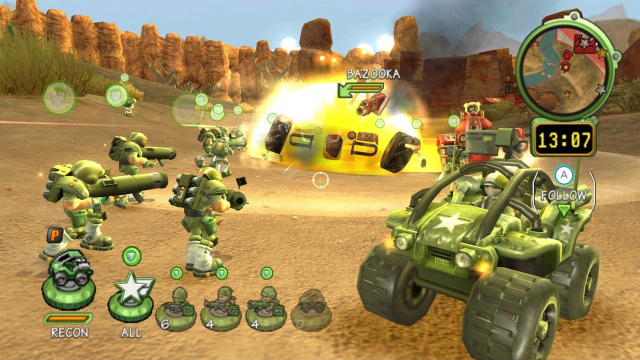
The Battalion Wars games are a combination real-time strategy and third-person shooter. Like most R.T.S. games, players are tasked with completing objectives with the units provided for the mission—riflemen, tanks, bombers, etc. Needless to say, each unit type had its own strengths, weaknesses, and abilities and the majority of the strategy revolves around knowing where and when to deploy each unit. The unique selling point of this game is that the player directly controls one of the units the whole time, with the ability to freely switch between units as needed. Think of it as being sort of like Pikmin but with guns…and tanks.
Both games are set in a fictional world filled with global super-powers just itching to find a use for their massive armies. Seeing as the series was developed in England, each of the games’ fictional nations are comically stereotypical counterparts to real-life countries. The United States is represented by the gung-ho Western Frontier, the Tundran Territories are an odd combination of Tsarist/Soviet Russia, likewise Xylvania combines Imperial Germany with Nazi Germany, the Solar Empire is a futuristic tropical Japan, and the Anglo Isles—first introduced in the second game—mirrors the Anglo Isles…I mean the United Kingdom…seriously, they weren’t even trying to be subtle with that one.
As to be expected, each of these nations employ an eccentric and colorful cadre of commanders. Each mission has the player receiving orders from one of their faction’s commanding officers while the enemy commander emotes and responds according to the events of the game. While they don’t offer any special gameplay bonuses like the commanders of the Advance Wars series, the commanders’ typically blasé attitude toward warfare and nonchalant dialogue helps keep the tone light. I would say the only commander that I personally didn’t care for was Empress Lei Qo of the Solar Empire—who left so little of an impression on me, I had to look up her name just to write the previous sentence.
The third-person perspective really is what makes gameplay stand out. Giving orders from the perspective of one of your men while returning fire yourself really makes you feel like you’re an actual part of the conflict, instead of some ghostly observer calling the shots. When your battalion’s under fire, you’re under fire, and having to make tactical decisions in the midst of the chaos of the battlefield can create some really tense moments. Then there are the times when you spot some enemies in the distance or look at the map and have to plan your next move. I’m not sure I can properly express the feeling I would get as my men crowded around me, expectantly waiting for me to formulate a plan of attack.
Being an entity on the battlefield requires the player to look after both himself and and his units.
If quality gameplay wasn’t enough, these games are also overflowing with personality. The games’ humor and cartoonish visuals give the series a lighthearted tone; these aren’t games out to deliver a ham-fisted “war is bad” message but instead revel in the innocent—and perhaps naive—feeling of playing with toy army men. Despite having the depth of a Saturday morning cartoon, almost every character is likable in some way—with my personal favorites being Tsar Gorgi, Kaiser Vlad, and Col. Austin—and I genuinely wanted to know what happened to them next. Each faction’s units are instantly recognizable, and their designs convey a lot of personality, not just for the unit itself, but for the faction it belongs to.
Giving orders from the perspective of one of your men while returning fire yourself really makes you feel like you’re an actual part of the conflict.
Now that we’ve covered the basics, take a closer look at the first game.
Battalion Wars
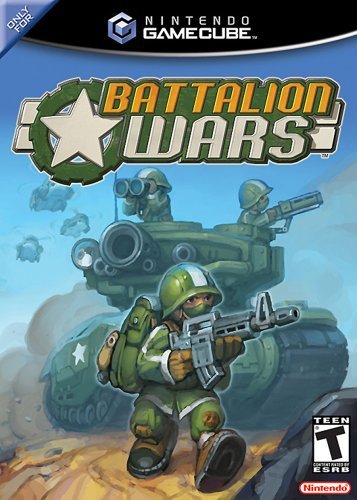
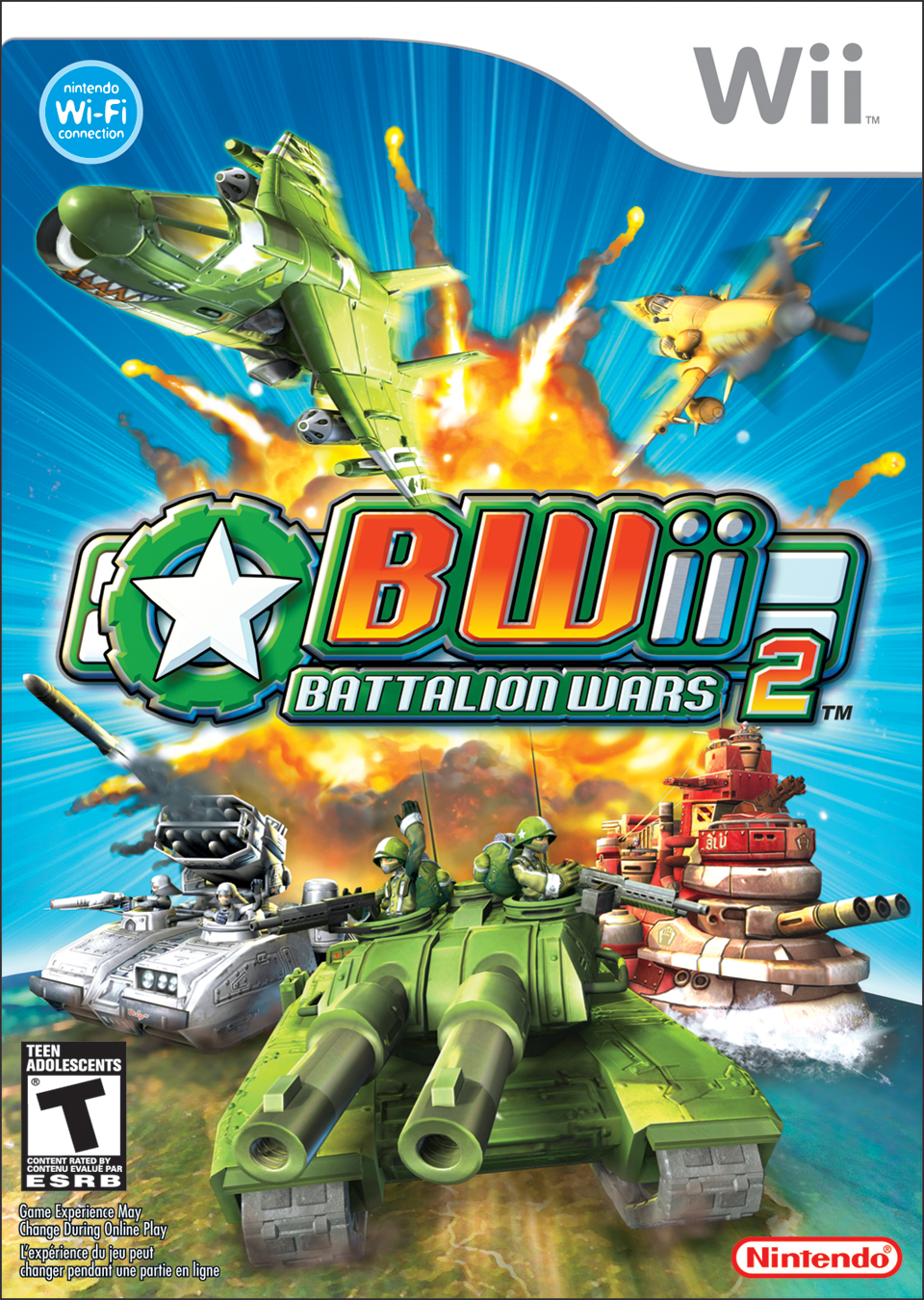
The cute proportions and solemn color choice of the cover art sums up the game’s unique atmosphere quite well.
I first heard of Battalion Wars from the now defunct Nintendo Power Magazine. That’s not to say I immediately took an interest in it, however. I wouldn’t pay it much mind until my younger brother returned from the now defunct Hasting’s Entertainment with a used copy of the game. Shortly after he inevitably lost interest in it, I took a crack at it and fell for it harder than Tsar Gorgi off a bridge (too soon?).
The game places the player in command of the forces of the Western Frontier—with some exceptions in the form of unlockable bonus missions. The story begins during an uneasy truce between the Western Frontier and their longstanding enemies, the Tundran Territories. War breaks out when Western Frontier troops find a Tundran spy on the Frontier side of the border. As the plot continues, the Tundrans ally themselves with the Xylvanians, the Xylvanians betray the Tundrans, an old man is thrown off a bridge, I think there was a zombie-ghost legion at some point…you get the picture.
While it won’t win any awards, the story has a great sense of progression to it. Plot-wise, mission objectives often tie into something you did in a previous stage. If you saved a spy, you can bet his intel is what will point you toward your next target. The fort you defend in one mission is essential to launching a counter attack in the next and so forth. It’s a small detail, but having your actions contextualized like that goes a long way toward making your input feel meaningful.
While it won’t win any awards, the story has a great sense of progression to it.
While we’re talking about writing, I need to discuss the most important character: the grunts. Throughout the game, the troops under your command are constantly responding to your orders, quipping at the enemy, talking among themselves, or commenting on the situation at hand…and it is freaking adorable! Okay, I know that sounds like it’d get annoying after awhile, but the troops have so many lines that I would sometimes still be discovering new ones on my fourth or fifth play-through of particular missions.
“I’m beat…let’s make camp and whip up some cocoa!”
On to the atmosphere: the visual style is a strange blend of cute, chibi soldiers and vehicles and a muted color palette that gives the environments an oddly grim and gritty feel. This, in conjunction with a great soundtrack that wouldn’t sound out of place in an old WW2 movie, produces a unique atmosphere in which the tone is never too heavy or oppressive but the player is still fully aware that—no matter how cute the enemy’s tanks are—this is still war.
The game isn’t without faults, however. The A.I. for units under the player’s control is a little slow on the uptake, to the point of seemingly lacking a self preservation instinct at times. I found any mission where I had to fight enemy aircraft especially aggravating, as anti-air vets tend to not take initiative, resulting in massive losses from even brief lapses in focus. I didn’t care much for missions where the game expects me to command planes and ground forces at the some time, either. For whatever reason, when given the wait command, planes continuously fly in a straight line instead of staying in proximity to where they were when the order was given. This required me to constantly check back on them to make sure they weren’t about to fly over enemy anti-air embankments.
Battalion Wars 2
More playable factions, more unit types, more color! KA-BOOM!
Battalion Wars 2 starts its story off 200 years in the past by showing the player the final conflict between the Solar Empire and Old Xylvania at the end of the “Lightning Wars”. Bottom line is that the S.E. nukes O.X.’s H.Q. with an orbital death ray and then—fearing that the weapon is too much power for anyone to wield—chucks the controller (a staff) into a glacial ravine…what could possibly go wrong?
Back in present day, it’s been 2 years since the events of B.W. 1 and the nations of the world are at peace…until the Anglo Isles preemptively attack the Solar Empire based on rumors that they are harboring some sort of super weapon. The plot jumps between flashbacks and modern day from there with each campaign focusing on a different faction: a conflict between the Western Frontier and Tundra, the Anglo Islands staving off the Solar Empire’s retaliation, one where the player controls Old Xylvania’s forces, and finally Tundra’s attempts to prevent Xylvania from finding the staff.
The plot sounds a lot more complicated, but it really isn’t. I assume the 200-year-old-artifact-of-doom plot was meant to make the story feel bigger than the last game’s. Unfortunately, I’m not very fond of epics; I much prefer down-to-earth plots as I think they tend to have better focus and require the author to actually make me care about something specific like people or places. Fortunately, most of the characters are still quite likable, including most of the new ones.
Sadly, the narrative’s constantly changing point of view leaves the story unfocused and absolutely kills that sense of progression the first game had. You only play as any one faction for at most five missions (usually less). Between less emphasis being placed on the player’s actions between missions and the fact the player constantly switches sides, that feeling from the first game of being a single commander fighting in a series of much larger conflicts is completely gone.
Did I mention the volume on the player’s soldiers has also been dramatically reduced? They still speak, and I’m sure it’s still adorable, but I for the life of me can’t hear what they’re saying.
The narrative’s constantly changing point of view leaves the story unfocused and absolutely kills that sense of progression the first game had.
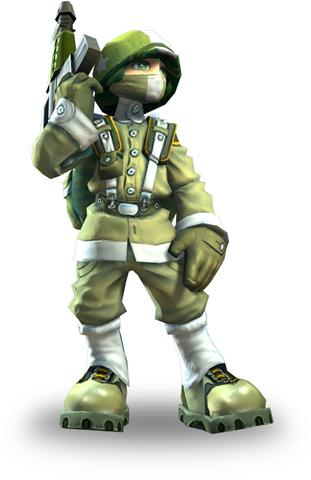
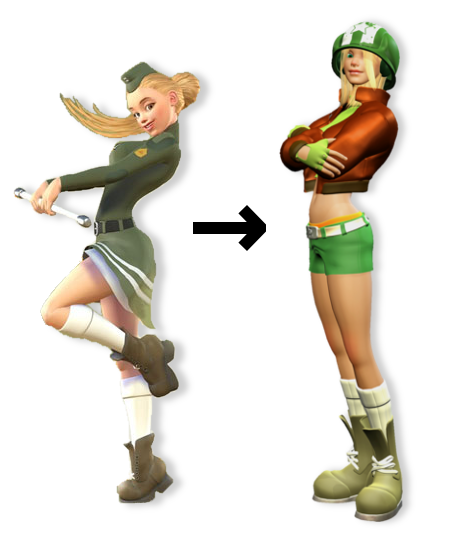
Moving on to the visual design of this game: many of the units received redesigns, especially the Tundran Territories’ infantry, most of which I think are improvements. The same can’t be said for Brigadier Betty: her look, not to mention her distinctive voice and a good deal of her peppy can-do attitude, are gone, making this iteration rather bland and forgettable. Speaking of bland, the game’s color palette is much more colorful which, while fitting well with the cartoonish style, demolishes the unique atmosphere of the B.W. 1 and stands out less by comparison.
On the left, a plucky, upbeat, and memorable character; on the right, the uncanny valley.
Okay, so maybe the aesthetics and narrative aren’t on par with the original, but this game fixes many of its predecessor’s failings when it comes to gameplay. The A.I. is much more proactive: there were many times I would be ordering my units to attack a tank or some entrenched enemy infantry and would be surprised by the wreckage of an enemy gunship I didn’t notice suddenly crashing nearby. Oh, and planes finally fly in circles when put on standby!
The motion controls also make targeting enemies and issuing commands a snap. The only place where they really feel out of place is when controlling aircraft, as pointing the Wii remote up or down controls altitude. This feels awkward, especially if the player is trying to target a ground based unit, partially due to the game not making the change in altitude immediately obvious.
The game’s missions do feel a bit more repetitive than before. BWii’s missions follow a pretty predictable formula: defend a location then go on the assault or go on the assault and then defend the capture point. That said, BWii doesn’t have any missions that drag on too long or feel unfair—which the first game was occasionally guilty of, so I guess it more or less balances out.
The game’s missions do feel a bit more repetitive than before. That said, BWii doesn’t have any missions that drag on too long or feel unfair—which the first game was occasionally guilty of.
Of course, Battalion Wars 2 also brought new gameplay elements to the table: naval units and buildings. Naval units basically feel like tanks and artillery, but much more sluggish. That said, the game does a great job of conveying their weight and scale, and their long range means naval missions don’t feel too drawn out. Unfortunately, missions in which the player has to command both land and sea units tend to feel disjointed and tedious, due the two unit types’ inability to travel together and the player not being able to use the “All Units” button to regroup their units without messing up their positioning.
Buildings are a solid addition. Players can’t select their position, instead having to secure predetermined locations. Once under the player’s control, buildings will periodically replace fallen units corresponding to the type of building (e.g. aircraft for airfields). These help take the edge off, as the player doesn’t have to worry about losing essential personnel. That said, the fact that units have to run all the way to the players position, which can be on the other side of the map, means the player can’t rely on reinforcements too much.
Debriefing
Despite all of the flak I just gave Battalion Wars 2, I do think it’s the better game. While I think Battalion Wars has more personality, it can also be much more tiring—and sometimes frustrating—to play. Of course, neither is particularly hard to come by, and they’re both worth your time.
Sadly, Nintendo never commissioned Kuju to make a Battalion Wars 3. I think it’s blend of action and strategy would’ve been a great fit for the Wii U, and the Wii U gamepad would’ve been a great help in micromanaging units, something that neither game made easy. Nintendo still seems to have a fondness for cartoony wars games if the recent 3DS game Tank Heroes is anything to go by, so I haven’t completely given up hope. If the rumors of GameCube games coming to the Switch’s Virtual Console are true, I’d happily double dip on Battalion Wars…and not just because of how utterly unreliable old GameCube memory cards are.
About the Author
Glen Straughn is a lifelong Nintendo fan whose love of video games has inspired him to pursue a career in computer programming. He is currently studying to receive his masters in computer science from Oklahoma State University. He has gotten an S rank on every mission in BWii, and even managed to get an S on the final mission on his first successful play-through…completely by accident.
We’re gonna be so pro by the end of the series! eSports, come at us, bro!
Dr. Mario history runs deep in Scott’s family. Almost enough to where he could beat levels with his eyes closed by himself – but not quite! He needs a little bit of Simeon’s help, and vice versa! Today the daring duo takes on an incredible challenge, to clear away viruses without the use of their eyes and only the guiding voice of their companion to help. Timing is very important in this puzzle game, and colors MUST be matched if success is to be attained. Lend the Crew your power as you watch – and enjoy!
Shot by Alex Campbell
“Escape the Premises” Kevin MacLeod (incompetech.com) Licensed under Creative Commons: By Attribution 3.0 http://creativecommons.org/licenses/by/3.0/
You thought Wii-related jokes had run their course? Not even close. A decade later, Simeon and Scott are revisiting the issue with an enhanced vocabulary of Wii puns and slang that you’ve never even imagined. The Nintendo Wii seemed like it was getting a big downgrade when it received its official name. The codename, Revolution, seemed much more fitting. But if Wii is responsible for allowing us these kinds of puns, we daresay that it was all worth it.
Shot by Alex Campbell
“Escape the Premises” Kevin MacLeod (incompetech.com) Licensed under Creative Commons: By Attribution 3.0 http://creativecommons.org/licenses/by/3.0/