It’s nothing personal, Wii U… it’s not you, it’s us.
As we discussed yesterday, with a brand new console coming (expensive in itself), it’s also accompanied by many accessories and other opportunities to spend your hard-earned cash. Well, that money needs to come from somewhere, so what about selling your older games and consoles… say… your Wii U? Will you really be playing it anymore? Does it really have THAT many truly exclusive games? We’ve collected the definitive lists of pros and cons – watch, then make up your mind and proceed with confidence! Shot by Alex Campbell “Escape the Premises” Kevin MacLeod (incompetech.com)
Licensed under Creative Commons: By Attribution 3.0
http://creativecommons.org/licenses/by/3.0/
The Switch is not as expensive as most outlets are making it out to be. Far too many sites are claiming that the Switch has a ton of hidden fees and will end up costing you over $700 which is totally ludicrous and completely untrue.
The Switch is $299.99 (in the US). Period.
Just because the system is launching with a ton of add-ons and accessories does not mean the price of the system is increased. All of the extras are completely optional. Do you want a Pro Controller? Cool! Buy one! Don’t need an extra dock? Okay, don’t get it. It’s not a tacked on price that’s required by Nintendo that you purchase every available accessory at launch. Not to mention you can play 2-player games right out of the box at no additional cost thanks to the versatility of the Joy-Con.
An argument could be made that the system is actually $359.98, because what is the system without any games? That’s an expected cost though, not a hidden cost. I’m sick of gaming journalists trying to get clicks to their content by making up shocking headlines or articles. While all of this info may be painfully obvious to some, I wanted to educate the few that may not know to help save your wallets.
The cost of all your Switch launch day goodies can add up extremely fast, so make sure you need certain accessories before pulling the trigger and getting a bunch of things you’ll never need.
This has been your dose of financial advice from someone who has no business telling you how to manage your finances.
That is the question. The question we are all asking as a new wave of indie titles hits the Nintendo Switch each and every week.
It’s nearly impossible not to fall behind.
To illustrate this point, consider the following group of games: Shovel Knight, TumbleSeed, Thumper, Sonic Mania, SteamWorld Dig 2, Golf Story, and Stardew Valley.
Did you purchase and play all of those?
This is just a quick list of games filed under “DON’T MISS” off the top of my head. Chances are, you’ve let a handful of these slip through the cracks. (If you actually played all of those, I want to shake your hand.)
Each week is a new opportunity to either A) catch up on amazing games in the backlog, or B) play the newest latest game that was released.
Option A feels good because you get to experience that title that’s been sitting on your wish list, enjoy it, and cross it off.
It creates a problem, though, when it causes your backlog to grow. Thanks to the deluge of new releases, truly “catching up” isn’t really an option.
Option B is exciting. You get to buy a brand new game and join in the conversations while it’s still hot. All the Nintendo podcasts and groups are discussing it.
The downside is, it prevents you from getting back to some of those earlier eShop games that received 8s or 9s out of 10.
No matter what we choose, we’re missing out.
How do you pick between shoring up your collection and trying out the latest greatest?
You have better chances of enjoying your purchases, and not regretting them, if you go with the backlog. Hindsight is 20/20, and a few months after a game launches, you know from the way a title is talked about (and IF it’s even remembered) if it’s worth it or not. You probably build a wish list and whittle it down as your perception of each game’s value evolves with time. What’s left is a series of sure-fire hits that you’re bound to enjoy.
Delve into games like that.
The cutting edge is risky, but rewarding. You can get in on a game’s fandom on ground 0 and be a part of a community’s formation. Other times, the game just isn’t what you thought it was and you’re out $10 or $20.
When you have a really good feeling about an indie title, and you can just sense that you will love it, buy it on launch day. Don’t let it pass you by. During those times, the backlog can wait.
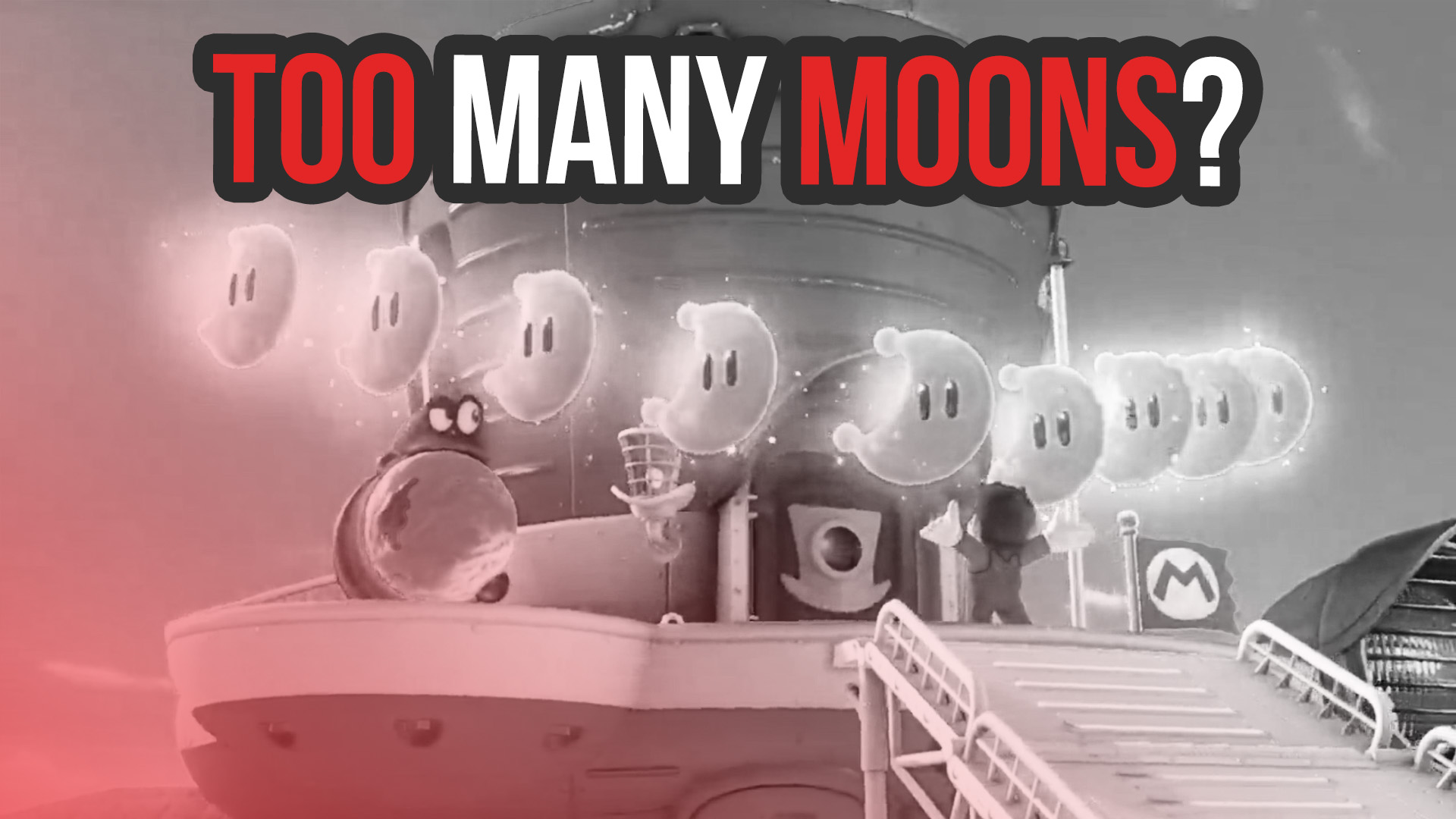
Most platformer games usually have one common goal in place: collecting. Whether it be jinjos, jiggies, stars, or moons, these games are usually referred to as “collectathons”. In order to bulk up the experience, or add more to the game, is it safe to simply add more things to collect? How do developers keep the experience fresh? If you missed the spoiler warning for Super Mario Odyssey in the title and don’t want anything to be spoiled, now is the time to stop reading.
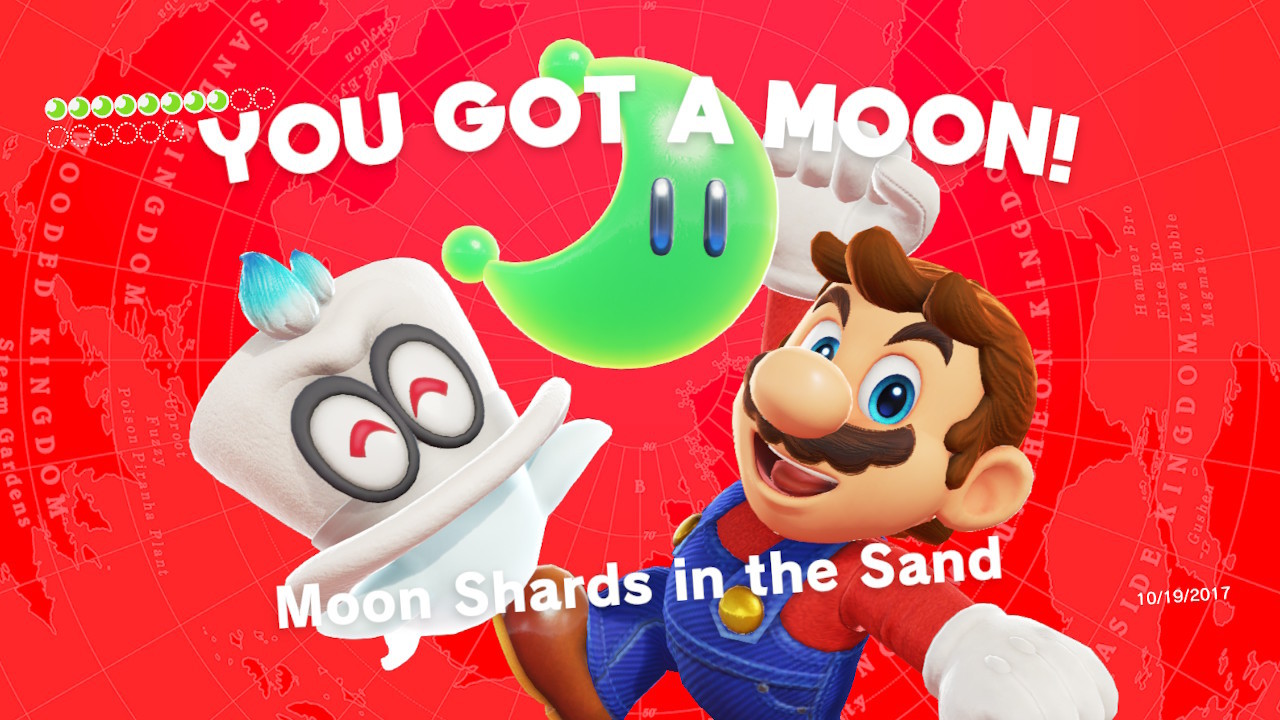
There are 999 moons to collect in Super Mario Odyssey (not counting all the additional moons that you can buy, but those don’t count toward the maxed out 999 moons that can power your Odyssey). It’s true that every moon is a little different, but when you boil it down, there are some recurring ways to get most of the moons, with little uniqueness. Some moons are collected by ground-pounding a certain area, dressing up in a specific costume, walking in a perfect circle, stacking Goombas, finding paintings, racing, etc. Despite this repetition, and the vast number of moons spread across the world, I never got sick of the experience. In my 45 hours spent, I collected everything I could, and the experience never felt stale or like I was crawling my way through.
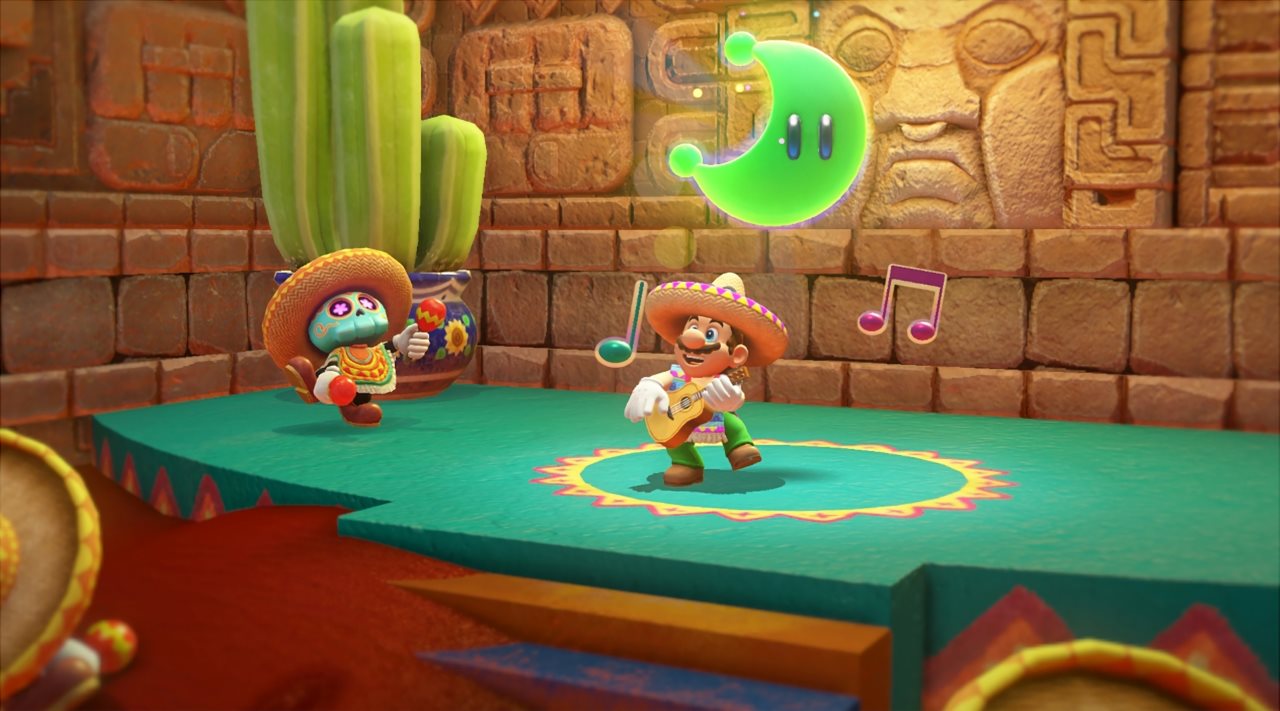
For me, this game ended at the perfect time. Anything more, and the experience likely would have started to decline. Nintendo found the sweet spot, and I think that is largely in part due to the differences in the levels. No two areas were similar in any way, and I appreciate that Nintendo didn’t play it safe with their usual grass, desert, snow/ice, mountain, and lava worlds. Starting out in the Cap Kingdom is so different than anywhere that Mario started his adventure in the past, and the sense of adventure really sparked as soon as I entered the Cascade Kingdom for the first time. The Dia de los Muertos tie-in to the Sand Kingdom was also a nice touch. The Metro Kingdom is something that I was skeptical about, as it gave me vibes of Sonic ’06, but it was done so well. Sometimes I still just go back and run around that giant playground. Even Bowser’s Kingdom looks like it never has, with a Japanese Dojo style theme. Simply wanting to experience every meticulously crafted level is what kept me going to the pursuit of 999 moons. The reason this didn’t feel like a collectathon to me is that I wasn’t motivated by the desire to collect more moons, but rather exploring and being immersed in the environment.
A game shouldn’t be driven by collecting, but exploring.
I realized that these games don’t get their longevity from the number of things to collect, but from the quality of their worlds. In Odyssey, Nintendo found the perfect balance. After I inserted that 999th moon into the Odyssey and saw the cap resting on Peach’s castle, I felt a great sense of accomplishment, and at that time, I was ready to be done. Not done exploring and playing around in the worlds, but done collecting moons. To answer my initial question: is 999 moons too many? In this game, no. In any other game, it probably would be. It all depends on the quality and creativity of the world. Not to mention that throughout my entire 45 hour completion play through, I had a pretty dumb smile on my face (except during a few moons – looking at you, Dark Side).
Nice photobomb, Captain Toad.
I just want to conclude with a more personal note: thank you as always for your time to read these blogs. I know your time is valuable, and when I write these blogs I try to approach with a fresh or new perspective, as there is already so much circulating the internet about games. So thank you, and I wish you safe and happy Holidays. Hopefully it’s not only spent with Mario on his incredible odyssey, but with family.
For the low low price of $250, YOU TOO can wait in line at E3 2017!
Two big pieces of news recently exploded on to the scene for Nintendo fans! E3 is being opened to the public?! Zelda Breath of the Wild is getting a season pass for DLC? What world are we living in, anyway? We’re here with our impressions on the news. Is E3 worth paying $250 to attend? Did Nintendo mess up with their announcement of the Zelda DLC by debuting it too early? All these thoughts, and more, inside the video!
Shot by Alex Campbell
“Escape the Premises” Kevin MacLeod (incompetech.com) Licensed under Creative Commons: By Attribution 3.0 http://creativecommons.org/licenses/by/3.0/
Wait until you get to the part of the review where Simeon talks about the phase… glitch… gun… zapper-thingy.
Simeon has the full scoop on the Metroid-like Indie game called Axiom Verge. It’s available for Wii U and it just may be worth your time – watch to get his complete impressions!
Shot by Alex Campbell
“Escape the Premises” Kevin MacLeod (incompetech.com) Licensed under Creative Commons: By Attribution 3.0 http://creativecommons.org/licenses/by/3.0/
SteamWorld Heist is an indie game developed by Image & Form, who brought us the immensely popular SteamWorld Dig game and its sequel.
Heist takes place after the events of Dig 2, as our robotic characters struggle to cling to existence after Planet Earth has been shattered.
Resources are scarce, and that’s why our trusty Steambot pirate leader Piper and her scrappy crew are exploring space and raiding enemy ships for loot.
The objective of the game is to enter a series of procedurally generated ships, accomplish certain missions like obtaining epic swag, rescuing robots in distress, or destroying big baddies.
Combat consists of moving your characters behind cover, lining up shots, and firing weapons that you’ve collected from across space. Many times, destroying all enemies is not a requirement for success, so it pays to play smart and keep the mission in mind.
Along your journey, you will collect a plethora of weapons in many categories and a ragtag bunch of crew members with different abilities. It’s up to you to determine your loadout for each mission, and any characters that survive the ensuing encounters will gain more experience points and level up.
Controls are flawless. Whether you’re playing with Joy-Con, Pro Controller, or even touching the screen without the need for any buttons, the game adapts to the way you want to play. You can gain a bit more accuracy by aiming with the touch screen if you prefer, even if you play the rest of the game with analog sticks and buttons.
Gameplay in SteamWorld Heist is turn-based, but fast-paced and exciting during the player’s turn. Aiming is a nonstop challenge that gets easier with experience, and as you learn how your character’s “breathe” and move naturally as you line up a shot. Sometimes, I wished that I could speed up the enemies’ turn, especially when multiple Scrappers and turrets were on screen. A “zoom-out” button also would have been helpful for scouting a ship, but panning around works fine.
It’s hard to complain about the graphics in this game, which are high definition with a stylized art approach. Presentation is equally good, with quick load times, a driving atmospheric soundtrack, simple user interface, and genuinely funny and clever writing that endears you to the characters and their world.
SteamWorld Heist: Ultimate Edition boasts a healthy amount of content, including DLC previously sold on other platforms. A large range of difficulty settings promises replayability, as well as New Game+ mode unlocked after beating the game (which took me over 10 hours). The downloadable content adds a playable character, interesting side-missions, and a load of hats with pop-culture references.
Simeon and I both played through this title simultaneously, and it was really fun to compare our loadouts, including all the optional characters Simeon unlocked while I was impatiently pressing through the main storyline. Exploration and strategizing is rewarded in this title!
SteamWorld Heist is easily recommendable to everyone that enjoyed Mario + Rabbids, the Worms series, or previous SteamWorld games. Heist has more limited movement options than Kingdom Battle, but is also available for the lower launch price of $20 on the Switch eShop, launching December 28th. To sum it up, it’s a challenging, rewarding, interesting, smooth, expansive game for a great value. Two Button Crew awards SteamWorld Heist: Ultimate Edition an 8.25 out of 10. Buy it!
In the coming year, as we forge into the fast-approaching unknown, may the enjoyment we derive from our leisure activities grow. Whenever those opportunities present themselves, however often or not, may they find us smiling. I hope that we find games that make us happy. For some it will be our favorite developers’ newest creative endeavors. Others will rely on retro titles revisited for the “nth” occasion. Console loyalists, PC gamers, mobile gamers, all. May 2018 be a year of gratitude for the art in our medium.
Lastly, may 2018 be the year in which we play together, more than any year before. The love of a community amplifies mirth. Join me in raising a glass (filled whatever it is you toast with). To the Crew and all other gamers out there. May we have a blessed 2018.
Ah, pixel art…Nothing says “video games” quite like a 32×32 pixel sprite. Retro sprites are a fascinating art form: unlike many other mediums, the conventions of pixel art were born of technical limitations, not creative freedom. While the nuances of the medium are often lost on modern developers, who see the limitations as an excuse to churn out overly simplistic animations, classic games would often feature impressively detailed animation frames. To this day, even single frames of these animations are downright iconic and instantly recognizable to fans around the world, something that few other animated works can boast!
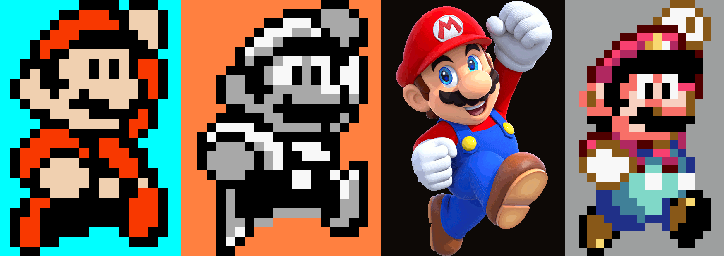
Pop quiz! Which of the following are 8-bit images?
Please excuse the fact that these aren’t in chronological order.
Believe it or not, only the second one from the right is 8-bit. “B-but, but the NES and the Gameboy were both 8-bit systems!” you say. Yes, well, maybe it’s time we actually examine what exactly “8-bit” means.
In Computer Imagery
Let’s start with what bits mean for pictures. There are two basic ways of composing pictures: color channels and indexing. In a picture that uses color channels, each color is represented by a mixture of primary colors with each primary color composing one of the image’s color channels. These colors are red, green, blue, and sometimes an additional “alpha” channel that represents opacity (i.e. how much you can’t see through it). Every pixel in the image is a combination of these channels.
The number of bits dedicated to each pixel is known as the image’s color depth. As you may know, bits are binary digits, hence the name (binary digit). Because of this, every sequence of bits can represent 2n values (where n is the number of bits used). That means an image with a color depth of three—which is to say one bit per channel—can have two shades of red (fully black and fully red), two shades of green, and two shades of blue, which combine for a total of eight (23) colors. In today’s day and age, most images either have a color depth of 24 for plain R.G.B. or 32 for R.G.B.A., dedicating eight bits (one byte) to each color channel. That means R.G.B. images these days can contain up to 16,777,216 colors. Any more than a byte per color channel results in diminishing returns.
The number of bits dedicated to each pixel is known as the image’s color depth.
As you can imagine, three bytes per pixel adds up quickly on a console that only has 2 kilobytes of video R.A.M. While it’s easy to forget in this age where most computers typically have four to sixteen gigabytes of R.A.M. and terabytes of storage, space—both memory and long-term storage—was a valuable commodity back in the 80’s and 90’s. That’s where color indexing comes into play. Instead of storing color values per pixel, indexed images have a set of color values stored in a lookup table (i.e. the palette) with each pixel being represented by a single number that refers back to a position in the lookup table. For instance, if the color in position 5 of the table is red, then every pixel with the value 5 will be displayed as red. While this would limit the number of colors in an 8-bit image to 256, that’s 256 out of any of the thousands or millions of 16-bit or 24-bit colors available.
So, knowing this, where does this leave the NES’s graphics? An NES sprite consists of four colors, three visible and one transparent. That makes NES sprites 2-bit sprites. Don’t look at me like that, it’s the truth!
Now I’m sure some of you are thinking, “well, just because the sprites are only 2-bit doesn’t mean NES graphics aren’t 8-bit. The NES could produce way more than four colors at a time!” Okay, while we’re stretching terms a bit (or more accurately, crumpling them up and chucking them into the fireplace), I’ll be generous. The NES used the YpbPr palette, which consisted of 64 colors. So if we were to hypothetically classify the NES’s graphics in regards to the total number of colors available, that would mean the NES has 6-bit graphics. To add insult to injury, only 54 of the colors are useful, as many of them are identical shades of black. That said, the NES did include an additional three tinting bits (one for each primary color). While this increases the theoretical number of colors to 432, the tint is applied globally, meaning all sprites and tiles on screen were tinted at the same time. So, in actuality, it really just had 8 sets of 54 colors. What are we at now, 9-bits?
All 64 colors the NES could produce prior to tinting.
What Does 8-Bit Really Mean Then?
So why is it we call sprites from the NES “8-bit” when they’re actually 2/6/9-bit? Simple, they were from games released on an 8-bit console. Of course, that begs the question: “what’s it mean when we say a console is 8-bit?” The number of bits ascribed to a console refers to its central processing unit. The NES used a Ricoh 2A03 processor (or its counterpart the 2A07, used in P.A.L. consoles), which is an 8-bit processor.
The CPU of the Nintendo Entertainment System.
So what’s makes an 8-bit processor an 8-bit processor? When someone says a processor is “X-bits”, they are referring to the processor’s word size. In computer science, the term word refers to the standard computational unit of a machine. That means an 8-bit processor has a word that’s eight bits long, which in turn means that the C.P.U. processes eight bits in one operation.
My System Has More Bits Than Yours!
Just how important is a system’s word size? These days, manufacturers don’t even mention their consoles’ word size, but back in the 80’s and 90’s, it was a major part of a platform’s marketing. The logic was if a system had a 16-bit C.P.U., it could process twice as much data as a console that only had an 8-bit C.P.U., right? Unfortunately, the reality isn’t that simple.
While technically a 16-bit C.P.U. processes twice as much data bit-wise as an 8-bit C.P.U. per calculation, we need to keep in mind what that data is actually representing. Consider the following binary numbers:
00011001
00000000 00011001
Both the 8-bit value and the 16-bit value equal 25, with each representing the contents of one word for an 8-bit and a 16-bit system, respectively. Notice how they appear identical save for the number of leading zeros? Words can be thought of like boxes: if the number placed inside is smaller than the box, then the excess space is filled with packing peanuts… or, zeros. This way, the processor doesn’t have to worry about how long the number’s binary representation is and instead just performs whatever calculations are needed on the entire word. All of that is to say that unless the calculation in question requires numbers that exceed the maximum value that can be represented with the number of bits in the system’s C.P.U., there isn’t actually any speed boost.
That said, when the largest number you can handle at one time is 255, those extra-bits really do make a difference, so maybe the 8-bit and 16-bit divide isn’t the best example.
In the end, the reason we call sprites from NES games “8-bit” isn’t because the graphics themselves are 8-bit, but because of a sort of linguistic cross-contamination. The systems of the 80’s and 90’s were advertised by exploiting consumer ignorance to turn technical terms into marketing buzzwords, resulting in the systems having much of their identity tied to these terms. Because of that, anything associated with the consoles from that era is going to be collectively referred to by the one unifying descriptor available: 8, 16, 32, or even 64-bit. In the end, it’s ultimately harmless; these terms have an understood meaning and are thus perfectly descriptive in the context in which they’re used. Really, the only real confusion this causes is that I’m somehow okay with it; normally I’m the type go on a long rant whenever anyone says “Ethernet cable” when they really mean “Cat-5”.
SteamWorld Heist: Ultimate Edition recently released on the Nintendo Switch eShpop! It’s a single-player affair, but that doesn’t mean Simeon and Scott can’t take turns and have just as much fun! This is a stretegy game along the lines of Mario + Rabbids or Worms. By the end of this video, you should know if the game is for you or not! We also have a review on our channel if you need more information!
“Exit the Premises” Kevin MacLeod (incompetech.com)
Licensed under Creative Commons: By Attribution 3.0
http://creativecommons.org/licenses/by/3.0/
While Ryan Van Liere was in town for the launch of Nintendo Switch, Simeon and Scott decided to take him out for a night of fun at the local arcade. We played a lot of arcade games, Nintendo and others, and sunk a lot of quarters into the slots. Our skills, you ask? You’ll have to watch and see for yourself.
Shot by Alex Campbell
“Escape the Premises” Kevin MacLeod (incompetech.com) Licensed under Creative Commons: By Attribution 3.0 http://creativecommons.org/licenses/by/3.0/
Can you imagine what we’d do if we just beat the game while making this episode… accidentally?!
Can we make it into Ganon’s castle, with only early-game items and armor?! Ryan, Simeon, and Scott take turns with the pair of Joy-Con to see what they can do against the Malice and Guardians. Spoiler disclaimer: We approach the endgame, but do NOT meet the final boss.
Shot by Alex Campbell
“Escape the Premises” Kevin MacLeod (incompetech.com) Licensed under Creative Commons: By Attribution 3.0 http://creativecommons.org/licenses/by/3.0/
Needless to say, the weekend the Nintendo Switch debuted, I didn’t get much done. After the setup of the surprisingly small console, I immediately started playing Breath of the Wild. In my opinion, the introduction is the best in the series. I was instantly hooked and ended up playing until around 2 A.M. I have an embarrassing number of hours logged into the game already, and I only have about 1/3 of the map uncovered, and only one dungeon complete. Though I have a ways to go, I can already tell this game is special. A game like this doesn’t come around often, so I plan to cherish it. I could go on and on about my feelings so far for Breath of the Wild, but alas, this is about the Switch.
Looking out into the horizon for the first time is a magical experience
The next day wasn’t very different, with the exception that friends were planning on coming over to try out the system. Of course, I played Zelda all day leading up to that. When people started arriving, it was time to try 1-2-Switch. Let me say that this is probably the most fun I’ve had with a multiplayer game in a long time. The concept is a little strange at first, especially since it encourages you to look your opponent in the eyes (something us introverts can struggle with). This creates a somewhat awkward (yet hilarious) interaction. As we went through the games we realized we were not only having fun with the game, but having fun with one another. It’s clear this is what Nintendo was going for, and once you ease in and feel more comfortable with how the games work, it’s truly a blast.
This game is not only fun, but a great showcase of the Switch technology
After 1-2-Switch, we transitioned over to Snipperclips. Another multiplayer game where two players work cooperatively to solve different puzzles and accomplish different tasks. It’s a lot of fun. I also downloaded Shovel Knight: Treasure Trove, and haven’t even gotten to it because I’ve been so enveloped in the other games.
This console has some magic that the Wii U just didn’t have. I truly believe this is what Nintendo needed in terms of their position in the industry. That is, to not worry about competition, but rely on the best development in the industry and innovation. I’m also looking forward to Mario Kart 8 Deluxe and Splatoon 2 releasing in the coming months. Yes, I may be caught up in the whirlwind of hype and still in the “honeymoon phase” with Zelda, but my hope is fulfilled back in Nintendo. Now excuse me, I need to go play Zelda; it hurts to not be playing it.
Contrary to popular opinion from the outside, being a Nintendo fan is not always mushrooms and sunshine. It can be unforgiving, inviting ridicule from fellow gamers, the gaming community, message board commenters, and even friends and family. But being a Nintendo fan is always worth it for me, which leads to the question I get a lot: Why Do You Like Nintendo?
From Sega to Nintendo
My gaming history stretches back to the glorious 16-bit Console Wars between the Nintendo and Sega. I owned both, but I got more use out of my Sega Genesis because kids at school would make fun of me if they knew I liked Nintendo. Sega was cool. Sega was hip. Sonic was fast with attitude and Mario was slow and boring. Secretly, I liked Nintendo as well, but my heart was with Sega. I also owned a Nintendo 64, but I had a Sega Saturn as well and that was my priority. This lasted all the way until the Dreamcast was discontinued, and my gaming tastes defaulted back to Big N.
The current console at that time was the GameCube, which ended up being Nintendo’s second lowest selling home console in history. Sony’s PlayStation brand and Microsoft’s Xbox were the new hip kids on the block, and Nintendo was accused of being a kiddie machine. Outside of a few games that were geared towards a mature gamer – like the then-GCN exclusive Resident Evil 4, Geist and a few others… the GameCube got most of its milage out of family friendly games. If you didn’t like twenty Mario Party games, the GameCube was not for you.
But it was during this era something was rekindled inside me. While Sony and Microsoft began to push online gaming, Nintendo doubled down and continued to focus on the fun of couch multiplayer – games you can play with friends in person and have a blast.
During the very successful Wii era, Nintendo’s dedication to multiplayer games was at its peak. Wii Sports, perhaps the best pack-in game ever, was a prime example of the kind of fun video games could represent. Despite how much it can be ridiculed now, I defy anyone to say that their first few times playing Wii Sports was not fun. It was a lot of fun. That’s what propelled the Wii to sales of over 100 million worldwide.
The Wii U somewhat faltered in this aspect, but the new Switch console has put a heavy emphasis on it again, with games like Mario Kart 8 Deluxe, ARMS and Splatoon 2 all out within the first few months of the system’s debut. Gaming is fun again.
Soooo, Why Do I Love Nintendo?
All that being said, I love Nintendo because, to me, it just represents a good time. When I think of the PlayStation 4 or the Xbox One, I think of shooters like Call of Duty or games like Grand Theft Auto. I’m not saying those games have no worth, or that they aren’t entertaining or even visually astounding… but when I want to just have a fun time with friends, or a game I can just pick up and play at any given moment without an investment of 40 hours a week I choose Nintendo. Gaming shouldn’t always feel like a chore where I am punching a time clock to advance.
Certainly, Nintendo does have games that fall into that category. The recent and highly-reviewed The Legend of Zelda: Breath of the Wild does for sure as it is an adventure game much in the style of Skyrim, but where I feel Nintendo separates itself from its competitors is how that genre of games isn’t all they have. There are more than just adventure and sports games on the Switch this year. There is also fun.
Take a very simple game like Snipperclips, a co-op puzzle game in which you play as pieces of paper and you have to snip each other in order to match certain shapes or get objects from one side of the screen to the other. It sounds simple enough, but its magic is in the gameplay. I haven’t had so much fun in a co-op game in a long time… it was fun, funny, and charming – and challenging as well, as the game progressed. It’s a game that you and your significant other can play, or your younger sibling or cousin. It is the epitome of what beloved Nintendo President Satoru Iwata always believed video games should be – It’s fun for everyone.
Nintendo’s roster of happy characters and cute enemies just bring a smile to my face. I’ve used this word before, but looking at the E3 trailer for the upcoming Super Mario Odyssey is just pure magic. It is what I call “Nintendo Magic.” Playing their games can make anyone forget their troubles for an amount of time and make everyone feel like a kid again. Personally speaking, I struggle with depression and anxiety, so my choice to play games of this nature is not only a preference but a very meaningful choice as well. Nintendo makes me smile.
Their first-party games are consistently of very high quality. Sometimes their franchises don’t progress enough, but then they hit you with a Breath of the Wild or a Super Mario Odyssey, which completely changes your expectations and takes you by surprise. And I will never get tired of them.
Standing Strong
It isn’t easy being a Nintendo fan. When the two other major consoles are blowing the doors off the building with the latest Call of Duty, Metro or Assassin’s Creed games, Nintendo creates buzz with Mario or cartoonish characters like in ARMS. This comes with a price, because Nintendo and their fans are easy targets. Buying some Nintendo content can result in a mocking comment from a cashier – a friend recently told of a McDonald’s cashier laughing when he went to order a Mario Happy Meal toy to complete his collection. Playing Nintendo games can mean ridicule from people who like to point out that Nintendo’s consoles dating back to the Wii have not been in the same league as competing systems as far as power and graphics.
All of this, though, can make fans even more dedicated. There is a reason that small groups popped up around the world in major cities for 3DS gamers to swap streetpasses and puzzle pieces and play Mario Kart 7 with each other. There is a reason why holding a meet-up for the newest Animal Crossing game attracted more than dozens of people at every stop during a Nintendo Mall Tour. There is a reason why VANS made a very successful line of Nintendo themed shoes last summer. There is a reason why people love their franchises so much that just a simple title card for Metroid Prime 4 at E3 made the internet meltdown in a frenzy of wild, screaming excitement. There is a reason why people love the company so much that even PR reps (like Bill Trinen or Kit and Krysta from Nintendo Minute) are elevated to near-celebrity status. There is a reason that Nintendo can get away with having one single retail store in New York City and fans will travel from all over to visit it as if they were going to Disney World. The ridicule and snubbing we tend to get from other gamers and game publishers who skip developing games for Nintendo systems just makes me feel like connecting with other Nintendo fans is a major event. We are a community of fans who feel slighted in one way or another, and it makes us feel like we are all in this together. It is so much fun to get in a group of fellow fans and just talk about anything and everything. Attending a Nintendo Switch Preview Event in Chicago this past February was fun in part because of trying out the then-yet-to-be-released system, but largely because of being surrounded by fans, talking about games, seeing people dressed up in Nintendo cosplay, and just being one with the excited community. It was not unlike the feeling you get going to a Comic-Con – it just felt right.
Nintendon’t Sometimes, and That’s Okay
This is not to say that competing systems don’t have dedicated communities or “fun” games, nor does it mean that Nintendo is perfect and doesn’t have any faults. But Nintendo doesn’t play by anyone’s rules but their own. Sometimes that can be a bad thing, but I feel it is mostly a positive. They focus on fun, they focus on being together, and they focus on gaming together. There is a level of fun that online playing just can’t compete in comparison to couch multiplayer. Hitting someone with a red shell in Mario Kart, or stealing all of their stars in Mario Party may be the source of “ruined friendship” memes, but the competition of playing right next to a friend is just a level of satisfaction that can’t be matched. Even though I enjoy a fair share of “mature” games, I will almost always choose the fun of Super Mario Odyssey over the carnage of a Grand Theft Auto. And I will definitely choose a company that will always continue to offer those games to me even when they offer the M-rated stuff.
The Nintendo Magic is why I fell in love with Nintendo. It’s why I put up with some of their occasionally questionable decisions. Their games, characters, and universe just never cease to make me smile and it makes me happy… and isn’t that what gaming is supposed to be about?
Eric “Flapjack” Ashley has been a Nintendo fan for almost his entire life! While he also has a special place in his heart for Sega, it is Nintendo that gets him worked up and the franchises that capture his imagination and wonder. Flapjack is hopelessly in love with Animal Crossing. When he is not playing video games, he is a social media guru, assisting numerous organizations with their outreach and promotions, and he is also a big horror movie buff. Follow him on Twitter and Instagram: @flapjackashley.
We’ve got better games to play than Mario Kart! Close your eyes and pick something off the eShop.
#510 – Zelda Breath of the Wild is a tough act to follow, and Mario Kart 8 Deluxe certainly falls short in that regard. The racing game has its charm and its place in the Switch owners’ collection, but it also has some major design problems that frustrate the player, and makes them want to go back to Zelda!
“Escape the Premises” Kevin MacLeod (incompetech.com) Licensed under Creative Commons: By Attribution 3.0 http://creativecommons.org/licenses/by/3.0/
With Nintendo fully revealing the Nintendo Switch TONIGHT, we couldn’t be more hyped! This is officially our last chance to make predictions pertaining to the launch of the console, its hidden features, and what we might see accompany the hardware at launch! Pass the time waiting for the Presentation by watching this episode and dropping your OWN predictions in the comments section! Related blog: 6 Ways Nintendo Can Nail the Switch Presentation https://twobuttoncrew.com/2017/01/08/6-ways-nintendo-can-nail-the-switch-presentation/
Shot by Alex Campbell
“Escape the Premises” Kevin MacLeod (incompetech.com)
Licensed under Creative Commons: By Attribution 3.0
http://creativecommons.org/licenses/by/3.0/
Also, carrying around floppy mops and killing people with them makes this game pretty incredible.
Zelda: Breath of the Wild is quite possibly Nintendo’s most anticipated release in history. Fortunately, it’s safe to say that the title delivered in force! The game was met by resounding positivity from critics and gamers alike. In this episode of the Two Button Crew show, Simeon and Scott are trying to dissect the specifics of what makes this particular entry in the Legend of Zelda series so special.
“Escape the Premises” Kevin MacLeod (incompetech.com) Licensed under Creative Commons: By Attribution 3.0 http://creativecommons.org/licenses/by/3.0/
Sometimes, Nintendo gives us something good disguised as something we don’t want.
The newest entry in the Metroid Prime series has just been released, and the Nintendo fanbase has been in an outcry over it. Is this game worth a shot? Is it worth your time? Watch for all the details on Scott’s experience with the game.
Shot by Alex Campbell
“Reformat” Kevin MacLeod (incompetech.com) Licensed under Creative Commons: By Attribution 3.0 http://creativecommons.org/licenses/by/3.0/