For real though, is Scott just being a pansy? (GET IT!?)
#535 – TumbleSeed is a cute, adorable, STINKING DIFFICULT indie game on the Nintendo Switch. Your only task is to roll a seed to the top of the mountain, but the game does everything in its power to stop you. Games like this straddle a fine line between fun and frustrating… where does TumbleSeed land?
Footage Credit – Polygon, SwitchForce “Escape the Premises” Kevin MacLeod (incompetech.com)
Licensed under Creative Commons: By Attribution 3.0
http://creativecommons.org/licenses/by/3.0/
#536 – If you own a Nintendo Switch and you haven’t downloaded Thumper, YOU’RE DOING IT WRONG! This rhythm game on the eShop is worth all 2,000 pennies you’ll drop on this gem. You’ll be intrigued, you’ll be awed, you’ll be stunned, you’ll be challenged… do it. Go forth and Thump.
Footage Credit – SwitchForce “Escape the Premises” Kevin MacLeod (incompetech.com)
Licensed under Creative Commons: By Attribution 3.0
http://creativecommons.org/licenses/by/3.0/
Howdy, crew! Welcome back to That Was a Thing, where I take a look at strange and obscure pantendo games and paraphernalia!
The Wii: when it’s key feature, motion control, was first revealed, the first two uses that went through everyone’s mind were sword and gun. Not missing a beat for once, game developers were quick to cater to the public’s sociopathic expectations. Many of the Wii’s early titles utilized the Wiimote’s pointer to aim projectile weapons and its motion detection to swing melee weapons, and the results were undeniably mixed. One such game was Ubisoft’s Red Steel.
The game was fairly standard fair: girlfriend kidnapped by yakuza, go to Japan and shoot them, yada, yada, yada. What separated it from other first-person shooters was its motion-controlled swordplay. At various points in the game, the hero would have to fight in one-on-one katana duels. Long story short, it just didn’t work. Unfortunately, the Wiimote’s I.R. sensor and accelerometer simply weren’t enough to emulate the one-to-one precision players expected.
Which is why Nintendo invented the Wii MotionPlus! And this is where Red Steel 2 comes in. When Ubisoft saw the gyroscope add-on, they knew they had everything they needed to set things right. I seem to recall a lot of hype surrounding this game before it came out; retailers even offered preorder bonuses. I first heard about the game from the now defunct Nintendo Power magazine, and was immediately intrigued. This game was dripping with style and—just as important—it didn’t have anything to do with the first game, so I could jump in without missing anything. However, I wouldn’t get around to playing it until I got an extended trial of the late Blockbuster Video’s online rental service, and decided it was time I a gave it a shot.
Nu-Western Post-Cyberpunk Japanimé
Let’s start at the beginning. The game opens with our hero waking up on the outskirts of town. As he slowly comes to, he notices his hands are tied. Tracing the rope, he quickly realizes he’s not just tied up, he’s tied to the back of one of his assailant’s motorcycles. Just woke up, and this day’s already turning out to be a drag.
And this is how we’re introduced to the game: a gloriously over-the-top, first-person cutscene in which the hero is dragged into town, crashes the bike, and dusts himself off like he does this every day. While it admittedly takes a few minutes to get to gameplay, this intro nails the tone of the game and what players can expect right off the bat! You’re the toughest, badest son of a gun on the planet and you can bet your stetson every pinhead fool-enough to take a shot at you is going to make you prove it!
The intro nails the tone of the game and what players can expect right off the bat!
In fact, I’d say this game runs on distilled, unadulterated cool, and not in a “trying too hard” kind of way either. Even when parts of it seem hokey—or downright silly—the game presents its set-pieces with such confidence and commitment that the player really has no choice but to just go with it. While other games try to convince you they’re awesome, Red Steel 2 just leans in close, stares you right in the eye, and in a low, gravelly voice tells you it’s awesome.
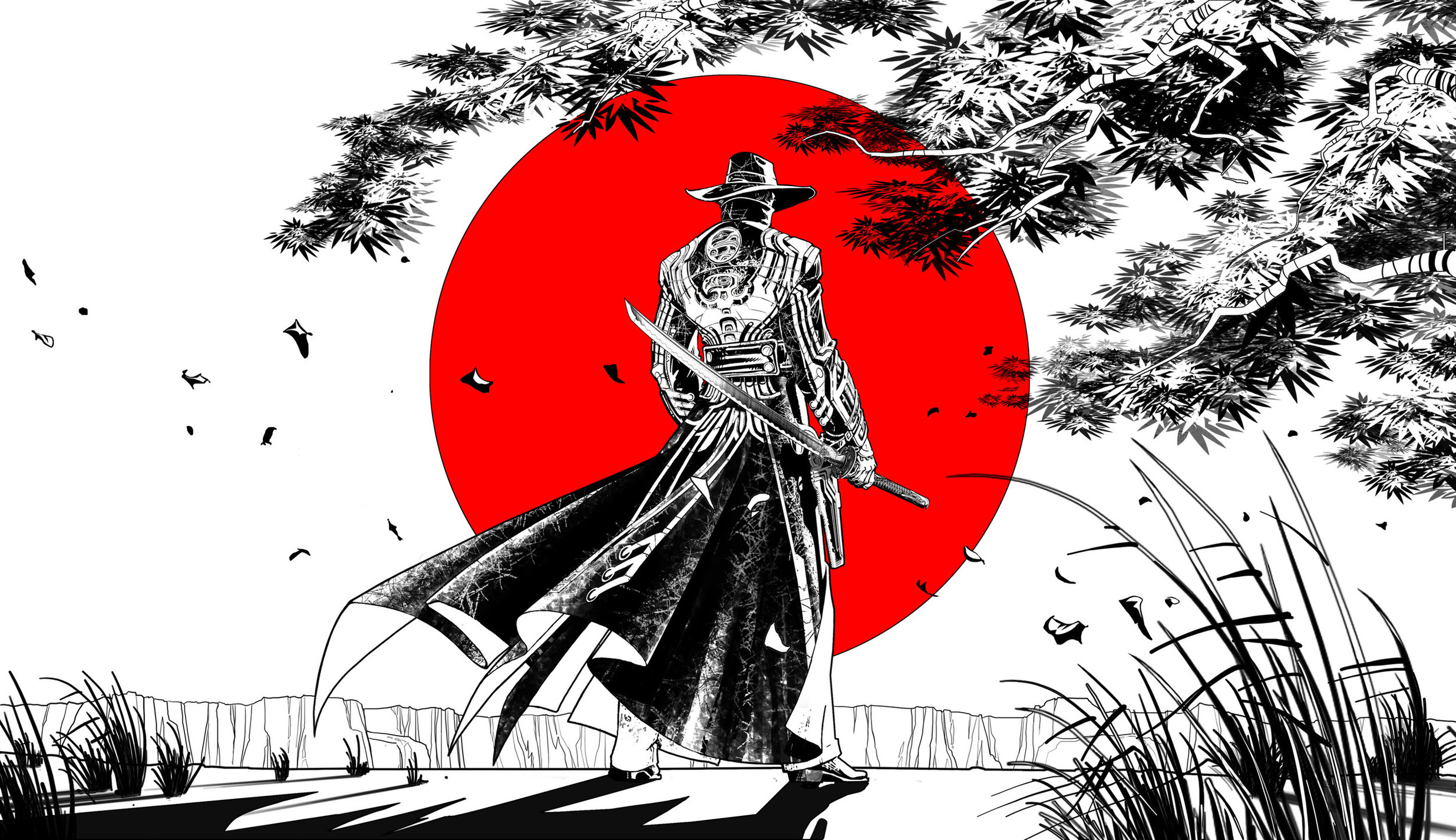
On that note, let’s take a moment to talk about this game’s aesthetics. This game is a chocolate-and-peanutbutter-esque mashup of the wild west and samurai flicks, with the occasional dusting of cyberpunk. The game takes place some unspecified amount of time in the future in a dystopian Nevada. The environments you explore are a strange blend of old-west, feudal Japan, and run-down, futuristic towns. It’s not at all uncommon to see Cracker Barrel-esque country stores with tanukis on their signs right next to radio towers and hovering attack drones. Moreover, the plethora of destructible crates, trash bags, boxes, and barrels gives the environments a cluttered, grungy feel that reinforces the gritty tone of the game.
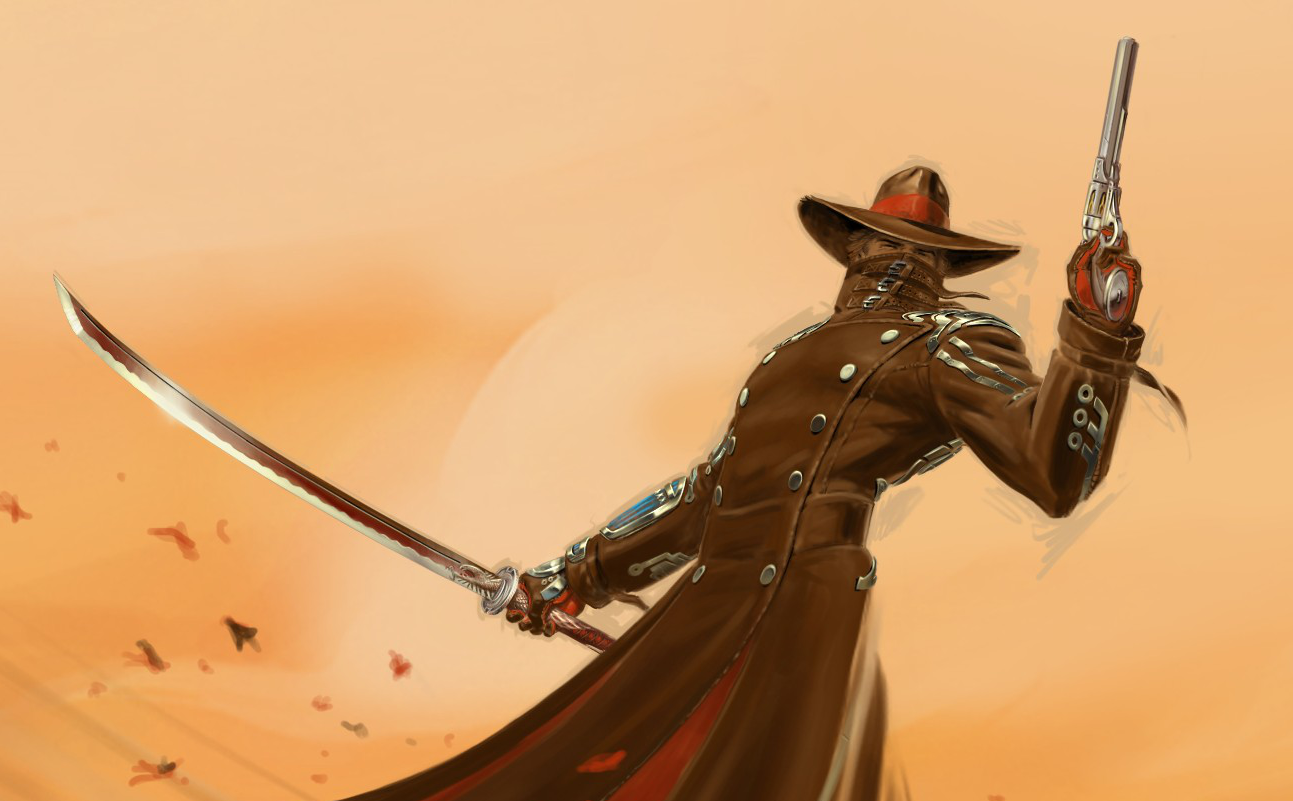
Just look at this guy! He’s Clint Eastwood mixed with Miyamoto Musashi left to marinade in anime overnight!
The game makes use of a heavily stylized visual design. While the Japanese influences on the plot and setting may lead some to call it anime-inspired at first glance, it really has more in common with comic books: bold lines, fairly realistic body proportions, and a deliberate visual roughness that complements the game’s visceral combat and tale of ambition and revenge. As to be expected with a western, the color palette includes a lot of earthy tones: browns, oranges, and sandy yellows. Fortunately, Red Steel 2 manages to avoid the pitfall of making all of its environments dingy brown, with several areas including—if not primarily consisting of—cool blues, grays, and greens. Clearly, the art team put a lot thought into making each area visually distinct from one another, as every stage either has a unique theme or makes use of color to distinguish itself. That said, all the themes are variations of cowboy, samurai, or industrial, so while each level is aesthetically distinct from one another, the constraints of the game’s themes do start to wear thin toward its conclusion.
Clearly, the art team put a lot thought into making each area visually distinct from one another.
While we’re on the topic of environments, one of my biggest complaints with the game’s visuals is that some of them don’t age very well. Between the murky textures and low-res models, a lot of the environments in this game don’t look very good close up. Fortunately, you’ll probably be too busy hacking-up dudes (who themselves look fine) or searching for loot to pay too much attention to such things.
Cutscenes are another weak point. To be fair, most cutscenes in this game are okay, but the ones that trigger when talking to one of the hero’s allies are just painful. These usually consist of a stationary camera shot with one lone character pacing back and forth while talking. And it is so boring. In the end, while I love the visual design, I suspect the artists weren’t given enough time or resources to fully realize it.
So what exactly is the story? You play as the last surviving member of the Kusagari clan, an outcast banished by the elders for…well, the game never actually says. There was a short “animated comic” online that serves as a prequel to the events of the game. You can still find it, but I wouldn’t bother, it’ll just leave you even more confused. The only revelation I got from it is that the hero is wearing a blue shirt under his signature duster.
Confusing backstories aside, the story really isn’t that complicated. First, you get your sword back from a gang leader, then you find out the real villain wants to make more swords like yours because it has special qualities. Along the way, you compile a cadre of companions. Truth be told, they’re exactly who you’d expect to find in this sort of game: the sword smith/kenjutsu sensei; the old, stubborn sheriff; the hacker girl; and the guy who’s going to double-cross you. The plot’s pretty cookie-cutter when you look at it separate from the game’s unique setting, but I’d argue that’s not really the point; this is an action game. So how is the action?
Hack and Shoot
Red Steel 2 is a first-person action game. I say “action game” instead of shooter because, well, this isn’t really a first-person shooter. Sure, you play from a first-person perspective and you shoot things, but once you get a sword, the guns take a backseat. No, at its core Red Steel 2 is a brawler with some F.P.S. trappings.
At it’s core Red Steel 2 is a brawler with some F.P.S. trappings.
During combat, players can freely switch between swinging a sword and shooting thugs with one of four guns. As to be expected, swinging the sword is accomplished by swinging the Wiimote and guns are fire using the B-trigger. Sword slashes are individual attacks in a specific direction instead of 100% one-to-one movements, making each swing a discrete action, much like a button press. While it may sound like a cop-out, this system actually works really well: this system discourages flailing and instead encourages you to make deliberate, decisive strikes, which ultimately gives each hit you land more impact.
This game is full of tough choices, like, “who do I shoot first?”
This game also showers you special abilities. Each one has its purpose, and figuring out how to combine them seamlessly is immensely satisfying. It also helps that most of them are very easy to perform. All special abilities are simply one swing direction and button combination, and because of the aforementioned motion registering method, the game has very little difficulty figuring out what it is you want to do.
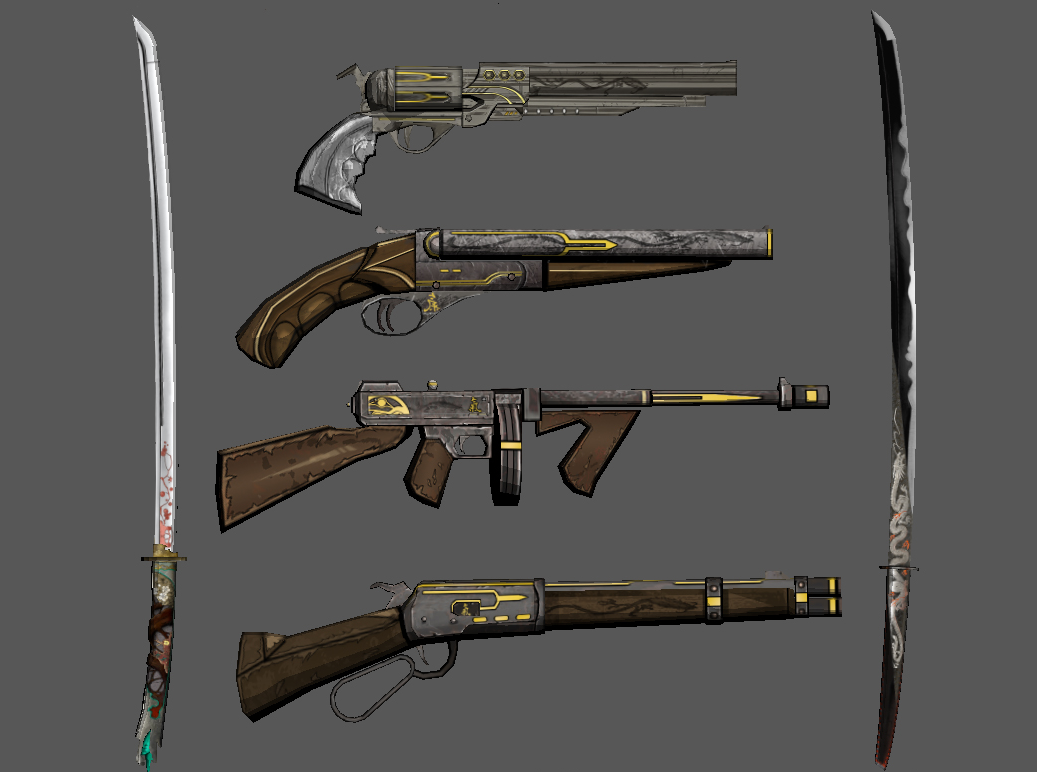
Gun fighting isn’t nearly as intricate. Simply point and pull the trigger. That’s not to say it isn’t fun; getting to smoothly switch between the two fighting styles is a blast. It gets even better once you start unlocking special attacks for your firearms and—of course—more guns. You start with just a revolver, but eventually get a sawed-off shotgun, a Tommy-gun, and finally a rifle. Of all the guns, the only one I don’t really like is the rifle: by the time you get it, it just doesn’t feel necessary. That’s not to say I never found a use for it, just that it doesn’t really stand-out.
Say hello to your new best friends.
Fighting is the most fun when you manage to get into a rhythm. Most fights aren’t terribly difficult, so the fun comes from trying to establish a sense of flow. Fights just look awesome in this game, with animations carrying a great sense of impact and frequent visual effects, like slow-motion, punctuating dodges, parries, and finishing blows. This means that once you get that flow, the fights almost look choreographed, especially if you make a conscious effort to make use of your diverse moveset. All of this is enhanced by the game’s first-person view. Because you experience gameplay entirely through the hero’s heterochromatic eyes, you never get to see what exactly it is the hero’s doing, letting your imagination run wild filling in the blanks.
But visceral acts of violence are only what you’ll be doing about half of the time. A good deal of the game is quietly exploring the levels looking for fights, money, or optional objectives. And I have to say, these quiet moments are what give this game its phenomenal pacing. Much like in Metroid Prime, F.E.A.R., or Half-Life, these exploration segments help to break up the action and give the player some breathing room, not to mention a chance to wind down between battles. These brief interludes never feel out of place, however. Walking the abandoned streets creates a rising sense of tension which makes you anticipate the next fight all the more, especially since your opponents tend to come out of nowhere.
Walking the abandoned streets creates a rising sense of tension which makes you anticipate the next fight all the more.
An odd quirk of these exploration segments is the occasional motion-based prompt. Every now and then, you’ll come across a combination safe or a dial that you’ll have to turn with the Wii remote. It’s never very challenging as you either need to tilt the remote at the appropriate angle and hold it there, in the case of dials, or press the A button to activate the tumblers, in the case of the safe. While it seemed perfectly natural when the Wii and the MotionPlus were still fairly recent, nowadays I can’t help but think it dates the game. Not necessarily in a bad way, mind you, but it certainly screams “Wii.”
Then there’s the upgrades, and—oh golly—are there a lot of them! You can upgrade your sword, your special abilities, your guns, the ammo for your guns, your coat, and even your hat! This is where money comes into play. You’ll come across a lot of cash, be it from completing missions, using special attacks to finish foes, finding secret collectibles, or just plain lying around. I can only assume part of what makes dystopian Nevada dystopian is inflation, ’cause you’ll find money flipping everywhere. And even then you’ll still have to go out of your way to get all of the upgrades available to you. Honestly, while I appreciate the effort, I can’t help but think the dev-team went a little overboard. While not being able to get everything in one run does encourage thinking about how you upgrade the Last Kusagari, it can be frustrating to obsessive types like myself, as this game doesn’t feature a “new game plus” option. Then again, maybe it’s for the best. Since enemies aren’t that strong to begin with, upgrading your weapons means they go down even quicker, thus revealing the tragic irony of this game: one-shotting an opponent is the ultimate buzzkill.
Riding into the Sunset
Red Steel 2 is a rip-roaring good time. From it’s sense of style to its fluid gameplay, the game knows what it wants to be. I think it succeeds partially because it’s so focused on nailing the core concept. That said, it is a bit of a one-trick pony. If you don’t like old-school, run-and-gun shooters or hack-and-slash games, then there is absolutely nothing here for you. It’s a great trick, and it doesn’t outstay its welcome, but the whole game is the same basic exploration and combat loop all throughout. It’s also not without some flaws. Aside from the ones I’ve already mentioned, the ending is pretty weak, the “challenge mode” is just a mission select with a tacked on scoring system, and there’s no post-game content or completion bonuses to add replay value. But I guess that—aside from the ending—all of those complaints just reinforce the notion that this game is about doing one thing and doing it well. This is—in my opinion—one of the best action games on the Wii and an excellent exhibition of what the system’s motion controls could do to enhance gameplay.
Here’s hoping there’ll be a Red Steel 3 on the Switch!
The Legend of Zelda: Breath of the Wild is a special game. Is it perfect? Not quite. But in my humble opinion, it’s pretty close. Throughout the 100+ hours I have dedicated to Breath of the Wild, I slowly felt more empowered, more confident, and more ambitious. Finally feeling strong enough to storm the castle gate pumped up the adrenaline inside of me. Not to mention, most of the game I felt as though I was running and gliding through a Bob Ross painting. However, rather than writing a full review on this game, I thought I’d highlight something that just stood out to me. That is, all of the intricate references to past Zelda games.
Beauty is Everywhere
Wherever, you look, whether you know it or not, you are probably seeing an homage to a past Zelda game. Every other landmark is named after a past character or location, although a letter might be missing or displaced in the name. I felt an unusual sense of happiness when I discovered Tingle Island, even though Tingle was nowhere to be found. I find it crazy that just a name can invoke such a feeling of nostalgia even if the landmark itself does not. There are also specific regions in the map that primarily focus on one game. I found a Phantom Hourglass Area, Twilight Princess themed area, even a Wand of Gamelon area.
Kidding on that last one.
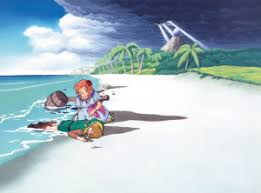
There were many times when I encountered a landmark that tugged on the nostalgia strings. For instance, I was riding on my horse, Lacey (named after my real-life cat), and while I heard the subtle melody of the main Legend of Zelda theme, I stumbled upon Ranch Ruins. I couldn’t believe the condition of this place, and then it hit me that it was a dystopian Lon Lon Ranch. After I disposed of the Guardian that called it home, I took Lacey for a spin around the track and actually started getting emotional as I recalled memories of playing Ocarina of Time and pictured Malon Singing Epona’s Song in the center of the ranch. Another time this hit me was when I discovered Eventide Island (by far my favorite area in the game) and felt as helpless as getting washed ashore in Link’s Awakening. Yet another favorite of mine was discovering the Master Sword. This took me back to a Link to the Past thanks to three blue nightshades in the background.
This game doesn’t forget about its roots, either. It was really nice to see the old man at the very beginning of the game, the only difference being instead of going into the cave to visit him, you go out of the cave. Maybe there is a deep meaning behind that? I’m not entirely sure, but when Link does leave the cave for the first time and overlooks the Dueling Peaks, I was instantly reminded of the artwork from the original game. The Master Sword shooting projectiles when Link has full health is also a nice touch.
Though these references may be a nightmare for people who are keen on placing this game somewhere in the franchise timeline, I view it as essentially a conglomerate of pinnacle moments in the series. For me, this aspect of the game is delicious icing on an already incredibly built cake. This is a special game not only because of its top-notch design, but because it doesn’t forget about how it came to be in the first place.
Though it’s E3 weekend, and so much is happening, I would like to turn focus to just one of Nintendo’s events: The ARMS Open Invitational. The Big N is getting into the spirit of the season by throwing a tournament for their upcoming title ARMS. Summer fighting game tournaments are nothing new, and since we’re about a month away from EVO 2017 (the biggest, grandest fighting game tournament of the year), I found it appropriate to celebrate all of the riot time festivities by inducting some of the best Pantendo (appearing on Nintendo consoles, including first, second, and third party) fighting games into the Nintendo Experience.
We’ll kick off with an old classic: Soul Calibur II for GameCube. Soul Calibur is a series of 3D fighting games that center around weapons-based combat as opposed to hand-to-hand. If you are familiar with the franchise, you know that they’re usually multi-platform and each platform has its own exclusive character(s). For the second offering, the Playstation 2 version contained Heihachi from the Tekken series, and the Xbox version had the Spawn comic book character. Fortunately, Nintendo fans got the best deal, and Link from the Legend of Zelda series was playable. For that appearance alone this game is worth playing.
The game was a solid fighter and was an arcade classic; perfect for both friendly and serious play. With the exception of Soul Calibur Legends for Wii (of which I had not heard until researching this blog, and is not even a fighting game), this was the only one of the series that made it to a Nintendo console. I suggest you hunt down this old gem and give it a shot.
Next up is a game that should not be foreign to anyone reading this blog: Super Smash Bros. Melee. Whether you prefer this specific version or not (it is not my personal favorite), you cannot deny its impact on Nintendo and Fighting Game Community (FGC) culture.
Official box art
Melee was released in 2001, and has remained relevant since, having what is possibly the longest, most-permeating tournament longevity of any fighting game ever. People continue to play competitively to this day, and it has found its way into the EVO tournament lineup six times (counting this year’s upcoming tournament) and has churned out record-breaking turnouts. Melee is the fighting powerhouse you cannot ignore.
Lastly, I would like to discuss a pushed-aside Wii gem known as Tatsunoko Vs. Capcom: Ultimate All-Stars.
The saga of TvC is an interesting, but sad tale. The original version of the game, Tatsunoko Vs. Capcom: Cross Generation of Heroes, saw some of Capcom’s best-known brawlers facing off against characters from popular Japanese anime studio Tatsunoko (probably best-known in the states for Karas and Samurai Pizza Cats). Since many of Tatsunoko’s characters were unfamiliar to the rest of the world, the game was only released in Japan and the Wii featured region lock, the rest of the world was missing out on a fighting game produced by the community’s best developer. The outcry was so great that Capcom not only decided to relent and release world-wide a year later, but to polish the game up and add new characters. Fighters who owned a Wii were overjoyed, but therein lie the crux. Many people who were serious about fighting games (especially Capcom fighters) had already found satisfaction in one of the other consoles (PS3 or Xbox 360) with Street Fighter IV, and with the announcement of Marvel Vs. Capcom 3 (for which TvC seemed a test run) for those consoles, there was little incentive to invest in this game. It soon faded into obscurity after reaching the EVO stage once in 2010.
All of this is a shame, because the game is not only technically challenging, but also one of the most balanced fighters ever made. If you scour the internet for TvC tier lists, you will find a few opinions. Almost all of them will rank the giants (Gold Lightan and PTX-40A) as dead last, or at least bottom tier. They’re a huge target, slow, and you do not get a partner to help you out. But if you look at the top eight finishers in the EVO tournament, you will see three of them used giants in their run to the top. In fact, you will see a lot of variety, which is not common in a lot of fighting games. You usually see a few characters over and over again because those characters have a natural advantage over the rest of the cast. TvC was one balanced mamma-jamma, and I love returning to it whenever I can.
… Can I get a chant? (Sequel! Sequel! Sequel! Sequel…)
That is all for this special fighting game edition of the Nintendo Experience. Pick these classics up and go the distance.
#519 – We agree that Nintendo has some serious shaping up to do when it comes to their Virtual Console. Will we ever get cross-console purchasing or a subscription service?
Footage Credit: Wii Shop Channel – Fan Man | Earthbound Beginnings – ColeNL112 “Escape the Premises” Kevin MacLeod (incompetech.com)
Licensed under Creative Commons: By Attribution 3.0
http://creativecommons.org/licenses/by/3.0/
We are not responsible for any first kisses that happen as a result of this episode.
#524 – If you were given the power to change one thing about a Nintendo console, which one would you pick and what would you change? Simeon and Scott are faced with many similar tough choices today – watch to see what they would decide! Comment below what you would change. Footage Credit: Super Smash Bros. Wii U Tripping – Master0fHyrule | Metroid Prime 3 Corruption SD vs HD – thepixelpress
“Escape the Premises” Kevin MacLeod (incompetech.com)
Licensed under Creative Commons: By Attribution 3.0
http://creativecommons.org/licenses/by/3.0/
After you save some serious Benjamins by following this advice, you might just head over to our Patreon page. ;)
#524 – We know how it is! Video games are expensive and cash is tight. That’s why you can’t just buy games from here, there, and everywhere all willy nilly! You gotta go in with a plan, know where you can score the best deal, and save some dough. Don’t buy another game until you watch this full episode!
“Escape the Premises” Kevin MacLeod (incompetech.com)
Licensed under Creative Commons: By Attribution 3.0
http://creativecommons.org/licenses/by/3.0/
#526 – Sometimes, the side mode ends up being the best offering of the whole game! When the main story mode just isn’t good enough when compared to the side mode, wonderful things happen! Here is a short list of our favorite bonus modes in all Pantendo games. Footage Credit: Mario VS Luigi – SullyPwnz | Super Smash Bros. – RedFalconGames
“Escape the Premises” Kevin MacLeod (incompetech.com)
Licensed under Creative Commons: By Attribution 3.0
http://creativecommons.org/licenses/by/3.0/
TBC’s regular viewers (the Crew) are truly the people who make Two Button Crew work. If you are reading this, you are probably one of them. If you are not, we welcome all with open arms (more on that later)! With such a growing community, I thought it would be helpful to remind myself what makes our community unique.
Faithfulness:
With the exception of a few, TBC’s videos have had consistent views, which means that the same viewers come back day after day to watch our videos. Recently, Scott and I have gone back and looked at the low points of our daily show. But I realized that, even when our videos were not our best efforts, our fans were always there, watching faithfully… Except for the Mystery Block. No one watched the Mystery Block.
Highway run…
Our overall channel views (which just recently crossed the 100,000 mark. Yay!) and comments section corroborate this fact; many of our regulars comment on all of our videos. Speaking of YouTube comments…
Kindness:
Something that is so common in many communities, no matter what type, is toxicity. People tend to tear each other down and apart much more than they like to build each other up. The Crew has been nothing short of amazing in this aspect. Comments on our videos are nearly always positive, whether it is a compliment or a criticism; all of it is done with grace. It was recently suggested to me that we add a “rules” section to our Discord. My first reaction was, “Yeah, that’s a really good idea. Why haven’t we done that already?” Then I realized that it was because we have not had to worry about such problems before. Just this last week seven of you recommended Scott for a gaming journalism position on Twitter to IGN. Seven! Kindness like this is a unique characteristic for a gaming community. As the Crew grows, I hope this is something we never lose.
Progression
The last element I want to focus on is something I like to call progression. Everyone starts out watching a single video (I wonder how many of you can remember which one it was!); this is the “peruser” phase. A peruser is shopping around to see what channel is worth investing in. After a few views, a peruser might become a subscriber and enter the Crew. From here, subscribers become faithful watchers and commenters. Some of the Crew, after spending some time in the family, might even take the next step into patronage; this means that they not only believe that the Crew is worth investing their time but also their resources. This is crazy to me, and I am so grateful that there are so many who have taken that step. Beyond this, some (*cough* Glen *cough) have even become content creators for TBC. Not every member of the Crew finds his way into the inner circle, but it amazes me to see fans make their progression further into the Crew.
The Crew should go down in the history books as the greatest internet-based community ever. Thank you so much for supporting TBC.
Are you so familiar with Nintendo controllers that you could recognize individual buttons without looking?! That’s exactly what Simeon and Scott are attempting today, while blindfoldedly shoving fingers into gaming input devices. Who will win?
“Escape the Premises” Kevin MacLeod (incompetech.com)
Licensed under Creative Commons: By Attribution 3.0
http://creativecommons.org/licenses/by/3.0/
I finally got around to playing Breath of the Wild’s First DLC pack and I had a lot of fun with it. When I finished it though, I started thinking whether or not DLC is really essential to enhance the experience of the game, or is it something that company’s feel obligated to do now, because it may look bad if they don’t. Obviously, there are different types of DLC out there, including but not limited to: enhancements (BoTW DLC Pack 1), additional story elements (BoTW DLC Pack 2), new modes, etc. I get that the advantage of DLC is that companies can release their games without further delay if they want to make an addition to the game but it is too late to fit it in the release schedule, and DLC can make a game last longer. But is that also opening the door for companies to release “unfinished” games? Nintendo themselves have even expressed disinterest in DLC in the past, saying that they want the consumer to have the full experience up front, but the tide has apparently turned.
A while back, I recall a company releasing DLC that was actually already loaded on to the original disc. Long story short, this created a huge controversy, and ever since, DLC has had sort of a negative tone to it, for me at least. The fact that you could buy the disc and not truly own all of its content seemed, well, cheap. I know that this is a rare case, but I consider it a turning point for this type of additional content. Just the idea of adding something after the fact makes me question the motive and ethics in general.
But from a positive viewpoint, DLC can drastically increase the life of a game if done right. I’m hoping the second DLC pack for Breath of the Wild, The Champion’s Ballad, will add a lot more to the game and justify the $20 price I paid for both DLC packs. Considering $20 is 1/3 of the price of the entire game, I’m expecting a lot of content. I do think it’s smart for Nintendo to “sell” the DLC a little more by releasing amiibo with it, hence the four Champion amiibo, which do look amazing. In my opinion, the more DLC can stand alone, the better it is. Yes, add-ons and enhancements are nice, but I think it’s tougher to pay for those compared with actual, fresh content. I do want to disclaim that this is in no way a review of The Master Trials DLC.
Mario Kart 8 is another game that comes to mind. I loved the bonus tracks included in the DLC, but I still can’t help but think they should have been included in the actual game. My fear, and point of this blog is that DLC in general, if not done right, can only decrease the value of the consumer dollar. Nintendo has surely jumped on the DLC bandwagon, and I think they are still in the experimentation phase. It seems like when it comes to releasing content after the fact, more developers have been getting away with charging more for less. At least that’s how things seem to be trending. The Master Trials was a fun motivator for me to get back in the game, but I really felt like it should have been included in the first place. Hopefully, the Champion’s Ballad proves to be a breath of fresh air (that pun was intended).
The Champion’s Ballad is scheduled to release this Holiday Season
It seems like the DLC trend Nintendo has been riding is here to stay. It will be interesting to see how it evolves.
Greetings! I hope you’ve all had a safe holiday season filled with family, friends, and festivities. In celebrating the coming of the new year with resolving to better ourselves, I find it will be helpful to reflect on a holiday we celebrated a few months ago.
While visiting my in-laws for Thanksgiving in beautiful Montana, I flipped through a Christmas catalog. I can’t remember the store, but it was one I was unfamiliar with, and was clearly geared toward an elderly crowd. While skimming the pages, I found this:
Notice the tagline “Can the expensive game systems offer that?” The answer is, of course, “Not for the low, low price of $49.95, they can’t!” But it really got me thinking; is this a legitimate selling point? Just because a “Handheld Arcade Gaming System” has 140 games, is it worth the money? These sorts of deals bring up memories of things like Action 52, an infamous NES game which bundled 52 poor quality games into a single cartridge, and a CD I had as a kid with 1,000 games on it… only a few of which were worth my time. I hate to assume the worst of this handheld, but experience has taught me skepticism. I ended up going deeper; what makes gamers happy?
Will more games make us happy?
The advertising method of this handheld is based on the assumption that more games > less games. It’s the simple principle of more is more. It’s my guess that most gamers would laugh at this style of advertising. I don’t know about you, but I would rather have one well-crafted adventure than to sort through a mound of games that are unpolished. My game collection is not really that impressive in size. I have a handful of experiences that I enjoy playing again and again, and a lot that I rarely, if ever, return to. So, I think it’s safe to say that, “No, more games will not make us happy.”
Will longer games make us happy?
Recently the crew discussed this in an episode entitled What Length Should a Game Be?Many times, in a game review, how many “hours” the game will be is included. This baffled me at first, as many of the games I grew up on could be played through in one sitting (if you were good enough at it), and the joy of the game came from playing it over and over again. One recent example of a great game despite having a very short length is Portal. I beat it in one sitting, but it left such a huge impact on me that, after my first play-through, I put it in my top 20 favorite games. Some games, on the other extreme, are too long and can feel needlessly drawn-out. Will longer games make us happy? No.
Will branding make us happy?
Hahahaha… No. Just because something has a specific title, character, or developer behind it does not mean it will make us happy.
Will quality make us happy?
The short and honest answer is, no. Let me qualify my answer. Of course, everyone has their own taste in genre, and no one game is guaranteed to please everyone. Also, a triple-A developer is probably going to produce a more enjoyable game than other developers, especially considering all of the app store shovelware out there. But just because a game is well-crafted, even perfect, and should, by all counts, appeal to me, does not mean it will make me happy. Take Ocarina of Time, for instance. I love the Legend of Zelda series. I love Majora’s Mask. Ocarina of Time is widely considered one of the greatest masterpieces of gaming, yet it failed to hold my attention. I’ve tried to get into it on several occasions, yet it always fails to suck me in. Mighty No. 9, on the other hand, isn’t that great of a game, and was extremely disappointing, but I find myself drawn to its unique style, fun level design, and interesting weapons.
To me, I only see one universal guarantee to make a gamer happy: give them a memory. In the end, a gamer will not care if a game is good, or balanced, or polished; he will only care if the game gives him a smile thinking back on it. If you start talking with a gamer long enough, you will hear him start to talk about a game he played in his childhood which, even though the game was probably garbage to everyone else, he remembers fondly because it left an impression. For me, some of those games are Power Rangers Lightspeed Rescue,Electro Man, andother games from my childhood that I remember fondly. I might return to them now and think they’re completely terrible, but the fond memory is something I’ll never lose.
This year, as you resolve to be a better person, make room for a few more resolutions. Resolve to make memories of your gaming experiences, and resolve to remember those games that made you smile.
#582 – In the past 581 episodes, we’ve messed up a handful of times. We’ve given you sub par content that doesn’t live up to our high-quality standard. What’s the best thing to do with those shows? Put them in a collection and laugh at them, of course! Feel free to make fun of us in the comments today. This is a day for fun at our expense. Enjoy!
“Escape the Premises” Kevin MacLeod (incompetech.com) Licensed under Creative Commons: By Attribution 3.0 http://creativecommons.org/licenses/by/3.0/
#583 – When you take a game too literally, you come up with some pretty hilarious descriptions! Our job today is to make you laugh by giving you terrible explanations for games. For once, we’re trying NOT to be helpful. And we think you’ll enjoy the results.
“Escape the Premises” Kevin MacLeod (incompetech.com) Licensed under Creative Commons: By Attribution 3.0 http://creativecommons.org/licenses/by/3.0/
#584 – Are video games art? You bet they are! Or… they CAN be. Simeon and Scott have an eye for artistic expression in games, and today we’ve gathered a list of the best looking games to feast your eyes upon. We hope you enjoy!
#585 – Mario + Rabbids: Kingdom Battle hits store shelves (and eShop) today! To celebrate this monumental partnership with Nintendo, we’re looking back on where the Rabbids came from. Their humble origins started with an Ubisoft launch game on Wii, and they’ve skyrocketed to success ever since. Come for a trip down memory lane with us!
Footage credit: Bryce Games
“Escape the Premises” Kevin MacLeod (incompetech.com)
Licensed under Creative Commons: By Attribution 3.0
http://creativecommons.org/licenses/by/3.0/
#587 – We haven’t seen the New Super Mario Bros. games in a little while, but is that such a bad thing? Nintendo was leaning heavily into the multiplayer aspects of these games, but many gamers found it surprisingly frustrating to share the screen with their friends. Maybe Mario just isn’t a well-suited series for multiplayer. Let’s discuss it! Footage credit: TheRunawayGuys, WiiLikeToPlay
“Escape the Premises” Kevin MacLeod (incompetech.com) Licensed under Creative Commons: By Attribution 3.0 http://creativecommons.org/licenses/by/3.0/
#588 – We wish we could say we have “nothing but love” for video games, but to be honest, sometimes it’s more of a love/hate relationship. Our goal at Two Button Crew has always been to enhance your enjoyment of Nintendo gaming and fandom, so today we’re doing that quite literally: explaining how to have fun while gaming. We’ve got tips for casual and competitive environments, as well as single player gaming. Hope it helps!
“Escape the Premises” Kevin MacLeod (incompetech.com) Licensed under Creative Commons: By Attribution 3.0 http://creativecommons.org/licenses/by/3.0/
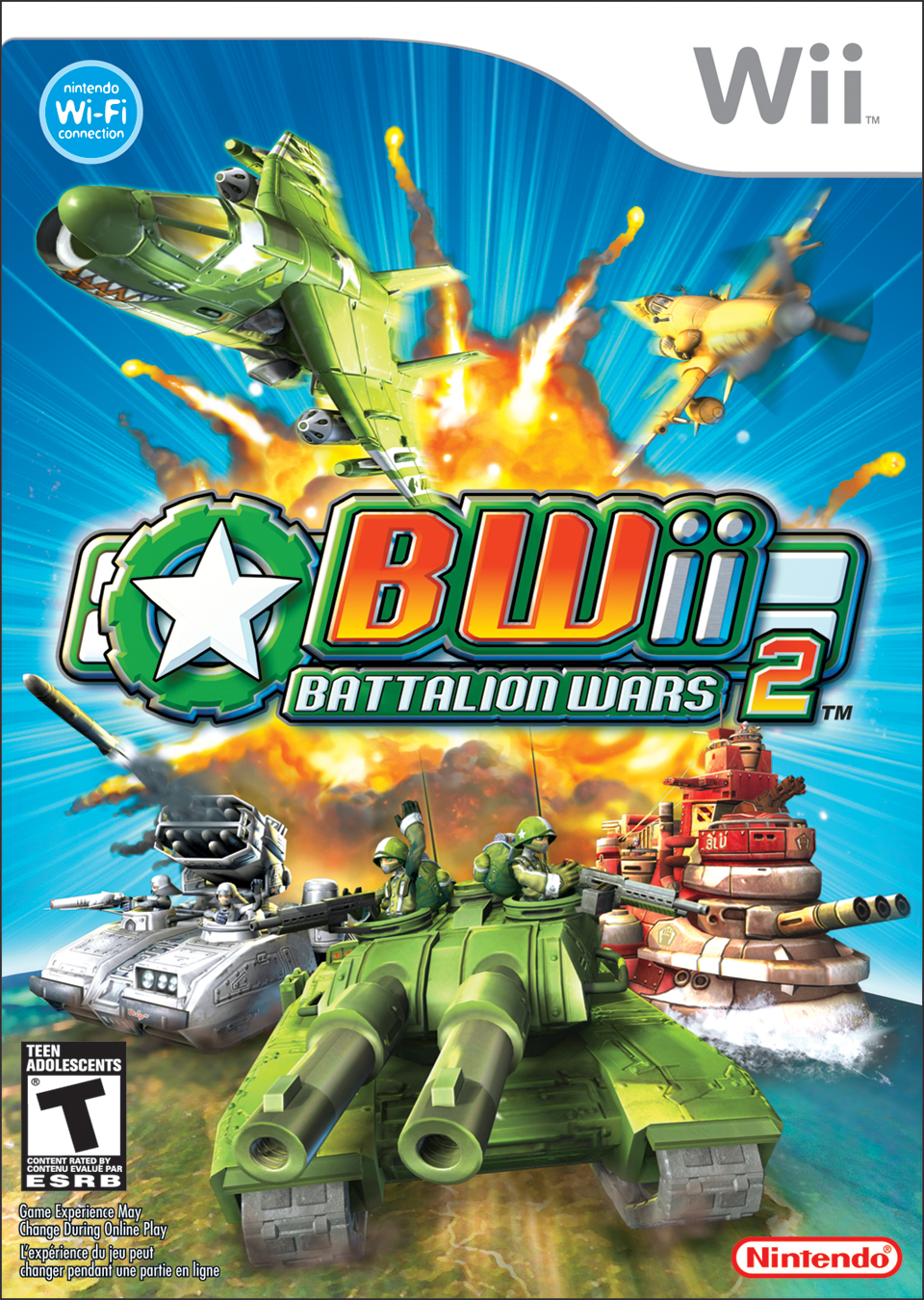
Welcome to That Was a Thing! A new series in which I discuss my favorite weird, obscure, or simply underrated pantendo games and media. Think of it as the evil twin to Simeon’s Nintendo Experience series. In this inaugural installment, I’m going to look at one of my favorite—not to mention one of the only—real-time strategy Nintendo series out there: Battalion Wars.
The Battalion Wars duology was a spin-off of the Nintendo Wars franchise and originally had the working title of Advanced Wars: Under Fire. Unlike the other Nintendo Wars games, however, Battalion Wars wasn’t developed by Nintendo or Intelligent Systems, but a British company: Kuju Entertainment. The first game was released for the GameCube on September 19, 2005 and its sequel debuted on the Wii on October 29, two years later.
Overview
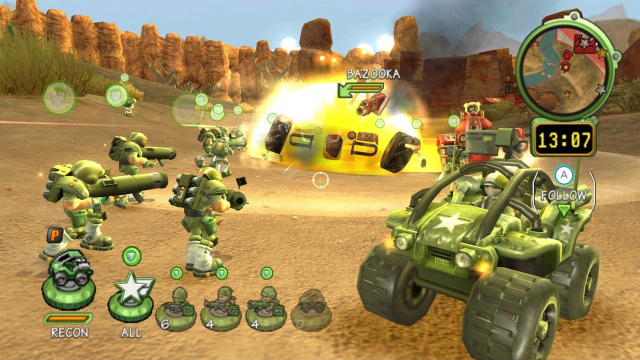
The Battalion Wars games are a combination real-time strategy and third-person shooter. Like most R.T.S. games, players are tasked with completing objectives with the units provided for the mission—riflemen, tanks, bombers, etc. Needless to say, each unit type had its own strengths, weaknesses, and abilities and the majority of the strategy revolves around knowing where and when to deploy each unit. The unique selling point of this game is that the player directly controls one of the units the whole time, with the ability to freely switch between units as needed. Think of it as being sort of like Pikmin but with guns…and tanks.
Both games are set in a fictional world filled with global super-powers just itching to find a use for their massive armies. Seeing as the series was developed in England, each of the games’ fictional nations are comically stereotypical counterparts to real-life countries. The United States is represented by the gung-ho Western Frontier, the Tundran Territories are an odd combination of Tsarist/Soviet Russia, likewise Xylvania combines Imperial Germany with Nazi Germany, the Solar Empire is a futuristic tropical Japan, and the Anglo Isles—first introduced in the second game—mirrors the Anglo Isles…I mean the United Kingdom…seriously, they weren’t even trying to be subtle with that one.
As to be expected, each of these nations employ an eccentric and colorful cadre of commanders. Each mission has the player receiving orders from one of their faction’s commanding officers while the enemy commander emotes and responds according to the events of the game. While they don’t offer any special gameplay bonuses like the commanders of the Advance Wars series, the commanders’ typically blasé attitude toward warfare and nonchalant dialogue helps keep the tone light. I would say the only commander that I personally didn’t care for was Empress Lei Qo of the Solar Empire—who left so little of an impression on me, I had to look up her name just to write the previous sentence.
The third-person perspective really is what makes gameplay stand out. Giving orders from the perspective of one of your men while returning fire yourself really makes you feel like you’re an actual part of the conflict, instead of some ghostly observer calling the shots. When your battalion’s under fire, you’re under fire, and having to make tactical decisions in the midst of the chaos of the battlefield can create some really tense moments. Then there are the times when you spot some enemies in the distance or look at the map and have to plan your next move. I’m not sure I can properly express the feeling I would get as my men crowded around me, expectantly waiting for me to formulate a plan of attack.
Being an entity on the battlefield requires the player to look after both himself and and his units.
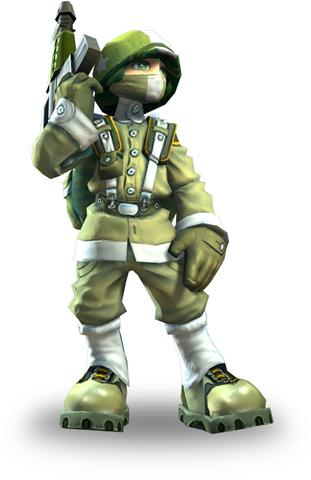
If quality gameplay wasn’t enough, these games are also overflowing with personality. The games’ humor and cartoonish visuals give the series a lighthearted tone; these aren’t games out to deliver a ham-fisted “war is bad” message but instead revel in the innocent—and perhaps naive—feeling of playing with toy army men. Despite having the depth of a Saturday morning cartoon, almost every character is likable in some way—with my personal favorites being Tsar Gorgi, Kaiser Vlad, and Col. Austin—and I genuinely wanted to know what happened to them next. Each faction’s units are instantly recognizable, and their designs convey a lot of personality, not just for the unit itself, but for the faction it belongs to.
Giving orders from the perspective of one of your men while returning fire yourself really makes you feel like you’re an actual part of the conflict.
Now that we’ve covered the basics, take a closer look at the first game.
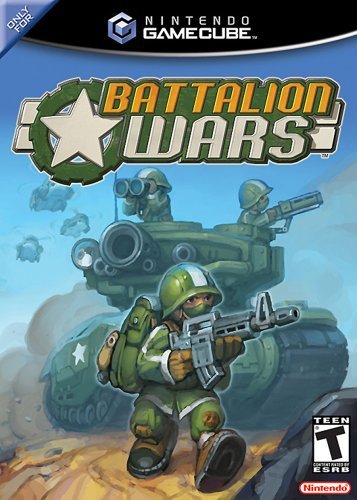
Battalion Wars
The cute proportions and solemn color choice of the cover art sums up the game’s unique atmosphere quite well.
I first heard of Battalion Wars from the now defunct Nintendo Power Magazine. That’s not to say I immediately took an interest in it, however. I wouldn’t pay it much mind until my younger brother returned from the now defunct Hasting’s Entertainment with a used copy of the game. Shortly after he inevitably lost interest in it, I took a crack at it and fell for it harder than Tsar Gorgi off a bridge (too soon?).
The game places the player in command of the forces of the Western Frontier—with some exceptions in the form of unlockable bonus missions. The story begins during an uneasy truce between the Western Frontier and their longstanding enemies, the Tundran Territories. War breaks out when Western Frontier troops find a Tundran spy on the Frontier side of the border. As the plot continues, the Tundrans ally themselves with the Xylvanians, the Xylvanians betray the Tundrans, an old man is thrown off a bridge, I think there was a zombie-ghost legion at some point…you get the picture.
While it won’t win any awards, the story has a great sense of progression to it. Plot-wise, mission objectives often tie into something you did in a previous stage. If you saved a spy, you can bet his intel is what will point you toward your next target. The fort you defend in one mission is essential to launching a counter attack in the next and so forth. It’s a small detail, but having your actions contextualized like that goes a long way toward making your input feel meaningful.
While it won’t win any awards, the story has a great sense of progression to it.
While we’re talking about writing, I need to discuss the most important character: the grunts. Throughout the game, the troops under your command are constantly responding to your orders, quipping at the enemy, talking among themselves, or commenting on the situation at hand…and it is freaking adorable! Okay, I know that sounds like it’d get annoying after awhile, but the troops have so many lines that I would sometimes still be discovering new ones on my fourth or fifth play-through of particular missions.
“I’m beat…let’s make camp and whip up some cocoa!”
On to the atmosphere: the visual style is a strange blend of cute, chibi soldiers and vehicles and a muted color palette that gives the environments an oddly grim and gritty feel. This, in conjunction with a great soundtrack that wouldn’t sound out of place in an old WW2 movie, produces a unique atmosphere in which the tone is never too heavy or oppressive but the player is still fully aware that—no matter how cute the enemy’s tanks are—this is still war.
The game isn’t without faults, however. The A.I. for units under the player’s control is a little slow on the uptake, to the point of seemingly lacking a self preservation instinct at times. I found any mission where I had to fight enemy aircraft especially aggravating, as anti-air vets tend to not take initiative, resulting in massive losses from even brief lapses in focus. I didn’t care much for missions where the game expects me to command planes and ground forces at the some time, either. For whatever reason, when given the wait command, planes continuously fly in a straight line instead of staying in proximity to where they were when the order was given. This required me to constantly check back on them to make sure they weren’t about to fly over enemy anti-air embankments.
Battalion Wars 2
More playable factions, more unit types, more color! KA-BOOM!
Battalion Wars 2 starts its story off 200 years in the past by showing the player the final conflict between the Solar Empire and Old Xylvania at the end of the “Lightning Wars”. Bottom line is that the S.E. nukes O.X.’s H.Q. with an orbital death ray and then—fearing that the weapon is too much power for anyone to wield—chucks the controller (a staff) into a glacial ravine…what could possibly go wrong?
Back in present day, it’s been 2 years since the events of B.W. 1 and the nations of the world are at peace…until the Anglo Isles preemptively attack the Solar Empire based on rumors that they are harboring some sort of super weapon. The plot jumps between flashbacks and modern day from there with each campaign focusing on a different faction: a conflict between the Western Frontier and Tundra, the Anglo Islands staving off the Solar Empire’s retaliation, one where the player controls Old Xylvania’s forces, and finally Tundra’s attempts to prevent Xylvania from finding the staff.
The plot sounds a lot more complicated, but it really isn’t. I assume the 200-year-old-artifact-of-doom plot was meant to make the story feel bigger than the last game’s. Unfortunately, I’m not very fond of epics; I much prefer down-to-earth plots as I think they tend to have better focus and require the author to actually make me care about something specific like people or places. Fortunately, most of the characters are still quite likable, including most of the new ones.
Sadly, the narrative’s constantly changing point of view leaves the story unfocused and absolutely kills that sense of progression the first game had. You only play as any one faction for at most five missions (usually less). Between less emphasis being placed on the player’s actions between missions and the fact the player constantly switches sides, that feeling from the first game of being a single commander fighting in a series of much larger conflicts is completely gone.
Did I mention the volume on the player’s soldiers has also been dramatically reduced? They still speak, and I’m sure it’s still adorable, but I for the life of me can’t hear what they’re saying.
The narrative’s constantly changing point of view leaves the story unfocused and absolutely kills that sense of progression the first game had.
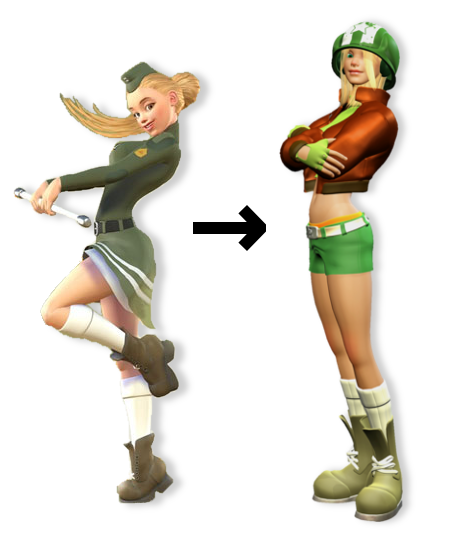
Moving on to the visual design of this game: many of the units received redesigns, especially the Tundran Territories’ infantry, most of which I think are improvements. The same can’t be said for Brigadier Betty: her look, not to mention her distinctive voice and a good deal of her peppy can-do attitude, are gone, making this iteration rather bland and forgettable. Speaking of bland, the game’s color palette is much more colorful which, while fitting well with the cartoonish style, demolishes the unique atmosphere of the B.W. 1 and stands out less by comparison.
On the left, a plucky, upbeat, and memorable character; on the right, the uncanny valley.
Okay, so maybe the aesthetics and narrative aren’t on par with the original, but this game fixes many of its predecessor’s failings when it comes to gameplay. The A.I. is much more proactive: there were many times I would be ordering my units to attack a tank or some entrenched enemy infantry and would be surprised by the wreckage of an enemy gunship I didn’t notice suddenly crashing nearby. Oh, and planes finally fly in circles when put on standby!
The motion controls also make targeting enemies and issuing commands a snap. The only place where they really feel out of place is when controlling aircraft, as pointing the Wii remote up or down controls altitude. This feels awkward, especially if the player is trying to target a ground based unit, partially due to the game not making the change in altitude immediately obvious.
The game’s missions do feel a bit more repetitive than before. BWii’s missions follow a pretty predictable formula: defend a location then go on the assault or go on the assault and then defend the capture point. That said, BWii doesn’t have any missions that drag on too long or feel unfair—which the first game was occasionally guilty of, so I guess it more or less balances out.
The game’s missions do feel a bit more repetitive than before. That said, BWii doesn’t have any missions that drag on too long or feel unfair—which the first game was occasionally guilty of.
Of course, Battalion Wars 2 also brought new gameplay elements to the table: naval units and buildings. Naval units basically feel like tanks and artillery, but much more sluggish. That said, the game does a great job of conveying their weight and scale, and their long range means naval missions don’t feel too drawn out. Unfortunately, missions in which the player has to command both land and sea units tend to feel disjointed and tedious, due the two unit types’ inability to travel together and the player not being able to use the “All Units” button to regroup their units without messing up their positioning.
Buildings are a solid addition. Players can’t select their position, instead having to secure predetermined locations. Once under the player’s control, buildings will periodically replace fallen units corresponding to the type of building (e.g. aircraft for airfields). These help take the edge off, as the player doesn’t have to worry about losing essential personnel. That said, the fact that units have to run all the way to the players position, which can be on the other side of the map, means the player can’t rely on reinforcements too much.
Debriefing
Despite all of the flak I just gave Battalion Wars 2, I do think it’s the better game. While I think Battalion Wars has more personality, it can also be much more tiring—and sometimes frustrating—to play. Of course, neither is particularly hard to come by, and they’re both worth your time.
Sadly, Nintendo never commissioned Kuju to make a Battalion Wars 3. I think it’s blend of action and strategy would’ve been a great fit for the Wii U, and the Wii U gamepad would’ve been a great help in micromanaging units, something that neither game made easy. Nintendo still seems to have a fondness for cartoony wars games if the recent 3DS game Tank Heroes is anything to go by, so I haven’t completely given up hope. If the rumors of GameCube games coming to the Switch’s Virtual Console are true, I’d happily double dip on Battalion Wars…and not just because of how utterly unreliable old GameCube memory cards are.
About the Author
Glen Straughn is a lifelong Nintendo fan whose love of video games has inspired him to pursue a career in computer programming. He is currently studying to receive his masters in computer science from Oklahoma State University. He has gotten an S rank on every mission in BWii, and even managed to get an S on the final mission on his first successful play-through…completely by accident.