Even with everything going for it, I just can’t get behind the idea of watching someone else play a video game.
Part of my hesitation is generational; I’m a little bit older than the average LP viewer.
Otherwise, it’s just not how I want to spend my small slice of free time. After work is done, the house is taken care of, and my responsibilities are attended to, I want the controller to be in my hand. That firsthand experience just can’t be replaced.
Ironically, I help run two weekly Let’s Play series, one for Switch and one for Classics. Make sure to tune in live on the weekends!
Forget my two front teeth. All I want for Christmas is a solid online infrastructure for Nintendo Switch!
Add Friends
Can friend codes please go die in a deep, dark, flaming, sulfury smelling hole? Thanks.
There’s no reason that friend codes should still exist. They’re long, impersonal, impractical, and not used in any other modern technological setting.
See Friends
Nintendo has historically been all about the “couch multiplayer” experience, but it’s time those sensibilities were extended to online play. Their preferences don’t excuse them for providing trash solutions over the Internet. When my friend comes online to play a game, I get a little pop-up in the top left corner of my screen… but that’s it! I can’t tap on it, can’t spectate their session, can’t send them a message… nothing. Nintendo could also bring competitive leaderboard features to the forefront by notifying me when my scores are broken by a friend, even before I pop the cartridge in!
Join Friends
It should be easy to play online with my friends, no matter which mode. It should also be painless to make sure we’re on the same Splatoon team, rather than randomly being pitted against each other. Nintendo has always brought friends together, so let’s write the extra lines of code necessary to facilitate that when we aren’t in the same room.
Talk to Friends
Tools. That’s all we need! We just require the tools to speak to our friends, the tools to monitor or restrict that usage for our children, and the ability to use our own equipment. You won’t catch me dead with that horrid squid dongle with a web of cables running every which way… keep it simple.
It shouldn’t matter if we’re playing the same game, either. System-wide party chat has been solved for a couple console generations, so the Big N needs to jump on the bandwagon.
I’m not being too demanding because Nintendo’s competitors have all of this covered already. This is nothing new.
Nintendo starts charging for online play in 2018, and the ramp-up hasn’t looked very promising with how they’ve handled their mobile app and voice chat so far. For crying out loud, Discord has even gone on record saying that Nintendo could contract them to handle this whole infrastructure! There are no more excuses. They have to get this right if they think fans will subscribe to their service.
Fall is already upon us. Leaves are changing, the air is becoming cool and crisp, and good games are seemingly being released left and right. Alas, this blog is not about the season, but about 2017 as a whole. Yes, we have a few more months before it wraps up, but in less than a week, Nintendo’s juggernaut, Super Mario Odyssey will finally be released. I for one cannot wait to sink my teeth into this game. Having already received a perfect score, I think we are in for a fun ride. That being said, I want to focus on what has already been released, and why I think 2017 has been one of the most glorious years for gaming in recent history.
Nintendo is a company that fans expect a lot of. They always seem to set the bar of quality game design higher and higher. Take Breath of the Wild for instance. This game takes the best aspects of the franchise and capitalizes on what makes it great. I felt no greater sense of adventure since I was a young kid playing Super Mario 64 or Ocarina of Time for the first time. This is undoubtedly special, and why so far Breath of the Wild is currently* game of the year for me.
*subject to change
A franchise that was essentially brought back from the dead this year is Metroid. Samus Returns does everything that I was hoping it would. Appealing visuals and tight controls, along with the new melee addition, make for a really addictive journey. I would love to see the developer have free reigns and make a brand-new Metroid game.
This year in particular, smaller, more tightly knit developers are also getting more attention. Sonic Mania is living proof that sometimes, fans know exactly what is best for a franchise. The game was made by only a handful of inspired and passionate people, and look what resulted. The same can be said for the recently released Cuphead. Though not on a Nintendo platform, I couldn’t pass this one up. The 1930’s art style is one that I have never seen before in a game, and pushing through the brutally hard difficulty is so worth it only to experience more. My point is, gamers are starting to appreciate the hand crafted, quality approach, and developers are responding.
A Game of Year Contender for sure. Competition is fierce this year.
The release of the Switch was also monumental, and completely necessary, to erase painful memories of the Wii U era. I love that Nintendo doesn’t feel the need to compete with competitors by powerful processing or graphics, but with intuitive design. A portable home system is something that will pave the way for years to come. When Nintendo becomes irreverent in the industry, Nintendo is at its strongest. We were also fortunate enough to get the SNES classic, so I can replay some of my favorite games of all time the way they were meant to be played.
Perhaps I consider 2017 so impressive because it made franchises relevant again. It made Nintendo relevant again. No, we didn’t get a new Animal Crossing game or a Pikmin game (at least not the type I’d want to see), but we did get a plethora of games that were not afraid to redefine themselves. When I look back on the year and reflect, I see a year of revitalization. A year of redefining what gamers actually want: quality.
As both a Nintendo fan, and an Apple fan, seeing Miyamoto walk onstage during an iPhone keynote was pretty incredible. I was on board with the Big N’s foray into mobile gaming from the outset.
Now, three games and a weird social sim later, the partnership with DeNA has proved to be an interesting one. Development on these iPhone and Android games is sure taking longer than anyone expected, with the set of 5 games from the DeNA partnership still incomplete after multiple delays.
Miitomo turned out as a fun take on social media and online interaction, but was nowhere near snappy enough to have staying power. Social apps are all about long feeds and quick interactions. When tapping Like (or “Yeah” – whatever Nintendo is calling it) takes 15 seconds, it discourages users from coming back.
They’re mobile efforts are bogged down by long loading times, and assets that live on servers rather than the user’s device. This is not how mobile gaming is supposed to be, and it’s certainly not how social media is supposed to be.
Instant startup followed by a few quick wins. That’s all we usually have time for on our phones. If there is more time, I’m likely to turn on my Switch instead.
Nintendo is older than your Grandpa, and they’ve stored a lot of money in the bank over the years…
They could afford a couple Wii U disasters in a row—even another Virtual Boy or two—and still be in business.
But hypothetically, let’s say they chose to shut down tomorrow. Upper management wants to take their money, lay everyone off, and close their doors.
I think I would actually be completely fine with this.
Sure, it’d be sad on multiple levels. Many hardworking developers, designers, marketers, production facility workers, and more would lost their jobs.
Loose ends would be left dangling off our favorite franchises, and we’d never know if Mario and Peach finally got married.
We’d always wonder what the next console would look like.
On the bright side, however, I would still get to be a Nintendo fan for life. See, the company has already produced thousands of products in the form of games that span generations of hardware. Realistically, I’ve only played a fraction of these experiences.
My collector sensibilities would kick into high-gear, knowing that there was now a cap on the quest.
I could try to play, beat, and 100% every Nintendo game ever made, and I could make videos and podcasts about the journey for years to come.
They’ve supplied me with a lifetime of entertainment.
For almost two years, we’ve been making Nintendo discussion and gameplay videos every single weekday. It’s hard to believe we’ve been going for this long!
Well, it’s time to kick things up a notch and we need your help to make it happen. With a bit more support on our page, we’ll be starting the Two Button Crew podcast! And that’s only the beginning.
Giveaway
USA Residents: Back our page at the $5 tier (or higher) by March 31st to be entered to win one of these three prizes!
1. Breath of the Wild Soundtrack 2. Sheikah Coin 3. Apple Store Exclusive Super Mario Run Pin
Credits
Get your name in the credits of all of our videos for only $1 a month!
Votes
For $3 a month, you become involved in the planning of our show’s content by voting on upcoming videos.
Exclusive Videos
Behind-the-Scenes, bloopers, and bonus videos that won’t be available to the public. $5 per month lands you all these extras!
Tees
You can get your hands (and torsos) on TBC’s exclusive tee shirts, designed and distributed only to our highest tier of Patreon backers. Every 3 months that you support us with $15, you’ll receive an exclusive tee in the mail.
Want to see the first design?
“Warped Pipe” – Celebration of Prop Drops and all things Crew. Exclusively available to Patreon backers.
Did I mention that our rewards use stacking tiers? Each reward tier includes the perks of the previous tier!
It all started with a bright light and a girl’s voice calling my name; beckoning me to open my eyes. The voice sounded like that of a noble woman, with that soft, breathy accent that the inbred stratum of Hyrulian society thinks sounds sophisticated for whatever reason. Questions regarding what kind of person the voice belonged to quickly evaporated once I opened my eyes, however. Upon awakening, I found myself alone in a dark, empty room.
…in my underwear.
Yeah, one of those days…
Still quite groggy, I attempted to take in my surroundings. As stated before, the room was dark, lit only by faintly glowing decorations on the walls and furnishings. Speaking of furnishings, the only objects were the trough in which I was laying and a glowing orange pedestal. It didn’t take me long to realize where I was. A dark room with a trough for people to float in? Clearly some sort of sensory deprivation tank, which would mean this is probably some sort of new-age spa. That would also explain the voice and weird visions; I was in the tank for too long and started hallucinating.
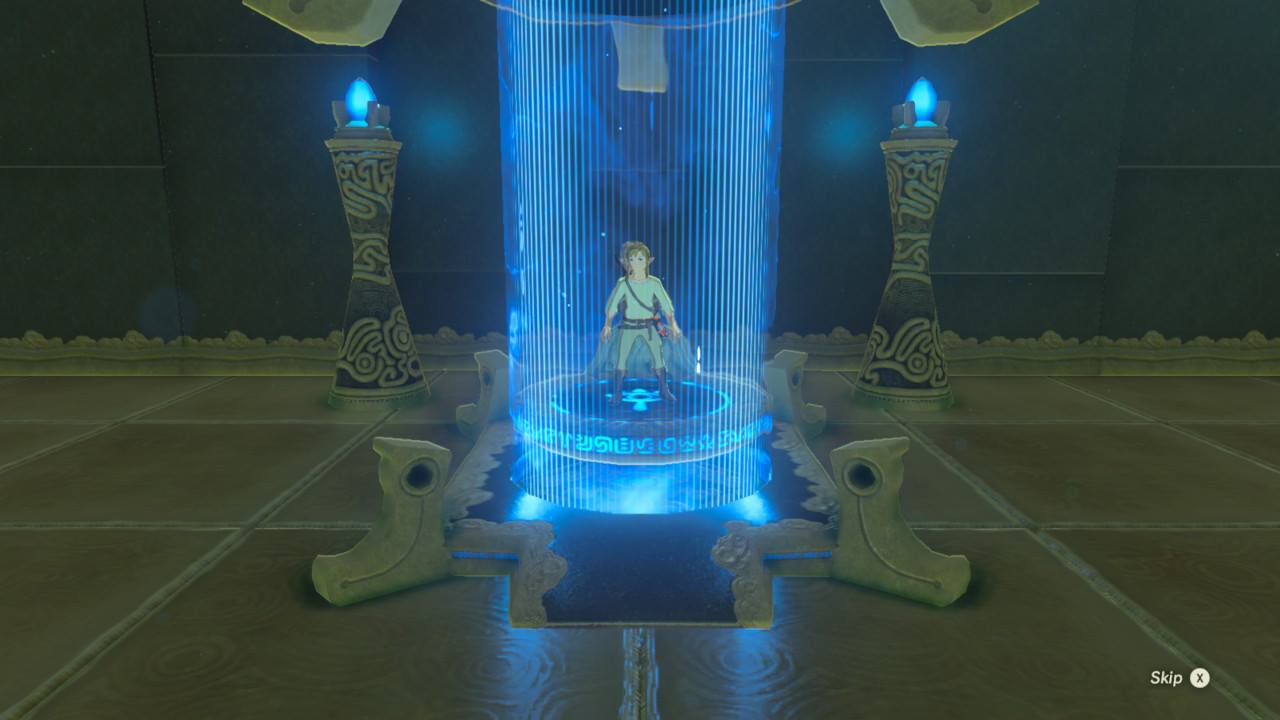
Confident in my deductions, I placed my bare feet on rough stone floor. Trying not to think about when the last time the floor was cleaned, I staggered over to the pedestal for a closer look. The top of the object was comprised of two concentric dials adorned with glowing, interconnected patterns. On my arrival, the center dial began to spin and shortly afterward produced some sort of rectangular device. Before I could even question why any sane person would create such a needlessly elaborate charging dock for their Hy-Pad™, the voice from before spoke up, this time explaining that the device was a “Sheikah-Slate” and imploring me to take it.
Sheikah-Slate…now where have I heard that before? Oh yeah, I pretty sure it’s that open-source alternative to the Hy-Pad™ everyone was talking about awhile back.
Anyway, after taking the tablet, a nearby door opened up. Peering through the opening, I saw crates, barrels, and two ornate stone chests. I stumbled through the door and up to one of the chests. Inside were a pair of well-worn pants and boots. Glad to finally have some clothes, I put them on only to find they weren’t my size. The other chest contained a shirt, also too small for me. I don’t know which bothered me more, the fact that someone misplaced my clothes or that they thought the shirt needed its own chest despite there clearly being enough space left in the other one.
I debated whether being clothed really out-weighed looking like a hipster, but I eventually rationalized that it was only until I could explain the mix-up to the spa’s receptionist.
At the end of the hall was another pedestal. Again, the feminine voice began dictating instructions. I really don’t like it when the voices in my head start getting bossy. Lacking any other options, however, I did as I was told and held the tablet up to the pedestal, thus opening yet another door. As I shielded my eyes from the light pouring in, the voice in my head told me I was “the light that must shine on Hyrule.”
I briefly contemplated whether the voice was trying to persuade me to start a cult before realizing that despite being out of the sensory deprivation tank for a while now, I was still hearing voices in my head. Yeah…definitely one of those days…
Despite the broken stairs, I managed to clamber my way towards the light at the end of the tunnel. Instead of finding myself in a reception area—like I expected—I was outside overlooking a forest. A quick scan of the area revealed three things: 1) I didn’t know where I was, 2) there was a creepy old hobo staring at me off to my right, and 3) I still had no clue where my clothes where. While I had reservations about approaching the hobo (or any hobo for that matter), there was no one else to ask for directions. I made my way downhill, making sure to pick up a tree branch along the way—just in case.
After a brief trek, I reached the vagrant’s camp. Ignoring the unpleasant aromatic mix of wood smoke and hobo, I politely asked the bum who he was and where we were. He deflected the first question, simply saying he was just “an old fool” (no arguments there). He was much more forthcoming when answering the second, stating that we were on the Great Plateau, that this was the birthplace of Hyrule, and something about an abandoned temple. My eyes rolled so hard I started getting dizzy: if this place was so important, why have I never heard of it? Regardless, I figured that the temple, abandoned or not, must have something that could tell me where I was.
Along the way, I was once again accosted by sound of a girl’s voice, this time goading me to find a place marked on my Sheikah-Slate. Despite my better judgment, I checked the map app to find that the previous user had indeed marked a nearby position. The sensory deprivation theory was starting to lose credibility…
I did my best to ignore the encroaching existential crisis that comes with frequent hallucinations as I made my way over to the temple. The surrounding ruins were littered with strange statues that looked a little like octoroks. Some sort of modern art installation? Whatever they were supposed to represent, it just looked tacky…which—knowing artists these days—may have been the point.
Around then is when I started to notice figures in the distance. They didn’t look like Hylians, or even round-eared folk (I forget the polite term for them). I really didn’t care to find out what it was, deciding it best to not draw too much attention to myself. Despite my best efforts, however, I came face-to-face with one of the creatures at the top of a stairway leading up to the temple. A bokoblin…I couldn’t help but chuckle at my own paranoia as I brought an axe down on it’s head. You know you’re on-edge when even bokoblins spook you. Still, as pathetic as they are, the place being overrun with the little blighters wasn’t very reassuring.
Not much remained of the temple on ground-level. No doubt those filthy bokoblins looted this place until there was nothing of worth left. I quickly formulated a new plan: climb to the roof and look for any towns, settlements, or even familiar landmarks. After a perilous climb, I managed to reach the temple’s steeple. I quickly surveyed the surrounding countryside. That’s when I saw it on the other side of a field: a cabin!
I hastily scrambled down the temple ruins and booked it across the field. A short time later, I arrived at the cabin, peered in, and found it…completely empty. Upon further investigation I realized this must be where Old Fool was squatting (why would I expect anything else?). Running out of ideas, I decided to just pick a direction and hope I found a town or something.
It wasn’t long before I nearly walked off a cliff. Turns out Old Fool wasn’t kidding about this being a “great plateau”. There’s no way I’ll be able to climb my way off this goddess forsaken rock.
Disheartened, I decided to investigate the point on the map. Hallucination Girl did seem to know how to open those doors, and it’s not like I had anything else to do, plus the Slate’s previous user wouldn’t have marked that spot no for reason, right? I followed the map until I reached an alcove with yet another garish glowing pedestal. I knew the drill.
Apparently not, because instead of opening a door, I somehow got a tower to spring from under my feet. No, you read that right, a whole tower. After I managed to peel myself off the floor and calm myself down by reciting a mantra of disjointed curses, I noticed my Sheikah-Slate had downloaded map data for the plateau. That’s handy, I guess.
That’s when I heard her—I mean it—again. Honestly, I don’t know what it tried to convince me to do this time, as I was a little distracted by the image of the shadowy form of a pig engulfing a distant castle. I think the parts of my brain responsible for auditory hallucinations and visual ones are competing for my attention.
Climbing down was difficult. Who ever the idiot that designed the tower was, he apparently didn’t believe in ladders or stairs. I had to jump between platforms jutting from the sides of the tower. Also, I was distracted by that whole “I’m probably crazy” thing. I really wanted to write-off what I just saw as the result of a head injury, but given the frequency, persistence, and increasing vividness of my delusions—not to mention the fact I woke up in a spa and/or psychiatric ward with no memory of how I got there—I couldn’t rule out the possibility of some sort of long term psychological condition. Either way, I should probably find a doctor when I get out of here.
Once at the bottom, Old Fool arrived via some sort of miniature hang-glider. He asked me if anything happened while I was up there. Still mad about earlier, I refused to speak. He then asked if I heard a voice, which he insisted he could tell happened from the way I acted at the top of the tower. Yeah right, like his blurry, semi-sober hobo eyes could make out anything from where he was sitting. I refused to acknowledge his lucky guess or answer any of his other questions.
After he realized his prodding wasn’t going to get me to open up about my psychosis, he decided to change the subject. “I assume you caught sight of that atrocity enshrouding the castle,” he said turning his gaze to the castle and gesturing with his walking-stick. I felt like I had been kicked in the chest. How did he know about that? Could that thing be real? I quickly came to my senses; surely there was a simpler answer. Maybe he was just another hallucination, perhaps he’s somehow been gaslighting me this whole time, or he could just have gotten a hold of my medical records and decided to mess with me. I tried my best not to let on and humored him.
After some talk about a great calamity—y’know, typical doomsday-cult stuff—he offered me his glider in exchange for whatever treasure I found in a nearby shrine. Eager for an easy way off the plateau, I agreed. The outside of the shrine looked much like the tower and spa, with weird coral-like carvings on its walls. I cautiously used my tablet to unlock the front door and proceeded down the elevator.
Once inside, I was greeted by a prerecorded message welcoming me to some sort of trial. Seeing yet another glowing pedestal, I reflexively walked up to it and placed my Slate on it. My Pavlovian conditioning was rewarded with a free app for my Sheikah-Slate. While I don’t care for how they invasively installed software on my device without so much as asking, I have to admit it’s a cool app. It lets me pick up metal objects from a distance. I wonder why they’d just give this away; maybe it’s still in beta? Either way, I shouldn’t overuse it: probably drains the battery like nothing else.
After that, I explored the testing area they provided looking for anything else of value. There isn’t much else worth mentioning except whoever was here last forgot to turn off one of the security robots. Regardless, I effortlessly made my way to the end of the obstacle course and listened as a hologram offered me a congratulatory message and something called a “spirit-orb”. No clue what that was about.
Shortly after I exited the shrine, Old Fool swooped in on his glider to check-in on me. Despite our agreement, and my frequent, tactful reminders, he decided to hold onto the glider. Now he says I need to loot all of the shrines on the Great Plateau. I’m really starting to hate that guy…
So it looks like I’m going to be stuck here for awhile. It’s getting late: I’ll continue in the morning. In the meantime, I’ve decided to keep this journal as a record of my time stranded on the Great Plateau. I can probably adapt it into a best selling book once I get out of here. And if I don’t make it, at least whoever finds this will know:
Don’t trust the old man.
~ Link
About the Author: Glen is a lifelong Nintendo fan whose love of video games has inspired him to pursue a career in computer programming. He’s currently studying to get his master’s degree in computer science from Oklahoma State University. He’s too busy playing Breath of the Wild to come up with a witty, self-deprecating fact about himself.
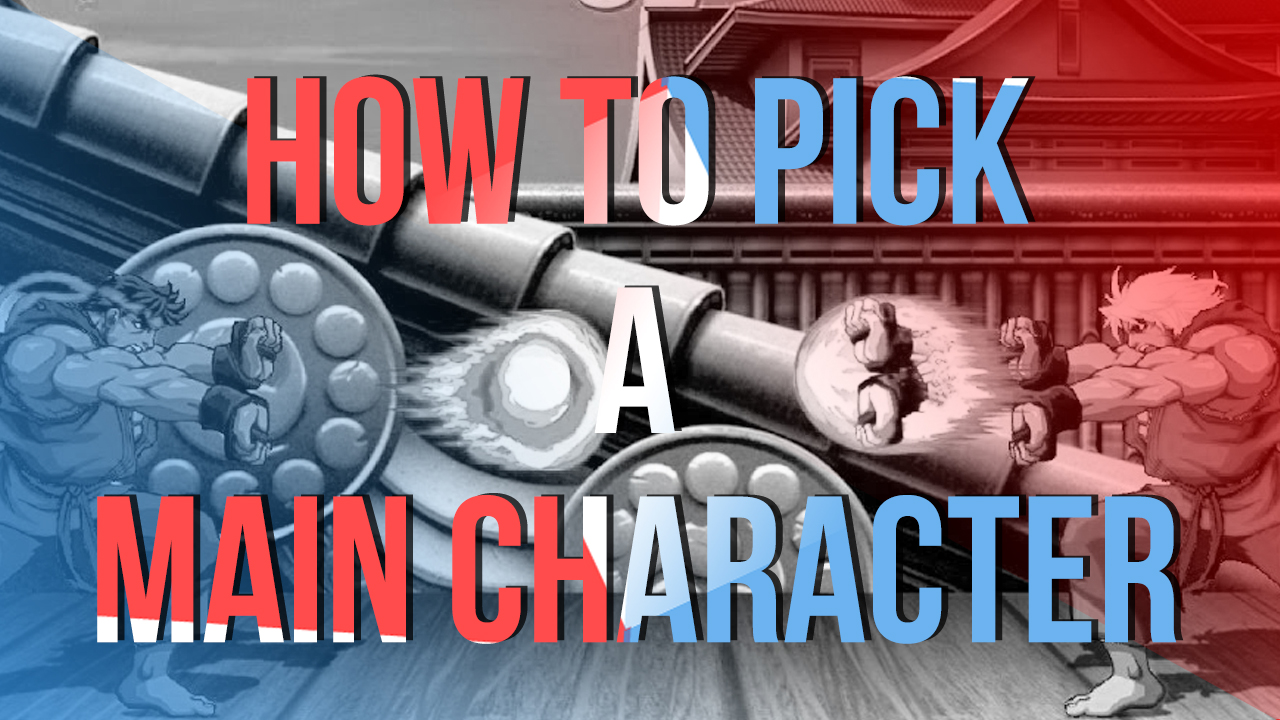
This is the eternal question when it comes to fighting games. You’ve finished unlocking and now it’s time to make the tough decision: Who will I main? There are so many factors that affect the character or team that you choose in a fighting game. Main selection is very important to competitive play. If you are new to fighting games and don’t quite know where to start, or are just having trouble finding a comfortable match, I hope that this guide will help you. I’m sure it’s not comprehensive, but, as a guy who’s been there, thinking through these elements has helped me find better satisfaction in character selection.
For the sake of contrast I will be using two main examples to help illustrate the process: Super Smash Bros. and Tatsunoko Vs. Capcom. These two games have many differences (one has a single-character selection, the other is a team fighter, etc.) which I hope will give this guide a wider application.
The Producer
Fortunately (and unfortunately), many of the decisions that go into what character you play are made for you before you have any input. What characters actually make it into the game are decided by the producer of the game: his or her ambitions and limitations. The maker(s) of the game have a plethora of deciding factors when it comes to their game’s cast. Some of these are as follows:
Availability: “What characters do I have available to me? Do I have to make them from scratch, or can I use characters from the company I work for? Do I have the rights to use guest characters from a number of companies?”
Cast size: “How many fighters should my game have? Will having more fighters mean serious balance issues?” In looking at our examples, Smash has a character roster of about fifty-five, while TvC has a maximum count of 26, which is half the amount. Complete balance is impossible (more on tier lists later), but a smaller cast may mean a more well-rounded field.
Personal preference: “Do I put certain characters in because I like them more than others? I really like character ‘X’, therefore I will make him pretty good.” Take Metaknight in Smash Bros. Brawl, for instance. Sakurai (the game’s point man) created the character, and seems overly powerful when compared with the rest of the cast. I’m not bitter.
Making fans happy: “Fans really seem to like this character, so I might include her. This character wasn’t popular in the last installment, so maybe I’ll remove him.” For the most recent Smash Bros. game, fans got a special treat when Nintendo set up a poll for fans to pick the last character in the roster. Still not bitter.
$$$$$: “What character can I put in this game as a selling point? If I use a character from another recent/upcoming release, maybe they’ll buy that game, too. If I add characters as paid DLC, will people buy it?” Sadly, money is what makes the video game world go ’round.
Once the game is released, and as long as you have the money to buy the game and all the DLC, it’s finally your turn! How do you even begin to pick? Note that the following doesn’t necessarily go in order, and that they don’t have to happen separately. You may find yourself sliding naturally from one into another or going back and forth between two multiple times. Give the process time and don’t rush it.
The Cool Factor
After watching trailers for a fighting game, there’s usually one character that I want to try out first. I see their fighting style or know them from another game and I naturally gravitate toward that character. Needless to say, I rarely end up sticking with that character. There are some players that stick to a character simply because they like the character and make it work with lots of practice. If you really want to go this way, I wish you luck, but don’t quit a game because a character you love doesn’t gel with you.
Trial and Error
Were you expecting some soul mate, love-at-first-sight mumbo jumbo? Finding the right one is hard work! You should always try out each member of the cast at least once. If you’re playing against someone or see someone playing a character that looks really good or like a lot of fun to play, try that character out next. Don’t expect a character to magically make you good, but once you’ve had a taste of what the whole cast can do, you’ll have a better idea of what you’re looking for. Hopefully you’ll be able to make a list of characters that you enjoy and would like to play. Don’t worry about narrowing down at this stage.
Know Thyself
If you’ve played fighting games before, you may have a “style” of character that you play. You may be a more reserved person who likes to slowly chip away at your opponent from a distance, or you might like to play more rushdown where you stay in your opponent’s face, never giving them a chance to breathe. Know your character archetypes and if you seem to fall into one category or another. If you are the kind of person that practices combos all day and relies on muscle memory then you might opt for a combo-heavy character. If you are good at reading a situation and baiting your opponent into a trap, then you might spring for a slow but hard-hitting grappler. If you’re new to the scene or can’t seem to find a pattern, you’re not alone; my mains are very much dependent on the game. But it is very helpful to know what kind of character you might gravitate toward.
Superheroes
A practical tip for any video game that you want to be good at is this: Watch the game! Watch people playing whatever game you want to play, whether you frequent the local tournament hotspot or binge online streams. It won’t be long until you pick out your favorite players. Maybe you like their personality or their play style. Watching people having fun playing a game will make you want to play like them and use the characters they use. I love watching Vermanubis play Smash Bros., and since I started watching him I picked up Gannondorf. Scott watches the Smasher Izaw, and whenever he releases a new video, I know I have a new character to learn to play against, because Scott will try him out.
Let Someone Else Pick
By this, I don’t mean that you should hand your controller to someone else and have them pick for you, but rather that you should keep an eye on the competitive scene. The metagame (factors outside of a game that affect the outcome) is always updating for any given game. Tier lists (though always having a subjective element) are a good indication on a character’s relative “goodness” in the current metagame. Some characters are considered “better” than others because of certain attributes that they have, certain combos they can pull off, or just the number of matches they can win against the majority of the cast. Picking a character with better tools may give you an advantage. There are, however, advantages to picking a lower-tier (“worse”) character. For instance, by picking an unpopular character, it is likely that the people you play against will be less familiar with what your character can do, whereas if you were to play as a top-tier character, your opponent might be familiar with a lot of the character’s tricks and counterpick you. It also helps to know popular characters in your “scene”. Where I live, there are some really good Ganondorf Smash players, so, even though he is low tier, many players are familiar with Ganon’s tools, which put me at another disadvantage. Once again, not bitter.
Gelling
Ultimately, the deciding factor for me whilst picking a main is whether or not a character gels with me. I might see a character that can do something really cool and try it out, only to find that my character doesn’t move the way I expect him to. There is always a learning curve when it comes to getting good with any character, but there is no doubt that you’ll find some characters that just don’t flow with you and others that do. This is something that’s unavoidable. As with finding a “cool” or “good” character, you can always choose to tough it out and make it work, but, personally, I don’t find that abandoning that natural connection that’s present from the start is an advantage. In my eyes, it puts you one step ahead at the beginning. That could have consequences down the line in developing a main, but keep this factor in mind especially when looking for a counterpick, as you won’t be able to put as much time into them.
Team Synergy
In games like Tatsunoko Vs Capcom, you not only have to pick one good character, you have to pick a compliment to your character. This might mean picking two good characters, but that doesn’t always work in your favor. You have to take into account what one character on your team might contribute where the other one is lacking. For instance, if my team consists of Zero (a rushdown character) and Jun (another rushdown character), they might be really good individually, but if I’m up against a team of Alex and Frank West I’m going to have a bad time, as both of those characters are grapplers who want me close to them. You also have to keep in mind assists and DHC’s. Zero and Tekkaman Blade are probably two of the best characters by themselves, but their assists are pretty terrible and won’t extend any combos, whereas Ryu’s assist goes well with just about any character needing a combo extension.
Counterpicks and Secondaries
Unless you are the best (at which point you are probably not reading this), or your game has an unimaginably broken character that you play (and maybe even in those situations), you’re probably eventually going to need a counterpick on your side. A counterpick is a character (or sometimes a stage) that is chosen to specifically combat an opponent’s character choice. These are handy to have practiced up so that you can buff up your main’s weak areas (kind of like team synergy, only not). Many characters have a fighting chance against most other characters, but there are a few matchups for each character that make playing him or her a pain. In these cases, it’s nice to have an option toward which to turn to avoid said detrimental matchup. Picking a secondary character can be pretty difficult, because often the characters that you gravitate toward have similar weaknesses to your main. Try to change it up and learn a different character style or archetype. You’ll learn more about your main by playing a new character, too.
Switching Mains and Stagnancy
There may be some conditions that make you want to switch your main. You may settle into a character, then realize he has an outstanding number of bad matchups. A patch might come along and nerf your character into the ground. You may feel like, though you once really liked a character, you’re bored or falling into a rut that you can’t seem to escape. Before you switch mains, I suggest watching some footage of the character being played by a number of different players. Go back into practice mode and try to find some new options for your character. Sometimes it is a good idea to switch mains, but don’t give up on all the hard work you’ve already put into the character. Knowing how to play more than one character, even if it isn’t your main, will give you more matchup knowledge and even more counterpick options.
However you choose to land on your main, I hope you play hard and never give up. Fight on, fellow brawlers, fight on.
The Wii was an awesome console. I admit that I was skeptical at first, but as with the DS, I eventually grew to love it and its amazing library. What made it even better, however, was the inclusion of the Virtual Console service, which let me revisit old favorites and experience classics I had missed out on the first time around. There was just one problem: it required a broadband internet connection.
I received my Wii shortly after moving to rural Oklahoma. Just so some of you don’t get the wrong idea about the OK great state of Oklahoma, high-speed internet is fairly common in towns, even back in 2006. That said, my family decided to move into a house about ten to twelve miles outside of town, which was out of the range of service of every broadband I.S.P. in the region. Heck, until just a couple of years ago, my folks were still on dial-up!
This made purchasing Virtual Console games an absolute pain. I would have to disconnect my Wii, place it in a bag, and (assuming my destination didn’t already have a TV I could use) lug a television with me, then haul everything somewhere I was allowed to use the WiFi or hook up a L.A.N. adapter, make my purchase, and then reverse the whole process when it was time to leave. Bear in mind this was back in 2006-2007 when flat-screen TVs weren’t ubiquitous, which is to say all I had access to was a bulky C.R.T. TV.
And yes, I actually did do this.
I didn’t like doing it this way: it was exhausting and tedious. Fortunately, I come from a long line of engineers, so coming up with creative solutions to difficult problems comes naturally for me. When my family got a new Dodge Caravan with a built-in DVD player and screen, I saw an opportunity to optimize.
The mini-van had standard component cable ports, so getting the Wii to interface with the screen wasn’t a problem. What was a problem, however, was powering the Wii. Most automobiles don’t have standard two-pronged AC power-outlets, which meant I had to find an apparatus to let me plug my Wii into the car’s 12-volt socket. After a little trouble finding the right keywords to get Amazon’s search algorithm to cooperate, I managed to get one for a decent price.
Now that I had all of the hardware, all I needed was a WiFi connection. Fortunately, E.C.U., the local university, has free campus-wide WiFi; even better, it isn’t password protected. All I had to do was drive the family van into town—usually late in the afternoon or evening once all of the parking spaces had opened up—boot up the Wii, connect it to the university’s WiFi, and download the game I wanted.
Sadly, by the time I formulated this plan and had everything I needed, the Wii’s life cycle was about halfway through, and I had bought most of games I really wanted. Come to think of it, the only games I bought this way were Super Street Fighter II and Secret of Mana.
Regardless, my adventures in wardriving make for a good story and fond memories.
Every single year I find myself wondering, speculating, and analyzing what Nintendo is going to release next. I’m about 0 for 300 in predictions. Two Button Crew recently posted something on Facebook that made me laugh, but also made me wonder why Nintendo operates the way they do. What I mean by that is they never do what anyone is expecting. They are probably the most unpredictable company I have ever known. Yet, they are probably the company I have given the most money to. What is the driving force (from a business perspective) behind Nintendo’s decisions and how they market them?
The biggest thing I can think of is innovation. To be innovative, a company has to be different. Nintendo cannot reform the gaming industry by following the same old formula. Unfortunately, this also means that some fans are going to be let down because Nintendo tends to take what they love and either leave it in the dust, or change it just enough so it doesn’t feel old. An example of this for me is Paper Mario: The Thousand Year Door. I loved that game. I would love nothing more than a true sequel. Since that game came out, we’ve gotten Super Paper Mario, Paper Mario: Sticker Star, and Paper Mario: Color Splash. Each subsequent game I just mentioned gets closer and closer to the formula that makes The Thousand Year Door, but none of those games kept my interest because of changes made by developers to keep the games “fresh”. Not all changes are bad though (I’m looking at you, Breath of the Wild). When Nintendo takes change and gets it right, that is when nothing else in the industry can come close. And it’s not just about software, the same applies to hardware. The Wii essentially revolutionized gaming, and the Switch so far is a success story as well. Nintendo is basically the cleanup hitter in the lineup. They hit more home runs than anyone, and they can hit them farther. Unfortunately, that also means they are likely going to strike out more than anyone.
The other thing that Nintendo doesn’t really seem to care about is competition. They are 100% independent when it comes to the decisions their competitors make. This is a very ambitious move, but not one that comes without risk. A company as large and with as big of a fan base as Nintendo can get away with this. They don’t have to keep making the same old games and systems because they don’t care about disrupting the status quo in the industry. People expect a new Gears of War game that does not stray far from the formula, because that is what Microsoft is good at making (I’m not saying it’s a bad series). There is very little risk for Microsoft here, because they can look at past sales, and without straying from the formula within the game, they can predict and model how profitable the game will be. My intent is not to start a console war, but in my opinion, no other competitor innovates like Nintendo. This is simply because other companies do not want to partake in the risk Nintendo takes on when they test the waters of the market.
I’ll always love Nintendo, and there are times when I’ll hate them. It’s just the way Nintendo works, and it will not change anytime soon because it’s how they operate. Innovation is what all companies should strive for, but Nintendo takes it to a whole different level. It’s a business model that would drive most companies into bankruptcy sooner than you can say “Mario Kart”. Innovation is something that does come with a cost, but one thing I can be confident in is that Nintendo will be innovating the industry and making my favorite games and consoles for years to come.
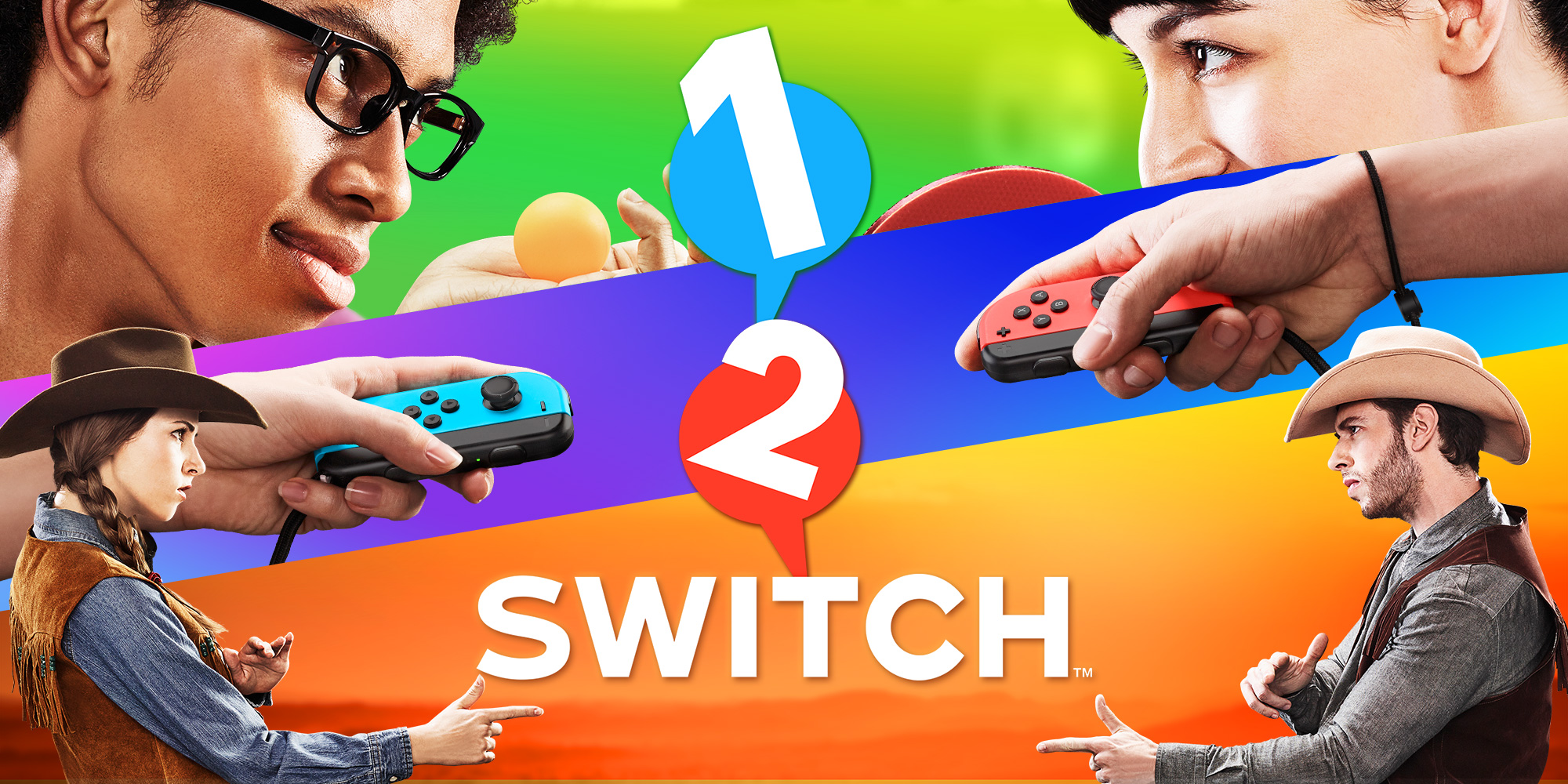
1-2-Switch, to say it gently, had mixed reactions after its release. We’re going to start this article by analyzing why there seems to be people giving it positive reviews, and many critics bashing it. Once we’re finished looking at that, this article will rank the 1-2-Switch games from best to worst, and sort them into three categories!
To me the issue is simple. It all comes down to audience. League of Legends is a wildly popular strategy game that has taken the world of gaming captive. I’ve tried it, and it’s not my cup of tea. 1-2-Switch is judged harshly because it is being judged by gamers. If you were expecting 1-2-Switch to be a gamer’s game, or even on the level of Mario Party, you are sadly mistaken. From its reveal its intention was clear; don’t look at the screen. With a goal like that, you immediately understand that it’s not aiming to be a video gamer’s game.
This game is PERFECT for any sort of gathering. It is more accessible to everyone than Wii Sports was. It is instantly “get-able”, and most mini-games can be jumped into without any explanation. I have yet to find a non-gamer that did not find it to be a blast.
All these things about audience being said, that does not mean that this game is completely without flaw. There is enough here to keep the crowd entertained for some time, but some experiences were clearly missteps. I believe that all of the 1-2-Switch mini games fall into one of 3 categories: 1) enjoyable games, 2) games, at least, 3) unplayable messes. We’ll start with the best and work our way down to the worst.
Good Mini-Games:
1. Fake Draw: This is the genius of the Switch all in one mini-game. It’s a super simple premise with a little extra strategy added. You need a quick wrist and a trained ear, and it’s perfect to test reaction times.
2. Quick Draw: Surprised to see this next? Don’t be! It’s just a simpler version of Fake Draw that’s 100% about speed. This is the game that everyone should start out with. It’s exciting, and it’s the one to which everyone wants to have a go.
3. Ball Counting: This game by itself made me believe in HD rumble. It may not be the most exciting game, but it requires patience and a gentle hand. Seriously, it makes me believe there are marbles in the Joy-Con.
4. Sword Fight: Sword fighting on Wii Sports Resort was fun, but usually turned into a waggle-fest. The motion sensors in the Joy-Cons are much more accurate, and this combat game is the best of them.
5. Plate Spin: It doesn’t sound like a very exciting game, but your goal is to keep your plate spinning while you knock off your opponent’s. Very entertaining. I only wish I could find more people to play with me…
6. Safe Crack: Another game that does the HD rumble really well, Safe Crack requires precision. The right rumbles become more difficult to detect as the game goes on, making it quite the challenge.
7. Wizard: Is this one cheesy? Yes, yes it is. But it is fun, and requires strategy.
8. Gorilla: I like this mini-game, but few others are in my camp, so I rarely get to show off my apely prowess.
9. Treasure Chest: Once again, a simple premise, but shows off the motion controls of the Joy-Con well.
10. Shave: This one is fun to play and entertaining to watch especially if they throw you the buzz cut challenge!
11. Copy Dance: Give the Joy-Cons to the goofiest and most flexible people in the room for this one. Trust me, it’s hilarious.
12. Air Guitar: This one definitely had to be made, and it is fun to play. Most of the times I’ve played this game the Joy-Con seemed to track the beat well and not reward waggling, but in more recent play sessions, it seemed like the biggest waggler won… Try it a few times for yourself.
Well, They’re Games…:
Now we take a step down from the good into the… meh.
13. Milk: Yes, it looks ridiculous, but people enjoy laughing at each other. It’s inevitable that this mini-game will continue to be a staple and will be immediately associated with 1-2-Switch till the end of time.
14. Boxing Gym: Requires quick reflexes, but I’m not really certain how well it reads the different punches.
15. Baseball: The presentation on this one is nice. It’s like Wii Sports Baseball, but without looking silly, and you use your ears as opposed to your eyes. It’s all about reading your opponent.
16. Zen: Not moving as a game… I think the premise works, but it’s not exactly a rip-roaring time.
17. Eating Contest: It’s fun to watch people play, but can be really frustrating if you are playing and it does not read your movements. On Nintendo’s behalf I did try putting the camera in front of my hand and puppeting mouth movements and it didn’t work at all, so the camera CAN tell the difference between my mouth and my fingers.
18. Dance Off: It’s a good premise, but copy dance is more entertaining.
19. Samurai Training: Maybe it is just because I am a sore loser, but I do not really care for this game.
20. Beach Flag: Beach Flag is kind of a waggle-fest that wears you out. I enjoy it, but I haven’t found one other person who does.
21. Runway: Once again, humorous to watch, and it requires technique! I brought 1-2-Switch to school for my students to play one day. One of the boys won EVERY time because he had the hip sway portion absolutely pinpoint perfect.
22. Signal Flag: JUST making the cut as an actual game, this one is about concentration and not plunging a pencil into your ear at how annoying the voices are.
Broken Head-Shakers:
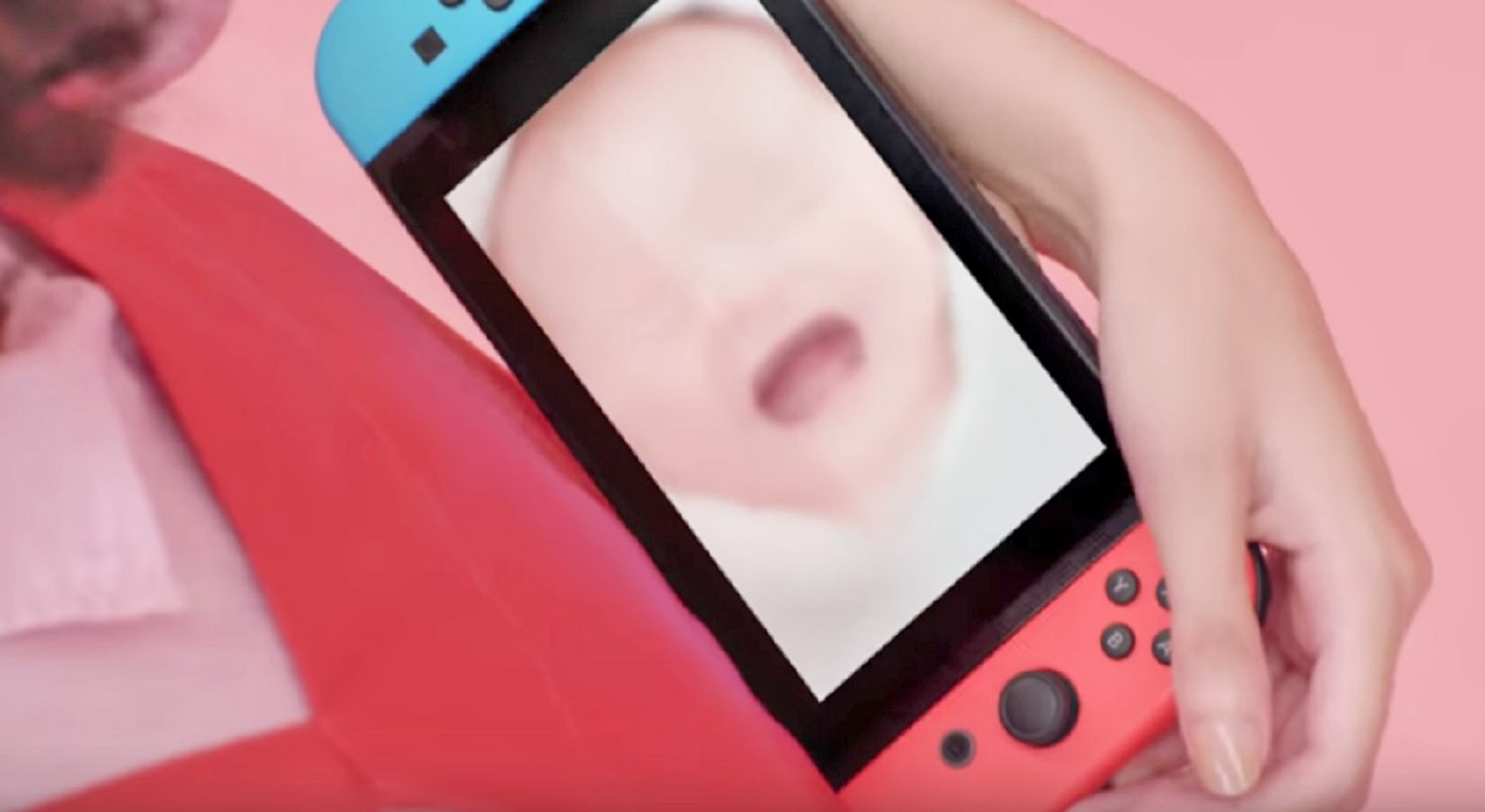
The Switch acting as a mirror of the person playing this mini-game.
None of these are playable. Turn back now.
23. Telephone: Pick up the controller when you hear a certain sound. That’s it. Also, be careful when you do. It is easy to drop the Joy-Cons.
24. Soda Shake: I understand the premise of this game, but apparently, the developers didn’t. The demonstrational video doesn’t explain it at all! When the last guy loses, they all rejoice, including him! I guess they’re just excited to have whatever’s in that bottle… and to be done with this non-game.
25. Table Tennis: Good idea, poor execution. You’re always going to be missing the timing. The Wii Play version was better. And yes, I meant that.
26. Sneaky Dice: This game is so complicated that I had to explain it to anyone I played with after the instructional video, and they still didn’t understand. Flip a coin. You’ll have more fun that way.
27. Joy-Con Rotation: THE most frustrating thing. You play on a table, someone will bump it. You play on the floor, it had better be hardwood and no one should be moving. Like, at all. Even after that, it will give you hypertension, then make you question your life decisions. My recommendation is to dupe two friends into playing it, then standing behind them saying, “Careful, Spongebob. CAREFUL, SPONGEBOB!” and laugh hysterically after they impale your eye with the Joy-Con because it was worth it.
28. Baby: Why? Why did they think this was a good idea. Better yet, what audience were they going for? For people who don’t have kids, is it supposed to be a method of birth control? For people who have had kids, why would they want to relive the most annoying part about having a baby? It’s baffling that anyone thought this would be enjoyable for any audience. Why? WHY!?!?
All in all, there are more good games than bad in this collection, and I think it is the new must-have for any party or large get-together. It showcases what the Joy-Cons can do so well, and for that reason, it is the next necessity in the Nintendo Experience as well.
Tuesday, May 2nd was the day that Two Button Crew uploaded its 500th episode.
This monumental milestone dwarfs everything that has come and gone before! It’s hard to believe that we’ve made a show every weekday for the last 500 weekdays. Just amazing.
Simeon and I (Scott) are almost two years older than when we started, and we’ve grown from a team of 2 to a team of 7 (don’t worry if you can’t name everybody – we’ll introduce them properly soon).
The show has stayed largely the same, although the set has changed, we’ve witnessed the launch of a new Nintendo console, and we’ve changed day jobs.
Oh, and YouTube has changed a dozen times or so.
Here, I’m going to take a few moments and share the things I’ve learned over the last 500 episodes:
You Can Attract the Right Viewers and Build A Community
TBC doesn’t have a huge following, but the quality of our viewers is astounding. There are all kind of stigmas about YouTube comment sections, but none of them apply to our viewers. By avoiding growth shortcuts, follow-for-follow techniques, and by engaging with Nintendo fans, we’ve collected a tight-knit group of like-minded Nintendo fans. Our patience has paid off! We wouldn’t change the connections we’ve made for a big number of mysterious subscribers.
You Can Help People By Providing Entertainment
Our daily show is a mixture of information, entertainment, gameplay, competitions, and the like. But the source material is consistently one thing: video games. Sometimes it’s tempting to feel like all the time we pour into this effort is frivolous compared to more altruistic endeavors, but we’ve found something surprising along the way: we have helped people. Our viewers have chaotic and sometimes difficult lives, and our channel has proved to be a safe-haven of positivity for them. We love making consistent, top-quality content that you can count on, no matter what’s going on in real life.
You Have to Serve Others to Succeed
There are no benefits for creators to reap without helping others. At first, becoming a YouTuber seems like a pretty grand gig. Make content, people will watch, numbers will go up, and you’ll gain credibility and perks in the industry. Right?
No.
Those motives aren’t sustainable. Attach your motivation to helping your audience, and then you can wake up every day, put others before yourself, and make something truly great while improving others’ lives.
You Have to Be Ready to Adapt
YouTube changes the rules constantly, tinkering with their algorithms to keep viewers engaged and to increase their own revenue. Sometimes these changes are in the favor of creators, and other times they’re not. It’s important that we don’t rely on YouTube too much, but that we diversify our sources of support.
Persistence Pays Off
Things that we have invested in for years are just now starting to pay off. It’s all about the long game. I’ll look back on this post another 500 episodes from now and smile at how things have changed.
Howdy, crew! Welcome back to That Was a Thing, where I take a look at strange and obscure pantendo games and paraphernalia!
The Wii: when it’s key feature, motion control, was first revealed, the first two uses that went through everyone’s mind were sword and gun. Not missing a beat for once, game developers were quick to cater to the public’s sociopathic expectations. Many of the Wii’s early titles utilized the Wiimote’s pointer to aim projectile weapons and its motion detection to swing melee weapons, and the results were undeniably mixed. One such game was Ubisoft’s Red Steel.
The game was fairly standard fair: girlfriend kidnapped by yakuza, go to Japan and shoot them, yada, yada, yada. What separated it from other first-person shooters was its motion-controlled swordplay. At various points in the game, the hero would have to fight in one-on-one katana duels. Long story short, it just didn’t work. Unfortunately, the Wiimote’s I.R. sensor and accelerometer simply weren’t enough to emulate the one-to-one precision players expected.
Which is why Nintendo invented the Wii MotionPlus! And this is where Red Steel 2 comes in. When Ubisoft saw the gyroscope add-on, they knew they had everything they needed to set things right. I seem to recall a lot of hype surrounding this game before it came out; retailers even offered preorder bonuses. I first heard about the game from the now defunct Nintendo Power magazine, and was immediately intrigued. This game was dripping with style and—just as important—it didn’t have anything to do with the first game, so I could jump in without missing anything. However, I wouldn’t get around to playing it until I got an extended trial of the late Blockbuster Video’s online rental service, and decided it was time I a gave it a shot.
Nu-Western Post-Cyberpunk Japanimé
Let’s start at the beginning. The game opens with our hero waking up on the outskirts of town. As he slowly comes to, he notices his hands are tied. Tracing the rope, he quickly realizes he’s not just tied up, he’s tied to the back of one of his assailant’s motorcycles. Just woke up, and this day’s already turning out to be a drag.
And this is how we’re introduced to the game: a gloriously over-the-top, first-person cutscene in which the hero is dragged into town, crashes the bike, and dusts himself off like he does this every day. While it admittedly takes a few minutes to get to gameplay, this intro nails the tone of the game and what players can expect right off the bat! You’re the toughest, badest son of a gun on the planet and you can bet your stetson every pinhead fool-enough to take a shot at you is going to make you prove it!
The intro nails the tone of the game and what players can expect right off the bat!
In fact, I’d say this game runs on distilled, unadulterated cool, and not in a “trying too hard” kind of way either. Even when parts of it seem hokey—or downright silly—the game presents its set-pieces with such confidence and commitment that the player really has no choice but to just go with it. While other games try to convince you they’re awesome, Red Steel 2 just leans in close, stares you right in the eye, and in a low, gravelly voice tells you it’s awesome.
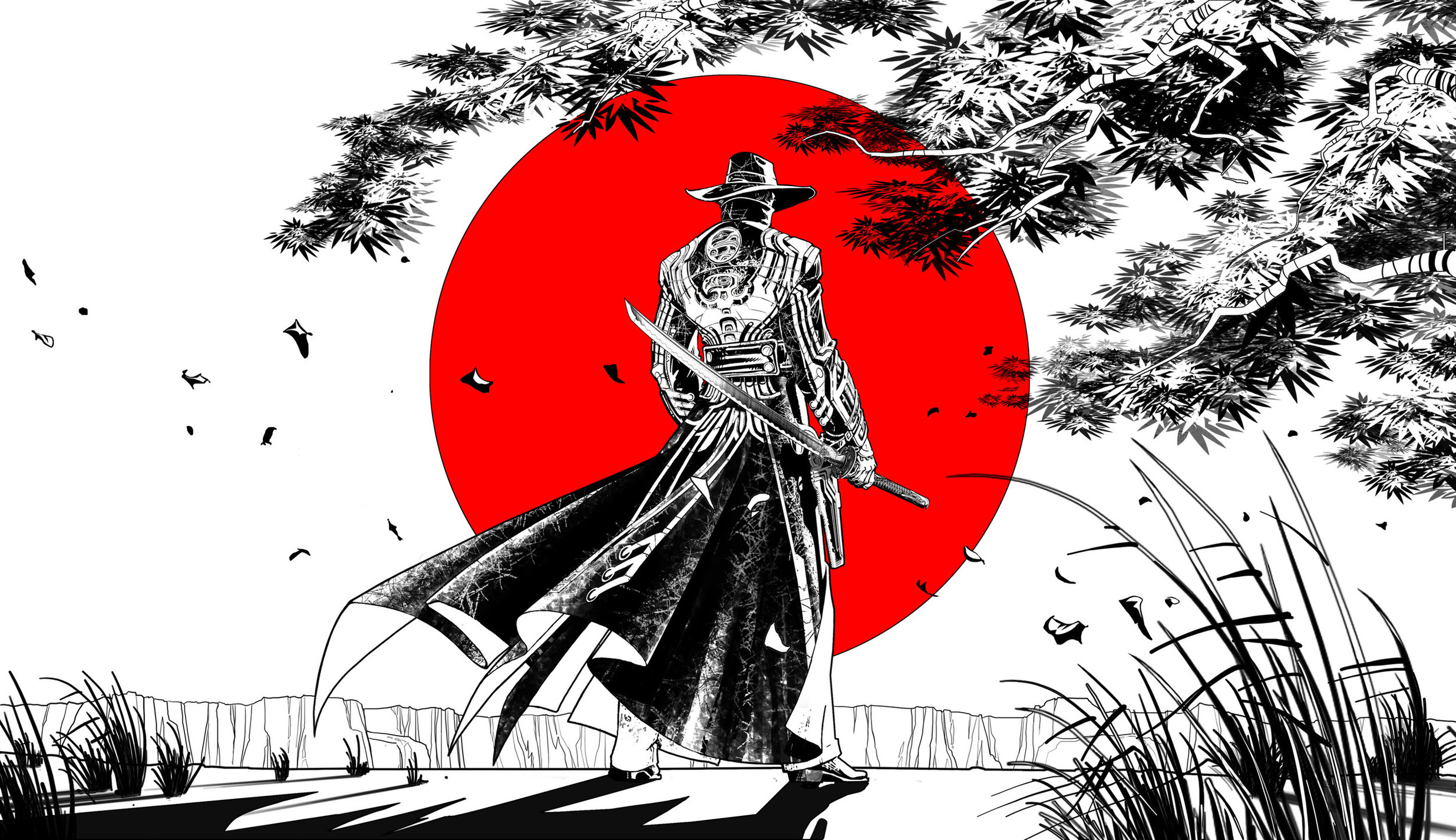
On that note, let’s take a moment to talk about this game’s aesthetics. This game is a chocolate-and-peanutbutter-esque mashup of the wild west and samurai flicks, with the occasional dusting of cyberpunk. The game takes place some unspecified amount of time in the future in a dystopian Nevada. The environments you explore are a strange blend of old-west, feudal Japan, and run-down, futuristic towns. It’s not at all uncommon to see Cracker Barrel-esque country stores with tanukis on their signs right next to radio towers and hovering attack drones. Moreover, the plethora of destructible crates, trash bags, boxes, and barrels gives the environments a cluttered, grungy feel that reinforces the gritty tone of the game.
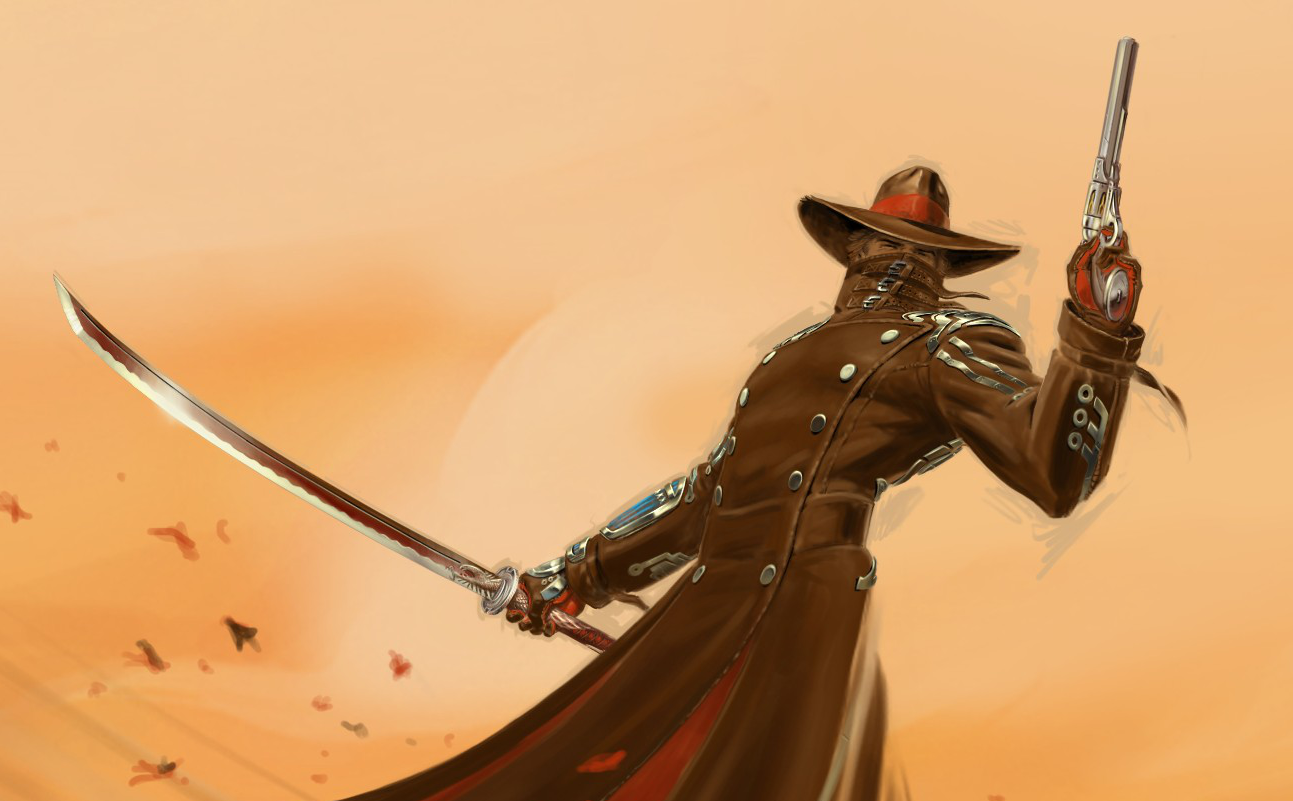
Just look at this guy! He’s Clint Eastwood mixed with Miyamoto Musashi left to marinade in anime overnight!
The game makes use of a heavily stylized visual design. While the Japanese influences on the plot and setting may lead some to call it anime-inspired at first glance, it really has more in common with comic books: bold lines, fairly realistic body proportions, and a deliberate visual roughness that complements the game’s visceral combat and tale of ambition and revenge. As to be expected with a western, the color palette includes a lot of earthy tones: browns, oranges, and sandy yellows. Fortunately, Red Steel 2 manages to avoid the pitfall of making all of its environments dingy brown, with several areas including—if not primarily consisting of—cool blues, grays, and greens. Clearly, the art team put a lot thought into making each area visually distinct from one another, as every stage either has a unique theme or makes use of color to distinguish itself. That said, all the themes are variations of cowboy, samurai, or industrial, so while each level is aesthetically distinct from one another, the constraints of the game’s themes do start to wear thin toward its conclusion.
Clearly, the art team put a lot thought into making each area visually distinct from one another.
While we’re on the topic of environments, one of my biggest complaints with the game’s visuals is that some of them don’t age very well. Between the murky textures and low-res models, a lot of the environments in this game don’t look very good close up. Fortunately, you’ll probably be too busy hacking-up dudes (who themselves look fine) or searching for loot to pay too much attention to such things.
Cutscenes are another weak point. To be fair, most cutscenes in this game are okay, but the ones that trigger when talking to one of the hero’s allies are just painful. These usually consist of a stationary camera shot with one lone character pacing back and forth while talking. And it is so boring. In the end, while I love the visual design, I suspect the artists weren’t given enough time or resources to fully realize it.
So what exactly is the story? You play as the last surviving member of the Kusagari clan, an outcast banished by the elders for…well, the game never actually says. There was a short “animated comic” online that serves as a prequel to the events of the game. You can still find it, but I wouldn’t bother, it’ll just leave you even more confused. The only revelation I got from it is that the hero is wearing a blue shirt under his signature duster.
Confusing backstories aside, the story really isn’t that complicated. First, you get your sword back from a gang leader, then you find out the real villain wants to make more swords like yours because it has special qualities. Along the way, you compile a cadre of companions. Truth be told, they’re exactly who you’d expect to find in this sort of game: the sword smith/kenjutsu sensei; the old, stubborn sheriff; the hacker girl; and the guy who’s going to double-cross you. The plot’s pretty cookie-cutter when you look at it separate from the game’s unique setting, but I’d argue that’s not really the point; this is an action game. So how is the action?
Hack and Shoot
Red Steel 2 is a first-person action game. I say “action game” instead of shooter because, well, this isn’t really a first-person shooter. Sure, you play from a first-person perspective and you shoot things, but once you get a sword, the guns take a backseat. No, at its core Red Steel 2 is a brawler with some F.P.S. trappings.
At it’s core Red Steel 2 is a brawler with some F.P.S. trappings.
During combat, players can freely switch between swinging a sword and shooting thugs with one of four guns. As to be expected, swinging the sword is accomplished by swinging the Wiimote and guns are fire using the B-trigger. Sword slashes are individual attacks in a specific direction instead of 100% one-to-one movements, making each swing a discrete action, much like a button press. While it may sound like a cop-out, this system actually works really well: this system discourages flailing and instead encourages you to make deliberate, decisive strikes, which ultimately gives each hit you land more impact.
This game is full of tough choices, like, “who do I shoot first?”
This game also showers you special abilities. Each one has its purpose, and figuring out how to combine them seamlessly is immensely satisfying. It also helps that most of them are very easy to perform. All special abilities are simply one swing direction and button combination, and because of the aforementioned motion registering method, the game has very little difficulty figuring out what it is you want to do.
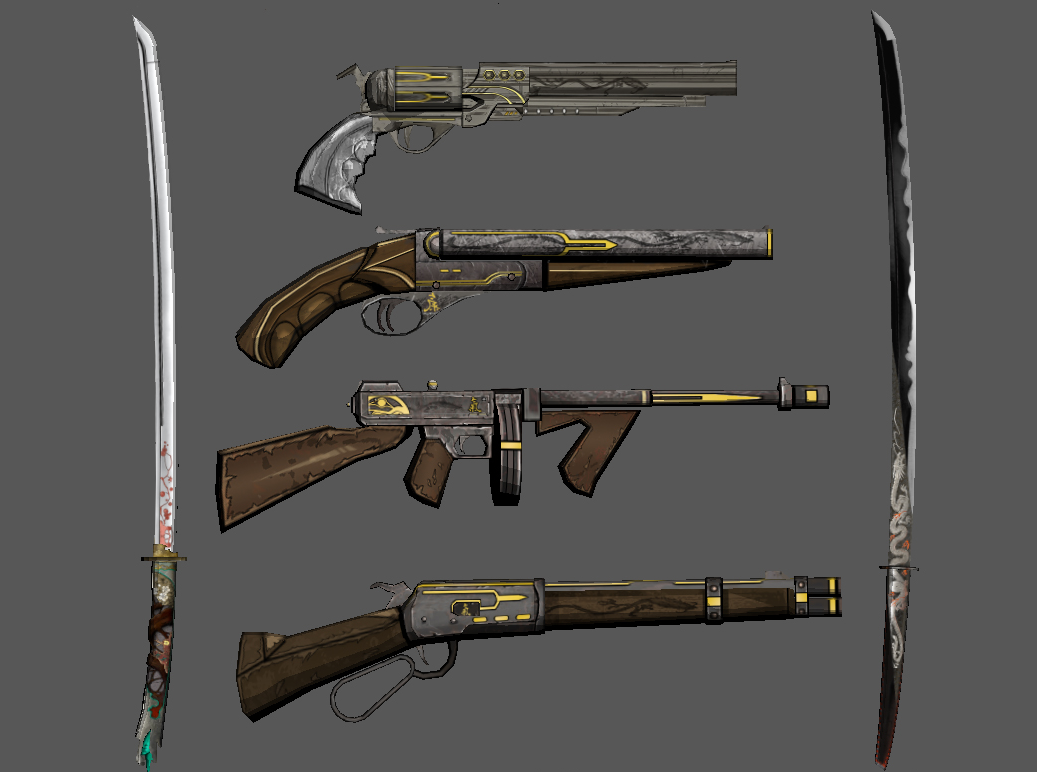
Gun fighting isn’t nearly as intricate. Simply point and pull the trigger. That’s not to say it isn’t fun; getting to smoothly switch between the two fighting styles is a blast. It gets even better once you start unlocking special attacks for your firearms and—of course—more guns. You start with just a revolver, but eventually get a sawed-off shotgun, a Tommy-gun, and finally a rifle. Of all the guns, the only one I don’t really like is the rifle: by the time you get it, it just doesn’t feel necessary. That’s not to say I never found a use for it, just that it doesn’t really stand-out.
Say hello to your new best friends.
Fighting is the most fun when you manage to get into a rhythm. Most fights aren’t terribly difficult, so the fun comes from trying to establish a sense of flow. Fights just look awesome in this game, with animations carrying a great sense of impact and frequent visual effects, like slow-motion, punctuating dodges, parries, and finishing blows. This means that once you get that flow, the fights almost look choreographed, especially if you make a conscious effort to make use of your diverse moveset. All of this is enhanced by the game’s first-person view. Because you experience gameplay entirely through the hero’s heterochromatic eyes, you never get to see what exactly it is the hero’s doing, letting your imagination run wild filling in the blanks.
But visceral acts of violence are only what you’ll be doing about half of the time. A good deal of the game is quietly exploring the levels looking for fights, money, or optional objectives. And I have to say, these quiet moments are what give this game its phenomenal pacing. Much like in Metroid Prime, F.E.A.R., or Half-Life, these exploration segments help to break up the action and give the player some breathing room, not to mention a chance to wind down between battles. These brief interludes never feel out of place, however. Walking the abandoned streets creates a rising sense of tension which makes you anticipate the next fight all the more, especially since your opponents tend to come out of nowhere.
Walking the abandoned streets creates a rising sense of tension which makes you anticipate the next fight all the more.
An odd quirk of these exploration segments is the occasional motion-based prompt. Every now and then, you’ll come across a combination safe or a dial that you’ll have to turn with the Wii remote. It’s never very challenging as you either need to tilt the remote at the appropriate angle and hold it there, in the case of dials, or press the A button to activate the tumblers, in the case of the safe. While it seemed perfectly natural when the Wii and the MotionPlus were still fairly recent, nowadays I can’t help but think it dates the game. Not necessarily in a bad way, mind you, but it certainly screams “Wii.”
Then there’s the upgrades, and—oh golly—are there a lot of them! You can upgrade your sword, your special abilities, your guns, the ammo for your guns, your coat, and even your hat! This is where money comes into play. You’ll come across a lot of cash, be it from completing missions, using special attacks to finish foes, finding secret collectibles, or just plain lying around. I can only assume part of what makes dystopian Nevada dystopian is inflation, ’cause you’ll find money flipping everywhere. And even then you’ll still have to go out of your way to get all of the upgrades available to you. Honestly, while I appreciate the effort, I can’t help but think the dev-team went a little overboard. While not being able to get everything in one run does encourage thinking about how you upgrade the Last Kusagari, it can be frustrating to obsessive types like myself, as this game doesn’t feature a “new game plus” option. Then again, maybe it’s for the best. Since enemies aren’t that strong to begin with, upgrading your weapons means they go down even quicker, thus revealing the tragic irony of this game: one-shotting an opponent is the ultimate buzzkill.
Riding into the Sunset
Red Steel 2 is a rip-roaring good time. From it’s sense of style to its fluid gameplay, the game knows what it wants to be. I think it succeeds partially because it’s so focused on nailing the core concept. That said, it is a bit of a one-trick pony. If you don’t like old-school, run-and-gun shooters or hack-and-slash games, then there is absolutely nothing here for you. It’s a great trick, and it doesn’t outstay its welcome, but the whole game is the same basic exploration and combat loop all throughout. It’s also not without some flaws. Aside from the ones I’ve already mentioned, the ending is pretty weak, the “challenge mode” is just a mission select with a tacked on scoring system, and there’s no post-game content or completion bonuses to add replay value. But I guess that—aside from the ending—all of those complaints just reinforce the notion that this game is about doing one thing and doing it well. This is—in my opinion—one of the best action games on the Wii and an excellent exhibition of what the system’s motion controls could do to enhance gameplay.
Here’s hoping there’ll be a Red Steel 3 on the Switch!
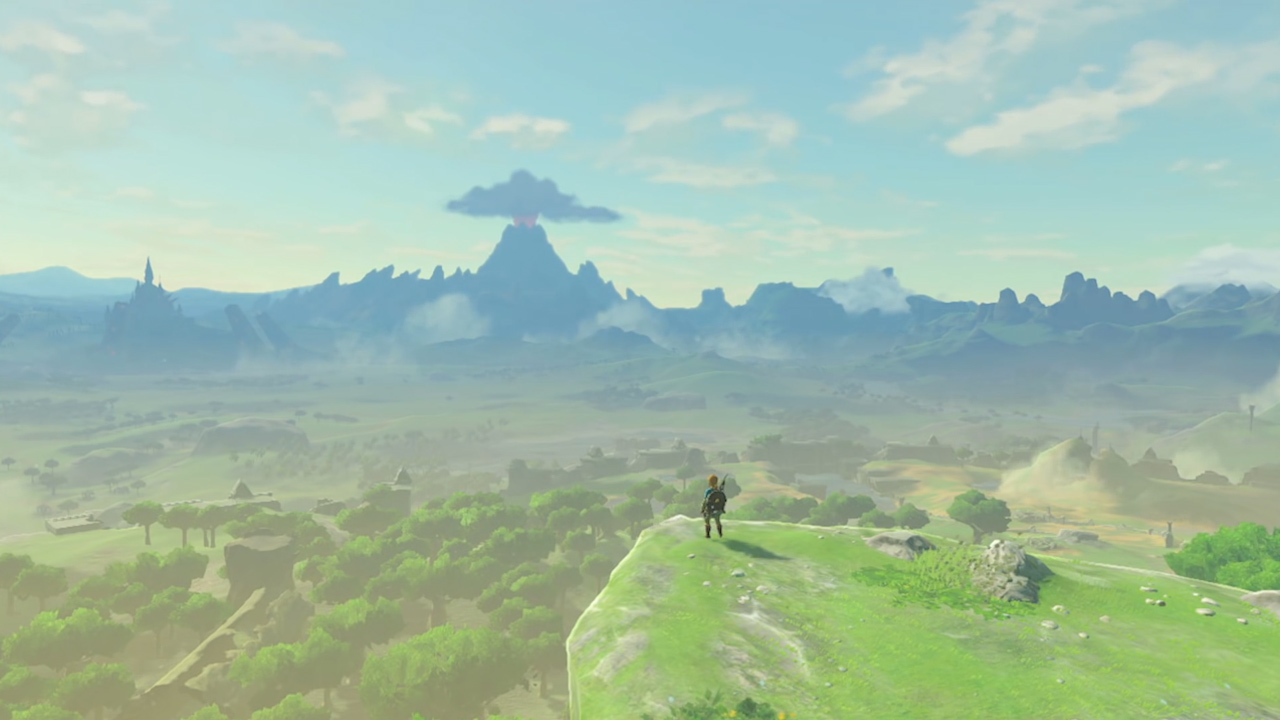
The Legend of Zelda: Breath of the Wild is a special game. Is it perfect? Not quite. But in my humble opinion, it’s pretty close. Throughout the 100+ hours I have dedicated to Breath of the Wild, I slowly felt more empowered, more confident, and more ambitious. Finally feeling strong enough to storm the castle gate pumped up the adrenaline inside of me. Not to mention, most of the game I felt as though I was running and gliding through a Bob Ross painting. However, rather than writing a full review on this game, I thought I’d highlight something that just stood out to me. That is, all of the intricate references to past Zelda games.
Beauty is Everywhere
Wherever, you look, whether you know it or not, you are probably seeing an homage to a past Zelda game. Every other landmark is named after a past character or location, although a letter might be missing or displaced in the name. I felt an unusual sense of happiness when I discovered Tingle Island, even though Tingle was nowhere to be found. I find it crazy that just a name can invoke such a feeling of nostalgia even if the landmark itself does not. There are also specific regions in the map that primarily focus on one game. I found a Phantom Hourglass Area, Twilight Princess themed area, even a Wand of Gamelon area.
Kidding on that last one.
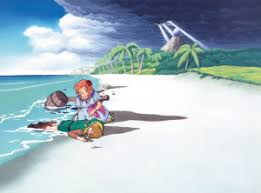
There were many times when I encountered a landmark that tugged on the nostalgia strings. For instance, I was riding on my horse, Lacey (named after my real-life cat), and while I heard the subtle melody of the main Legend of Zelda theme, I stumbled upon Ranch Ruins. I couldn’t believe the condition of this place, and then it hit me that it was a dystopian Lon Lon Ranch. After I disposed of the Guardian that called it home, I took Lacey for a spin around the track and actually started getting emotional as I recalled memories of playing Ocarina of Time and pictured Malon Singing Epona’s Song in the center of the ranch. Another time this hit me was when I discovered Eventide Island (by far my favorite area in the game) and felt as helpless as getting washed ashore in Link’s Awakening. Yet another favorite of mine was discovering the Master Sword. This took me back to a Link to the Past thanks to three blue nightshades in the background.
This game doesn’t forget about its roots, either. It was really nice to see the old man at the very beginning of the game, the only difference being instead of going into the cave to visit him, you go out of the cave. Maybe there is a deep meaning behind that? I’m not entirely sure, but when Link does leave the cave for the first time and overlooks the Dueling Peaks, I was instantly reminded of the artwork from the original game. The Master Sword shooting projectiles when Link has full health is also a nice touch.
Though these references may be a nightmare for people who are keen on placing this game somewhere in the franchise timeline, I view it as essentially a conglomerate of pinnacle moments in the series. For me, this aspect of the game is delicious icing on an already incredibly built cake. This is a special game not only because of its top-notch design, but because it doesn’t forget about how it came to be in the first place.
Though it’s E3 weekend, and so much is happening, I would like to turn focus to just one of Nintendo’s events: The ARMS Open Invitational. The Big N is getting into the spirit of the season by throwing a tournament for their upcoming title ARMS. Summer fighting game tournaments are nothing new, and since we’re about a month away from EVO 2017 (the biggest, grandest fighting game tournament of the year), I found it appropriate to celebrate all of the riot time festivities by inducting some of the best Pantendo (appearing on Nintendo consoles, including first, second, and third party) fighting games into the Nintendo Experience.
We’ll kick off with an old classic: Soul Calibur II for GameCube. Soul Calibur is a series of 3D fighting games that center around weapons-based combat as opposed to hand-to-hand. If you are familiar with the franchise, you know that they’re usually multi-platform and each platform has its own exclusive character(s). For the second offering, the Playstation 2 version contained Heihachi from the Tekken series, and the Xbox version had the Spawn comic book character. Fortunately, Nintendo fans got the best deal, and Link from the Legend of Zelda series was playable. For that appearance alone this game is worth playing.
The game was a solid fighter and was an arcade classic; perfect for both friendly and serious play. With the exception of Soul Calibur Legends for Wii (of which I had not heard until researching this blog, and is not even a fighting game), this was the only one of the series that made it to a Nintendo console. I suggest you hunt down this old gem and give it a shot.
Next up is a game that should not be foreign to anyone reading this blog: Super Smash Bros. Melee. Whether you prefer this specific version or not (it is not my personal favorite), you cannot deny its impact on Nintendo and Fighting Game Community (FGC) culture.
Official box art
Melee was released in 2001, and has remained relevant since, having what is possibly the longest, most-permeating tournament longevity of any fighting game ever. People continue to play competitively to this day, and it has found its way into the EVO tournament lineup six times (counting this year’s upcoming tournament) and has churned out record-breaking turnouts. Melee is the fighting powerhouse you cannot ignore.
Lastly, I would like to discuss a pushed-aside Wii gem known as Tatsunoko Vs. Capcom: Ultimate All-Stars.
The saga of TvC is an interesting, but sad tale. The original version of the game, Tatsunoko Vs. Capcom: Cross Generation of Heroes, saw some of Capcom’s best-known brawlers facing off against characters from popular Japanese anime studio Tatsunoko (probably best-known in the states for Karas and Samurai Pizza Cats). Since many of Tatsunoko’s characters were unfamiliar to the rest of the world, the game was only released in Japan and the Wii featured region lock, the rest of the world was missing out on a fighting game produced by the community’s best developer. The outcry was so great that Capcom not only decided to relent and release world-wide a year later, but to polish the game up and add new characters. Fighters who owned a Wii were overjoyed, but therein lie the crux. Many people who were serious about fighting games (especially Capcom fighters) had already found satisfaction in one of the other consoles (PS3 or Xbox 360) with Street Fighter IV, and with the announcement of Marvel Vs. Capcom 3 (for which TvC seemed a test run) for those consoles, there was little incentive to invest in this game. It soon faded into obscurity after reaching the EVO stage once in 2010.
All of this is a shame, because the game is not only technically challenging, but also one of the most balanced fighters ever made. If you scour the internet for TvC tier lists, you will find a few opinions. Almost all of them will rank the giants (Gold Lightan and PTX-40A) as dead last, or at least bottom tier. They’re a huge target, slow, and you do not get a partner to help you out. But if you look at the top eight finishers in the EVO tournament, you will see three of them used giants in their run to the top. In fact, you will see a lot of variety, which is not common in a lot of fighting games. You usually see a few characters over and over again because those characters have a natural advantage over the rest of the cast. TvC was one balanced mamma-jamma, and I love returning to it whenever I can.
… Can I get a chant? (Sequel! Sequel! Sequel! Sequel…)
That is all for this special fighting game edition of the Nintendo Experience. Pick these classics up and go the distance.
The SNES Classic Edition has been unveiled, but not in enough detail!
On June 26th, Nintendo announced that it will be following up the popular NES Classic Edition with an SNES successor. At an MSRP of $80 and containing 21 games, this bundle of 16-bit nostalgia is liable to fly off shelves as quickly as Nintendo can stock them. However, there is still some information about this mini console that is shrouded in mystery and could affect gamers’ buying decisions.
Controller Cords and Ports (Answered!) Immediately following Nintendo’s announcement of the SNES Classic Edition, questions of the controllers’ cord length and connectivity method surfaced. Thankfully, so did some answers! Nintendo confirmed that the controller cables will be about 5 feet long, an extra 2 ft. compared to the previous Classic console.
It also became clear that the SNES controller ports on the front of the unit are simply for aesthetic accuracy. Due to Wii Classic Controller and Classic Controller Pro compatibility noted on the SNES website, it is confirmed the controllers will plug in with the same type of ports utilized by NES Classic Edition and Wii. So questions of the controllers can be put to rest!
Just How Limited is this Edition? The NES Classic Edition was notoriously hard to find last Holiday season and through the remainder of its short production run. Nintendo cites a misjudgment of demand as the reason for that inconvenience, but it also came to light that the system was meant to be sold as a limited run (and actually got extended as its popularity became evident).
How many Super Nintendo units are going to be manufactured is unknown, but Nintendo insists that more units will be made available than its NES counterpart. Though they won’t commit to any production past the 2017 calendar year, they are making an effort to avoid shortages. Understandably so: with sales data on the NES Classic, Nintendo will try to leave less money on the table now that the market has now been proven for these throwback consoles. Additionally, the new system is going on sale several weeks earlier than the NES did, so Nintendo appears to be gearing up for more availability going into Q4.
Will Nintendo Allow Proper Preorders? A missing piece of this puzzle is preorders. Fans of retro gaming were disappointed when preorders never opened up for the NES Classic Edition, and quantity was too limited on launch day and during the restocks that followed. Taking preorders would certainly alleviate much of this frustration, as Nintendo can gauge interest and adjust production accordingly. Allowing gamers to pre-purchase the console would also help avoid common issues with scalpers, and get the 16-bit console into the hands of true Nintendo fans.
Amazon may offer their own form of preorders (like Amazon UK did, and quickly sold out, for this very product), but whether they have actual shipment quantities to allocate remains to be seen. Unfortunately, Amazon has been known to cancel orders when they do not receive as many units from Nintendo as they hoped. Nintendo needs to have strong communication and systems in place with retailers for this product to be a true success, and avoid the frustration that their product distribution has become known for.
How Will the User Interface be Improved? The NES Classic shipped with a perfectly serviceable user interface, allowing players to quickly scroll through the catalog of games, change visual filters, and create restore points while playing. It didn’t leave much to be desired, except one thing: the main menu was only accessible via the console’s Reset button. That is markedly less convenient than the Home buttons Nintendo fans have grown accustomed to since the Wii era. The Super Nintendo’s Reset button will probably retain this functionality as well, but a controller button-combination (like Select + Start) for quick access to the menu would be a welcome addition.
Will Nintendo Have a Different Stocking Stuffer? Many fans expected Nintendo to follow up the NES Classic Edition with another entry in the Classics brand, but it came as a surprise when Nintendo announced its release date to be considerably earlier in the calendar year. The Mini NES was clearly intended to be a Holiday impulse-buy (which would have worked if the inventory was there), but now that the SNES will launch on September 29th, it raises the question of Nintendo’s Black Friday strategy. Will there be an alternate “stocking stuffer” to occupy Christmas lists around the globe, or will Nintendo opt to increase their marketing efforts for the system as Thanksgiving gets closer?
Do the Regional Versions Feature Different Games? (Partially Answered!) The NES Classic Edition featured 30 games, and the list of titles differed from region to region. It was unclear if that would be the same case again until Nintendo of Japan officially announced the Super Famicom Mini. We learned that, yes, 4 different games made the cut (and 4 will remain exclusive to North America and Europe).
In PAL territories, SNES titles were originally made with a slightly lower frame-rate to match the local television sets of the time. On modern HDTVs, this difference is noticeable and can be bothersome. We don’t know which software versions Nintendo of Europe will implement in this new collection, and these are the types of technical specification questions Nintendo tends to leave unanswered.
Will There Be an N64 Classic Edition? What About Handhelds? Rather than just a one-off run of NES systems, the Classics label is now a brand of products for Nintendo. And with two consoles being remade in as many years, it begs the question: “What’s next?” Nintendo 64 follows, but introduces more controller ports, polygonal 3D graphics, and more complicated control schemes that vary from game to game. Nintendo won’t be able to release a Classics console annually for much longer before they catch up to the Nintendo Switch, or the scope outgrows what is reasonable for an impulse-buy product.
An alternate course of action would be to release Handheld Classic Editions, starting with the GameBoy! Grab some Pokemon games, Tetris, Metroid, Kid Icarus (maybe throw in a backlit screen and wireless multiplayer if we’re getting really crazy) and you’ve got yourself an affordable chart-buster.
Clearly, there is a lot that we don’t know! As we wait for answers, let’s take a step back and anticipate all the great things that have been confirmed: Dual controllers in the box? Check! Unreleased Star Fox 2? Check! September release date? Check!
What information are you desperate to know about the SNES Classic Edition? Sound off in the comments below!
If you ever have the chance to talk to Scott, ask him how I feel about Smash Bros. If he happens to recall all of the many times I’ve almost thrown my controller while playing it, he will remember to tell you that I hate those stinking piles of trash, and then probably begin laughing hysterically with memories of my salty tears.
Today, I am going to list reasons I despise the Smash Bros. series. I will not be focusing on one entry, but rather looking at the series as a whole. The list is also not exhaustive. The internet does not contain enough space to list all of this garbage. You may have found some of these same things frustrating, or you may not have. Let me enlighten you to the truth of these monstrosities:
The Crotch. I hate the crotch. For those of you who do not know what this means, it is a term I coined some years back referring to the point on the side of a stage (especially noticeable on Brawl’s Final Destination) at which one gets stuck while trying to recover. This was a major problem for Marth before they fixed things in Smash 4, as he would get stuck due to his forward momentum bringing his upward momentum into the crotch. FYI, you can also use crotch as a verb (“Oh, man, I just got crotched!“).
The invisible Ceiling, or Y-Cancelling. I’ve seen videos that say that Melee’s invisible ceiling is only noticeable when Luigi is being hit. That is so false. It is also extremely noticeable on Roy’s (and Marth’s) counter moves. That crap was extremely annoying.
Teching the sides of walls when you are going straight downward. What is this garbage?
Brawl had online. Hahaha! That was a thing! Hahaha! Oh, boy. Remember that funny joke? It was funny.
Nerfed Ike in Sm4sh. My favorite character to play in Brawl was Ike. It took a few patches, but Ike is finally at least semi-playable in Sm4sh. They did, however take out the best thing about him, which was that he had no landing lag on N-air, which allowed him to go straight into jab. That moment of landing lag is a killer.
Jank. No other competitive fighting game has this much jank, people, especially nowadays. That crap gets patched out. Why Samus’s standing up-B can kill at 0% I will never be able to explain to you.
Samus’ Matchups in Sm4sh. Speaking of Samus, she has some ridiculous matchups in the fourth Smash game. Samus may not be the best in the game, but Samus vs. Dorf or Samus vs. Ike is super dumb for the person who is not playing Samus.
Sm4sh’s “Voice Acting”. One of the first things I noticed about Sm4sh on release night was that a lot of the characters’ voice clips for the game were the same as Brawl. Now, that in itself is kind of lazy, but I get it. What I do not get is when ONE character has, like, THREE different voices! It’s especially noticeable in Dorf and Fox. You might be trying to recover and hear the sound of a chipmunk squeaking “Fire!”, Then the next moment, after your opponent has two-framed you, you hear the deep guttural bellows of 1,000 manly warriors entering the gates of Hades. What?
Playing Brawl on Wii U. It just drops inputs? WHY!? I have never had this problem with ANY other Wii game! Is there a reason? No. It’s just stupid.
B-Reversing. The reason I hate B-reversing is probably just a personal thing. I almost never try to do it intentionally, but it always seems to happen at the worst times when I use a grounded up-B. Why?
Melee Cultists. The rest of these are more “community” complaints, and for the sake of my own precious time, we all know what this one means. Oh, and if you miss meteor cancelling, just don’t get meteored. Git gud, scrub.
EVO making custom moves legal. *Sigh* Why did they have to complicate things so? If you’re not familiar with this fiasco, it goes like this: EVO is the biggest fighting game tournament of the year. All of the important games are there, all of the best fighters are in attendance, so when the EVO people make a rule set, everyone pays attention. In 2015, EVO set the Sm4sh rules to allow for custom moves. We even did one of our first episodes on it. This meant that, until EVO, all of the local tournaments used the new rule set, which meant that each player that was going to bring a set up had to play the stupid extra modes for hours on end trying to unlock all of the custom moves (which, by the way, you could collect multiple of, meaning each time you worked hard for one did not guarantee you would find one you didn’t have) AND set each character’s ten EVO-approved set-ups, which translates to days of work! After all of this local scenes stopped using custom moves after EVO 2015 passed, and the EVO people themselves discontinued this practice.
Project M Scene. I understand, if you enjoy a game, have fun with it. But if you want to play a Smash Bros. game that’s more like Melee… play Melee. I see Project M as an abomination. It’s not Melee, and it’s definitely not Brawl any more. Oh, and the fact that the scene pretty much died after it stopped getting updates? I laughed. #sorrynotsorry
Project M caught on instead of Balanced Brawl. Balanced Brawl was an attempt to fix the MANY problems that Brawl had, and, do you know what? It was pretty stinking good! It embraced what was good about the game instead of mutating it into an unrecognizable mess.
Because, um… uh… Fine. I do not hate Smash Bros. But it does have a bunch of stupid things that make me want to rip my hair out sometimes. Some of those are the same things that make me laugh at how ridiculously zany these games are. So, as much fun as it is to whine about smash Bros., I have to admit, it’s a heck of a lot of fun to rage about.
P.S.: Notice that I was able to write this article without even mentioning tripping. … Darn.
With Super Mario Odyssey looming in the horizon, I thought it would be appropriate to write about my favorite 3D Mario Game. Yes, it’s Super Mario Sunshine, and probably the 3D Mario game with the most divided opinions. The game is by no means perfect (looking at you, Pachinko Machine), but I’m going to outline some key points that for me, make this game better than Super Mario 64, Super Mario Galaxy 1 and 2, and the most recent “3D” installments that I have a tough time even grouping into this category. Let us begin.
The Locale
I’ll get this one out of the way first. I’m an absolute sucker for the tropics. Maybe it’s something about the water lapping up against the shore or the gorgeous sunsets, but I just find myself being really relaxed whenever I play this game. It’s as if you aren’t only playing a stellar Mario game, but having a day at the beach. All of the levels are artfully designed, and even though they are all based around the tropical theme, they each have their unique personality. Whether you’re in the peaceful country life of Bianco Hills, the island theme park known as Pinna Park, or enjoying a world class sunset at Sirena Beach (my favorite), you feel like you are on a vacation. I also really enjoy the fact that you can see different levels in the distance within each area. It’s a simple addition, but a nice touch nonetheless since the world seems connected.
The last thing I’ll mention in this category are the local inhabitants. It’s not your traditional toads, koopas, and goombas. Here, we have Piantas, Nokis, and a whole new variety of enemies. It’s different and refreshing. Nintendo crafted a world here that really does feel genuine. The further you get in a level, the more involved you become in its story, and it’s really nice to feel involved in an environment, rather than just running around for the sake of collecting things.
There are so many good things happening here…
The Gameplay
I have a really tough time describing this one because I’m not sure how to define what makes it better. To me, it’s just more fun to control Mario in this game. It could in part be to the addition of the FLUDD and that you have more moves in your arsenal, but somewhere in the development of Galaxy 1, they tweaked it, and it hasn’t felt as good since then. It seems like Mario controlled tighter and was more responsive in Sunshine. Not to say that later Mario games don’t control well, but I don’t feel like I have the same level of precision control over Mario. I have a feeling that Odyssey will conform to the more recent “loose” style, but we’ll have to wait and see.
The Challenge
This game is hard. This is the aspect of the game that I believe deters some gamers from liking Sunshine. This title does house some of the toughest levels in the entire Mario Franchise, even going back to the original. I’ve beaten it countless times, and each playthrough there are a number of levels that still give me pause (even a Game Over screen or two – something which I never really see in newer Mario titles). On top of some challenging levels, each world features a number of platforming stages where shadow Mario removes your FLUDD. In these levels, the only thing separating you from the Shine Sprite is a gauntlet of platforms. It’s deceivingly simple, and there are some stages that are absolutely brutal, especially later in the game. Not to mention the classic Mario music is playing here, which for some reason makes it even more intense for me.
The last thing in this category I want to include are the blue coins. I’m a completionist, and I must collect every blue coin. The game doesn’t do a fantastic job of tracking these for you, other than giving you a count for each level. I do sometimes get annoyed when I’m missing the last few and I admittedly have to go online to hunt them down. No shame if you do the same.
So here is where the divide occurs. The above points may seem like negatives that take away from the overall experience, and for some, they are. But personally, they enhance my experience by doing something that Mario games rarely do today, and that is make me want to beat it. When I see that Game Over screen, the adrenaline kicks in and I focus. This makes victory that much sweeter. I have to be fair and say that later Mario games do bring in this level of difficulty, but usually at the very end of the game, after you collect everything else. I had fun in the Champion’s Road and Grandmaster Galaxy’s “The Perfect Run”. I can certainly see why Nintendo would put the ultimate challenge of the game at the very end, but it would be nice to have this flavor be added more throughout the game, albeit as optional.
Plan your next move carefully…
The Graphics and Music
I grouped these categories together because they complement each other so nicely. The music does a fantastic job of speeding up or slowing down depending on what you are doing, and it always sticks to the tropical theme. For an early GameCube title, the graphics are incredible. These visuals have aged really well, and I always look forward to replaying the game just to see the eye candy that it still offers to this day. I still hope that Nintendo makes an HD remake, because that would be… well… tear inducing.
Conclusion
So that is my defense of Super Mario Sunshine. If you want to play a really fun Summer game and need a break from inking squids, pick up Sunshine and do yourself a favor. It’s such an incredible and unique entry in the series that this blog can’t do it justice. If you disagree (which I anticipate as somewhat likely), please let me know, and why. What is your favorite 3D Mario game?
Here’s hoping in just a few months we’ll all have a new favorite!
Greetings! I hope you’ve all had a safe holiday season filled with family, friends, and festivities. In celebrating the coming of the new year with resolving to better ourselves, I find it will be helpful to reflect on a holiday we celebrated a few months ago.
While visiting my in-laws for Thanksgiving in beautiful Montana, I flipped through a Christmas catalog. I can’t remember the store, but it was one I was unfamiliar with, and was clearly geared toward an elderly crowd. While skimming the pages, I found this:
Notice the tagline “Can the expensive game systems offer that?” The answer is, of course, “Not for the low, low price of $49.95, they can’t!” But it really got me thinking; is this a legitimate selling point? Just because a “Handheld Arcade Gaming System” has 140 games, is it worth the money? These sorts of deals bring up memories of things like Action 52, an infamous NES game which bundled 52 poor quality games into a single cartridge, and a CD I had as a kid with 1,000 games on it… only a few of which were worth my time. I hate to assume the worst of this handheld, but experience has taught me skepticism. I ended up going deeper; what makes gamers happy?
Will more games make us happy?
The advertising method of this handheld is based on the assumption that more games > less games. It’s the simple principle of more is more. It’s my guess that most gamers would laugh at this style of advertising. I don’t know about you, but I would rather have one well-crafted adventure than to sort through a mound of games that are unpolished. My game collection is not really that impressive in size. I have a handful of experiences that I enjoy playing again and again, and a lot that I rarely, if ever, return to. So, I think it’s safe to say that, “No, more games will not make us happy.”
Will longer games make us happy?
Recently the crew discussed this in an episode entitled What Length Should a Game Be?Many times, in a game review, how many “hours” the game will be is included. This baffled me at first, as many of the games I grew up on could be played through in one sitting (if you were good enough at it), and the joy of the game came from playing it over and over again. One recent example of a great game despite having a very short length is Portal. I beat it in one sitting, but it left such a huge impact on me that, after my first play-through, I put it in my top 20 favorite games. Some games, on the other extreme, are too long and can feel needlessly drawn-out. Will longer games make us happy? No.
Will branding make us happy?
Hahahaha… No. Just because something has a specific title, character, or developer behind it does not mean it will make us happy.
Will quality make us happy?
The short and honest answer is, no. Let me qualify my answer. Of course, everyone has their own taste in genre, and no one game is guaranteed to please everyone. Also, a triple-A developer is probably going to produce a more enjoyable game than other developers, especially considering all of the app store shovelware out there. But just because a game is well-crafted, even perfect, and should, by all counts, appeal to me, does not mean it will make me happy. Take Ocarina of Time, for instance. I love the Legend of Zelda series. I love Majora’s Mask. Ocarina of Time is widely considered one of the greatest masterpieces of gaming, yet it failed to hold my attention. I’ve tried to get into it on several occasions, yet it always fails to suck me in. Mighty No. 9, on the other hand, isn’t that great of a game, and was extremely disappointing, but I find myself drawn to its unique style, fun level design, and interesting weapons.
To me, I only see one universal guarantee to make a gamer happy: give them a memory. In the end, a gamer will not care if a game is good, or balanced, or polished; he will only care if the game gives him a smile thinking back on it. If you start talking with a gamer long enough, you will hear him start to talk about a game he played in his childhood which, even though the game was probably garbage to everyone else, he remembers fondly because it left an impression. For me, some of those games are Power Rangers Lightspeed Rescue,Electro Man, andother games from my childhood that I remember fondly. I might return to them now and think they’re completely terrible, but the fond memory is something I’ll never lose.
This year, as you resolve to be a better person, make room for a few more resolutions. Resolve to make memories of your gaming experiences, and resolve to remember those games that made you smile.
If you’re old enough to remember printed game manuals, you’ve probably heard gamers joke about how superfluous they were. Ever since the mid 90’s, games have featured in-game tutorials and, even then, most people are smart enough to figure out the basics just by fiddling with the controller for a few seconds. They were utterly redundant. And yet, just about everyone admits that the first thing they did when they bought a new game as a kid was read those blasted booklets cover to cover. I know I did.
Nowadays, print manuals have been phased out in favor of in-game tutorials and digital guides accessible with a few, quick button presses. But just because something’s extinct doesn’t mean it’s not worth studying. Let’s take a look at how game manuals evolved over the years.
These have been gone for eons, and yet every natural history museum has to have at least one.
I’ll be limiting this examination to one mainline Mario title per console generation: Super Mario Bros., Super Mario World, Super Mario 64, Super Mario Sunshine, and Super Mario Galaxy 2. Why? Because contrary to popular belief I actually have a life, and to do this properly is way more work than even I’m willing to put out.
Printing
The most noticeable difference between manuals at first glance is their physical construction. The original Super Mario Bros.‘s manual is approximately 5.2×4 inches, which is considerably smaller the manuals of later generations, which all average to roughly 4.6×7 inches. Of course, size differences pale in comparison to the actual printing. With the exception of the cover and the gold Nintendo Seal of Approval on the first page, Super Mario Bros.‘s manual is entirely in black and white. Later generations would feature full color print for their manuals. Moreover, much more thought was given to how the pages were laid out, with sentences no longer being split between pages and more organic placement of text and illustrations. The last item of note is Super Mario Galaxy 2‘s manual is written in three languages: English, French, and Spanish. As to be expected, this tripled the booklet’s thickness.
Story
Back in the day, the only way to know a game’s plot often times was reading it in the game’s manual. Even after games started to become self-contained by providing opening cinematics, manuals continued to provide brief summaries of the game’s premise.
As to be expected, the plot summary of the first Super Mario Bros. is short and to the point. It describes what happens, without going into much detail as to how or why. Moreover, we don’t get to see things from any character’s point of view. Because of this, the narration has a sense of detachment from the plight of the hero, giving the plot summary a matter-of-fact tone. In short, it’s not so much a story as it is a plot.
In short, it’s not so much a story as it is a plot.
By contrast, Super Mario World‘s story uses a limited third-person narrative, presenting the story from Mario and Luigi’s perspective. The characters are presented as, well, characters: they’re given motives, emotions, and even dialog. Moreover, the story is actually presented as a narrative, with events playing out in sequence. Interestingly, the story (in the North American manual, at least), makes reference to the events of Super Mario Bros. 3, indicating that SMB3 is canonical despite Miyamoto stating it was all a stage-play…
Super Mario 64 continues the increased focus on narrative, notably by spending two whole pages on story! The story starts with a dose of self-awareness by asking, “Is there no end to the constant feuding between Mario and Bowser?” Afterward, the plot is told entirely from Mario’s perspective, with frequent interjections from the man himself. These quips from Mario are actually a bit jarring for anyone used to Mario’s modern portrayal, as they actually communicate some personality. It seems at this point Nintendo wasn’t afraid to let Mario be his own character instead of a stand-in for the player. Other than that, the story unfolds much like Super Mario World’s, which is to say a narrative instead of a plot. Interestingly, Mario 64 and Super Mario World‘s stories both include some overlap with what the player would see during gameplay.
It seems at this point Nintendo wasn’t afraid to let Mario be his own character instead of a stand-in for the player.
Super Mario Sunshine‘s story section is somewhere between the style of Super Mario Bros. and its super Nintendo and N64 predecessors, mostly leaning toward the former. While it attempts to convey the story with the sense of drama of Super Mario World and Mario 64, it only describes things in broad strokes. Like Super Mario Bros., there’s no focus on characters, instead favoring a description of events from an outside perspective. I assume this is in part due to the inclusion of cutscenes in the game itself. Since this was the first Mario game to be almost entirely self-contained when it came to plot, Nintendo probably thought it would be redundant to put information in the manual that the player would receive in-game.
Lastly, Super Mario Galaxy 2 somehow manages to beat even Super Mario Bros. in brevity. It doesn’t even set up the story’s conflict. All we learn from it is that Mario’s been invited to the castle and meets a Luma along the way. That’s it. The Prologue page actually devotes more space to character bios than story, which—given the game’s focus on gameplay over any semblance of plot—is probably appropriate.
Controls and Gameplay
The most important part of a game, and thereby the most important part of a game manual, is the gameplay. Gameplay and controls vary from game to game, even within the same franchise. As such, these sections are going to differ quite a bit on the granular level. Seeing as this is an examination of the evolution of game manuals and not the Mario series, I’m going to look at the big picture: what’s emphasized and how those instructions are written.
So right off the bat, I noticed something peculiar about the way pre-2000’s manuals were written. Often times when explaining controls or specific actions, the manuals often phrase actions in terms of Mario and not the player. For example, when listing the uses for the A-button, the Super Mario World manual says it “Makes Mario jump,” instead of, say, “Makes you jump.” Sunshine and Galaxy 2‘s manuals instead phrase controls and player actions in terms of the player, using terms like “when you touch an enemy” and so on.
This is interesting as conveys the idea that—despite the player controlling him—Mario is his own separate entity, with the player simply giving him instructions rather than Mario being an extension of the player. That said, I would be remiss to not mention that the pre-2000’s manuals were inconsistent in this trend, often alternating between describing actions as being performed in third-person (i.e. Mario) and second-person (i.e. the player). Also interesting is that while Mario Galaxy 2‘s manual exclusively describes the actions Mario can perform in second-person, actions that Yoshi can perform are exclusively third-person, indicating that the player isn’t the character he’s controlling, he is Mario.
This conveys the idea that—despite the player controlling him—Mario is his own separate entity.
Older games take a very different approach to describing gameplay. Both Super Mario Bros. and Super Mario World go into great detail about everything: defeating enemies, items, kicking shells, using the weird pink ramps in Mario World, everything. Super Mario 64‘s manual spends most of its pages explaining analog movement, items, and how to progress through the game, with basic concepts like stomping on enemies being mostly glossed over. Sunshine‘s gameplay section is almost exclusively about all of the different moves and actions Mario can perform, only briefly touching on game progression or items. Lastly, while the Galaxy 2 manual mostly lists moves, it does go into more detail when explaining the mechanics of recurrent items and stage features like checkpoint flags than the previous 3D games.
Early manuals explained every facet of the game.
Personally, seeing how ideas and perspectives have changed over the last 30+ years is fascinating. We’ve seen Nintendo promote Mario as a character, only to make a 180 and make him a simple stand-in for the player. Then there’s getting to see what they thought was important for each game: back when Mario was first introduced, stomping on enemies, kicking shells, and so forth were new ideas, and the manuals tried to explain everything they could. Later games trusted that the player was familiar enough with the series—or video games in general—to figure out how to use their abilities and instead focused on the basic controls and the game’s new ideas, such as Mario 64‘s analog movement.
Unfortunately, this is where the story ends; Nintendo phased out print manuals during the Wii U era in favor of digital manuals, and now with the Switch, we don’t even have those. It’s a shame really, because, as I’ve just shown, even if you don’t need a manual to play a game or understand its plot, you can still learn from it.