When you walk into a store and purchase a new video game, you get more in return: a display case, a printed cover and (sometimes) instruction manual, a cartridge housing the game’s data, the ability to lend the copy to a friend, and the option of selling the copy when you’re done with it.
Downloadable versions provide none of the above benefits (though you could definitely argue for the convenience factor). They cost the same as a physical version, but take up more space on your hard drive or memory card, and are far cheaper for the publisher to distribute.
With digital games, creators don’t pay for printing discs or cartridges, packaging, shipping, or shelf-space at stores. They also don’t split any profit with retailers.
You would almost think the downloadable version should be cheaper.
Further confusing the matter are stores like Best Buy and Amazon, where you can actually get retail releases at a steep discount. It feels backward.
The reason Nintendo and its competitors are afraid to cut gamers a deal on digital versions is that it would make retailers upset. Their relationships with WalMart, Target and others would be severely damaged as gamers flocked to online offerings to get the lowest price.
Why doesn’t Nintendo just cut its retail ties and only offer their games digitally? They’re not ready yet. The majority of sales still take place in brick and mortar, but that is starting to change.
Someday, a Nintendo console might not come equipped with a cartridge slot. And just maybe, downloadable games will be a little cheaper.
(Or not because of inflation, the rising cost of development, server infrastructure, and Nintendo being a business trying to make money. But one can dream.)
It seems like Switch is actually picking up steam with third-parties! Sounds like a lot of exclusives are under development right now, just like Breath of the Wild’s winter DLC is! That, and more on this week’s installment of Nintendo news.
“Escape the Premises” Kevin MacLeod (incompetech.com)
Licensed under Creative Commons: By Attribution 3.0
http://creativecommons.org/licenses/by/3.0/
NX rumors began shortly after Wii U launched. People were quickly eager for the next big thing.
Closing in on Switch’s first year, and Nintendo fans aren’t fidgeting for news on its successor. We’re content. Eager for certain game announcements, yes, but satisfied with the hardware.
“What do you want in the next Nintendo console?” Even enthusiasts are having a hard time answering that. A more powerful Switch, I guess?
And I would agree with that. Friends texted me right after the Switch reveal video, asking me what I thought. My response: What more could you want? It’s got all the buttons, it’s HD, and you can play on your TV or take it anywhere.
In many ways, we’ve arrived. Similar to the cellular market, where your phone looks about the same as it did 4 or 5 models ago, the Nintendo hardware line is maturing.
Could you imagine a follow-up console to the Switch not being portable? You don’t want to think about that, do you? Rest assured, the hybrid strategy is here to stay.
With Nintendo, that is. Competitors like Microsoft and Sony might not adopt it so quickly because of their emphasis on graphical power.
You can think of those companies as desktop PC makers, whereas Nintendo has differentiated itself as the laptop provider. Not leading the charge in technical specifications but in form-factor.
There certainly are advancements still waiting to be made in the gaming industry, make no mistake. In five years or less, we’ll likely have the opportunity to purchase a 4K Switch tablet with VR capabilities.
But Switch represents a revolution in how Nintendo makes their flagship consoles.
Snipperclips, Switch’s first split-Joy-Con-co-op experience has been expanded! More levels and modes were added as DLC, and sold as a complete physical package! Maybe you have the original game and are wondering if the upgrade is worth it? Or if you’re just ready to have a good time, watch Simeon and Scott snip and clip their way to victory.
“Escape the Premises” Kevin MacLeod (incompetech.com)
Licensed under Creative Commons: By Attribution 3.0
http://creativecommons.org/licenses/by/3.0/
Do you love huge, generalized sweeping statements? Well, you’re in luck!
Indies are way better than 3rd party developers.
When I play a 1st party Nintendo game, the polish is undeniable. I can practically taste the quality assurance oozing out of every aspect of the game.
Playing a 3rd party title is often a disappointing affair. I’m reminded how much less effort they put into their menus, onboarding new players, readability, and the overall stability of the experience.
Indies, however? I’ve had the pleasure of completing multiple independently-developed games that feel as if they belong in Nintendo’s own stable of IP. They often approach development the same way Nintendo does, creating a unique mechanic and building an entire world around it.
These self-published titles come with lower budgets and therefore have less marketing. They have to compensate with more ambitious pitches; it takes a lot to stand out on the Switch eShop, with handfuls of games being dumped onto the store weekly.
An indie game tries to do less, and with that narrower focus comes a more concentrated dose of polish.
For the most part, independent games are structurally and functionally tight. You can learn what’s expected of you in a matter of seconds, just like an old arcade or NES game.
They are more often labors of love, made by people who don’t come home with a check twice a month from an employer but quit their job to work on the idea that they just can’t get out of their head.
Indie games are less restricted by businessmen who demand a carbon copy of what’s already selling and are free to experiment with art styles and non-traditional music.
Do yourself a favor and enjoy indie games, thereby supporting these small studios. They both need it and deserve it.
Mega Man is at a weird juncture in its life. It has been five years since the last actual game release with Street Fighter x Mega Man. But since then, there have been fan games released, a “spiritual successor” in Mighty No. 9, guest appearances in fighting games like Super Smash Bros., a cartoon series and movie announced, and a “big announcement” coming in December for his 30th anniversary, not to mention several collections for modern consoles of some of his classic adventures. I guess you could say that he is experiencing his own mid-life crisis, trying to find his identity in these unfamiliar times.
Not to alleviate that, it is my goal today to tell him that the franchise that bears his namesake is not about him. It may be rude to kick someone while they are down, but I want to bring some reality to the situation. First, I want to prove that Mega Man is NOT the central protagonist of his franchise, then present to whom I believe the spotlight has shifted.
Background
In talking about this franchise, I would like to get some terminology out of the way. First, I will be using “series” and “franchise” in very different ways. “Franchise” will refer to all things Mega Man (especially media considered “canon”), and when I use “series” I will denote the specific subdivision of the franchise to which I am referring (i.e. classic, X, Battle Network, etc.)
Also, I will be dealing primarily with the “classic” timeline. For those of you unfamiliar, the Mega Man canon is divided up into 2 main timelines. The first is what I will refer to as the classic timeline. This includes the classic series, X series, Zero series, ZX Series, and Legends series. The second timeline, in which Dr. Light pursued software solutions as opposed to robotics, contains the Battle Network and Star Force series. It is a little more complicated than that, but, as I said, I will refrain from using those sources when I can.
I will also try to refrain from boring you with storyline minutia, though some talk of story points is inevitable. Consider this a spoiler warning… If you ever cared about the Mega Man storyline being spoiled for you…
Who is “Mega Man”?
The difficulty in defining Mega Man as the star of his own franchise begins with defining who you are referring to when you refer to Mega Man. Do you mean the classic 8-bit rendition, or the reploid named X, which bears resemblance? Perhaps you are referring to Mega Man Volnutt, or maybe the persona created by the fusion of Geo and Omega-Xis?
Will the real Mega Man please stand up?
If you were to count characters commonly referred to as Mega Man (by games of fans) you would come up with no less than five, or three in the classic timeline, and possibly as many as twenty or more depending on which renditions you “count”. Even if you were to only count three, all of them are separate entities with their own origins and personalities which they do not share with any of the others. Also, no one of those characters plays a major part in all of those games or series.
The best way around this is to hold to a view that Mega Man is not a single entity, but rather an idea centered around championing peace, justice, and the color blue to a troubled world. At that point, Mega Man is no longer a character, but a loosely-defined set of characteristics that do not find themselves clearly stated in the games, but are then defined by the player. It is an entertaining thought, but hardly a basis of a character.
One champion above the others…?
Now that we are forced to chose one Mega Man, we must choose wisely. First, we should immediately eliminate Mega Man Volnutt from the equation. His series takes place thousands of years apart from the other series, holding only tangential story ties.
Next is the classic Mega Man. It was with him that the franchise began, and I think that it is safe to say that he was the original protagonist of the series. But this Mega Man does not have any direct influence after the time of the classic series end. Though nostalgia may cloud our vision, he had to pass the torch eventually.
Lastly, we have X, which I believe is the best of the Mega Man candidates. We see his origins in the classic series, created by Dr. Light as Mega Man’s successor and an experiment that one day robots might be just like humans. X’s main story begins in Mega Man X, extending through the X series. He fights in the Maverick Wars against Sigma and his underlings. X’s influence is seen through the Zero series (though not being the main protagonist) turning into a cyber elf, still fighting for the greater good, but dying-ish in Mega Man Zero 3. His soul returns in the form of Biometal Model X in the ZX series, continuing in his assistance to the current heroes.
No doubt X’s influence is felt throughout these time periods. His help in defeating Sigma countless times, as well as other threats against the earth cannot be overlooked. But even with all of these points, the developers have not ceased to draw our attention to the real star of the show.
Zero’s the Hero
Was there any doubt when you started reading this article who I would land on as the franchise’s main protagonist? Not only does Zero have a great design, killer moves, and hair that makes all the ladies jealous, but Zero is the central character of the Mega Man franchise as a whole.
First, there is the issue of presence. Of course, Zero is not clearly present in the Legends series (yet), but, once again, the Legends series is so far removed from the rest of the timeline that we must minimize its effect. Zero’s story, as X’s did, begins in the classic series with Wily’s creation of Bass as a rival to Mega Man. Though Bass failed to live up to Wily’s expectations, he studied the energy he had used to create Bass (called Bassnium, lol) to create the ultimate weapon. Here we see Zero’s sinister origins.
Before the events of the first Mega Man X game, Zero is shown to be a maverick (read: “crazed, destructive robot”), unstoppable by any of the Maverick Hunters except Sigma, and only that due to a headache caused by the Maverick Virus, which is released from Zero’s body upon defeat. Sigma has Zero brought back to the Maverick Hunters’ base.
From this point forward, the storyline of the series follows two repeating themes. The first is Zero’s redemption. Though Zero fights for truth, justice, and all that jazz, his primary struggle is against himself. In fact, just about everyone’s struggle from this point on, for the next few hundred years, at least, can be traced back to Zero, either directly, or in the form of the Maverick Virus, or some other “chunk” of Zero that finds its way to a sinister purpose. Sigma, the main villain from the X series, turned evil because he was infected by the Maverick Virus. All of these things set the stage for Zero to not only become the primary hero of the X series (and beyond), but also the primary antagonist, as he must fight to redeem his initial purpose as a weapon of evil and his past (and recurring) destructive actions. X is a hero for good that pretty much stays good. Boring.
The second theme is sacrifice and rebirth. As you may know, Zero dies. He dies A LOT. His deaths are not just the result of his defeats, however, as he routinely sacrifices himself for the greater good (defeating Vile on MMX, Sigma in X5, etc.). But just as the evil part of him is consistently brought back to life by some wicked plot, he always seems to find his way to the land of the living as well. The cycle continues at least through the ZX series, and probably beyond.
The passing of the torch
The last thing I feel I need to address is the “when”. When did the focus shift from Mega Man to Zero? I think the easiest answer is Mega Man X4, as we see a greater, overt emphasis on Zero’s role starting there (X1-3 seem to focus on X, X4-6 focus on Zero, and X7-8 on Axl), but I think we can go back a little further.
At the beginning of the first Mega Man X game, we see X defeated by Vile, and Zero swooping in to save the day. While giving X a pep talk Zero says, “If you use all the abilities you were designed with, you should become stronger…you may even become as powerful as I am.” From this point forward in the game, whenever X gains an armor upgrade, he becomes more and more like, say it with me, Zero (this point is taken from Arin “Egoraptor” Hanson’s Mega Man X Sequelitis video. There is strong language in the video, so follow it at your own risk)! Though X is the central protagonist, becoming like Zero is his ultimate goal. What is the plot of the Second X game? Rebuilding Zero after his heroism in the first game! Even when he is not alive, Zero is given the center stage. Though the plot in X3 does not necessarily revolve around him, he is still given an increasingly important role, as he is finally a playable character, setting the stage for him to be the center of attention for the rest of the series and, after that, the franchise.
So, there you have it. All roads in the Mega Man universe lead to Zero.
P.S. Did I mention that he also appears in the Battle Network timeline as well?
That is the question. The question we are all asking as a new wave of indie titles hits the Nintendo Switch each and every week.
It’s nearly impossible not to fall behind.
To illustrate this point, consider the following group of games: Shovel Knight, TumbleSeed, Thumper, Sonic Mania, SteamWorld Dig 2, Golf Story, and Stardew Valley.
Did you purchase and play all of those?
This is just a quick list of games filed under “DON’T MISS” off the top of my head. Chances are, you’ve let a handful of these slip through the cracks. (If you actually played all of those, I want to shake your hand.)
Each week is a new opportunity to either A) catch up on amazing games in the backlog, or B) play the newest latest game that was released.
Option A feels good because you get to experience that title that’s been sitting on your wish list, enjoy it, and cross it off.
It creates a problem, though, when it causes your backlog to grow. Thanks to the deluge of new releases, truly “catching up” isn’t really an option.
Option B is exciting. You get to buy a brand new game and join in the conversations while it’s still hot. All the Nintendo podcasts and groups are discussing it.
The downside is, it prevents you from getting back to some of those earlier eShop games that received 8s or 9s out of 10.
No matter what we choose, we’re missing out.
How do you pick between shoring up your collection and trying out the latest greatest?
You have better chances of enjoying your purchases, and not regretting them, if you go with the backlog. Hindsight is 20/20, and a few months after a game launches, you know from the way a title is talked about (and IF it’s even remembered) if it’s worth it or not. You probably build a wish list and whittle it down as your perception of each game’s value evolves with time. What’s left is a series of sure-fire hits that you’re bound to enjoy.
Delve into games like that.
The cutting edge is risky, but rewarding. You can get in on a game’s fandom on ground 0 and be a part of a community’s formation. Other times, the game just isn’t what you thought it was and you’re out $10 or $20.
When you have a really good feeling about an indie title, and you can just sense that you will love it, buy it on launch day. Don’t let it pass you by. During those times, the backlog can wait.
Nintendo’s reward program has evolved and devolved over the years. There was a really nice sweet-spot during the Wii era, where lots of great games earned you points and those points could be redeemed for awesome physical prizes. I enjoyed that period and collected a lot of exclusive merch that made me feel like a part of the—well—club.
Things are different with today’s program, My Nintendo. The approach pivoted from rewarding surveys to gameplay accomplishments and task completed instead, which is a sensible exchange. However, with the new program, we’ve firmly waved goodbye to physical goodies like tote bags and hanafuda cards, left to spend our Gold and Platinum coins on in-game outfits, themes, and digital wallpapers.
Turns out, it’s no replacement. I was excited at the onset of My Nintendo, as a few games were offered for redemption: WarioWare Touched!, a DS title, and a Zelda-themed Picross game exclusive to the loyalty service.
Eager for more rewards like this, I quickly became disappointed when I found nothing worthwhile to spend my coins on.
Worse, the digital currency was a ticking time-bomb. Expiration dates loomed over my Nintendo piggy-bank, which threatened to disappear if I didn’t hurry up and spend it on a bunch of themes I would never use.
I don’t feel particularly rewarded by Nintendo, which is a problem when you consider that I’m their best customer: a day-one early adopter, a collector, a completionist, and a brand ambassador dedicating my life to working for them free of charge.
If their customer loyalty program isn’t for me, then who is it for?
VR and AR are certainly hot topics, and we’re discussing those as well as other future possibilities as we look at what is to come. The future of gaming could look quite different than what we’re experiencing today, so Simeon and Scott are placing some bets on what’s coming down the pipeline!
“Escape the Premises” Kevin MacLeod (incompetech.com)
Licensed under Creative Commons: By Attribution 3.0
http://creativecommons.org/licenses/by/3.0/
Nintendo has been diversifying their income of late. Not content to only sell you a console per generation and a shelf-full of games, offerings have increased to amiibo, special editions, and add-on downloadable content.
Rather than earning $40 off of Metroid: Samus Returns customers in North America, Nintendo was given twice the amount by hardcore fans who bought the limited box-set and amiibo two-pack.
There’s a new pricing model on the rise, and Nintendo calls it the DLC Expansion Pass. Some might remember Legend of Zelda: Breath of the Wild as the game that introduced the Expansion Pass to us, but this method of DLC delivery was first utilized in Mario Kart 8 on Wii U, where two major add-ons were sold in one bundle and fulfilled over time.
Of course, Nintendo is one of the last companies in the industry to adopt the practice, but now that they have, there’s no looking back.
Seeing the success of Mario Kart 8 and Breath of the Wild, Nintendo and Ubisoft created an Expansion Pass strategy for Mario + Rabbids and Fire Emblem Warriors.
It’s a brilliant business model for a number of reasons.
Players are encouraged to purchase additional content as early as day 1, when excitement for the game is at its peak.
The people most likely to give a business money are the ones who are already giving it money.
Revenue earned from advance DLC purchases fund continued development, where teams can keep working with existing assets for some time, rather than switching to a more expensive project from scratch.
Expansion Pass owners are extremely unlikely to sell their game for some time, delivering a blow to the used market.
100% of DLC sales go straight to Nintendo, not split with a retailer.
Prevents the base sticker price from climbing.
The benefits are self-explanatory, but the final one could use some unpacking. High-definition video games have been $60 for a considerable amount of time (over a decade). Nintendo gamers held onto the $50 threshold a bit longer thanks to Wii’s standard definition output.
The cost of a video game feels high. It’s the better half of a hundred dollars. But it has remained low relative to two major factors: 1) Development costs are rising, not declining. 2) Inflation is constantly active.
Watch our Pricing Through The Ages video to get an idea of how quickly the dollar loses value. You need more “money” to purchase the candy bar today than you did five years ago. Despite this, software prices remain steady.
That’s why Nintendo has been diversifying, and the Expansion Pass is a win-win strategy. Gamers get to support the developers of titles they care about, and Nintendo gets to stay in business!
35 hours. That’s how many I put into Picross S for Nintendo Switch. It was an impulse buy at $8, “cheap” by many standards, but its true expense was my time.
My days contain 24 hours, like yours, but not many are leftover for gaming. What precious little minutes remain for entertainment must be wisely spent, and I failed to do so with Picross.
Don’t get me wrong; I love the series. But this particular title didn’t offer much by way of new or exciting material. My first few hours were motivated by fun, and I played a bit longer in multiplayer, which was a worthwhile experience with friends and family.
The rest of my time was spent out of compulsion. Nintendo has successfully trained me as a collector, so earning the medals on each group of puzzles felt rewarding at first, but ultimately became a chore. I truly noticed the problem after completing all 150 levels, then immediately setting out to do them again in Mega Picross mode. The SAME puzzles!
I wanted to be 100% done with the game so that I could move on to other, more fun titles. Therein lies the issue: I didn’t have to complete the game to move on. I should have closed the software, let it rest, and came back in a few weeks or months.
What I endeavor to do in the future, and I encourage you to as well, is make wiser choices with your gaming time. Maximize your fun. If a game isn’t doing the trick, sell it. If you can’t get rid of it, forget it.
Our time on this planet is short, so recreation should be used for relaxing, improving skills, and most importantly: spending time with people we care about. Whether that’s your friend or your spouse, gaming can be a great way to grow bonds.
You don’t have to prove anything to anyone by being a completionist. For goodness sake, there aren’t even achievements on your Nintendo profile! And you don’t owe it to yourself to slog through a game just because you purchased it. You wouldn’t eat every bite of a meal at a restaurant if it tasted bad, or pained you to swallow, right? The same applies here.
Black Friday is almost upon us, and Nintendo is gearing up for a big holiday season! Third parties and indies are also joining in the festivities and launching a slew of games soon. Let’s look at what’s coming up!
“Escape the Premises” Kevin MacLeod (incompetech.com)
Licensed under Creative Commons: By Attribution 3.0
http://creativecommons.org/licenses/by/3.0/
Something especially cool happened at E3 2017. If you only watched Nintendo’s press conference, you missed it.
Shigeru Miyamoto came out on stage and promoted Mario + Rabbids. But even Miyamoto-san wasn’t the star of that show; Davide Soliani stole the spotlight.
Davide was the lead on developing Mario’s crossover with the Raving Rabbids. As you’ll remember, his passion project got leaked onto the internet and was met with a collective “huh?” from gamers.
It was a demoralizing period for his team, having poured months and months into crafting the perfect crossover that no one knew they wanted. The premature announcement was met with uncertainty.
The team pressed onward, through the disappointing turn of events, and made it to E3 where Kingdom Battle had its proper announcement and another shot at recognition. Nintendo lent Miyamoto for Ubisoft’s stage, as well as dedicated a slot of time in their Treehouse stream to showcase the game.
Sentiment around the game started to turn, but nothing so critical happened as when the camera at Ubisoft’s press conference focused in on Davide.
The developer had given Miyamoto the honor of introducing his game on stage, but Miyamoto turned the praise back to Davide and the crowd got to watch his reaction as tears streamed down his face.
The French game designer was overcome with emotion as his sweat equity had finally culminated in a finished product. But most every developer experiences that sensation. Davide also had the unique opportunity of getting to work with an industry idol, and partner with Nintendo on their own property. To see Miyamoto himself introduce a game that he had conceptualized brought him to tears.
“Don’t cry Ubisoft man” became a meme, a tee-shirt, and a rallying cry for those who wanted to show their support for Ubisoft’s crazy mash-up and the people responsible for creating it.
Sometimes, gamers just need a small reminder that humans create the software. Behind every work is a team of individuals with families, needs, and dreams.
For Davide’s sake, and those like him, measure your tone carefully when offering criticism online. The status quo is harsh, and it takes more effort to be constructive. Go the extra mile.
Simeon grew up with Super Mario Kart, but Scott’s only played it once. This should be interesting. We start with a grand prix and end with a fierce balloon battle. Watch until the end for something you probably never wanted to see!
“Escape the Premises” Kevin MacLeod (incompetech.com) Licensed under Creative Commons: By Attribution 3.0 http://creativecommons.org/licenses/by/3.0/
Since Nintendo launched Switch in March, they’ve quickly built out the library with solid 1st party hits.
Select 3rd parties, and a swath of independent developers, have also been instrumental in filling out the gaps.
From Legend of Zelda: Breath of the Wild to Super Mario Odyssey, one can’t help but be impressed with how this hardware’s first year has been supported by stellar software.
For the first time in many years, consumers are actually starting to say “there are just too many good games. I wish they would delay some of these.”
Who can possibly manage to play Odyssey, Skyrim, and Xenoblade all back-to-back?
What’s more, how will Nintendo maintain this breakneck development pace?
Here’s the important factor to keep in mind: Switch has a team of software designers about twice the size that Wii U had. Where did all these extra developers come from?
Well, Nintendo merged the 3DS and Wii U departments together shortly after R&D on Switch began, bringing home and portable development under one roof.
3DS is seeing it’s last days as more and more resources are allocated to developing new experiences on Nintendo’s hybrid console. And they’re selling like crazy.
I expect the manic pace to continue for the foreseeable future. It won’t be a gigantic new title like Super Mario Odyssey dropping each month, but I could see twelve releases spread over a year like so:
1 party game (people must be getting tired of 1-2-Switch, right?)
1 crazy announcement no one could ever predict
And that’s twelve games right there. As you can see, it’s totally doable for the Big N to publish something every 4-5 weeks.
The only question remains: can our wallets and schedules keep up with the runaway hype-train?
It’s Simeon’s first time going hands-on with Super Mario Odyssey, and Scott’s beaten the game! In an effort to not be too spoilery, we’re just hunting for moons in an early world (the Cascade Kingdom) and not wearing any costumes that are TOO amazing! We have a blast and we get rich on purple coins and moons!
“Escape the Premises” Kevin MacLeod (incompetech.com)
Licensed under Creative Commons: By Attribution 3.0
http://creativecommons.org/licenses/by/3.0/
Maybe you’ve had the pleasure of attending a convention like PAX or Comic-Con and visiting Nintendo’s booth. Maybe you’ve even made it to E3 and gotten to explore a gigantic section of the show-floor dedicated to Nintendo and outfitted with scenes from Legend of Zelda or Mario.
Now, dream with me: NintendoCon, an entire convention dedicated to Nintendo. Ingenious, right? If you can handle it, read on for my take on this imaginary event:
Location & Attractions
You know exactly where this needs to be held. That’s right; Super Nintendo World, their very own theme park. Why in the world not? When you’re not partaking in conventional (pun) activities, line up to get on Mario Go Karts or Donkey Kong’s Crazy Coaster.
Nintendo Direct Live
An event of this scale could surpass even Nintendo’s viewership at E3, and would be the perfect place to drop some huge announcements in a pre-recorded presentation, or even a live stage-show. Just picture the crowds as all of Nintendo’s biggest fans are gathered in one place, hanging on every word being spoken and erupting into crazed cheers as the Big N makes their dreams come true.
Previews
After the big announcements, attendees are released to queue up for demo stations. As they say, Playing is Believing and there’s nothing like hands-on time with unreleased games to get fans excited.
Nindies and 3rd Parties
Of course, Nintendo wouldn’t be the only brand represented at their convention. Developers of all sizes could register and set up booths to display their titles running on Switch or 3DS. Naturally, these lines would be much easier to get into and would bring a huge amount of diversity to the playable lineup.
Press Days
Let’s not forget the paid professionals, whose job it is to cover announcements and events. Press should be allowed to set up meetings, interviews, and playable sessions ahead of the public convention access. This would allow them to write up stories, as well as edit and produce videos, gearing up to publish them as soon as embargoes lift when NintendoCon commences in earnest.
Tournaments
eSports are picking up steam with the Big N, and the trend would continue here. The latest fighting games would be on display, with crowds, commentators, and coaches to complete the spectacle.
Panels
Every good convention has panels, where gamers can sit down, take a break from the hustle and bustle, and learn from industry experts. At NintendoCon, you would be able to watch developers of recently-released games, and titles still in development, discuss what it’s like to be a video game creator. Fans would gain insight on what challenges Nintendo’s internal teams face, as well as be able to take a peek behind-the-scenes of their favorite hobby. Who knows, maybe a few smaller reveals would sneak into these panels as well.
What do you think—would an event like this be irresistible? I hope I’ve painted a picture of how amazing a production like NintendoCon could be. Please lend your own thoughts and ideas in the comments. Hope to see you there in 2023!
“It’s so hard to find the NES Classic Edition! Why can’t Nintendo just put all those games on a cartridge and call it a day?”
It was the same story with the Super Nintendo version.
Nintendo fans and collectors, left baffled by supply issues, often bemoan the fact that these collections of retro games aren’t made available for Switch.
What if Classic Editions weren’t miniature reproductions of the original consoles, but simple game carts or eShop downloads?
Pros:
+ More convenient
+ Cheaper
+ Portable
+ Easier to purchase
+ Less clutter
Cons:
– You don’t get the original controllers
– Only lasts one console generation
– Less of a collector’s item
– Not as nostalgic
– Well… you can’t hack it to add more games.
Personally, I’m really glad Nintendo chose to recreate the consoles. I’ve been wanting NES to return to store shelves for a decade, but I never predicted the genius of shrinking it down to the size of your palm and preloading it with games.
I can also now say that I own an SNES, which is the only console I missed while growing up.
It’s easy to beg Nintendo to make things more convenient and cut some corners, but the experience just wouldn’t be the same.
They say “ignorance is bliss,” which can be true.
If you’re enjoying a meal that accidentally touched the ground, you’re probably better off not knowing that.
We’re always within a small distance from insects, but if they’re not bothering us… ignorance is bliss.
Other times, being ignorant just leaves you feeling left out. Like for the gamer who’s never played a Final Fantasy title in their life, and the discussion turns to the series.
Here’s what it sounds like to me, someone who has never touched the popular RPG franchise:
“Oh man, when are we ever going to get the proper follow-up to Twelve?”
“You know, Three is actually Six in Japan.”
“I’m holding out hope for Fifteen Two.” (What is this, Cribbage?)
“Why did it take so long for Seven to get remastered?”
“One and Four are available on iOS, but you’ll have to buy an original PlayStation to access Five.” (Clearly, I’m making all of this up.)
Final Fantasy games are referred to simply by their number designation, which makes conversations around them even harder to follow for newcomers.
When people start talking FF, my eyes glaze over.
Sometimes I wonder if I should play the entire series just to be in the know.
It’s not the games. It’s not the price. It isn’t the user interface or the branding.
The secret selling point is that the Switch is fun to use.
It’s physically fun to play with.
That dumb snapping noise that plays in all the commercials? It underscores one of the core benefits of the experience.
Seeing the hardware’s multiple configurations raises intrigue, then the tactile feedback received when sliding the pieces together does all the convincing.
Nintendo used to say Playing is Believing, but they advanced this concept a step further by creating believers before the console even powers on.


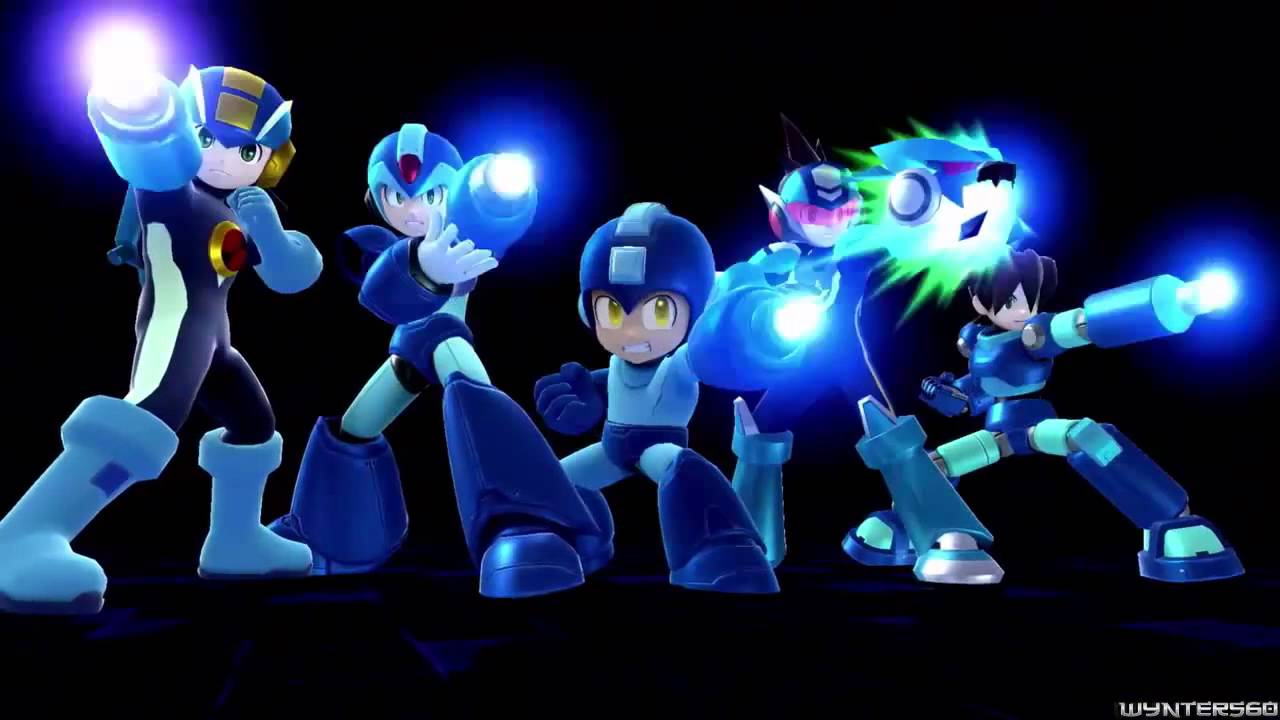
 First, there is the issue of presence. Of course, Zero is not clearly present in the Legends series (yet), but, once again, the Legends series is so far removed from the rest of the timeline that we must minimize its effect. Zero’s story, as X’s did, begins in the classic series with Wily’s creation of Bass as a rival to Mega Man. Though Bass failed to live up to Wily’s expectations, he studied the energy he had used to create Bass (called Bassnium, lol) to create the ultimate weapon. Here we see Zero’s sinister origins.