Have you ever been on the outside, looking in on a pop-culture phenomenon?
While the Pokemon games are some of the most popular titles in Nintendo’s stable, I’ve never played a full mainline entry.
I’ve had a weird history with this franchise, and beaten just about everything except the main RPGs: Stadium 1&2, Snap, Colosseum, XD Gale of Darkness, Pokken, a little GO, even Hey You! Pikachu for goodness sake.
I grew up a little bit after the huge wave of Red/Blue/Yellow hype, and have always felt that I missed the bandwagon.
People who have been with the series since its inception are still trading their pocket monsters from game to game, amassing a huge army!
It definitely feels like I would have a hard time just jumping in, although I know they create these games for a younger demographic and take into account franchise newcomers to some extent.
You know what still scares me? It’s all the nuance that’s built up over generations. Developer GameFreak still builds on mechanics that have existed for decades, resulting in an imposing collection of the unknown.
A crossroads approaches. When the Pokemon series debuts on Nintendo Switch, I feel like I’ll have my best shot yet of hopping aboard the speeding train. If I let it pass me by again, I may never catch up.
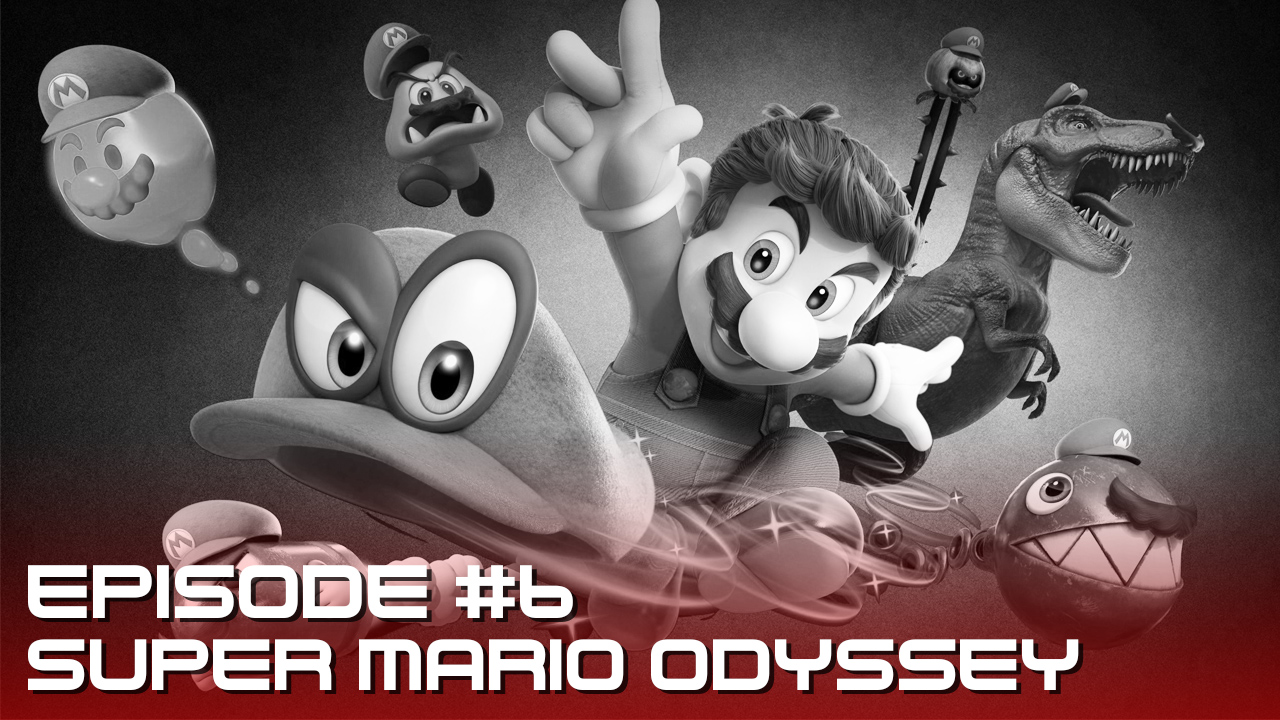
Super Mario Odyssey is Nintendo’s second HUGE sequel installment on Switch. They’ve been knocking it out of the park this year with Switch software support, and we’re here to talk about what Nintendo did correctly, and what they can learn for the future. Join Scott, Ryan, and Glen for their impressions of Mario & Cappy’s cross-kingdom adventure! Ready for more TBC Podcast? We are an ad-free show, and you can support us on Patreon: http://patreon.com/twobuttoncrew Get Your Daily Nintendose of Fandom on our YouTube channel: https://www.youtube.com/TwoButtonCrew “Escape the Premises” Kevin MacLeod (incompetech.com)
Licensed under Creative Commons: By Attribution 3.0
http://creativecommons.org/licenses/by/3.0/
Before the Live Show, Simeon and Scott hosted Your Daily Nintendose of Fandom on their YouTube channel by uploading a Nintendo related video every day. It was a blast, and it’s time to look back on the final 250 episodes and celebrate the Top 10 videos from that period. Join us as we laugh, cry, and remember the Daily Show!
“Escape the Premises” Kevin MacLeod (incompetech.com) Licensed under Creative Commons: By Attribution 3.0 http://creativecommons.org/licenses/by/3.0/
Have you ever stopped and added up your recent gaming purchases, just to see how much your hobby is really costing you?
The Manufacturer Suggested Retail Price (MSRP) is an abbreviation that get’s thrown around a lot oil the gaming industry, indicating what most stores charge for new hardware and software as recommended by the publishers.
However, the amount on a price tag isn’t the true cost associated with gaming.
Price ≠ Cost.
Time: You spend much more time equity on a game compared to what’s come out of your wallet. Even if your job pays minimum wage, your time has a high value on it that is quickly surpassed when sinking hours into the latest open world adventure or competitive shooter. (Related: “Making Your Gaming Time Matter”)
Mood: It takes some maturity and self-awareness to think about how you’re thinking. Oftentimes, video games are liable to alter our moods. We usually like our titles to be somewhat challenging (as opposed to a cake-walk), and there’s a fine line between difficulty that enhances your accomplishment and difficulty that causes frustration. It’s okay to walk away from a game that’s interfering with real life, in any way, shape or form.
Opportunity: Related to time management, opportunity cost is a real thing to consider. Sometimes, it’s good to think about what else you could be doing with your time. In other words, what are games causing you to potentially miss out on? Who could you meet, what could you make, or where could you go?
Health: I’d love to believe that there are no health risks with partaking in Nintendo fandom, but my hands tell me otherwise. Carpal tunnel can set in without proper ergonomics, especially if you spend a considerable amount of time on computers on top of your gaming hobby. Additionally, omitting a short stint in the Wii era, time spent gaming is time spent sitting on your God-given cushions. It’s important to balance digital entertainment with some amount of physical activity (don’t ask my advice on this—I’ll get back to you later).
Don’t feel guilty for spending money, time, and other assets on video games. Like you, it’s my favorite way to have fun! Just try to consider the true cost, and avoid debt… monetary, health, or otherwise.
I’m younger than you might guess. I was only 12 years old as I was saving up for the launch of Nintendo Wii.
I had never been more excited for a video game console, and I was literally counting down the days. On my wall calendar, I flipped forward to November 19th, 2006 and wrote “WII DAY” in big marker. I then proceeded to work backward and mark a countdown on each preceding day, up into the 60s!
Many families lucky enough to locate a Wii on store shelves would get to open their shiny new system for Christmas that year, but that wouldn’t do for me. As a 12 year old, I performed every extra chore I could find until a stack of $500 ensured I could buy the console and whatever games and accessories I wanted, on launch day.
Ever since then, I’ve been hooked on getting my games the day they come out.
Release date announcements go straight into my Google Calendar (sadly, I no longer hang a physical one on my wall) and I receive reminders as the launch comes nearer.
Whenever Nintendo launches a new title, you can find me at the store either at a midnight launch, or right when I get off work.
It’s an event. Every time.
But why—why is it so important to me that I experience new games on the first day? Wouldn’t it be smarter to wait and read some reviews? Delaying my purchase even longer could land me a discount.
The game industry moves fast. Conversations online quickly turn to the latest and greatest, so participating in gaming communities is easier when you’re up to speed.
There’s also a heavy dose of excitement that comes with being an early adopter. You get to go into a brand new, creative piece of art before it’s talked about like common knowledge on podcasts or had its surprises spoiled in YouTube thumbnails (our channel doesn’t do that, by the way).
It’s fun to be on the cutting edge. Sure, you get cut every once in awhile, but the thrill is worth it.
Full disclosure: I have a Picross addiction. If Pavlov is Nintendo and Picross is a bell, I’m the salivating dog.
They release a new game in the series, I buy it, and the next 20 hours of my life are a blur as I perfect every puzzle.
Having said that, my excitement for the sudden release of Picross S on Switch was huge!
An important new feature was touted: multiplayer. New to the series, two players would be able to “play cooperatively, or compete to see who can place the most tiles!”
This was a game-changer! I have a friend from Picrossers Anonymous who would love to relapse with me and go head-to-head!
Well, Nintendo wasn’t fully honest with their description of this functionality. Technologically, it’s all there: two players can control cursors on the same screen, and it works. It’s fun to help each other out and solve puzzles together.
Competitively, the structure is non-existent. There’s no separate “Vs. Mode” or anything of that nature, it simply tallies up the number of tiles filled in by each player. The game doesn’t keep score over multiple rounds or celebrate a victor. The players are left to point out that their score was higher and rub it in their “opponent’s” face.
That’s not the extent of the issue, either. This game is impossible—I repeat—impossible to be treated competitively. It leaves the door wide open for cheating and unfair play.
I mentioned my fellow addict above. We got to playing a few rounds of Picross S together and it wasn’t long before he had outsmarted the game. Whenever I placed a tile, he would follow behind my cursor and overwrite it with a tile of his own color, taking my points for himself.
Picross S lets competitors get away with whatever they’d like, and also creates another problem by not awarding any points for blocking off tiles. Placing an X on a space that won’t contain a colored title is a critical part of Picross gameplay, but gamers are punished in multiplayer mode by not receiving any points, leaving their opponent to score off their work.
My advice to Switch owners: Purchase this title and enjoy it as a single player or cooperative affair.
Words to Nintendo: Be careful how you advertise your games; it’s important to be honest about what’s included in the package.
Update: Nintendo has adjusted the wording on their Picross S online listing to read ‘Unique to the Switch version, 2 players can now play simultaneously! Enjoy with friends and family!’
That’s better.
Nintendo just blew the roof off Splatoon 2 by adding in a ton of new content, as well as feature we’ve been asking for since the original’s launch: fast gear swapping. We’ve also got news on the direction GameFreak will be taking Pokemon on Switch, and more! It’s a big news week so buckle up and hit the play button.
“Escape the Premises” Kevin MacLeod (incompetech.com) Licensed under Creative Commons: By Attribution 3.0 http://creativecommons.org/licenses/by/3.0/
1. If I earn something, just give it to me. Don’t tell me I earned it, then explain how I have to tap through menus to retrieve my reward. Just give it to me.
2. Crafting is not the best thing since sliced bread. Just because Minecraft was super popular doesn’t mean everything needs to be crafted from now on.
3. Simplify the exchange rates. I don’t want to pay real money for leaf tickets to buy a mining pass to collect gold in order to exchange that for bells so that I can use the bells to purchase digital furniture. The expression is “cut out the middleman,” not “let’s create an army of middlemen.”
Simeon and Scott scored a copy of Pokken Tournament DX on Switch, so it’s time to battle it out and see how the updated version holds up! There are some odd choices for local multiplayer, so the Crew will test out which one is best for competitors, while showing off all the awesome new additions to the roster!
“Escape the Premises” Kevin MacLeod (incompetech.com) Licensed under Creative Commons: By Attribution 3.0 http://creativecommons.org/licenses/by/3.0/
Note: The following article contains spoilers for Sonic Mania. For those interested in Sonic Mania, I highly recommend waiting until you complete zone 2, act 2 before reading further.
Sonic Mania is amazing. But you probably already know that, either from experiencing it first-hand or from the mounds of praise heaped upon it by the general public. It quickly became my favorite entry into the franchise when I picked it up for myself a few months ago. It’s the “back to basics” game Sega has been promising—but ultimately failing—to deliver for nearly a decade now. Heck, this game is so good, it can even include one of the most egregiously wrong design choices I’ve ever seen and make it one of the most charming set-pieces of the entire game.
And no, that’s not hyperbole, one of the game’s most memorable moments is flat out stupid by conventional game design standards. What moment am I referring to? The Chemical Plant Zone Robotnik fight.
Why It Should be Horrible
The boss of Zone 2 isn’t a boss in the traditional sense; instead, it’s a game of Puyo-Puyo Pop. That’s right, instead of fighting some wacky contraption, Sonic, Tails, or Knuckles faces Dr. Robotnik in a lethal game of Puyo-Puyo. No instructions, no fore-shadowing, just dropped into a game and expected to win.
From a design standpoint, this looks like a bad idea on paper. As mentioned before, the player is given no instructions. Puyo Pop isn’t exactly the hardest game to understand, but the game assumes the player already knows how to play. There’s no pop-up for controls, no instructions on how to clear Puyos from the screen, nothing. If the player is familiar with drop-puzzles like Tetris or Dr. Mario, they may be able to intuit some objectives from the conventions of the format: namely matching colors.
That leads into the more pressing issue: genre shift. While switching between gameplay styles isn’t uncommon in video games, especially more recent Sonic titles, typically levels that dip into different gameplay formats only switch to genres of a similar nature. For instance, many side-scrolling platformer games include one or two levels that switch over to being a side-scrolling shoot-em-up. This is typically considered acceptable because the two gameplay styles have many similarities. Most notably, both are action games, meaning the skills needed to master them are almost identical. These skills include things like quick-reflexes, spacial awareness to assess threats and their proximity to the player, and prioritization of risks and rewards (such as power-ups).
Where switching gameplay styles gets frustrating is when the new style has little or nothing to do with the concepts of the core gameplay style. A pertinent example of such a gameplay switch is the fishing segments of Sonic Adventure. While many people speak fondly of the game those segments’ mechanics were based off of, Sega Bass Fishing, most people object to the inclusion of such mechanics in an action platformer. That’s not to say juxtaposed gameplay styles can’t be paired successfully, but that contrast typically has to be one of the game’s core principles with everything else designed around it (e.g. DS cult classic Henry Hatsworth).
Where switching gameplay styles gets frustrating is when the new style has little or nothing to do with the concepts of the core gameplay style.
Now compare that to Puyo-Puyo Pop. Being good at Puyo-Puyo requires players to plan on the fly. The player has to decide how to stack and group puyos in real-time to set up combos and react to his opponent’s attempts to interfere. I don’t have the background in Puyo-Puyo to know what exactly goes into high level play, but I can tell you it’s a very different game than Sonic the Hedgehog. This means that the player is expected to use an entirely different skill-set from what the game has been training him to use up until this point. Moreover, this is the only place in the game—outside of an unlockable bonus Puyo-Puyo mode, that is—that the player is asked to exercise these skills.
The moment in question.
Why It’s Awesome
So why does this moment work? There’s several factors at play here. First is the design of Puyo-Puyo Pop itself. First of all, Puyo Pop is a fairly easy game to learn: the computer is playing it along-side the player. If the player doesn’t understand how color matching works, he can just observe the computer match groups of four or more puyos of a single color.
Secondly, this battle is pretty easy. So long as the player keeps the board mostly clear, Dr. Robotnik’s incompetence will do the rest of the work sooner or later. Putting the battle so early in the game was actually a smart move: the encounter’s low difficulty allows the player to get used to the new gameplay style while still fitting the game’s expected difficulty curve.
Third, Puyo Pop is good. Many times when a game dips into a different style, the auxiliary gameplay style is under-developed. The majority of the developers’ time and effort (hopefully) goes toward the core gameplay, meaning mini-games don’t get the time and polish needed to fully flesh-out the concept. The Puyo-Puyo battle gets around this by implementing an already established idea. This way the Mania team didn’t have to haphazardly slap together a new gameplay concept, instead they just had to copy something they knew works.
Many times when a game dips into a different style, the peripheral gameplay style is under-developed.
Now that I’ve gotten the minor stuff out of the way, let’s talk about the two biggest reasons this works. I’m sure many of you are grinding your teeth by now with how I keep referring to this moment as “Puyo Pop”. Chemical Plant Zone’s Robotnik fight is actually a callback to the Sega Geneisis/Mega Drive classic Dr. Robotnik’s Mean Bean Machine (which was technically just a reskin of a Puyo-Pop game, but whatever). This attention to detail and acknowledgment of the Sonic series’ history is a huge part of what makes this bizarre set-piece work. Who in their right mind would anticipate such an obscure reference?
Companies like Sega and Nintendo often reference their past works, but they tend to stick to callbacks that are easy for fans to recognize. Even when a reference is to something more obscure, it’s out of the way and can be easily ignored. Most designers would stick some puyos/beans in the background and call it good. The Mania team, however, decided to put that callback front and center by making it a part of gameplay. If the reference is half of the reason this moment works, the sheer audacity that the designers would even attempt it is the other half. The element of surprise and the obscene amount of creative whimsy this moment embodies is more than enough to make up for any of its “bad” game design.
If the reference is half of the reason this moment works, the sheer audacity that the designers would even attempt it is the other half.
The combination of good implementation, recognizability, and surprise factor all come together to make this one of my favorite game set-pieces in recent memory. While I love analyzing what works and what doesn’t work in games, it’s important not to get too entrenched in sticking to “good” game design. There’s a delight in encountering the unexpected that is all too often ignored in favor of “safe” design practices. Formula is good, but too much results in a game being formulaic.
Our patrons voted that we should try out Earthbound for the SNES Classic Edition, and their wish is our command! This quirky RPG is sure to be weird, if nothing else. Should be entertaining!
“Escape the Premises” Kevin MacLeod (incompetech.com) Licensed under Creative Commons: By Attribution 3.0 http://creativecommons.org/licenses/by/3.0/
Miles is here to have an important discussion with Scott; what’s it like being an old man? Old men are important to video games, ever since the one in the cave told us it was dangerous to go alone. Miles will share his insight into being an old hero.
“Escape the Premises” Kevin MacLeod (incompetech.com) Licensed under Creative Commons: By Attribution 3.0 http://creativecommons.org/licenses/by/3.0/
Hold the phone – Nintendo’s working on a movie?! Let’s talk about that! And as usual, Nintendo sales are up and more developers are committing to bringing their games to the Switch!
“Escape the Premises” Kevin MacLeod (incompetech.com)
Licensed under Creative Commons: By Attribution 3.0
http://creativecommons.org/licenses/by/3.0/
Happy Thanksgiving, everybody! Here at the Crew, we’re a thankful bunch, and this is the perfect time of year to count our blessings and reflect on the many things we have to be grateful for.
Thankful for Switch
Nintendo’s latest and greatest console has been welcomed with open arms by the faithful few and, seemingly, the masses as well. The R&D team crafted a unique piece of kit that’s exactly what we wanted, and the launch was amazing. In the months following, software support has been both steady and spectacular. With Switch, Nintendo ushered in a new Golden Age of gaming, and it’s really special to have a platform that brings pure pleasure.
Thankful for the Crew
Two Button Crew affectionately refers to our viewers and subscribers as the greater “Crew,” and greater is the perfect word to describe you folks. The Internet can be a nasty and hate-filled place, but none of that comes with the viewers we attract. It’s been magical to see the sincerity and kindness demonstrated by people who tag along with our content. Every few days, we receive a nice note from a Patron or long-time subscriber, telling us how our entertainment has helped them and wishing us to keep going. The encouragement means the world.
Thankful for Podcasts
Nintendo podcasts are becoming more and more prevalent, with long-running ones still pumping out episodes and a number of new ones that popped up with the release of the Switch. Content creators are more eager than ever to discuss news, impressions, as well as an increase in meaningful topics being lobbied. If you aren’t a podcast listener, you’re missing out on some excellent sound-bites from insightful industry reporters and analysts. For hosts, podcasts are a chance to sit back and talk freely about what’s on their mind in the gaming spectrum. For listeners, it’s like having a group of friends (just as dedicated to Nintendo fandom as you are) that meet together weekly to celebrate all things Mario, Metroid, Zelda, and the rest. The podcast we started this year has been a lot of fun.
Thankful for Unforgettable Games
2017 will truly be a year to remember. We now have our modern version of Ocarina of Time vs. Super Mario 64, with the brand new installments Breath of the Wild and Odyssey. The debates between greater game will live on for decades, hopefully not overshadowing the outstanding Splatoon 2, ARMS, Mario + Rabbids, and swaths of indie games flooding the eShop each week. Switch is quickly becoming a home for masterpieces, whether they are brand new experiences, definitive editions, ports, or remakes.
Thankful for a Bright Future
This year was laser-focused on software quality and quantity. I picture Nintendo’s offices being “all hands on deck” to make this new hardware a success. However, there are other ventures that Nintendo is preparing to embark on; namely a theme park, an animated Mario film, more mobile titles, and more. Development on great software will continue as we are promised new entries in the Metroid Prime series (!) and Pokemon, which will sell systems like absolute bananas. The install base is shaping up to be so huge, no developers will be able to ignore it!
When Nintendo bounced back from the Wii U, they bounced back hard. They’re back in the spotlight, which is a huge payoff for people like us who have followed the brand through thick and thin. I’m thankful we’re currently in the thick of the action!
Have a wonderful Holiday, hug your family, and drag them to your room to play some Switch!
Introducing… MILES! Guest host for the week and TBC’s resident “old guy’ friend, Miles is here to take Rocket League for a spin with Simeon. A famous indie game finally making its way to Nintendo platforms, Rocket League is a blast (even if you don’t typically enjoy soccer or cars). “Escape the Premises” Kevin MacLeod (incompetech.com)
Licensed under Creative Commons: By Attribution 3.0
http://creativecommons.org/licenses/by/3.0/
I’m a collector. I have multiple shelves in my house dedicated to Nintendo, lined with cases of games, amiibo, preorder bonus merchandise, or Club Nintendo rewards (remember those? They used to be physical). My biggest console library belongs to Wii, and I hope to outnumber those games with Switch software this generation.
I’m also a tightwad. I prefer saving money over spending it. I don’t mind waiting months or years for things to go on sale before buying.
How does one balance the urge to collect games, when trading or selling them can help financially? It’s a tough choice.
I’ve purchased 9 Switch games in the system’s first 7 months and sold 3 of them. Sure, it was opposed to my goal of expanding my collection, but they weren’t great games. I’d rather have a small amount of excellent titles than a larger batch where you don’t know what you’re going to get.
When deciding to keep a game or not, first acknowledge that it’s probably disappointed you. If it hadn’t, you likely wouldn’t be debating what to do with it.
Next, this question is super helpful: Do I want to introduce my kids to this? Whether you’re a parent or not, it helps put things into perspective. Video game collections are best not when they take up a lot of space, but when you can proudly open up a box with your ten-year-old and tell him or her to pick anything; you know you’ll have a great time.
Do I want to play this with my daughter in fifteen years? No, it’s not the best one in the series. Sell this one. We’ll play the older version.
Keep the best, get rid of the rest! You’ll have more space and more money to put toward better experiences.
Oh my good gracious. Thank goodness for that 10x life code, or else Simeon and Scott would be up a creek without a paddle! We’re attempting to conquer the Contra game known as Super C, but it’s going to take all our patience and focus to make it past a level or two.
“Escape the Premises” Kevin MacLeod (incompetech.com)
Licensed under Creative Commons: By Attribution 3.0
http://creativecommons.org/licenses/by/3.0/
I often see newly released games being appraised for their graphics, controls, music, and price.
What the industry needs more of a focus on is simple: fun.
A game can have terrible graphics, no soundtrack, and clunky controls, but still be a lot of fun. Conversely, a beautiful and imaginative game can be boring and punishing.
Video games are a form of art, but that doesn’t mean they need to be treated with as much weight and gravitas as other mediums. Some critics don’t understand this and neglect to consider the fun factor, so take review scores with a grain of salt. A 7/10 game might be the most fun you and a friend have ever had.
I’m one of the first people to happily wave goodbye to the 3DS.
It’s low-resolution screen looked behind-the-times the moment I laid eyes on it on launch day. However, there is one aspect of its visuals which I will miss: glasses-free 3D.
Nintendo pulled something incredible off by releasing the only mass-market device employing the technology. Personally fine-tunable by a slider, no less!
The company also made a wise move in never requiring 3D visuals to advance in any games, ensuring those too young, who had eye problems, or just preferred flat images, weren’t forced to see in 3D.
But boy was it helpful.
Super Mario 3D Land, for example, is a fantastic title that takes full advantage of the unique screen hardware. I have a harder time lining up precise jumps on my Switch.
Nintendo is highly proactive with quality insurance, but every so often… glitch’s sneak in and they are real doozies. We’ve collected a top-10 list of our favorite glitches from Nintendo history – see if your favorite buggy childhood memory is included!
“Escape the Premises” Kevin MacLeod (incompetech.com)
Licensed under Creative Commons: By Attribution 3.0
http://creativecommons.org/licenses/by/3.0/