This last June, Kirby: Planet Robobot was released state-side, quickly receiving praise from critics and fans alike. Needless to say—being the avid Kirby fan that I am—I jumped on it six months after the fact because I wanted to complete Mario & Luigi: Paper Jam first. What? Grad school doesn’t leave me with much time to spend on getting through my backlog, okay? Regardless, I’d say, without hesitation, that this is the best of the “modern-style” Kirby games that started with Return to Dreamland. Great music, enough of a plot to keep things interesting, lots of fan-service, and a gimmick that actually meshes with the core gameplay instead of being an intrusive pace-killer. And as with any Kirby game, it features new powers! And they…kind of suck, to be honest.
And as with any Kirby game, Planet Robobot features new powers! And they kind of suck, to be honest.
Okay, now that I’ve gotten the requisite suck pun out of the way, let’s talk powers. Kirby’s copy abilities were first introduced in Kirby’s Adventure, released in 1993 for the Famicom and NES. These abilities gave Kirby a single attack that imitated the ability of an enemy character. The concept remained much the same until Kirby Super Star in 1996 when most—but not all—copy abilities were given a variety of techniques the pink protagonist could perform based on what button combination the player inputted. Some abilities have traditionally had very few individual attacks, while others let the player revel in a vast array of possibilities. For the most part, entries in the franchise have followed one of the two aforementioned schemes, with the Super Star style being more prevalent as well as what the recent titles use.
So, let’s examine how the evolution of this system effects powers individually and each game’s gameplay as a whole.
Number of Attacks
As stated before, the number of available moves in each ability’s repertoire has increased from the copy mechanic’s introduction. In Kirby’s Adventure, each power only had one attack (though one could argue backdrop and U.F.O. are exceptions). This allowed players to easily pick their favorites and avoid those they didn’t like. This also, unfortunately, meant that powers easily got stale and that few, if any, abilities stood out as particularly fun. Strangely, I’d argue that the game made it work; since no one power (or at the least, commonly available one) stood out as “the fun one” the player wasn’t inclined to become attached to what he currently had, meaning he would be more willing to part with it, making for more dynamic gameplay.
Kirby’s Adventure only provided one page for it’s copy ability descriptions, most of it flavor text.
Kirby Super Star changed this by assigning multiple attacks to most copy abilities. This drastically changed the dynamic as now each power became far less situational. Copy abilities on average had somewhere between four and seven attacks and a list of them was conveniently provided on the pause screen. I must commend the designers, as most of the abilities are fun to use with only a handful of duds. That said, the expanded move set does mean players are going to find some abilities more fun than others, meaning they’ll be less willing to part with them which ultimately discourages the varied gameplay Kirby’s Adventure had.
Then there’s the current generation of Kirby games. For brevity’s sake, I’m only going discuss the current gen powers featured in Kirby: Planet Robobot (and probablytotally not because I’m too lazy to switch cartridges on my 3DS or boot up my Wii). The number of moves for this new set of powers typically weighs in around eight to eleven, with a few of the attacks being variations of or similar in function to others. This produces a state of decision paralysis when trying to learn the new abilities, especially when two attacks are similar. For the majority of new abilities, I would look at the move list and think to myself, “surely there’s a proper time or context for this attack.” Unfortunately, there often isn’t, at least not that I can see. Notably, most of the older abilities are similar to their previous iterations, if not completely untouched. In my opinion, this makes the classics more approachable gameplay-wise as most of them are easier to learn with attacks that have a clear and easily understood purpose. The one new copy ability in the game I genuinely liked, ESP, happened to be the one with the simplest move set.
Coincidentally, this ability’s costume also resembles one of my favorite powers from Kirby Super Star.
Copy Ability Versatility and Variety
So what does having a wide array of moves do for Kirby’s copy abilities? In short, more moves theoretically increases the versatility of the ability. If one move allows Kirby to easily dispatch a foe in front of him and another move defeats opponents above him, the player is equipped to handle two different scenarios. There are two main factors in determining a copy ability’s versatility: range and what I like to call “angle of attack”, with the presence of a defensive ability making for a third factor of nominal importance.
There are two main factors in determining a copy ability’s versatility: range and what I like to call “angle of attack”.
Range is self-explanatory; it’s simply how far the attack reaches. Short range attacks require Kirby to be near his target to be effective; long range allows Kirby to rain cute death upon his foes from a safe distance. Simple. Angle of attack isn’t much more complicated. Heck, I’ve already given an example of it in the previous paragraph. It simply determines where the opponent has to be for the attack to hit him. In the context of Kirby, there four basic angles of attack: upwards, sideways, downwards, and radius attacks—the last of which refers to attacks that strike in all directions (they’re common enough to warrant their own classification). Of the two, angle of attack has the most influence over an ability’s versatility.
As I’m sure you’ve already figured out, the copy abilities in Kirby’s Adventure provide only one angle of attack of set range. High-jump attacks opponents above Kirby at close-range (though Kirby covers a long distance in the process), while spark attacks enemies within a short radius of Kirby. Kirby Super Star expands the role of most copy powers, allowing Kirby to make use of multiple angles of attack with a single ability. That said, most powers are still limited in range or angle of attack, requiring the player to plan around his ability’s limitations or find one more suited for the situation at hand. For the ones that do provide good coverage of all angles, they are usually rare or have some sort of drawback, like yo-yo’s long attack animations.
Here’s where my second issue with more recent copy abilities comes into play: they’re too well rounded. Most of the new abilities include attacks for every angle and often times multiple ranges too. Lacking weaknesses actually makes them less fun, not necessarily because it makes the game too easy (it’s Kirby; it’s always easy) but because they all feel very samey. Even some of the older powers have received similar revisions, like the unnecessary addition of an upward attack to the stone ability’s move list. Admittedly, this is a rather technical complaint and probably doesn’t apply to everyone.
Lacking weaknesses actually makes copy abilities less fun.
Refinement is a Subtractive Process
Despite most of its new powers not being particularly interesting, Planet Robobot actually does adhere to the limited copy ability design that I’m advocating, specifically the robobot powers. Each robobot copy ability has a very limited moveset, and as a result, each one feels unique. And just so it’s clear that I’m not being a nostalgia-blind curmudgeon, I like most the ideas for each ability (leaf and archer were long overdue), and I think if Hal streamlined the abilities so that they fulfilled a unique niche, instead of every niche, they would have some real winners.
The robobot armor’s sword ability only has three attacks. Three incredibly satisfying, easy-to-use attacks.
For those familiar with my previous work, these points probably sound quite similar to my second article, The Streamlined Turnabout. While feature-rich games and mechanics are great (especially from a marketing perspective), continually adding ideas runs the risk of producing bloat. Much like cutting and polishing a diamond to make it shine, video games can greatly benefit from the occasional trim.
About the Author: Glen is a lifelong Nintendo fan whose love of video games has inspired him to pursue a career in computer programming. He is currently studying for his masters in Computer Science at Oklahoma State University. His first Kirby game was Kirby 64, which led to a lot of confusion when trying to figure out how to make combo abilities in Kirby Super Star.
The Switch is not as expensive as most outlets are making it out to be. Far too many sites are claiming that the Switch has a ton of hidden fees and will end up costing you over $700 which is totally ludicrous and completely untrue.
The Switch is $299.99 (in the US). Period.
Just because the system is launching with a ton of add-ons and accessories does not mean the price of the system is increased. All of the extras are completely optional. Do you want a Pro Controller? Cool! Buy one! Don’t need an extra dock? Okay, don’t get it. It’s not a tacked on price that’s required by Nintendo that you purchase every available accessory at launch. Not to mention you can play 2-player games right out of the box at no additional cost thanks to the versatility of the Joy-Con.
An argument could be made that the system is actually $359.98, because what is the system without any games? That’s an expected cost though, not a hidden cost. I’m sick of gaming journalists trying to get clicks to their content by making up shocking headlines or articles. While all of this info may be painfully obvious to some, I wanted to educate the few that may not know to help save your wallets.
The cost of all your Switch launch day goodies can add up extremely fast, so make sure you need certain accessories before pulling the trigger and getting a bunch of things you’ll never need.
This has been your dose of financial advice from someone who has no business telling you how to manage your finances.
No, the Switch isn’t even on the market yet. (So close!)
Yes, I’m already looking ahead to what’s next.
I want to put a prediction down, timestamped and dated, so that I can say “I told you so!” when it turns out to be true.
Let’s start with the facts before we get into prediction territory (plus I want to keep you in suspense a little while longer.
Many aspects of the Switch were “leaked” by patent sleuths who were keeping an eye on what Nintendo was filing.
At the end of one particular and very long series of patents, we find this:
Ladies and gentleman, that there is a Nintendo Switch Virtual Reality (VR) patent filing!
Were this patent to become a product, its usage would be fairly simple: strap on the headset, slide the Switch tablet into the slot, and play! Individual Joy-Con would be perfect controllers for a VR experience, with motion control, analog sticks, and a handful of face and shoulder buttons.
Really, this filing is quite ingenious. But, Nintendo can’t be credited for this implementation of VR – plenty of Samsung and Google devices have been doing this for years. So, why is Nintendo trying to patent it?
I’m not sure about the answer to that question, but it could be that they are filing for protection of the idea of using a home console itself in a VR headset. Or perhaps, only making a headset for the Switch console would infringe this particular patent. I don’t speak the legalese to give a firm answer, but I can certainly deduce the gaming implications of this document.
After this leak occurred, many fans hoped they would see a Virtual Reality segment during the January Switch Presentation. I knew we wouldn’t.
There’s one big problem with making the above patent a real product: the resolution of the screen. For those that own a PS4 already, PlayStation VR is on the lower end of the cost barrier, and that solution provides a 1920×1080 (full HD) display, which could be considered the bare minimum for virtual reality.
With VR, the screen is mounted very close to your eyes. That’s why Oculus Rift and other VR-equipped smartphones have such high pixel density – you don’t want to be distracted by pixels in the screen a few inches away from your face.
This is what would happen if it was done with the current Switch model.
For this reason, I don’t believe we’ll see Nintendo step into the VR market with this iteration of their console… which brings us to my prediction:
I predict: Nintendo will release an upgraded Switch model midway through the console’s lifecycle.
Name: Switch Vision Release Date: Holiday 2020 Resolution: 4k (allowing for 2k to be used on each eye) Headset: Can charge separately, lends extra battery to the tablet Backward Compatibility: Works with all existing games and accessories Exclusive Software: Special VR-enabled games will be produced, 3 main titles from Nintendo (Mario spinoff, Metroid, New IP) SKUs: Purchase the tablet-only for previous Switch owners, or a bundle option for new customers
Can you picture the marketing? Switch Vision – 2020.
The industry is well adjusted to mid-console cycle upgrades. Is this so far-fetched? I don’t believe so, especially with an official patent document showing that Nintendo is at the very least interested in this technology. Of course, many of their patents never see the light of day as finalized products that make it to the market… but…
Should it happen, remember that you heard it here first!
This is the eternal question when it comes to fighting games. You’ve finished unlocking and now it’s time to make the tough decision: Who will I main? There are so many factors that affect the character or team that you choose in a fighting game. Main selection is very important to competitive play. If you are new to fighting games and don’t quite know where to start, or are just having trouble finding a comfortable match, I hope that this guide will help you. I’m sure it’s not comprehensive, but, as a guy who’s been there, thinking through these elements has helped me find better satisfaction in character selection.
For the sake of contrast I will be using two main examples to help illustrate the process: Super Smash Bros. and Tatsunoko Vs. Capcom. These two games have many differences (one has a single-character selection, the other is a team fighter, etc.) which I hope will give this guide a wider application.
The Producer
Fortunately (and unfortunately), many of the decisions that go into what character you play are made for you before you have any input. What characters actually make it into the game are decided by the producer of the game: his or her ambitions and limitations. The maker(s) of the game have a plethora of deciding factors when it comes to their game’s cast. Some of these are as follows:
Availability: “What characters do I have available to me? Do I have to make them from scratch, or can I use characters from the company I work for? Do I have the rights to use guest characters from a number of companies?”
Cast size: “How many fighters should my game have? Will having more fighters mean serious balance issues?” In looking at our examples, Smash has a character roster of about fifty-five, while TvC has a maximum count of 26, which is half the amount. Complete balance is impossible (more on tier lists later), but a smaller cast may mean a more well-rounded field.
Personal preference: “Do I put certain characters in because I like them more than others? I really like character ‘X’, therefore I will make him pretty good.” Take Metaknight in Smash Bros. Brawl, for instance. Sakurai (the game’s point man) created the character, and seems overly powerful when compared with the rest of the cast. I’m not bitter.
Making fans happy: “Fans really seem to like this character, so I might include her. This character wasn’t popular in the last installment, so maybe I’ll remove him.” For the most recent Smash Bros. game, fans got a special treat when Nintendo set up a poll for fans to pick the last character in the roster. Still not bitter.
$$$$$: “What character can I put in this game as a selling point? If I use a character from another recent/upcoming release, maybe they’ll buy that game, too. If I add characters as paid DLC, will people buy it?” Sadly, money is what makes the video game world go ’round.
Once the game is released, and as long as you have the money to buy the game and all the DLC, it’s finally your turn! How do you even begin to pick? Note that the following doesn’t necessarily go in order, and that they don’t have to happen separately. You may find yourself sliding naturally from one into another or going back and forth between two multiple times. Give the process time and don’t rush it.
The Cool Factor
After watching trailers for a fighting game, there’s usually one character that I want to try out first. I see their fighting style or know them from another game and I naturally gravitate toward that character. Needless to say, I rarely end up sticking with that character. There are some players that stick to a character simply because they like the character and make it work with lots of practice. If you really want to go this way, I wish you luck, but don’t quit a game because a character you love doesn’t gel with you.
Trial and Error
Were you expecting some soul mate, love-at-first-sight mumbo jumbo? Finding the right one is hard work! You should always try out each member of the cast at least once. If you’re playing against someone or see someone playing a character that looks really good or like a lot of fun to play, try that character out next. Don’t expect a character to magically make you good, but once you’ve had a taste of what the whole cast can do, you’ll have a better idea of what you’re looking for. Hopefully you’ll be able to make a list of characters that you enjoy and would like to play. Don’t worry about narrowing down at this stage.
Know Thyself
If you’ve played fighting games before, you may have a “style” of character that you play. You may be a more reserved person who likes to slowly chip away at your opponent from a distance, or you might like to play more rushdown where you stay in your opponent’s face, never giving them a chance to breathe. Know your character archetypes and if you seem to fall into one category or another. If you are the kind of person that practices combos all day and relies on muscle memory then you might opt for a combo-heavy character. If you are good at reading a situation and baiting your opponent into a trap, then you might spring for a slow but hard-hitting grappler. If you’re new to the scene or can’t seem to find a pattern, you’re not alone; my mains are very much dependent on the game. But it is very helpful to know what kind of character you might gravitate toward.
Superheroes
A practical tip for any video game that you want to be good at is this: Watch the game! Watch people playing whatever game you want to play, whether you frequent the local tournament hotspot or binge online streams. It won’t be long until you pick out your favorite players. Maybe you like their personality or their play style. Watching people having fun playing a game will make you want to play like them and use the characters they use. I love watching Vermanubis play Smash Bros., and since I started watching him I picked up Gannondorf. Scott watches the Smasher Izaw, and whenever he releases a new video, I know I have a new character to learn to play against, because Scott will try him out.
Let Someone Else Pick
By this, I don’t mean that you should hand your controller to someone else and have them pick for you, but rather that you should keep an eye on the competitive scene. The metagame (factors outside of a game that affect the outcome) is always updating for any given game. Tier lists (though always having a subjective element) are a good indication on a character’s relative “goodness” in the current metagame. Some characters are considered “better” than others because of certain attributes that they have, certain combos they can pull off, or just the number of matches they can win against the majority of the cast. Picking a character with better tools may give you an advantage. There are, however, advantages to picking a lower-tier (“worse”) character. For instance, by picking an unpopular character, it is likely that the people you play against will be less familiar with what your character can do, whereas if you were to play as a top-tier character, your opponent might be familiar with a lot of the character’s tricks and counterpick you. It also helps to know popular characters in your “scene”. Where I live, there are some really good Ganondorf Smash players, so, even though he is low tier, many players are familiar with Ganon’s tools, which put me at another disadvantage. Once again, not bitter.
Gelling
Ultimately, the deciding factor for me whilst picking a main is whether or not a character gels with me. I might see a character that can do something really cool and try it out, only to find that my character doesn’t move the way I expect him to. There is always a learning curve when it comes to getting good with any character, but there is no doubt that you’ll find some characters that just don’t flow with you and others that do. This is something that’s unavoidable. As with finding a “cool” or “good” character, you can always choose to tough it out and make it work, but, personally, I don’t find that abandoning that natural connection that’s present from the start is an advantage. In my eyes, it puts you one step ahead at the beginning. That could have consequences down the line in developing a main, but keep this factor in mind especially when looking for a counterpick, as you won’t be able to put as much time into them.
Team Synergy
In games like Tatsunoko Vs Capcom, you not only have to pick one good character, you have to pick a compliment to your character. This might mean picking two good characters, but that doesn’t always work in your favor. You have to take into account what one character on your team might contribute where the other one is lacking. For instance, if my team consists of Zero (a rushdown character) and Jun (another rushdown character), they might be really good individually, but if I’m up against a team of Alex and Frank West I’m going to have a bad time, as both of those characters are grapplers who want me close to them. You also have to keep in mind assists and DHC’s. Zero and Tekkaman Blade are probably two of the best characters by themselves, but their assists are pretty terrible and won’t extend any combos, whereas Ryu’s assist goes well with just about any character needing a combo extension.
Counterpicks and Secondaries
Unless you are the best (at which point you are probably not reading this), or your game has an unimaginably broken character that you play (and maybe even in those situations), you’re probably eventually going to need a counterpick on your side. A counterpick is a character (or sometimes a stage) that is chosen to specifically combat an opponent’s character choice. These are handy to have practiced up so that you can buff up your main’s weak areas (kind of like team synergy, only not). Many characters have a fighting chance against most other characters, but there are a few matchups for each character that make playing him or her a pain. In these cases, it’s nice to have an option toward which to turn to avoid said detrimental matchup. Picking a secondary character can be pretty difficult, because often the characters that you gravitate toward have similar weaknesses to your main. Try to change it up and learn a different character style or archetype. You’ll learn more about your main by playing a new character, too.
Switching Mains and Stagnancy
There may be some conditions that make you want to switch your main. You may settle into a character, then realize he has an outstanding number of bad matchups. A patch might come along and nerf your character into the ground. You may feel like, though you once really liked a character, you’re bored or falling into a rut that you can’t seem to escape. Before you switch mains, I suggest watching some footage of the character being played by a number of different players. Go back into practice mode and try to find some new options for your character. Sometimes it is a good idea to switch mains, but don’t give up on all the hard work you’ve already put into the character. Knowing how to play more than one character, even if it isn’t your main, will give you more matchup knowledge and even more counterpick options.
However you choose to land on your main, I hope you play hard and never give up. Fight on, fellow brawlers, fight on.
Welcome to That Was a Thing! A new series in which I discuss my favorite weird, obscure, or simply underrated pantendo games and media. Think of it as the evil twin to Simeon’s Nintendo Experience series. In this inaugural installment, I’m going to look at one of my favorite—not to mention one of the only—real-time strategy Nintendo series out there: Battalion Wars.
The Battalion Wars duology was a spin-off of the Nintendo Wars franchise and originally had the working title of Advanced Wars: Under Fire. Unlike the other Nintendo Wars games, however, Battalion Wars wasn’t developed by Nintendo or Intelligent Systems, but a British company: Kuju Entertainment. The first game was released for the GameCube on September 19, 2005 and its sequel debuted on the Wii on October 29, two years later.
Overview
The Battalion Wars games are a combination real-time strategy and third-person shooter. Like most R.T.S. games, players are tasked with completing objectives with the units provided for the mission—riflemen, tanks, bombers, etc. Needless to say, each unit type had its own strengths, weaknesses, and abilities and the majority of the strategy revolves around knowing where and when to deploy each unit. The unique selling point of this game is that the player directly controls one of the units the whole time, with the ability to freely switch between units as needed. Think of it as being sort of like Pikmin but with guns…and tanks.
Both games are set in a fictional world filled with global super-powers just itching to find a use for their massive armies. Seeing as the series was developed in England, each of the games’ fictional nations are comically stereotypical counterparts to real-life countries. The United States is represented by the gung-ho Western Frontier, the Tundran Territories are an odd combination of Tsarist/Soviet Russia, likewise Xylvania combines Imperial Germany with Nazi Germany, the Solar Empire is a futuristic tropical Japan, and the Anglo Isles—first introduced in the second game—mirrors the Anglo Isles…I mean the United Kingdom…seriously, they weren’t even trying to be subtle with that one.
As to be expected, each of these nations employ an eccentric and colorful cadre of commanders. Each mission has the player receiving orders from one of their faction’s commanding officers while the enemy commander emotes and responds according to the events of the game. While they don’t offer any special gameplay bonuses like the commanders of the Advance Wars series, the commanders’ typically blasé attitude toward warfare and nonchalant dialogue helps keep the tone light. I would say the only commander that I personally didn’t care for was Empress Lei Qo of the Solar Empire—who left so little of an impression on me, I had to look up her name just to write the previous sentence.
The third-person perspective really is what makes gameplay stand out. Giving orders from the perspective of one of your men while returning fire yourself really makes you feel like you’re an actual part of the conflict, instead of some ghostly observer calling the shots. When your battalion’s under fire, you’re under fire, and having to make tactical decisions in the midst of the chaos of the battlefield can create some really tense moments. Then there are the times when you spot some enemies in the distance or look at the map and have to plan your next move. I’m not sure I can properly express the feeling I would get as my men crowded around me, expectantly waiting for me to formulate a plan of attack.
Being an entity on the battlefield requires the player to look after both himself and and his units.
If quality gameplay wasn’t enough, these games are also overflowing with personality. The games’ humor and cartoonish visuals give the series a lighthearted tone; these aren’t games out to deliver a ham-fisted “war is bad” message but instead revel in the innocent—and perhaps naive—feeling of playing with toy army men. Despite having the depth of a Saturday morning cartoon, almost every character is likable in some way—with my personal favorites being Tsar Gorgi, Kaiser Vlad, and Col. Austin—and I genuinely wanted to know what happened to them next. Each faction’s units are instantly recognizable, and their designs convey a lot of personality, not just for the unit itself, but for the faction it belongs to.
Giving orders from the perspective of one of your men while returning fire yourself really makes you feel like you’re an actual part of the conflict.
Now that we’ve covered the basics, take a closer look at the first game.
Battalion Wars
The cute proportions and solemn color choice of the cover art sums up the game’s unique atmosphere quite well.
I first heard of Battalion Wars from the now defunct Nintendo Power Magazine. That’s not to say I immediately took an interest in it, however. I wouldn’t pay it much mind until my younger brother returned from the now defunct Hasting’s Entertainment with a used copy of the game. Shortly after he inevitably lost interest in it, I took a crack at it and fell for it harder than Tsar Gorgi off a bridge (too soon?).
The game places the player in command of the forces of the Western Frontier—with some exceptions in the form of unlockable bonus missions. The story begins during an uneasy truce between the Western Frontier and their longstanding enemies, the Tundran Territories. War breaks out when Western Frontier troops find a Tundran spy on the Frontier side of the border. As the plot continues, the Tundrans ally themselves with the Xylvanians, the Xylvanians betray the Tundrans, an old man is thrown off a bridge, I think there was a zombie-ghost legion at some point…you get the picture.
While it won’t win any awards, the story has a great sense of progression to it. Plot-wise, mission objectives often tie into something you did in a previous stage. If you saved a spy, you can bet his intel is what will point you toward your next target. The fort you defend in one mission is essential to launching a counter attack in the next and so forth. It’s a small detail, but having your actions contextualized like that goes a long way toward making your input feel meaningful.
While it won’t win any awards, the story has a great sense of progression to it.
While we’re talking about writing, I need to discuss the most important character: the grunts. Throughout the game, the troops under your command are constantly responding to your orders, quipping at the enemy, talking among themselves, or commenting on the situation at hand…and it is freaking adorable! Okay, I know that sounds like it’d get annoying after awhile, but the troops have so many lines that I would sometimes still be discovering new ones on my fourth or fifth play-through of particular missions.
“I’m beat…let’s make camp and whip up some cocoa!”
On to the atmosphere: the visual style is a strange blend of cute, chibi soldiers and vehicles and a muted color palette that gives the environments an oddly grim and gritty feel. This, in conjunction with a great soundtrack that wouldn’t sound out of place in an old WW2 movie, produces a unique atmosphere in which the tone is never too heavy or oppressive but the player is still fully aware that—no matter how cute the enemy’s tanks are—this is still war.
The game isn’t without faults, however. The A.I. for units under the player’s control is a little slow on the uptake, to the point of seemingly lacking a self preservation instinct at times. I found any mission where I had to fight enemy aircraft especially aggravating, as anti-air vets tend to not take initiative, resulting in massive losses from even brief lapses in focus. I didn’t care much for missions where the game expects me to command planes and ground forces at the some time, either. For whatever reason, when given the wait command, planes continuously fly in a straight line instead of staying in proximity to where they were when the order was given. This required me to constantly check back on them to make sure they weren’t about to fly over enemy anti-air embankments.
Battalion Wars 2
More playable factions, more unit types, more color! KA-BOOM!
Battalion Wars 2 starts its story off 200 years in the past by showing the player the final conflict between the Solar Empire and Old Xylvania at the end of the “Lightning Wars”. Bottom line is that the S.E. nukes O.X.’s H.Q. with an orbital death ray and then—fearing that the weapon is too much power for anyone to wield—chucks the controller (a staff) into a glacial ravine…what could possibly go wrong?
Back in present day, it’s been 2 years since the events of B.W. 1 and the nations of the world are at peace…until the Anglo Isles preemptively attack the Solar Empire based on rumors that they are harboring some sort of super weapon. The plot jumps between flashbacks and modern day from there with each campaign focusing on a different faction: a conflict between the Western Frontier and Tundra, the Anglo Islands staving off the Solar Empire’s retaliation, one where the player controls Old Xylvania’s forces, and finally Tundra’s attempts to prevent Xylvania from finding the staff.
The plot sounds a lot more complicated, but it really isn’t. I assume the 200-year-old-artifact-of-doom plot was meant to make the story feel bigger than the last game’s. Unfortunately, I’m not very fond of epics; I much prefer down-to-earth plots as I think they tend to have better focus and require the author to actually make me care about something specific like people or places. Fortunately, most of the characters are still quite likable, including most of the new ones.
Sadly, the narrative’s constantly changing point of view leaves the story unfocused and absolutely kills that sense of progression the first game had. You only play as any one faction for at most five missions (usually less). Between less emphasis being placed on the player’s actions between missions and the fact the player constantly switches sides, that feeling from the first game of being a single commander fighting in a series of much larger conflicts is completely gone.
Did I mention the volume on the player’s soldiers has also been dramatically reduced? They still speak, and I’m sure it’s still adorable, but I for the life of me can’t hear what they’re saying.
The narrative’s constantly changing point of view leaves the story unfocused and absolutely kills that sense of progression the first game had.
Moving on to the visual design of this game: many of the units received redesigns, especially the Tundran Territories’ infantry, most of which I think are improvements. The same can’t be said for Brigadier Betty: her look, not to mention her distinctive voice and a good deal of her peppy can-do attitude, are gone, making this iteration rather bland and forgettable. Speaking of bland, the game’s color palette is much more colorful which, while fitting well with the cartoonish style, demolishes the unique atmosphere of the B.W. 1 and stands out less by comparison.
On the left, a plucky, upbeat, and memorable character; on the right, the uncanny valley.
Okay, so maybe the aesthetics and narrative aren’t on par with the original, but this game fixes many of its predecessor’s failings when it comes to gameplay. The A.I. is much more proactive: there were many times I would be ordering my units to attack a tank or some entrenched enemy infantry and would be surprised by the wreckage of an enemy gunship I didn’t notice suddenly crashing nearby. Oh, and planes finally fly in circles when put on standby!
The motion controls also make targeting enemies and issuing commands a snap. The only place where they really feel out of place is when controlling aircraft, as pointing the Wii remote up or down controls altitude. This feels awkward, especially if the player is trying to target a ground based unit, partially due to the game not making the change in altitude immediately obvious.
The game’s missions do feel a bit more repetitive than before. BWii’s missions follow a pretty predictable formula: defend a location then go on the assault or go on the assault and then defend the capture point. That said, BWii doesn’t have any missions that drag on too long or feel unfair—which the first game was occasionally guilty of, so I guess it more or less balances out.
The game’s missions do feel a bit more repetitive than before. That said, BWii doesn’t have any missions that drag on too long or feel unfair—which the first game was occasionally guilty of.
Of course, Battalion Wars 2 also brought new gameplay elements to the table: naval units and buildings. Naval units basically feel like tanks and artillery, but much more sluggish. That said, the game does a great job of conveying their weight and scale, and their long range means naval missions don’t feel too drawn out. Unfortunately, missions in which the player has to command both land and sea units tend to feel disjointed and tedious, due the two unit types’ inability to travel together and the player not being able to use the “All Units” button to regroup their units without messing up their positioning.
Buildings are a solid addition. Players can’t select their position, instead having to secure predetermined locations. Once under the player’s control, buildings will periodically replace fallen units corresponding to the type of building (e.g. aircraft for airfields). These help take the edge off, as the player doesn’t have to worry about losing essential personnel. That said, the fact that units have to run all the way to the players position, which can be on the other side of the map, means the player can’t rely on reinforcements too much.
Debriefing
Despite all of the flak I just gave Battalion Wars 2, I do think it’s the better game. While I think Battalion Wars has more personality, it can also be much more tiring—and sometimes frustrating—to play. Of course, neither is particularly hard to come by, and they’re both worth your time.
Sadly, Nintendo never commissioned Kuju to make a Battalion Wars 3. I think it’s blend of action and strategy would’ve been a great fit for the Wii U, and the Wii U gamepad would’ve been a great help in micromanaging units, something that neither game made easy. Nintendo still seems to have a fondness for cartoony wars games if the recent 3DS game Tank Heroes is anything to go by, so I haven’t completely given up hope. If the rumors of GameCube games coming to the Switch’s Virtual Console are true, I’d happily double dip on Battalion Wars…and not just because of how utterly unreliable old GameCube memory cards are.
About the Author
Glen Straughn is a lifelong Nintendo fan whose love of video games has inspired him to pursue a career in computer programming. He is currently studying to receive his masters in computer science from Oklahoma State University. He has gotten an S rank on every mission in BWii, and even managed to get an S on the final mission on his first successful play-through…completely by accident.
It seemed like it was just yesterday; that snowy November day back in 2012. The day I picked up my Wii U, brought it home, opened it, and hooked it up with anticipation and excitement. The Wii brought my family countless hours of joy, so I was expecting this system to get the same type of love. I started with Nintendo Land and then downloaded Little Inferno. Little did I know, Little Inferno would be a fairly accurate representation of what the Wii U would produce. That is; a cold, empty fireplace with short but powerful bursts of fire. Just beyond 4 years later, and while I write this, I hate to say the system was overall a disappointment for me. That being said, some of my favorite games of all time were released on this system, albeit they were few and far between. Here is my top 5 favorite game list for the Wii U:
Honorable Mentions: Splatoon; Captain Toad: Treasure Tracker; The Legend of Zelda: The Windwaker HD; Super Mario Maker
Kirby and the Rainbow Curse
The number 5 spot was a pretty even tie between Kirby and the honorable mentions. Any game could have gotten it. The reason I chose Kirby was because I fell in love with the clay style visuals and controls the second I started playing. Not to mention, this game really took advantage of the unique gamepad the Wii U had to offer. Not too many games took advantage of it, which is a shame.
Donkey Kong Country: Tropical Freeze
The Donkey Kong Country series is one of my all-time favorites, and I like this entry just as much as any of the games in the original trilogy for the Super Nintendo. The visuals are astonishing, and the soundtrack is beautifully composed by original Donkey Kong Country Composer David Wise. These two things come together to make an extremely atmospheric adventure that I still go back to on occasion.
Super Smash Bros. Wii U
Well, it’s Super Smash Bros. I have spent countless hours playing this game with friends, and it has brought me plenty of fun times and memories. The control scheme was tweaked and tightened from the Wii version, and this, in my opinion, makes it easier to pick up and play.
Mario Kart 8
Mario Kart 8 takes everything that makes the series great and amplifies it with great tracks, an assortment of new characters, a brand new physics mechanic, and DLC. My only gripe with this one is the lack of battle tracks, but it looks like the Switch is going to pick up the slack in that department with a set of battle maps, old and new alike with Mario Kart 8 Deluxe.
Pikmin 3
My all-time favorite game for the Wii U. As I was playing this game, I felt as though I was a part of the world. It may not be the longest game out there, but as a self-proclaimed completionist, I found myself constantly coming back for more. Even the bingo battle multiplayer is a blast, and there are a number of ways to win, which only adds to the strategy. If you own a Wii U and have not played this game, please do yourself a favor.
Well, those are my favorites of the Wii U. I would love to hear what yours are. In the meantime, let’s raise a glass to the Wii U. Cheers.
We did it. We finally know what the Switch is. We had a minor reveal late last year that provided a few answers, but it also brought up a lot more questions. There’s one thing in the long road of the Nintendo NX that completely astounds me: how on Earth did Nintendo keep a secret this long?
How did Nintendo keep a secret this long?
In this day and age, and with all the technology and leaks that happen constantly, it’s absolutely amazing that while a general idea of what Nintendo was cooking up was touched upon, up until the presentation we were still left guessing. So many times come E3 big reveals are ruined, but not this time. It was rumored that the Switch had a touch screen and motion controls, but we only now just confirmed it. We still had a few surprises that weren’t even guessed upon such as HD rumble, colored Joy-cons and the games for the Switch (excluding officially announced titles).
A lot of this was a mystery until less then two months from launch.
I don’t know how they did it, but I hope it’s a trend that continues. I loved being left in the dark. Not while it was happening, mind you, but it only strengthened the hype after the fact. Here’s hoping E3 can bring as much excitement and anticipation as the console reveal. Now excuse my insomnia while I wait (impatiently) until March 3rd…
In less than a week, Nintendo will be blowing the lid off the Nintendo Switch secrecy container and giving us a complete look at their upcoming console. Nintendo fans are getting an early-E3 gift this year because Nintendo isn’t waiting until the industry’s standard slot for big reveals – they’re launching the console before the summer!
We’re going to see the Switch’s launch games, release date, pricing, and hidden features in just a matter of days.
Like any good Nintendo fan, I’m crossing my fingers for the Big N and hoping that they smash this Presentation out of the park. They’ll be taking the stage and streaming live from Japan (that’s why the broadcast is coming to us at such an odd, late time of night on a Thursday) – and they’re a bit out of practice on the live show front.
I’m relieved to hear that they’re stepping up to the plate and introducing some showmanship to their full Switch unveiling, but I’m equally nervous. Nintendo’s president, Kimishima, has had next to no contact with Nintendo fans since he stepped into the late Iwata’s office. Reggie and Aonuma have been appearing mostly in recorded formats, where multiple takes are allowed to get messaging across right… but not so on a live broadcast. On Reggie’s live appearance with Jimmy Fallon, you could feel a lot of that nervousness in his presentation and hear the stuttering that comes with a lack of practice.
I hope everyone is rehearsing right now – that should be priority #1.
Misgivings aside, what will be the most important part of the presentation is the information, and I’ve arranged a simple list of things Nintendo can do to knock this one out of the park. Their initial reveal trailer was well-crafted and received positively, so here’s what they can do to maintain that momentum and keep the positive buzz around their console-portable hybrid:
Virtual Console Done Right
The launch lineup needs to be strong in quality, but I’ve grown to expect only a handful of games. On a console which almost surely cannot be backwards-compatible via hardware, the VC service is going to need to step in and keep us busy on our shiny new Switches.
Library
The Virtual Console should be the Netflix of gaming.
Something has to be done about the historically abysmal Virtual Console library. The slow drip-feed of mediocre games with email notifications sent weekly just isn’t doing it – and surely Nintendo’s digital sales figures reflect that.
Open this thing up, Nintendo! I would encourage the company to look at a subscription model as opposed to piecemeal sales. The VC should be the Netflix of gaming, where we’re sending them $10 a month to have access to a growing catalog. I guarantee their profits would increase.
Purchase History
If they make me repurchase my digital games one more time, I’ll… well, I won’t. I’ve already boycotted the SNES games on 3DS and I’m sending the message that I won’t double dip for them.
You must reward your loyal customers, not punish them for being early adopters.
Emulation
The NES Classic Edition blows Wii U out of the water as far as emulation goes – the NERD team at Nintendo (Nintendo Europe Research & Development) nailed it, and I don’t think I’ll be able to go back to the dim and muddy appearance of Nintendo’s other methods. Let’s not go halfway with the Switch – go all out and make it a service worth paying for!
Muti-SKU Positioning
Do you forget sometimes, that Wii U was sold in Basic and Deluxe models at launch? This was a new move for Nintendo, but it certainly paid off. What may have seemed like a really high entry price at $350 instead seemed like a worthy upgrade over the Basic console. And what true Nintendo fan (who actually watches these presentations) wants to be “basic”? Sure, the white Wii U sold a handful of consoles but it was primarily there for positioning, and I can’t blame Nintendo for implementing that marketing tactic. In fact, I think it’s smart. It provides a logical choice for casual and hardcore fans alike – and consumers love having choices between product models.
I hope Nintendo continues this trend and offers Basic and Deluxe switch packages.
The basic one would have a console with less storage, Joy-Cons, and a tech-demo game (think Wii Sports/Nintendo Land) packed in, while the deluxe version would have larger storage, a Joy-Con grip, and Breath of the Wild packed in.
Zelda at Launch
Nothing has been more frustrating to me than the messaging around this game’s release. Nintendo announced this game in 2014 and has sent nothing but mixed signals since then, delaying the game, saying trust us this will be out in 2015 just after Star Fox (also delayed) and delaying it again. Fine – I actually believe that delays can actually benefit a game – but they STILL aren’t committing to March for us to see Zelda! Yet. It needs to be confirmed for Switch launch day and release on Wii U at the same time.
I don’t even need a whole lot of coverage on the game during this presentation – we’ve been seeing more and more of it for a few years now. It was the only thing at E3. We’re just ready for the game to be available to purchase! The ambiguous “2017” release date that they’ve been very careful to not expound on has got me worried. In order to nail this Switch Presentation, Nintendo needs to confirm that the development is not in fact as troubled as it seems. Imagine the negative buzz around yet another Breath of the Wild delay.
Leave Handholding to the Parents
Alright Nintendo – in the Switch reveal trailer you marketed this console to adults, so you won’t be restricting our online communication, RIGHT?
If they want this game to be popular with the crowd that it looks like they’re targeting, then let’s see it. Let’s see this console come unrestricted out of the box – voice chat, parties, etc. All the features that have been staples in competing products for the last decades.
If parents want to implement controls – great – let them. It is their job, not Nintendo’s.
Preorders The Day Following
Rather self-explanatory. No one is going to want to run out to their store at midnight on a Thursday evening with work the next day – but Friday, that’s a different story! We’re gonna be all hyped up on the Switch from the Presentation and Nintendo better be ready to receive our money! (Well, the retailers – but you know what I mean.)
Over-Produce
This is absolutely critical. Most of Nintendo’s missteps in the last few years have been production related.
Pokemon Go Plus
amiibo
NES Classic Edition
That bullet list right there represents literally millions of dollars left on the table (and/or scooped up by scalpers) due to under-production.
Nintendo’s been playing far too conservative with their production runs.
They have the capital, so they need to make more of these consoles. 2 million worldwide (the rumored figure) is not enough at launch – the Switch reveal trailer already has that many views! Sure, not everyone who watches the video will get one at launch but the same can be said in reverse for the people that will buy it who have not yet watched the trailer.
Up that number. Fill those shelves. Not being able to get a Switch on launch-day when you’re a die-hard Nintendo fan would be a huge red-flag, and that’s what has happened with the aforementioned hardware launches!
And those are my thoughts! I think my blog post came across in a negative tone, but I’m actually truly excited for this presentation. I think Nintendo will nail it, and I think they’ll surprise me to boot.
Of course, stay tuned at TBC for full coverage of the event. We’ll be making shows and live streaming this weekend!
Greetings! I hope you’ve all had a safe holiday season filled with family, friends, and festivities. In celebrating the coming of the new year with resolving to better ourselves, I find it will be helpful to reflect on a holiday we celebrated a few months ago.
While visiting my in-laws for Thanksgiving in beautiful Montana, I flipped through a Christmas catalog. I can’t remember the store, but it was one I was unfamiliar with, and was clearly geared toward an elderly crowd. While skimming the pages, I found this:
Notice the tagline “Can the expensive game systems offer that?” The answer is, of course, “Not for the low, low price of $49.95, they can’t!” But it really got me thinking; is this a legitimate selling point? Just because a “Handheld Arcade Gaming System” has 140 games, is it worth the money? These sorts of deals bring up memories of things like Action 52, an infamous NES game which bundled 52 poor quality games into a single cartridge, and a CD I had as a kid with 1,000 games on it… only a few of which were worth my time. I hate to assume the worst of this handheld, but experience has taught me skepticism. I ended up going deeper; what makes gamers happy?
Will more games make us happy?
The advertising method of this handheld is based on the assumption that more games > less games. It’s the simple principle of more is more. It’s my guess that most gamers would laugh at this style of advertising. I don’t know about you, but I would rather have one well-crafted adventure than to sort through a mound of games that are unpolished. My game collection is not really that impressive in size. I have a handful of experiences that I enjoy playing again and again, and a lot that I rarely, if ever, return to. So, I think it’s safe to say that, “No, more games will not make us happy.”
Will longer games make us happy?
Recently the crew discussed this in an episode entitled What Length Should a Game Be?Many times, in a game review, how many “hours” the game will be is included. This baffled me at first, as many of the games I grew up on could be played through in one sitting (if you were good enough at it), and the joy of the game came from playing it over and over again. One recent example of a great game despite having a very short length is Portal. I beat it in one sitting, but it left such a huge impact on me that, after my first play-through, I put it in my top 20 favorite games. Some games, on the other extreme, are too long and can feel needlessly drawn-out. Will longer games make us happy? No.
Will branding make us happy?
Hahahaha… No. Just because something has a specific title, character, or developer behind it does not mean it will make us happy.
Will quality make us happy?
The short and honest answer is, no. Let me qualify my answer. Of course, everyone has their own taste in genre, and no one game is guaranteed to please everyone. Also, a triple-A developer is probably going to produce a more enjoyable game than other developers, especially considering all of the app store shovelware out there. But just because a game is well-crafted, even perfect, and should, by all counts, appeal to me, does not mean it will make me happy. Take Ocarina of Time, for instance. I love the Legend of Zelda series. I love Majora’s Mask. Ocarina of Time is widely considered one of the greatest masterpieces of gaming, yet it failed to hold my attention. I’ve tried to get into it on several occasions, yet it always fails to suck me in. Mighty No. 9, on the other hand, isn’t that great of a game, and was extremely disappointing, but I find myself drawn to its unique style, fun level design, and interesting weapons.
To me, I only see one universal guarantee to make a gamer happy: give them a memory. In the end, a gamer will not care if a game is good, or balanced, or polished; he will only care if the game gives him a smile thinking back on it. If you start talking with a gamer long enough, you will hear him start to talk about a game he played in his childhood which, even though the game was probably garbage to everyone else, he remembers fondly because it left an impression. For me, some of those games are Power Rangers Lightspeed Rescue,Electro Man, andother games from my childhood that I remember fondly. I might return to them now and think they’re completely terrible, but the fond memory is something I’ll never lose.
This year, as you resolve to be a better person, make room for a few more resolutions. Resolve to make memories of your gaming experiences, and resolve to remember those games that made you smile.
Nintendo is known for many things: innovation, quality, terrible third party relations, etc. Throughout the years, the company has cultivated a reputation as highly creative, exacting master artisans. It’s one of the many reasons they’re so beloved by fans around the world. They don’t just make games, they make worlds and characters that are instantly recognizable and overflowing with personality. Creativity is a fundamental part of their identity as a company.
However, in recent years they’ve garnered a reputation among some as a bunch of corporate stiffs who keep churning out the same-old-same-old that they’ve always been, like Activision with Call of Duty, Ubisoft with Assassin’s Creed, or Capcom with…well take your pick. So what’s different? What makes the Nintendo titles of today “corporate cash-ins” instead of visionary, artistic masterpieces? If I had to give my two rupees on the subject, I’d say the issue isn’t that the games are bad or mechanically unsound, it’s that they lack personality.
So what even is personality? What makes it so important? What happens when a game doesn’t have it? Let’s take a look, shall we?
What I Mean by Personality
What is personality? Well, typically the word refers to the psychological concept of a collection of behavioral traits that determine how one sets priorities and reacts to different situations. Seeing as I’m writing about video games, however, that definition isn’t really of much use. For the sake of this article, I’ll just define it as the interplay between a game’s aesthetic choices (visual design, music, story, etc.) and its gameplay that give each game its identity.
Huh…that’s pretty vague, isn’t it? Maybe a visual aid is in order; consider the following image:
Even when packed onto the same cartridge, each game is easily distinguishable.
Clearly, these are all Mario games, but because each one has a unique visual style, even people unfamiliar with the franchise can easily tell that each one is a different game (Okay, technically you can get them all on one cartridge, but that’s beside the point). Furthermore, those who’ve played the games will tell you that despite each game staying true to the Mario formula, each game has its own unique mechanics and gameplay quirks that makes the gameplay feel different. That’s basically what I’m getting at when I say personality: a game’s unique look, sound, and feel. It’s why the first Paper Mario is cute and colorful while it’s sequel, The Thousand Year Door, is wry and occasionally dark, or how the claustrophobic corridors and eerie music give the Metroid series its trademark sense of isolation and unease, and so forth.
That’s basically what I’m getting at when I say personality: a game’s unique look, sound, and feel.
For the Want of an Identity
What happens when you have a mechanically airtight game that lacks the personality to set itself apart? You get the New Super Mario Bros. series.
When New Super Mario Bros. first came out on the DS, its deliberately vanilla presentation was—I dare say—welcome, considering it had been roughly fifteen years since Mario’s last new 2D outing. The aesthetic was familiar but modernized, making it a great choice for a game meant to be just that: a throwback with modern graphics and design sensibilities that epitomized what it meant to be “Mario”.
When you eliminate differences in graphical quality and resolution, these games are almost impossible to tell apart at a glance.
So what’s the problem? Nintendo made three nearly identical sequels, that’s what. Make no mistake, each game is excellent in its own right, but they’re all so ridiculously similar in terms of their visuals, gameplay, level themes, and music that they’re practically the same game! The New Super Mario Bros. series is proof that too much of a good thing is entirely possible. I honestly believe that if Nintendo had taken the time to give each game its own unique style—visually, setting-wise, musically, or otherwise—each game would be fondly remembered as classics, but because each game used the same “New” style, each one was more forgettable than the last. Ironically, between this and the lukewarm reception of Yoshi’s New Island, the word new has become Nintendo fan jargon for “safe” and “uninspired”.
The New Super Mario Bros. series is proof that too much of a good thing is entirely possible.
Making Okay Games Great
Alright, so an otherwise great game can lose its appeal without personality, but let’s be real for a moment, a game riddled with questionable design can’t really catch on just because of its personality, right? As proof of the contrary—and possibly of me secretly having a death wish—I present the 1995 cult-classic, EarthBound.
A man falls from the sky, tells you to say “fuzzy pickles”, takes your picture, and flies away. This is relatively normal by EarthBound standards.
Are you still reading? Okay, good.
If I had to summarize the gameplay of EarthBound in one word, I would say it’s serviceable. As R.P.G.s go, there are certainly more streamlined experiences on the Super Nintendo. In terms of core gameplay, EarthBound is very traditional. There are some minor mechanics which distinguish the game, but they honestly don’t affect the overall experience that often.
On top of that, EarthBound features some questionable design. EarthBound‘s interface is archaic, even for the time it was made. Simple actions like talking to people or investigating an object (which are separate actions) take multiple button presses with the default controls. Admittedly, there is a way to automatically do all of that in a single press, but if you didn’t read the manual or hear about it from someone else, you’d never know it’s there, likely because it’s unintuitively mapped to the L-trigger. Aside from that, inventory management is downright tedious, with actions like trading items between party members—or just buying and selling for that matter—taking many more windows, confirmations, and button presses than needed.
EarthBound‘s interface is archaic, even for the time it was made.
The game also has some difficulties with difficulty. Simply put, the game’s difficulty curve is as wild as its enemy designs. The beginning is particularly rough, with grinding being a must. Things do get easier once the other party members start showing up (several hours in), but the game loves to throw curveballs at the player.
And yet, the game is heralded as a masterpiece, and for good reason! Ask any EarthBound fan what makes the game so great, and I guarantee you they’ll mention the game’s quirky atmosphere long before they talk about the mechanics. EarthBound is full of humor, thought provoking themes, and obscene amounts of heart. In a fitting twist, EarthBound defies the usual mantra of “gameplay first” and sells itself almost entirely on its personality. If the game was just another fantasy epic about orphans saving the world from the physical manifestation of darkness—or whatever—I highly doubt anyone would remember it. Personality is what elevates EarthBound above its mechanics and earns it the title of classic.
Stay Fresh!
As I’ve stated prior, Nintendo’s struggled with getting personality right in their games of late. Some franchises—like Mario—are suffering from overexposure while others from Nintendo over-simplifying them in an attempt to be more accessible—thus removing the fun quirks that made them stand out in the first place. Fortunately, many of the Big N’s recent titles show that they haven’t completely lost their creative mojo: the urban, 90’s kid aesthetic of Splatoon, the jazzy sound and Geisel-esque environments of Super Mario 3D World, and the beautiful Ghibli styled world of the up-coming Legend of Zelda: Breath of the Wild, to name a few.
Next to gameplay, personality is the most important aspect of a game. Even if a game has great mechanics, it will quickly be forgotten if it doesn’t have the charm and appeal to leave a lasting impression. Likewise, a game with a lot of character can convince players to look past many of its flaws and hold it as a classic. And while Nintendo sometimes screws up and turns out games that don’t feel like they had much heart put into them, let’s be honest: there’s something about Nintendo that makes us willing to look past such missteps.
About the Author: Glen Straughn is a life-long Nintendo fan whose love of video games has inspired to pursue a career in computer programming. Currently, he is studying to get his masters in Computer Science at Oklahoma State University. He’s an INTJ on the Meyers-Briggs personality spectrum, which in fiction is the personality most often associated with evil geniuses like Professor Moriarty.
It’s no surprise that one of Nintendo’s main Holiday 2016 experiences has to do with Mario doing what he does best: running. Except this time, he is not being controlled by a controller, but the touch of a finger. Mario games have never been very complex in terms of gameplay, and that is likely why Nintendo made their most iconic figure transfer over to iOS devices (Android sometime next year). Mario running and jumping is a Nintendo staple, and even people who could not be more disconnected from video games surely are at least familiar with the physics behind the game. That is why I think it was brilliant for Nintendo to do this. The price point for the full game will turn some of the crowd away, but I predict this is going to be a massive success for Nintendo, and long term, they will be a big contributor to mobile gaming.
So, what’s next? I feel that some franchises will migrate over to mobile better than others. I have a tough time picturing a mobile Zelda game that brings the expansiveness and feeling of adventure that we are all used to with a console. I could possibly see Nintendo bringing it back to the classic style (per Link Between Worlds), but the mobile limitations alone would most likely water down what could be an otherwise rich experience.
Another direction Nintendo could take this would be to remake classic games (Ice Climbers, Balloon Fight, Excitebike, etc.) on mobile devices, since these games tend to have a simpler play style. With the recent release of the NES Classic Edition, these games are on the forefront of Nintendo’s radar, so maybe it’s a possibility that one day they will hit the mobile market. Of course, this is purely speculation, and Nintendo has proven time and time again that speculation usually amounts to no more.
Whatever the case, it will be interesting to see exactly where Nintendo goes with this, because right now, the market is still being tested. Are mobile devices better suited for $1.99 puzzle games, or $9.99 games that have had much more development invested in them. The money will talk, and Nintendo will surely respond. This season, however, the more Mario runs, the happier Nintendo will be. Who knows, he may even pave the way for other franchises.
After being released in 1993, and re-released in color in 1998, The Legend of Zelda: Link’s Awakening DX is now available on the 3DS Virtual Console. It is developed and published by Nintendo.
Unlike most of the other Legend of Zelda games, Link’s Awakening does not involve you finding or rescuing Princess Zelda. Instead, Link’s ship has crashed on an island after a storm. It’s up to Link to find the eight instruments of the sirens to wake the Wind Fish so he can escape the island. Little does he know, the island holds a secret…
Puzzle solving in the dungeon.
If you’ve played any 2D Legend of Zelda game you know exactly how this plays. If not, it’s pretty basic. You start off in a main overworld and must find your sword. With sword in hand, you make your way to the various dungeons collecting the different instruments. In these dungeons you also collect a large variety of tools to help you along your journey, such as Roc’s Feather which allows you to jump, or the Power Bracelet which helps you move large rocks and pots. The dungeons are filled with puzzles and enemies with each one containing at least one mini-boss and one main boss. There are two main collectibles in Link’s Awakening, Pieces of Heart and Secret Seashells. The pieces of heart increase your overall health for every four you find and every time you collect a Secret Seashell it simply says, “If you find enough of them, something good is bound to happen.”
The DX version of the game includes and extra ‘Color Dungeon’, which if completed instead of rewarding Link with and instrument or Heart Container, gives him a choice between a Blue tunic (Cuts all damage Link takes in half) or a Red Tunic (Doubles all damage Link deals out). These tunics are extremely helpful.
It’s our old pal, Boo!
There are lots of references to other Nintendo games such as Kirby, a Yoshi doll, and a large variety of Mario’s enemies which are seen in wonderfully-done platforming sections.
The graphics are that of almost any Gameboy Color game. I found that this game’s visuals in particular still look simply fantastic and drew me in as much as the newer games.
If you enjoy Zelda games, or even adventure games at all, you owe it to yourself to play this game. The mystery of the story kept me wanting to play more to see everything unfold and captured me more than any other 2D Zelda. I can’t recommend this game enough.
The Legend of Zelda: Link’s Awakening gets 5 opening chests out of 5.
I’ve been playing a lot of NES Classic Edition around the Holidays, and it’s a big hit. I think Nintendo hit it out of the park for multiple reasons, and I’m going to go in depth on each one!
Brand Top of Mind (in Absence of Switch)
Nintendo wouldn’t be kidding anyone if they told us that they didn’t want the Nintendo Switch to be released this holiday season. The November weekend before Thanksgiving is their favorite day to launch their biggest hardware and software, year over year. Yet they couldn’t quite make it in time for the 2016 Holidays, so the Switch will be releasing on their second-favorite slot: March. That left kind of a gaping hole in November, so Nintendo brilliantly filled it with the NES Classic Edition.
What’s going to be on every Christmas list? What is going to get brought out at family gatherings? The NES, or even simply, “the Nintendo.”
The brand might not have the benefit of the buzz through their new console this winter, but everyone’s going to be repeating their name thanks to their throwback console.
Nostalgia is Big Right Now
Who knew that 2016 would be such a perfect year to be a ’90s kid? Everything that was old is new again, and gaming, film, and TV industries have all wizened up and they’re repackaging our memories of old and selling them to us all over again. Nintendo is no different. Their stable of IPs is in the top 5 strongest in the world, among the likes of Disney, Marvel, and Star Wars (or should I say, Disney, Disney, and Disney).
The NES Classic Edition was a very calculated move. Down to the packaging on the box and each and every commercial, the marketing has been a complete throwback. There’s not a young-to-middle-aged adult alive who wouldn’t want to pick up the perfect replica of that controller. Nintendo didn’t wait too long for this and they didn’t do it too soon – the timing is just right.
It’s Not Just 3rd Parties
Nintendo has been working on this console rerelease for quite awhile. Want to know how I know? Because of all the licensing deals that went into it! They could have scraped together 25 or 30 first-party IPs and shipped it out, but instead they held meetings and struck deals with other companies, allowing third-parties to get in on the action. In my experience, Contra has been one of the most recognizable names on the system (albeit in the game Super C), so it’s a good thing that Nintendo branched out and expanded the library through its partners. The Big N doesn’t get to keep 100% of the profits anymore, but I think it was well worth it. I’m just surprised news of the mini-console didn’t leak with other companies being brought into the circle.
It Has Spot-On Emulation
I didn’t realize just how bad the NES emulation was on Wii U until I saw it in contrast to the NES Classic Edition.
Trust me, if you haven’t seen the difference in emulation quality, you will be appalled. Nintendo didn’t do so hot with NES games on Wii U, but we really couldn’t ask for better than the Classic Edition. With the three different display options and the boost in brightness and clarity over Wii U, it just can’t be beaten.
It’s Literally a Stocking-Stuffer
This thing is so small. I know that the first image Nintendo released of this console, it showed the mini-NES sitting in a model’s hand. Still, my mind didn’t quite grasp the size. It wasn’t until I opened up the tiny box and held the even-tinier console replica that I understood just how small it is! It’s absolutely fun-sized. And I think it could actually fit in kids’ stockings this Christmas. This thing has the potential to be the #1 impulse-buy of 2016, if Nintendo could only just produce enough to fill up store’s end-caps.
Also, the price is perfect. You see that the thing is $60, you see that 30 games are included, you do a little quick math in your head and you exclaim “That’s only $2 per game!” That’s literally every consumer’s thought process. Everyone feels like they are getting a steal of a deal. If there were only 25 games included or if the console was $70, the story would be completely different. Nintendo hit the bulls-eye on this one.
I’m really happy about this product. I’m a huge NES fan and I’ve actually been wanting Nintendo to reproduce the system for many years. I never had the idea of it being miniature and coming with packed-in games, but they absolutely made the right choice with that design. There’s no bulky consoles or rows of cartridges taking up shelf-space, just this little joy of a system. I hope all the TBC fans who want one are able to find a console of their own! Nintendo really needs to stop playing so conservative with their supplies and just make more of these things. But Foxconn is probably busy making Switch parts, and I won’t complain about that.
With the release of the NES Classic Edition just a couple days ago, I can’t help but reflect on what makes classic Nintendo games so special. Since those 8-bit days years back, technology has advanced an exponential amount, but yet, we keep going back to the hits of yesteryear. Why is this? In the present day and age of 4K television sets, Nintendo is releasing a system with games over 30 years old. This seems very ironic, and at the same time, it just seems right. For those who don’t know, the NES Classic will include 30 classic NES games, all in HD. It could, of course, be a Holiday filler for Nintendo in what otherwise may be considered a drought, but nonetheless, it’s something I am personally pumped about!
I have to admit that I own 95% of these games already, most of them through virtual console and the ambassador program. That being said, I am still getting an NES Classic. Maybe it’s the fact that all of the games are in an incredible looking shrunken NES, or because you can experience them with a replica NES controller, or maybe because I am way too quick to throw my money at Nintendo. Regardless, this is such a great way to appeal to seasoned gamers who can never get enough, and new gamers wanting to experience these games for the very first time.
These titles never really seem to age, and when I say “age,” I mean go out of style. Once in a while I go back to a Nintendo 64 game and the frame rate is just so bad that I have to stop. But NES games (most of them) don’t seem to bother my eyes as much. On top of that, the 8-bit style seems to be trending; that is, it’s cool again. I feel like the classic style is viewed as an art form today. Not only the graphics, but the music as well. Whenever I play a really old game, I always admire all of the limitations that the developers were up against, yet they still managed to provide a fun experience. Some developers are still taking advantage of this. Yacht Club Games recently developed Shovel Knight. I can’t even begin to describe how much I enjoyed my experience with that game. Despite all of the advances in game development techniques and top notch engines, they made Shovel Knight with a very classic feel, sound, and challenge. It sold well – REALLY well. This just supports the argument that graphics are not everything, and in fact, I view them as secondary (but that is a rant for another time).
Not only do these games capture an art style that never gets old, they provide a level of challenge that almost goes unmatched today. I can’t even count the number of times that I spent 40 minutes trying to get through a stage in Kid Icarus and collecting as many hearts as possible to power up, while missing the final jump in a level by a pixel and falling to my death (I’m finished!). The games can be relentless, they can be mean, they can make fun of you, and they can even be unfair. But I feel like this only adds to their personalities. I will never forget the feelings of accomplishment that I achieved when I first defeated Medusa, Mother Brain, and Ganon for the very first time. You have to WORK for it. If you are having a tough time beating a level, there will not be a character pop up to offer help. You have to get better, or there will not be any progression. I understand that Nintendo has to appeal to a much broader crowd now days, and I have absolutely no problem with the helping systems they put in place, but sometimes it’s nice to play a game that respects one’s level of skill.
Nintendo knows that they are sitting on a gold mine of classic games. In my opinion, the NES Classic Edition is a fantastic idea, despite the fact that most of these games have been released countless times in the past. It’s something that old and new gamers alike can enjoy. These games are like wine and cheese. They only get better with age.
As I was considering a topic for this blog, I realized two things. Firstly, I realized that I had already written a blog titled “October’s Nintendo Experience“, so it would be either redundant or I would have to lie and call it “November’s Nintendo Experience.” Secondly, I realized, of course, that the publication of this blog will arrive on the eve of two holidays, and it would be culturally ignorant of me not to address them.
Matt wrote a blog recently called “Seasonal Gaming” (a recommended read), and he spoke about how he enjoys certain games during certain times of year. Sometimes this is due to seasonal weather (Sun, snow, etc.), but sometimes it is due to the holidays surrounding the season. For instance, he enjoys Luigi’s Mansion this time of year because of the spooky theme paralleling the Halloween holiday. This got me thinking: If we celebrate Halloweeen with certain video games, why not other festivities?
Certainly, many people associate Halloween with all sorts of creepy stuff: spooky decorations and costumes, horror movies and scary games. Be it Resident Evil or Slender, if it’s scary, it’s in season this time of year. But to me it begs the question: Why don’t we do the same with other holidays?
Sure, Christmas has its movies and a handful of games… kind of (if you consider “Elf Bowling” a game…?). But we don’t say, “This game is about hope and cheer, ergo, we shall play this game during Christmas!” Many games have “ice” or “snow” sections, but very few (on Nintendo consoles, at least) that are focused on said climates or seasons. For New Years, we do not go, “Okami is a game about rebirth and fresh starts. Let’s pop it in!” Or, at least, I’ve never heard anyone say that. I’ve yet to play New Super Luigi U on St. Patrick’s day (my wife’s favorite holiday), nor have I ever played Whack-A-Mole on Groundhog’s Day. The only holidays I could see myself celebrating with a certain kind of game are holidays created by games: Wii day (November 19th), and Dreamcast Day (September 9th, which, sadly, I missed this year).
This train of thought has led me to two realizations. First, even though I’m not a fan of it, Halloween has an interesting distinction as a holiday in relation to media. Its themes tie into whole genres of both films and video games, enough that it creates a special opportunity to enjoy them. Second, it has opened my eyes to the fact that there is a vast, unexplored territory of holiday gaming. Maybe this year, as a Crew, we’ll play Okami for New Years. Perhaps I’ll celebrate Boxing Day with a few of my favorite fighting games. And you can bet that I’ll be playing Mega Man x Street Fighter on Memorial Day.
Maybe this will never be a thing, and a certain spooky festival will always be the exception to the rule, but I couldn’t let the moment to point out this anomaly pass. So, If you are celebrating Halloween, I hope you party safely and responsibly. Or, if you’re like me, happy Reformation Day! Now, if you’ll excuse me, I’m going to rent Luther and hammer some nails into doors.
One of the most frustrating things we gamers have to deal with is the idea of delays.
Game delays. Console delays. ANNOUNCEMENT DELAYS (hashtag not bitter about NX at all). It happens all of the time in our beloved industry.
I am of the opinion that release dates are shared too early. Developers should keep their cards close to their chest until they are almost ready to play them. It would sure cut down on fan disappointment; that feeling of annoyance and dread when a game you have been looking forward to was about to come out and then gets pushed back into the next year.
This pattern is not going to change any time soon. In fact, most gaming companies are announcing their games ever further ahead of time now: two, three, four, or even five years ahead of when the actual launch ends up taking place.
Game delays are something that we have to learn to deal with.
However, we should not just learn to tolerate these situations, but actually look to the bright side. There are a number of upshots to having release dates moved, and we are going to take a look at each one of them:
Longer to Save Up
As much as we might like to say that gaming is a necessity, we both know that it’s a luxury. Gaming isn’t the cheapest of hobbies, with consoles requiring a considerable chunk of change to purchase and each game being the better half of a Benjamin.
There is a long list of things that my money has to be used for in life before it funnels out into video games. My 3DS and my Wii U often gets what’s left after the more essential things.
NX originally looked like it was slated for holiday 2016… now picture what your finances would look like if you had a brand new console to buy in November. I know that I would have had to make some tough calls earlier in the year if that were the case. Now we have an extra three months to save up, and that should help us have the ability to pad the launch experience with a nice little collection of launch games to take home as well. And with NX coming out after Christmas (and my Birthday in January!) we will have that sweet extra gift cash to apply toward it as well. We’re in good shape.
See, that feels kind of nice, doesn’t it?
Time to Play Backlog
We’ve discussed the finances that come into consideration around the topic of game release delays, but you know what an even more precious and expensive commodity is, more so than money itself?
That would be your time. There’s a fixed amount that you are allotted in a day, a week, a year, and even in your lifetime. We can never buy back the time that we’ve spent.
Game delays keep us a little less busy. We get to take our time, slow down, and enjoy some things that we’ve missed. Nintendo must have one of the most expansive libraries of any publisher out there, and many of us who even call ourselves Nintendo fans have only scratched the surface in many areas of their catalog.
When the game release calendar is sparse for Nintendo, it’s like an invitation from an old friend to come back and enjoy some of those titles that you missed when they first came out. For me, it would be a lot of the Gameboy/Color/Advance library as well as the SNES. I really need to go back and get an education on the 16-bit era games – the rest of the home consoles I have pretty well buttoned up. This “lackluster” holiday lineup from Nintendo should afford me the opportunity to do that!
And hey – if the game is new to you, what’s really the difference?
The Games Get Better
Delays don’t happen just to annoy you. Nintendo probably hates them even more than you yourself. They don’t want to redo release dates and let their fans down. It’s always a tough call.
Games are delayed only when they need it. The developers determine that the experience you would be getting on launch day would not live up to their standards, and they hold it back.
Think of all the respect you have for Nintendo. Think of their reputation. They put out wonderful experiences; polished pieces of software that perform well and rarely get patched. (Note: The same can’t be said for many others in the industry.) If they were to never delay games when the tough calls needed to be made, we would not think of Nintendo and their games the same way that we do today.
You can bet that the time between the original release date and the actual launch are spent with employees working overtime into the evenings and weekends. There’s no twiddling of thumbs happening. Longer development cycles mean more paychecks have to be written before any return on investment or profit is collected. Nintendo takes development time very seriously and does what is best for us – their fans.
We Get to Learn a Little Thing Called Patience
It’s really good for us. Our world tells us to enjoy instant gratification – stream things instantly, get all of our stuff on demand… But game delays are contrary to that mentality. They tell us to wait. Waiting is something that our parents could tell us a lot about – they had to experience it on the daily. Waiting in lines, waiting for movies to come out on VHS to watch them, etc. And they didn’t have cellphones to occupy them during their periods of waiting, either.
If you can become the kind of person that doesn’t get upset about video game delays, you will be a happier person. You can apply that patience to many areas of your life, and you will glean better enjoyment from your days.
It Pays Off in the End
We already talked about game quality above. Here, I’m talking about the actual feeling you get when you come home with the game. If everything went smoothly all the time and games came out exactly when they were initially expected to, we would almost have things too easy.
I was hyped for Super Smash Bros. Brawl, but each time Sakurai had to extend the wait, it heightened my anticipation even more. That game was delayed like two or three times, substantially, and it made my desire grow. Finally getting to release day and getting my hands on that game felt like I had already won some sort of battle before I even took the wrapper off.
***
There are plenty of good reasons that video games are delayed, and there are an equal amount of benefits that we get to experience on the receiving end as gamers. So sit back, enjoy the slower holiday season… play some old games, and cheer on Nintendo, because they’re working hard for us!
With the autumn season upon us, what initially comes to mind? For most, probably colder weather, leaves falling, pumpkin spice x (where x = everything), hoodies, haunted houses, Halloween, and so on. I greatly appreciate the fall season and everything that comes with it. In fact, it’s probably my favorite season. But for me, it’s more than black cats and apple cider. It’s a time where I can enjoy certain types of video games at their best. Nintendo is absolutely fantastic at creating games that burst with seasonal energy. That is; games that display the best a season has to offer.
Of course, every game does it differently. Being the season that it is, I’ll start with the original Luigi’s Mansion for the GameCube. This game is built around one theme: a haunted house. My October would not be complete if I didn’t spend a weekend replaying through this game with the lights off. Not because it’s terrifying, but because for me, this is how the game should be played. I just get so much more out of it. Playing this game on a hot mid-summer night, or when snow is flying just doesn’t feel right. When running through the mansion vacuuming up ghosts and exploring dark rooms, I want to be able to look out my window and see colorful leaves. Another fall favorite of mine is Paper Mario: The Thousand Year Door. Why? This answer why may not be as obvious, but here it is: the chapter “For Pigs the Bell Tolls.” Yes, I know that there is a chapter where Mario travels to a tropical island and where there is snow, but making the trek to the Creepy Steeple (about 5 times), to me, is the most defining chapter. Everything about that section: the music, the characters, the lighting, the setting, creates a perfect Halloween experience.
Admittedly, I am biased when it comes to what season a game should be played because some of it has to do when the game came out, and my nostalgia for a game always peaks based on what time of the year I played through it and enjoyed it for the first time. The Thousand Year Door was released in October (yes, I may be a bit weird about my timely nostalgia). But seriously, if you haven’t experienced this glorious gem, there is no better time than now, and when you get to chapter 4, you’ll know exactly what I’m talking about.
And of course, there are games like Animal Crossing, where the game is set up to follow the time of year no matter what, so it can be played to the maximum level of enjoyment all year. This game has become immensely popular, and I attribute that a lot to what I referred to above as seasonal energy. It just feels right. Nintendo was brilliant to realize this and capitalize off of it. I remember playing the game and running around my town on Halloween looking for Jack, hearing my real world doorbell ring, and passing out candy to kids. This created a full 360° experience for me, and I’ll never forget it.
I won’t make a complete list of games I like to play during specific seasons, but here are just a few others that really stick out: Mario Baseball (spring/summer), Super Mario Sunshine (summer), Banjo Kazooie (fall/winter), Resident Evil 4 (fall), Splatoon (summer), Pikmin (any season – these games capture them all greatly), Wii Sports Resort (summer), Legend of Zelda: The Wind Waker (all but winter), and Kirby’s Epic Yarn (winter).
Lastly, the intention of this write-up is not to tell you when you can and can’t enjoy a game. Of course, this is 100% subjective, and everyone is going to have a different take. If you enjoy cleaning off Isle Delfino in the middle of winter to get some virtual sun and cure those winter blues, more power to you. I would love to hear comments about certain times of year you prefer what games, or if you don’t care at all and anytime is the best time. Now excuse me as I eat a freshly picked honey crisp apple and take on King Boo.
About the author: Matt has been a Nintendo fan since 1996 after his parents got him a Nintendo 64 with Super Mario 64. His love for gaming took off from there with games such as Diddy Kong Racing and Banjo Kazooie. When not playing video games, Matt can be found cycling, golfing, playing with his cat, reading math books, and partaking in anything nerdy. Once in a great while, he even may play a game that is… gulp… out of season.
Confession time, boys and girls! I like the Super Mario Bros. Movie. There, I said it! I admit, it’s probably just residual nostalgia from the many times I watched it as a kid, seeing as how the movie is a horrendous adaptation of the games (which was no less obvious to four-year-old me as it is today). Even then, I think when judged on its own merits, the movie has a sort of cheesy charm: it’s a film made in the early 90s trying so hard to be a mid-to-late 80s styled action-adventure thriller. In my opinion, it works in a weird, probably unintentional way. Regardless, the film has become infamous among gamers, who deride it for—among other things—not being much like the games on which it’s, ahem, “based.”
The film has become infamous among gamers, who deride it for not being much like the games on which it’s “based.”
However, this was not always the case. The movie had a long and troubled production, mostly due to differing opinions on which direction the film should take. The end result? Many, many rewrites. Most versions of the script are more or less in the vein of the final product, a sci-fi action-adventure sort of a thing. However, there is one major exception: the first draft. Indeed, the first draft was not a sci-fi action-adventure sort of a thing, but instead a comical romp through a bizarre fantasy world. More to the point, it also included many more nods to the series on which it was, ahem, “based.” So, does accuracy to the source material make this version of the movie better? Let’s find out! Uh, I mean, “let’s-a go!”
I’m pretty sure that’s what the cool kids are saying these days…
Summary
Seeing as how it’s doubtful the average gamer knows about the many rewrites this movie went through, much less bothered to read the original script, I think it’d be a good idea to briefly go over the plot detailed in the aforementioned first script. The movie follows a pretty clear three-act structure, with the first act taking place in Brooklyn, the second in the Mushroom Kingdom, and the third being comprised of the climax and denouement, as one would expect.
Act 1: Brooklyn
The story begins much like the finished movie does: a dark and stormy night, a robed figure, an infant, and some sort of mystical artifact, in this case, a jewel encrusted locket shaped like a mushroom. In this story, however, the nun that answers the door fails to notice the locket, and it consequentially slips out of the basket and into a nearby storm drain. After leaving the child on the door step of a church, the robed figure—in this version an old man—tries to beat a hasty retreat but is blocked by the shadowy figure of the story’s villain, King Koopa. Koopa threatens the man with unimaginable suffering, and the frail old man—being quite old and frail—dies of fright.
Twenty-something years later in modern-day, early 90s Brooklyn, Mario and Luigi are doing what plumbers do: fixing pipes. Or, at least, Mario is, Luigi is daydreaming about the love of his life, a girl that works at a nearby flower shop. Mario, having been hurt by love some unspecified amount of time ago, abrasively attempts to dissuade Luigi from pursuing a relationship.
Quick aside: for maximum enjoyment, I recommend envisioning Mario being played by Bob Hoskins—like he was in the final version of the film—and Luigi being depicted by Danny Wells like he was in the Super Mario Bros. Super Show.
Clearly the best casting decision this side of Charles Martinet.
Anyway, Mario and Luigi aren’t exactly in the best shape financially. Mario is deep in debt to a loanshark named “Big Eddie” (pro tip: never loan money from anyone whose name starts with “big”). Further adding to their problems are the differences between each brother: Mario is all business—which is understandable given his circumstances—while Luigi is compulsively generous and prone to messing up while on the job, resulting in more work for Mario. Case in point, after leaving to fetch some tools he left in the van, Mario returns to find that Luigi has turned the pipe they were working on into something akin to a modern art piece.
Later, after fixing the pipe, Luigi heads down to the flower shop to confess his love to Hildy. Wait, Hildy? Why Hildy? I mean, at least Daisy was an established character in Mario canon (albeit an incredibly obscure one back when the movie came out). Whatever, Dai—Hildy is rebuffing the advances of some sleazy dude named Vinnie. Apparently the two went out on a date sometime ago, and Dai—Hildy gave him a black eye. Luigi enters the shop just after Hildy convinces him to leave via argumentum ad tubulum irrigandum. After wussing out of telling Hildy how he feels, an argument breaks out between Hildy and her employer: Hildy put top dollar flowers in a budget wedding bouquet because weddings should be special or something. Afterward, Luigi and Hildy make lunch plans for the next day.
So to summarize, Mario is gruff and cynical, Luigi is warm and whimsical, and Hildy is tough but sweet.
Later that night, after having dinner with his brother (and some arguing), Luigi heads out on the fire escape to look at the city lights. He starts daydreaming (nightdreaming?) about being with Hildy. His happy thoughts are soon interrupted by that most inconsiderate of bugbears, foreshadowing. He imagines Hildy being stolen away by a reptilian claw and then himself holding the locket from opening. He then wakes up in bed, which leads me to question how much of the previous scene even happened. Did Mario and Luigi even have dinner, or was that part a dream too?
The next day, Luigi bumps into some of Big Eddie’s goons. They start hassling him until Mario steps in. Mario assures Eddie and his thugs he’s got a job lined up and he’ll be able to pay them soon. Mario then heads to the City Engineer’s office. Unfortunately, the City Engineer won’t even look at Mario’s proposal for the unspecified project until Mario pays a bribe. Mario, of course, refuses to stoop to bribery. After a debate on business ethics, the meeting inevitably concludes with the defenestration of the City Engineer’s golf bag.
Afterward, Luigi is telling some of the neighborhood children a story about a fisherman who outwitted a wrathful genie by daring him to enter a bottle. Mario, already having a bad day, dismisses the tale. Luigi attempts to cheer his brother up by telling Mario he found them a (pro bono) job fixing a leak in the basement of the church from the opening. During the job, they accidentally break open a sewer pipe, out of which comes the locket. Luigi immediately recognizes it as the one from his dream, and Mario immediately recognizes it as his ticket out of debt.
The next day, an unusual fellow tells Hildy he’s a detective working for her parents, and they would like to meet her. Previously believing herself to be an orphan, Hildy readily agrees. Meanwhile, Mario meets with Big Eddie to pay off his debt using the locket. Unfortunately, Luigi switched the locket with a rock when Mario wasn’t looking, which Big Eddie doesn’t find amusing. Back in the flower shop, Luigi shows up for his lunch date only to catch the Hildy right before she leaves with the strange man. Quickly realizing something’s amiss, Luigi chases after their cab in the Mario Bros.’s van. Mario, trying to escape Big Eddie’s goons, tries to escape to the van and after a brief chase only barely manages to hop in the back. Luigi chases the cab to an alley and continues his pursuit on foot. Mario follows him and they enter an abandoned diner with a large pipe jutting from the floor in the kitchen. They enter the pipe and are quickly whisked away.
Act 2: The Mushroom Kingdom
They exit on the other side of the pipe in…well, the movie never specifies, but we’ll just say the Mushroom Kingdom. After a brief scuffle over the locket and an encounter with some Piranha Plants, the brothers start wandering about, trying to determine where they are. They eventually stumble across Toad, who’s attached to a metronome-like deathtrap. They free him and he decides to tag along.
I should mention that this depiction of Toad is more or less the same as his portrayal in The Super Mario Bros. Super Show, but with a little less chutzpa in the face of danger. I’ll leave it to you to decide just how annoying that sounds.
The brothers eventually catch up to Hildy and the strange man, who then changes form to reveal himself to be none other than King Koopa (why can’t they ever just call him Bowser?). Luigi rushes off to save her, and—having no plan or weapons—gets himself and Mario captured. King Koopa leaves with Princess Hildy (she’s apparently a princess now) in tow while Mario and Luigi are to be executed via ballista. They just barely manage to show their executioners—who happen to be of a bearded human-like race known as “Yeelahs”—the locket before the trigger is pulled. Upon seeing the locket, the Yeelah proclaim the Mario Bros. the heroes of prophecy (is it just me, or are prophesies more common in movies than the Bible?). They then direct the trio to a nearby village to meet a wizard.
They meet the wizard, Woltan, and after some convincing, he sends them on a quest to the Pit of No Return to retrieve his wand. Meanwhile, Toad sends a message stating the brothers are still alive to Koopa via rocket-powered carrier turtle. Woltan gives Luigi three silver coins and sends the three on their way. As Mario’s complaining about never wanting to go on any quest, Luigi gives a beggar the three silver coins and receives a magic bean in return.
Meanwhile at Koopa’s castle, Koopa elaborates that he needs Princess Hildy to willingly marry him so that he can get his claws on the Crown of Invincibility. After briefly and awkwardly attempting to use charm and wit to persuade her, he defaults to love-potion laced chocolates, because apparently, it’s consensual when she’s under the effects of a love potion. The script cuts back to the progression of this plot point several times, presumably to provide a sense of urgency, but I’m not going to bother.
After camping out for the night, the Mario Bros. (and Toad) eventually stumble across a group of “toadstoolians” (i.e. Toads) working as slaves for King Koopa. This is followed by a chase scene in which the Mario Bros. have to run from the Hammer Bros., who’ve been sent to assassinate them. After escaping the Hammer Bros. and some more of Koopa’s minions, they find an egg in the woods which hatches into a “brontosaurus-like” creature. It’s actually a Yoshi, but is never referred to as such. It imprints on Mario, who shoos it away. After some more hiking, they (finally) come to the cave’s entrance. They enter, navigate some traps: including Thwomps and a strangely out-of-place Bob-omb, and enter a treasure chamber where the wand is. While in the treasure chamber, Luigi finds a jar of mushroom powder, and Toad takes a red leaf.
Pictured: a comparison of some promotional artwork of a Brontosaurus (left) and an artist’s rendition of what a T. Yoshisaur Munchakoopas may have looked like (right).
Outside, they’re greeted by Koopa and his minions. Koopa shoves Luigi and Toad off the ledge at the edge of the cave, sending them plummeting to their doom. Fortunately for our heroes, Luigi and Toad have the raccoon-leaf from earlier and use it to land safely. Mario, thinking his brother is dead, swears vengeance on Koopa as the Yoshi from earlier comes to his rescue. After the two escape from Koopa’s troops, Mario says goodbye to the Yoshi as it goes to be with its real mother.
Act 3: Koopa’s Castle
On his way to Koopa’s castle, Mario comes across the beggar Luigi got the magic bean from. The beggar reveals himself to be Woltan. Mario returns the wand and they head off to defeat Koopa. Koopa’s chief wizard, Beedleman, senses that Woltan has regained his powers and summons a storm to slow them down. As the storm brews, Mario takes cover, but Woltan tells him that there is nothing to fear because his magic is strong enough to protect them from the storm. Immediately afterward he’s vaporized by a bolt of lightning (Okay, I got to admit that’s pretty funny). Anyway, Mario continues onward, alone.
Mario arrives at Koopa’s castle and rushes in. Luigi and Toad, who escaped the caves by sprouting the magic bean from earlier into a vine they could climb, see him run in but are too far away to call out to him. Inside, Mario finds the place unexpectedly deserted. He seeks out Hildy, following her cries for help. He follows the voice only to find that (all together now) it’s a trap! After delivering the famous “the princess is in another castle” line (which is probably the most clever allusion to the games in the whole movie), Mario is taken away in chains. Fortunately, his captivity is brief as Luigi rescues him en route to the dungeon of Koopa’s real castle.
Now reunited, the brothers sneak into Koopa’s castle. The duo knock out some guards, steal their uniforms, and inadvertently stumble into King Koopa’s bachelor’s party. The king mistakes them for jesters and demands a song. After improvising a tune, the brothers sneak off to find Hildy. Upon finding her, they are shocked to find that the once sweet Hildy has been transformed into a “grotesque wench” (way too much makeup, long claw-like fingernails, etc.) by the chocolates. Hildy only barely recognizes Luigi before the guards barge in and take the Mario Bros. to the dungeon.
In the dungeon, our two heroes await their fate: in the morning the floor—which is made of ice—will melt and they will plunge into a pool of man-eating fish. Without anything better to do, Luigi resorts to having a real-talk with Mario. Turns out, the only reason Luigi still lives with Mario is because he promised their mother that he would look after Mario, because all Mario cared about was money and work.
The next morning, the ice begins to crack, Toad finally decides to check and see what’s taking our heroes so long, and Koopa’s wedding begins. Just as the remaining ice becomes too small to support both Mario Bros., Toad shows up. He manages to trick the dungeon’s guard into eating a poison mushroom, thereby straight up murdering him, and then rushes to the brothers aid.
Does this look like the face of mercy?
Mario and company barge into the wedding. Unfortunately, Koopa is able to finish the ceremony while the protagonists are busy fighting through the guards. Just after Hildy says “I do,” Luigi breaks the spell on her via the mushroom powder he obtained in the Cave of No Return. Now the rightful-ish ruler of the kingdom, Koopa takes the crown and uses its power to begin turning Luigi to stone. Mario hefts Luigi’s petrified body and attempts to escape with Toad and Hildy. Just before his petrification completes, Luigi reminds Mario of the story of the genie and the fisherman.
As they escape, there’s a largely pointless confrontation with a pair of chain-chomps and a rather cool implementation of roto-disks. Eventually, the group is chased into an underground chamber…full of magma. Duh.
Our heroes attempt to cross a rickety rope bridge when Koopa finally catches up to them. Mario directs the others to take Luigi and get to safety. Koopa, at first, tries to use illusions to defeat Mario. When that doesn’t work, he uses his magic to pull Mario toward him and deliver a powerful uppercut. Mario is sent flying and only barely manages to grab onto the bridge. With his opponent now dangling precariously above a pool of magma, Koopa approaches to deliver the coup de grace. Just before Koopa cuts the rope Mario is hanging on, Mario remembers the story of the fisherman and the genie. Mario says that even though he may be small, he’ll always be bigger than Koopa. Koopa, of course, uses the crown’s power to grow. Mario continues to egg him on but Koopa becomes wise to Mario’s ploy and begins levitating to avoid destroying the bridge with his weight. That wasn’t Mario’s plan, however: Mario tells King Koopa that his shoe is untied and Koopa reflexively looks down, thus causing the crown that is now many times too small to fit on his head to slip off. Koopa plummets into the magma and everyone (including his former henchmen) rejoice. But suddenly, a giant flaming head emerges from the fire. Mario does the only logical thing in this situation and…tells Koopa that it’s over and he just needs to give it a rest? With one last furious roar, Koopa takes Mario’s advice and finally dies.
Woltan reappears and reveals that he was actually the former king of the Mushroom Kingdom all along. Later, in the field of pipes that will take our heroes home, the King gives a speech congratulating the Mario Bros. and Toad and presents them with medals. He then gives Hildy permission to return to Brooklyn so she can be with Luigi, stating that he will simply remarry and produce another heir to the throne. That’s a…surprisingly practical way of resolving that plot issue. Anyway, after saying their goodbyes, Mario, Luigi, and Hildy all return to Brooklyn.
Three months later, the trio are eating dinner at an Italian restaurant. Hildy and Luigi are now married, and Mario is finally out of debt. The newly-wed couple ask Mario if he’s seeing anyone. Just as he starts to explain—while he’s very happy for them—he’s not interested in a relationship for himself, he spies an attractive woman sitting by herself who happens to resemble a bit character who I didn’t bother mentioning before now because she only exists for the sake of this one call back. We see Mario walk up to her and start a conversation through the front window of the restaurant as the camera begins to pull back, revealing the Mario Bros. van whose side now reads “Super Mario Bros.: Ace Plumbers.”
The End.
Analysis and Review
So, this story is obviously more faithful to the source material, therefore it’s clearly better, right? Eehhhh…
Okay, first things first, movies are a collaborative effort: they are the end product of many people’s input and passion. For that reason, it’s hard to judge a hypothetical film solely on a script alone. Many factors can influence the quality of a movie: direction, acting, editing, the list goes on and on. So for this reason, I’m judging this assuming the performers never miss a beat, the director has some actual talent, and no scenes were cut for length. With that in mind…
Let’s start with the positives. Some of the jokes are actually really funny. I like that this script has a rather dark sense of humor in places, like having Woltan vaporized with little warning or fanfare. Some of the one-liners are fairly clever (though most are a little cheesy) and—if properly acted and edited—the slapstick could potentially be almost on par with something like Looney Toons or the good seasons of SpongeBob. Over all, many of the jokes have potential, and they do a good job of establishing a wry, yet light-hearted tone.
Over all, many of the jokes have potential, and they do a good job of establishing a wry, yet light-hearted tone.
I also like the dynamic between Mario and Luigi. Having Mario resent Luigi for no reason other than the latter is a responsibility the former never asked for may not be the most original idea, but I think it was a very interesting direction and made for a surprisingly deep and psychological take on the characters. Also, let’s not forget the reveal near the end in which Luigi admits to having similar feelings regarding Mario, which I thought was a good pay off for their character arcs.
Lastly, I liked that they made an effort to make the movie’s world resemble the games’. The thought of seeing a live action Super Mario Bros. that more closely resembles the games is enough to make me salivate.
Now the bad, few of the other characters other than Mario and Luigi get much character development. With the possible exception of Toad, none of the side characters really change or grow throughout the course of the story. Hildy remains tough but sweet, Woltan’s only change is that we discover he’s really the king, and Koopa’s not fleshed out much as a villain. This last one’s particularly infuriating because Koopa at one point mentions how his father had everything taken from him and his family was reduced to living in abject poverty. Taken by whom? King Woltan? That moment raised so many questions: questions I was very much looking forward to having answered, and they never mentioned it ever again! Easily the most aggravating thing in this script!
Next were some miscellaneous issues. Firstly, you probably noticed there were quite a few scenes that I only mentioned in passing. Well, that’s because a lot of scenes don’t really add much to the story and were effectively padding. Next, the story doesn’t quite know who its protagonist is. I know of two basic ways of determining who’s the story’s hero: “who drives the plot?” and “who undergoes the most character development?” For most of the film, Luigi’s driving the plot, but Mario undergoes most of the character development, but toward the end the movie changes gears and has Mario do both. I don’t think this is too big of a deal, seeing this is the Super Mario Bros. movie, and thus the writers may have just figured both brothers should share the spotlight, but even then it came across as a tad unfocused. Lastly, the movie shows its age in some of the worst ways possible: parts of it are painfully cheesy and cliché-ridden. It’s very clearly a product of the 90s.
A lot of scenes don’t really add much to the story.
Now for the Reznor in the room: the efforts to reference the games are often times distracting. I know that doesn’t sound right, so hear me out. The script makes an effort to reference the games, but it’s incredibly inconsistent in how it does so. I’m not against there being new ideas—especially considering this script was written in ’91 and there was a lot less material to go off of—but there are missed opportunities all over the place. For example, they never call the Mushroom Kingdom the Mushroom Kingdom, or Hildy “Princess Toadstool”—even as a title. Also, why have the majority of Koopa’s army be comprised of Yeelahs instead just having Yeelahs be the conquered peasants (I’m not anti-Yeelah, but give me my gosh-darn Koopa Troopas!)?
Because of this, the movie’s references feel kind of half-hearted: like they only included them out of necessity. Heck, some come across as completely shoe-horned, like the bob-omb in the Pit of No Return or the Chain-Chomps in Koopa’s castle: both come completely out of nowhere and add very little to the plot. While reading this, I got the impression there were times where the writers stopped and said, “wait, weren’t we writing a Super Mario Bros. movie? Oh crud! Quick, put in a character from the games.”
This may sound really weird, but I think the movie we got is easier for me to judge on its own merits than this one because it doesn’t try as hard to connect itself to the games, meaning I have to overcome less bias to accept it as its own thing. Because the first draft includes so many references to my favorite video game franchise of all time, I want it to be even more faithful.
Because the first draft includes so many references to my favorite video game franchise of all time, I want it to be even more faithful.
Verdict
In its current state? It’s okay. I don’t think it would’ve been as controversial as the version that made it to theaters, though. It would probably be seen much the same way as Street Fighter: The Movie is. Either way, it’s nothing spectacular. I do think with some revisions, some trimming, a good director, and talented actors, it could be quite good. I liked most of the stuff in Brooklyn, and I think the climax works pretty well, but the second act drags and is lacking in the Mario charm I expect.
All in all, while it may be fun to speculate, I don’t think we’d be much better off with this version of the movie. But hey, Nintendo’s said they’re going to start licensing the movie rights to their franchises, so maybe a good Super Mario Bros. movie isn’t that far down the road.
About the author: Glen is a lifelong Nintendo fan whose love of video games has inspired him to pursue a career in computer programming; so much so that he is currently studying to get his masters in computer science. He also likes the Street Fighter movie for much the same reasons he likes The Super Mario Bros. Movie, cementing the fact he has questionable taste in films.
Welcome back to the Nintendo Experience! I’m once again expanding the list of necessary games for every Nintendo fan. We’ve since added Photo Dojo to the list as the essential DSi game, and we’re moving on.
For the past few weeks I’ve really been enjoying the indie title Axiom Verge, and while it won’t be making its appearance on the Nintendo Experience, it is a great game. While trudging through the depths of cyberspace… or the subconscious… or another dimension… whatever that setting is, it got me thinking of the game that inspired it.
Super Metroid for the SNES is a Nintendo classic through and through. Originally marketed as Nintendo’s biggest game yet (see our Watching Old Nintendo Commercials episode), it sure does show. The game’s environments and inhabitants are varied and give an awesome sense of exploration and conquest as you traverse the world of Zebes. from your initial encounter with Ridley to the final showdown with Mother Brain, it is an unforgettable thrill-ride.
One of the clear inspirations that Axiom Verge took from Super Metroid is its use of traversal items. Though the two games’ items differ in specific application, they both serve the purpose of making you feel like you have the freedom to go anywhere and everywhere. You may start out feeling like you don’t have much in the way of mobility, but soon enough you’re getting from point A to point B using methods of which you’d never dreamed. The sense of control you have over your character and freedom to explore the environment is truly a great feeling.
It was also nice to recently revisit Donkey Kong Jungle Beat in a recent episode (man, I’m killing it with these shameless self-promotions!). There is something to be said about the Donkey Konga Bongos. While Donkey Konga and its sequel were alright for rhythm games, Nintendo didn’t leave the peripheral to be used for one game only. They decided to do what no one else had thought of: use a rhythm game controller for another kind of game. That’s genius! Have you seen “Guitar Hero Platformer” or “DDR Fighter”? No! Of course, you haven’t because Nintendo has harvested all of the geniuses in the world to come up with those ideas for them.
As far as how the game actually plays, it’s pretty good (nothing ultra groundbreaking besides the control method). But it’s the fact that one day, someone sat down and said “let’s use a set of drums to control a character,” then made it work that lands it a “must play” sticker for me.
Well, that’s it for the Nintendo Experience for now. It feels good to finally see the shelf start to fill out.
The year is 2016. Competing consoles have full-fledged online efforts backing their console and software. Purchases are tracked digitally, automatically, and conveniently. It’s not much different in the smartphone and tablet arena either: buy a game on your iPhone, play it on your iPad. Pretty simple! Pretty commonsensical!
That is until you step foot into the realm of Nintendo, where it’s like pulling teeth to get consoles and handhelds to talk to each other. The realm of Nintendo, where we all have Nintendo Accounts, My Nintendo accounts, and NNIDs, and we only have a vague idea of how those all fit together.
The realm where you buy an old SNES game on your Wii U and it’s not there on your 3DS.
We’re talking about cross-buy, and more specifically, the lack of cross-buy.
Nintendo’s Virtual Console service is celebrating its tenth anniversary this year. After a decade of offering their classic titles for sale digitally, how has Nintendo’s service expanded? Well, the answer is unfortunate: barely.
Virtual Console made a small jump from Wii to 3DS with restore points. The next real iteration was on the Wii U, which implemented the 3DS improvements plus customizable controls and a few other small perks.
The nice thing was, it was really easy to transfer your VC games from Wii over to your Wii U console!
Oh – wait… no, it wasn’t. You had to buy them all over again. Sure, Nintendo gave you a slight discount for owning the same software on Wii, and the service recognized that, but rather than letting you access your VC games on Wii U’s home menu with the new perks, you had to pay again or just deal with the outdated features and slog through old emulated Wii menus.
Nintendo doesn’t charge for operating system software updates, why should they charge when Virtual Console technology is upgraded?
I couldn’t believe my ears when I heard the news that Super Nintendo games were coming specifically to the New 3DS as an exclusive feature over the previous generation’s model. You can’t expect me to believe that the original 3DS couldn’t run Super Nintendo games – that would be absurd. But they desperately needed some unique features for the handheld (because they couldn’t make more than one exclusive game for it), so SNES VC titles were the answer.
I own quite a few SNES games on my Wii U, and by this time, Nintendo Network IDs were a thing. They have already been implemented. NNIDs were supposed to be the answer to all our 21st century problems with Nintendo’s online systems – it was supposed to track our purchases, unify the different Nintendo platforms… it was supposed to bring balance to the force!
Yet another implementation of the Virtual Console had arrived with no mention, no promise, not a peep about cross-buy.
I had been frustrated about Nintendo attempting to sell us the same exact retro software over and over again for quite some time, but I held onto hope that Nintendo was going to make good on their word to use NNIDs and make the whole Virtual Console experience more cohesive. When they came out with NNIDs in March (launching alongside Miitomo) and then put SNES games on the handheld, it was finally the straw that broke the camel’s back.
The straw being the terrible value proposition from Nintendo that shows they have a broken business model for their classic titles. The camel’s back being my willingness to put up with it.
I boycotted SNES Virtual Console titles on 3DS, and in fact, I haven’t bought a single VC title in the time since. I’m through with it. I don’t have $8 (per game) x 10 (titles) for every new console iteration they come out with… for the same games!
Let me rephrase that… I do have the money, but I don’t have the will to spend it on this stuff time and time again. I have plenty of nostalgia for Nintendo’s older games, but I won’t allow them to keep using that against me.
It’s not $8 – it’s the principal.
Okay, maybe I am planning on buying the NES Classic Edition! But that’s different…
The point is, I’ve been burned too many times. I’ve invested too much in this broken, excuse for a digital platform called the Virtual Console and seen it count for nothing when new hardware comes out. Nintendo’s online systems and their business sense isn’t smart enough to allow my purchases to carry over, but I am smart enough to avoid the same traps over and over again!
Nintendo, listen closely: You don’t burn your early adopters. You don’t make your die-hard fans pay twice.
You don’t punish people for buying your games early!
You reward these customers. You say: here, you have a big collection of VC games on your Wii? We spent 700 man hours figuring out how to make those transfer over to your Wii U home menu, for free, and now you can keep enjoying those titles just as easily.
You reward your loyal customers. You take the information about their SNES purchases connected with their NNID and you download those games automatically onto their 3DS, so they open it up and see a surprise gift on their menu screen. I know you can do this stuff – you send me random demos all the time.
Because of so many bad past experiences with the Virtual Console, I’ve turned a deaf ear to the service. I won’t be playing another classic Nintendo game digitally until they address this issue.
I’m waiting eagerly for the Nintendo Direct where Kimishima, Reggie, or Bill Trinen takes the stage and announces the new direction for Virtual Console, a cohesive experience where Nintendo respects my investments in their software.
Until then, I’ll be ignoring all press-releases and the insignificant drip-feed of the same old games every week.


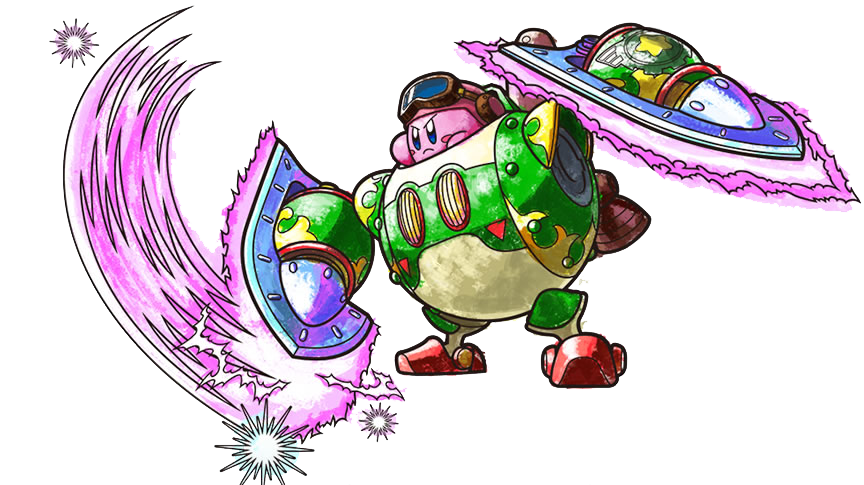



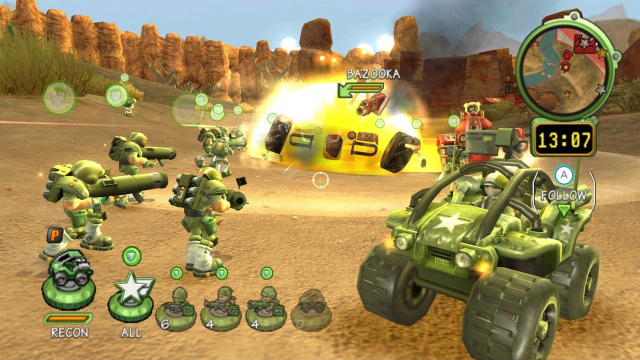
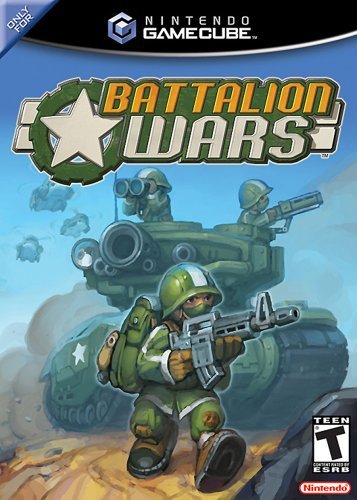
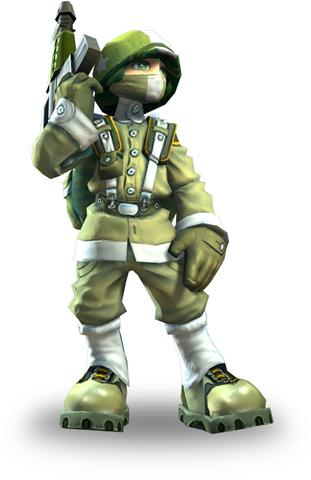
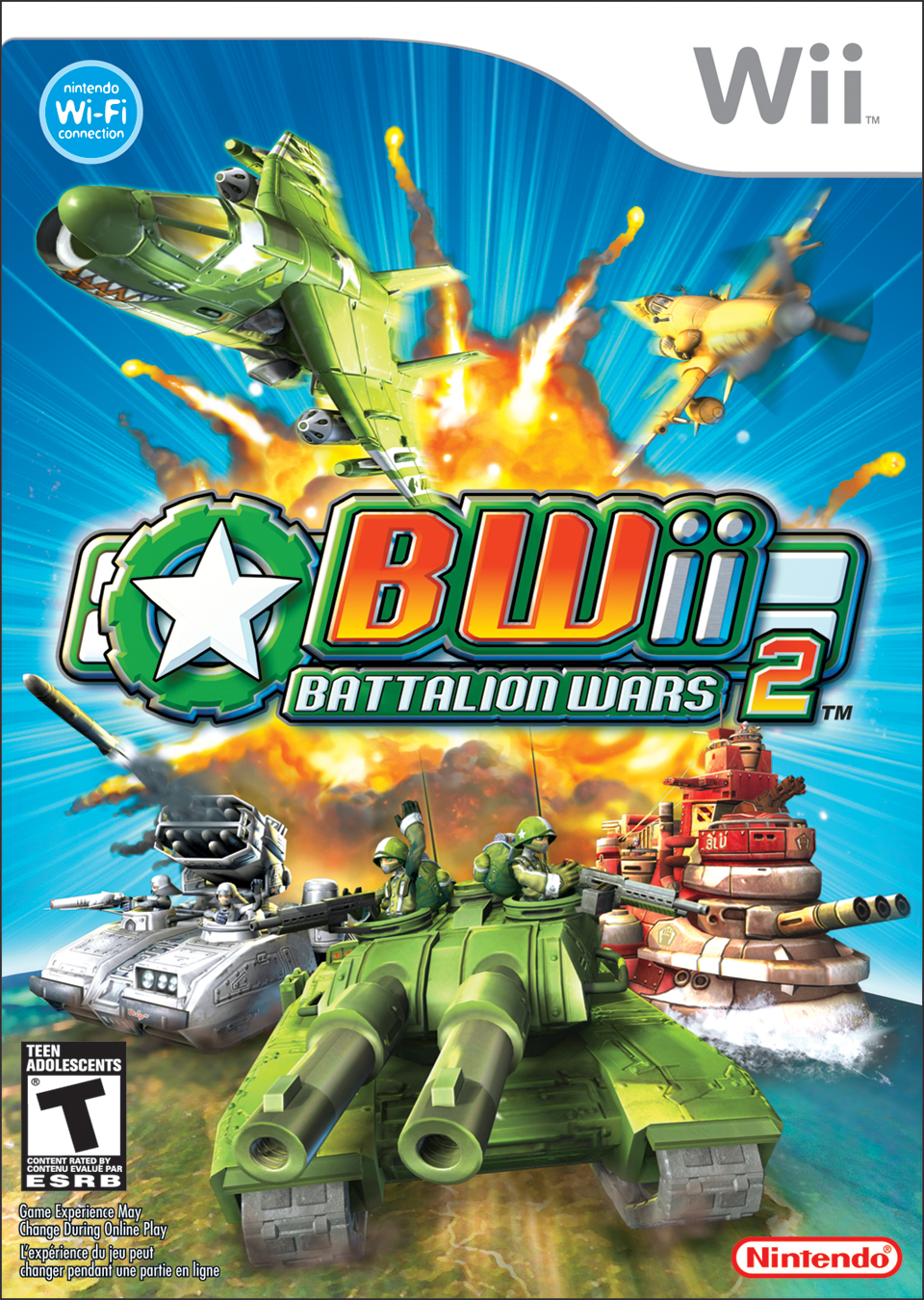
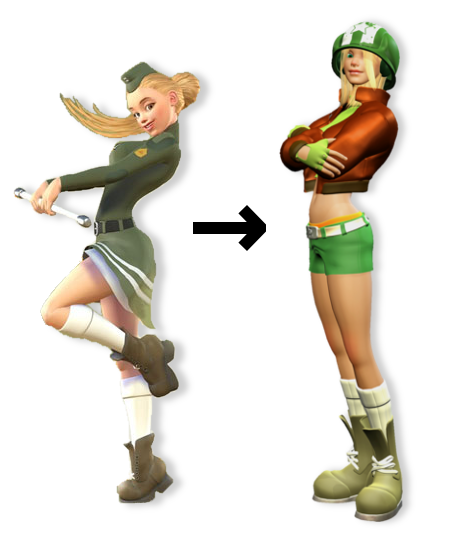


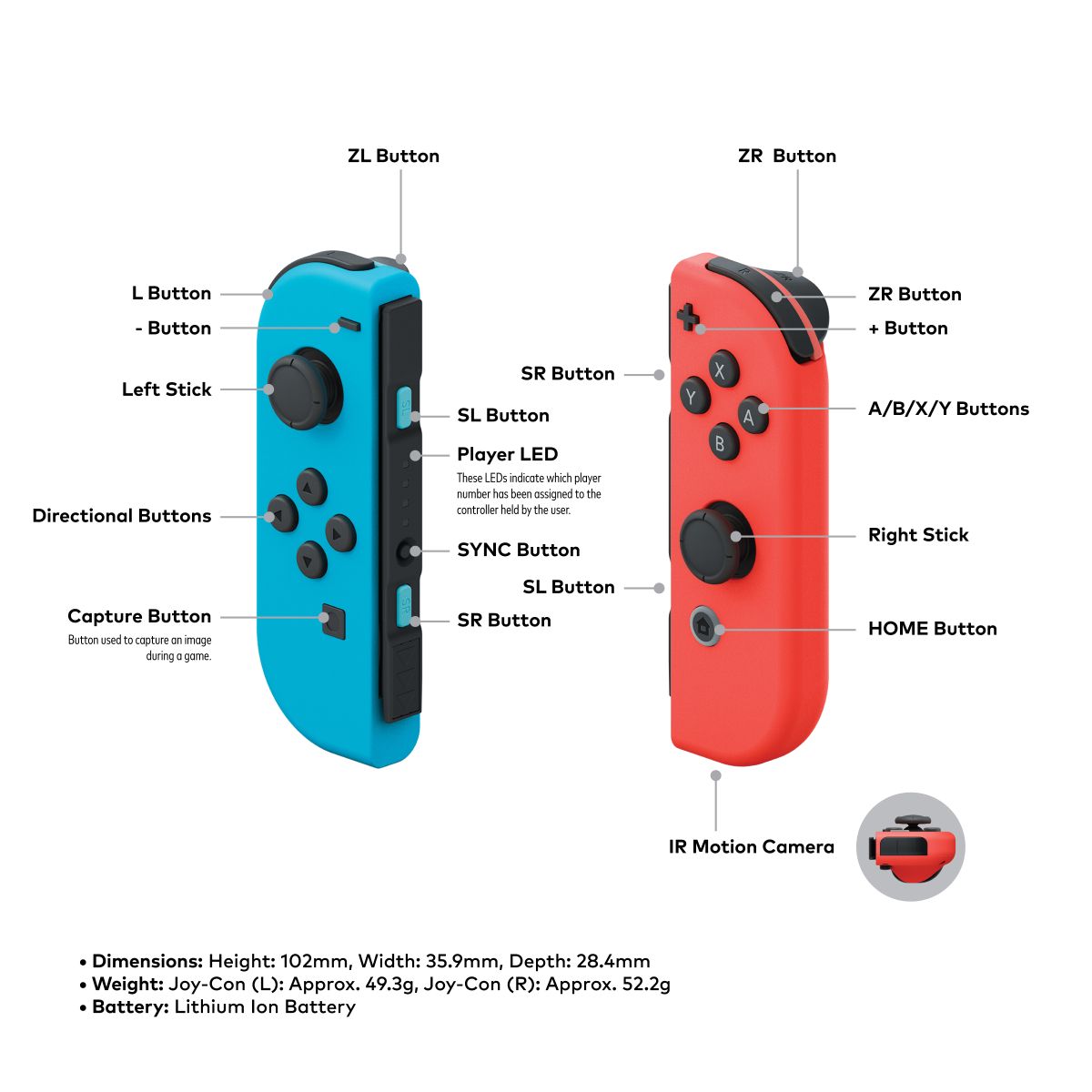


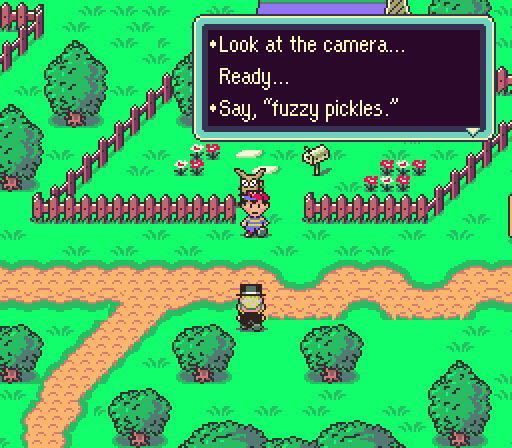

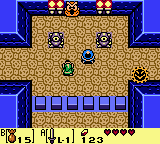




_(En,Fr,De)-14.jpg)