noun: the best achievable or imaginable of its kind.
adjective: being or happening at the end of a process; final.
Will Super Smash Bros. Ultimate be the last game in the series? Is the subtitle more of a noun, or an adjective?
It certainly seems that this 5th entry in the series is a celebration of all things Smash. Until E3 2018, we were unsure if the Switch would see a simple port of the Wii U game, or if we would get a true sequel. From the moment the words “Everyone is Here” flashed across our screens, we knew that this game was something special.
With every character and nearly every stage reporting for battle, it’s easy to see why some would think this is the climax of the franchise.
Not to mention Sakurai’s constant threats that he may be finished with Smash development after each entry nearly kills him. He calls the games being completed a “miracle” and has battled various physical conditions while new games are in development, often putting strain on his wrists and his sleep schedule.
I believe we’re nearing a time of turnover in Nintendo’s headquarters in Japan. Of course, the President’s chair has seen a few different occupants in recent years, but their stable of developers and directors is also showing its age. Miyamoto-san has been actively raising the next generation of Mario makers, resulting in many of the new ideas found in Super Mario Odyssey. It’s only a matter of years before Aunoma decides that it’s time to retire as well.
Sakurai is a bit younger than his aforementioned contemporaries, but has seen more crunch-time than just about anyone in the industry. He also tends to take on more responsibility than necessary, insisting on doing all the balancing himself by hand. Carrying a franchise as large as Super Smash Bros., with a roster as big as it’s grown, is too big a burden for one man.
I can easily see Sakurai stepping down after Super Smash Bros. Ultimate. If he had additional games in him, I don’t think this Switch title would have gotten the name it did.
Now, from a business perspective it’s hard to imagine a world without a new SSB game in the pipeline. It’s one of Nintendo’s most dearly loved franchises, one of their best selling series, and is one of their few tenuous connections to hardcore, competitive gaming and events like EVO and Genesis.
I don’t think Nintendo will ever let Super Smash Bros. die, but Sakurai will likely pass the leadership on after the Fighter Pass DLC is complete.
We’ve endured the long wait for Super Smash Bros. Ultimate, although if you think about it… the wait really hasn’t been that long! We only learned about this title in March, and development faced zero known delays, something that’s almost unheard of for this series.
Word on the street (read: Reddit) is that eShop servers will update at midnight Eastern, which is fortunately 9pm in Pacific timezone where I live. If you preloaded the game digitally, that’s when it should unlock on your home screen!
Simeon and I are ready and extremely excited to play. I just wanted to share a quick post about our plans for release night.
Get done with a meeting about 8:15pm. It absolutely must NOT go late, or there will be consequences!
Rush to Best Buy so I can pick up my physical copy at 9pm.
Simeon will accompany me, and will then use his phone’s mobile-hotspot feature to connect his Switch and unlock his digital copy.
Speed through every red light and stop sign to arrive at home. Periodically shoot Simeon dirty looks of jealousy as his Switch’s speakers emit sounds of smashing in the passenger seat.
Scale the 3 flights of stairs up to my apartment in about 7.3 seconds.
Slam the cartridge into my Switch (after a quick lick).
Start up a stream on our YouTube channel [ring that bell to get notified when we go live].
Unlock characters as fast as possible.
Kick Simeon’s sorry tushy with Dark Samus.
If you’re not picking up the game and playing it right away, we’d love to have you join our release night stream!
I’ve got one more blog post in this series, publishing tomorrow, Dec. 7th at noon Pacific.
Super Smash Bros. Ultimate is here! This blog post concludes the Ultimate Countdown.
What a wait it has been! It’s been so fun to see glimpses of this game over the past nine months, and the next character reveal was always an event to look forward to.
Now we have the game in our hands, and our wait has been rewarded.
Savor it.
To savor is to enjoy completely.
This game has to be the title with the most content, the most replayability, of any Nintendo game ever!
Nintendo fans have a horrible reputation for being insatiable, for calling a game “old news” the week after it hits store shelves.
It be tempting to start calling for certain balance patches, to create campaigns for additional DLC…
But this time, what about being content? How about being satiated? Let’s appreciate Sakurai, the development team, the marketing folks at Nintendo, the Treehouse testers, everyone who was involved in making this superb title.
I’ve been a fan of the Sonic franchise for almost my entire life. Over the years, I’ve seen Sonic’s ups, downs, and all-arounds, either first-hand or from a safe distance. The franchise’s difficulties with maintaining relevance in the modern day have produced an incredible amount of debate as to what works and what doesn’t work for Sonic games. Fans have argued over every aspect of the series: game mechanics, storytelling, character redesigns, and so on.
One particularly controversial figure in the Sonic series is Shadow the Hedgehog. Shadow is simultaneously a fan-favorite character, often ranking in the top five in popularity polls, and a symbol of everything wrong with the series post Dreamcast era, with many fans citing him as an egregiously clichéd “bad Sonic”.
So is Shadow a bad character? Is he just a cheap and cliched “anti-Sonic” or does he bring something of his own to the series? Let’s take a closer look are the Sonic franchise’s resident antihero to find out.
While I will admit there are many legitimate issues one can take with Shadow’s characterization (convoluted, self-contradicting back-story; inconsistent characterization; the entirety of Shadow the Hedgehog, etc.), when it comes to the question of whether or not Shadow is a walking cliché, I think the issue isn’t as open and shut as many like to make it out to be. Read more How Cliched is Shadow the Hedgehog? ›
At least where I live, that is. Not that I mind: I like watching rain fall, and rain brings with it flowers. And with flowers come bees.
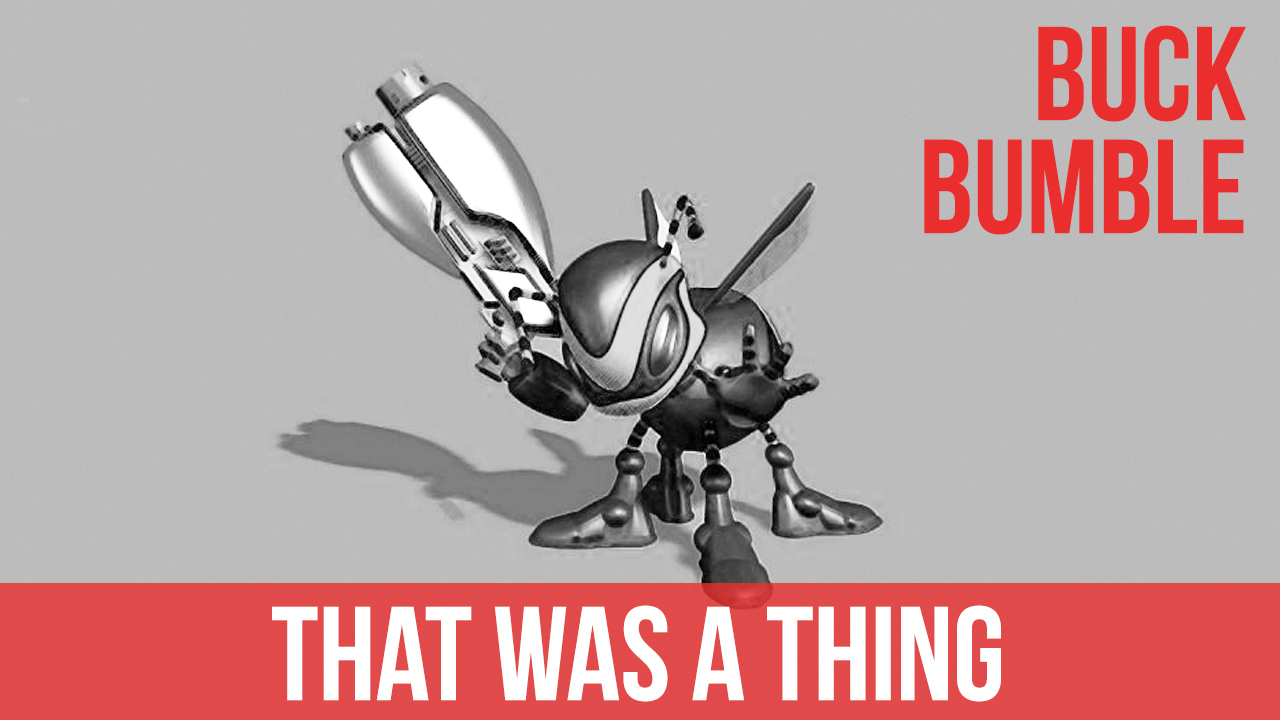
My history with Buck Bumble is much like that of my experience with Bomberman Hero: I rented way back in the 90’s and it always stuck with me. Unlike Bomberman Hero, however, I never even got close to beating it. Heck, having played it again recently, I’m not sure I ever even got past the tutorial.
Buck Bumble is a third-person shooter published by Ubisoft and developed by the now defunct Argonaut Games. Hold up, Argonaut Games? Yes, the company that helped develop the Super Nintendo’s Super FX Chip and the first Star Fox game. Strange, I heard that after Nintendo turned down their proposal for a 3D Yoshi game—which would eventually become Croc: Legend of the Gobbos—they had a grudge against the Big N and only released their games on every other system. Well, if that rumor is true, it apparently only applied to the Croc games, because they not only made Buck Bumble for the N64, but went on to develop several other games that were released for Nintendo platforms: Bionicle Matoran Adventure for the G.B.A., I-Ninja for the GameCube, and… Catwoman: The Game… Hm…
Wait, where was I? Ah right, Buck Bumble! As with Bomberman Hero, I stumbled across Bumble in a used game store—possibly the exact same one—for a mere ten bucks. Needless to say, I didn’t hesitate to take advantage of the opportunity to see if this game was worth remembering. Read more Buck BumbleThat Was a Thing ›
With my recent completion of Shantae and the Pirate’s Curse, I am proud to say I’ve finally gotten all caught up on WayForward’s Shantae series. From the first game via the 3DS Virtual Console, to ½ Genie Hero on the Switch, I’ve played every game in the series all the way through (not counting bonus modes for the half genie’s latest title that is). Those of you who’ve seen my review of ½ Genie Hero know I greatly enjoyed that game, as I do the rest of the series, but that doesn’t mean I don’t take issue with some elements of the games’ design. Read more Shantae and the Pirate’s Curse and Shantae: ½ Genie HeroSpit Shine ›
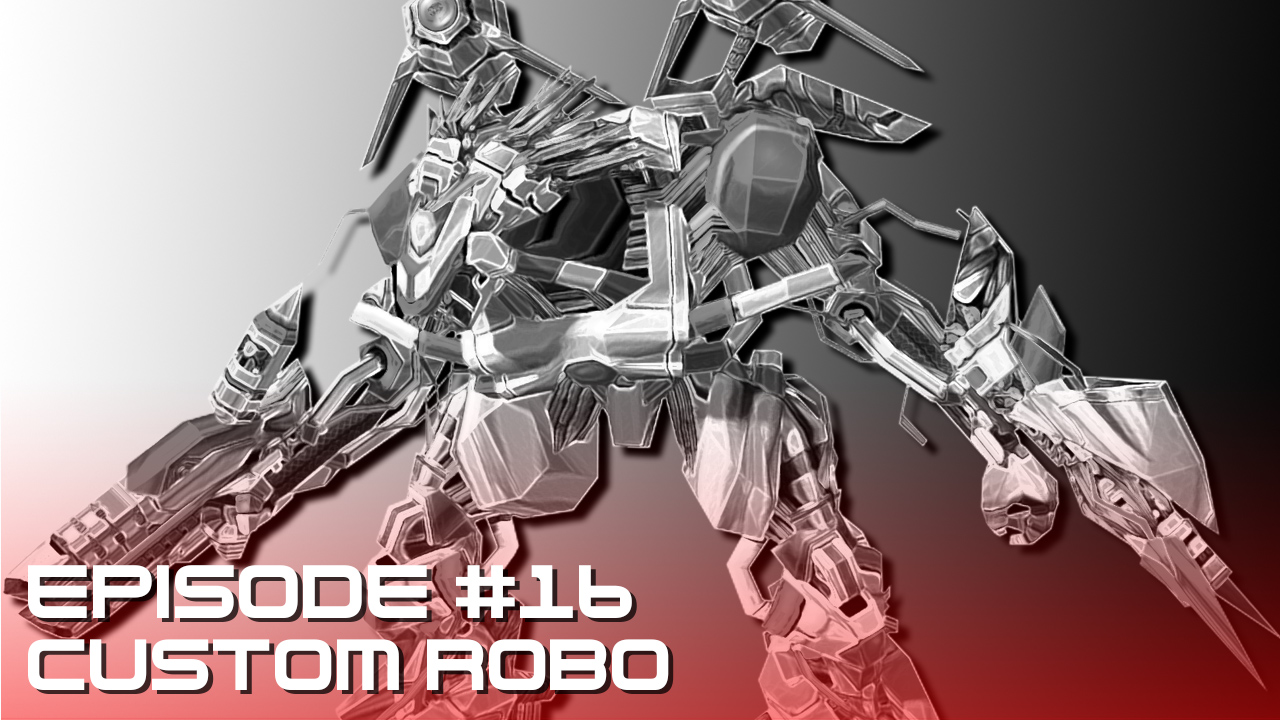
The Two Button Crew makes a surprise return! We’re here to discuss… Custom Robo of all things! And who better to have on the podcast than Nathan Blake of Nathan Blake Games, Custom Robo expert?! Listeners are in for a treat.
Ready for more TBC Podcast? We are an ad-free show, and you can support us on Patreon: http://patreon.com/twobuttoncrew
Get Your Daily Nintendose of Fandom on our YouTube channel: https://www.youtube.com/TwoButtonCrew
“Exit the Premises” Kevin MacLeod (incompetech.com) Licensed under Creative Commons: By Attribution 3.0 http://creativecommons.org/licenses/by/3.0/
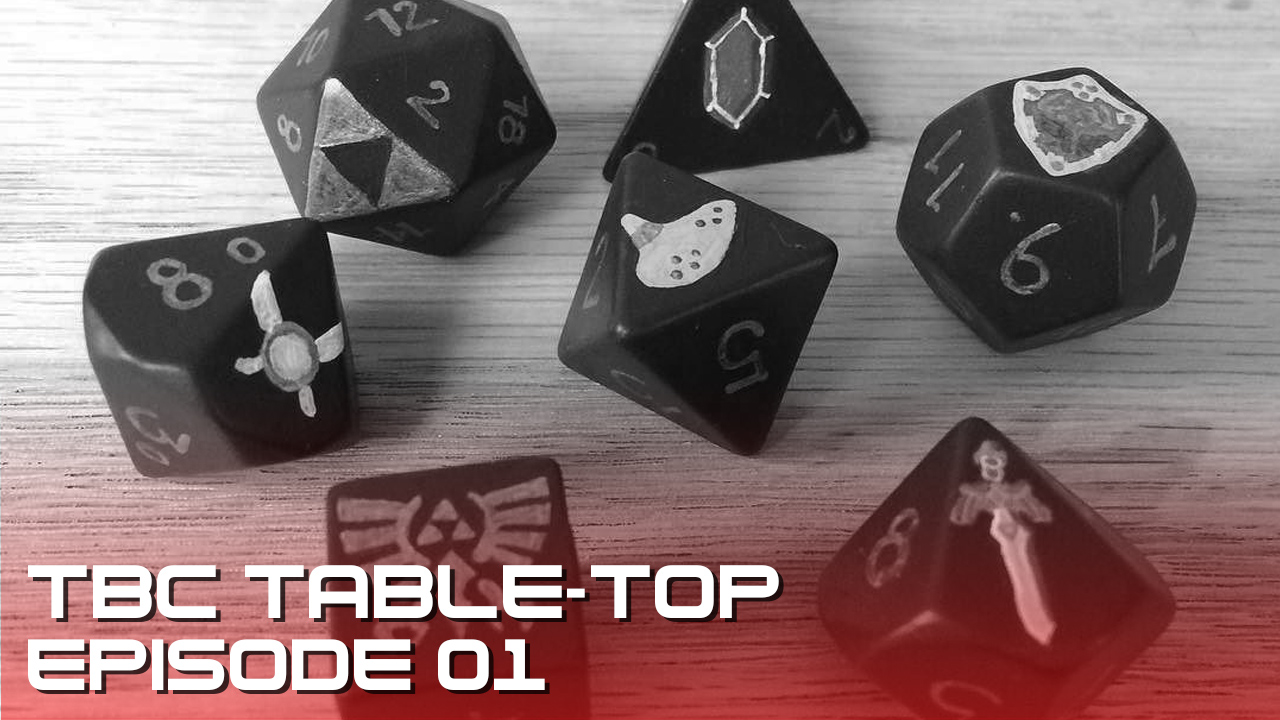
Join Scott, Ryan, Glen, and Nathan Blake of Nathan Blake Games on an adventure through the backwoods of Hyrule as the crew plays a table-top R.P.G. inspired by The Legend of Zelda.
In this inaugural episode, our heroes learn that the town that they’re passing through is in trouble: the river that’s vital to their lumber trade is drying up. They then band together to discover the cause and begin preparations for the journey ahead.
Cast
Sigil: Scott
Trouse: Nathan Blake
Noire: Ryan
Sage: Glen
Music Credits
Timeless Journey Sam Dillard OverClocked ReMix (http://ocremix.org)
Heart Home and Hearth Rebeca Tripp OverClocked ReMix (http://ocremix.org)
The Guru The OC Jazz Collective OverClocked ReMix (http://ocremix.org)
Join Scott, Ryan, Glen, and Nathan Blake of Nathan Blake Games on an adventure through the backwoods of Hyrule as the crew plays a table-top R.P.G. inspired by The Legend of Zelda.
In this episode, our heroes continue their preparations by swinging by the general store and searching for armor.
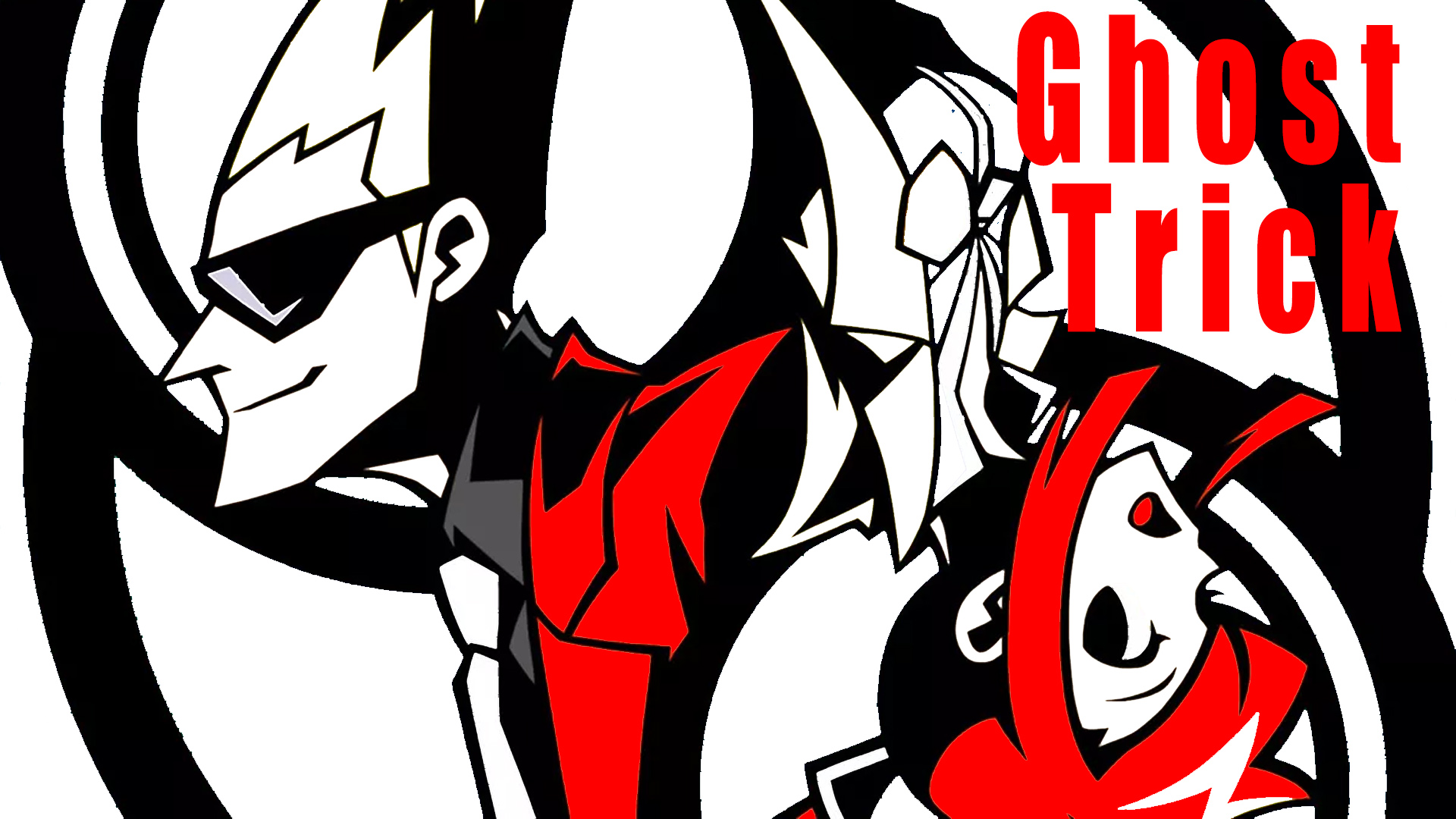
Have I ever mentioned I love a good mystery? Maybe it started with my childhood affection for Encyclopedia Brown books, or perhaps even earlier with my adoration of Disney’s The Great Mouse Detective. Whatever the case may be, my fondness for sleuthing didn’t really take hold until I got into the Ace Attorney series. The sorts of bizarre and colorful lateral-thinking puzzles that lie at the core of the many murder mysteries throughout the series clicked with me instantly. So it’s no wonder that when I read in the now defunct Nintendo Power magazine that Shu Takumi, the creator of the Ace Attorney series, was making a new game about an amnesiac ghost trying to solve his own murder, I was immediately intrigued. Read more Ghost TrickThat Was a Thing ›
Perhaps one of the greatest movements in the history of the game industry is the rise of indie development in the late 2000’s. With the advent of widespread digital distribution, increase in instructional content available on the internet, and the introduction of affordable game development software suites, such as the Unity or Unreal engines, game development opened up to be available to the general public, and not just those lucky few who managed to get hired at an established studio. Likewise, said established studios were freed from the need to secure funding from large publishing companies to keep their doors open via crowd funding services such as Kickstarter or the topically named Indie-Go-Go.
Glen and Scott are joined by Zelda expert GameOver Jesse! What brought about such a momentous occasion? Why, the announcement of the sequel to Breath of the Wild! Join us for a podcast packed with hype, speculation, analysis, and complete guesses.
Please note that I played the P.C. version of the game. The following review is for the game itself, and does not cover platform specific details such as performance or glitches.
Developed by Wayforward Technologies and published by Arc Systems Works, River City Girls is, as the name would imply, a spin-off of the N.E.S. classic River City Ransom. Much like its 8-bit predecessor, River City Girls is a blend of side-scrolling beat-em-up combat and open-world action-adventure exploration with a sprinkling of R.P.G. elements on top. The game follows the adventures of the tough, temperamental, and sarcastic Misako and the cute, bubbly, and emotionally unhinged Kyoko as the two set out to rescue their respective boyfriends from being kidnapped. Read more River City Girls: Review ›
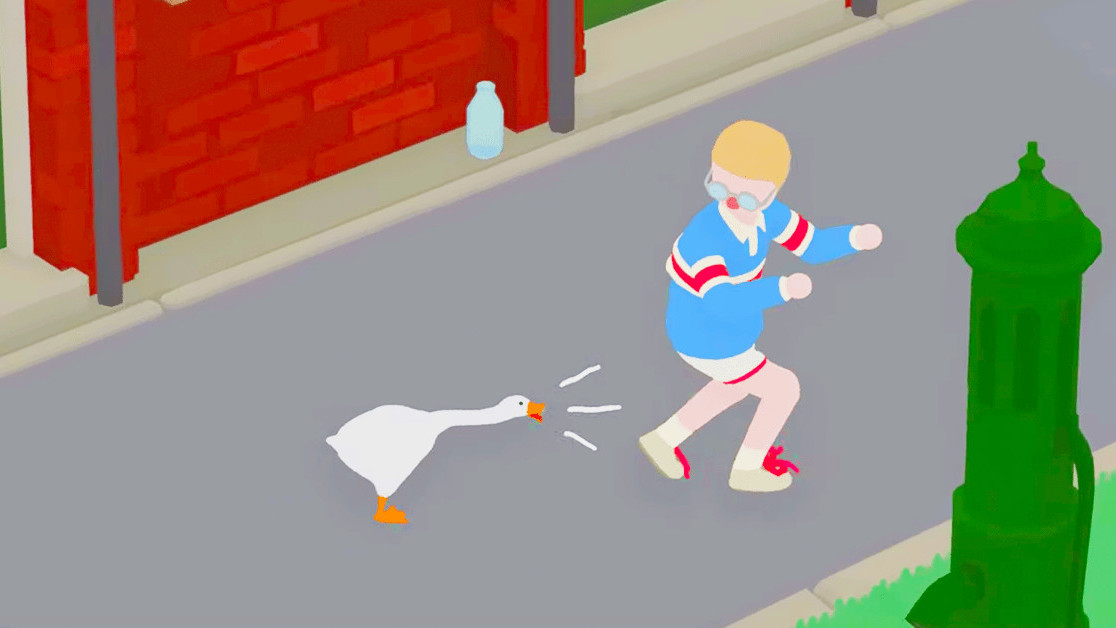
Untitled Goose Game by House House is a unique, charming game for Nintendo Switch.
Disguised as a goofy goose sim, this stealth/puzzle game has you work your way through to-do lists, perfect for a productivity nerd like myself. But these tasks are all mischief related, and involve messing with innocent people’s things without getting caught.
There are four areas to explore, so while you may have an ear-to-ear grin throughout the experience, the credits could roll before you feel that your investment has been returned. It took me under two hours to complete (though post-game content in the form of additional to-do lists should effectively double your play time).
Everything is quite sound here, whether we’re talking about controls, music, systems, graphics, etc. This game took awhile to release considering its short length, and it is evident that the developers made the most of that time to iron out any potential kinks in the gameplay.
While I would love to praise the game in specific ways, it’s difficult to do so without spoiling the moment-to-moment gameplay, which is often humorous and always inventive and charming.
I had a great time solving all the puzzles as they progressively got more complex. Making someone spit their coffee out as a troublemaking goose was an experience I won’t quickly forget.
Making someone spit their coffee out as a troublemaking goose was an experience I won’t quickly forget.
Untitled Goose Game is clearly lacking one feature, however, and that is a hint system. After having just played BoxBoy + BoxGirl, I can’t help but think of how helpful that hint system could have been if implemented in Untitled Goose Game.
Without an option for hints, some puzzle solutions just will not present themselves to you, no matter how long you waddle around the level flapping your wings and honking to no effect. You can always Google a walkthrough, but something more subtle and built-in would have been a worthy inclusion.
The value proposition for Untitled Goose Game is… well, suspect. House House is up against a lot of great competition on the eShop, especially around the $20 asking price. My gut tells me that the game will perform well during sales, but otherwise will have a hard time convincing people to part with a crisp green Jackson.
Conclusion: Untitled Goose Game is a tight, fun, memorable experience that leaves the player wanting more.
This last June, Kirby: Planet Robobot was released state-side, quickly receiving praise from critics and fans alike. Needless to say—being the avid Kirby fan that I am—I jumped on it six months after the fact because I wanted to complete Mario & Luigi: Paper Jam first. What? Grad school doesn’t leave me with much time to spend on getting through my backlog, okay? Regardless, I’d say, without hesitation, that this is the best of the “modern-style” Kirby games that started with Return to Dreamland. Great music, enough of a plot to keep things interesting, lots of fan-service, and a gimmick that actually meshes with the core gameplay instead of being an intrusive pace-killer. And as with any Kirby game, it features new powers! And they…kind of suck, to be honest.
And as with any Kirby game, Planet Robobot features new powers! And they kind of suck, to be honest.
Okay, now that I’ve gotten the requisite suck pun out of the way, let’s talk powers. Kirby’s copy abilities were first introduced in Kirby’s Adventure, released in 1993 for the Famicom and NES. These abilities gave Kirby a single attack that imitated the ability of an enemy character. The concept remained much the same until Kirby Super Star in 1996 when most—but not all—copy abilities were given a variety of techniques the pink protagonist could perform based on what button combination the player inputted. Some abilities have traditionally had very few individual attacks, while others let the player revel in a vast array of possibilities. For the most part, entries in the franchise have followed one of the two aforementioned schemes, with the Super Star style being more prevalent as well as what the recent titles use.
So, let’s examine how the evolution of this system effects powers individually and each game’s gameplay as a whole.
Number of Attacks
As stated before, the number of available moves in each ability’s repertoire has increased from the copy mechanic’s introduction. In Kirby’s Adventure, each power only had one attack (though one could argue backdrop and U.F.O. are exceptions). This allowed players to easily pick their favorites and avoid those they didn’t like. This also, unfortunately, meant that powers easily got stale and that few, if any, abilities stood out as particularly fun. Strangely, I’d argue that the game made it work; since no one power (or at the least, commonly available one) stood out as “the fun one” the player wasn’t inclined to become attached to what he currently had, meaning he would be more willing to part with it, making for more dynamic gameplay.
Kirby’s Adventure only provided one page for it’s copy ability descriptions, most of it flavor text.
Kirby Super Star changed this by assigning multiple attacks to most copy abilities. This drastically changed the dynamic as now each power became far less situational. Copy abilities on average had somewhere between four and seven attacks and a list of them was conveniently provided on the pause screen. I must commend the designers, as most of the abilities are fun to use with only a handful of duds. That said, the expanded move set does mean players are going to find some abilities more fun than others, meaning they’ll be less willing to part with them which ultimately discourages the varied gameplay Kirby’s Adventure had.
Then there’s the current generation of Kirby games. For brevity’s sake, I’m only going discuss the current gen powers featured in Kirby: Planet Robobot (and probablytotally not because I’m too lazy to switch cartridges on my 3DS or boot up my Wii). The number of moves for this new set of powers typically weighs in around eight to eleven, with a few of the attacks being variations of or similar in function to others. This produces a state of decision paralysis when trying to learn the new abilities, especially when two attacks are similar. For the majority of new abilities, I would look at the move list and think to myself, “surely there’s a proper time or context for this attack.” Unfortunately, there often isn’t, at least not that I can see. Notably, most of the older abilities are similar to their previous iterations, if not completely untouched. In my opinion, this makes the classics more approachable gameplay-wise as most of them are easier to learn with attacks that have a clear and easily understood purpose. The one new copy ability in the game I genuinely liked, ESP, happened to be the one with the simplest move set.
Coincidentally, this ability’s costume also resembles one of my favorite powers from Kirby Super Star.
Copy Ability Versatility and Variety
So what does having a wide array of moves do for Kirby’s copy abilities? In short, more moves theoretically increases the versatility of the ability. If one move allows Kirby to easily dispatch a foe in front of him and another move defeats opponents above him, the player is equipped to handle two different scenarios. There are two main factors in determining a copy ability’s versatility: range and what I like to call “angle of attack”, with the presence of a defensive ability making for a third factor of nominal importance.
There are two main factors in determining a copy ability’s versatility: range and what I like to call “angle of attack”.
Range is self-explanatory; it’s simply how far the attack reaches. Short range attacks require Kirby to be near his target to be effective; long range allows Kirby to rain cute death upon his foes from a safe distance. Simple. Angle of attack isn’t much more complicated. Heck, I’ve already given an example of it in the previous paragraph. It simply determines where the opponent has to be for the attack to hit him. In the context of Kirby, there four basic angles of attack: upwards, sideways, downwards, and radius attacks—the last of which refers to attacks that strike in all directions (they’re common enough to warrant their own classification). Of the two, angle of attack has the most influence over an ability’s versatility.
As I’m sure you’ve already figured out, the copy abilities in Kirby’s Adventure provide only one angle of attack of set range. High-jump attacks opponents above Kirby at close-range (though Kirby covers a long distance in the process), while spark attacks enemies within a short radius of Kirby. Kirby Super Star expands the role of most copy powers, allowing Kirby to make use of multiple angles of attack with a single ability. That said, most powers are still limited in range or angle of attack, requiring the player to plan around his ability’s limitations or find one more suited for the situation at hand. For the ones that do provide good coverage of all angles, they are usually rare or have some sort of drawback, like yo-yo’s long attack animations.
Here’s where my second issue with more recent copy abilities comes into play: they’re too well rounded. Most of the new abilities include attacks for every angle and often times multiple ranges too. Lacking weaknesses actually makes them less fun, not necessarily because it makes the game too easy (it’s Kirby; it’s always easy) but because they all feel very samey. Even some of the older powers have received similar revisions, like the unnecessary addition of an upward attack to the stone ability’s move list. Admittedly, this is a rather technical complaint and probably doesn’t apply to everyone.
Lacking weaknesses actually makes copy abilities less fun.
Refinement is a Subtractive Process
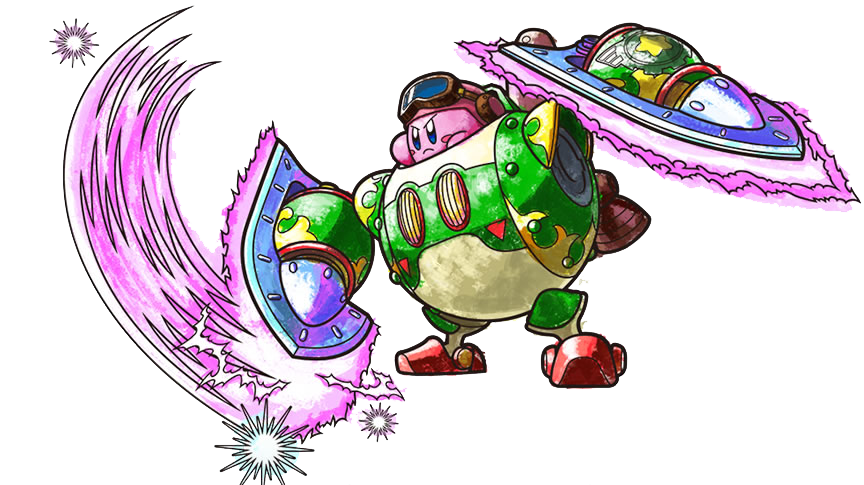
Despite most of its new powers not being particularly interesting, Planet Robobot actually does adhere to the limited copy ability design that I’m advocating, specifically the robobot powers. Each robobot copy ability has a very limited moveset, and as a result, each one feels unique. And just so it’s clear that I’m not being a nostalgia-blind curmudgeon, I like most the ideas for each ability (leaf and archer were long overdue), and I think if Hal streamlined the abilities so that they fulfilled a unique niche, instead of every niche, they would have some real winners.
The robobot armor’s sword ability only has three attacks. Three incredibly satisfying, easy-to-use attacks.
For those familiar with my previous work, these points probably sound quite similar to my second article, The Streamlined Turnabout. While feature-rich games and mechanics are great (especially from a marketing perspective), continually adding ideas runs the risk of producing bloat. Much like cutting and polishing a diamond to make it shine, video games can greatly benefit from the occasional trim.
About the Author: Glen is a lifelong Nintendo fan whose love of video games has inspired him to pursue a career in computer programming. He is currently studying for his masters in Computer Science at Oklahoma State University. His first Kirby game was Kirby 64, which led to a lot of confusion when trying to figure out how to make combo abilities in Kirby Super Star.
Glen and Scott sit down to discuss the recently released Legend of Zelda: Link’s Awakening for Nintendo Switch. How did Nintendo’s latest remake sit with us? What was improved, what was memorable, and what left a bad taste in our mouth? At the end, each host shares a surprising game they would like to see remade next from the Legend of Zelda series.
Back in August, I finally managed to complete Super Mario Odyssey. While I found much to love about it—the gorgeous and eclectic visuals, the fast-paced story, the fact that Mario is weird again, the myriad of accessibility features, etc., etc.—there was a reason it took me nearly two years to complete. While I definitely intend to replay the game’s story someday, I can say with confidence that completing it is a task I will never undertake again.
As the number of remaining moons dwindled, so too did my enthusiasm. In fact, by the end of my run, I was having more fun grinding for coins in Luigi’s Balloon World so that I could afford the last few moons needed to max out the counter than I did hunting for the ones populating the game’s various worlds. Why was that, and what could Nintendo have done differently to avoid the slog? That’s exactly what I intend to answer in this edition of Spit Shine. Read more Super Mario OdysseySpit Shine ›
Join Scott, Simeon, Glen, and Nathan Blake of Nathan Blake Games on an adventure through the backwoods of Hyrule as the crew plays a table-top R.P.G. inspired by The Legend of Zelda.
Glen and Scott are back to discuss Luigi’s Mansion 3, a beautiful game and strong Game of the Year contender. They have a lot to say about the game’s pros and cons, so get cozy and listen to their deep dive on Luigi’s newest solo outing.
“Exit the Premises” Kevin MacLeod (incompetech.com) Licensed under Creative Commons: By Attribution 3.0 http://creativecommons.org/licenses/by/3.0/
Are you buried in unplayed games? Do you keep purchasing new titles, knowing full well that you don’t have the time to play them? Are you drowning in a long list of classics that you want to try and make time for… someday… eventually? If any of this sounds familiar, we know exactly how you feel. And we’re here to discuss a strategy and make that backlog manageable. Hop on board the TBC train!
“Exit the Premises” Kevin MacLeod (incompetech.com) Licensed under Creative Commons: By Attribution 3.0 http://creativecommons.org/licenses/by/3.0/