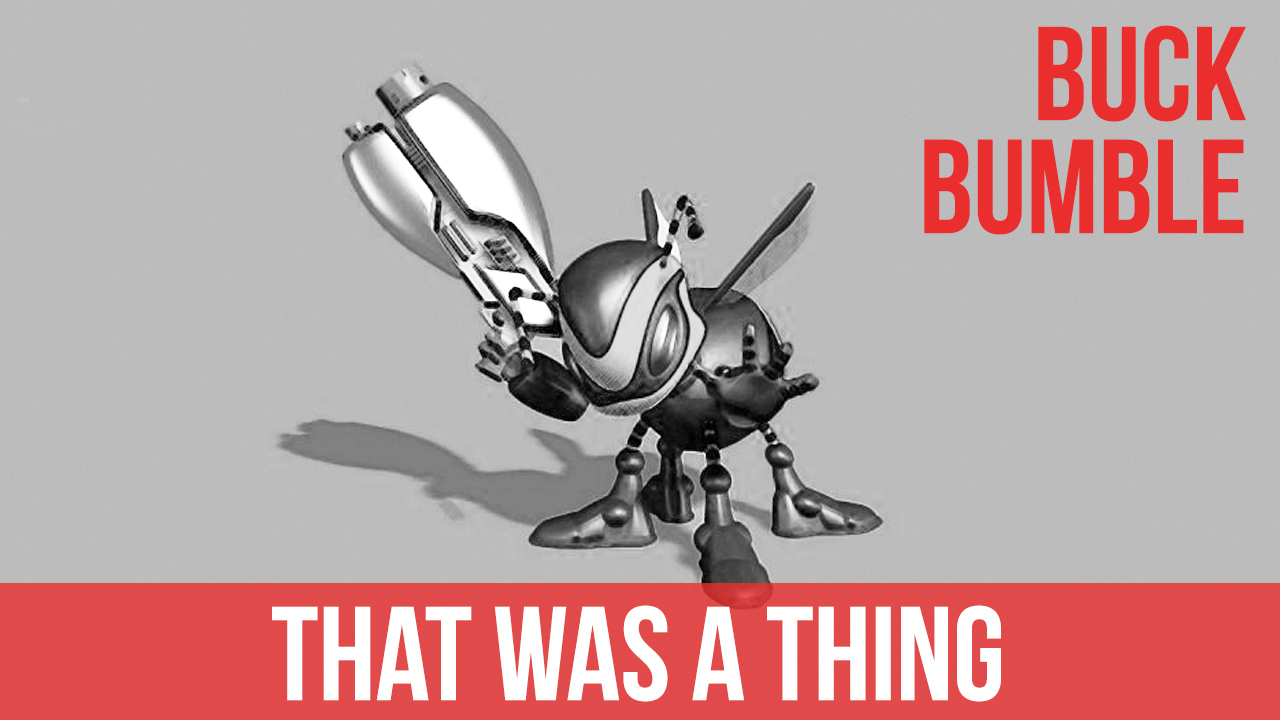
Battalion Wars | That Was a Thing

Welcome to That Was a Thing! A new series in which I discuss my favorite weird, obscure, or simply underrated pantendo games and media. Think of it as the evil twin to Simeon’s Nintendo Experience series. In this inaugural installment, I’m going to look at one of my favorite—not to mention one of the only—real-time strategy Nintendo series out there: Battalion Wars.

The Battalion Wars duology was a spin-off of the Nintendo Wars franchise and originally had the working title of Advanced Wars: Under Fire. Unlike the other Nintendo Wars games, however, Battalion Wars wasn’t developed by Nintendo or Intelligent Systems, but a British company: Kuju Entertainment. The first game was released for the GameCube on September 19, 2005 and its sequel debuted on the Wii on October 29, two years later.

Overview

The Battalion Wars games are a combination real-time strategy and third-person shooter. Like most R.T.S. games, players are tasked with completing objectives with the units provided for the mission—riflemen, tanks, bombers, etc. Needless to say, each unit type had its own strengths, weaknesses, and abilities and the majority of the strategy revolves around knowing where and when to deploy each unit. The unique selling point of this game is that the player directly controls one of the units the whole time, with the ability to freely switch between units as needed. Think of it as being sort of like Pikmin but with guns…and tanks.

Both games are set in a fictional world filled with global super-powers just itching to find a use for their massive armies. Seeing as the series was developed in England, each of the games’ fictional nations are comically stereotypical counterparts to real-life countries. The United States is represented by the gung-ho Western Frontier, the Tundran Territories are an odd combination of Tsarist/Soviet Russia, likewise Xylvania combines Imperial Germany with Nazi Germany, the Solar Empire is a futuristic tropical Japan, and the Anglo Isles—first introduced in the second game—mirrors the Anglo Isles…I mean the United Kingdom…seriously, they weren’t even trying to be subtle with that one.

As to be expected, each of these nations employ an eccentric and colorful cadre of commanders. Each mission has the player receiving orders from one of their faction’s commanding officers while the enemy commander emotes and responds according to the events of the game. While they don’t offer any special gameplay bonuses like the commanders of the Advance Wars series, the commanders’ typically blasé attitude toward warfare and nonchalant dialogue helps keep the tone light. I would say the only commander that I personally didn’t care for was Empress Lei Qo of the Solar Empire—who left so little of an impression on me, I had to look up her name just to write the previous sentence.

The third-person perspective really is what makes gameplay stand out. Giving orders from the perspective of one of your men while returning fire yourself really makes you feel like you’re an actual part of the conflict, instead of some ghostly observer calling the shots. When your battalion’s under fire, you’re under fire, and having to make tactical decisions in the midst of the chaos of the battlefield can create some really tense moments. Then there are the times when you spot some enemies in the distance or look at the map and have to plan your next move. I’m not sure I can properly express the feeling I would get as my men crowded around me, expectantly waiting for me to formulate a plan of attack.

Take that ya tsarist turnip!
Being an entity on the battlefield requires the player to look after both himself and and his units.

If quality gameplay wasn’t enough, these games are also overflowing with personality. The games’ humor and cartoonish visuals give the series a lighthearted tone; these aren’t games out to deliver a ham-fisted “war is bad” message but instead revel in the innocent—and perhaps naive—feeling of playing with toy army men. Despite having the depth of a Saturday morning cartoon, almost every character is likable in some way—with my personal favorites being Tsar Gorgi, Kaiser Vlad, and Col. Austin—and I genuinely wanted to know what happened to them next. Each faction’s units are instantly recognizable, and their designs convey a lot of personality, not just for the unit itself, but for the faction it belongs to.

Giving orders from the perspective of one of your men while returning fire yourself really makes you feel like you’re an actual part of the conflict.

Now that we’ve covered the basics, take a closer look at the first game.

Battalion Wars

Clearly, this is a real man's adorable war game.
The cute proportions and solemn color choice of the cover art sums up the game’s unique atmosphere quite well.

I first heard of Battalion Wars from the now defunct Nintendo Power Magazine. That’s not to say I immediately took an interest in it, however. I wouldn’t pay it much mind until my younger brother returned from the now defunct Hasting’s Entertainment with a used copy of the game. Shortly after he inevitably lost interest in it, I took a crack at it and fell for it harder than Tsar Gorgi off a bridge (too soon?).

The game places the player in command of the forces of the Western Frontier—with some exceptions in the form of unlockable bonus missions. The story begins during an uneasy truce between the Western Frontier and their longstanding enemies, the Tundran Territories. War breaks out when Western Frontier troops find a Tundran spy on the Frontier side of the border. As the plot continues, the Tundrans ally themselves with the Xylvanians, the Xylvanians betray the Tundrans, an old man is thrown off a bridge, I think there was a zombie-ghost legion at some point…you get the picture.

While it won’t win any awards, the story has a great sense of progression to it. Plot-wise, mission objectives often tie into something you did in a previous stage. If you saved a spy, you can bet his intel is what will point you toward your next target. The fort you defend in one mission is essential to launching a counter attack in the next and so forth. It’s a small detail, but having your actions contextualized like that goes a long way toward making your input feel meaningful.

While it won’t win any awards, the story has a great sense of progression to it.

While we’re talking about writing, I need to discuss the most important character: the grunts. Throughout the game, the troops under your command are constantly responding to your orders, quipping at the enemy, talking among themselves, or commenting on the situation at hand…and it is freaking adorable! Okay, I know that sounds like it’d get annoying after awhile, but the troops have so many lines that I would sometimes still be discovering new ones on my fourth or fifth play-through of particular missions.

“I’m beat…let’s make camp and whip up some cocoa!”

On to the atmosphere: the visual style is a strange blend of cute, chibi soldiers and vehicles and a muted color palette that gives the environments an oddly grim and gritty feel. This, in conjunction with a great soundtrack that wouldn’t sound out of place in an old WW2 movie, produces a unique atmosphere in which the tone is never too heavy or oppressive but the player is still fully aware that—no matter how cute the enemy’s tanks are—this is still war.

The game isn’t without faults, however. The A.I. for units under the player’s control is a little slow on the uptake, to the point of seemingly lacking a self preservation instinct at times. I found any mission where I had to fight enemy aircraft especially aggravating, as anti-air vets tend to not take initiative, resulting in massive losses from even brief lapses in focus. I didn’t care much for missions where the game expects me to command planes and ground forces at the some time, either. For whatever reason, when given the wait command, planes continuously fly in a straight line instead of staying in proximity to where they were when the order was given. This required me to constantly check back on them to make sure they weren’t about to fly over enemy anti-air embankments.

Battalion Wars 2

"Sir, the last game didn't sell well." "Then put an explosion of the cover of the next one!"
More playable factions, more unit types, more color! KA-BOOM!

Battalion Wars 2 starts its story off 200 years in the past by showing the player the final conflict between the Solar Empire and Old Xylvania at the end of the “Lightning Wars”. Bottom line is that the S.E. nukes O.X.’s H.Q. with an orbital death ray and then—fearing that the weapon is too much power for anyone to wield—chucks the controller (a staff) into a glacial ravine…what could possibly go wrong?

Back in present day, it’s been 2 years since the events of B.W. 1 and the nations of the world are at peace…until the Anglo Isles preemptively attack the Solar Empire based on rumors that they are harboring some sort of super weapon. The plot jumps between flashbacks and modern day from there with each campaign focusing on a different faction: a conflict between the Western Frontier and Tundra, the Anglo Islands staving off the Solar Empire’s retaliation, one where the player controls Old Xylvania’s forces, and finally Tundra’s attempts to prevent Xylvania from finding the staff.

The plot sounds a lot more complicated, but it really isn’t. I assume the 200-year-old-artifact-of-doom plot was meant to make the story feel bigger than the last game’s. Unfortunately, I’m not very fond of epics; I much prefer down-to-earth plots as I think they tend to have better focus and require the author to actually make me care about something specific like people or places. Fortunately, most of the characters are still quite likable, including most of the new ones.

Sadly, the narrative’s constantly changing point of view leaves the story unfocused and absolutely kills that sense of progression the first game had. You only play as any one faction for at most five missions (usually less). Between less emphasis being placed on the player’s actions between missions and the fact the player constantly switches sides, that feeling from the first game of being a single commander fighting in a series of much larger conflicts is completely gone.

Did I mention the volume on the player’s soldiers has also been dramatically reduced? They still speak, and I’m sure it’s still adorable, but I for the life of me can’t hear what they’re saying.

The narrative’s constantly changing point of view leaves the story unfocused and absolutely kills that sense of progression the first game had.

Moving on to the visual design of this game: many of the units received redesigns, especially the Tundran Territories’ infantry, most of which I think are improvements. The same can’t be said for Brigadier Betty: her look, not to mention her distinctive voice and a good deal of her peppy can-do attitude, are gone, making this iteration rather bland and forgettable. Speaking of bland, the game’s color palette is much more colorful which, while fitting well with the cartoonish style, demolishes the unique atmosphere of the B.W. 1 and stands out less by comparison.

What's that orange bit above her shorts? Her underwear? C'mon guys, this is a Nintendo game...
On the left, a plucky, upbeat, and memorable character; on the right, the uncanny valley.

Okay, so maybe the aesthetics and narrative aren’t on par with the original, but this game fixes many of its predecessor’s failings when it comes to gameplay. The A.I. is much more proactive: there were many times I would be ordering my units to attack a tank or some entrenched enemy infantry and would be surprised by the wreckage of an enemy gunship I didn’t notice suddenly crashing nearby. Oh, and planes finally fly in circles when put on standby!

The motion controls also make targeting enemies and issuing commands a snap. The only place where they really feel out of place is when controlling aircraft, as pointing the Wii remote up or down controls altitude. This feels awkward, especially if the player is trying to target a ground based unit, partially due to the game not making the change in altitude immediately obvious.

The game’s missions do feel a bit more repetitive than before. BWii’s missions follow a pretty predictable formula: defend a location then go on the assault or go on the assault and then defend the capture point. That said, BWii doesn’t have any missions that drag on too long or feel unfair—which the first game was occasionally guilty of, so I guess it more or less balances out.

The game’s missions do feel a bit more repetitive than before. That said, BWii doesn’t have any missions that drag on too long or feel unfair—which the first game was occasionally guilty of.

Of course, Battalion Wars 2 also brought new gameplay elements to the table: naval units and buildings. Naval units basically feel like tanks and artillery, but much more sluggish. That said, the game does a great job of conveying their weight and scale, and their long range means naval missions don’t feel too drawn out. Unfortunately, missions in which the player has to command both land and sea units tend to feel disjointed and tedious, due the two unit types’ inability to travel together and the player not being able to use the “All Units” button to regroup their units without messing up their positioning.

Buildings are a solid addition. Players can’t select their position, instead having to secure predetermined locations. Once under the player’s control, buildings will periodically replace fallen units corresponding to the type of building (e.g. aircraft for airfields). These help take the edge off, as the player doesn’t have to worry about losing essential personnel. That said, the fact that units have to run all the way to the players position, which can be on the other side of the map, means the player can’t rely on reinforcements too much.

Debriefing

Despite all of the flak I just gave Battalion Wars 2, I do think it’s the better game. While I think Battalion Wars has more personality, it can also be much more tiring—and sometimes frustrating—to play. Of course, neither is particularly hard to come by, and they’re both worth your time.

Sadly, Nintendo never commissioned Kuju to make a Battalion Wars 3. I think it’s blend of action and strategy would’ve been a great fit for the Wii U, and the Wii U gamepad would’ve been a great help in micromanaging units, something that neither game made easy. Nintendo still seems to have a fondness for cartoony wars games if the recent 3DS game Tank Heroes is anything to go by, so I haven’t completely given up hope. If the rumors of GameCube games coming to the Switch’s Virtual Console are true, I’d happily double dip on Battalion Wars…and not just because of how utterly unreliable old GameCube memory cards are.


About the Author

Glen Straughn is a lifelong Nintendo fan whose love of video games has inspired him to pursue a career in computer programming. He is currently studying to receive his masters in computer science from Oklahoma State University. He has gotten an S rank on every mission in BWii, and even managed to get an S on the final mission on his first successful play-through…completely by accident.

SNES Classic: Big Unanswered Questions

The SNES Classic Edition has been unveiled, but not in enough detail!

On June 26th, Nintendo announced that it will be following up the popular NES Classic Edition with an SNES successor. At an MSRP of $80 and containing 21 games, this bundle of 16-bit nostalgia is liable to fly off shelves as quickly as Nintendo can stock them. However, there is still some information about this mini console that is shrouded in mystery and could affect gamers’ buying decisions.

Controller Cords and Ports (Answered!)
Immediately following Nintendo’s announcement of the SNES Classic Edition, questions of the controllers’ cord length and connectivity method surfaced. Thankfully, so did some answers! Nintendo confirmed that the controller cables will be about 5 feet long, an extra 2 ft. compared to the previous Classic console.

It also became clear that the SNES controller ports on the front of the unit are simply for aesthetic accuracy. Due to Wii Classic Controller and Classic Controller Pro compatibility noted on the SNES website, it is confirmed the controllers will plug in with the same type of ports utilized by NES Classic Edition and Wii. So questions of the controllers can be put to rest!

Just How Limited is this Edition?
The NES Classic Edition was notoriously hard to find last Holiday season and through the remainder of its short production run. Nintendo cites a misjudgment of demand as the reason for that inconvenience, but it also came to light that the system was meant to be sold as a limited run (and actually got extended as its popularity became evident).

How many Super Nintendo units are going to be manufactured is unknown, but Nintendo insists that more units will be made available than its NES counterpart. Though they won’t commit to any production past the 2017 calendar year, they are making an effort to avoid shortages. Understandably so: with sales data on the NES Classic, Nintendo will try to leave less money on the table now that the market has now been proven for these throwback consoles. Additionally, the new system is going on sale several weeks earlier than the NES did, so Nintendo appears to be gearing up for more availability going into Q4.

Will Nintendo Allow Proper Preorders?
A missing piece of this puzzle is preorders. Fans of retro gaming were disappointed when preorders never opened up for the NES Classic Edition, and quantity was too limited on launch day and during the restocks that followed. Taking preorders would certainly alleviate much of this frustration, as Nintendo can gauge interest and adjust production accordingly. Allowing gamers to pre-purchase the console would also help avoid common issues with scalpers, and get the 16-bit console into the hands of true Nintendo fans.

Amazon may offer their own form of preorders (like Amazon UK did, and quickly sold out, for this very product), but whether they have actual shipment quantities to allocate remains to be seen. Unfortunately, Amazon has been known to cancel orders when they do not receive as many units from Nintendo as they hoped. Nintendo needs to have strong communication and systems in place with retailers for this product to be a true success, and avoid the frustration that their product distribution has become known for.

How Will the User Interface be Improved?
The NES Classic shipped with a perfectly serviceable user interface, allowing players to quickly scroll through the catalog of games, change visual filters, and create restore points while playing. It didn’t leave much to be desired, except one thing: the main menu was only accessible via the console’s Reset button. That is markedly less convenient than the Home buttons Nintendo fans have grown accustomed to since the Wii era. The Super Nintendo’s Reset button will probably retain this functionality as well, but a controller button-combination (like Select + Start) for quick access to the menu would be a welcome addition.

Will Nintendo Have a Different Stocking Stuffer?
Many fans expected Nintendo to follow up the NES Classic Edition with another entry in the Classics brand, but it came as a surprise when Nintendo announced its release date to be considerably earlier in the calendar year. The Mini NES was clearly intended to be a Holiday impulse-buy (which would have worked if the inventory was there), but now that the SNES will launch on September 29th, it raises the question of Nintendo’s Black Friday strategy. Will there be an alternate “stocking stuffer” to occupy Christmas lists around the globe, or will Nintendo opt to increase their marketing efforts for the system as Thanksgiving gets closer?

Do the Regional Versions Feature Different Games? (Partially Answered!)
The NES Classic Edition featured 30 games, and the list of titles differed from region to region. It was unclear if that would be the same case again until Nintendo of Japan officially announced the Super Famicom Mini. We learned that, yes, 4 different games made the cut (and 4 will remain exclusive to North America and Europe).

In PAL territories, SNES titles were originally made with a slightly lower frame-rate to match the local television sets of the time. On modern HDTVs, this difference is noticeable and can be bothersome. We don’t know which software versions Nintendo of Europe will implement in this new collection, and these are the types of technical specification questions Nintendo tends to leave unanswered.

Will There Be an N64 Classic Edition? What About Handhelds?
Rather than just a one-off run of NES systems, the Classics label is now a brand of products for Nintendo. And with two consoles being remade in as many years, it begs the question: “What’s next?” Nintendo 64 follows, but introduces more controller ports, polygonal 3D graphics, and more complicated control schemes that vary from game to game. Nintendo won’t be able to release a Classics console annually for much longer before they catch up to the Nintendo Switch, or the scope outgrows what is reasonable for an impulse-buy product.

An alternate course of action would be to release Handheld Classic Editions, starting with the GameBoy! Grab some Pokemon games, Tetris, Metroid, Kid Icarus (maybe throw in a backlit screen and wireless multiplayer if we’re getting really crazy) and you’ve got yourself an affordable chart-buster.


Clearly, there is a lot that we don’t know! As we wait for answers, let’s take a step back and anticipate all the great things that have been confirmed: Dual controllers in the box? Check! Unreleased Star Fox 2? Check! September release date? Check!

What information are you desperate to know about the SNES Classic Edition? Sound off in the comments below!

Why Smash Bros. Is Stupid

If you ever have the chance to talk to Scott, ask him how I feel about Smash Bros. If he happens to recall all of the many times I’ve almost thrown my controller while playing it, he will remember to tell you that I hate those stinking piles of trash, and then probably begin laughing hysterically with memories of my salty tears.

Today, I am going to list reasons I despise the Smash Bros. series. I will not be focusing on one entry, but rather looking at the series as a whole. The list is also not exhaustive. The internet does not contain enough space to list all of this garbage. You may have found some of these same things frustrating, or you may not have. Let me enlighten you to the truth of these monstrosities:

  • The Crotch. I hate the crotch. For those of you who do not know what this means, it is a term I coined some years back referring to the point on the side of a stage (especially noticeable on Brawl’s Final Destination) at which one gets stuck while trying to recover. This was a major problem for Marth before they fixed things in Smash 4, as he would get stuck due to his forward momentum bringing his upward momentum into the crotch. FYI, you can also use crotch as a verb (“Oh, man, I just got crotched!“).
  • The invisible Ceiling, or Y-Cancelling. I’ve seen videos that say that Melee’s invisible ceiling is only noticeable when Luigi is being hit. That is so false. It is also extremely noticeable on Roy’s (and Marth’s) counter moves. That crap was extremely annoying.
  • Teching the sides of walls when you are going straight downward. What is this garbage?
  • Brawl had online. Hahaha! That was a thing! Hahaha! Oh, boy. Remember that funny joke? It was funny.
  • Nerfed Ike in Sm4sh. My favorite character to play in Brawl was Ike. It took a few patches, but Ike is finally at least semi-playable in Sm4sh. They did, however take out the best thing about him, which was that he had no landing lag on N-air, which allowed him to go straight into jab. That moment of landing lag is a killer.
  • Jank. No other competitive fighting game has this much jank, people, especially nowadays. That crap gets patched out. Why Samus’s standing up-B can kill at 0% I will never be able to explain to you.
  • Samus’ Matchups in Sm4sh. Speaking of Samus, she has some ridiculous matchups in the fourth Smash game. Samus may not be the best in the game, but Samus vs. Dorf or Samus vs. Ike is super dumb for the person who is not playing Samus.
  • Sm4sh’s “Voice Acting”. One of the first things I noticed about Sm4sh on release night was that a lot of the characters’ voice clips for the game were the same as Brawl. Now, that in itself is kind of lazy, but I get it. What I do not get is when ONE character has, like, THREE different voices! It’s especially noticeable in Dorf and Fox. You might be trying to recover and hear the sound of a chipmunk squeaking “Fire!”, Then the next moment, after your opponent has two-framed you, you hear the deep guttural bellows of 1,000 manly warriors entering the gates of Hades. What?
  • Playing Brawl on Wii U. It just drops inputs? WHY!? I have never had this problem with ANY other Wii game! Is there a reason? No. It’s just stupid.
  • B-Reversing. The reason I hate B-reversing is probably just a personal thing. I almost never try to do it intentionally, but it always seems to happen at the worst times when I use a grounded up-B. Why?
  • Melee Cultists. The rest of these are more “community” complaints, and for the sake of my own precious time, we all know what this one means. Oh, and if you miss meteor cancelling, just don’t get meteored. Git gud, scrub.
  • EVO making custom moves legal. *Sigh* Why did they have to complicate things so? If you’re not familiar with this fiasco, it goes like this: EVO is the biggest fighting game tournament of the year. All of the important games are there, all of the best fighters are in attendance, so when the EVO people make a rule set, everyone pays attention. In 2015, EVO set the Sm4sh rules to allow for custom moves. We even did one of our first episodes on it. This meant that, until EVO, all of the local tournaments used the new rule set, which meant that each player that was going to bring a set up had to play the stupid extra modes for hours on end trying to unlock all of the custom moves (which, by the way, you could collect multiple of, meaning each time you worked hard for one did not guarantee you would find one you didn’t have) AND set each character’s ten EVO-approved set-ups, which translates to days of work! After all of this local scenes stopped using custom moves after EVO 2015 passed, and the EVO people themselves discontinued this practice.
  • Project M Scene. I understand, if you enjoy a game, have fun with it. But if you want to play a Smash Bros. game that’s more like Melee… play Melee. I see Project M as an abomination. It’s not Melee, and it’s definitely not Brawl any more. Oh, and the fact that the scene pretty much died after it stopped getting updates? I laughed. #sorrynotsorry
  • Project M caught on instead of Balanced Brawl. Balanced Brawl was an attempt to fix the MANY problems that Brawl had, and, do you know what? It was pretty stinking good! It embraced what was good about the game instead of mutating it into an unrecognizable mess.
  • Because, um… uh… Fine. I do not hate Smash Bros. But it does have a bunch of stupid things that make me want to rip my hair out sometimes. Some of those are the same things that make me laugh at how ridiculously zany these games are. So, as much fun as it is to whine about smash Bros., I have to admit, it’s a heck of a lot of fun to rage about.

P.S.: Notice that I was able to write this article without even mentioning tripping. … Darn.

The Nintendo Experience: Pantendo Fighting Masterpieces

Though it’s E3 weekend, and so much is happening, I would like to turn focus to just one of Nintendo’s events: The ARMS Open Invitational. The Big N is getting into the spirit of the season by throwing a tournament for their upcoming title ARMS. Summer fighting game tournaments are nothing new, and since we’re about a month away from EVO 2017 (the biggest, grandest fighting game tournament of the year), I found it appropriate to celebrate all of the riot time festivities by inducting some of the best Pantendo (appearing on Nintendo consoles, including first, second, and third party) fighting games into the Nintendo Experience.

We’ll kick off with an old classic: Soul Calibur II for GameCube. Soul Calibur is a series of 3D fighting games that center around weapons-based combat as opposed to hand-to-hand. If you are familiar with the franchise, you know that they’re usually multi-platform and each platform has its own exclusive character(s). For the second offering, the Playstation 2 version contained Heihachi from the Tekken series, and the Xbox version had the Spawn comic book character. Fortunately, Nintendo fans got the best deal, and Link from the Legend of Zelda series was playable. For that appearance alone this game is worth playing.

The game was a solid fighter and was an arcade classic; perfect for both friendly and serious play. With the exception of Soul Calibur Legends for Wii (of which I had not heard until researching this blog, and is not even a fighting game), this was the only one of the series that made it to a Nintendo console. I suggest you hunt down this old gem and give it a shot.

Next up is a game that should not be foreign to anyone reading this blog: Super Smash Bros. Melee. Whether you prefer this specific version or not (it is not my personal favorite), you cannot deny its impact on Nintendo and Fighting Game Community (FGC) culture.

Official box art

Melee was released in 2001, and has remained relevant since, having what is possibly the longest, most-permeating tournament longevity of any fighting game ever. People continue to play competitively to this day, and it has found its way into the EVO tournament lineup six times (counting this year’s upcoming tournament) and has churned out record-breaking turnouts. Melee is the fighting powerhouse you cannot ignore.

Lastly, I would like to discuss a pushed-aside Wii gem known as Tatsunoko Vs. Capcom: Ultimate All-Stars.

The saga of TvC is an interesting, but sad tale. The original version of the game, Tatsunoko Vs. Capcom: Cross Generation of Heroes, saw some of Capcom’s best-known brawlers facing off against characters from popular Japanese anime studio Tatsunoko (probably best-known in the states for Karas and Samurai Pizza Cats). Since many of Tatsunoko’s characters were unfamiliar to the rest of the world, the game was only released in Japan and the Wii featured region lock, the rest of the world was missing out on a fighting game produced by the community’s best developer. The outcry was so great that Capcom not only decided to relent and release world-wide a year later, but to polish the game up and add new characters. Fighters who owned a Wii were overjoyed, but therein lie the crux. Many people who were serious about fighting games (especially Capcom fighters) had already found satisfaction in one of the other consoles (PS3 or Xbox 360) with Street Fighter IV, and with the announcement of Marvel Vs. Capcom 3 (for which TvC seemed a test run) for those consoles, there was little incentive to invest in this game. It soon faded into obscurity after reaching the EVO stage once in 2010.

All of this is a shame, because the game is not only technically challenging, but also one of the most balanced fighters ever made. If you scour the internet for TvC tier lists, you will find a few opinions. Almost all of them will rank the giants (Gold Lightan and PTX-40A) as dead last, or at least bottom tier. They’re a huge target, slow, and you do not get a partner to help you out. But if you look at the top eight finishers in the EVO tournament, you will see three of them used giants in their run to the top. In fact, you will see a lot of variety, which is not common in a lot of fighting games. You usually see a few characters over and over again because those characters have a natural advantage over the rest of the cast. TvC was one balanced mamma-jamma, and I love returning to it whenever I can.

… Can I get a chant? (Sequel! Sequel! Sequel! Sequel…)

That is all for this special fighting game edition of the Nintendo Experience. Pick these classics up and go the distance.

Red Steel 2 | That Was a Thing

Howdy, crew! Welcome back to That Was a Thing, where I take a look at strange and obscure pantendo games and paraphernalia!

The Wii: when it’s key feature, motion control, was first revealed, the first two uses that went through everyone’s mind were sword and gun. Not missing a beat for once, game developers were quick to cater to the public’s sociopathic expectations. Many of the Wii’s early titles utilized the Wiimote’s pointer to aim projectile weapons and its motion detection to swing melee weapons, and the results were undeniably mixed. One such game was Ubisoft’s Red Steel.

The game was fairly standard fair: girlfriend kidnapped by yakuza, go to Japan and shoot them, yada, yada, yada. What separated it from other first-person shooters was its motion-controlled swordplay. At various points in the game, the hero would have to fight in one-on-one katana duels. Long story short, it just didn’t work. Unfortunately, the Wiimote’s I.R. sensor and accelerometer simply weren’t enough to emulate the one-to-one precision players expected.

Which is why Nintendo invented the Wii MotionPlus! And this is where Red Steel 2 comes in. When Ubisoft saw the gyroscope add-on, they knew they had everything they needed to set things right. I seem to recall a lot of hype surrounding this game before it came out; retailers even offered preorder bonuses. I first heard about the game from the now defunct Nintendo Power magazine, and was immediately intrigued. This game was dripping with style and—just as important—it didn’t have anything to do with the first game, so I could jump in without missing anything. However, I wouldn’t get around to playing it until I got an extended trial of the late Blockbuster Video’s online rental service, and decided it was time I a gave it a shot.

Nu-Western Post-Cyberpunk Japanimé

Let’s start at the beginning. The game opens with our hero waking up on the outskirts of town. As he slowly comes to, he notices his hands are tied. Tracing the rope, he quickly realizes he’s not just tied up, he’s tied to the back of one of his assailant’s motorcycles. Just woke up, and this day’s already turning out to be a drag.

And this is how we’re introduced to the game: a gloriously over-the-top, first-person cutscene in which the hero is dragged into town, crashes the bike, and dusts himself off like he does this every day. While it admittedly takes a few minutes to get to gameplay, this intro nails the tone of the game and what players can expect right off the bat! You’re the toughest, badest son of a gun on the planet and you can bet your stetson every pinhead fool-enough to take a shot at you is going to make you prove it!

The intro nails the tone of the game and what players can expect right off the bat!

In fact, I’d say this game runs on distilled, unadulterated cool, and not in a “trying too hard” kind of way either. Even when parts of it seem hokey—or downright silly—the game presents its set-pieces with such confidence and commitment that the player really has no choice but to just go with it. While other games try to convince you they’re awesome, Red Steel 2 just leans in close, stares you right in the eye, and in a low, gravelly voice tells you it’s awesome.

On that note, let’s take a moment to talk about this game’s aesthetics. This game is a chocolate-and-peanutbutter-esque mashup of the wild west and samurai flicks, with the occasional dusting of cyberpunk. The game takes place some unspecified amount of time in the future in a dystopian Nevada. The environments you explore are a strange blend of old-west, feudal Japan, and run-down, futuristic towns. It’s not at all uncommon to see Cracker Barrel-esque country stores with tanukis on their signs right next to radio towers and hovering attack drones. Moreover, the plethora of destructible crates, trash bags, boxes, and barrels gives the environments a cluttered, grungy feel that reinforces the gritty tone of the game.

This is what all men aspire to.
Just look at this guy! He’s Clint Eastwood mixed with Miyamoto Musashi left to marinade in anime overnight!

The game makes use of a heavily stylized visual design. While the Japanese influences on the plot and setting may lead some to call it anime-inspired at first glance, it really has more in common with comic books: bold lines, fairly realistic body proportions, and a deliberate visual roughness that complements the game’s visceral combat and tale of ambition and revenge. As to be expected with a western, the color palette includes a lot of earthy tones: browns, oranges, and sandy yellows. Fortunately, Red Steel 2 manages to avoid the pitfall of making all of its environments dingy brown, with several areas including—if not primarily consisting of—cool blues, grays, and greens. Clearly, the art team put a lot thought into making each area visually distinct from one another, as every stage either has a unique theme or makes use of color to distinguish itself. That said, all the themes are variations of cowboy, samurai, or industrial, so while each level is aesthetically distinct from one another, the constraints of the game’s themes do start to wear thin toward its conclusion.

Clearly, the art team put a lot thought into making each area visually distinct from one another.

While we’re on the topic of environments, one of my biggest complaints with the game’s visuals is that some of them don’t age very well. Between the murky textures and low-res models, a lot of the environments in this game don’t look very good close up. Fortunately, you’ll probably be too busy hacking-up dudes (who themselves look fine) or searching for loot to pay too much attention to such things.

Cutscenes are another weak point. To be fair, most cutscenes in this game are okay, but the ones that trigger when talking to one of the hero’s allies are just painful. These usually consist of a stationary camera shot with one lone character pacing back and forth while talking. And it is so boring. In the end, while I love the visual design, I suspect the artists weren’t given enough time or resources to fully realize it.

So what exactly is the story? You play as the last surviving member of the Kusagari clan, an outcast banished by the elders for…well, the game never actually says. There was a short “animated comic” online that serves as a prequel to the events of the game. You can still find it, but I wouldn’t bother, it’ll just leave you even more confused. The only revelation I got from it is that the hero is wearing a blue shirt under his signature duster.

Confusing backstories aside, the story really isn’t that complicated. First, you get your sword back from a gang leader, then you find out the real villain wants to make more swords like yours because it has special qualities. Along the way, you compile a cadre of companions. Truth be told, they’re exactly who you’d expect to find in this sort of game: the sword smith/kenjutsu sensei; the old, stubborn sheriff; the hacker girl; and the guy who’s going to double-cross you. The plot’s pretty cookie-cutter when you look at it separate from the game’s unique setting, but I’d argue that’s not really the point; this is an action game. So how is the action?

Hack and Shoot

Red Steel 2 is a first-person action game. I say “action game” instead of shooter because, well, this isn’t really a first-person shooter. Sure, you play from a first-person perspective and you shoot things, but once you get a sword, the guns take a backseat. No, at its core Red Steel 2 is a brawler with some F.P.S. trappings.

At it’s core Red Steel 2 is a brawler with some F.P.S. trappings.

During combat, players can freely switch between swinging a sword and shooting thugs with one of four guns. As to be expected, swinging the sword is accomplished by swinging the Wiimote and guns are fire using the B-trigger. Sword slashes are individual attacks in a specific direction instead of 100% one-to-one movements, making each swing a discrete action, much like a button press. While it may sound like a cop-out, this system actually works really well: this system discourages flailing and instead encourages you to make deliberate, decisive strikes, which ultimately gives each hit you land more impact.

Answer: None. Rush the kneeling man with your sword.
This game is full of tough choices, like, “who do I shoot first?”

This game also showers you special abilities. Each one has its purpose, and figuring out how to combine them seamlessly is immensely satisfying. It also helps that most of them are very easy to perform. All special abilities are simply one swing direction and button combination, and because of the aforementioned motion registering method, the game has very little difficulty figuring out what it is you want to do.

Gun fighting isn’t nearly as intricate. Simply point and pull the trigger. That’s not to say it isn’t fun; getting to smoothly switch between the two fighting styles is a blast. It gets even better once you start unlocking special attacks for your firearms and—of course—more guns. You start with just a revolver, but eventually get a sawed-off shotgun, a Tommy-gun, and finally a rifle. Of all the guns, the only one I don’t really like is the rifle: by the time you get it, it just doesn’t feel necessary. That’s not to say I never found a use for it, just that it doesn’t really stand-out.

Not pictured: the prorder weapons. Fun fact: you can find the codes to unlock them online.
Say hello to your new best friends.

Fighting is the most fun when you manage to get into a rhythm. Most fights aren’t terribly difficult, so the fun comes from trying to establish a sense of flow. Fights just look awesome in this game, with animations carrying a great sense of impact and frequent visual effects, like slow-motion, punctuating dodges, parries, and finishing blows. This means that once you get that flow, the fights almost look choreographed, especially if you make a conscious effort to make use of your diverse moveset. All of this is enhanced by the game’s first-person view. Because you experience gameplay entirely through the hero’s heterochromatic eyes, you never get to see what exactly it is the hero’s doing, letting your imagination run wild filling in the blanks.

But visceral acts of violence are only what you’ll be doing about half of the time. A good deal of the game is quietly exploring the levels looking for fights, money, or optional objectives. And I have to say, these quiet moments are what give this game its phenomenal pacing. Much like in Metroid Prime, F.E.A.R., or Half-Life, these exploration segments help to break up the action and give the player some breathing room, not to mention a chance to wind down between battles. These brief interludes never feel out of place, however.  Walking the abandoned streets creates a rising sense of tension which makes you anticipate the next fight all the more, especially since your opponents tend to come out of nowhere.

Walking the abandoned streets creates a rising sense of tension which makes you anticipate the next fight all the more.

An odd quirk of these exploration segments is the occasional motion-based prompt. Every now and then, you’ll come across a combination safe or a dial that you’ll have to turn with the Wii remote. It’s never very challenging as you either need to tilt the remote at the appropriate angle and hold it there, in the case of dials, or press the A button to activate the tumblers, in the case of the safe. While it seemed perfectly natural when the Wii and the MotionPlus were still fairly recent, nowadays I can’t help but think it dates the game. Not necessarily in a bad way, mind you, but it certainly screams “Wii.”

Then there’s the upgrades, and—oh golly—are there a lot of them! You can upgrade your sword, your special abilities, your guns, the ammo for your guns, your coat, and even your hat! This is where money comes into play. You’ll come across a lot of cash, be it from completing missions, using special attacks to finish foes, finding secret collectibles, or just plain lying around. I can only assume part of what makes dystopian Nevada dystopian is inflation, ’cause you’ll find money flipping everywhere. And even then you’ll still have to go out of your way to get all of the upgrades available to you. Honestly, while I appreciate the effort, I can’t help but think the dev-team went a little overboard. While not being able to get everything in one run does encourage thinking about how you upgrade the Last Kusagari, it can be frustrating to obsessive types like myself, as this game doesn’t feature a “new game plus” option. Then again, maybe it’s for the best. Since enemies aren’t that strong to begin with, upgrading your weapons means they go down even quicker, thus revealing the tragic irony of this game: one-shotting an opponent is the ultimate buzzkill.

Riding into the Sunset

Red Steel 2 is a rip-roaring good time. From it’s sense of style to its fluid gameplay, the game knows what it wants to be. I think it succeeds partially because it’s so focused on nailing the core concept. That said, it is a bit of a one-trick pony. If you don’t like old-school, run-and-gun shooters or hack-and-slash games, then there is absolutely nothing here for you. It’s a great trick, and it doesn’t outstay its welcome, but the whole game is the same basic exploration and combat loop all throughout. It’s also not without some flaws. Aside from the ones I’ve already mentioned, the ending is pretty weak, the “challenge mode” is just a mission select with a tacked on scoring system, and there’s no post-game content or completion bonuses to add replay value. But I guess that—aside from the ending—all of those complaints just reinforce the notion that this game is about doing one thing and doing it well. This is—in my opinion—one of the best action games on the Wii and an excellent exhibition of what the system’s motion controls could do to enhance gameplay.

Here’s hoping there’ll be a Red Steel 3 on the Switch!

Breath of the Wild Nostalgia

The Legend of Zelda: Breath of the Wild is a special game. Is it perfect? Not quite. But in my humble opinion, it’s pretty close. Throughout the 100+ hours I have dedicated to Breath of the Wild, I slowly felt more empowered, more confident, and more ambitious. Finally feeling strong enough to storm the castle gate pumped up the adrenaline inside of me. Not to mention, most of the game I felt as though I was running and gliding through a Bob Ross painting. However, rather than writing a full review on this game, I thought I’d highlight something that just stood out to me. That is, all of the intricate references to past Zelda games.

Beauty is Everywhere

Wherever, you look, whether you know it or not, you are probably seeing an homage to a past Zelda game. Every other landmark is named after a past character or location, although a letter might be missing or displaced in the name. I felt an unusual sense of happiness when I discovered Tingle Island, even though Tingle was nowhere to be found. I find it crazy that just a name can invoke such a feeling of nostalgia even if the landmark itself does not. There are also specific regions in the map that primarily focus on one game. I found a Phantom Hourglass Area, Twilight Princess themed area, even a Wand of Gamelon area.
Kidding on that last one.

There were many times when I encountered a landmark that tugged on the nostalgia strings. For instance, I was riding on my horse, Lacey (named after my real-life cat), and while I heard the subtle melody of the main Legend of Zelda theme, I stumbled upon Ranch Ruins. I couldn’t believe the condition of this place, and then it hit me that it was a dystopian Lon Lon Ranch. After I disposed of the Guardian that called it home, I took Lacey for a spin around the track and actually started getting emotional as I recalled memories of playing Ocarina of Time and pictured Malon Singing Epona’s Song in the center of the ranch. Another time this hit me was when I discovered Eventide Island (by far my favorite area in the game) and felt as helpless as getting washed ashore in Link’s Awakening. Yet another favorite of mine was discovering the Master Sword. This took me back to a Link to the Past thanks to three blue nightshades in the background.

This game doesn’t forget about its roots, either. It was really nice to see the old man at the very beginning of the game, the only difference being instead of going into the cave to visit him, you go out of the cave. Maybe there is a deep meaning behind that? I’m not entirely sure, but when Link does leave the cave for the first time and overlooks the Dueling Peaks, I was instantly reminded of the artwork from the original game. The Master Sword shooting projectiles when Link has full health is also a nice touch.

Though these references may be a nightmare for people who are keen on placing this game somewhere in the franchise timeline, I view it as essentially a conglomerate of pinnacle moments in the series. For me, this aspect of the game is delicious icing on an already incredibly built cake. This is a special game not only because of its top-notch design, but because it doesn’t forget about how it came to be in the first place.

1-2-Switch: Why It’s #1… and #2!

1-2-Switch, to say it gently, had mixed reactions after its release. We’re going to start this article by analyzing why there seems to be people giving it positive reviews, and many critics bashing it. Once we’re finished looking at that, this article will rank the 1-2-Switch games from best to worst, and sort them into three categories!

To me the issue is simple. It all comes down to audience. League of Legends is a wildly popular strategy game that has taken the world of gaming captive. I’ve tried it, and it’s not my cup of tea. 1-2-Switch is judged harshly because it is being judged by gamers. If you were expecting 1-2-Switch to be a gamer’s game, or even on the level of Mario Party, you are sadly mistaken. From its reveal its intention was clear; don’t look at the screen. With a goal like that, you immediately understand that it’s not aiming to be a video gamer’s game.

This game is PERFECT for any sort of gathering. It is more accessible to everyone than Wii Sports was. It is instantly “get-able”, and most mini-games can be jumped into without any explanation. I have yet to find a non-gamer that did not find it to be a blast.

All these things about audience being said, that does not mean that this game is completely without flaw. There is enough here to keep the crowd entertained for some time, but some experiences were clearly missteps. I believe that all of the 1-2-Switch mini games fall into one of 3 categories: 1) enjoyable games, 2) games, at least, 3) unplayable messes. We’ll start with the best and work our way down to the worst.

Good Mini-Games:

  • 1. Fake Draw: This is the genius of the Switch all in one mini-game. It’s a super simple premise with a little extra strategy added. You need a quick wrist and a trained ear, and it’s perfect to test reaction times.
  • 2. Quick Draw: Surprised to see this next? Don’t be! It’s just a simpler version of Fake Draw that’s 100% about speed. This is the game that everyone should start out with. It’s exciting, and it’s the one to which everyone wants to have a go.
  • 3. Ball Counting: This game by itself made me believe in HD rumble. It may not be the most exciting game, but it requires patience and a gentle hand. Seriously, it makes me believe there are marbles in the Joy-Con.
  • 4. Sword Fight: Sword fighting on Wii Sports Resort was fun, but usually turned into a waggle-fest. The motion sensors in the Joy-Cons are much more accurate, and this combat game is the best of them.
  • 5. Plate Spin: It doesn’t sound like a very exciting game, but your goal is to keep your plate spinning while you knock off your opponent’s. Very entertaining. I only wish I could find more people to play with me…
  • 6. Safe Crack: Another game that does the HD rumble really well, Safe Crack requires precision. The right rumbles become more difficult to detect as the game goes on, making it quite the challenge.
  • 7. Wizard: Is this one cheesy? Yes, yes it is. But it is fun, and requires strategy.
  • 8. Gorilla: I like this mini-game, but few others are in my camp, so I rarely get to show off my apely prowess.
  • 9. Treasure Chest: Once again, a simple premise, but shows off the motion controls of the Joy-Con well.
  • 10. Shave: This one is fun to play and entertaining to watch especially if they throw you the buzz cut challenge!
  • 11. Copy Dance: Give the Joy-Cons to the goofiest and most flexible people in the room for this one. Trust me, it’s hilarious.
  • 12. Air Guitar: This one definitely had to be made, and it is fun to play. Most of the times I’ve played this game the Joy-Con seemed to track the beat well and not reward waggling, but in more recent play sessions, it seemed like the biggest waggler won… Try it a few times for yourself.

Well, They’re Games…:

Now we take a step down from the good into the… meh.

  • 13. Milk: Yes, it looks ridiculous, but people enjoy laughing at each other. It’s inevitable that this mini-game will continue to be a staple and will be immediately associated with 1-2-Switch till the end of time.

  • 14. Boxing Gym: Requires quick reflexes, but I’m not really certain how well it reads the different punches.

  • 15. Baseball: The presentation on this one is nice. It’s like Wii Sports Baseball, but without looking silly, and you use your ears as opposed to your eyes. It’s all about reading your opponent.

  • 16. Zen: Not moving as a game… I think the premise works, but it’s not exactly a rip-roaring time.

  • 17. Eating Contest: It’s fun to watch people play, but can be really frustrating if you are playing and it does not read your movements. On Nintendo’s behalf I did try putting the camera in front of my hand and puppeting mouth movements and it didn’t work at all, so the camera CAN tell the difference between my mouth and my fingers.

  • 18. Dance Off: It’s a good premise, but copy dance is more entertaining.

  • 19. Samurai Training: Maybe it is just because I am a sore loser, but I do not really care for this game.

  • 20. Beach Flag:  Beach Flag is kind of a waggle-fest that wears you out. I enjoy it, but I haven’t found one other person who does.

  • 21. Runway: Once again, humorous to watch, and it requires technique! I brought 1-2-Switch to school for my students to play one day. One of the boys won EVERY time because he had the hip sway portion absolutely pinpoint perfect.

  • 22. Signal Flag: JUST making the cut as an actual game, this one is about concentration and not plunging a pencil into your ear at how annoying the voices are.

Broken Head-Shakers:

The Switch acting as a mirror of the person playing this mini-game.

None of these are playable. Turn back now.

  • 23. Telephone: Pick up the controller when you hear a certain sound. That’s it. Also, be careful when you do. It is easy to drop the Joy-Cons.

  • 24. Soda Shake: I understand the premise of this game, but apparently, the developers didn’t. The demonstrational video doesn’t explain it at all! When the last guy loses, they all rejoice, including him! I guess they’re just excited to have whatever’s in that bottle… and to be done with this non-game.

  • 25. Table Tennis: Good idea, poor execution. You’re always going to be missing the timing. The Wii Play version was better. And yes, I meant that.

  • 26. Sneaky Dice: This game is so complicated that I had to explain it to anyone I played with after the instructional video, and they still didn’t understand. Flip a coin. You’ll have more fun that way.

  • 27. Joy-Con Rotation: THE most frustrating thing. You play on a table, someone will bump it. You play on the floor, it had better be hardwood and no one should be moving. Like, at all. Even after that, it will give you hypertension, then make you question your life decisions. My recommendation is to dupe two friends into playing it, then standing behind them saying, “Careful, Spongebob. CAREFUL, SPONGEBOB!” and laugh hysterically after they impale your eye with the Joy-Con because it was worth it.

  • 28. Baby: Why? Why did they think this was a good idea. Better yet, what audience were they going for? For people who don’t have kids, is it supposed to be a method of birth control? For people who have had kids, why would they want to relive the most annoying part about having a baby? It’s baffling that anyone thought this would be enjoyable for any audience. Why? WHY!?!?

All in all, there are more good games than bad in this collection, and I think it is the new must-have for any party or large get-together. It showcases what the Joy-Cons can do so well, and for that reason, it is the next necessity in the Nintendo Experience as well.

Thoughts after Making 500 Daily YouTube Videos

Tuesday, May 2nd was the day that Two Button Crew uploaded its 500th episode.

This monumental milestone dwarfs everything that has come and gone before! It’s hard to believe that we’ve made a show every weekday for the last 500 weekdays. Just amazing.

Simeon and I (Scott) are almost two years older than when we started, and we’ve grown from a team of 2 to a team of 7 (don’t worry if you can’t name everybody – we’ll introduce them properly soon).

The show has stayed largely the same, although the set has changed, we’ve witnessed the launch of a new Nintendo console, and we’ve changed day jobs.

Oh, and YouTube has changed a dozen times or so.

Here, I’m going to take a few moments and share the things I’ve learned over the last 500 episodes:

You Can Attract the Right Viewers and Build A Community

TBC doesn’t have a huge following, but the quality of our viewers is astounding. There are all kind of stigmas about YouTube comment sections, but none of them apply to our viewers. By avoiding growth shortcuts, follow-for-follow techniques, and by engaging with Nintendo fans, we’ve collected a tight-knit group of like-minded Nintendo fans. Our patience has paid off! We wouldn’t change the connections we’ve made for a big number of mysterious subscribers.

You Can Help People By Providing Entertainment

Our daily show is a mixture of information, entertainment, gameplay, competitions, and the like. But the source material is consistently one thing: video games. Sometimes it’s tempting to feel like all the time we pour into this effort is frivolous compared to more altruistic endeavors, but we’ve found something surprising along the way: we have helped people. Our viewers have chaotic and sometimes difficult lives, and our channel has proved to be a safe-haven of positivity for them. We love making consistent, top-quality content that you can count on, no matter what’s going on in real life.

You Have to Serve Others to Succeed

There are no benefits for creators to reap without helping others. At first, becoming a YouTuber seems like a pretty grand gig. Make content, people will watch, numbers will go up, and you’ll gain credibility and perks in the industry. Right?

No.

Those motives aren’t sustainable. Attach your motivation to helping your audience, and then you can wake up every day, put others before yourself, and make something truly great while improving others’ lives.

You Have to Be Ready to Adapt

YouTube changes the rules constantly, tinkering with their algorithms to keep viewers engaged and to increase their own revenue. Sometimes these changes are in the favor of creators, and other times they’re not. It’s important that we don’t rely on YouTube too much, but that we diversify our sources of support.

Persistence Pays Off

Things that we have invested in for years are just now starting to pay off. It’s all about the long game. I’ll look back on this post another 500 episodes from now and smile at how things have changed.

Here’s to 500 more!

A Wii and a Van

The Wii was an awesome console. I admit that I was skeptical at first, but as with the DS, I eventually grew to love it and its amazing library. What made it even better, however, was the inclusion of the Virtual Console service, which let me revisit old favorites and experience classics I had missed out on the first time around. There was just one problem: it required a broadband internet connection.

I received my Wii shortly after moving to rural Oklahoma. Just so some of you don’t get the wrong idea about the OK great state of Oklahoma, high-speed internet is fairly common in towns, even back in 2006. That said, my family decided to move into a house about ten to twelve miles outside of town, which was out of the range of service of every broadband I.S.P. in the region. Heck, until just a couple of years ago, my folks were still on dial-up!

This made purchasing Virtual Console games an absolute pain. I would have to disconnect my Wii, place it in a bag, and (assuming my destination didn’t already have a TV I could use) lug a television with me, then haul everything somewhere I was allowed to use the WiFi or hook up a L.A.N. adapter, make my purchase, and then reverse the whole process when it was time to leave. Bear in mind this was back in 2006-2007 when flat-screen TVs weren’t ubiquitous, which is to say all I had access to was a bulky C.R.T. TV.

And yes, I actually did do this.

I didn’t like doing it this way: it was exhausting and tedious. Fortunately, I come from a long line of engineers, so coming up with creative solutions to difficult problems comes naturally for me. When my family got a new Dodge Caravan with a built-in DVD player and screen, I saw an opportunity to optimize.

The mini-van had standard component cable ports, so getting the Wii to interface with the screen wasn’t a problem. What was a problem, however, was powering the Wii. Most automobiles don’t have standard two-pronged AC power-outlets, which meant I had to find an apparatus to let me plug my Wii into the car’s 12-volt socket. After a little trouble finding the right keywords to get Amazon’s search algorithm to cooperate, I managed to get one for a decent price.

Now that I had all of the hardware, all I needed was a WiFi connection. Fortunately, E.C.U., the local university, has free campus-wide WiFi; even better, it isn’t password protected. All I had to do was drive the family van into town—usually late in the afternoon or evening once all of the parking spaces had opened up—boot up the Wii, connect it to the university’s WiFi, and download the game I wanted.

Sadly, by the time I formulated this plan and had everything I needed, the Wii’s life cycle was about halfway through, and I had bought most of games I really wanted. Come to think of it, the only games I bought this way were Super Street Fighter II and Secret of Mana.

Regardless, my adventures in wardriving make for a good story and fond memories.

The Nintendo Strategy – Does it Work?

Every single year I find myself wondering, speculating, and analyzing what Nintendo is going to release next. I’m about 0 for 300 in predictions. Two Button Crew recently posted something on Facebook that made me laugh, but also made me wonder why Nintendo operates the way they do. What I mean by that is they never do what anyone is expecting. They are probably the most unpredictable company I have ever known. Yet, they are probably the company I have given the most money to. What is the driving force (from a business perspective) behind Nintendo’s decisions and how they market them?


The biggest thing I can think of is innovation. To be innovative, a company has to be different. Nintendo cannot reform the gaming industry by following the same old formula. Unfortunately, this also means that some fans are going to be let down because Nintendo tends to take what they love and either leave it in the dust, or change it just enough so it doesn’t feel old. An example of this for me is Paper Mario: The Thousand Year Door. I loved that game. I would love nothing more than a true sequel. Since that game came out, we’ve gotten Super Paper Mario, Paper Mario: Sticker Star, and Paper Mario: Color Splash. Each subsequent game I just mentioned gets closer and closer to the formula that makes The Thousand Year Door, but none of those games kept my interest because of changes made by developers to keep the games “fresh”. Not all changes are bad though (I’m looking at you, Breath of the Wild). When Nintendo takes change and gets it right, that is when nothing else in the industry can come close. And it’s not just about software, the same applies to hardware. The Wii essentially revolutionized gaming, and the Switch so far is a success story as well. Nintendo is basically the cleanup hitter in the lineup. They hit more home runs than anyone, and they can hit them farther. Unfortunately, that also means they are likely going to strike out more than anyone.

The other thing that Nintendo doesn’t really seem to care about is competition. They are 100% independent when it comes to the decisions their competitors make. This is a very ambitious move, but not one that comes without risk. A company as large and with as big of a fan base as Nintendo can get away with this. They don’t have to keep making the same old games and systems because they don’t care about disrupting the status quo in the industry. People expect a new Gears of War game that does not stray far from the formula, because that is what Microsoft is good at making (I’m not saying it’s a bad series). There is very little risk for Microsoft here, because they can look at past sales, and without straying from the formula within the game, they can predict and model how profitable the game will be. My intent is not to start a console war, but in my opinion, no other competitor innovates like Nintendo. This is simply because other companies do not want to partake in the risk Nintendo takes on when they test the waters of the market.


I’ll always love Nintendo, and there are times when I’ll hate them. It’s just the way Nintendo works, and it will not change anytime soon because it’s how they operate. Innovation is what all companies should strive for, but Nintendo takes it to a whole different level.  It’s a business model that would drive most companies into bankruptcy sooner than you can say “Mario Kart”. Innovation is something that does come with a cost, but one thing I can be confident in is that Nintendo will be innovating the industry and making my favorite games and consoles for years to come.

Link’s Log: A Narrative Breath of The Wild Let’s Play

So today was…interesting

It all started with a bright light and a girl’s voice calling my name; beckoning me to open my eyes. The voice sounded like that of a noble woman, with that soft, breathy accent that the inbred stratum of Hyrulian society thinks sounds sophisticated for whatever reason. Questions regarding what kind of person the voice belonged to quickly evaporated once I opened my eyes, however. Upon awakening, I found myself alone in a dark, empty room.

…in my underwear.

Yeah, one of those days…

Still quite groggy, I attempted to take in my surroundings. As stated before, the room was dark, lit only by faintly glowing decorations on the walls and furnishings. Speaking of furnishings, the only objects were the trough in which I was laying and a glowing orange pedestal. It didn’t take me long to realize where I was. A dark room with a trough for people to float in? Clearly some sort of sensory deprivation tank, which would mean this is probably some sort of new-age spa. That would also explain the voice and weird visions; I was in the tank for too long and started hallucinating.

Confident in my deductions, I placed my bare feet on rough stone floor. Trying not to think about when the last time the floor was cleaned, I staggered over to the pedestal for a closer look. The top of the object was comprised of two concentric dials adorned with glowing, interconnected patterns. On my arrival, the center dial began to spin and shortly afterward produced some sort of rectangular device. Before I could even question why any sane person would create such a needlessly elaborate charging dock for their Hy-Pad™, the voice from before spoke up, this time explaining that the device was a “Sheikah-Slate” and imploring me to take it.

Sheikah-Slate…now where have I heard that before? Oh yeah, I pretty sure it’s that open-source alternative to the Hy-Pad™ everyone was talking about awhile back.

Anyway, after taking the tablet, a nearby door opened up. Peering through the opening, I saw crates, barrels, and two ornate stone chests. I stumbled through the door and up to one of the chests. Inside were a pair of well-worn pants and boots. Glad to finally have some clothes, I put them on only to find they weren’t my size. The other chest contained a shirt, also too small for me. I don’t know which bothered me more, the fact that someone misplaced my clothes or that they thought the shirt needed its own chest despite there clearly being enough space left in the other one.

I debated whether being clothed really out-weighed looking like a hipster, but I eventually rationalized that it was only until I could explain the mix-up to the spa’s receptionist.

At the end of the hall was another pedestal. Again, the feminine voice began dictating instructions. I really don’t like it when the voices in my head start getting bossy. Lacking any other options, however, I did as I was told and held the tablet up to the pedestal, thus opening yet another door. As I shielded my eyes from the light pouring in, the voice in my head told me I was “the light that must shine on Hyrule.”

I briefly contemplated whether the voice was trying to persuade me to start a cult before realizing that despite being out of the sensory deprivation tank for a while now, I was still hearing voices in my head. Yeah…definitely one of those days…

Despite the broken stairs, I managed to clamber my way towards the light at the end of the tunnel. Instead of finding myself in a reception area—like I expected—I was outside overlooking a forest. A quick scan of the area revealed three things: 1) I didn’t know where I was, 2) there was a creepy old hobo staring at me off to my right, and 3) I still had no clue where my clothes where. While I had reservations about approaching the hobo (or any hobo for that matter), there was no one else to ask for directions. I made my way downhill, making sure to pick up a tree branch along the way—just in case.

What has that hobo been eating? He's HUGE!

After a brief trek, I reached the vagrant’s camp. Ignoring the unpleasant aromatic mix of wood smoke and hobo, I politely asked the bum who he was and where we were. He deflected the first question, simply saying he was just “an old fool” (no arguments there). He was much more forthcoming when answering the second, stating that we were on the Great Plateau, that this was the birthplace of Hyrule, and something about an abandoned temple. My eyes rolled so hard I started getting dizzy: if this place was so important, why have I never heard of it? Regardless, I figured that the temple, abandoned or not, must have something that could tell me where I was.

Along the way, I was once again accosted by sound of a girl’s voice, this time goading me to find a place marked on my Sheikah-Slate. Despite my better judgment, I checked the map app to find that the previous user had indeed marked a nearby position. The sensory deprivation theory was starting to lose credibility…

I did my best to ignore the encroaching existential crisis that comes with frequent hallucinations as I made my way over to the temple. The surrounding ruins were littered with strange statues that looked a little like octoroks. Some sort of modern art installation? Whatever they were supposed to represent, it just looked tacky…which—knowing artists these days—may have been the point.

Around then is when I started to notice figures in the distance. They didn’t look like Hylians, or even round-eared folk (I forget the polite term for them). I really didn’t care to find out what it was, deciding it best to not draw too much attention to myself. Despite my best efforts, however, I came face-to-face with one of the creatures at the top of a stairway leading up to the temple. A bokoblin…I couldn’t help but chuckle at my own paranoia as I brought an axe down on it’s head. You know you’re on-edge when even bokoblins spook you. Still, as pathetic as they are, the place being overrun with the little blighters wasn’t very reassuring.

Not much remained of the temple on ground-level. No doubt those filthy bokoblins looted this place until there was nothing of worth left. I quickly formulated a new plan: climb to the roof and look for any towns, settlements, or even familiar landmarks. After a perilous climb, I managed to reach the temple’s steeple. I quickly surveyed the surrounding countryside. That’s when I saw it on the other side of a field: a cabin!

I hastily scrambled down the temple ruins and booked it across the field. A short time later, I arrived at the cabin, peered in, and found it…completely empty. Upon further investigation I realized this must be where Old Fool was squatting (why would I expect anything else?). Running out of ideas, I decided to just pick a direction and hope I found a town or something.

It wasn’t long before I nearly walked off a cliff. Turns out Old Fool wasn’t kidding about this being a “great plateau”. There’s no way I’ll be able to climb my way off this goddess forsaken rock.

As per tradition, I took the opportunity to spit over the edge. Stupid bokoblins at the bottom kept looking for rain clouds. It was pretty funny.

Disheartened, I decided to investigate the point on the map. Hallucination Girl did seem to know how to open those doors, and it’s not like I had anything else to do, plus the Slate’s previous user wouldn’t have marked that spot no for reason, right? I followed the map until I reached an alcove with yet another garish glowing pedestal. I knew the drill.

Apparently not, because instead of opening a door, I somehow got a tower to spring from under my feet. No, you read that right, a whole tower. After I managed to peel myself off the floor and calm myself down by reciting a mantra of disjointed curses, I noticed my Sheikah-Slate had downloaded map data for the plateau. That’s handy, I guess.

That’s when I heard her—I mean it—again. Honestly, I don’t know what it tried to convince me to do this time, as I was a little distracted by the image of the shadowy form of a pig engulfing a distant castle. I think the parts of my brain responsible for auditory hallucinations and visual ones are competing for my attention.

Climbing down was difficult. Who ever the idiot that designed the tower was, he apparently didn’t believe in ladders or stairs. I had to jump between platforms jutting from the sides of the tower. Also, I was distracted by that whole “I’m probably crazy” thing. I really wanted to write-off what I just saw as the result of a head injury, but given the frequency, persistence, and increasing vividness of my delusions—not to mention the fact I woke up in a spa and/or psychiatric ward with no memory of how I got there—I couldn’t rule out the possibility of some sort of long term psychological condition. Either way, I should probably find a doctor when I get out of here.

Once at the bottom, Old Fool arrived via some sort of miniature hang-glider. He asked me if anything happened while I was up there. Still mad about earlier, I refused to speak. He then asked if I heard a voice, which he insisted he could tell happened from the way I acted at the top of the tower. Yeah right, like his blurry, semi-sober hobo eyes could make out anything from where he was sitting. I refused to acknowledge his lucky guess or answer any of his other questions.

After he realized his prodding wasn’t going to get me to open up about my psychosis, he decided to change the subject. “I assume you caught sight of that atrocity enshrouding the castle,” he said turning his gaze to the castle and gesturing with his walking-stick. I felt like I had been kicked in the chest. How did he know about that? Could that thing be real? I quickly came to my senses; surely there was a simpler answer. Maybe he was just another hallucination, perhaps he’s somehow been gaslighting me this whole time, or he could just have gotten a hold of my medical records and decided to mess with me. I tried my best not to let on and humored him.

After some talk about a great calamity—y’know, typical doomsday-cult stuff—he offered me his glider in exchange for whatever treasure I found in a nearby shrine. Eager for an easy way off the plateau, I agreed. The outside of the shrine looked much like the tower and spa, with weird coral-like carvings on its walls. I cautiously used my tablet to unlock the front door and proceeded down the elevator.

Don't really appreciate them hijacking Hylia's name and iconography to sell mobile apps, to be honest.

Once inside, I was greeted by a prerecorded message welcoming me to some sort of trial. Seeing yet another glowing pedestal, I reflexively walked up to it and placed my Slate on it. My Pavlovian conditioning was rewarded with a free app for my Sheikah-Slate. While I don’t care for how they invasively installed software on my device without so much as asking, I have to admit it’s a cool app. It lets me pick up metal objects from a distance. I wonder why they’d just give this away; maybe it’s still in beta? Either way, I shouldn’t overuse it: probably drains the battery like nothing else.

After that, I explored the testing area they provided looking for anything else of value. There isn’t much else worth mentioning except whoever was here last forgot to turn off one of the security robots. Regardless, I effortlessly made my way to the end of the obstacle course and listened as a hologram offered me a congratulatory message and something called a “spirit-orb”. No clue what that was about.

Shortly after I exited the shrine, Old Fool swooped in on his glider to check-in on me. Despite our agreement, and my frequent, tactful reminders, he decided to hold onto the glider. Now he says I need to loot all of the shrines on the Great Plateau. I’m really starting to hate that guy…

So it looks like I’m going to be stuck here for awhile. It’s getting late: I’ll continue in the morning. In the meantime, I’ve decided to keep this journal as a record of my time stranded on the Great Plateau. I can probably adapt it into a best selling book once I get out of here. And if I don’t make it, at least whoever finds this will know:

Don’t trust the old man.

~ Link


About the Author: Glen is a lifelong Nintendo fan whose love of video games has inspired him to pursue a career in computer programming. He’s currently studying to get his master’s degree in computer science from Oklahoma State University. He’s too busy playing Breath of the Wild to come up with a witty, self-deprecating fact about himself.

What You Get from Being TBC’s Patron!

We launched our very own Patreon page!

For almost two years, we’ve been making Nintendo discussion and gameplay videos every single weekday. It’s hard to believe we’ve been going for this long!

Well, it’s time to kick things up a notch and we need your help to make it happen. With a bit more support on our page, we’ll be starting the Two Button Crew podcast! And that’s only the beginning.

Giveaway

USA Residents: Back our page at the $5 tier (or higher) by March 31st to be entered to win one of these three prizes!

1. Breath of the Wild Soundtrack 2. Sheikah Coin 3. Apple Store Exclusive Super Mario Run Pin

Credits

Get your name in the credits of all of our videos for only $1 a month!

Votes

For $3 a month, you become involved in the planning of our show’s content by voting on upcoming videos.

Exclusive Videos

Behind-the-Scenes, bloopers, and bonus videos that won’t be available to the public. $5 per month lands you all these extras!

Tees

You can get your hands (and torsos) on TBC’s exclusive tee shirts, designed and distributed only to our highest tier of Patreon backers. Every 3 months that you support us with $15, you’ll receive an exclusive tee in the mail.
Want to see the first design?

“Warped Pipe” – Celebration of Prop Drops and all things Crew. Exclusively available to Patreon backers.

Did I mention that our rewards use stacking tiers? Each reward tier includes the perks of the previous tier!

So hop on over to our Patreon page and join the Crew with your support.

Good luck in the giveaway!

How to Pick a Main: Weighing the Factors of Fighting Game Character Selection

“Who do I pick?”

This is the eternal question when it comes to fighting games. You’ve finished unlocking and now it’s time to make the tough decision: Who will I main? There are so many factors that affect the character or team that you choose in a fighting game. Main selection is very important to competitive play. If you are new to fighting games and don’t quite know where to start, or are just having trouble finding a comfortable match, I hope that this guide will help you. I’m sure it’s not comprehensive, but, as a guy who’s been there, thinking through these elements has helped me find better satisfaction in character selection.

For the sake of contrast I will be using two main examples to help illustrate the process: Super Smash Bros. and Tatsunoko Vs. Capcom. These two games have many differences (one has a single-character selection, the other is a team fighter, etc.) which I hope will give this guide a wider application.

The Producer

Fortunately (and unfortunately), many of the decisions that go into what character you play are made for you before you have any input. What characters actually make it into the game are decided by the producer of the game: his or her ambitions and limitations. The maker(s) of the game have a plethora of deciding factors when it comes to their game’s cast. Some of these are as follows:

  • Availability: “What characters do I have available to me? Do I have to make them from scratch, or can I use characters from the company I work for? Do I have the rights to use guest characters from a number of companies?”
  • Cast size: “How many fighters should my game have? Will having more fighters mean serious balance issues?” In looking at our examples, Smash has a character roster of about fifty-five, while TvC has a maximum count of 26, which is half the amount. Complete balance is impossible (more on tier lists later), but a smaller cast may mean a more well-rounded field.
  • Personal preference: “Do I put certain characters in because I like them more than others? I really like character ‘X’, therefore I will make him pretty good.” Take Metaknight in Smash Bros. Brawl, for instance. Sakurai (the game’s point man) created the character, and seems overly powerful when compared with the rest of the cast. I’m not bitter.
  • Making fans happy: “Fans really seem to like this character, so I might include her. This character wasn’t popular in the last installment, so maybe I’ll remove him.” For the most recent Smash Bros. game, fans got a special treat when Nintendo set up a poll for fans to pick the last character in the roster. Still not bitter.
  • $$$$$: “What character can I put in this game as a selling point? If I use a character from another recent/upcoming release, maybe they’ll buy that game, too. If I add characters as paid DLC, will people buy it?” Sadly, money is what makes the video game world go ’round.

Once the game is released, and as long as you have the money to buy the game and all the DLC, it’s finally your turn! How do you even begin to pick? Note that the following doesn’t necessarily go in order, and that they don’t have to happen separately. You may find yourself sliding naturally from one into another or going back and forth between two multiple times. Give the process time and don’t rush it.

The Cool Factor

After watching trailers for a fighting game, there’s usually one character that I want to try out first. I see their fighting style or know them from another game and I naturally gravitate toward that character. Needless to say, I rarely end up sticking with that character. There are some players that stick to a character simply because they like the character and make it work with lots of practice. If you really want to go this way, I wish you luck, but don’t quit a game because a character you love doesn’t gel with you.

Trial and Error

Were you expecting some soul mate, love-at-first-sight mumbo jumbo? Finding the right one is hard work! You should always try out each member of the cast at least once. If you’re playing against someone or see someone playing a character that looks really good or like a lot of fun to play, try that character out next. Don’t expect a character to magically make you good, but once you’ve had a taste of what the whole cast can do, you’ll have a better idea of what you’re looking for. Hopefully you’ll be able to make a list of characters that you enjoy and would like to play. Don’t worry about narrowing down at this stage.

Know Thyself

If you’ve played fighting games before, you may have a “style” of character that you play. You may be a more reserved person who likes to slowly chip away at your opponent from a distance, or you might like to play more rushdown where you stay in your opponent’s face, never giving them a chance to breathe. Know your character archetypes and if you seem to fall into one category or another.  If you are the kind of person that practices combos all day and relies on muscle memory then you might opt for a combo-heavy character. If you are good at reading a situation and baiting your opponent into a trap, then you might spring for a slow but hard-hitting grappler. If you’re new to the scene or can’t seem to find a pattern, you’re not alone; my mains are very much dependent on the game. But it is very helpful to know what kind of character you might gravitate toward.

Superheroes

A practical tip for any video game that you want to be good at is this: Watch the game! Watch people playing whatever game you want to play, whether you frequent the local tournament hotspot or binge online streams. It won’t be long until you pick out your favorite players. Maybe you like their personality or their play style. Watching people having fun playing a game will make you want to play like them and use the characters they use. I love watching Vermanubis play Smash Bros., and since I started watching him I picked up Gannondorf. Scott watches the Smasher Izaw, and whenever he releases a new video, I know I have a new character to learn to play against, because Scott will try him out.

Let Someone Else Pick

By this, I don’t mean that you should hand your controller to someone else and have them pick for you, but rather that you should keep an eye on the competitive scene. The metagame (factors outside of a game that affect the outcome) is always updating for any given game. Tier lists (though always having a subjective element) are a good indication on a character’s relative “goodness” in the current metagame. Some characters are considered “better” than others because of certain attributes that they have, certain combos they can pull off, or just the number of matches they can win against the majority of the cast. Picking a character with better tools may give you an advantage. There are, however, advantages to picking a lower-tier (“worse”) character. For instance, by picking an unpopular character, it is likely that the people you play against will be less familiar with what your character can do, whereas if you were to play as a top-tier character,  your opponent might be familiar with a lot of the character’s tricks and counterpick you. It also helps to know popular characters in your “scene”. Where I live, there are some really good Ganondorf Smash players, so, even though he is low tier, many players are familiar with Ganon’s tools, which put me at another disadvantage. Once again, not bitter.

Gelling

Ultimately, the deciding factor for me whilst picking a main is whether or not a character gels with me. I might see a character that can do something really cool and try it out, only to find that my character doesn’t move the way I expect him to. There is always a learning curve when it comes to getting good with any character, but there is no doubt that you’ll find some characters that just don’t flow with you and others that do. This is something that’s unavoidable. As with finding a “cool” or “good” character, you can always choose to tough it out and make it work, but, personally, I don’t find that abandoning that natural connection that’s present from the start is an advantage. In my eyes, it puts you one step ahead at the beginning. That could have consequences down the line in developing a main, but keep this factor in mind especially when looking for a counterpick, as you won’t be able to put as much time into them.

Team Synergy

In games like Tatsunoko Vs Capcom, you not only have to pick one good character, you have to pick a compliment to your character. This might mean picking two good characters, but that doesn’t always work in your favor. You have to take into account what one character on your team might contribute where the other one is lacking. For instance, if my team consists of Zero (a rushdown character) and Jun (another rushdown character), they might be really good individually, but if I’m up against a team of Alex and Frank West I’m going to have a bad time, as both of those characters are grapplers who want me close to them. You also have to keep in mind assists and DHC’s. Zero and Tekkaman Blade are probably two of the best characters by themselves, but their assists are pretty terrible and won’t extend any combos, whereas Ryu’s assist goes well with just about any character needing a combo extension.

Counterpicks and Secondaries

Unless you are the best (at which point you are probably not reading this), or your game has an unimaginably broken character that you play (and maybe even in those situations), you’re probably eventually going to need a counterpick on your side. A counterpick is a character (or sometimes a stage) that is chosen to specifically combat an opponent’s character choice. These are handy to have practiced up so that you can buff up your main’s weak areas (kind of like team synergy, only not). Many characters have a fighting chance against most other characters, but there are a few matchups for each character that make playing him or her a pain. In these cases, it’s nice to have an option toward which to turn to avoid said detrimental matchup. Picking a secondary character can be pretty difficult, because often the characters that you gravitate toward have similar weaknesses to your main. Try to change it up and learn a different character style or archetype. You’ll learn more about your main by playing a new character, too.

Switching Mains and Stagnancy

There may be some conditions that make you want to switch your main. You may settle into a character, then realize he has an outstanding number of bad matchups. A patch might come along and nerf your character into the ground. You may feel like, though you once really liked a character, you’re bored or falling into a rut that you can’t seem to escape. Before you switch mains, I suggest watching some footage of the character being played by a number of different players. Go back into practice mode and try to find some new options for your character. Sometimes it is a good idea to switch mains, but don’t give up on all the hard work you’ve already put into the character. Knowing how to play more than one character, even if it isn’t your main, will give you more matchup knowledge and even more counterpick options.

However you choose to land on your main, I hope you play hard and never give up. Fight on, fellow brawlers, fight on.

Metroid: Other Fusion

WARNING: The following blog post contains spoilers for Metroid: Other M and Metroid Fusion.

It’s tough being a Metroid fan. After a promising start, the series goes on hiatus for nearly a decade. Then after a resurgence and several great additions to the franchise, Metroid: Other M comes out and sends everyone into a tizzy. Cue another hiatus, and then after years of waiting, Nintendo finally announces a new entry into the series…and everyone loses it all over again. I don’t particularly like controversies, they have an odd propensity to throw gentlemanly discourse out the window and reduce (presumably) otherwise intelligent individuals to their embarrassingly base, vitriolic nature. That said, there is an issue regarding Metroid: Other M that seems to have slipped through the cracks, and with the aesthetically controversial Metriod Prime: Federation Force releasing this August, I think now would be a good time to get it off my chest and discuss what I think Metroid: Other M‘s real flaw is.

People have criticized Other M for a variety of things: potentially sexist undertones, awkward non-analog controls, Samus’s emotionless voice acting, etc. I, however, either didn’t notice or didn’t mind most of the commonly cited issues when I first played the game. No, there was something else. Something I couldn’t ignore. Something that kept scratching at the back of my mind in the same annoying fashion a house cat lazily paws at its sleeping owner’s face. Something that is never brought up when discussing the game’s flaws. Something that kept running through my moderately attractive head every time I played the game: I’ve seen this before.

To put it bluntly, Metroid: Other M is a rehash of Metroid Fusion.

No seriously, there are just too many similarities. Oddly enough, despite all of the discussion the game has (shine) sparked, no one ever discusses the Goyagma in the room and mentions how suspiciously similar the two games are, even when they’re listing reasons they don’t think the game is good. The only time I’ve seen it brought up was a forum post made shortly after the game was released, and that was quickly dismissed by the site’s other members. So let’s switch to our scan visors and take a closer look.

The Setting

Both games are set shortly after the masterpiece that is Super Metroid. The similarities between settings are more than chronological, however.

In Fusion, the game starts with our girl Sammy escorting a team of xeno-biologists on a mission to survey the metroid home-world, SR-388. After mercilessly blasting a hornoad that could’ve made for a valuable specimen, the creature reveals itself to be an X-parasite in disguise. Samus is infected, hospitalized, and eventually saved by a vaccine made from a DNA sample from the now dead last metroid. Deciding not to question the medical team’s severe misuse of the term vaccine, Samus immediately gets back to work and heads out on her next mission: to investigate a distress signal coming from the BSL (Biological Space Laboratories) Research Station.

The BSL Research Station is a space station-based research facility designed with the study of alien lifeforms in mind. It is equipped with top-of-the-line containment facilities that recreate the environments of the creatures that live in them. Each of these areas are referred to as sectors, are numbered one through six, and recreate a different biome (SR-388, jungle, desert/volcanic, aquatic, ice, and nocturnal).

Ah, the memories: like that one time I got stuck on the spider boss for 16 months.
The B.S.L. Research Station serves as the setting of Metroid Fusion.

Other M opens with Samus in a Federation quarantine bay being attended to by Federation medics after her harrowing escape at the end of Super Metroid. After a dry internal monologue and debriefing, Samus is off on her own to…I don’t know, hunt bounties? Anyway, she picks up a “baby’s cry” distress signal and—being the mercenary bounty-hunter that she is—goes to assist with no promise of financial compensation what-so-ever.

Upon arriving at the source of the transmission, Samus finds herself at the Bottle Ship. The Bottle Ship is a space station-based research facility designed with the study of alien lifeforms in mind. It is equipped with top-of-the-line containment facilities that recreate the environments of the creatures that live in them. Each of these areas are referred to as sectors, are numbered one through three, and recreate a different biome (jungle, volcanic, and ice). Sound familiar?

♪ One of these things is just like the other! ♫
The Bottle Ship serves as the setting of Metroid Fus–OTHER M! I was going to say Other M!

[They are] equipped with top-of-the-line containment facilities that recreate the environments of the creatures that live in them. Each of these areas are referred to as sectors, are numbered […], and recreate a different biome.

To top it all off, even the chamber from which the sectors are accessed are the same: a large room situated below the crew quarters and command center with color coordinated elevators.

The Antagonists

Both games also have similar antagonists. Anyone who’s played Fusion can tell you about the paranoia inducing terror that is SA-X. Heck, I still sometimes have nightmares about it. For readers who don’t know, SA-X is the X-Parasite’s mimicry of Samus: it has all of her powers, her knowledge, and—most of all—her suit. Throughout the game, it wanders the BSL, constantly attempting to sabotage Samus’s mission. It destroys machinery, doorways, it even tries to induce a meltdown in the station’s reactor. While the being makes a few onscreen appearances, it usually sticks to the shadows. Throughout the game, SA-X is a threat that seems to be around every corner, just out of sight.

Oh BTW, there are actually TEN of these.
Metroid Fusion is rated E? Man, when is Nintendo going to stop making kid’s games?!

Other M has a similar enemy: the Deleter. The Deleter is a mysterious entity that operates in the shadows. He/she/it constantly attempts to thwart Samus and her allies’ efforts to get to the bottom of what went down on the Bottle Ship by sabotaging equipment, jamming communications, and even systematically eliminating Adam Malkovich’s soldiers one-by-one. Trying to identify and stop the Deleter is one of the major plot elements of the game, much like stopping SA-X is in Fusion.

You never find out.
Surely, uncovering this criminal mastermind’s true identity will be the ultimate payoff!

But Other M doesn’t just have similar antagonists to Fusion, it even goes so far as to copy one of Fusion‘s most iconic bosses: Nightmare. Nightmare is a large, gravity-warping bio-weapon that gave Samus the gravity suit in Fusion. Its battle is one of the longest and most difficult in the game, and as to be expected the fight occurs near the end of the game. The boss returns in Other M, and just like in Fusion is fought near the end of the game. The only real difference is that Fusion bothers to build it up as a major threat, while Other M just shoe horns it into the game.

And then there’s Ridley…who’s in almost every game, so he isn’t worth mentioning. Moving on!

Adam Malkovich

Yet another of the similarities between Fusion and Other M is Adam and his role. In Fusion, Samus’s new ship comes with an on board A.I. that she nicknames Adam after a former commanding officer. Adam is Samus’s guide throughout the game, offering objectives and providing suit upgrades. Adam is eventually revealed to be an uploaded personality and is—in fact—the real (artificially simulated) Adam Malkovich. The real (not artificially-simulated) Adam appears in Other M. In that game he points out objectives to Samus and authorizes use of her various suit features, similar to in Fusion.

The two games also both depict him as potentially untrustworthy. Fusion shows that Adam, and the Federation at large, have a hidden agenda that they’re keeping a secret from Samus. This can also be said of Other M, though it is more ambiguously framed. Adam clearly knows more about the situation at hand than Samus, which is a major source of tension in the game’s story. Other M even goes so far as to depict Adam as a candidate for the true identity of the Deleter. All of this conspiracy mumbo-jumbo leads to my final point…

Surprise! It’s Full of Metroids!

Both game’s have a secret, hidden sector. It’s full of metroids. The Federation is cloning them. They want to use them as bio-weapons. The secret part of the space station is jettisoned into space. Samus fights an adult metroid.

I always imagined SA-X was freaking out a bit at this point.
Imagine this in 3D and then replace SA-X with Adam and you basically have what happens in Other M.

Despite what my very critical overview may suggest, I rather enjoyed Metroid: Other M. It certainly had a number of problems, but the end product still had tight controls, good gameplay, and great production values; overall an enjoyable experience. Unfortunately, as a prequel to Fusion, it’s an abysmal mess that introduces many, many plot-holes. I’d go so far to say it serves as a cautionary tale of how not to do a prequel. All of the similarities make Samus’s reaction to the events of Fusion completely unbelievable. She acts like it’s her first time stumbling across a secret metroid cloning project, or dealing with an enigmatic saboteur, or fighting Nightmare! It’s almost as if Other M was an attempt to rewrite Fusion in hopes of removing the latter from the series continuity like a lab full of metroids from a space-station. But I’ll admit, that’s a bit of a stretch. It’s not like the Big N is some sort of large, secretive collective that would conspire to do something like repeatedly clone Metroids to further their own ends, right?


Haven’t gotten enough Metroid: Other M? Click here to hear Scott and Simeon’s thoughts on the game.


About the author:

Glen is a lifelong Nintendo fan whose first foray into the Metroid Franchise was Metroid Fusion. His love of video games has inspired him to pursue a career in computer programming and is currently studying to get a masters in computer science. And yes, he really does sometimes have nightmares about SA-X.

NX – Striking Similarities to the GameCube?

Somewhere in Japan, Nintendo’s Research & Development staff members are pulling overtime and long nights to create Nintendo’s next console, codenamed NX. Soon we will have our first official details on the console and it will be off to the production lines. I predict that NX will bear some striking similarities to one of their past consoles, the Nintendo GameCube.

I think that Nintendo’s next console will be taking a leaf out of the GameCube’s book.

• • •

It is good to be a Nintendo fan. During E3 2016 we were treated to a monumental information and footage dump of a brand new Zelda game: Breath of the Wild. This new open world adventure is our first confirmed NX game.

The-Legend-of-Zelda-Breath-of-the-Wild
NX just had its first game confirmed

Yet, as the excitement of E3 dies down in the weeks following the convention, Nintendo fans are still restless with excitement. Why? Because Nintendo didn’t show all of the cards in their hand like some of their competitors did at E3 this year. No, Nintendo is still playing things rather close to the chest as they gear up for a full-blown NX reveal event which should take place within a few months if indeed this new hardware will launch in March of 2017.

One question is burned into every Nintendo fan’s mind: what is NX?

That’s the question that causes our thumbs to navigate to fan-sites for news every morning. That’s the question that allows attention-starved trolls to mock up fake leaks of the console. I don’t put much stock in rumors that circulate outside of the few days before events, but that doesn’t stop me from coming up with my own theories.

I think that the NX will be a home console constructed with the same sensibilities that gave birth to the GameCube. I have some compelling arguments to present, but keep in mind that I know just as much about the NX as the next guy on the Internet: absolutely nothing.

Standard Controller

I’m willing to bet pretty heavily on this one. Why? Nintendo has been rebranding. Corporate rebrands are expensive (hit me up – I’m a graphic designer and I will charge you a lot of money). Reconstructing the image that a company projects of themselves is much like turning a gigantic ship; it takes a lot of time and effort to go in a new direction.

Nintendo just spent that time and effort on a corporate rebrand – they’re going red themed down to their Twitter Avatar, and they have a new slogan to go with it: There’s No Play Like It.

Nintendo's new slogan, with which they will march into Holiday 2016 and into 2017
Nintendo’s new slogan, with which they will march into Holiday 2016 and into 2017

4 buttons: A, B, X, and sometimes Y.

No, wait – always Y.
These are the symbols that Nintendo has chosen to represent them for the next generation, and they will be on the NX controller.

We only know of one NX game and it’s Breath of the Wild, which is controlled by the standard buttons of the Wii U GamePad, and is also compatible with the Pro controller. Nintendo has stated that the game is the “same experience” on NX and therefore suggests that we will not be playing with a remote, a glass surface, or other non-traditional methods of input.

Buttons are all you need to control NX's first confirmed game, Breath of the Wild
Buttons are all you need to control NX’s first confirmed game, Breath of the Wild

Keeping the cost low on the controller (by minimizing sensors) is also a lesson that Nintendo learned from the Wii U’s commercial failure. Any development dollars left over could be directly applied to the console’s internal specs, which will be needed in order to stay in the same league as Nintendo’s competition.

Not the Strongest Kid on the Block

Every time Nintendo is due for a new console, these rumors kick into gear: It’s going to be the most powerful console on the market! As much as I dislike to break it to you…

NX will not be a powerhouse 4K VR juggernaut.

 Nintendo doesn’t have the experience in high-end computing that would be required to go head-to-head (or headset-to-headset) with the likes of Facebook’s Oculus or Sony’s PSVR. What Nintendo DOES have a great track record of doing is this: implementing affordable tech, optimizing its performance, and marketing it to all ages and audiences.

The Nintendo Gamecube did not outclass its contemporaries with impressive specs, but it was home to many creative innovations (within a set of limitations) that produced groundbreaking titles like Metroid Prime and Wind Waker, which were marvels for their time.

Different Media Format

Nintendo is not comfortable with doing things the same way. You won’t catch them copying themselves or others… very often. *cough*amiibo*cough*

Just like the GameCube featured its own unique media format, NX is likely to pivot away from those smooth Blu-Ray discs we’ve come to love on Wii U.

Rumor has it, NX will utilize cartridges.

Don’t think clunky N64 games – carts can be the size of an SD card these days.
Why move from a disc format? Well, solid state media (as opposed to spinning discs) would be quite beneficial for transporting the unit and, dare I suggest, all-around portability? The absence of moving parts is what enables portables to be taken on the go, and cartridges provide other benefits like being more durable, not getting scratches and smudges, etc.
It’s also important to remember that the amount of systems Nintendo has put out that featured discs is far outnumbered by the ones with cartridges… this would not be out of left field.

Emphasis on Portability

You know where this is going in regards to NX, but how does it relate back to the GameCube approach?

^ Did no one, ever
^ Did no one, ever

Yep – that. That strange lunchbox handle fixed to the back of the GameCube, meant to help you carry the console around. Sure, there was no gaming on-the-go associated with this feature, but we’ve come a long way since then.

Not only was the Gamecube physically constructed to be carried, but the console offered many different opportunities to link up and cross over with handled gaming – even more than the Wii and Wii U have done.

Now that Nintendo has moved their Portable and Console divisions under one roof, we should see a strong push in the arena of portability, mobility, and connectivity.

So, What is the NX?

I think it will be a home console that is not tethered to a TV screen. It may come with a miniature portable screen and stand; it may connect via Bluetooth or adapters to your smartphone or tablet for display purposes, or it might have a small, personal projector bulb.

Whatever NX is, it will certainly be unique.

Nintendo needs a game-changer. Nintendo needs to capture a new generation of children that are growing up on Minecraft and the App Store. It’s time for Nintendo to get back in the game!

Two Button Crew will be eagerly awaiting further details on Nintendo’s NX console, and we will continue to cover all things Nintendo on our Daily Show for Nintendo Fans.

BoxBoxBoy! Review

BoxBoxBoy! is the sequel to the hit downloadable puzzle game BoxBoy! for the 3DS that expands on the original, quite literally, as this time around you use two sets of boxes instead of one. While no prior experience with the original is needed, it really helps as the mechanics you learn over the course of an entire game you learn in a few levels. You’ll still be hopping on and throwing boxes, along with hooking onto ledges and snaking your way through narrow paths, and it’s all still a lot of fun.

3DS_BoxBoxBoy_E32016_SCRN_06
Hooked on a feeling.

The only new idea is creating two sets of boxes, but that’s okay as it completely changes the way you have to solve the puzzles and sometimes significantly ramps up the difficulty. There’s still plenty of switches, spikes, and lazers to deal with and it definitely had me stumped for a while on more than one occasion. There are usually a few levels in a row where you use the same mechanic in increasingly difficult puzzles, only to ditch it for a long while and come back to it when you’ve forgotten about it. Absolutely fantastic level design and it made feel dumb for not realizing the solution much soon than I had. There are bonus levels in which you replay chunks of levels you previously completed except this time with either the ninja or the bunny costume from the first game, but you have a lot less boxes at your disposal.

Two sets of boxes, twice the challenge.

The collectible crowns are back once again. If you’re not familiar, think hidden coins from Mario, except you have a limit of boxes you can create until it disappears. Being the OCD gamer I am, I had to get all of them, and a few were extremely difficult. It adds a lot to the way you approach levels and to the overall replay-ability.

BoxBoxBoy! really stacks up to the competition.
BoxBoxBoy! really stacks up to the competition!

The more crowns you get, the more coins you get at the end of every level, which can be spent in the games shop. There you are able to purchase new costumes, short a quirky comics, and music from the game. All of the costumes you unlock from the original BoxBoy! transfer over too, which is a neat little addition.

There’s quite a lot of content for the price and is a great buy for the puzzle and platformer fan alike. While I recommend playing the original game first, this is a sequel that lives up to the original and shouldn’t be missed.


Check out our video review of BoxBoxBoy! or the original BoxBoy!

The Streamlined Turnabout

Note From the Author: The game discussed in this article, Phoenix Wright: Ace Attorney – Duel Destinies, has been rated M for Mature (ages 17+) by the ESRB for the following: violence, blood, suggestive themes, and language. That said, this article focuses only on the game’s mechanics and should be appropriate for all audiences. Please use care and caution when deciding what games are right for you and your family.

I typically don’t play story-heavy games during the school year: they take a long time to beat and all of that pesky suspense and intrigue makes them hard to pull myself away from. So when summer rolled around earlier this year, I decided it was high time I got around to playing a game I’ve been meaning to tackle ever since it came out way back in 2013, Ace Attorney: Dual Destinies.

After slogging through other plot-driven games in the past solely out of pride (I beat games, not the other way around), I figured that I—a busy adult with things to do—simply had grown out of those types of games. As such, I went in to Dual Destinies with fairly low expectations.

AA5_Holdit

It didn’t take me long to remember one crucial piece of information: I like the Ace Attorney series…a lot. This game is no different. While not the strongest entry in the franchise (clumsy writing in places, too much hand-holding, and not nearly enough Trucy Wright), Dual Destinies still managed to impress me, especially where I least expected it: the game mechanics.

Awkward Zombie Trying My Patience Truncated
The game does have an annoying habit of spoon-feeding the player.

The Ace Attorney series is no stranger to introducing new gameplay mechanics and gimmicks, but until Dual Destinies, I honestly can’t think of a game in the franchise that took existing elements and trimmed the fat. Overall, the game has the best pacing and flow of the entire series, which is why I think it’s the perfect candidate for a case study on how to streamline gameplay mechanics. Court is now in session!

Dual Destinies managed to impress me, especially where I least expected it: the game mechanics.

Opening Statement: The Investigation Phase

Cases in the Ace Attorney franchise are generally split into two distinct parts: investigations and court sessions. For anyone not familiar with the franchise, defense attorneys in the Ace Attorney universe are two parts lawyer and one part private investigator. They question witnesses, search for clues, and sneak evidence out of crime scenes when the cops aren’t looking, all to prove their client’s innocence. This portion of the job is represented in gameplay with what’s known as the investigation phase and plays much like a traditional adventure game in the vein of the Monkey Island series or Princess Tomato in the Salad Kingdom. These segments of the game are often the longest, and fittingly, most of the trimming the game does is in these portions.

Defense attorneys in the Ace Attorney universe are two parts lawyer and one part private investigator.

Exhibit A: The Search Command

Like many adventure games, players in Ace Attorney games must search the environment to find items they can use, in this case evidence to prove their client’s innocence. The examine command brings up a cursor that the player can then use to click on objects in the environment to investigate them. Now, not everything the player sees in an area is going to be evidence (Phoenix’s office plant, Mr. Charlie, for instance), and when clicked these objects, instead of advancing the plot, will just trigger some flavor text wherein the protagonist and his plucky sidekick humorously palaver on about the object in question (#TeamStepLadder).

Screenshot of both screens of Phoenix Wright: Ace Attorney.
A typical investigation from the first game.

Now, in games prior to Dual Destinies, every location was searchable, even if there wasn’t any evidence there (I’m looking at you Wright & CO. Law Offices). This meant players were expected to search every area. Just because a murder occurred in, say, a public park doesn’t mean the player won’t end up searching an abandoned doctors office for clues on the whereabouts of the true killer’s lost shoes.

In games prior to Dual Destinies, every location was searchable, even if there wasn’t any evidence there.

Examine UI
While conventional wisdom looks down on limiting what the player can do, sometimes it can improve the overall experience.
Cursor Comparison
The search cursor before and after examining an object.

Dual Destinies improves on this feature in several ways. First, the game limits use of the examine command strictly to crime scenes. This means that there’s only ever one searchable location for the player to worry about at a time, unlike previous games that let the player switch between searching multiple areas, each of which could change depending on event flags. More over, the game now has the courtesy to inform players when they’ve found everything they need, which too often wasn’t clear in previous titles. Lastly, Dual Destinies introduced the ever so subtle—but oh-so-useful—addition of having the cursor take the shape of a check mark if the object being highlighted by the player has already been investigated. Considering that many of the conversations triggered when clicking on something could be quite long, even with fast forwarding, this U.I. feature is something longtime fans can appreciate.

And to top it all of, despite the newly imposed restrictions there’s still plenty of that sweet, sweet flavor text.

Exhibit B: The Travel Menu

Locations in the Ace Attorney series are normally static, disconnected, one-screen “rooms” that the player travels between via selection from a menu. It’s about as utilitarian as it gets, and yet Dual Destinies still managed to smooth out the rough edges. See, for whatever reason, previous games in the franchise had a four option limit on the travel menu, meaning the player could only travel to four other locations from any given area. The way the developers got around this—quite frankly arbitrary—limit was to have each area have its own list of destinations. So, for example, if the player wanted to go from the detention center to the crime scene, they may have to travel to back to Wright’s Office, then to the front door of the building the body was found in, and then to the actual crime scene.

Of course, a sleek, afigimatiko-dynamic game like Dual Destinies isn’t about to put the player through all that for something as simple as getting from point A to point B! Enter the magic that is “scrolling”! With this space-aged technique, players now have the uncanny ability to pick any location from anywhere in the game simply by “scrolling” between options! (Restrictions may apply in accordance to plot demands.)

Ace Attorney 5 - Travel UI
The Ace Attorney series is known for its inclusion of supernatural elements; scrolling was only a matter of time.

Exhibit C: The Notebook

Anyone who’s played an old-school adventure game can tell you that the worst thing that’s guaranteed to happen to the player at some point is getting stuck without any clear directions. This is why many modern games of all genres keep an objectives list or provide a character who the player can ask for advice at any time. Unfortunately, until Dual Destinies the Ace Attorney games fell into the old adventure game trap of not always giving the player clear directions on what to do next. To make matters worse, N.P.C.s had an annoying tendency to just up and disappear until the player triggered the right event flag. This led to the player constantly going back and forth after every event to see which N.P.C.s had returned to their post and who had new dialog options.

Ace Attorney 5 - Notebook
Oh right, I was investigating a murder! I should really get back to that…

Dual Destinies introduced an extra section to the court record (basically the player’s inventory screen) for notes—which in this case is more of a checklist than a place for the player to jot down information. Any time the player isn’t sure what to do next, they can just open the court record, hit the notes tab, and be on their way. Admittedly, Dual Destinies’ plot is structured in such a way that the player rarely needs extra input, especially once you factor in the previously listed enhancements, but the handful of times I did need it, I greatly appreciated the fact that I could just hit a few buttons and continue the game instead of wandering around in circles for ten minutes.

Any time the player isn’t sure what to do next, they can just open the court record, hit the notebook tab, and be on their way.

Closing Thoughts

What I hope to get across is how seemingly small changes eventually add up. Small U.I. improvements can help better communicate information to the player, which leads to less time spent on tasks that slow progression. Moreover, limiting when a player can perform certain actions—like investigating their environment—can keep them from getting side-tracked or lost. In Dual Destinies’ case, the end result is the first Ace Attorney game that didn’t have me at a complete loss for what to do next at any point. As I mentioned in the beginning of this article, it’s not necessarily the best game in the series (my personal favorite is Apollo Justice), but I will say right here and now that it’s the best structured and paced, all because the developers weren’t afraid to make some compromises regarding many of the accepted, long-standing conventions of the series. I’ll miss you, dear glut of humorous flavor text, but I can’t deny the game’s pacing is better off without you.


About the author:

Glen is a lifelong Nintendo fan and has been an Ace Attorney enthusiast ever since he first played Apollo Justice: Ace Attorney back in 2008. His love of video games has inspired him to pursue a career in computer programming and is currently studying to get a masters in computer science. Despite his name and choice of professions, he is in no way related to Glen Elg.

Pokémon Go Meet-up

Recently I got the opportunity to go to a Pokémon Go meet-up in Grand Rapids, Michigan, and let me tell you: it was an absolute blast!

What started out as a Facebook event for a few friends quickly got shared by an astounding amount of people and turned into thousands. The creator of the event had intended it to be 25-30, but the end result was 5,300 going and 7,500 interested. I would easily estimate 6,000 people ended up attending, if not more.

If there are 4 Pokéstops in one area, they will come.

The corner pictured above was standing room only, and was quite a scene to behold. Teams wore clothing and glow-sticks to match their team color and every once in a while trainers would chant their team names.

The best way I can describe it was civilized mayhem. It was awesome.

Everyone was in on Pokémon Go that night. All the local news outlets were there, people made t-shirts and stickers to sell, even the local businesses (if they were smart) were getting in on the action with discounts for hungry or thirsty trainers. Both businesses and trainers were turning almost every Pokéstop into a lure. Everywhere you went Pokémon were popping up constantly. Luckily there are plenty of spots to refill all those Pokéballs you were bound to throw.

Lures galore!
Lures galore!

The sense of community this game brought out in everyone was a really great thing to behold as well. If a rare Pokémon had spawned, someone would always yell it out so others could join in. I was lucky enough to do it once for a Dratini that had spawned by a bridge, and boy did they come running.

If you have a Pokémon Go meet-up near you I highly recommend you check it out. Plus, the more people playing in a given area, the more chance for a rare Pokémon to spawn! I’m more of an introverted person with people I don’t know, but I had a lot of fun talking to fellow trainers I had only just met. This night will easily be going into my (non-existent) gaming scrapbook.


Haven’t tried Pokémon Go yet? Click here to see Scott and Simeon’s thoughts on the game.

Ranking All Nintendo Controllers

I love every Nintendo controller, but some are easily better than others. Today we’ll take a look at my personal ranking of Nintendo’s controllers from best to worst, and the reasoning behind it. Remember, this list is entirely my opinion and yours could be completely different.


7. Wii U

Wii U Gamepad

The main problem I have with the Wii U gamepad is when a game gives me the option to use the Wii U Pro Controller, I use the Pro Controller every time. While the touch screen is insanely helpful for a map in Splatoon, or item management in The Legend of Zelda, the gamepad never had a very compelling reason to justify the second screen in my mind. I only ever used the off TV play a handful of times, because the resolution on the gamepad leaves much to be desired.


6. Nintendo 64


The Nintendo 64 controller was designed for people with 3 hands. I only ever knew of a few games that even used the D-Pad because it was located off to the side, but I loved the control stick and the Z-button as a trigger was amazing.


5. NES

NES-Controller-Flat

Simple. Clean. Classic. It doesn’t get much easier than this. The fact that almost anyone can pick up an NES controller and play because of its simplicity is amazing. Truly a monumentous achievement when your original controller still holds up so well today. The only thing holding this one back is the square design. While it looks amazing, it can become uncomfortable to hold during extended play sessions.


4. Virtual Boy

Only used to its full potential a couple times, but easily the best part of the console. The L and R buttons located on the back is fantastic and the dual D-pad was great for added control. Created with a mirrored design meant that games that only used one D-pad let the players pick which one they wanted to use, so whether you were left or right handed you could pick what felt comfortable.


3. Wii

242196-nintendo-wii-remote-plus


Not everyone loves motion control gaming, but the Wii did it right. The controller was designed to be similar to a TV remote for ease of use with all demographics. They nailed it. The main thing I didn’t like about it was the 1 and 2 buttons were far down on the controller, but they were usually used for menus and map anyhow. As an added bonus you can plug in the nunchuck attachment for added control-ability or turn the controller sideways and it essentially becomes an NES controller. Brilliant.


2. GameCube


ABXY? Check. L and R? Check. Dual analog? So close! The main thing holding this controller back in my mind is the tic-tac C-stick. There’s a very good reason it’s many peoples go to controller for Smash Bros. to this day. Very comfortable and great button placement. You could even update your default controller to the Wavebird for wireless gaming.


1. SNES

SNES-Controller-Flat


Nintendo took the NES controller and improved on it in every way. Rounded so it was more comfortable, added buttons for more functionality, but still incredibly simple and user friendly. It really doesn’t get any better than this.


That’s all of them, folks… for now! I can’t wait to see where the NX will end up on this list. Be sure to let me know how your list compares!


Scott and Simeon recently ranked all of Nintendo’s consoles! Check out Part 1 and Part 2 to see how they stack up!

Nintendo is Juggling Too Much

As someone who has been a Nintendo fan since I was old enough to hold a controller, I have never seen the company attempting to juggle so many different projects at the same time.

With Nintendo dabbling in so many areas, is it only a matter of time until they start dropping the ball?

Let’s take a moment and examine everything that Nintendo has on their plate, so we can determine if they’ve bitten off more than they can chew:

  • Wii U
  • 3DS
  • NX
  • Amiibo
  • Mobile Games
  • Apparel
  • Frozen Yogurt (no really – I’m serious)
  • Kids’ events in malls (It’s true)
  • Theme Park
  • Films
  • Nintendo Directs
  • NES Classic Edition
  • Rebranding
  • MORE THINGS that we don’t even know about!

It makes me anxious just thinking about all of the things that Nintendo management must deal with on a regular basis, and each and every one of those projects comes with their own set of challenges: public relations, marketing, quality assurance, customer service, and more.

MJWBWFC_PglaLDwBFOf03afOhNtoHKPS

Wisely, Nintendo is not embarking on all of these endeavors alone. With the help of other established companies like DeNA, VANS, and Universal Studios, Nintendo is only shouldering a partial load for some of these projects. Still…

The load adds up quickly.

How many different ways can Nintendo’s attention be split before their products begin to suffer?

We’ve already begun to see the affects of an unfocused Nintendo, I’m afraid. The publisher was banking on a hit success with the Wii U, but the console performed below expectations, causing Nintendo to focus on attaining cash flow through additional means. The key to this extra revenue? Intellectual Property (or IP). Nintendo has invested in their character for decades, and finally decided that the time to cash in… is now.

Nintendo’s famous stable of characters can now be seen in places previously untouched by the company: mobile games, figurine toys, and more.

Is this a bad thing? No. But does it mean that we will get fewer software releases? Inevitably, it must. You’ve felt it on the Wii U and 3DS for the past couple of years.

Can we fault Nintendo for outsourcing some of these projects, like with DeNA and VANS?
Perhaps.

The risk with partnerships is the very integrity of your brand.

There are more companies trying to turn a profit with Nintendo’s own IP now than ever before, and Nintendo has less control over them.

Remember when 5th Cell was given permission to add Mario characters to their Scribblenauts game? It was called Scribblenauts Unlimited, because you could modify whatever nouns you wanted with any adjectives you would like.
Except for the Mario characters.
Angry sweater? Check. Loose goose? Check. Green Mario? No go.

Scribblenauts-Mario_1

Nintendo’s IP used to be sacred, but now it’s plastered on tie-dye, Hawaiian VANS apparel with abandon.

Nintendo can make money through video games, theme parks, apparel and frozen yogurt… but they shouldn’t have done it all at once, with plummeting hardware sales.

The NX should have been priority 1, it should have been unveiled at E3, because it should be on store shelves this Holiday.