I’ve gone on record multiple times defending my decision to buy physical Switch games whenever possible.
For all the big releases, you get your decision: cartridge or download. Launch day. Choose your adventure.
Unfortunately, it’s proven pretty difficult to stick to my guns with indie games, which have complicated the buying process by releasing digitally way earlier that the physical version comes out. This is the case for Axiom Verge, Mutant Mudds, Overcooked, and more.
I want to support developers by paying the higher price-tag. I want the neat physical goodies they’re including in the box. I want the ability to sell my copy if I don’t end up liking it… but that requires a lot of waiting, which has its downsides if you’re a game reviewer that needs to be in on the conversation as it’s happening in real-time.
Matters are made worse when indie companies are wishy-washy about the potential release of a physical cartridge, either saying “we’ll see how it sells digitally” OR just announcing that a physical edition is coming after customers have already downloaded their game (Rocket League). Now I’m stuck with the digital version, and the hours I’ve put into my save-file.
We need Switch developers and publishers to be more forthright about upcoming physical releases, and to close that release date gap.
Super Smash Bros. Brawl was a Wii game that I played to death—I’m surprised the disk never shattered after all the hours I put into it.
700, if you’re wondering.
What can I say! I was living at home with few responsibilities, bonding with friends and family, and playing competitively (for TENS of dollars).
Some people’s skin crawls at the thought of playing Brawl in a tournament setting, and they do have a point. The game was criminally imbalanced and was never blessed with a single patch.
Unless, of course, you count “unofficial” patches, like Balanced Brawl. If Nintendo ever did patch Smash Bros. on Wii, they surely would have blocked this batch of homebrew.
Balanced Brawl was a set of adjustments that could be loaded in via SD card. You could go to the Stage Builder mode and then the screen would suddenly be covered in data that would look like you were hacking into the Matrix. Things loaded for a minute, and then you’d be ready to play some balanced matches.
Meta Knight was hit with a nerf hammer from the heavens. Link could kill with his bow and arrow. All things considered, it was a pretty good effort. Still not perfectly fine-tuned, but it was fun to mod an official Nintendo game.
Ah, pixel art…Nothing says “video games” quite like a 32×32 pixel sprite. Retro sprites are a fascinating art form: unlike many other mediums, the conventions of pixel art were born of technical limitations, not creative freedom. While the nuances of the medium are often lost on modern developers, who see the limitations as an excuse to churn out overly simplistic animations, classic games would often feature impressively detailed animation frames. To this day, even single frames of these animations are downright iconic and instantly recognizable to fans around the world, something that few other animated works can boast!
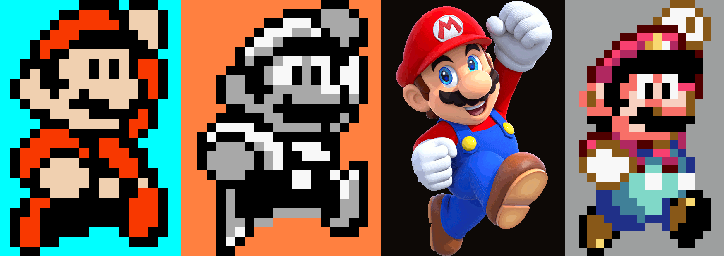
Pop quiz! Which of the following are 8-bit images?
Please excuse the fact that these aren’t in chronological order.
Believe it or not, only the second one from the right is 8-bit. “B-but, but the NES and the Gameboy were both 8-bit systems!” you say. Yes, well, maybe it’s time we actually examine what exactly “8-bit” means.
In Computer Imagery
Let’s start with what bits mean for pictures. There are two basic ways of composing pictures: color channels and indexing. In a picture that uses color channels, each color is represented by a mixture of primary colors with each primary color composing one of the image’s color channels. These colors are red, green, blue, and sometimes an additional “alpha” channel that represents opacity (i.e. how much you can’t see through it). Every pixel in the image is a combination of these channels.
The number of bits dedicated to each pixel is known as the image’s color depth. As you may know, bits are binary digits, hence the name (binary digit). Because of this, every sequence of bits can represent 2n values (where n is the number of bits used). That means an image with a color depth of three—which is to say one bit per channel—can have two shades of red (fully black and fully red), two shades of green, and two shades of blue, which combine for a total of eight (23) colors. In today’s day and age, most images either have a color depth of 24 for plain R.G.B. or 32 for R.G.B.A., dedicating eight bits (one byte) to each color channel. That means R.G.B. images these days can contain up to 16,777,216 colors. Any more than a byte per color channel results in diminishing returns.
The number of bits dedicated to each pixel is known as the image’s color depth.
As you can imagine, three bytes per pixel adds up quickly on a console that only has 2 kilobytes of video R.A.M. While it’s easy to forget in this age where most computers typically have four to sixteen gigabytes of R.A.M. and terabytes of storage, space—both memory and long-term storage—was a valuable commodity back in the 80’s and 90’s. That’s where color indexing comes into play. Instead of storing color values per pixel, indexed images have a set of color values stored in a lookup table (i.e. the palette) with each pixel being represented by a single number that refers back to a position in the lookup table. For instance, if the color in position 5 of the table is red, then every pixel with the value 5 will be displayed as red. While this would limit the number of colors in an 8-bit image to 256, that’s 256 out of any of the thousands or millions of 16-bit or 24-bit colors available.
So, knowing this, where does this leave the NES’s graphics? An NES sprite consists of four colors, three visible and one transparent. That makes NES sprites 2-bit sprites. Don’t look at me like that, it’s the truth!
Now I’m sure some of you are thinking, “well, just because the sprites are only 2-bit doesn’t mean NES graphics aren’t 8-bit. The NES could produce way more than four colors at a time!” Okay, while we’re stretching terms a bit (or more accurately, crumpling them up and chucking them into the fireplace), I’ll be generous. The NES used the YpbPr palette, which consisted of 64 colors. So if we were to hypothetically classify the NES’s graphics in regards to the total number of colors available, that would mean the NES has 6-bit graphics. To add insult to injury, only 54 of the colors are useful, as many of them are identical shades of black. That said, the NES did include an additional three tinting bits (one for each primary color). While this increases the theoretical number of colors to 432, the tint is applied globally, meaning all sprites and tiles on screen were tinted at the same time. So, in actuality, it really just had 8 sets of 54 colors. What are we at now, 9-bits?
All 64 colors the NES could produce prior to tinting.
What Does 8-Bit Really Mean Then?
So why is it we call sprites from the NES “8-bit” when they’re actually 2/6/9-bit? Simple, they were from games released on an 8-bit console. Of course, that begs the question: “what’s it mean when we say a console is 8-bit?” The number of bits ascribed to a console refers to its central processing unit. The NES used a Ricoh 2A03 processor (or its counterpart the 2A07, used in P.A.L. consoles), which is an 8-bit processor.
The CPU of the Nintendo Entertainment System.
So what’s makes an 8-bit processor an 8-bit processor? When someone says a processor is “X-bits”, they are referring to the processor’s word size. In computer science, the term word refers to the standard computational unit of a machine. That means an 8-bit processor has a word that’s eight bits long, which in turn means that the C.P.U. processes eight bits in one operation.
My System Has More Bits Than Yours!
Just how important is a system’s word size? These days, manufacturers don’t even mention their consoles’ word size, but back in the 80’s and 90’s, it was a major part of a platform’s marketing. The logic was if a system had a 16-bit C.P.U., it could process twice as much data as a console that only had an 8-bit C.P.U., right? Unfortunately, the reality isn’t that simple.
While technically a 16-bit C.P.U. processes twice as much data bit-wise as an 8-bit C.P.U. per calculation, we need to keep in mind what that data is actually representing. Consider the following binary numbers:
00011001
00000000 00011001
Both the 8-bit value and the 16-bit value equal 25, with each representing the contents of one word for an 8-bit and a 16-bit system, respectively. Notice how they appear identical save for the number of leading zeros? Words can be thought of like boxes: if the number placed inside is smaller than the box, then the excess space is filled with packing peanuts… or, zeros. This way, the processor doesn’t have to worry about how long the number’s binary representation is and instead just performs whatever calculations are needed on the entire word. All of that is to say that unless the calculation in question requires numbers that exceed the maximum value that can be represented with the number of bits in the system’s C.P.U., there isn’t actually any speed boost.
That said, when the largest number you can handle at one time is 255, those extra-bits really do make a difference, so maybe the 8-bit and 16-bit divide isn’t the best example.
In the end, the reason we call sprites from NES games “8-bit” isn’t because the graphics themselves are 8-bit, but because of a sort of linguistic cross-contamination. The systems of the 80’s and 90’s were advertised by exploiting consumer ignorance to turn technical terms into marketing buzzwords, resulting in the systems having much of their identity tied to these terms. Because of that, anything associated with the consoles from that era is going to be collectively referred to by the one unifying descriptor available: 8, 16, 32, or even 64-bit. In the end, it’s ultimately harmless; these terms have an understood meaning and are thus perfectly descriptive in the context in which they’re used. Really, the only real confusion this causes is that I’m somehow okay with it; normally I’m the type go on a long rant whenever anyone says “Ethernet cable” when they really mean “Cat-5”.
Today, I endeavor to discover which Nintendo character I identify with. I hope to find the perfect match, one that resonates and rings true. Without further ado…
Mario
I don’t think so. Mario is more like a father figure than an equal. He’s very sporty and multi-talented, which is in contrast to my narrow set of specialized skills. He wears loud clothing (especially in Super Mario Odyssey) and is a brave hero that throws himself into danger without a plan. All around: no. Not at all.
Link
Hyrule’s silent protagonist is a more likely match. He doesn’t waste any breath, which I appreciate, and he is guided by a strong sense of loyalty. Link always tries to do the right thing, and once he has found a noble cause, he applies himself and sees it through. These are all personality traits that I admire and (at least attempt to) share. However, Link is also quite the outdoorsy fellow, and can often be found traversing planes on horseback or scaling imposing mountains. He’s probably too adventurous to be considered my analog.
Donkey Kong
This big brown brute is way too strong to resemble me. He’s bigger, faster, and stronger, too, after all. I am none of those things.
DK is also easily pleased. All he needs is a pile of bananas to be content. First of all, I hate bananas because they make my mouth itchy. Second, I’m not in touch with the “simple pleasures” of life. I require technology, innovation, and the cutting edge. I wouldn’t no what to do with a stack of fruit in the jungle. Donkey kong can keep his lifestyle and I’ll keep mine, thank you very much!
Samus
Another strong contender, because like Link, Samus doesn’t say a whole lot. This is pleasing to my introverted tendencies. We’re both completely happy with alone time; in fact, this bounty hunter pretty much blasts anything alive until it stops moving. She doesn’t spend a lot of time outdoors, and she’s on top of the latest tech. I think we’d get along well.
There’s a pretty big difference that separates us, though. Samus is compassionate, and when push comes to shove, she lets even the most vicious creatures live when it means that their race will be spared. I don’t share that same level of empathy, unfortunately. But she’s currently leading the pack!
Captain Falcon
Captain Falcon enjoys everything I don’t; cars, speeding, rivalries, working out, yelling loudly, taunting people, wearing skin-tight unitards, and I could go on. Suffice it to say: FALCON NO!
Kirby
While I do enjoy eating a lot of food, the similarities end there. I am not round, cute, smiley, or cuddly, and I don’t look like a girl.
Tom Nook
Okay, this is a possibility. I do have an affinity for money, and I enjoy some aspects of business and entrepreneurship. But I hope I don’t match this raccoon’s level of greed, because he’s gone so far as to break child labor laws and employ underage animals at his store. He’s also after your real life $ bills now in Animal Crossing: Pocket Camp. Please tell me that I am not like Tom Nook.
Captain Olimar
He traverses alien planets and commands little living plants around all day (until the annoying timer runs out). I don’t think I’ve ever done anything like this.
Fox McCloud
I’m running out of options here, but Fox is promising. He also likes technology, leads a team, accepts missions and gets them done, etc. He’s got this huge amount of self-confidence and determination though, that I’m not sure I measure up to. Fox also spent a long leg of his life outside the cockpit, galavanting around Dinosaur Planet and acting like a low-rent hero of Hyrule.
However, there was one man (bird) that refused to leave the cockpit…
This guy knows what up. He prefers the air, and that’s where he stays (when he’s not shooting people up in Assault or smacking them silly in Smash Bros.). He has a narrow but deep skillset and can always be relied upon for bombs. He has a quick wit and isn’t afraid to crack a joke even in the face of danger. He appears cold on the outside, but deep down he cares for his friends and is always bummed when they get shot out of the sky. Falco is a loyal, skilled, sarcastic and cool wingman. I am Falco Lombardi!
It’s hard to resist. When a Nintendo Direct leak or rumor starts circulating, the wish-lists and pie in the sky dreams quickly follow.
Over-hyping a Direct is just asking to be ran over by the hype-train.
How often have you felt that crushing disappointment when your favorite obscure series didn’t get a sequel out of nowhere, or when Nintendo didn’t suddenly adopt Xbox Live and rebrand it?
Here’s the key to contentment as a Nintendo fan: “I will wait patiently for the next Nintendo Direct, and I will keep an open mind. I will probably be interested in a few of the announcements, other games won’t be for me, and I’ll have hopes leftover for next time.”
Since Nintendo launched Switch in March, they’ve quickly built out the library with solid 1st party hits.
Select 3rd parties, and a swath of independent developers, have also been instrumental in filling out the gaps.
From Legend of Zelda: Breath of the Wild to Super Mario Odyssey, one can’t help but be impressed with how this hardware’s first year has been supported by stellar software.
For the first time in many years, consumers are actually starting to say “there are just too many good games. I wish they would delay some of these.”
Who can possibly manage to play Odyssey, Skyrim, and Xenoblade all back-to-back?
What’s more, how will Nintendo maintain this breakneck development pace?
Here’s the important factor to keep in mind: Switch has a team of software designers about twice the size that Wii U had. Where did all these extra developers come from?
Well, Nintendo merged the 3DS and Wii U departments together shortly after R&D on Switch began, bringing home and portable development under one roof.
3DS is seeing it’s last days as more and more resources are allocated to developing new experiences on Nintendo’s hybrid console. And they’re selling like crazy.
I expect the manic pace to continue for the foreseeable future. It won’t be a gigantic new title like Super Mario Odyssey dropping each month, but I could see twelve releases spread over a year like so:
1 party game (people must be getting tired of 1-2-Switch, right?)
1 crazy announcement no one could ever predict
And that’s twelve games right there. As you can see, it’s totally doable for the Big N to publish something every 4-5 weeks.
The only question remains: can our wallets and schedules keep up with the runaway hype-train?
The Switch is not as expensive as most outlets are making it out to be. Far too many sites are claiming that the Switch has a ton of hidden fees and will end up costing you over $700 which is totally ludicrous and completely untrue.
The Switch is $299.99 (in the US). Period.
Just because the system is launching with a ton of add-ons and accessories does not mean the price of the system is increased. All of the extras are completely optional. Do you want a Pro Controller? Cool! Buy one! Don’t need an extra dock? Okay, don’t get it. It’s not a tacked on price that’s required by Nintendo that you purchase every available accessory at launch. Not to mention you can play 2-player games right out of the box at no additional cost thanks to the versatility of the Joy-Con.
An argument could be made that the system is actually $359.98, because what is the system without any games? That’s an expected cost though, not a hidden cost. I’m sick of gaming journalists trying to get clicks to their content by making up shocking headlines or articles. While all of this info may be painfully obvious to some, I wanted to educate the few that may not know to help save your wallets.
The cost of all your Switch launch day goodies can add up extremely fast, so make sure you need certain accessories before pulling the trigger and getting a bunch of things you’ll never need.
This has been your dose of financial advice from someone who has no business telling you how to manage your finances.
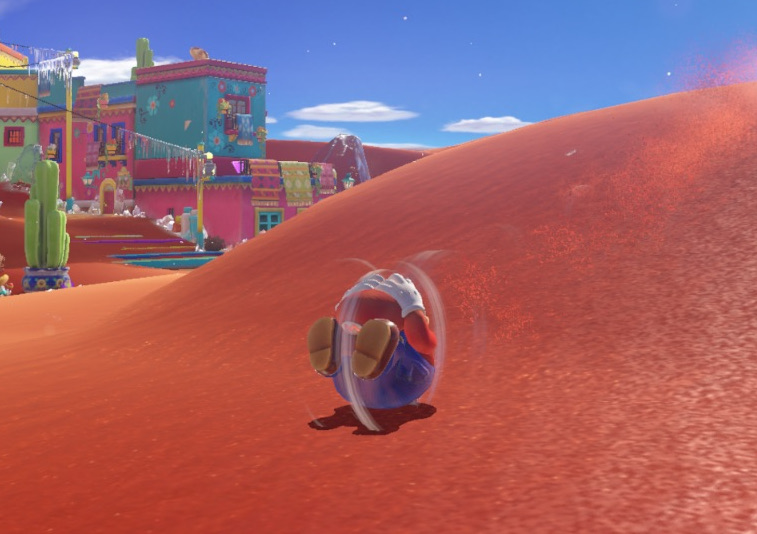
Super Mario Odyssey is out and—surprise, surprise—it’s good. As expected, Mario’s as athletic as ever, with a myriad of moves and abilities that not only elevate his already impressive jumping skills but greatly extend his lateral movement options, as well. One of my personal favorites is Mario’s new ability that allows him to curl up into a ball and roll along the ground like some sort of armadillo or hedgehog or something. It’s like some sort of…spinning dash!
Mario doing his best tumbleweed impression.
Wait a second…Great Gunpei’s Ghost! Super Mario Odyssey is the best 3D Sonic game ever!
Between the rolling technique and how Mario can preserve his speed through precise platforming, there are portions of Super Mario Odyssey that feel like the classic, momentum-based 2D Sonic gameplay in three dimensions. This is especially noticeable in timed segments such as the Koopa free-running missions where obtaining and maintaining Mario’s forward momentum by achieving fluidity of motion is essential. Much like classic Sonic, Super Mario Odyssey has a great sense of flow, which is something most 3D Mario titles can’t really boast.
There are portions of Super Mario Odyssey that feel like the classic, momentum-based 2D Sonic gameplay in three dimensions.
What is Momentum?
Okay, so before we can understand how Super Mario Odyssey achieves such an excellent sense of flow, we need to know what momentum is. In physics, momentum is the product of an object’s velocity and mass. In terms of video games, this means games that feature momentum-based mechanics have a few elements:
The protagonist has mass.
Mass implies the character has inertia.
Inertia implies the character does not instantly accelerate and the character does not instantly decelerate. Moreover, the greater an object’s momentum, the more difficult it is to alter its course.
Some games that exhibit these traits:
Asteroids: One of the earliest examples of momentum-based mechanics. The player’s ship does not accelerate instantly, but gradually, and continues to move even after the player has stopped using the ship’s thrusters. Moreover, altering the path of the ship requires substantial effort at high speeds.
Super Mario Bros.: Mario accelerates quickly, but not instantaneously. He either jogs to a stop if he is running too fast or skids to a halt when trying to change direction.
Sonic the Hedgehog: Sonic carries a lot of inertia. He accelerates slowly and must either skid to a halt or let his momentum slowly peter out.
Momentum as a Resource
In platformers like Mario and Sonic, the majority of the game’s challenge comes from executing precise acrobatics to navigate through the game’s various stages and their respective perils. Not only does the inclusion of momentum-based mechanics give the characters a satisfying sense of weight, but it adds an extra element of challenge. Because the character doesn’t move at top speed right away, building enough momentum to cross large gaps, find secrets, and ultimately complete the stage is an integral part of the game’s challenge.
So basically, in games that utilize momentum and inertia as mechanics, momentum is not only useful, but also—to some extent—scarce. This essentially makes it another kind of resource to be managed, much like health, ammo, or money. If you don’t mind the forced metaphor (all for the sake of a really cool, if not somewhat pretentious sounding, title), momentum is the currency of movement in Mario, Sonic, and similar games.
Essentially, momentum is another kind of resource to be managed.
Running with the fiscal metaphor, the value of this currency is different depending on the game: in Mario games, for instance, momentum is less critical in most situations than it is in Sonic games. That’s not to mention Sonic’s slightly slower acceleration and worse traction means manipulating his momentum takes more effort without the aid of outside forces or Sonic’s signature spin-dash—producing a greater scarcity of the desired momentum. This means that the plumber’s economy of motion has a higher saturation of momentum that has less demand than the hedgehog’s momentum, thus Mario’s momentum is generally less valuable by comparison.
Flow
With all of that out of the way, I can start unpacking what I meant by Mario Odyssey’s sense of flow. Flow—for the sake of this discussion, at least—means the smooth transition from one state of motion to another. Flow is important to games, even those that don’t heavily utilize momentum-based mechanics, though not in the way you’d think. People typically like flow, so when the player character takes damage, their flow is interrupted. This brief moment in which the player loses control and their character’s momentum suddenly shifts subconsciously communicates to the player that they’ve made a mistake.
Flow is the smooth transition from one state of motion to another.
This is why it’s typically not advisable to interrupt the game’s flow for something positive. Mario is a bit odd about this as many games do pause momentarily when the player snags a power-up, but the fact that the player’s momentum isn’t lost and instead continues a half second later may have something to do with why it’s not typically seen as an issue. But that’s really a minor nit-pick compared to the plumber’s more egregious violation of these principles: most notably the star-spin from Super Mario Galaxy and its sequel. Mario’s momentum completely stops as he lifts a short distance upward, leaving him with little ability to steer himself. This is awkward when combined with normal jumps, but it completely breaks any sort of flow when Mario is using a technique like the long jump. Mario goes from flying forward to barely having any lateral movement what-so-ever; it feels like running head-first into a wall, to be honest.
At first glance, these two moves seem similar, but they’re very different in practice.
Super Mario Odyssey does away with this in two ways. First of all, Mario doesn’t lose much—if any—forward momentum when throwing Cappy. Secondly, Mario can immediately launch himself forward with his jumping dive maneuver. Between these two factors, it’s possible for a skilled player to utilize Cappy as jump-assistance without losing his forward momentum. As mentioned in this article’s introduction, this is used to great effect in the game’s timed missions and Koopa races, where Mario has to build up speed using the rolling maneuver and then hold onto to it through precise platforming and clever use of his aerial repertoire.
While Mario Odyssey is by no means a perfect game, the controls and Mario’s own acrobatic aptitude are spot on. In true Mario fashion, the mere act of moving is fun, especially when you get into a good rhythm and can bound across the game’s colorful locales uninterrupted. It’s also interesting to see Mario take a page from Sonic’s playbook and adopt a rolling maneuver that allows him to travel faster than he can on foot at the cost of control. Hopefully someone at Sega is paying attention, because that’s an idea worth stealing back!
P.S. In case you’re wondering, this is the actual greatest 3D Sonic game ever.
The Legend of Zelda: Breath of the Wild has been out for a month and a half now and I still haven’t beaten it. That’s because after 70 hours I’m intentionally not finishing it quite yet as I don’t want this amazing experience to end. Even now, before experiencing the end-game, I have to wonder: how in the world will Nintendo follow up this masterpiece?
Dungeons
The few main dungeons BotW does have are really good and unique, but their lack of themes that we’re used to combined with overall length of dungeons is something that could be improved upon. Majora’s Mask and Wind Waker both had fewer dungeons than your average Zelda, but thy had more character and intricacy. This is a common thing I’ve heard from fans, and I expect Nintendo to step up the dungeon game in Link’s next open-air outing.
Weapons
I love the wide variety of weapons available, but they don’t last quite long enough. I appreciate the fact that it forces you to use different weapons and switch up your playstyle, but if I find a really great weapon it’s always so hard for me to use it as I don’t want it to break. I hope weapons continue to break in future games as well, but once you leave the beginning area of the game the weapons should last much longer.
Items/Abilities
You get all of your key ways of traversing and puzzle solving before you leave the tutorial area this time around. Once again, Nintendo did the right thing for this game by giving all control over to the player. Next time traditional items such as the Grappling Hook, Mole Mits and Ball & Chain make could a return while still giving the player freedom. The way they could do this is color code the key items, and the entrance to certain dungeons and mini-dungeons that require certain items will be color coded (think colored doors in Metroid). The players can still explore how they want, but will have to leave areas for later once they collect the right items.
Nintendo has already said that Link will continue his adventures in an open-air Hyrule, so here’s hoping they can change up a few little things that will make a huge difference in the future. Until then I’ll have to finish Breath of the Wild… someday.
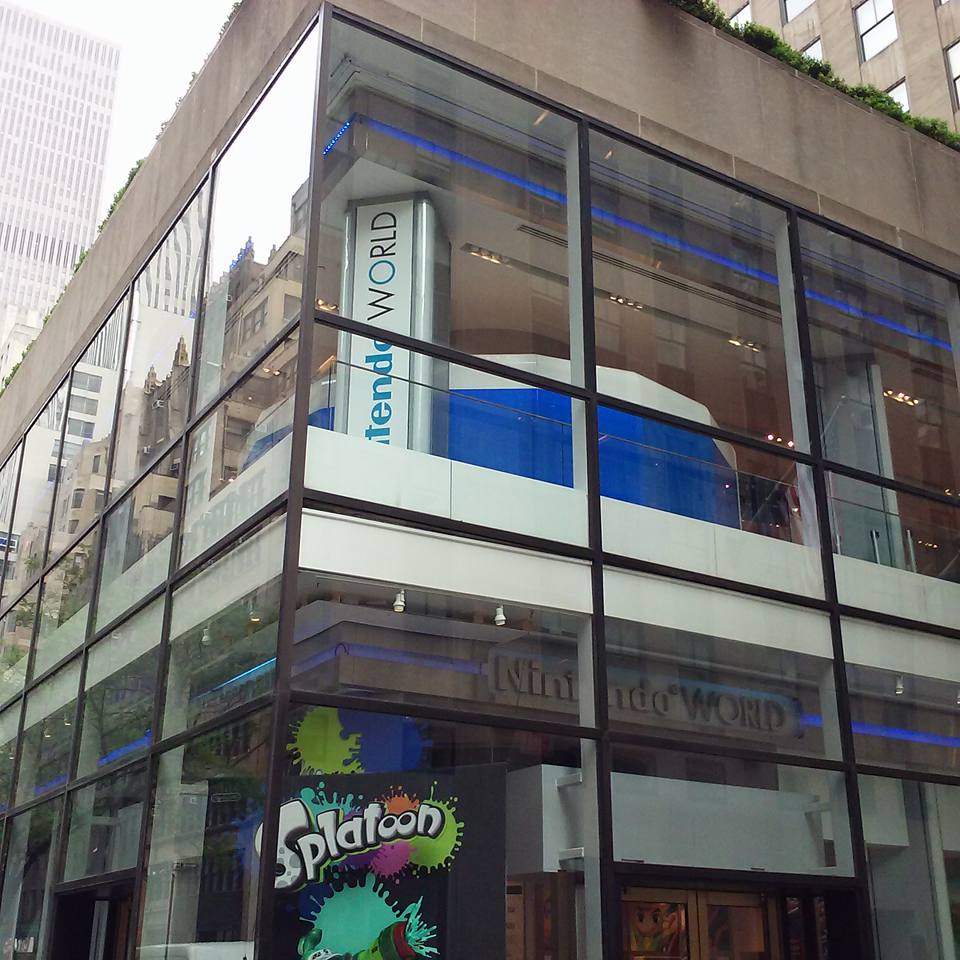
For many Nintendo fans, it is something of a rite of passage to visit the company’s only retail store in New York City. And when I mean “only”, I really mean it. The New York City store is the only retail storefront open to the public for Nintendo fans in the entire world. Every year, thousands of fans make the trek to the Big Apple to visit it. Why?
Because It’s Special
Nintendo New York (formerly known as the Nintendo World Store) is located in Rockefeller Plaza in the heart of the city. Before it transformed into a general Nintendo store, it was a Pokémon Center. For years, fans have made the drive or flight to visit the store. Sure, many come to New York for many other reasons, but stopping here is always a highlight. Some people, like myself, made the trip from Indiana specifically to go to the store, with other activities planned around it.
The store’s footprint is small… but it’s two stories, so the square footage is pretty sizable in the end. But the moment you walk in, you are in instant awe. Besides the eye-popping merchandise that smacks you in the face, the atmosphere and decorations just make you feel good.
Being the only Nintendo store in existence makes it special. It would still be special if others were to open up – which is what some fans are hoping for with the aforementioned renaming from Nintendo “World” Store to Nintendo “New York”. As it stands now, with only one store, it literally is akin to going to an amusement park, and you will look back on your visit there as fondly as if you had been to one.
Because It’s Fun
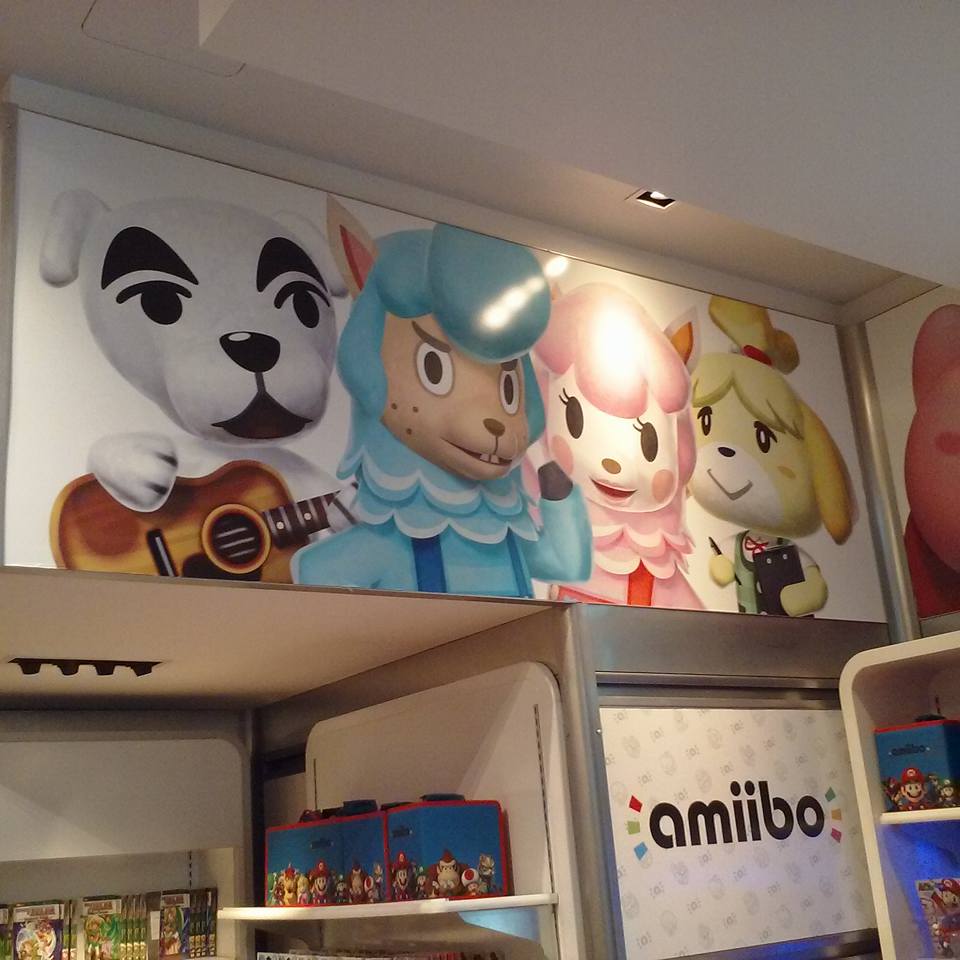
The Nintendo New York store is like nothing else. It is the hub of Nintendo goodness – one that you don’t even get when visiting the employees-only headquarters in Redmond, Washington, which I did when living in Seattle. If you are a longtime fan like myself, you will spend about a full minute just standing in the doorway with your mouth agape like I did. It is an amazing sight. The store just has a happy vibe to it – a Nintendo vibe, if you will. You are surrounded by beloved Nintendo characters, demo units, games, clothing and more. Much of the merchandise sold here is exclusive to the store. My traveling companion went wild in here when we went – she spent $471 before tax on plushies, T-Shirts, bags and more.
The store regularly holds fun launch events for major games. I was there in May of 2015, the day before the launch of the Wii U game Splatoon, and there was already a long line that stretched down the block in what would be almost 24 hours before the store opened on release day. They make game launches a huge deal with lots of fun, special guests, real life games and contests: they even held a mock fashion show for Style Savvy: Fashion Forward for instance. The pictures that accompany this post are from that time, and the interior has changed since the 2016 remodel.
On the second level you will find a small “museum” section. I believe they change them out every so often, but when I was there they had a section dedicated to the history of The Legend of Zelda with every imaginable game, manual, special edition console and accessories in a three section display case. In front of it was a “History of Nintendo Handhelds” exhibit with every portable console on display – even the obscure ones like the Game Boy Light (previously for sale only in Japan) and the Game Boy Micro. There were also a small aisle with individual cases for each of Nintendo’s home consoles from the NES to the Wii U.
The store is just flat out fun. It is fun to be in. I was in there for three full hours from 9am to just after noon, and it felt like I wasn’t there long enough. It’s a store that invites you to play and have fun, and celebrate Nintendo’s rich history without ever feeling too self-congratulatory. There is no Tom Nook stalking you around to pressure you to spend your bells on anything – you are free to be there as long as you want.
Because You Belong
Going to the store is not unlike going to a convention – everyone in there is a huge Nintendo fanatic, and it feels good to be around them. Your mileage may vary, but sometimes for me, it is tough to admit I am a Nintendo fan among my other gaming friends who specialize in Halo and Call of Duty. Nintendo is looked at as a console for kiddies, despite it being the original home to some of the best M-rated games ever like Eternal Darkness, the Resident Evil remake and Resident Evil 4. Admittedly, Nintendo has lagged behind in sheer hardware power for three console generations now, beginning with the Wii, then Wii U and now the Switch. But the draw of the Switch is its hybrid format of being a portable and a home console. I won’t talk about how awesome that is because if you like Nintendo, you are probably already aware.
But when you walk into Nintendo New York, you feel like you belong. No one will laugh at you for preferring Animal Crossing to Battlefield, or you spent over 100 hours playing Mario Kart 8 Deluxe instead of organizing your Destiny clan. And just like going to a Comic-Con, you don’t have to be ashamed of your preferences. The store encourages you to have fun and enjoy yourself, and there is no better place to do it than surrounded by Mushroom Kingdom pipe decorations and giant Bowser statues.
Because It’s the Happiest Place on Earth
Forget Disneyland. The Nintendo New York store is the happiest place on Earth. For all of the reasons I mentioned above – but the bottom line is that it is just fun. It’s like an amusement park without the lines (unless, of course, you are there for a game launch event). The employees are friendly. The shoppers are friendly. The music is friendly. The plushies are all smiling at you, and not in a creepy, Five Nights at Freddy’s way. It is an excuse for kids to be kids, and for adults to be kids again too, because it’s impossible not to become awash in memories of your own childhood when in the store and seeing everything they have to offer.
Eric “Flapjack” Ashley has been a Nintendo fan for almost his entire life! While he also has a special place in his heart for Sega, it is Nintendo that gets him worked up and the franchises that capture his imagination and wonder. Flapjack is hopelessly in love with Animal Crossing. When he is not playing video games, he is a social media guru, assisting numerous organizations with their outreach and promotions, and he is also a big horror movie buff. Follow him on Twitter and Instagram: @flapjackashley.
Something especially cool happened at E3 2017. If you only watched Nintendo’s press conference, you missed it.
Shigeru Miyamoto came out on stage and promoted Mario + Rabbids. But even Miyamoto-san wasn’t the star of that show; Davide Soliani stole the spotlight.
Davide was the lead on developing Mario’s crossover with the Raving Rabbids. As you’ll remember, his passion project got leaked onto the internet and was met with a collective “huh?” from gamers.
It was a demoralizing period for his team, having poured months and months into crafting the perfect crossover that no one knew they wanted. The premature announcement was met with uncertainty.
The team pressed onward, through the disappointing turn of events, and made it to E3 where Kingdom Battle had its proper announcement and another shot at recognition. Nintendo lent Miyamoto for Ubisoft’s stage, as well as dedicated a slot of time in their Treehouse stream to showcase the game.
Sentiment around the game started to turn, but nothing so critical happened as when the camera at Ubisoft’s press conference focused in on Davide.
The developer had given Miyamoto the honor of introducing his game on stage, but Miyamoto turned the praise back to Davide and the crowd got to watch his reaction as tears streamed down his face.
The French game designer was overcome with emotion as his sweat equity had finally culminated in a finished product. But most every developer experiences that sensation. Davide also had the unique opportunity of getting to work with an industry idol, and partner with Nintendo on their own property. To see Miyamoto himself introduce a game that he had conceptualized brought him to tears.
“Don’t cry Ubisoft man” became a meme, a tee-shirt, and a rallying cry for those who wanted to show their support for Ubisoft’s crazy mash-up and the people responsible for creating it.
Sometimes, gamers just need a small reminder that humans create the software. Behind every work is a team of individuals with families, needs, and dreams.
For Davide’s sake, and those like him, measure your tone carefully when offering criticism online. The status quo is harsh, and it takes more effort to be constructive. Go the extra mile.
Sequels typically have one of three purposes. They are either meant to continue a story, to make a game more “current” or sensible to modern trends (we see this often with fighting games), or to simply improve the original. Usually, a combination of those three purposes can be seen when a sequel is announced with new features or characters to make you want to buy the next edition; I mean, if it were the same game, or an intentionally worse game, there would be little motivation to purchase it. Sometimes, the sequel is different enough to motivate us to return to it regularly, whether that be for the story, level design, or some other reason. For many games, though, especially in competitive series, when a sequel is released the previous title is abandoned almost completely. I find it helpful, occasionally to return to the oft-inferior predecessors to see just how far we have come and maybe appreciate something we lost along the way to where we are now.
Today, I will be comparing Mario Kart 8 Deluxe on Switch to Super Mario Kart for SNES. It is handy that Nintendo has just re-released the latter via SNES Classic, so if you want to experience the difference that 20+ years makes to a sequel, Nintendo has made it easier (as long as you can get your hands on one)! There are so many ways in which the series has improved, but I would like to focus on the ways that the original has some advantages over the most recent entry. Also note, some of these features are shared by other entries in the series but were phased out at some point along the way.
1. Simplicity
I know that “simplicity” is my fancy word for “fewer features”, but hear me out. When you boot up Mario Kart 8, you are greeted with a host of options and customization possibilities which the game may or may not explain to you. Yes, the options may seem primitive, and MK8D has its own options to make it easier for newcomers, but it is still a lot to process when you first boot it up.
With SMK, there are eight characters, each with their own attributes. No need to worry about whether the kart choice is the best or whether your tires are giving you the best advantage. Each character is a little different. Mario and Luigi are well-rounded, while Bowser takes it slower but has much more control. It makes it easy for someone who has never played to pick up a controller and not have to worry about harming their chances with a customization choice.
2: “Retry” button
Flow is important in multiplayer games. You want to keep the action quickly moving with few interruptions. In MK8D you first have to set the number of races in each set, which means you have a definite start and end to the set. After those races, the game kicks you out to the main menu and you start over again. In SMK, unless you decide to play a cup, the game sets you loose to play as many races as you want in a row, only keeping an overall win counter.
When my wife and I play Mario Kart, we often find ourselves wanting a rematch on the same track. MK8D kicks you back to the track select screen each time (a product of setting the number of races you play), whereas SMK gives you the option for an immediate replay without any loading time. I know this seems like a nit-pick, but having to go back through a menu when you want a quick rematch takes you out of the experience a little bit.
3: Donkey Kong Jr.
It has been a while since this little guy has been swept under the rug. A forgotten relic of a bygone era. Rest in peace, little buddy.
4: The Feather
Now, I know the feather is present in MK8D, but they removed it from the racing mode, which took away much of its usefulness. Need to make a shortcut? Use a feather. Need to cut a corner especially tight? Use a feather. Need to get out of the way of a red shell? … Well, that leads into my next point.
5: Dodging
Items are kind of the bane of my existence in MK8D. If someone hurls a red shell at you (unless you have properly-placed protection, of course), it will hit you. It will snake around just about every corner and object, break all speed barriers, and it will hit you. In SMK, as long as you are paying attention, you can duck around a corner to outsmart it. You can fly into the air using a feather, because, as it should be, shells stay on the ground. Also, if you are especially skilled (or lucky), you can place a well-timed hop to dodge a shell on its way toward you. The newest entry removes just about any skill element to this dynamic. Your fate is sealed.
6: NO BLUE SHELL
Ever been bumping along in first place, no one is around, you are having the lap of a lifetime. Then, the dinging starts. You know what that means…
When the Blue Shell is coming for you.
The blue shell is on its way to ruin your day. Now, I do want to point out two things. One, the blue shell was implemented to give everyone a chance at winning a race. But does that mean the blue shell should be as common as it is? Perhaps once every third race is more appropriate (as more of a “Hail Mary” than an “Oh, I’ll just wait till whoever is in last throws one”). Second, MK8 did introduce the “boom box” (I honestly do not care what its actual name is) to give the assaultee a possible defensive mechanism. These seem to be more rare than the blue shells, though.
Super Mario Kart, if I am not mistaken, is the only game in the series without the blue shell. This means that not only is the game kind to beginners (keeping the options simple so they can jump in right away), but it also rewards the skill of experienced players without punishing them for their hard work.
Mario Kart 8 Deluxe is a great game to play, and I recommend it if you have not yet picked it up. Sometimes we fail to appreciate the features we have lost along the way, though, and I am glad we will always have the classics.
No, the Switch isn’t even on the market yet. (So close!)
Yes, I’m already looking ahead to what’s next.
I want to put a prediction down, timestamped and dated, so that I can say “I told you so!” when it turns out to be true.
Let’s start with the facts before we get into prediction territory (plus I want to keep you in suspense a little while longer.
Many aspects of the Switch were “leaked” by patent sleuths who were keeping an eye on what Nintendo was filing.
At the end of one particular and very long series of patents, we find this:
Ladies and gentleman, that there is a Nintendo Switch Virtual Reality (VR) patent filing!
Were this patent to become a product, its usage would be fairly simple: strap on the headset, slide the Switch tablet into the slot, and play! Individual Joy-Con would be perfect controllers for a VR experience, with motion control, analog sticks, and a handful of face and shoulder buttons.
Really, this filing is quite ingenious. But, Nintendo can’t be credited for this implementation of VR – plenty of Samsung and Google devices have been doing this for years. So, why is Nintendo trying to patent it?
I’m not sure about the answer to that question, but it could be that they are filing for protection of the idea of using a home console itself in a VR headset. Or perhaps, only making a headset for the Switch console would infringe this particular patent. I don’t speak the legalese to give a firm answer, but I can certainly deduce the gaming implications of this document.
After this leak occurred, many fans hoped they would see a Virtual Reality segment during the January Switch Presentation. I knew we wouldn’t.
There’s one big problem with making the above patent a real product: the resolution of the screen. For those that own a PS4 already, PlayStation VR is on the lower end of the cost barrier, and that solution provides a 1920×1080 (full HD) display, which could be considered the bare minimum for virtual reality.
With VR, the screen is mounted very close to your eyes. That’s why Oculus Rift and other VR-equipped smartphones have such high pixel density – you don’t want to be distracted by pixels in the screen a few inches away from your face.
This is what would happen if it was done with the current Switch model.
For this reason, I don’t believe we’ll see Nintendo step into the VR market with this iteration of their console… which brings us to my prediction:
I predict: Nintendo will release an upgraded Switch model midway through the console’s lifecycle.
Name: Switch Vision Release Date: Holiday 2020 Resolution: 4k (allowing for 2k to be used on each eye) Headset: Can charge separately, lends extra battery to the tablet Backward Compatibility: Works with all existing games and accessories Exclusive Software: Special VR-enabled games will be produced, 3 main titles from Nintendo (Mario spinoff, Metroid, New IP) SKUs: Purchase the tablet-only for previous Switch owners, or a bundle option for new customers
Can you picture the marketing? Switch Vision – 2020.
The industry is well adjusted to mid-console cycle upgrades. Is this so far-fetched? I don’t believe so, especially with an official patent document showing that Nintendo is at the very least interested in this technology. Of course, many of their patents never see the light of day as finalized products that make it to the market… but…
Should it happen, remember that you heard it here first!
The Wii U was a unique offering. Nintendo rolled the dice, and, to most onlookers, it seems as though they lost. As with most things in life, most people’s trash is one eccentric fan’s treasure. What the Wii U lacked in quantity, it made up for in some unrepeatable experiences.
Now, while it’s difficult to say that a game that has come out less than 10 years ago is a classic, these games are definitely worthy of being inducted into the Nintendo Experience. I already highlighted Nintendo Land. It was the perfect tech demo to show what Wii U was all about: the capabilities of the Game Pad and asymmetrical gameplay. These other inductees were selected not for their individuality, but because of their stand-out excellence in already established franchises.
Super Smash Bros. for Wii U had a lot to prove. There were tons of fans of Melee and were let down by Brawl, and needed be to won back. Some, such as myself, loved Brawl, and doubted that the next entry would top such an amazing game (however flawed). It utterly destroyed any expectations put on it.
I applaud the team that worked on this game, not just for a well-put-together art piece, nor a Nintendo fighting game FINALLY ready for online competition, but also for striving for balance. Balance has been lacking in previous series entries, and while there still seem to be tiers of viability, the array of characters from such a large cast that are seen on the top of leader boards is diverse. The use of patches has been good for the most part (though, why they nerfed Luigi’s throw combos I will never know). For such a huge roster balance is hard to maintain, but this team seems to have kept it.
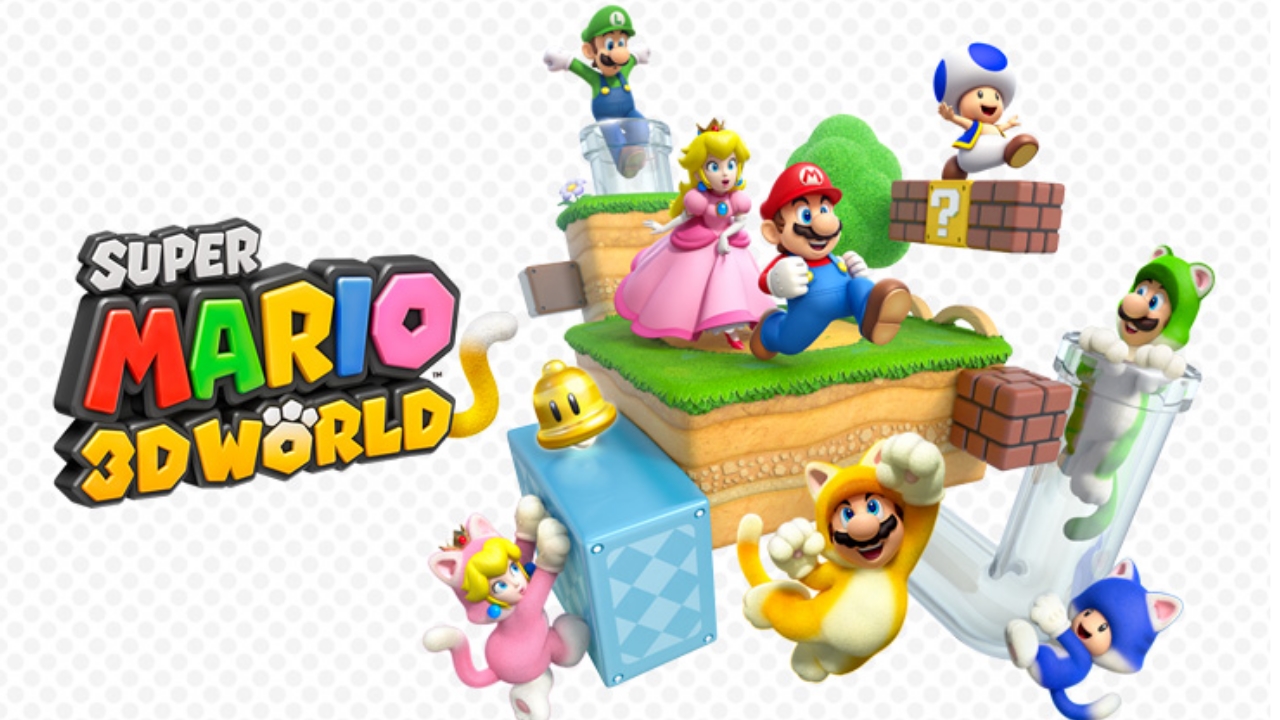
Lastly, I would like to showcase the greatness of Super Mario 3D World. Since Super Mario 64, the 2D and 3D Mario games have been pretty distinct entities. The 3D entries have been more focused on exploring the rich environments while the 2D entries have focused on the classic platforming and fun power-ups. It was fun having the two separate, but now we know, with the right amount of each, they work beautifully together.
That’s it for this month’s Nintendo Experience. If you find yourself without a Switch for awhile, like I do, it’s nice to recognize the amazing experiences we still have at our fingertips.
I expected a port of Super Smash Bros. for Wii U in 2018. Smash development cycles are too long, and we would never get new entries this close together… those were my thoughts entering into the March 8th Nintendo Direct.
I was wrong; it’s a brand new game.
There are still skeptics, or fans who are simply being cautious not to jump to conclusions. But Nintendo laid it out plainly for us:
The game has a working title (not simply “Super Smash Bros. for Switch” in the Smash 4 branding.)
Nintendo chose to forgo the transition used at the beginning of every Smash 4 trailer
SmashBros.com has been completely started over from scratch
The trailer shows only vague outlines of a cast with fewer than 20 characters, not the entire Smash 4 ensemble waiting to welcome the Inklings
It’s really happening. It’s a new console generation, a new Smash Bros. website, a new series of character reveals (who’s staying, who’s leaving, and who’s arriving?)—friends, it’s a new Super Smash Bros. game.
And the cherry on top? 2018.
It seems impossible. How would Nintendo have time to develop a new title from the ground up? The Wii U and 3DS entries only came out during the tail end of 2014.
The answer: The developers probably didn’t start from scratch. For one thing, this new game could very well use the Smash 4 engine. They finally struck the perfect balanced formula that resonated with casual players and eSports alike (not easy), so Sakurai and his team won’t be quick to abandon the engine.
Smash 5 likely won’t launch with a beefy lineup of 50 characters, either. I think the group of brawlers shown in the trailer was deliberately small.
Super Smash Bros. could easily be sold to us as a service. Think of all the popular games these days that add content gradually—the “Splatoon approach,” if you will.
I wouldn’t be surprised to see Smash launch alongside Nintendo’s paid online service in September to help promote the program. I also would not be surprised if Smash, in September, feels like a half a game.
Sakurai could keep the hype train of character reveals steaming along the tracks for—well—years!
P.S. Why didn’t Nintendo save this bombshell announcement for E3? Because it’s going to be the central theme of their booth, and booth decorations are literally impossible to prevent from leaking. We knew about Breath of the Wild and Odyssey before Nintendo decked out their corner of E3 in previous years, and the same will go for Smash this time. The lid is going to be absolutely blown off this game at E3 2018, only months ahead of launch!
Nintendo not only revolutionized the home console market, but time and time again, they’ve proven to be the best in the portable sector of gaming. We’ve already talked about several landmark portable titles for the Nintendo Experience: Pokemon Red and Blue and Pokemon GO. These games shaped the way we game on the go (pun intended), and reached far beyond the game to rock the shape of pop culture. These two games were not an isolated incident, and I would like to showcase two more games that are near and dear to my heart.
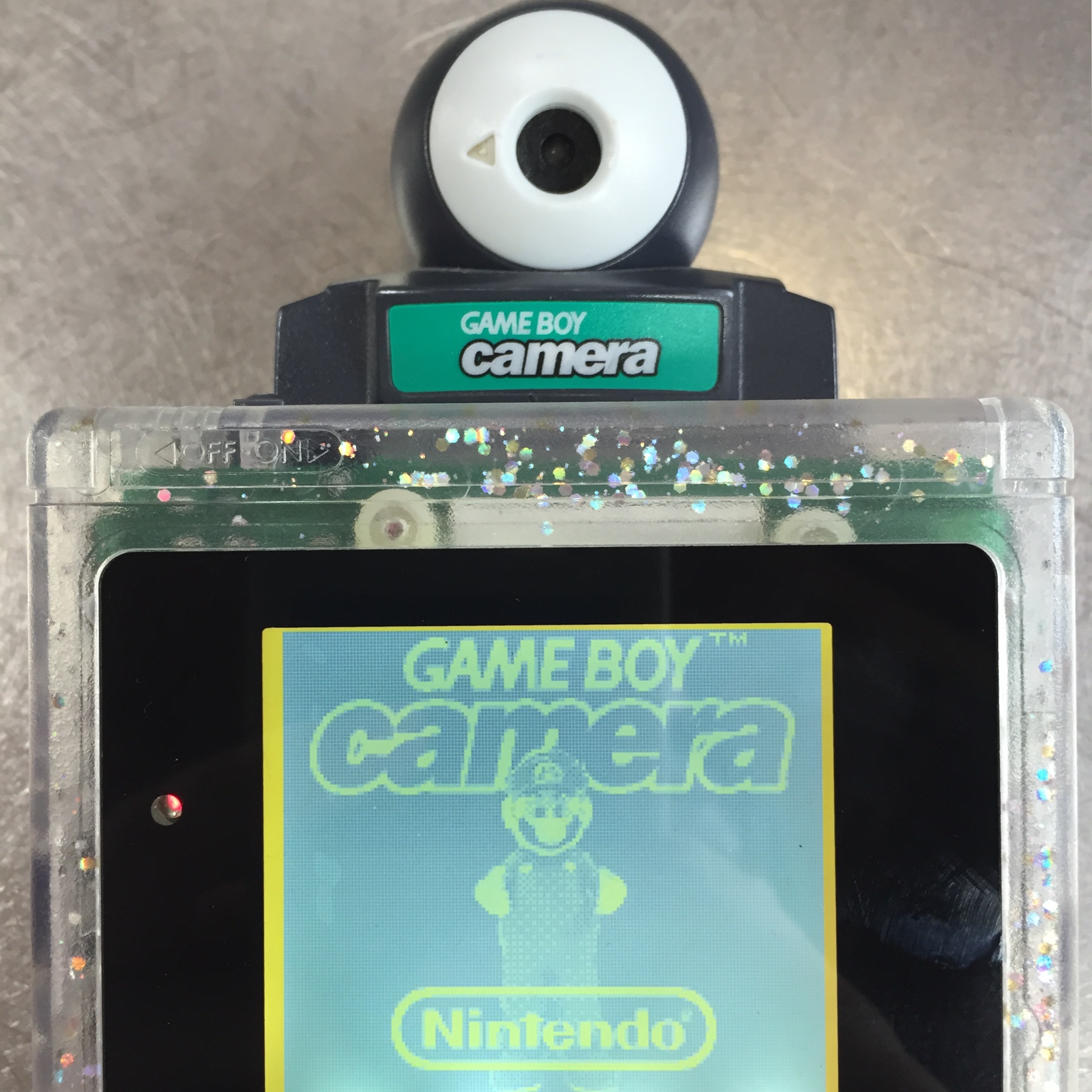
The first is one of the first games I ever owned personally: Game Boy Camera. To many, even those who loved it in its time, the Game Boy Camera is a joke. Compared to what we have at our disposal nowadays, it is. The resolution was bad, everything was in grayscale, the editor was primitive, the memory was limited to 30 photos, and, if you were looking for it to be a game, you would be sorely disappointed.
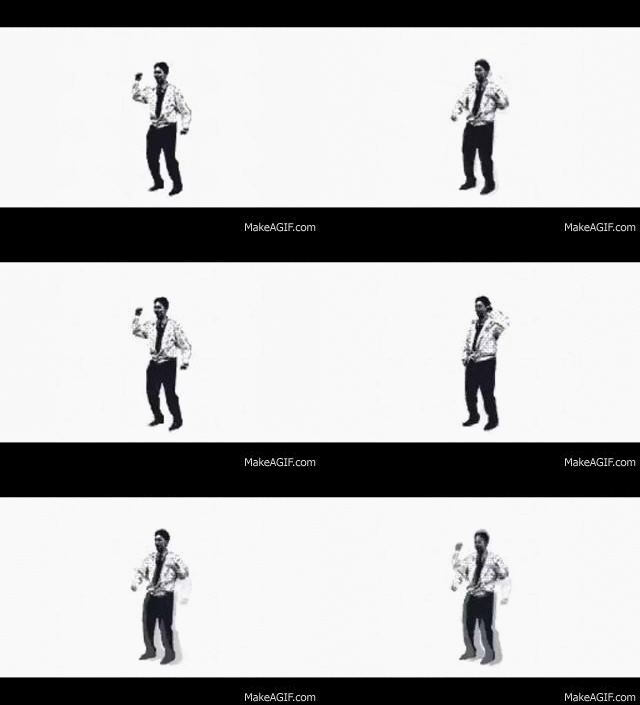
Something I will never forget, however, is reading my brother’s copy of “The Guinness Book of Records 1999” and seeing that this odd-looking Game Boy cart was currently the smallest digital camera in the world! I felt like a spy as a kid! It was a novelty, and there were enough menus in the game to navigate and not use (because I was never able to get my hands on a Game Boy Printer) to keep me occupied for a long time. Also, Miyamoto dancing!
If that’s not revolutionary enough to make it a must-play for Nintendo fans, I don’t know what is.
I think it’s time we talk about the real game-changer: Tetris. Tetris was a system seller, plain and simple. It got everyone who touched it into mobile gaming. It was accessible to people of all walks of life… unless you shun technology… I suppose. It’s simple, easy to pick up, and tough to put down. It is one of the best games ever. That is, until, Nintendo outdid themselves.
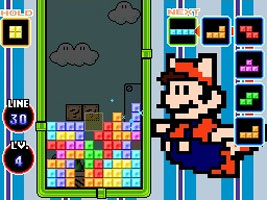
Here’s that 8-bit-“ish” art style that worked so well.
Tetris DS is the best game ever. I mean, Tetris was already the best, but they found a way to improve it. It had all of the puzzling proficiency of its previous iterations, but they made it streamlined. The multiplayer was great, the art style was perfect… What more could you ask for? I consider it the best version of the best game hands down, and I urge you: if you haven’t played it, pick it up. Like, right now. Why are you still reading? Oh, you already have it? Good.
For some time now, fans of Nintendo have debated what should be done about 3DS:
“Just let it die.”
“Leverage the fanbase! Make more exclusives!”
“KILL IT! KILL IT NOW WITH HOLY FIRE!”
In the March 8th Nintendo Direct, the Big N made their intentions clear:
3DS will continue to receive ports and remakes into 2019.
Absolutely perfect for the younger generation who aren’t old enough to have played the originals.
Captain Toad, Sushi Striker, Luigi’s Mansion, Mario & Luigi, not exclusives. All playable elsewhere. It services the install base but doesn’t lock out gamers who have moved on.
The fighter breathed in slowly in the darkened locker room.
His eyes drew to the hallway down which the arena loomed.
He’d trained for this very moment for innumerable days.
He let his breath out slowly as he also dropped his gaze.
His past had come to haunt him; or rather, his father’s did.
It was in the old man’s shadow that up ‘til now he hid.
He rose from the wooden bench as he slammed the locker door.
His mind was clear and focused as he slowly crossed the floor.
His father was a great man; one of the best there’d ever been.
He’d proudly held the people’s flag for years and years on end.
The women and children’s love he kept, the men’s respect he’d earned.
But even a champion’s fire burns out; a lesson he finally learned.
And now his boy had come of age, his turn had come at last
To earn the title for himself, to honor his father’s past.
Any time he’d walk the street the people called his name.
They smiled as they recalled his dad and said “You’ll do the same!”
He heard them calling for him as he traveled down the hall.
His pace was slow and steady as cheers echoed off the walls.
But as he plodded down the corridor that led down to the ring,
The distance to his destination got further, so it seemed.
He started to jog faster ‘til he ran as if he fled.
The image of his father was burned into his head.
As he neared the final door that led to the battleground,
He’d realized he could no longer hear the cheering of the crowd.
He swung the door wide open and he stepped into the light.
Instead of the cheering fans expected he saw a very different sight.
The crowd was filled with anger, spitefulness, and scorn.
The faces that used to smile at him now a scowl wore.
The booing increased with every step as he approached the field.
He looked across at his opponent who rose up from his kneel.
The enemy wore full armor and a horned helmet on his head.
He lifted his oddly-shaped sword. “I’ve looked forward to this”, he said.
The warrior that stood before him was the one who’d succeeded his Pa.
The boy took his battle stance, he set his eyes and jaw.
“I’ll prove them wrong,” he determined, “Today’s my day to shine!”
The crowed fell deadly silent ‘til they heard the air horn whine.
The boy immediately charged the knight, his weapon flashed to life.
The knight was ready for the attack and deflected with his knife.
“Is that all you have?” The knight laughed. “I expected more from you.”
The knight lunged with his weapon aloft, the boy’s head which to hew.
The boy quickly dodged the strike with blindingly quick speed.
“One thing you didn’t count on: my Pa wasn’t quick like me!”
He continued to rush around the ring, too fast to keep track,
Until the knight took a well-aimed swing that knocked him on his back.
Light was all that he could see as he lay there on the floor.
The knight drew near and placed his blade upon the boy’s core.
He kneeled down next to him, and with a look of sadness in his eyes,
He said, “I’m… disappointed.” And then began to rise.
The air was still in the Colosseum and the knight just turned and walked.
The seats were slowly emptied. No one dared to talk.
The boy just lay there on the mat. He knew everybody’d left.
One word stuck in his heart, and like a foil it cleft.
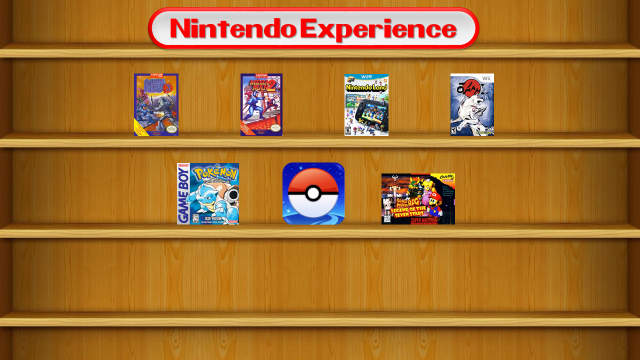
When I introduced the Nintendo Experience, I said that it would include around 70 titles or so. I haven’t changed my mind as far as the number of games go, but Scott brought to my attention that if I were to keep my current pace, it would take me approximately 2 ½ forevers to finish, and that’s not counting any games that might be essential coming out between now and then. I figured it might be easier if I spent some of my blog posts to talk about the Nintendo Experience. I still plan on dedicating a few Crew Cuts to them, but I can cover several games per post, so I can actually someday finish this project.
The Nintendo Experience is a list of games that I believe sum up essential Nintendo adventures for any fan to play through.
It’s not a list of Nintendo’s “best games”, per se, but they showcase what makes Nintendo the best game company in the world. They don’t need to be first-party games, or even exclusive games, but they need to use the Nintendo hardware in a unique way if they’re not.
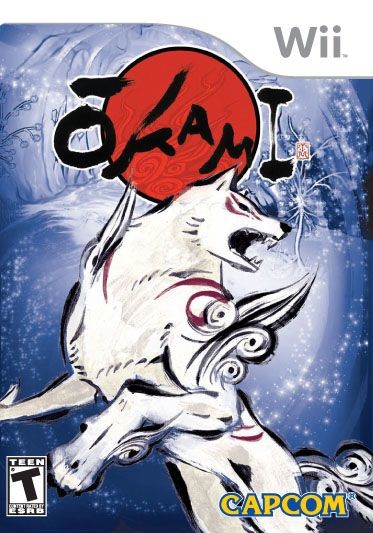
Case in point, the next game joining the Experience is Capcom’s Ōkami for Wii.
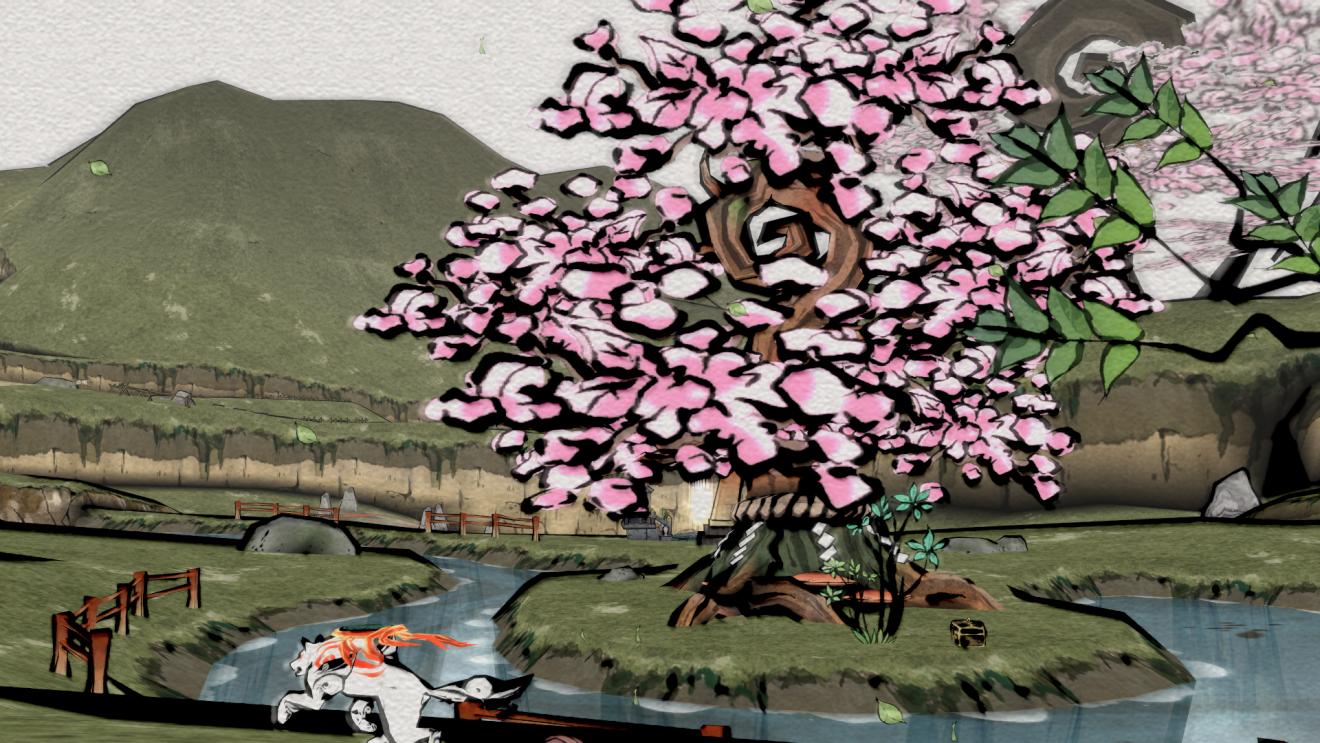
Ōkami was originally released for the PlayStation 2 in 2006 and was ported to the Wii in 2008. It’s a wonderful cell-shaded adventure that plays quite a bit like a Legend of Zelda game. But the gameplay isn’t the best part of the experience; that would go to the presentation. Graphically, the developers have re-created feudal Japan in the style of traditional Japanese paintings. The world is absolutely incredible, and you’ll find yourself running around fields and forests just taking in the prettiness of it all. The orchestral sound track matches the setting, and helps to transport the player into the world.
Next, the story is fantastic. Without giving very much away, you play as Amaterasu, a reincarnation of the sun god Shiranui. You set out on a quest to restore the nature of Nippon that has been thrown into ruin by the forces of evil by collecting different “Celestial Brush” techniques (more on that in a moment). The premise may sound odd, but believe me when I say that the story will suck you in and move you with every twist of the plot.
The thing that makes the Wii version of Ōkami unique and gives it a spot on the Nintendo Experience is the Celestial Brush. One of the key mechanics of the game entails the player stopping the action and using the Wiimote’s pointer to draw a shape on the screen to activate different powers. Need to cut a tree down that’s blocking your path? There’s a technique for that! Need a lily pad to help you walk on water? There’s a technique for that, too! Need a gust of wind to get rid of fowl-smelling air? You’re in luck! Just scrawl the shape where you need it and presto! Sometimes it takes a few tries to get the shape right, but once you get the hang of it, you’ll be Bob-ing your enemies like a Ross.
If you like adventure games and haven’t played Ōkami yet, then pick up a copy and give it a shot. You won’t regret picking it up.
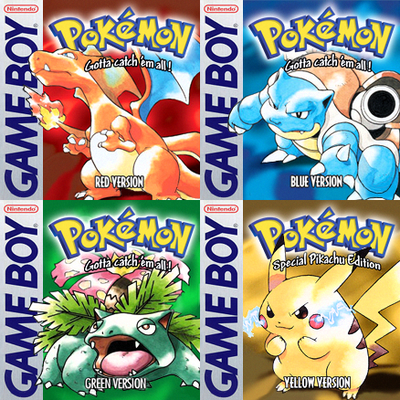
In honor of the recent release of Pokémon GO, another induction from the franchise into the Experience is Pokémon Red/Blue/Green along with their sequel, Yellow.
It’s hard to think of a world without Pokémon, and often times I forget where it all started. After these games were released, the TV show, trading card game, mangas, toys, and more were everywhere (just like GO is doing now).
Up to that point, RPGs usually had a pretty limited cast. You might be able to choose a few different combinations of characters for your party, but your choices were pretty limited. Then these games dropped and flipped the game on its head with 151 unique characters available to play as. As long as you could catch them, you could have whatever combination of six (or less) monsters you wanted. Sure the game was unbalanced, and sure, there were plenty of glitches, but the feeling you got when the professor gave you your first starter, or you traded a Pokémon with a friend, or got your first gym badge far outweighs all of the brokenness. If you haven’t played any of the games in the original trilogy, I highly suggest getting the port for your 3DS. It’s just $10! Give it a shot.
That’s it for the Nintendo Experience for now. Signing out!
It has almost been a full year since Breath of the Wild was released. My intention is to not beat a dead horse by writing about my love for this game again, but rather discuss how it’s holding up just short of a year later. As sappy as it sounds, I still remember exactly how I felt when I first booted up the game and stepped foot on the Great Plateau. This was an entire world for me to explore, and the Great Plateau served as the training wheels to my stunning adventure ahead. There were no tutorials to get my feet wet. It was a matter of exploration, failure, and most importantly, education. You had to learn how to fight, when to run (a strategy much more relevant in this Zelda game than any other in my opinion), how to glide, how to cook, how to climb, and so much more. For the majority of these, I learned by failing, and that is the reason why I am still playing the game today. A year later, and I am still learning things.
Despite over a hundred hours, there is still so much to be discovered.
At this point in my adventure, I have about 140 hours of gameplay in. I have about 200 Korok seeds, completed all Shrines, both main and DLC, completed Trial of the Sword, and finished the game. One would think this would be close to the end of the road, but I still want to keep coming back. Of course I am finding Korok seeds all over to add to my count and zooming around on my Master Cycle Zero like it’s a guilty pleasure, but I’m also learning. Every time I play I discover a new location. I learn more recipes. I meet new people. Just recently I was roaming around at night and started hearing some ominous music playing. Music I haven’t heard in my previous 100+ hours in the game. I was baffled what it was until I finally ran into the culprit: Kilton the Monster Parts Merchant. It is absolutely astonishing to me that after everything in this game that I have accomplished, there is still so much to educate myself on and explore. After meeting Kilton, I have the pleasure of doing it with a sweet Lynel mask.
A year ago I wrote about Breath of the Wild being a special game. Present day, I can not only confirm that, but add to it. Breath of the Wild has to be in the top five games I have ever had the pleasure of playing, if not the top spot. I never thought that Wind Waker would ever be dethroned, but this might do it. I can’t say for sure because I still have so much to explore in Breath of the Wild, and I’m just not satisfied putting it down. A year later and I feel as I haven’t mastered the game. There is still so much to learn. My hope is that Nintendo keeps releasing DLC, but that’s hard to predict at this point. Whether or not this is the case, I know I will be riding around on my Master Cycle Zero rocking a Lynel mask for hours to come.