Being a Nintendo Fan on a Budget

Some of you, the Crew, may have noticed that I am usually a little behind the times when it comes to my hardware library. If you were to ask me what I have been playing recently, you will probably catch me talking about Smash Bros. or about an older handheld title. It is an interesting dynamic, keeping up on current Nintendo news and zeitgeist, while not updating my Nintendo library alongside other Nintendo fans.

But I know it is not just me that has a hard time keeping up with Nintendo’s ever-expanding hardware and software library. I would like to start a discussion here on being a Nintendo fan on a budget. I want to keep it practical and easy, and I will kick it off with a few of my own tips and tricks.

Manage your Expectations

Before we get to practical application, we have to begin with the proper mindset. As I said before, Nintendo never stops making great consoles and games. It is not possible for pretty much any Nintendo fan to acquire everything they put out, much less spend quality time with each game. Not only can the quantity be overwhelming, but, just like it would be with any other hobby, playing video games is expensive. It may be true that gaming now is more affordable than ever, but that does not change the fact that even (most) gamers have bills to pay.

Also, refuse to get caught up in “must-play” mentality. It is fine to set goals of games you want to eventually play, but, as I have gone on record saying, do not let other people dictate the games you play. Just because a game is “10/10” or a “classic” does not mean you have to play it to be a Nintendo fan. Do not feel pressured into playing a game. It is likely you will not enjoy your experience, and the anxiety to acquire and complete that title is not worth it.

Bum Off your Friends

This is one I do a lot. There are some titles that are worth owning, and you and a friend each have your own copies. Often times with fighting games and other competitive games, you will want a copy for yourself to be able to play and improve at your own pace. Many other single-player ventures, however, can be experienced once through to satisfy your need. In these instances, it is handy to have a friend that can lend you the game and/or system. It is how friendships should work.
(Okay, maybe “bum off your friends” is a little over the top, but it gets my point across.)

Scott has lent me games on numerous occasions, and I have lent him some of my own things as well. Reciprocation is a healthy way to build a friendship. Often Scott will be too busy to play for a month, so he will allow me to borrow a game for that period. Currently, my wife and I are enjoying the SNES Classic. Later on, he just might have a problem that I’d understand. We all need somebody to lean on.

Check Pawn Shops

Now, no matter where you go, new equipment and games will probably cost you a few coins. But, if you have managed to manage your expectations properly (see what I did there?), you will not be driven by your need for the new stuff. This is where you have a decision to make: do you save up some money and/or wait for the new stuff to come down in price, or do you go for the bargain old junk at the pawn shop or eBay? Nintendo has so many classics to explore for the systems that you already own, and they can be more than reasonable in price.

Also, with pawn shops, you never know what you will find. Maybe you will run across a rare gem that would be exorbitantly priced elsewhere, or you might find a game that looks cheesy and bad for twenty-five cents, take it home, and make a new memory of the terrible piece of trash you found. You could even find a reasonably-priced old Nintendo console, allowing you to retread the glory days of your childhood, or see what gaming was like when your parents were kids.

Of course, if you want to get really edgy…

Foray into Non-Nintendo Fare

*Gasp!* Say it isn’t so! Am I suggesting you play something on a non-Nintendo console? Of course! If you have never owned a Sega console, pick one up at a local thrift store or pawn shop. I can recommend several titles, if you need any assistance digging for gold. All sorts of retro consoles wind up in second-hand stores, or in your uncle’s closet; grab one and try it out! Games can be cheap, and it exponentially broadens the field of games you can play. If anyone knows the value of playing retro games (even on non-Nintendo consoles), it is the staff here at Two Button Crew.

I hope this article has been an encouragement to you, especially if you are on a tight budget. You are not alone, and you can enjoy new experiences no matter your financial plan.

Let’s Play Vs. Firsthand Experience Scott's Thoughts

Growing up, Let’s Plays didn’t really exist.

It seems like it started with advent of Minecraft, but I might be wrong because the whole scene has never really appealed to me.

To be sure, I can see its draw:

  • See how a game works and plays before you buy (or instead of buying)
  • Enjoy the commentary of an engaging personality on-screen
  • Chat live with other viewers
  • Watch expert players perform speed runs, advanced techniques and find secrets
  • Free entertainment

Even with everything going for it, I just can’t get behind the idea of watching someone else play a video game.

Part of my hesitation is generational; I’m a little bit older than the average LP viewer.

Otherwise, it’s just not how I want to spend my small slice of free time. After work is done, the house is taken care of, and my responsibilities are attended to, I want the controller to be in my hand. That firsthand experience just can’t be replaced.

Ironically, I help run two weekly Let’s Play series, one for Switch and one for Classics. Make sure to tune in live on the weekends!

Yes, I am Intimidated by Pokemon RPGs for Kids Scott’s Thoughts

Have you ever been on the outside, looking in on a pop-culture phenomenon?

While the Pokemon games are some of the most popular titles in Nintendo’s stable, I’ve never played a full mainline entry.

I’ve had a weird history with this franchise, and beaten just about everything except the main RPGs: Stadium 1&2, Snap, Colosseum, XD Gale of Darkness, Pokken, a little GO, even Hey You! Pikachu for goodness sake.

I grew up a little bit after the huge wave of Red/Blue/Yellow hype, and have always felt that I missed the bandwagon.
People who have been with the series since its inception are still trading their pocket monsters from game to game, amassing a huge army!

It definitely feels like I would have a hard time just jumping in, although I know they create these games for a younger demographic and take into account franchise newcomers to some extent.

You know what still scares me? It’s all the nuance that’s built up over generations. Developer GameFreak still builds on mechanics that have existed for decades, resulting in an imposing collection of the unknown.

A crossroads approaches. When the Pokemon series debuts on Nintendo Switch, I feel like I’ll have my best shot yet of hopping aboard the speeding train. If I let it pass me by again, I may never catch up.

The True Cost of Gaming Scott’s Thoughts

Have you ever stopped and added up your recent gaming purchases, just to see how much your hobby is really costing you?

The Manufacturer Suggested Retail Price (MSRP) is an abbreviation that get’s thrown around a lot oil the gaming industry, indicating what most stores charge for new hardware and software as recommended by the publishers.

However, the amount on a price tag isn’t the true cost associated with gaming.

Price ≠ Cost.

Time: You spend much more time equity on a game compared to what’s come out of your wallet. Even if your job pays minimum wage, your time has a high value on it that is quickly surpassed when sinking hours into the latest open world adventure or competitive shooter. (Related: “Making Your Gaming Time Matter”)

Mood: It takes some maturity and self-awareness to think about how you’re thinking. Oftentimes, video games are liable to alter our moods. We usually like our titles to be somewhat challenging (as opposed to a cake-walk), and there’s a fine line between difficulty that enhances your accomplishment and difficulty that causes frustration. It’s okay to walk away from a game that’s interfering with real life, in any way, shape or form.

Opportunity: Related to time management, opportunity cost is a real thing to consider. Sometimes, it’s good to think about what else you could be doing with your time. In other words, what are games causing you to potentially miss out on? Who could you meet, what could you make, or where could you go?

Health: I’d love to believe that there are no health risks with partaking in Nintendo fandom, but my hands tell me otherwise. Carpal tunnel can set in without proper ergonomics, especially if you spend a considerable amount of time on computers on top of your gaming hobby. Additionally, omitting a short stint in the Wii era, time spent gaming is time spent sitting on your God-given cushions. It’s important to balance digital entertainment with some amount of physical activity (don’t ask my advice on this—I’ll get back to you later).


Don’t feel guilty for spending money, time, and other assets on video games. Like you, it’s my favorite way to have fun! Just try to consider the true cost, and avoid debt… monetary, health, or otherwise.

What is it about Launch Day? Scott’s Thoughts

I’m younger than you might guess. I was only 12 years old as I was saving up for the launch of Nintendo Wii.

I had never been more excited for a video game console, and I was literally counting down the days. On my wall calendar, I flipped forward to November 19th, 2006 and wrote “WII DAY” in big marker. I then proceeded to work backward and mark a countdown on each preceding day, up into the 60s!

Many families lucky enough to locate a Wii on store shelves would get to open their shiny new system for Christmas that year, but that wouldn’t do for me. As a 12 year old, I performed every extra chore I could find until a stack of $500 ensured I could buy the console and whatever games and accessories I wanted, on launch day.
Ever since then, I’ve been hooked on getting my games the day they come out.

Release date announcements go straight into my Google Calendar (sadly, I no longer hang a physical one on my wall) and I receive reminders as the launch comes nearer.

Whenever Nintendo launches a new title, you can find me at the store either at a midnight launch, or right when I get off work.

It’s an event. Every time.

But why—why is it so important to me that I experience new games on the first day? Wouldn’t it be smarter to wait and read some reviews? Delaying my purchase even longer could land me a discount.

The game industry moves fast. Conversations online quickly turn to the latest and greatest, so participating in gaming communities is easier when you’re up to speed.

There’s also a heavy dose of excitement that comes with being an early adopter. You get to go into a brand new, creative piece of art before it’s talked about like common knowledge on podcasts or had its surprises spoiled in YouTube thumbnails (our channel doesn’t do that, by the way).

It’s fun to be on the cutting edge. Sure, you get cut every once in awhile, but the thrill is worth it.

Picross S is NOT Competitive Scott’s Thoughts

Full disclosure: I have a Picross addiction. If Pavlov is Nintendo and Picross is a bell, I’m the salivating dog.
They release a new game in the series, I buy it, and the next 20 hours of my life are a blur as I perfect every puzzle.
Having said that, my excitement for the sudden release of Picross S on Switch was huge!

An important new feature was touted: multiplayer. New to the series, two players would be able to “play cooperatively, or compete to see who can place the most tiles!”

This was a game-changer! I have a friend from Picrossers Anonymous who would love to relapse with me and go head-to-head!

Well, Nintendo wasn’t fully honest with their description of this functionality. Technologically, it’s all there: two players can control cursors on the same screen, and it works. It’s fun to help each other out and solve puzzles together.

Competitively, the structure is non-existent. There’s no separate “Vs. Mode” or anything of that nature, it simply tallies up the number of tiles filled in by each player. The game doesn’t keep score over multiple rounds or celebrate a victor. The players are left to point out that their score was higher and rub it in their “opponent’s” face.

That’s not the extent of the issue, either. This game is impossible—I repeat—impossible to be treated competitively. It leaves the door wide open for cheating and unfair play.
I mentioned my fellow addict above. We got to playing a few rounds of Picross S together and it wasn’t long before he had outsmarted the game. Whenever I placed a tile, he would follow behind my cursor and overwrite it with a tile of his own color, taking my points for himself.

Picross S lets competitors get away with whatever they’d like, and also creates another problem by not awarding any points for blocking off tiles. Placing an X on a space that won’t contain a colored title is a critical part of Picross gameplay, but gamers are punished in multiplayer mode by not receiving any points, leaving their opponent to score off their work.

My advice to Switch owners: Purchase this title and enjoy it as a single player or cooperative affair.
Words to Nintendo: Be careful how you advertise your games; it’s important to be honest about what’s included in the package.

Update: Nintendo has adjusted the wording on their Picross S online listing to read ‘Unique to the Switch version, 2 players can now play simultaneously! Enjoy with friends and family!’
That’s better.

Lessons for Animal Crossing: Pocket Camp Scott’s Thoughts

1. If I earn something, just give it to me. Don’t tell me I earned it, then explain how I have to tap through menus to retrieve my reward. Just give it to me.

2. Crafting is not the best thing since sliced bread. Just because Minecraft was super popular doesn’t mean everything needs to be crafted from now on.

3. Simplify the exchange rates. I don’t want to pay real money for leaf tickets to buy a mining pass to collect gold in order to exchange that for bells so that I can use the bells to purchase digital furniture. The expression is “cut out the middleman,” not “let’s create an army of middlemen.”

Great Bad Game Design

Note: The following article contains spoilers for Sonic Mania. For those interested in Sonic Mania, I highly recommend waiting until you complete zone 2, act 2 before reading further.

Sonic Mania is amazing. But you probably already know that, either from experiencing it first-hand or from the mounds of praise heaped upon it by the general public. It quickly became my favorite entry into the franchise when I picked it up for myself a few months ago. It’s the “back to basics” game Sega has been promising—but ultimately failing—to deliver for nearly a decade now. Heck, this game is so good, it can even include one of the most egregiously wrong design choices I’ve ever seen and make it one of the most charming set-pieces of the entire game.

And no, that’s not hyperbole, one of the game’s most memorable moments is flat out stupid by conventional game design standards. What moment am I referring to? The Chemical Plant Zone Robotnik fight.

Why It Should be Horrible

The boss of Zone 2 isn’t a boss in the traditional sense; instead, it’s a game of Puyo-Puyo Pop. That’s right, instead of fighting some wacky contraption, Sonic, Tails, or Knuckles faces Dr. Robotnik in a lethal game of Puyo-Puyo. No instructions, no fore-shadowing, just dropped into a game and expected to win.

From a design standpoint, this looks like a bad idea on paper. As mentioned before, the player is given no instructions. Puyo Pop isn’t exactly the hardest game to understand, but the game assumes the player already knows how to play. There’s no pop-up for controls, no instructions on how to clear Puyos from the screen, nothing. If the player is familiar with drop-puzzles like Tetris or Dr. Mario, they may be able to intuit some objectives from the conventions of the format: namely matching colors.

That leads into the more pressing issue: genre shift. While switching between gameplay styles isn’t uncommon in video games, especially more recent Sonic titles, typically levels that dip into different gameplay formats only switch to genres of a similar nature. For instance, many side-scrolling platformer games include one or two levels that switch over to being a side-scrolling shoot-em-up. This is typically considered acceptable because the two gameplay styles have many similarities. Most notably, both are action games, meaning the skills needed to master them are almost identical. These skills include things like quick-reflexes, spacial awareness to assess threats and their proximity to the player, and prioritization of risks and rewards (such as power-ups).

Where switching gameplay styles gets frustrating is when the new style has little or nothing to do with the concepts of the core gameplay style. A pertinent example of such a gameplay switch is the fishing segments of Sonic Adventure. While many people speak fondly of the game those segments’ mechanics were based off of, Sega Bass Fishing, most people object to the inclusion of such mechanics in an action platformer. That’s not to say juxtaposed gameplay styles can’t be paired successfully, but that contrast typically has to be one of the game’s core principles with everything else designed around it (e.g. DS cult classic Henry Hatsworth).

Where switching gameplay styles gets frustrating is when the new style has little or nothing to do with the concepts of the core gameplay style.

Now compare that to Puyo-Puyo Pop. Being good at Puyo-Puyo requires players to plan on the fly. The player has to decide how to stack and group puyos in real-time to set up combos and react to his opponent’s attempts to interfere. I don’t have the background in Puyo-Puyo to know what exactly goes into high level play, but I can tell you it’s a very different game than Sonic the Hedgehog. This means that the player is expected to use an entirely different skill-set from what the game has been training him to use up until this point. Moreover, this is the only place in the game—outside of an unlockable bonus Puyo-Puyo mode, that is—that the player is asked to exercise these skills.

The look on Sonic's face at the start of the fight is priceless.
The moment in question.

Why It’s Awesome

So why does this moment work? There’s several factors at play here. First is the design of Puyo-Puyo Pop itself. First of all, Puyo Pop is a fairly easy game to learn: the computer is playing it along-side the player. If the player doesn’t understand how color matching works, he can just observe the computer match groups of four or more puyos of a single color.

Secondly, this battle is pretty easy. So long as the player keeps the board mostly clear, Dr. Robotnik’s incompetence will do the rest of the work sooner or later. Putting the battle so early in the game was actually a smart move: the encounter’s low difficulty allows the player to get used to the new gameplay style while still fitting the game’s expected difficulty curve.

Third, Puyo Pop is good. Many times when a game dips into a different style, the auxiliary gameplay style is under-developed. The majority of the developers’ time and effort (hopefully) goes toward the core gameplay, meaning mini-games don’t get the time and polish needed to fully flesh-out the concept. The Puyo-Puyo battle gets around this by implementing an already established idea. This way the Mania team didn’t have to haphazardly slap together a new gameplay concept, instead they just had to copy something they knew works.

Many times when a game dips into a different style, the peripheral gameplay style is under-developed.

Now that I’ve gotten the minor stuff out of the way, let’s talk about the two biggest reasons this works. I’m sure many of you are grinding your teeth by now with how I keep referring to this moment as “Puyo Pop”. Chemical Plant Zone’s Robotnik fight is actually a callback to the Sega Geneisis/Mega Drive classic Dr. Robotnik’s Mean Bean Machine (which was technically just a reskin of a Puyo-Pop game, but whatever). This attention to detail and acknowledgment of the Sonic series’ history is a huge part of what makes this bizarre set-piece work. Who in their right mind would anticipate such an obscure reference?

Companies like Sega and Nintendo often reference their past works, but they tend to stick to callbacks that are easy for fans to recognize. Even when a reference is to something more obscure, it’s out of the way and can be easily ignored. Most designers would stick some puyos/beans in the background and call it good. The Mania team, however, decided to put that callback front and center by making it a part of gameplay. If the reference is half of the reason this moment works, the sheer audacity that the designers would even attempt it is the other half. The element of surprise and the obscene amount of creative whimsy this moment embodies is more than enough to make up for any of its “bad” game design.

If the reference is half of the reason this moment works, the sheer audacity that the designers would even attempt it is the other half.


The combination of good implementation, recognizability, and surprise factor all come together to make this one of my favorite game set-pieces in recent memory. While I love analyzing what works and what doesn’t work in games, it’s important not to get too entrenched in sticking to “good” game design. There’s a delight in encountering the unexpected that is all too often ignored in favor of “safe” design practices. Formula is good, but too much results in a game being formulaic.

What this Nintendo Fan is Thankful For

Happy Thanksgiving, everybody! Here at the Crew, we’re a thankful bunch, and this is the perfect time of year to count our blessings and reflect on the many things we have to be grateful for.

Thankful for Switch

Nintendo’s latest and greatest console has been welcomed with open arms by the faithful few and, seemingly, the masses as well. The R&D team crafted a unique piece of kit that’s exactly what we wanted, and the launch was amazing. In the months following, software support has been both steady and spectacular. With Switch, Nintendo ushered in a new Golden Age of gaming, and it’s really special to have a platform that brings pure pleasure.

Thankful for the Crew

Two Button Crew affectionately refers to our viewers and subscribers as the greater “Crew,” and greater is the perfect word to describe you folks. The Internet can be a nasty and hate-filled place, but none of that comes with the viewers we attract. It’s been magical to see the sincerity and kindness demonstrated by people who tag along with our content. Every few days, we receive a nice note from a Patron or long-time subscriber, telling us how our entertainment has helped them and wishing us to keep going. The encouragement means the world.

Thankful for Podcasts

Nintendo podcasts are becoming more and more prevalent, with long-running ones still pumping out episodes and a number of new ones that popped up with the release of the Switch. Content creators are more eager than ever to discuss news, impressions, as well as an increase in meaningful topics being lobbied. If you aren’t a podcast listener, you’re missing out on some excellent sound-bites from insightful industry reporters and analysts. For hosts, podcasts are a chance to sit back and talk freely about what’s on their mind in the gaming spectrum. For listeners, it’s like having a group of friends (just as dedicated to Nintendo fandom as you are) that meet together weekly to celebrate all things Mario, Metroid, Zelda, and the rest. The podcast we started this year has been a lot of fun.

Thankful for Unforgettable Games

2017 will truly be a year to remember. We now have our modern version of Ocarina of Time vs. Super Mario 64, with the brand new installments Breath of the Wild and Odyssey. The debates between greater game will live on for decades, hopefully not overshadowing the outstanding Splatoon 2, ARMS, Mario + Rabbids, and swaths of indie games flooding the eShop each week. Switch is quickly becoming a home for masterpieces, whether they are brand new experiences, definitive editions, ports, or remakes.

Thankful for a Bright Future

This year was laser-focused on software quality and quantity. I picture Nintendo’s offices being “all hands on deck” to make this new hardware a success. However, there are other ventures that Nintendo is preparing to embark on; namely a theme park, an animated Mario film, more mobile titles, and more. Development on great software will continue as we are promised new entries in the Metroid Prime series (!) and Pokemon, which will sell systems like absolute bananas. The install base is shaping up to be so huge, no developers will be able to ignore it!

When Nintendo bounced back from the Wii U, they bounced back hard. They’re back in the spotlight, which is a huge payoff for people like us who have followed the brand through thick and thin. I’m thankful we’re currently in the thick of the action!

Have a wonderful Holiday, hug your family, and drag them to your room to play some Switch!

Collecting Vs. Trading Scott’s Thoughts

I have conflicting impulses.

I’m a collector. I have multiple shelves in my house dedicated to Nintendo, lined with cases of games, amiibo, preorder bonus merchandise, or Club Nintendo rewards (remember those? They used to be physical).
My biggest console library belongs to Wii, and I hope to outnumber those games with Switch software this generation.

I’m also a tightwad. I prefer saving money over spending it. I don’t mind waiting months or years for things to go on sale before buying.

How does one balance the urge to collect games, when trading or selling them can help financially?
It’s a tough choice.

I’ve purchased 9 Switch games in the system’s first 7 months and sold 3 of them. Sure, it was opposed to my goal of expanding my collection, but they weren’t great games. I’d rather have a small amount of excellent titles than a larger batch where you don’t know what you’re going to get.

When deciding to keep a game or not, first acknowledge that it’s probably disappointed you. If it hadn’t, you likely wouldn’t be debating what to do with it.

Next, this question is super helpful: Do I want to introduce my kids to this?
Whether you’re a parent or not, it helps put things into perspective. Video game collections are best not when they take up a lot of space, but when you can proudly open up a box with your ten-year-old and tell him or her to pick anything; you know you’ll have a great time.

Do I want to play this with my daughter in fifteen years? No, it’s not the best one in the series. Sell this one. We’ll play the older version.

Keep the best, get rid of the rest! You’ll have more space and more money to put toward better experiences.

Related: Simeon’s Guide to Decluttering your Collection

Don’t Forget the Fun Factor Scott’s Thoughts

I often see newly released games being appraised for their graphics, controls, music, and price.

What the industry needs more of a focus on is simple: fun.

A game can have terrible graphics, no soundtrack, and clunky controls, but still be a lot of fun.
Conversely, a beautiful and imaginative game can be boring and punishing.

Video games are a form of art, but that doesn’t mean they need to be treated with as much weight and gravitas as other mediums.
Some critics don’t understand this and neglect to consider the fun factor, so take review scores with a grain of salt. A 7/10 game might be the most fun you and a friend have ever had.

Goodbye, Stereoscopic 3-Dimensional Gaming Scott’s Thoughts

I’m one of the first people to happily wave goodbye to the 3DS.

It’s low-resolution screen looked behind-the-times the moment I laid eyes on it on launch day.
However, there is one aspect of its visuals which I will miss: glasses-free 3D.

Nintendo pulled something incredible off by releasing the only mass-market device employing the technology.
Personally fine-tunable by a slider, no less!

The company also made a wise move in never requiring 3D visuals to advance in any games, ensuring those too young, who had eye problems, or just preferred flat images, weren’t forced to see in 3D.

But boy was it helpful.

Super Mario 3D Land, for example, is a fantastic title that takes full advantage of the unique screen hardware.
I have a harder time lining up precise jumps on my Switch.

Stereoscopic 3D, I‘ll miss you.

Retail Vs. Digital Pricing Scott’s Thoughts

There is a discrepancy.

When you walk into a store and purchase a new video game, you get more in return: a display case, a printed cover and (sometimes) instruction manual, a cartridge housing the game’s data, the ability to lend the copy to a friend, and the option of selling the copy when you’re done with it.

Downloadable versions provide none of the above benefits (though you could definitely argue for the convenience factor). They cost the same as a physical version, but take up more space on your hard drive or memory card, and are far cheaper for the publisher to distribute.

With digital games, creators don’t pay for printing discs or cartridges, packaging, shipping, or shelf-space at stores. They also don’t split any profit with retailers.

You would almost think the downloadable version should be cheaper.

Further confusing the matter are stores like Best Buy and Amazon, where you can actually get retail releases at a steep discount. It feels backward.

The reason Nintendo and its competitors are afraid to cut gamers a deal on digital versions is that it would make retailers upset. Their relationships with WalMart, Target and others would be severely damaged as gamers flocked to online offerings to get the lowest price.

Why doesn’t Nintendo just cut its retail ties and only offer their games digitally?
They’re not ready yet. The majority of sales still take place in brick and mortar, but that is starting to change.

Someday, a Nintendo console might not come equipped with a cartridge slot. And just maybe, downloadable games will be a little cheaper.

(Or not because of inflation, the rising cost of development, server infrastructure, and Nintendo being a business trying to make money. But one can dream.)

Are Portable/Console Hybrids the Future? Scott’s Thoughts

NX rumors began shortly after Wii U launched. People were quickly eager for the next big thing.

Closing in on Switch’s first year, and Nintendo fans aren’t fidgeting for news on its successor.
We’re content. Eager for certain game announcements, yes, but satisfied with the hardware.

“What do you want in the next Nintendo console?”
Even enthusiasts are having a hard time answering that. A more powerful Switch, I guess?

And I would agree with that. Friends texted me right after the Switch reveal video, asking me what I thought. My response: What more could you want? It’s got all the buttons, it’s HD, and you can play on your TV or take it anywhere.

In many ways, we’ve arrived. Similar to the cellular market, where your phone looks about the same as it did 4 or 5 models ago, the Nintendo hardware line is maturing.

Could you imagine a follow-up console to the Switch not being portable? You don’t want to think about that, do you?
Rest assured, the hybrid strategy is here to stay.

With Nintendo, that is.
Competitors like Microsoft and Sony might not adopt it so quickly because of their emphasis on graphical power.

You can think of those companies as desktop PC makers, whereas Nintendo has differentiated itself as the laptop provider. Not leading the charge in technical specifications but in form-factor.

There certainly are advancements still waiting to be made in the gaming industry, make no mistake. In five years or less, we’ll likely have the opportunity to purchase a 4K Switch tablet with VR capabilities.

But Switch represents a revolution in how Nintendo makes their flagship consoles.

Why Indies are Better than 3rd Parties Scott’s Thoughts

Do you love huge, generalized sweeping statements? Well, you’re in luck!

Indies are way better than 3rd party developers.

When I play a 1st party Nintendo game, the polish is undeniable. I can practically taste the quality assurance oozing out of every aspect of the game.

Playing a 3rd party title is often a disappointing affair. I’m reminded how much less effort they put into their menus, onboarding new players, readability, and the overall stability of the experience.

Indies, however? I’ve had the pleasure of completing multiple independently-developed games that feel as if they belong in Nintendo’s own stable of IP. They often approach development the same way Nintendo does, creating a unique mechanic and building an entire world around it.

These self-published titles come with lower budgets and therefore have less marketing. They have to compensate with more ambitious pitches; it takes a lot to stand out on the Switch eShop, with handfuls of games being dumped onto the store weekly.

An indie game tries to do less, and with that narrower focus comes a more concentrated dose of polish.

For the most part, independent games are structurally and functionally tight. You can learn what’s expected of you in a matter of seconds, just like an old arcade or NES game.

They are more often labors of love, made by people who don’t come home with a check twice a month from an employer but quit their job to work on the idea that they just can’t get out of their head.

Indie games are less restricted by businessmen who demand a carbon copy of what’s already selling and are free to experiment with art styles and non-traditional music.

Do yourself a favor and enjoy indie games, thereby supporting these small studios. They both need it and deserve it.

Why Mega Man is Not the Main Character

Mega Man is at a weird juncture in its life.  It has been five years since the last actual game release with Street Fighter x Mega Man. But since then, there have been fan games released, a “spiritual successor” in Mighty No. 9, guest appearances in fighting games like Super Smash Bros., a cartoon series and movie announced, and a “big announcement” coming in December for his 30th anniversary, not to mention several collections for modern consoles of some of his classic adventures. I guess you could say that he is experiencing his own mid-life crisis, trying to find his identity in these unfamiliar times.

Not to alleviate that, it is my goal today to tell him that the franchise that bears his namesake is not about him. It may be rude to kick someone while they are down, but I want to bring some reality to the situation. First, I want to prove that Mega Man is NOT the central protagonist of his franchise, then present to whom I believe the spotlight has shifted.

Background

In talking about this franchise, I would like to get some terminology out of the way. First, I will be using “series” and “franchise” in very different ways. “Franchise” will refer to all things Mega Man (especially media considered “canon”), and when I use “series” I will denote the specific subdivision of the franchise to which I am referring (i.e. classic, X, Battle Network, etc.)

Also, I will be dealing primarily with the “classic” timeline. For those of you unfamiliar, the Mega Man canon is divided up into 2 main timelines. The first is what I will refer to as the classic timeline. This includes the classic series, X series, Zero series, ZX Series, and Legends series. The second timeline, in which Dr. Light pursued software solutions as opposed to robotics, contains the Battle Network and Star Force series. It is a little more complicated than that, but, as I said, I will refrain from using those sources when I can.

I will also try to refrain from boring you with storyline minutia, though some talk of story points is inevitable. Consider this a spoiler warning… If you ever cared about the Mega Man storyline being spoiled for you…

Who is “Mega Man”?

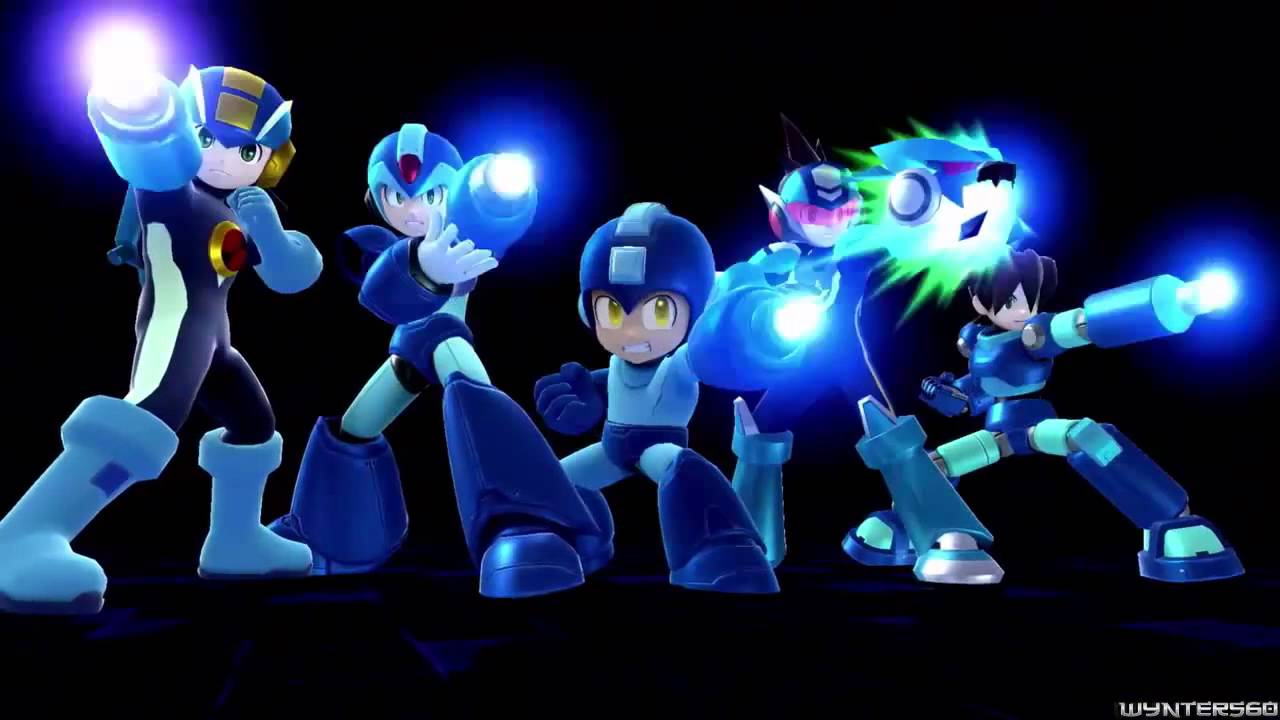
The difficulty in defining Mega Man as the star of his own franchise begins with defining who you are referring to when you refer to Mega Man. Do you mean the classic 8-bit rendition, or the reploid named X, which bears resemblance? Perhaps you are referring to Mega Man Volnutt, or maybe the persona created by the fusion of Geo and Omega-Xis?

Will the real Mega Man please stand up?

If you were to count characters commonly referred to as Mega Man (by games of fans) you would come up with no less than five, or three in the classic timeline, and possibly as many as twenty or more depending on which renditions you “count”. Even if you were to only count three, all of them are separate entities with their own origins and personalities which they do not share with any of the others. Also, no one of those characters plays a major part in all of those games or series.

The best way around this is to hold to a view that Mega Man is not a single entity, but rather an idea centered around championing peace, justice, and the color blue to a troubled world. At that point, Mega Man is no longer a character, but a loosely-defined set of characteristics that do not find themselves clearly stated in the games, but are then defined by the player. It is an entertaining thought, but hardly a basis of a character.

One champion above the others…?

Now that we are forced to chose one Mega Man, we must choose wisely. First, we should immediately eliminate Mega Man Volnutt from the equation. His series takes place thousands of years apart from the other series, holding only tangential story ties.

Next is the classic Mega Man. It was with him that the franchise began, and I think that it is safe to say that he was the original protagonist of the series. But this Mega Man does not have any direct influence after the time of the classic series end. Though nostalgia may cloud our vision, he had to pass the torch eventually.

Lastly, we have X, which I believe is the best of the Mega Man candidates. We see his origins in the classic series, created by Dr. Light as Mega Man’s successor and an experiment that one day robots might be just like humans. X’s main story begins in Mega Man X, extending through the X series. He fights in the Maverick Wars against Sigma and his underlings. X’s influence is seen through the Zero series (though not being the main protagonist) turning into a cyber elf, still fighting for the greater good, but dying-ish in Mega Man Zero 3. His soul returns in the form of Biometal Model X in the ZX series, continuing in his assistance to the current heroes.

No doubt X’s influence is felt throughout these time periods. His help in defeating Sigma countless times, as well as other threats against the earth cannot be overlooked. But even with all of these points, the developers have not ceased to draw our attention to the real star of the show.

Zero’s the Hero

Was there any doubt when you started reading this article who I would land on as the franchise’s main protagonist? Not only does Zero have a great design, killer moves, and hair that makes all the ladies jealous, but Zero is the central character of the Mega Man franchise as a whole.

First, there is the issue of presence. Of course, Zero is not clearly present in the Legends series (yet), but, once again, the Legends series is so far removed from the rest of the timeline that we must minimize its effect. Zero’s story, as X’s did, begins in the classic series with Wily’s creation of Bass as a rival to Mega Man. Though Bass failed to live up to Wily’s expectations, he studied the energy he had used to create Bass (called Bassnium, lol) to create the ultimate weapon. Here we see Zero’s sinister origins.
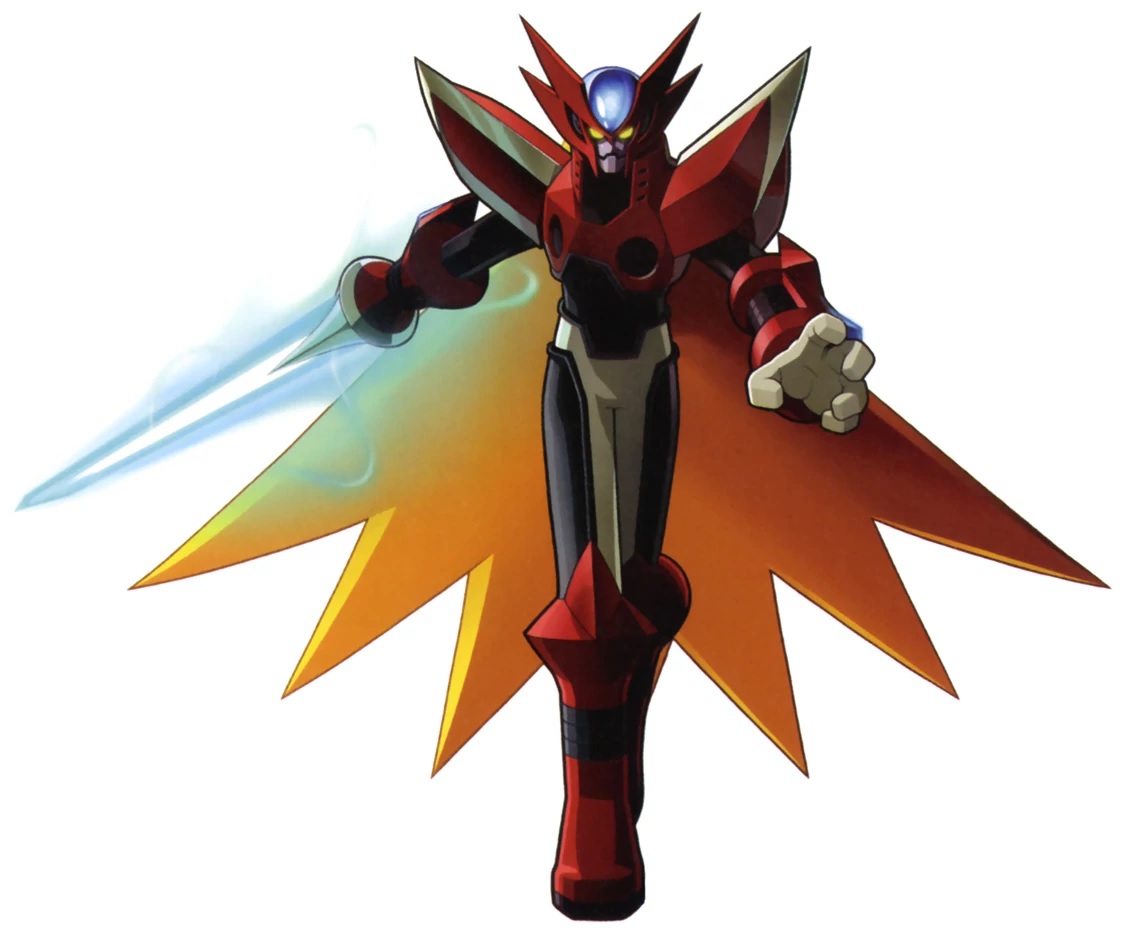
Before the events of the first Mega Man X game, Zero is shown to be a maverick (read: “crazed, destructive robot”), unstoppable by any of the Maverick Hunters except Sigma, and only that due to a headache caused by the Maverick Virus, which is released from Zero’s body upon defeat. Sigma has Zero brought back to the Maverick Hunters’ base.

From this point forward, the storyline of the series follows two repeating themes. The first is Zero’s redemption. Though Zero fights for truth, justice, and all that jazz, his primary struggle is against himself. In fact, just about everyone’s struggle from this point on, for the next few hundred years, at least, can be traced back to Zero, either directly, or in the form of the Maverick Virus, or some other “chunk” of Zero that finds its way to a sinister purpose. Sigma, the main villain from the X series, turned evil because he was infected by the Maverick Virus. All of these things set the stage for Zero to not only become the primary hero of the X series (and beyond), but also the primary antagonist, as he must fight to redeem his initial purpose as a weapon of evil and his past (and recurring) destructive actions. X is a hero for good that pretty much stays good. Boring.

The second theme is sacrifice and rebirth. As you may know, Zero dies. He dies A LOT. His deaths are not just the result of his defeats, however, as he routinely sacrifices himself for the greater good (defeating Vile on MMX, Sigma in X5, etc.). But just as the evil part of him is consistently brought back to life by some wicked plot, he always seems to find his way to the land of the living as well. The cycle continues at least through the ZX series, and probably beyond.

The passing of the torch

The last thing I feel I need to address is the “when”. When did the focus shift from Mega Man to Zero? I think the easiest answer is Mega Man X4, as we see a greater, overt emphasis on Zero’s role starting there (X1-3 seem to focus on X, X4-6 focus on Zero, and X7-8 on Axl), but I think we can go back a little further.

At the beginning of the first Mega Man X game, we see X defeated by Vile, and Zero swooping in to save the day. While giving X a pep talk Zero says, “If you use all the abilities you were designed with, you should become stronger…you may even become as powerful as I am.” From this point forward in the game, whenever X gains an armor upgrade, he becomes more and more like, say it with me, Zero (this point is taken from Arin “Egoraptor” Hanson’s Mega Man X Sequelitis video. There is strong language in the video, so follow it at your own risk)! Though X is the central protagonist, becoming like Zero is his ultimate goal. What is the plot of the Second X game? Rebuilding Zero after his heroism in the first game! Even when he is not alive, Zero is given the center stage. Though the plot in X3 does not necessarily revolve around him, he is still given an increasingly important role, as he is finally a playable character, setting the stage for him to be the center of attention for the rest of the series and, after that, the franchise.

So, there you have it. All roads in the Mega Man universe lead to Zero.


P.S. Did I mention that he also appears in the Battle Network timeline as well?

To Backlog or Not to Backlog Scott’s Thoughts

That is the question. The question we are all asking as a new wave of indie titles hits the Nintendo Switch each and every week.
It’s nearly impossible not to fall behind.

To illustrate this point, consider the following group of games: Shovel Knight, TumbleSeed, Thumper, Sonic Mania, SteamWorld Dig 2, Golf Story, and Stardew Valley.
Did you purchase and play all of those?
This is just a quick list of games filed under “DON’T MISS” off the top of my head. Chances are, you’ve let a handful of these slip through the cracks. (If you actually played all of those, I want to shake your hand.)

Each week is a new opportunity to either A) catch up on amazing games in the backlog, or B) play the newest latest game that was released.

Option A feels good because you get to experience that title that’s been sitting on your wish list, enjoy it, and cross it off.
It creates a problem, though, when it causes your backlog to grow. Thanks to the deluge of new releases, truly “catching up” isn’t really an option.

Option B is exciting. You get to buy a brand new game and join in the conversations while it’s still hot. All the Nintendo podcasts and groups are discussing it.
The downside is, it prevents you from getting back to some of those earlier eShop games that received 8s or 9s out of 10.

No matter what we choose, we’re missing out.
How do you pick between shoring up your collection and trying out the latest greatest?

You have better chances of enjoying your purchases, and not regretting them, if you go with the backlog. Hindsight is 20/20, and a few months after a game launches, you know from the way a title is talked about (and IF it’s even remembered) if it’s worth it or not. You probably build a wish list and whittle it down as your perception of each game’s value evolves with time. What’s left is a series of sure-fire hits that you’re bound to enjoy.

Delve into games like that.

The cutting edge is risky, but rewarding. You can get in on a game’s fandom on ground 0 and be a part of a community’s formation. Other times, the game just isn’t what you thought it was and you’re out $10 or $20.

When you have a really good feeling about an indie title, and you can just sense that you will love it, buy it on launch day. Don’t let it pass you by. During those times, the backlog can wait.

#NotMyNintendo Scott’s Thoughts

Nintendo’s reward program has evolved and devolved over the years. There was a really nice sweet-spot during the Wii era, where lots of great games earned you points and those points could be redeemed for awesome physical prizes. I enjoyed that period and collected a lot of exclusive merch that made me feel like a part of the—well—club.

Things are different with today’s program, My Nintendo. The approach pivoted from rewarding surveys to gameplay accomplishments and task completed instead, which is a sensible exchange. However, with the new program, we’ve firmly waved goodbye to physical goodies like tote bags and hanafuda cards, left to spend our Gold and Platinum coins on in-game outfits, themes, and digital wallpapers.

Turns out, it’s no replacement. I was excited at the onset of My Nintendo, as a few games were offered for redemption: WarioWare Touched!, a DS title, and a Zelda-themed Picross game exclusive to the loyalty service.

Eager for more rewards like this, I quickly became disappointed when I found nothing worthwhile to spend my coins on.

Worse, the digital currency was a ticking time-bomb. Expiration dates loomed over my Nintendo piggy-bank, which threatened to disappear if I didn’t hurry up and spend it on a bunch of themes I would never use.

I don’t feel particularly rewarded by Nintendo, which is a problem when you consider that I’m their best customer: a day-one early adopter, a collector, a completionist, and a brand ambassador dedicating my life to working for them free of charge.

If their customer loyalty program isn’t for me, then who is it for?

Welcome to Your Future: DLC Expansion Passes Scott’s Thoughts

Nintendo has been diversifying their income of late. Not content to only sell you a console per generation and a shelf-full of games, offerings have increased to amiibo, special editions, and add-on downloadable content.

Rather than earning $40 off of Metroid: Samus Returns customers in North America, Nintendo was given twice the amount by hardcore fans who bought the limited box-set and amiibo two-pack.

There’s a new pricing model on the rise, and Nintendo calls it the DLC Expansion Pass.
Some might remember Legend of Zelda: Breath of the Wild as the game that introduced the Expansion Pass to us, but this method of DLC delivery was first utilized in Mario Kart 8 on Wii U, where two major add-ons were sold in one bundle and fulfilled over time.

Of course, Nintendo is one of the last companies in the industry to adopt the practice, but now that they have, there’s no looking back.

Seeing the success of Mario Kart 8 and Breath of the Wild, Nintendo and Ubisoft created an Expansion Pass strategy for Mario + Rabbids and Fire Emblem Warriors.

It’s a brilliant business model for a number of reasons.

  • Players are encouraged to purchase additional content as early as day 1, when excitement for the game is at its peak.
  • The people most likely to give a business money are the ones who are already giving it money.
  • Revenue earned from advance DLC purchases fund continued development, where teams can keep working with existing assets for some time, rather than switching to a more expensive project from scratch.
  • Expansion Pass owners are extremely unlikely to sell their game for some time, delivering a blow to the used market.
  • 100% of DLC sales go straight to Nintendo, not split with a retailer.
  • Prevents the base sticker price from climbing.

The benefits are self-explanatory, but the final one could use some unpacking.
High-definition video games have been $60 for a considerable amount of time (over a decade). Nintendo gamers held onto the $50 threshold a bit longer thanks to Wii’s standard definition output.

The cost of a video game feels high. It’s the better half of a hundred dollars. But it has remained low relative to two major factors:
1) Development costs are rising, not declining. 2) Inflation is constantly active.

Watch our Pricing Through The Ages video to get an idea of how quickly the dollar loses value. You need more “money” to purchase the candy bar today than you did five years ago. Despite this, software prices remain steady.

That’s why Nintendo has been diversifying, and the Expansion Pass is a win-win strategy. Gamers get to support the developers of titles they care about, and Nintendo gets to stay in business!

Make your Gaming Time Matter Scott’s Thoughts

35 hours.
That’s how many I put into Picross S for Nintendo Switch. It was an impulse buy at $8, “cheap” by many standards, but its true expense was my time.

My days contain 24 hours, like yours, but not many are leftover for gaming. What precious little minutes remain for entertainment must be wisely spent, and I failed to do so with Picross.

Don’t get me wrong; I love the series. But this particular title didn’t offer much by way of new or exciting material. My first few hours were motivated by fun, and I played a bit longer in multiplayer, which was a worthwhile experience with friends and family.

The rest of my time was spent out of compulsion. Nintendo has successfully trained me as a collector, so earning the medals on each group of puzzles felt rewarding at first, but ultimately became a chore.
I truly noticed the problem after completing all 150 levels, then immediately setting out to do them again in Mega Picross mode. The SAME puzzles!

I wanted to be 100% done with the game so that I could move on to other, more fun titles.
Therein lies the issue: I didn’t have to complete the game to move on. I should have closed the software, let it rest, and came back in a few weeks or months.

What I endeavor to do in the future, and I encourage you to as well, is make wiser choices with your gaming time.
Maximize your fun. If a game isn’t doing the trick, sell it. If you can’t get rid of it, forget it.

Our time on this planet is short, so recreation should be used for relaxing, improving skills, and most importantly: spending time with people we care about. Whether that’s your friend or your spouse, gaming can be a great way to grow bonds.

You don’t have to prove anything to anyone by being a completionist. For goodness sake, there aren’t even achievements on your Nintendo profile! And you don’t owe it to yourself to slog through a game just because you purchased it. You wouldn’t eat every bite of a meal at a restaurant if it tasted bad, or pained you to swallow, right? The same applies here.