Flat Peaks (Zelda: Breath of the Wild)

The Legend of Zelda: Breath of the Wild is huge. Not just in terms of the scale and scope of the world it presents to players, but also in terms of its reception in the gaming industry. It’s received numerous perfect scores from critics and the Switch version of the game has reportedly sold more copies than the Switch itself. It’s a big flipping deal, and yet…I couldn’t throw myself into it. In the first episode of The TBCast, I stated that—while I thoroughly enjoyed this game—it didn’t even rank in my top three Zelda games. While I aired several of my grievances with the game’s design in that discussion (some of which will be making an encore appearance here), I never got around to going into detail on my biggest complaint about how the game was structured. But before I can explain what that hang-up is, we need to discuss a concept important to game design and narrative media in general.

Ladies and gentlemen, I present to you the interest curve! An interest curve is a graphical representation of the excitement and engagement the audience of a work experiences throughout the duration of said work. The peaks of the curve represent moments of high excitement and intrigue, while the lows represent the story’s slower, quieter moments. While lows sound like they should be avoided, an optimal curve actually alternates between highs and lows, never staying in one or the other too long. The reason for this is that human beings (who are most game developers’ primary demographic) tend to get acclimated to things pretty quickly. Even action can get boring or even tiresome if there’s too much of it.

I got nothing...Seriously, I can't be expected to come up with a joke no one's even going to read for everything!
A depiction of an idealized interest curve. Note how it starts with a bang, alternates/rises in the middle, and includes falling action at the end to provide closure.

That’s not to say that interest shouldn’t slowly increase over time. The base level of interest—that is to say, how far down the graph dips—should increase as a game progresses. If the graph dips down further at the end than it did at the beginning, then the game feels like it screeches to a halt, thus killing the player’s sense of progression (*cough* Triforce pieces *cough*). Finally, the story shouldn’t end on the climax, but instead include a gentle falling action to give the player a sense of closure—commonly known as the denouement (pronounced day-noo-Maw…it’s French). Without a denouement, a story’s ending feels abrupt and rushed.

If you’ve ever heard a reviewer talk about a game having a good “gameplay cycle”, he or she is referring to this concept—most likely without even realizing it!

So what’s all this have to do with Breath of the Wild? Well, my primary issue is its interest curve looks something like this:

It's amazing how useful graphs are for describing fun!
NOTE: The time between dungeons has been greatly compressed for the sake of legibility. Just increase them by a factor of five or six and you should be good.

Oh gosh, this is a mess…After a great introduction, everything just sort of flatlines. Now to be fair, this is based on my personal experience with the game, but even when the order of events are swapped around, I think this pattern basically holds true. The game’s overall arc seems to just maintain a complacent constant; there’s very little escalation, evolution, or extrapolation of the ideas the game presents. This ultimately leads to the game feeling repetitive.

The game’s overall arc seems to just maintain a complacent constant…

So what happened? What are some ways that Breath of the Wild hamstrings its overarching interest curve? What could they have done better? Let’s take a look, shall we?

The Main Quests

The easiest way to create a good cycle of engagement is to carefully craft a brilliant narrative and guide the player through it in a thoughtfully paced linear sequence…the whole point of Breath of the Wild is to not do that. That’s not necessarily a bad thing, however. My favorite Zelda game, The Legend of Zelda: a Link Between Worlds, was at the time of its release notable for being very open-ended. And that game had me hooked the whole time! So clearly, a carefully guided plot isn’t necessary.

That said, there are some notable differences between the the overarching structure of BotW and ALBW. For starters, A Link Between Worlds keeps the series’s usual two-part structure: in this particular instance the first half taking place in the light world, then after a plot twist the second half takes place in the dark world. This means that while the story doesn’t advance much throughout the halves of A Link Between Worlds individually, the events that link both halves of the game still give it the opportunity to raise the stakes of the game’s narrative thus raising the interest curve’s baseline mid-game. This compromise allows the player to pick how he wants to complete his adventure, while simultaneously ensuring the narrative escalates in a natural fashion.

Breath of the Wild, on the other hand, doesn’t follow this two-act structure. Instead, it features a main quest primarily consisting of two parts: awakening the Divine Beasts and the search for Link’s lost memories. Let’s start with the Divine Beasts. The Divine Beast quest is fairly modular, what with each part technically being optional. This means each segment aims to have a similar level of challenge and importance to the overall plot, consequently flattening the interest curve. While A Link Between Worlds dungeons faced a similar issue, as stated before, having a discernible half-way point lets the game escalate the challenge and perceived stakes between the first half and the second making for a more engaging narrative, something Breath of the Wild‘s structure doesn’t.

Another trick A Link Between Worlds used to keep players from noticing the fairly steady baseline engagement throughout each act was the number of dungeons to complete. The concept of an interest curve is scalable, meaning it can apply to a level or chapter as well as a complete work. To this end, dungeons act as climaxes for the (for lack of a better term) chapters of the game they appear in. With several dungeons, the player is constantly experiencing the rising and falling action of finding a dungeon, completing the requirements to gain entry, and then clearing the dungeon and slaying its boss. So long as this cycle isn’t repeated too many times, this cycle sustains the player’s interest until he completes all of the dungeons and moves on to the next plot arc of the game. The problem is that the dungeons in Breath of the Wild are both short and very few and far between. This means that this part of the game is either over too quickly, or these local engagement highs are very spread out (as they were when I played the game).

The concept of an interest curve is scalable. To this end, dungeons act as climaxes for the chapters of the game they appear in.

Compounding with these issues are how the memory quest is presented. If the player follows the early quests in the manner the game suggests, he’ll quickly wind up with both the Divine Beast quest and the lost memory quest at the same time. They’re both very lengthy and the benefit of the latter is never really made clear (Spoiler: it changes the game’s ending and little else). This makes it hard for the player to prioritize which one to attempt first. I think the developers wanted players to search for memories intermittently (which is how I completed it), but this makes both quests feel very disjointed, unfocused, and the memory quest far less consequential to the overall experience. Honestly, I think the memory quest should’ve been saved until after the player completed all of the Divine Beast quests: by that point, the player would already be very familiar with Hyrule’s landmarks, making for a shorter quest that required the player to apply their knowledge, instead of one where they wander around looking for the N.P.C. that tells them where to look. It also would provide a makeshift second act, which would give the player a better sense of progression, pace, and momentum.

Anticlimax

Okay, on a macro scale, the game only manages to provide a complacent sense of pace, but the interest curve is a scalable model, right? So, how does it fair on a more granular level. Well…it is admittedly better moment to moment, but even then there are times where it outright shoots itself in the foot. Some of the moments of the game that should be exciting, epic, or climatic were memorable precisely because of how underwhelming they were when they play out.

Case in point, the Master Sword: in all prior Zelda games in which the “blade of evil’s bane” appears, getting the darn thing was a major plot point and consequently required some effort on the player’s part. As a result, it’s a big moment. In Breath of the Wild, the only real challenge is figuring out how to get to it. The game does provide some cutscenes upon discovering it and after obtaining it to try to hype it up, which is a good start, but the method in which the player does obtain it feels tacked on, like the quest was an afterthought.

For the record, I wasn't able to pull it when I first found it.
Cutscenes are no substitute for a good quest. If I didn’t have to work for it, I don’t feel like I’ve earned it.

Previously, the player had to collect some items that represented the three virtues of the Triforce—power, wisdom, and courage—to prove their worth, but in this game all they have to do get enough hearts to pull the sword out of its pedestal without dying (it drains hearts to attempt). For any player that is actively looking for shrines, that’s something that’s going to happen in normal gameplay regardless. This means the quest for the Master Sword could be over as soon as the player finds where it’s hidden. This makes the quest’s pacing lopsided and its conclusion anticlimactic, especially for players used to the way previous games devote large portions of their respective stories to acquiring the Master Sword. Instead of an epic moment of triumph that’s built up to, it’s something on the player’s laundry list to be checked back on periodically. “Am I strong enough? No? ‘Kay, see ya after another four shrines!”

To make matters worse, there are three shrines dedicated to said virtues hidden throughout Hyrule. Why didn’t the game include those in the quest to get the Master Sword? I’d guess it probably had something to do with time constraints, but it still feels like a missed opportunity to provide a memorable and unique quest to the player. How much cooler would it be to have to scour the land to find the shrines and overcome a unique trial for each shrine related to the its respective attribute? Now I know some of you are probably saying, “but it’s a callback to the first Zelda,” to which I say, “so?” If the callback is really that important, they simply could’ve just done both methods.

Speaking of weapons, weapon durability also brings with it problems. While I admit finding new types of weapons is exciting, finding weapons themselves gets boring, especially in the game’s second half. One of the exciting aspects of finding a new weapon or item in previous Zelda titles was the understanding that Link was now innately more powerful. He had a new ability that made him more capable in combat or exploration that opened up new possibilities for the rest of the game. Not so in Breath of the Wild. That excitement quickly fades as the player realizes that the shiny new weapon he found will eventually break. In essence, weapons are just temporary power-ups like mushrooms or fire-flowers in Mario. Consequentially, players ultimately have less attachment to—and thereby less investment in—weapons than they would if weapons didn’t degrade.

In essence, weapons are just temporary power-ups like mushrooms or fire-flowers in Mario.

As a point of comparison, let’s examine clothing. Unlike weapons, clothing doesn’t break. This immediately makes clothing a more interesting item as it stays with the player as long a he wishes to keep it in his inventory. More over, it can be upgraded. This adds an element of mystery and intrigue to clothing as certain items gain additional bonuses when upgraded to a certain point. As a result, receiving clothing is exciting and immediately gets the player invested.

Now, I understand why the developers made weapons break. As several critics and apologists have already pointed out, having weapons be fragile forces the player to experiment with different weapon types and thus learn to be versatile in his fighting style. Again, I think a compromise would be fairly easy. Simply let the player find (after much effort) weapons that don’t break. Unlike other weapons, however, they would start off weak and need to be upgraded to be viable against the game’s stronger opponents. Even then these unbreakable weapons would only be upgradable to the point of straddling medium and upper tier, meaning if the player wanted to deal serious damage or utilize special effects (like elemental damage) he would have to stick to breakable weapons. See, that would at least make some of the weapons worth a darn!

I’d like to end this section with the ending. Don’t worry, I’m not going into specifics…because I don’t have to! If you’ve ever beaten a Zelda game before, I don’t think I can spoil this ending. It hits all of the beats, except—unlike other Zelda titles—it adds almost nothing of its own to the mix, making it feel more like the skeletal framework of a standard Zelda ending. It’s lackluster, boring, and predictable. It’s a real shame too, because pacing issues aside, this is otherwise one of the best written Zelda titles to date.

If you’ve ever beaten a Zelda game before, I don’t think I can spoil this ending.

Variety

Yet another way to keep the player engaged is to provide variety. As stated before, humans get acclimated to stimulus very quickly, so anything monotonous quickly loses people’s interest. To this end, Breath of the Wild features a huge world full of varied environments and unique landmarks…but then completely gives up when it comes enemies and shrines.

Three of the game’s main enemy types—bokoblins, moblins, and lizalfos—are basically all just variations of the same template. Moreover, each region just reuses variations from the same small pool of enemy types. While combat isn’t the main draw of the game, the fact that a hoard of monsters on one corner of the map looks and acts almost identical to a hoard of monsters on the complete opposite side of the world-space makes engagements incredibly boring and repetitive. Heck, even all of the dungeon bosses are basically palette swaps of each other! What makes this especially strange is that there is a lot of variety from region to region when it comes to flora and fauna. What gives, Nintendo? You clearly were able to populate each region with unique creatures. Why not extend that creativity to the enemy design?

Then there’s the shrines: they all look and SOUND THE SAME! *Ahem* Excuse me. If you’re an O.C.P.D. completion-nut like yours truly, you will get sick of the foggy blue corridors and slow, ponderous music of the shrines. If you complete all the shrines, you will have heard that stupid shrine theme at least 120 times! That’s not to say there isn’t variety in the puzzles; oh no, the shrine puzzles are great. But would it kill them to come up with more than one shrine aesthetic? Maybe have puzzle shrines and combat shrines differentiated by their visual and audio design. Or perhaps have the shrines’ interiors vary from region to region, showing that even though they were all built by the Sheikah, each regions’ sense of aesthetics subtly influenced the shrines’ construction (that’s just good world building).

Okay, you caught me. I just reused this screenshot from my last Breath of the Wild article.
Despite an excellent variety of puzzles, every shrine looks exactly the same.

The Consequences of Heroism

Now that I’ve ticked off all of the Zelda fanboys, undoubtedly invoking the wrath of their Yiga assassins, let me talk about something Breath of the Wild did right—at least part of the time. Something that I love seeing, especially in open-world games, is the game’s world responding to my actions. A while back, I praised the first Battalion Wars for making me feel like my actions had a direct impact on the game’s progression. This is a concept I like to call “letting the player happen to the world.”

In most games, the player is an entity that reacts to the game’s environments (i.e. “the world happening to the player”). This is fine for level-based action games, but in narrative-heavy adventures or open-world games, this tends to make the player’s actions feel inconsequential—like everything is basically just meaningless busy-work. While I still think Breath of the Wild has room for improvement in this regard, it does at least actively contextualize many of the player’s actions.

I want to happen to the world, not let the world happen to me.

First, there’s the Divine Beasts themselves. After clearing an area’s dungeon, not only does the disaster afflicting the area cease in typical Zelda fashion, but the Divine Beast become visible for miles around. Next is the fact that the items and enemies scale in proportion to how far the player is in the game. These both give the game a much needed sense of progression. That said, I wouldn’t say either is anything mind blowing. Because the effects of the Divine Beasts are almost entirely localized, finishing a dungeon only really effects the region it’s found in. It would be far more interesting to see characters start to wander around more and more as Link made Hyrule safer to travel. For instance, wouldn’t it be cool if a Rito merchant showed up in Hateno Village after finishing the Rito dungeon? If they threw in a line about him feeling more at ease traveling now that the Divine Beast was no longer rampaging, it would go a long way toward giving the player a sense that his actions actually matter.

A great example of what I’m talking about would be the Yiga Assassins. At one point in the Divine Beast quests, the player has to infiltrate the Yiga H.Q. Not only is this section a great set-piece on its own merits, but it triggers a change in the Yiga’s behavior. After defeating their master, Kohga (one of the best characters and certainly the best boss in the game), the Yiga assassins go from passively waiting for Link to stumble into ambushes to actively hunting him down in an attempt to get revenge. While I’m sure many players found the constant random ninja attacks annoying, the fact that a specific action I took had a logical effect on the way a certain class of foe behaved absolutely delighted me!

I miss him too... :'(
No wonder the Yiga want to avenge him: this guy was awesome.

A Game of Little Moments

To Breath of the Wild‘s credit, it does a much better job of creating and maintaining a healthy interest curve on a more granular level. Individual quests, shrines, and subplots are well structured when viewed on their own, leading me to my conclusion that Breath of the Wild is a game of little moments. Despite the grandeur advertised, the game’s best moments come in small packages: the little references, the ways it rewards out of the box thinking, the clever quest design, surprisingly mature writing, etc.

That said, it still fails to feel like it grows or evolves. From my experience, this is actually a pretty common issue with open-world games. While the individual components work well, they don’t come together in a cohesive fashion. That said, compared to the other (admittedly few) open-world games I’ve played, Breath of the Wild really is a cut above the rest. I don’t mean to convince anyone that this game isn’t good. Heck, I’ll say it just to be clear: go play it if you haven’t already. It’s worth your time. But I fear all of the critical praise and 10/10’s may gloss over the obvious (to me, at least) issues that need to be addressed in future games. As I see it, the series is standing on a precipice: from here it can either take off soaring or tumble into another rut.

What Do You Want? – A Discussion on Gamer Satisfaction

Greetings! I hope you’ve all had a safe holiday season filled with family, friends, and festivities. In celebrating the coming of the new year with resolving to better ourselves, I find it will be helpful to reflect on a holiday we celebrated a few months ago.

While visiting my in-laws for Thanksgiving in beautiful Montana, I flipped through a Christmas catalog. I can’t remember the store, but it was one I was unfamiliar with, and was clearly geared toward an elderly crowd. While skimming the pages, I found this:

imag0134

Notice the tagline “Can the expensive game systems offer that?” The answer is, of course, “Not for the low, low price of $49.95, they can’t!” But it really got me thinking; is this a legitimate selling point? Just because a “Handheld Arcade Gaming System” has 140 games, is it worth the money? These sorts of deals bring up memories of things like Action 52, an infamous NES game which bundled 52 poor quality games into a single cartridge, and a CD I had as a kid with 1,000 games on it… only a few of which were worth my time. I hate to assume the worst of this handheld, but experience has taught me skepticism. I ended up going deeper; what makes gamers happy?

Will more games make us happy?

The advertising method of this handheld is based on the assumption that more games > less games. It’s the simple principle of more is more. It’s my guess that most gamers would laugh at this style of advertising. I don’t know about you, but I would rather have one well-crafted adventure than to sort through a mound of games that are unpolished. My game collection is not really that impressive in size. I have a handful of experiences that I enjoy playing again and again, and a lot that I rarely, if ever, return to. So, I think it’s safe to say that, “No, more games will not make us happy.”

Will longer games make us happy?

Recently the crew discussed this in an episode entitled What Length Should a Game Be? Many times, in a game review, how many “hours” the game will be is included. This baffled me at first, as many of the games I grew up on could be played through in one sitting (if you were good enough at it), and the joy of the game came from playing it over and over again. One recent example of a great game despite having a very short length is Portal. I beat it in one sitting, but it left such a huge impact on me that, after my first play-through, I put it in my top 20 favorite games. Some games, on the other extreme, are too long and can feel needlessly drawn-out. Will longer games make us happy? No.

Will branding make us happy?

Hahahaha… No. Just because something has a specific title, character, or developer behind it does not mean it will make us happy.

Will quality make us happy?

The short and honest answer is, no.  Let me qualify my answer. Of course, everyone has their own taste in genre, and no one game is guaranteed to please everyone. Also, a triple-A developer is probably going to produce a more enjoyable game than other developers, especially considering all of the app store shovelware out there. But just because a game is well-crafted, even perfect, and should, by all counts, appeal to me, does not mean it will make me happy. Take Ocarina of Time, for instance. I love the Legend of Zelda series. I love Majora’s Mask. Ocarina of Time is widely considered one of the greatest masterpieces of gaming, yet it failed to hold my attention. I’ve tried to get into it on several occasions, yet it always fails to suck me in. Mighty No. 9, on the other hand, isn’t that great of a game, and was extremely disappointing, but I find myself drawn to its unique style, fun level design, and interesting weapons.

To me, I only see one universal guarantee to make a gamer happy: give them a memory. In the end, a gamer will not care if a game is good, or balanced, or polished; he will only care if the game gives him a smile thinking back on it. If you start talking with a gamer long enough, you will hear him start to talk about a game he played in his childhood which, even though the game was probably garbage to everyone else, he remembers fondly because it left an impression. For me, some of those games are Power Rangers Lightspeed Rescue, Electro Man, and other games from my childhood that I remember fondly. I might return to them now and think they’re completely terrible, but the fond memory is something I’ll never lose.

This year, as you resolve to be a better person, make room for a few more resolutions. Resolve to make memories of your gaming experiences, and resolve to remember those games that made you smile.

DLC – Is it Actually Doing the Industry a Favor?

I finally got around to playing Breath of the Wild’s First DLC pack and I had a lot of fun with it. When I finished it though, I started thinking whether or not DLC is really essential to enhance the experience of the game, or is it something that company’s feel obligated to do now, because it may look bad if they don’t. Obviously, there are different types of DLC out there, including but not limited to: enhancements (BoTW DLC Pack 1), additional story elements (BoTW DLC Pack 2), new modes, etc. I get that the advantage of DLC is that companies can release their games without further delay if they want to make an addition to the game but it is too late to fit it in the release schedule, and DLC can make a game last longer. But is that also opening the door for companies to release “unfinished” games? Nintendo themselves have even expressed disinterest in DLC in the past, saying that they want the consumer to have the full experience up front, but the tide has apparently turned.

A while back, I recall a company releasing DLC that was actually already loaded on to the original disc. Long story short, this created a huge controversy, and ever since, DLC has had sort of a negative tone to it, for me at least. The fact that you could buy the disc and not truly own all of its content seemed, well, cheap. I know that this is a rare case, but I consider it a turning point for this type of additional content. Just the idea of adding something after the fact makes me question the motive and ethics in general.

But from a positive viewpoint, DLC can drastically increase the life of a game if done right. I’m hoping the second DLC pack for Breath of the Wild, The Champion’s Ballad, will add a lot more to the game and justify the $20 price I paid for both DLC packs. Considering $20 is 1/3 of the price of the entire game, I’m expecting a lot of content. I do think it’s smart for Nintendo to “sell” the DLC a little more by releasing amiibo with it, hence the four Champion amiibo, which do look amazing. In my opinion, the more DLC can stand alone, the better it is. Yes, add-ons and enhancements are nice, but I think it’s tougher to pay for those compared with actual, fresh content. I do want to disclaim that this is in no way a review of The Master Trials DLC.

Mario Kart 8 is another game that comes to mind. I loved the bonus tracks included in the DLC, but I still can’t help but think they should have been included in the actual game. My fear, and point of this blog is that DLC in general, if not done right, can only decrease the value of the consumer dollar. Nintendo has surely jumped on the DLC bandwagon, and I think they are still in the experimentation phase. It seems like when it comes to releasing content after the fact, more developers have been getting away with charging more for less. At least that’s how things seem to be trending. The Master Trials was a fun motivator for me to get back in the game, but I really felt like it should have been included in the first place. Hopefully, the Champion’s Ballad proves to be a breath of fresh air (that pun was intended).

The Champion’s Ballad is scheduled to release this Holiday Season

It seems like the DLC trend Nintendo has been riding is here to stay. It will be interesting to see how it evolves.

Guilty Pleasure Games

Game of Pwns.


#578 – Make sure you watch to the end of this one – Simeon shares something super embarrassing and HILARIOUS!

Footage credit: cobanermani456, kngdmhrts3MvG, Super Best Friends Play

“Escape the Premises” Kevin MacLeod (incompetech.com)
Licensed under Creative Commons: By Attribution 3.0
http://creativecommons.org/licenses/by/3.0/

What Nintendo Character Am I?

If you ever need your eyebrows slimed, call us first.


It’s popular with the kids and it’s popular with the squids – SLIME! Simeon and Scott are here to play with slime (in a Nintendo-like fashion) for YOUR enjoyment. So play along and see if you can guess the characters that their slimy faces portray.

“Escape the Premises” Kevin MacLeod (incompetech.com)
Licensed under Creative Commons: By Attribution 3.0
http://creativecommons.org/licenses/by/3.0/

Nintendo Slime Co-Op Challenge

You could call us “YouTube Trendsetters,” but… you’d be completely wrong.


#553 – Never seen a video like this before on YouTube, have you? We’re playing with Slime, and you can just chalk this up as a Splatoon video, alright? The object of the game is for us to get each other to guess Nintendo related characters, objects, icons and more, simply by manipulating stubborn slime with our bare hands. Should be fun, right?

“Escape the Premises” Kevin MacLeod (incompetech.com)
Licensed under Creative Commons: By Attribution 3.0
http://creativecommons.org/licenses/by/3.0/

Linkle & The Question of Female Link

Linkle? Female LINK?! FEMALE ZELDA?!?! Wait…


#550 – Out of nowhere, Linkle appeared and paved the way for a female Link. Simeon and Scott sit down today to discuss the issue of Link and gender. Will Linkle ever star in her own game? Should the Hero of Hyrule reincarnate as a woman in a future game? WHY NOT?

Footage credit: Direct-Feed Games

“Escape the Premises” Kevin MacLeod (incompetech.com)
Licensed under Creative Commons: By Attribution 3.0
http://creativecommons.org/licenses/by/3.0/

The Master Trials (Zelda: Breath of the Wild DLC)

Should have raised the stakes from a sharpie drawing to a tattoo…


#544 – Breath of the Wild’s first big DLC drop just happened over the weekend, and Simeon and Scott are wasting no time in getting their competition on. Who can make it further in the Trial of the Sword within 5 minutes? TIME will tell!

“Escape the Premises” Kevin MacLeod (incompetech.com)
Licensed under Creative Commons: By Attribution 3.0
http://creativecommons.org/licenses/by/3.0/

Why Doesn’t Nintendo Sell Soundtracks?

Nintendo turning down money? Hmmm…


#540 – Sometimes Nintendo will create a bundle or incentive for us fans to acquire the rare soundtrack CD, but why don’t they shift their business model and actually sell the music? Or offer it for streaming, because… who uses CDs these days, anyway? It seems like the Big N is behind the times in this regard, and it’s also odd that they aren’t utilizing their tracks as another stream of revenue. They pay a lot to orchestrate this stuff, why not offer them as products?
“Escape the Premises” Kevin MacLeod (incompetech.com)
Licensed under Creative Commons: By Attribution 3.0
http://creativecommons.org/licenses/by/3.0/

Debate: Mario Odyssey Vs. BotW in Sales

Best way to win a debate: Pick a side and give your opponent the other one to argue for.


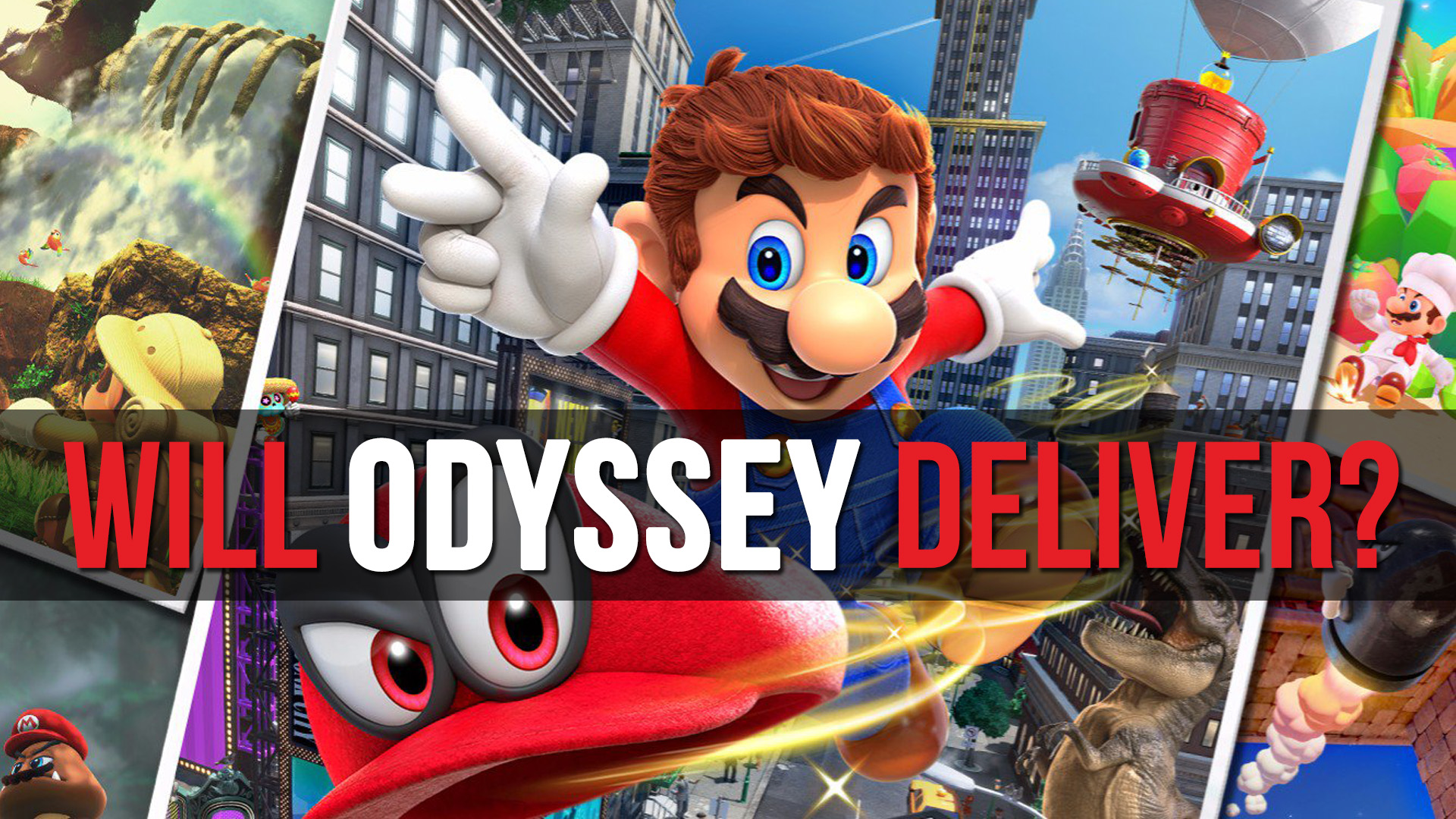
It’s amazing how many heavy-hitters the Nintendo Switch is getting in its first year. Some of Nintendo’s biggest franchises are being represented with all new entries featuring innovation and a high level of polish. That said, which game deserves the #1 sales spot when all is said and done? Will Breath of the Wild maintain its momentum from launch and stay king of the hill, or will Super Mario Odyssey become a runaway hit this holiday and dethrone the competition? We want your thoughts – vote in the poll by clicking the “i” icon!

“Escape the Premises” Kevin MacLeod (incompetech.com)
Licensed under Creative Commons: By Attribution 3.0
http://creativecommons.org/licenses/by/3.0/

E3 2017 Reaction Blow-Out!

This is an E3 to remember!


#530 – Nintendo just had one of their best E3s ever, and it’s not even over yet. In the span of 25 minutes, they managed to blow the socks off most of their hardcore fans. They really pulled out some big guns this year! Simeon and Scott are here with their fresh impressions of Nintendo’s newest announcements, discussing their failed predictions, and talking over what excited and surprised them the most. Join in the E3 hype in the comments!

“Escape the Premises” Kevin MacLeod (incompetech.com)
Licensed under Creative Commons: By Attribution 3.0
http://creativecommons.org/licenses/by/3.0/

E3 2017 Bingo Predictions!

How long do we have to keep being right in order for us to become paid industry analysts that make snarky remakrs for a living?


#528 – Each year, before the Electronic Entertainment Expo, Simeon and Scott take a stab at a swath of predictions! Nintendo will be streaming some bombshell announcements during their press conference / Nintendo Direct, and we’ve created a bingo board to keep track of our correct predictions! Can we score 5 in a row? Middle space is free!

“Escape the Premises” Kevin MacLeod (incompetech.com)
Licensed under Creative Commons: By Attribution 3.0
http://creativecommons.org/licenses/by/3.0/

If I Could Change One Thing…

We are not responsible for any first kisses that happen as a result of this episode.


#524 – If you were given the power to change one thing about a Nintendo console, which one would you pick and what would you change? Simeon and Scott are faced with many similar tough choices today – watch to see what they would decide! Comment below what you would change. Footage Credit: Super Smash Bros. Wii U Tripping – Master0fHyrule | Metroid Prime 3 Corruption SD vs HD – thepixelpress

“Escape the Premises” Kevin MacLeod (incompetech.com)
Licensed under Creative Commons: By Attribution 3.0
http://creativecommons.org/licenses/by/3.0/

Breath of the Wild Nostalgia

The Legend of Zelda: Breath of the Wild is a special game. Is it perfect? Not quite. But in my humble opinion, it’s pretty close. Throughout the 100+ hours I have dedicated to Breath of the Wild, I slowly felt more empowered, more confident, and more ambitious. Finally feeling strong enough to storm the castle gate pumped up the adrenaline inside of me. Not to mention, most of the game I felt as though I was running and gliding through a Bob Ross painting. However, rather than writing a full review on this game, I thought I’d highlight something that just stood out to me. That is, all of the intricate references to past Zelda games.

Beauty is Everywhere

Wherever, you look, whether you know it or not, you are probably seeing an homage to a past Zelda game. Every other landmark is named after a past character or location, although a letter might be missing or displaced in the name. I felt an unusual sense of happiness when I discovered Tingle Island, even though Tingle was nowhere to be found. I find it crazy that just a name can invoke such a feeling of nostalgia even if the landmark itself does not. There are also specific regions in the map that primarily focus on one game. I found a Phantom Hourglass Area, Twilight Princess themed area, even a Wand of Gamelon area.
Kidding on that last one.

There were many times when I encountered a landmark that tugged on the nostalgia strings. For instance, I was riding on my horse, Lacey (named after my real-life cat), and while I heard the subtle melody of the main Legend of Zelda theme, I stumbled upon Ranch Ruins. I couldn’t believe the condition of this place, and then it hit me that it was a dystopian Lon Lon Ranch. After I disposed of the Guardian that called it home, I took Lacey for a spin around the track and actually started getting emotional as I recalled memories of playing Ocarina of Time and pictured Malon Singing Epona’s Song in the center of the ranch. Another time this hit me was when I discovered Eventide Island (by far my favorite area in the game) and felt as helpless as getting washed ashore in Link’s Awakening. Yet another favorite of mine was discovering the Master Sword. This took me back to a Link to the Past thanks to three blue nightshades in the background.

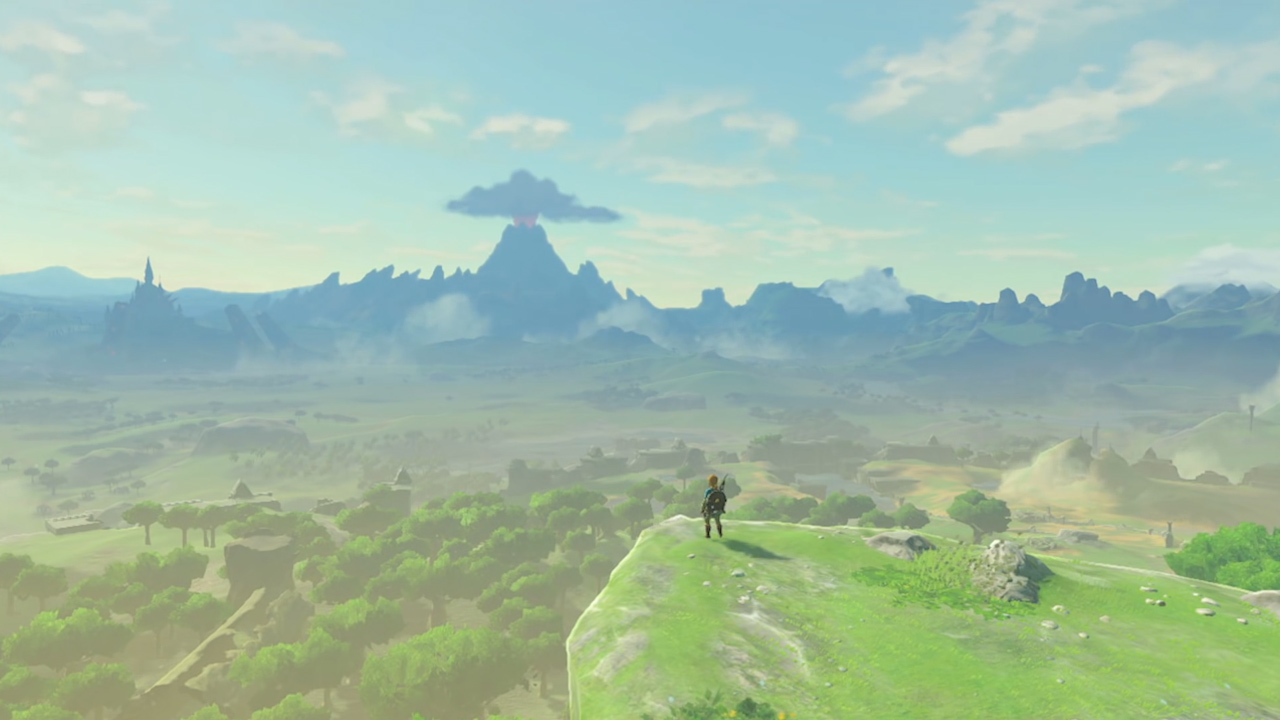
This game doesn’t forget about its roots, either. It was really nice to see the old man at the very beginning of the game, the only difference being instead of going into the cave to visit him, you go out of the cave. Maybe there is a deep meaning behind that? I’m not entirely sure, but when Link does leave the cave for the first time and overlooks the Dueling Peaks, I was instantly reminded of the artwork from the original game. The Master Sword shooting projectiles when Link has full health is also a nice touch.

Though these references may be a nightmare for people who are keen on placing this game somewhere in the franchise timeline, I view it as essentially a conglomerate of pinnacle moments in the series. For me, this aspect of the game is delicious icing on an already incredibly built cake. This is a special game not only because of its top-notch design, but because it doesn’t forget about how it came to be in the first place.

Did Switch Have Enough Launch Software?

Not only did we MOSTLY forget Just Dance, we COMPLETELY forgot Skylanders. I guess that tells you we are definitively not their target audience…


Another Nintendo console launch has come and gone! New systems are neat, but at the end of the day, it’s the games we care about. We buy our new hardware for the unique experiences that can be had on them. With that said, we are turning our scrutiny to the launch lineup of games that Nintendo and a few third parties prepared for us. Did it cover the bases for a variety of gamers? Is there enough to be satisfied until another batch of releases? Find out our thoughts in today’s episode, and let us know your thoughts in the comments below!

“Escape the Premises” Kevin MacLeod (incompetech.com)
Licensed under Creative Commons: By Attribution 3.0
http://creativecommons.org/licenses/by/3.0/

Nintendo’s Top-Selling Wii U Titles

Nothing more thrilling than game sale figures, amiright?


You might be very surprised at the sales records that some of the best Wii U games set. While not regarded as a financial success by most, the Wii U platform was home to some of Nintendo’s most polished work. And the sales figures and various attach rates prove that! Come with Simeon and Scott for a walk down monetary lane as they look at some dollars and cents.

“Escape the Premises” Kevin MacLeod (incompetech.com)
Licensed under Creative Commons: By Attribution 3.0
http://creativecommons.org/licenses/by/3.0/

Best Nintendo Sidekicks of All Time

TBC needs an offical… sidekick… YouTube channel! Now accepting applications.


Every superhero has a sidekick, and Nintendo’s stable of heroes are no different! But the characters that we find in Mario’s and Link’s shadows are not to be overlooked, because sometimes those characters are the ones that leave the biggest impression. That’s right – today’s all about the hero-helpers that made our gaming experiences amazing! Footage Credit: PMtTYD Yoshi – Tom Fawkes | TLoZ TP HD Midna – YOGSCAST Martyn | Paper Mario Goombario – RedFalconGames | Super Smash Bros. Wii U Falco – shofu | Super Mario RPG Geno – Zoundj

“Escape the Premises” Kevin MacLeod (incompetech.com)
Licensed under Creative Commons: By Attribution 3.0
http://creativecommons.org/licenses/by/3.0/

What You Get from Being TBC’s Patron!

We launched our very own Patreon page!

For almost two years, we’ve been making Nintendo discussion and gameplay videos every single weekday. It’s hard to believe we’ve been going for this long!

Well, it’s time to kick things up a notch and we need your help to make it happen. With a bit more support on our page, we’ll be starting the Two Button Crew podcast! And that’s only the beginning.

Giveaway

USA Residents: Back our page at the $5 tier (or higher) by March 31st to be entered to win one of these three prizes!

1. Breath of the Wild Soundtrack 2. Sheikah Coin 3. Apple Store Exclusive Super Mario Run Pin

Credits

Get your name in the credits of all of our videos for only $1 a month!

Votes

For $3 a month, you become involved in the planning of our show’s content by voting on upcoming videos.

Exclusive Videos

Behind-the-Scenes, bloopers, and bonus videos that won’t be available to the public. $5 per month lands you all these extras!

Tees

You can get your hands (and torsos) on TBC’s exclusive tee shirts, designed and distributed only to our highest tier of Patreon backers. Every 3 months that you support us with $15, you’ll receive an exclusive tee in the mail.
Want to see the first design?

“Warped Pipe” – Celebration of Prop Drops and all things Crew. Exclusively available to Patreon backers.

Did I mention that our rewards use stacking tiers? Each reward tier includes the perks of the previous tier!

So hop on over to our Patreon page and join the Crew with your support.

Good luck in the giveaway!

Initial Switch Impressions + Early Reviews

Similar to how “we” was suddenly a buzz word after the reveal of Nintendo Wii, it is now off limits to use the word “switch” without a wink-wink nudge-nudge to accompany its use!


We’ve only had a handful of days with the system, but BOY has it left an impression on us! There’s really something special about Nintendo’s Switch console/portable hybrid platform. And having a huge open world Zelda game on it sure doesn’t hurt! It’s very early to have a full review but we’re happy to provide our thoughts so far, and we’d love to hear yours in the comments below. Tell us how your experience has been!

Shot by Alex Campbell

“Escape the Premises” Kevin MacLeod (incompetech.com)
Licensed under Creative Commons: By Attribution 3.0
http://creativecommons.org/licenses/by/3.0/

Playing Switch with Strangers

You don’t need to be real life friends to be Switch friends.


Launch day – March 3rd 2017 – we took two Switch units to the local mall and invited passersby to take a controller and give the new console a spin. We found a lot of people who didn’t buy their own console that were happy to give it a try! Impressions were all very positive.

Shot by Alex Campbell

“Escape the Premises” Kevin MacLeod (incompetech.com)
Licensed under Creative Commons: By Attribution 3.0
http://creativecommons.org/licenses/by/3.0/