There’s a 2D Breath of the Wild on Switch eShop Scott’s Thoughts

On the Nintendo Switch eShop, there’s a 2-dimensional Breath of the Wild for sale.

It’s called SteamWorld Dig 2.

This is an indie title by Image & Form. You don’t have to like steampunk culture or have beaten the original to enjoy this title, it stands on its own as a must-play.

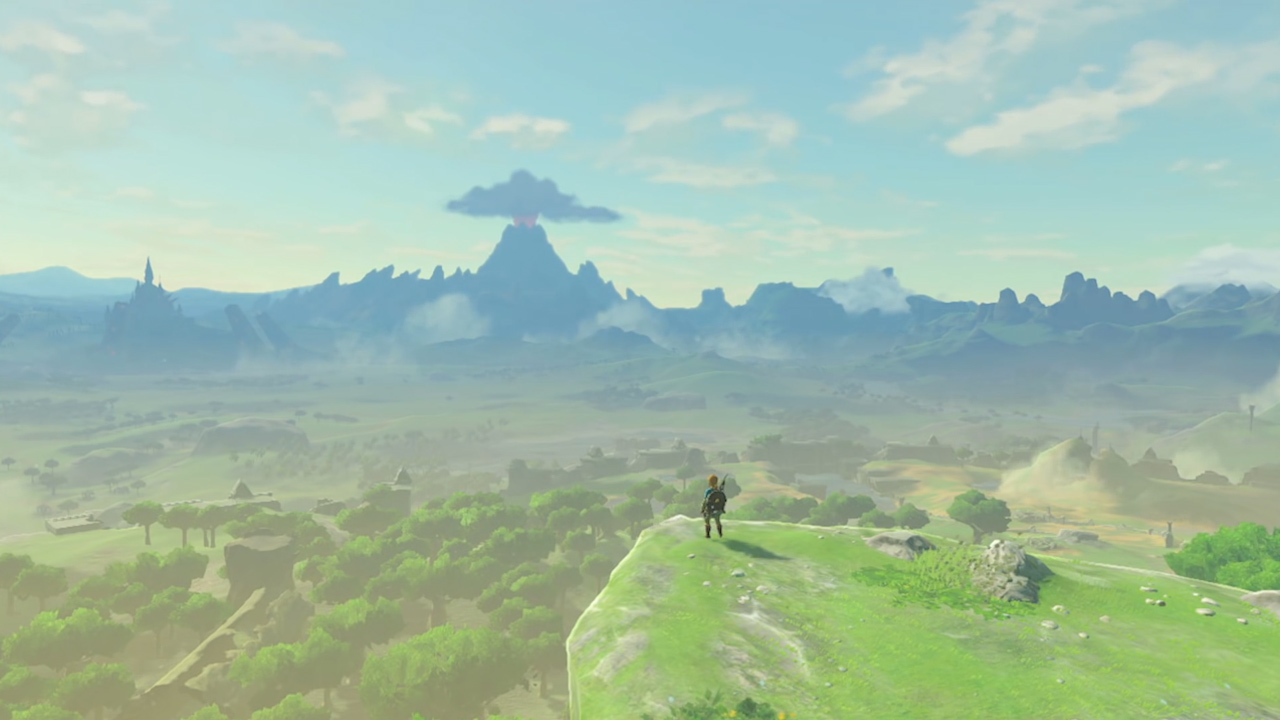
Everything that you loved about the the open-world Zelda adventure is here, in this little downloadable title.

Strictly speaking, Dig 2’s genre is most like a Metroidvania, but fans of Breath of the Wild will feel right at home in the game’s underground caverns.

Did you like defeating shrines? You’re in luck; with caves, puzzles must be completed to earn collectibles and power-ups. Just like shrines, caves feature additional hidden secrets apart from the main objective, for explorers and completionists.

Like Link’s stamina mechanics, the main character (Dorothy) has meters for water and light that the player has to keep an eye on and take into account while trying to reach new areas.

The game can be played nonlinearly, any time you wish to take a break from the main plotline to enhance your strengths.

Filling in Hyrule’s map by locating towers is not unlike uncovering new caverns and locating fast-travel points.

Special abilities can be unlocked that are very similar to the Champion Abilities in Zelda. I activated an especially helpful modification in SteamWorld which I lovingly referred to right away as “Mipha’s Grace.” Even the HUD elements share attributes in common, like how the special abilities indicate on-screen when they are ready to be used.

Don’t miss this title! Even if you don’t feel like you’re ready for “another Breath of the Wild,” keep in mind that this game is much smaller. SteamWorld Dig 2 doesn’t overstay it’s welcome.

It’s also plenty unique, with a creative world, interesting characters, and fun gameplay loops that keep you coming back and digging deeper.

TBC 005: Metroid: Samus Returns

Play

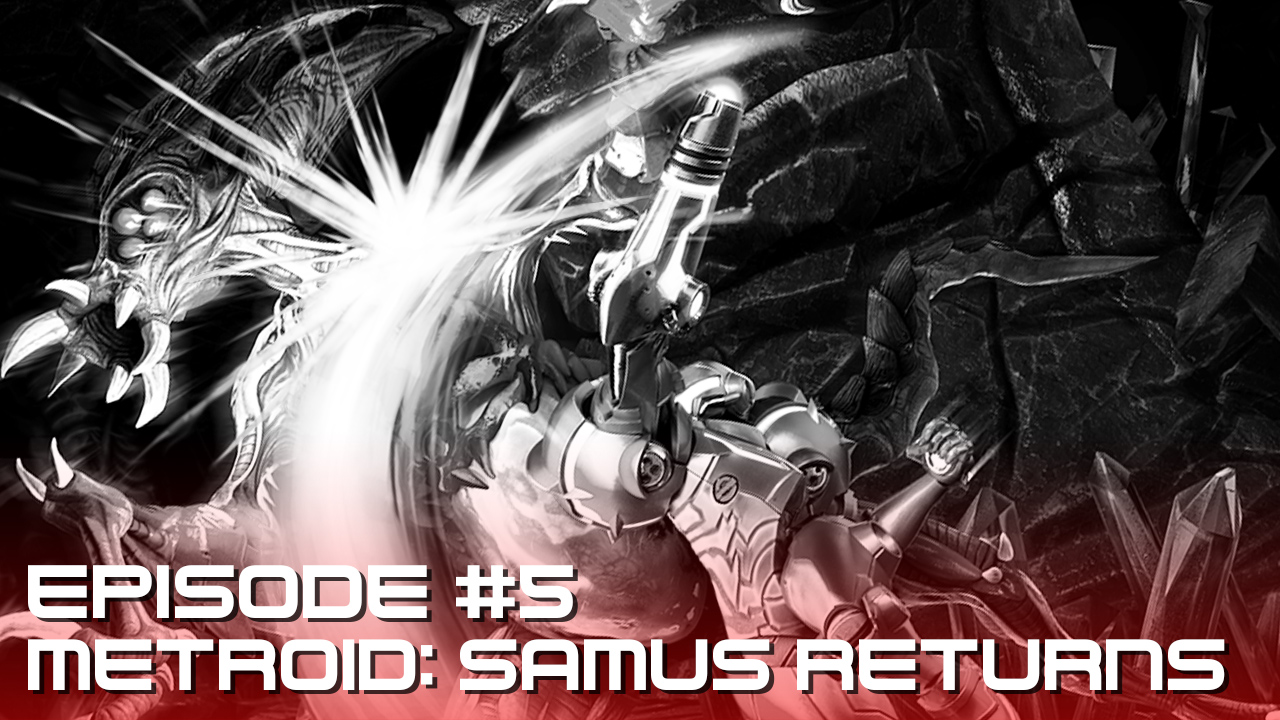
Samus is making a comeback! After a decade of misfires, the bounty hunter has returned to the starring role. This 3DS exclusive came out of the blue at E3, and a few short months later, was delivered to us along with amiibo figurines and special editions. After all the surprises and fanfare, how does the game hold up? The Two Button Crew hosts are here to discuss the controls, music, challenge, gameplay, and progression.
Ready for more TBC Podcast? We are an ad-free show, and you can support us on Patreon: http://patreon.com/twobuttoncrew
Get Your Daily Nintendose of Fandom on our YouTube channel: https://www.youtube.com/TwoButtonCrew
“Escape the Premises” Kevin MacLeod (incompetech.com)
Licensed under Creative Commons: By Attribution 3.0
http://creativecommons.org/licenses/by/3.0/

The Happiest Place on Earth

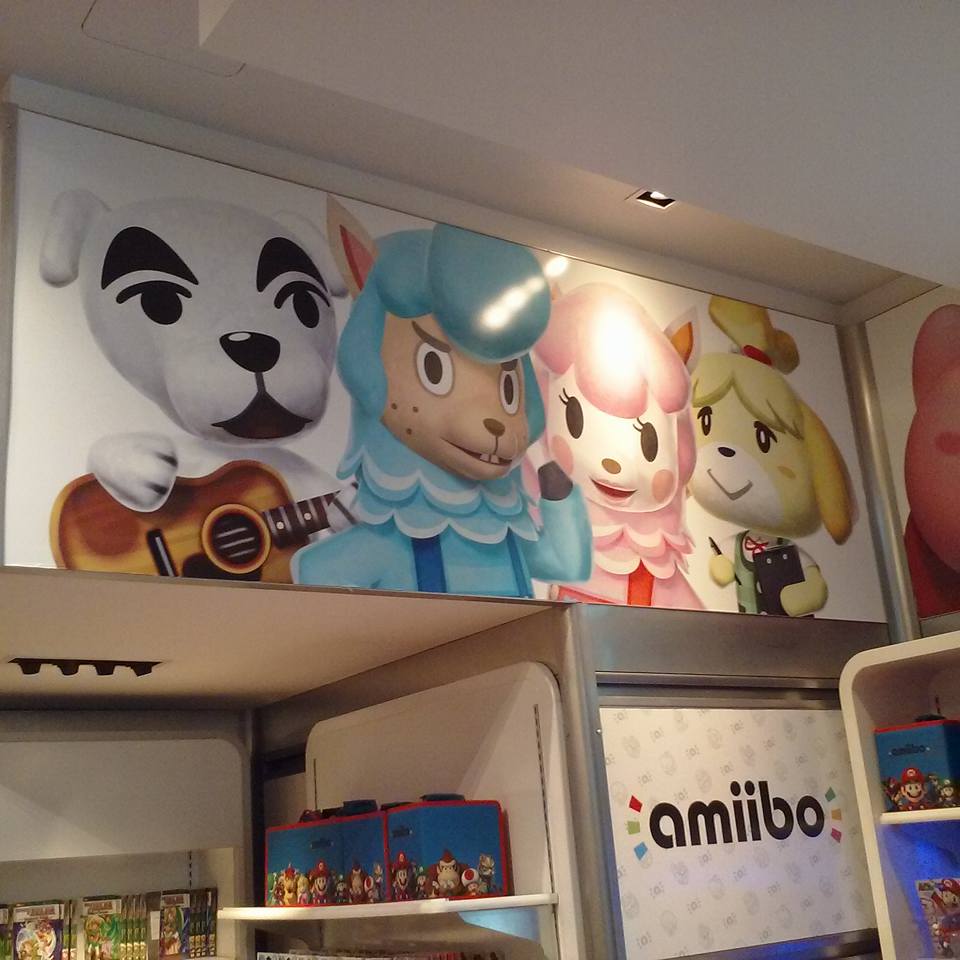
For many Nintendo fans, it is something of a rite of passage to visit the company’s only retail store in New York City. And when I mean “only”, I really mean it. The New York City store is the only retail storefront open to the public for Nintendo fans in the entire world. Every year, thousands of fans make the trek to the Big Apple to visit it. Why?

Because It’s Special

Nintendo New York (formerly known as the Nintendo World Store) is located in Rockefeller Plaza in the heart of the city. Before it transformed into a general Nintendo store, it was a Pokémon Center. For years, fans have made the drive or flight to visit the store. Sure, many come to New York for many other reasons, but stopping here is always a highlight. Some people, like myself, made the trip from Indiana specifically to go to the store, with other activities planned around it.

The store’s footprint is small… but it’s two stories, so the square footage is pretty sizable in the end. But the moment you walk in, you are in instant awe. Besides the eye-popping merchandise that smacks you in the face, the atmosphere and decorations just make you feel good.

Being the only Nintendo store in existence makes it special. It would still be special if others were to open up – which is what some fans are hoping for with the aforementioned renaming from Nintendo “World” Store to Nintendo “New York”. As it stands now, with only one store, it literally is akin to going to an amusement park, and you will look back on your visit there as fondly as if you had been to one.

Because It’s Fun

The Nintendo New York store is like nothing else. It is the hub of Nintendo goodness – one that you don’t even get when visiting the employees-only headquarters in Redmond, Washington, which I did when living in Seattle. If you are a longtime fan like myself, you will spend about a full minute just standing in the doorway with your mouth agape like I did. It is an amazing sight. The store just has a happy vibe to it – a Nintendo vibe, if you will. You are surrounded by beloved Nintendo characters, demo units, games, clothing and more. Much of the merchandise sold here is exclusive to the store. My traveling companion went wild in here when we went – she spent $471 before tax on plushies, T-Shirts, bags and more.

The store regularly holds fun launch events for major games. I was there in May of 2015, the day before the launch of the Wii U game Splatoon, and there was already a long line that stretched down the block in what would be almost 24 hours before the store opened on release day. They make game launches a huge deal with lots of fun, special guests, real life games and contests: they even held a mock fashion show for Style Savvy: Fashion Forward for instance. The pictures that accompany this post are from that time, and the interior has changed since the 2016 remodel.

On the second level you will find a small “museum” section. I believe they change them out every so often, but when I was there they had a section dedicated to the history of The Legend of Zelda with every imaginable game, manual, special edition console and accessories in a three section display case. In front of it was a “History of Nintendo Handhelds” exhibit with every portable console on display – even the obscure ones like the Game Boy Light (previously for sale only in Japan) and the Game Boy Micro. There were also a small aisle with individual cases for each of Nintendo’s home consoles from the NES to the Wii U.

The store is just flat out fun. It is fun to be in. I was in there for three full hours from 9am to just after noon, and it felt like I wasn’t there long enough. It’s a store that invites you to play and have fun, and celebrate Nintendo’s rich history without ever feeling too self-congratulatory. There is no Tom Nook stalking you around to pressure you to spend your bells on anything – you are free to be there as long as you want.

Because You Belong

Going to the store is not unlike going to a convention – everyone in there is a huge Nintendo fanatic, and it feels good to be around them. Your mileage may vary, but sometimes for me, it is tough to admit I am a Nintendo fan among my other gaming friends who specialize in Halo and Call of Duty. Nintendo is looked at as a console for kiddies, despite it being the original home to some of the best M-rated games ever like Eternal Darkness, the Resident Evil remake and Resident Evil 4. Admittedly, Nintendo has lagged behind in sheer hardware power for three console generations now, beginning with the Wii, then Wii U and now the Switch. But the draw of the Switch is its hybrid format of being a portable and a home console. I won’t talk about how awesome that is because if you like Nintendo, you are probably already aware.

But when you walk into Nintendo New York, you feel like you belong. No one will laugh at you for preferring Animal Crossing to Battlefield, or you spent over 100 hours playing Mario Kart 8 Deluxe instead of organizing your Destiny clan. And just like going to a Comic-Con, you don’t have to be ashamed of your preferences. The store encourages you to have fun and enjoy yourself, and there is no better place to do it than surrounded by Mushroom Kingdom pipe decorations and giant Bowser statues.

Because It’s the Happiest Place on Earth

Forget Disneyland. The Nintendo New York store is the happiest place on Earth. For all of the reasons I mentioned above – but the bottom line is that it is just fun. It’s like an amusement park without the lines (unless, of course, you are there for a game launch event). The employees are friendly. The shoppers are friendly. The music is friendly. The plushies are all smiling at you, and not in a creepy, Five Nights at Freddy’s way. It is an excuse for kids to be kids, and for adults to be kids again too, because it’s impossible not to become awash in memories of your own childhood when in the store and seeing everything they have to offer.


Eric “Flapjack” Ashley has been a Nintendo fan for almost his entire life! While he also has a special place in his heart for Sega, it is Nintendo that gets him worked up and the franchises that capture his imagination and wonder. Flapjack is hopelessly in love with Animal Crossing. When he is not playing video games, he is a social media guru, assisting numerous organizations with their outreach and promotions, and he is also a big horror movie buff. Follow him on Twitter and Instagram: @flapjackashley.

Donkey Kong Country: To Hate, or Not to Hate?


Simeon and Scott are trying to give Donkey Kong Country a fair shake here, even though they’ve never touched the game because of its graphics. Spoiler alert: they end up having a lot of fun and discovering some really challenging parts of the game. Extra spoilers: mine carts are involved. Beware the mine carts.

“Escape the Premises” Kevin MacLeod (incompetech.com)
Licensed under Creative Commons: By Attribution 3.0
http://creativecommons.org/licenses/by/3.0/

Switch is Selling, But 3rd Parties Aren’t Buying


Do you want the good news, or the bad news first? (Well, too late – we already recorded this episode.) As you’ll see in the video, the good news is that Nintendo is on a huge roll with hardware sales. The bad news is, some third parties are still holding out before committing to support the system with games. Will it be too late by the time they get on board?

“Escape the Premises” Kevin MacLeod (incompetech.com)
Licensed under Creative Commons: By Attribution 3.0
http://creativecommons.org/licenses/by/3.0/

Making Time for Gaming As Adults


The great majority of our viewers are adults, so you know what it’s like to try and squeeze a hobby into your schedule. You’re already busy, whether it’s with kids, work, school, or all of the above. How does one set aside time for gaming? What are some things you might have to say “no” to, in order to get that coveted console time in? Simeon and Scott have a few thoughts and ideas to share.

“Escape the Premises” Kevin MacLeod (incompetech.com)
Licensed under Creative Commons: By Attribution 3.0
http://creativecommons.org/licenses/by/3.0/

Octopath Traveler – Day of the Demo


Neither Simeon or Scott are big RPG players, but how can you resist a game that looks like Project Octopath Traveler? Especially when a free demo is available! This Square Enix title is coming to Nintendo Switch in 2018, but we’re going to take it for a spin and get some initial impressions of the game.
“Escape the Premises” Kevin MacLeod (incompetech.com)
Licensed under Creative Commons: By Attribution 3.0
http://creativecommons.org/licenses/by/3.0/

2017: One of the Best Gaming Years in History?

Fall is already upon us. Leaves are changing, the air is becoming cool and crisp, and good games are seemingly being released left and right. Alas, this blog is not about the season, but about 2017 as a whole. Yes, we have a few more months before it wraps up, but in less than a week, Nintendo’s juggernaut, Super Mario Odyssey will finally be released. I for one cannot wait to sink my teeth into this game. Having already received a perfect score, I think we are in for a fun ride. That being said, I want to focus on what has already been released, and why I think 2017 has been one of the most glorious years for gaming in recent history.

Nintendo is a company that fans expect a lot of. They always seem to set the bar of quality game design higher and higher. Take Breath of the Wild for instance. This game takes the best aspects of the franchise and capitalizes on what makes it great. I felt no greater sense of adventure since I was a young kid playing Super Mario 64 or Ocarina of Time for the first time. This is undoubtedly special, and why so far Breath of the Wild is currently* game of the year for me.

*subject to change

A franchise that was essentially brought back from the dead this year is Metroid. Samus Returns does everything that I was hoping it would. Appealing visuals and tight controls, along with the new melee addition, make for a really addictive journey. I would love to see the developer have free reigns and make a brand-new Metroid game.

This year in particular, smaller, more tightly knit developers are also getting more attention. Sonic Mania is living proof that sometimes, fans know exactly what is best for a franchise. The game was made by only a handful of inspired and passionate people, and look what resulted. The same can be said for the recently released Cuphead. Though not on a Nintendo platform, I couldn’t pass this one up. The 1930’s art style is one that I have never seen before in a game, and pushing through the brutally hard difficulty is so worth it only to experience more. My point is, gamers are starting to appreciate the hand crafted, quality approach, and developers are responding.

A Game of Year Contender for sure. Competition is fierce this year.

The release of the Switch was also monumental, and completely necessary, to erase painful memories of the Wii U era. I love that Nintendo doesn’t feel the need to compete with competitors by powerful processing or graphics, but with intuitive design. A portable home system is something that will pave the way for years to come. When Nintendo becomes irreverent in the industry, Nintendo is at its strongest. We were also fortunate enough to get the SNES classic, so I can replay some of my favorite games of all time the way they were meant to be played.

Perhaps I consider 2017 so impressive because it made franchises relevant again. It made Nintendo relevant again. No, we didn’t get a new Animal Crossing game or a Pikmin game (at least not the type I’d want to see), but we did get a plethora of games that were not afraid to redefine themselves. When I look back on the year and reflect, I see a year of revitalization. A year of redefining what gamers actually want: quality.

Are We Any Good at Star Fox 2?


Star Fox 2 is a divisive game. Media outlets tried scoring it, but that was met with much strife over how a cancelled SNES game should be scored in 2017. Let’s put all that aside and actually play the game, shall we? Scott actually makes it way farther than he expected to in this run. Thoughts on the game? Comment below.

“Escape the Premises” Kevin MacLeod (incompetech.com)
Licensed under Creative Commons: By Attribution 3.0
http://creativecommons.org/licenses/by/3.0/

Next Classic Edition: Gameboy Vs. N64


We were amazed and surprised by the NES Classic Edition. We were relieved and glad for the SNES. Now… what’s next? Gameboy or Nintendo 64? Time will tell, but Two Button Crew is here to stack up the pros and cons of each and determine which is more likely! Agree? Disagree? Let us know in the comments!

“Escape the Premises” Kevin MacLeod (incompetech.com)
Licensed under Creative Commons: By Attribution 3.0
http://creativecommons.org/licenses/by/3.0/

Nintendo’s Making Lots of Excuses


Nintendo, supply, and demand. Three words that don’t always mesh together very well. They’re at it again, this time with the SNES Classic Edition. And when the Public Relations dude at Nintendo seems lost for words, well, the situation must not be pretty. Also, Sonic Forces isn’t shaping up too well on Switch. Unfortunately, a bit of a downer this News week. However, we round things out by talking about the awesome Nintendo World Championships!

“Escape the Premises” Kevin MacLeod (incompetech.com)
Licensed under Creative Commons: By Attribution 3.0
http://creativecommons.org/licenses/by/3.0/

So… Let’s try this “Stardew Valley” Thing


Scott’s grandpa just died and left him a farm (Two Button Crew Farm, to be precise) to inherit. After clearing out some dead branches, bushes, and rocks, Scott was ready to plant a few parsnips. But he has no idea what he’s doing, and there’re a bunch of neighbors in the city nearby that he’s yet to meet. Oh, and he hasn’t eaten in 7 days. How will Scott survive? Watch to find out!

“Escape the Premises” Kevin MacLeod (incompetech.com)
Licensed under Creative Commons: By Attribution 3.0
http://creativecommons.org/licenses/by/3.0/

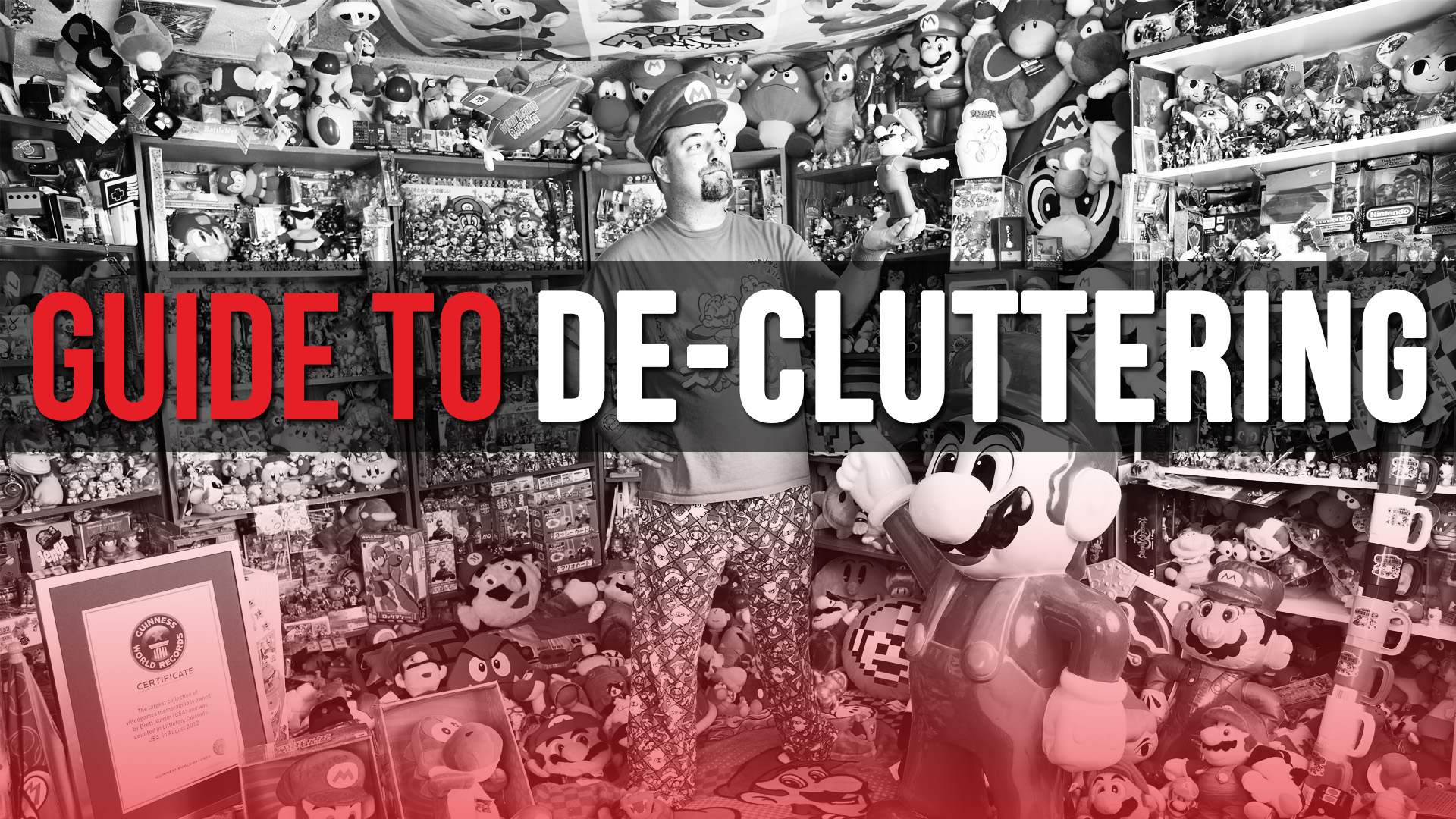
Do I NEED This?: A Gamer’s Guide to De-Cluttering

Recently I have been looking to downsize my video game collection. I am giving away and selling some old consoles, games, and accessories (blasphemy, I know). The fact is, I am a pack rat, but there are just some games that I do not play anymore, and I need to do some de-cluttering. I have had to think long and hard before I made the really difficult decision to toss some of the games in my closet, but the experience has been a freeing one. Not only do I have less “junk” lying around the house, but I no longer feel bound to my possessions, which is extremely freeing. So, if the thought of getting rid of a single game in your collection has you mumbling incoherently in the fetal position, let a fellow gamer lend you a hand.

These are the questions I ask myself of each game/piece of equipment I come across in my sorting adventures.

Do I even like this game?

I have a hard time getting rid of any game. I see that, as a thing, it has to have some sort of monetary value. I purchased it (or it was a gift to me), and, therefore, somebody spent good money on this! I cannot just throw it out, can I?

Well, it turns out I can. I do not really care for sports games, though my older brother did. I have cut a good portion of my clutter size down by being honest with myself, saying, “He might have liked this, and I might have had a good time or two, but I would rather be playing something else if I had the choice.” Remember the good times, but do not be afraid that your memories will fall out of your head if you get rid of something.

I almost wish I had kept this game it was so bad.

Does it work?

This is a similar question to the one above but is usually in reference to hardware. We either think, “I put money/time into this, even though it is broken.” Sometimes we try to rationalize, “I am going to get this fixed, someday!” even though you have no intention (much less the time or money) to actually fix it. I am not saying that broken equipment never has enough sentimental value to keep it solely “for old times’ sake”, but, like with bad games, if the memory is that important to you, it will not go away because your busted GameCube is in the dumpster.

How long has it been vs. how long have I had it?

This one is extremely practical. I have Wii games that I have had for years but never play anymore. They are going out with my next batch of games to be pawned at a small, but reasonable price.

Some games I have, though, just have not been given the chance to outstay their welcome. On one hand, I have hardly played Super Smash Bros. for 3DS since the release of the Wii U version. On the other hand, the game is only a few years old, and I have not had the chance, necessarily, to go “back” to it yet. Maybe I will want Smash Bros. on the go sometime soon. If I am asking myself that in ten years, however, I might have to take a second look.

There is another side to this, of course. Scott has been in the mood to sell his games soon after purchase because he does not see himself returning to the title. He gets the biggest bang for his buck by reselling right away, as opposed to seeing the game collect dust, and trying to get rid of it after the game is out of date.

Do I have this game in a more convenient form (Virtual Console, collections/anthologies, etc.)?

“But this is the original NES cartridge! Playing it on a modern console, even though it has been perfectly faithfully been ported, is just not the same!” This is one that, as a pack rat, I have had to wrestle with constantly. I am getting rid of many of my NES cartridges because I have them on collection elsewhere. Yes, this even includes some of my original series Mega Man games (but not my world record Mega Man 6 cart. That thing is getting framed or something). Collections are not only a great way to make accessing your games more convenient, but they also pave the way to downsizing, which is a good thing.

Is this an outdated version?

This question does not apply to most genres, as, usually, each version of a game brings something completely unique to the table. Fighting games, on the other hand, are often outdated by the next version. Is Marvel Vs. Capcom 3 REALLY worth keeping when you have the Ultimate version? Sure, there is a UI difference, but balancing patches and new characters have just made the update a better game. Let it go.

Do I have alternative console methods?

Because I have a Retron 3 I will probably be getting rid of my NES and SNES. The only downside to saying goodbye to them would be my inability to use my wireless NES multitap (though, if I got a wired one, my problem would be no more).

Retrons and similar consoles allow for ease of access and space saving. Retrons even allow you to use the original console’s controllers.

Also, you might have access to an emulator, like a Raspberry Pi. Not that I am advocating illegal emulation. Or admitting that I use my Raspberry Pi for emulation. I am not.

… Admitting it, that is.

These are some of the considerations that I used in sorting through my video game collection. Take it from someone who has been there: the process may be difficult, but the rewards are well worth it. Tune in next time as we discuss proper console dusting techniques!

Mega Man X – Newb Vs. Pro


In our previous Mega Man Trivia episode, we proved that Simeon is a master of Mega Man knowledge. This video, today, is here to prove that Simeon’s got just as much skill in-game as he does outside. And for your comparison pleasure, we have Scott, who will contrast Simeon’s awesomeness with pure newbishness.

“Escape the Premises” Kevin MacLeod (incompetech.com)
Licensed under Creative Commons: By Attribution 3.0
http://creativecommons.org/licenses/by/3.0/

Maga Man Trivia – Can We Stump the Pro?


Simeon is a bit of a Mega Man whiz. He’s a speedrunner and all-around know-it-all when it comes to the Blue Bomber. But can Scott scour the internet for obscure details about the franchise to take Simeon by surprise? Watch and see!

“Escape the Premises” Kevin MacLeod (incompetech.com)
Licensed under Creative Commons: By Attribution 3.0
http://creativecommons.org/licenses/by/3.0/

Future of 2D Metroid, Wii Shop, Mega Man?!


In the first-ever installment of Live Show News, we’ve got our crystal balls out to talk about the ~future~ of video games! Wii Shop Channel? Mega Man? 2D Metroid? It’s all here, and discussed by Simeon and Scott!

“Escape the Premises” Kevin MacLeod (incompetech.com)
Licensed under Creative Commons: By Attribution 3.0
http://creativecommons.org/licenses/by/3.0/

Steam-Rolling Through Dig 2!


It’s the first installment of Let’s Play Switch! Simeon and Scott sit down to take SteamWorld Dig 2 for a spin, the newly released digging Metroidvania Nindie title. Is it worth your $20? Yes! Is it worth you watching this entire video? Yes again!

“Escape the Premises” Kevin MacLeod (incompetech.com)
Licensed under Creative Commons: By Attribution 3.0
http://creativecommons.org/licenses/by/3.0/

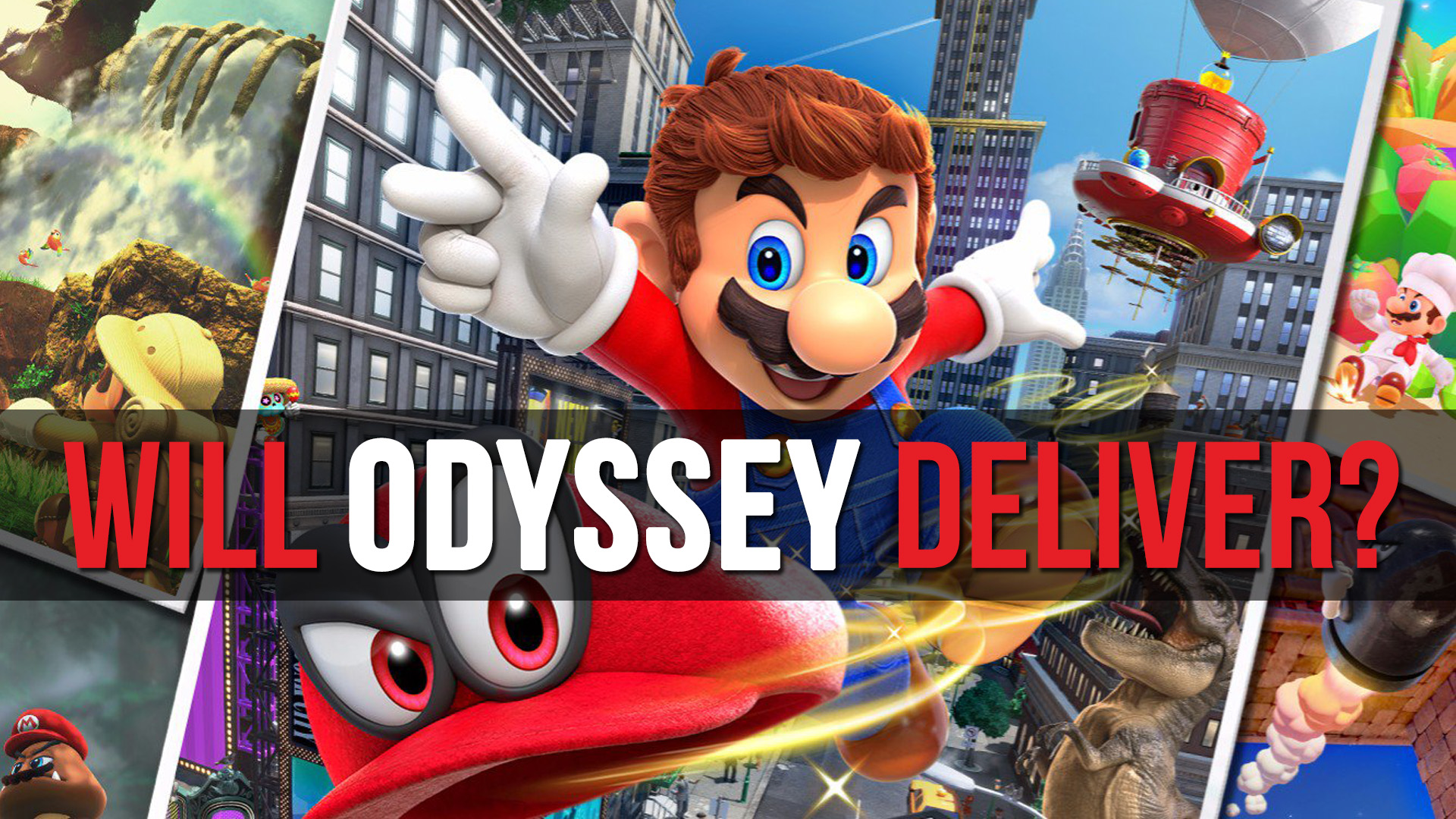
Will Odyssey Deliver on the Mario Formula?

It’s hard to believe, but this month marks another monumental game release from Nintendo! Joining the ranks of games discussed for decades like Super Mario Bros., Super Mario World, and Super Mario 64 is the newest game we won’t stop talking about for generations: Super Mario Odyssey. Link did a fantastic job carrying Nintendo’s new console through its infancy, but the torch is being passed to the plumber himself. Buckle up folks, this is gonna be big.

There’s no doubt Odyssey will sell millions, even a few tens of millions, or that it will be a hot topic for the entire Switch lifespan and beyond. But that’s not to say it’s a guaranteed hit. What we don’t know yet is: will it be good? Will it be truly great?

The potential is there. The track-record is evident in the series’ preceding entries. All Mario needs to do is avoid a few pitfalls, stick to what has worked, and wow us from time to time. A combination of tried-and-true best practices and fresh experiences will create a masterpiece.

Half of the puzzle has already been completed. The fresh ingredients: totally accounted for. We won’t be left wanting for any wow-factor, as already evidenced by numerous surprising trailer moments: Mario jumping out of a realistic city street’s manhole, Mario’s hat being alive, the game has T-Rexes… just to name a few.

Today, what I’m concerned with is this: Did the developers keep what worked from previous entries in the series? From the short time I’ve played Mario’s new adventure, and from what I’ve seen of others’ gameplay, I’m not so sure. I keep looking for those non-negotiable Super Mario elements, and unfortunately, some of them aren’t evident. Take a look for yourself.

Tight Controls

If we choose to ignore the Arcade Mario Bros. title, we can safely say that the Mario series has always featured tight controls. Whether you were making pixel-perfect adjustments with a D-Pad, or performing aerial cartwheels with an analog stick, the player always had complete and finite control over the mustachioed hero’s movements. However, Nintendo is pushing a control scheme on this game that will prove to be unideal. They say that disconnected Joy-Con with motion controls is the best way to experience Odyssey. However, that leaves us with the Switch’s signature small sticks (or S.S.S.S. for short). The analogue sticks on Switch aren’t very tall, and thus have a reduced range of motion. That’s fine for games like Breath of the Wild, where your character is often traversing in the same direction for long periods. But for intricate platforming, more range is needed.

I would recommend the Pro Controller as an alternative, but we run into further complications with that scheme, just like we do in Handheld mode: motion controls disappear (good), and are replaced with complicated combinations (bad). You would think with all the face- and shoulder-buttons at the Switch’s disposal, simple assignments would suffice, but unfortunately, performing the spinning-Cappy-throw (for example) requires you to physically spin Mario in a circle before hitting the Cappy button.

Another area you will notice the absence of tight controls is in 2D segments—you know—the really cool-looking 8-bit graffiti art portions? As attractive as those look in trailers, it’s really weird and off-putting to play with a modern controller. Imagine trying to navigate the original Super Mario Bros. with an analogue stick, and you’ll get an idea of the sensation. Furthermore, 3D “rules” of Mario still apply during these retro levels, which means running into a Goomba doesn’t make you shrink down, but you lose part of your life meter instead, resulting in a feeling of disconnect.

Level Design

If there’s one thing Super Mario Maker proved, it’s that we all have a long way to go in becoming level designers. The community generated courses simply caused me to appreciate Nintendo’s internal team more, who have proved time and time again that they can carefully craft experiences that will pull newcomers and veterans through to the end. Each level in a Mario game has clear goals, features, and themes. In Super Mario Odyssey, this clear-cut level design might be ditched in favor of an overly-open, sprawling collection of miniature attractions. Places to earn Moons are abundant, which could be a detriment to more meaningful challenges.

Progression Structure

To be perfectly honest, I’m most concerned about this one. We just discussed the plethora of Moons that this game contains, and it doesn’t excite me. 120 Power Stars was a lot to collect in Mario 64, but it was manageable thanks to a cohesive overworld that guides you to specific worlds, and specific tasks within those worlds. The developers of this new Switch title tout the fact that gameplay is returning to a sandbox nature, but that implementation can be taken too far.

In past Mario games, you know if you’re missing something. You know if a world is incomplete, and if a level was too difficult to clear for the time being.

In Odyssey you are provided with a list of Moons collected (with dates), but how will you know where new ones are? How will you know if you got all the Moons in a certain area, except one that you’re missing one in the corner? How much backtracking will be involved, and how many Moons will I pass up simply because I didn’t think to ground-pound a certain summit, or break an inconspicuous box?

You see, I’m a Shrine kind of guy. I love counting down from 120, hearing my Sheikah Slate alert me to a Shrine’s proximity as I enter a new area of the map… but you’ll never catch me trying to collect all the Korok Seeds. And I’m afraid that Moons are more akin to Seeds than Shrines. I hope I’m wrong.

Power-Ups

Gotta love Mario’s power-ups, right? Fire Flowers, Capes, Penguin Suits, Boo Mushrooms, and more! Well, they’re gone, folks. At least, that’s what this quote from the game’s producer heavily implies:
So when we wanted to create Mario games this time around we wanted to focus on the actions Mario can do and in previous Mario games he was able to get power-ups and new abilities. But this time around when we were making many different prototypes and changed our approach that found capturing or “possessing” enemies worked well so we stuck with that. -Mr. Koizumi

It’s unfortunate, to see such a mechanic go. In 2D Mario games, getting a Super Mushroom and earning that feeling of added security and power is iconic. In 3D titles, power-ups haven’t ever been as strongly implemented, but as a result, getting a Fire or Ice Flower felt like a treat. These elements have been discarded in favor of Cappy.

Gimmicks

Speaking of Cappy, he’s the new gimmick! New entries often feature a defining “gimmick,” be it Yoshi, Fludd, or over-the-top new power-ups like the Cat Suit. These open up whole new gameplay opportunities and dictate much of the level design. Odyssey’s most prominent and promising mechanic is Capture, which satisfies this aspect of the Mario formula nicely.
Let’s just hope Cappy doesn’t turn out to be the new Navi, eh?

Music

Mario music typically accomplishes two things. One: it’s catchy, and it gets stuck in your head. Two: it provides strong location associations. You can close your eyes and know exactly when Mario is underwater, in a dessert, or in Bowser’s castle. Did you just hear each of those themes in your head? I haven’t seen enough to know if Odyssey will deliver on this front, but there’s a good chance it will.

Enemies & Bosses

Baddies in the Mushroom Kingdom are always fun to stomp, and they don’t usually get repetitive or bothersome like the creatures in Metroid: Samus Returns. Hopefully, this game’s design will still lend itself to some combat, rather than just Capturing the majority of enemies in sight.

Bosses, while providing a spectacle, are typically an easy three-hit affair. This is an area where the new Switch title could easily improve upon tradition, and make boss encounters more intricate and memorable.

Charm

What would a Mario game be without charm? Character design, animations, music, and polish all create a compound for charm. Mario may be formidable when facing the forces of evil, but he’s equally adorable.

So… what’s this about real tyrannosaurus rexes roaming around? And realistic, proportionate humans walking alongside Mario in New Donk City?

I’m really questioning these design choices, and have been ever since the game was revealed.

Conclusion

Overall, Super Mario Odyssey appears to be a hodge-podge.
That’s the word for it. Just a big stew of locations, art-styles, new and old Mario sensibilities, and certainly a gigantic mix of objectives and tasks.

Will such a recipe, with that many ingredients, actually turn out well? I sure hope so, because I’m a day-one customer and lifetime Mario fan. I do trust Nintendo, but I’m not fully sold on this new direction, and I know I won’t be unless I take the game home and it proves me wrong. If that happens, I’ll update you! Fortunately, I’m entering the experience with low expectations, and that’s the safest posture to take. We’ll find out on October 27th!

What Does “8-Bit” Mean?

Ah, pixel art…Nothing says “video games” quite like a 32×32 pixel sprite. Retro sprites are a fascinating art form: unlike many other mediums, the conventions of pixel art were born of technical limitations, not creative freedom. While the nuances of the medium are often lost on modern developers, who see the limitations as an excuse to churn out overly simplistic animations, classic games would often feature impressively detailed animation frames. To this day, even single frames of these animations are downright iconic and instantly recognizable to fans around the world, something that few other animated works can boast!

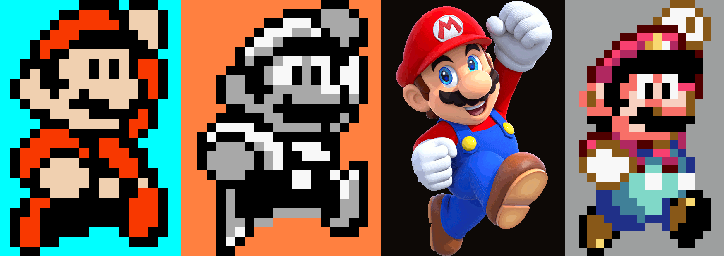
Pop quiz! Which of the following are 8-bit images?

Probably should've added some negative space to the top and bottom...
Please excuse the fact that these aren’t in chronological order.

Believe it or not, only the second one from the right is 8-bit. “B-but, but the NES and the Gameboy were both 8-bit systems!” you say. Yes, well, maybe it’s time we actually examine what exactly “8-bit” means.

In Computer Imagery

Let’s start with what bits mean for pictures. There are two basic ways of composing pictures: color channels and indexing. In a picture that uses color channels, each color is represented by a mixture of primary colors with each primary color composing one of the image’s color channels. These colors are red, green, blue, and sometimes an additional “alpha” channel that represents opacity (i.e. how much you can’t see through it). Every pixel in the image is a combination of these channels.

The number of bits dedicated to each pixel is known as the image’s color depth. As you may know, bits are binary digits, hence the name (binary digit). Because of this, every sequence of bits can represent 2n values (where n is the number of bits used). That means an image with a color depth of three—which is to say one bit per channel—can have two shades of red (fully black and fully red), two shades of green, and two shades of blue, which combine for a total of eight (23) colors. In today’s day and age, most images either have a color depth of 24 for plain R.G.B. or 32 for R.G.B.A., dedicating eight bits (one byte) to each color channel. That means R.G.B. images these days can contain up to 16,777,216 colors. Any more than a byte per color channel results in diminishing returns.

The number of bits dedicated to each pixel is known as the image’s color depth.

As you can imagine, three bytes per pixel adds up quickly on a console that only has 2 kilobytes of video R.A.M. While it’s easy to forget in this age where most computers typically have four to sixteen gigabytes of R.A.M. and terabytes of storage, space—both memory and long-term storage—was a valuable commodity back in the 80’s and 90’s. That’s where color indexing comes into play. Instead of storing color values per pixel, indexed images have a set of color values stored in a lookup table (i.e. the palette) with each pixel being represented by a single number that refers back to a position in the lookup table. For instance, if the color in position 5 of the table is red, then every pixel with the value 5 will be displayed as red. While this would limit the number of colors in an 8-bit image to 256, that’s 256 out of any of the thousands or millions of 16-bit or 24-bit colors available.

So, knowing this, where does this leave the NES’s graphics? An NES sprite consists of four colors, three visible and one transparent. That makes NES sprites 2-bit sprites. Don’t look at me like that, it’s the truth!

Now I’m sure some of you are thinking, “well, just because the sprites are only 2-bit doesn’t mean NES graphics aren’t 8-bit. The NES could produce way more than four colors at a time!” Okay, while we’re stretching terms a bit (or more accurately, crumpling them up and chucking them into the fireplace), I’ll be generous. The NES used the YpbPr palette, which consisted of 64 colors. So if we were to hypothetically classify the NES’s graphics in regards to the total number of colors available, that would mean the NES has 6-bit graphics. To add insult to injury, only 54 of the colors are useful, as many of them are identical shades of black. That said, the NES did include an additional three tinting bits (one for each primary color). While this increases the theoretical number of colors to 432, the tint is applied globally, meaning all sprites and tiles on screen were tinted at the same time. So, in actuality, it really just had 8 sets of 54 colors. What are we at now, 9-bits?

Note the conspicuous lack of yellow. No wonder Sakurai wanted Kirby to be pink!
All 64 colors the NES could produce prior to tinting.

What Does 8-Bit Really Mean Then?

So why is it we call sprites from the NES “8-bit” when they’re actually 2/6/9-bit? Simple, they were from games released on an 8-bit console. Of course, that begs the question: “what’s it mean when we say a console is 8-bit?” The number of bits ascribed to a console refers to its central processing unit. The NES used a Ricoh 2A03 processor (or its counterpart the 2A07, used in P.A.L. consoles), which is an 8-bit processor.

Looks kind of like one of those "Hexbugs" I see on TV.
The CPU of the Nintendo Entertainment System.

So what’s makes an 8-bit processor an 8-bit processor? When someone says a processor is “X-bits”, they are referring to the processor’s word size. In computer science, the term word refers to the standard computational unit of a machine. That means an 8-bit processor has a word that’s eight bits long, which in turn means that the C.P.U. processes eight bits in one operation.

My System Has More Bits Than Yours!

Just how important is a system’s word size? These days, manufacturers don’t even mention their consoles’ word size, but back in the 80’s and 90’s, it was a major part of a platform’s marketing. The logic was if a system had a 16-bit C.P.U., it could process twice as much data as a console that only had an 8-bit C.P.U., right? Unfortunately, the reality isn’t that simple.

While technically a 16-bit C.P.U. processes twice as much data bit-wise as an 8-bit C.P.U. per calculation, we need to keep in mind what that data is actually representing. Consider the following binary numbers:

  • 00011001

  • 00000000 00011001

Both the 8-bit value and the 16-bit value equal 25, with each representing the contents of one word for an 8-bit and a 16-bit system, respectively. Notice how they appear identical save for the number of leading zeros? Words can be thought of like boxes: if the number placed inside is smaller than the box, then the excess space is filled with packing peanuts… or, zeros. This way, the processor doesn’t have to worry about how long the number’s binary representation is and instead just performs whatever calculations are needed on the entire word. All of that is to say that unless the calculation in question requires numbers that exceed the maximum value that can be represented with the number of bits in the system’s C.P.U., there isn’t actually any speed boost.

That said, when the largest number you can handle at one time is 255, those extra-bits really do make a difference, so maybe the 8-bit and 16-bit divide isn’t the best example.


In the end, the reason we call sprites from NES games “8-bit” isn’t because the graphics themselves are 8-bit, but because of a sort of linguistic cross-contamination. The systems of the 80’s and 90’s were advertised by exploiting consumer ignorance to turn technical terms into marketing buzzwords, resulting in the systems having much of their identity tied to these terms. Because of that, anything associated with the consoles from that era is going to be collectively referred to by the one unifying descriptor available: 8, 16, 32, or even 64-bit. In the end, it’s ultimately harmless; these terms have an understood meaning and are thus perfectly descriptive in the context in which they’re used. Really, the only real confusion this causes is that I’m somehow okay with it; normally I’m the type go on a long rant whenever anyone says “Ethernet cable” when they really mean “Cat-5”.