What would you give for a 2D sidescrolling Metroid game right about now?
Metroid Dread is a canceled Nintendo project shrouded in secrecy. We have done our best to unearth all existing information and present it to you along with a few new tidbits! Join us as we discuss what could have been…
Shot by Alex Campbell
“Reformat” Kevin MacLeod (incompetech.com) Licensed under Creative Commons: By Attribution 3.0 http://creativecommons.org/licenses/by/3.0/
There are a few great games coming out on 3DS lately, which is sad.
Why is it sad that stellar software is being brought to a Nintendo platform? Well—because it’s Nintendo’s “old” platform. The Switch owners’ sentiment is largely we’ve moved on. Bring the game to Switch.
3DS is now a low-resolution, outdated, clunky, extra-device-with-battery that needs to be charged… And I can’t bring myself to buy games for it. Here’s what I’m missing out on:
Detective Pikachu (this game isn’t even in three dimensions for goodness sake!)
Mario Party: The Top 100
Rhythm Heaven Mega Mix (even though it went on sale for 50% off to try and entice me even more)
Mega Man Legacy Collection 1 & 2
BoxBoy sequels
Chicken Wiggle
Thankfully, some of the above items are confirmed Switch ports. The rest, I can only hope.
It would have made FAR too much sense to play the games in chronological order! Nah!
Today is Scott’s 23rd Birthday, and to celebrate, Simeon is giving him the chance to display his skills in all 5 official Super Smash Bros. games. 64, Melee, Brawl, 3DS, and Wii U are all included in this challenge, and the player that wins the majority of rounds is declared the Ultimate Super Smash Bro. Simeon wouldn’t dare humiliate Scott on his Birthday, now would he?
Shot by Alex Campbell
“Escape the Premises” Kevin MacLeod (incompetech.com) Licensed under Creative Commons: By Attribution 3.0 http://creativecommons.org/licenses/by/3.0/
SteamWorld Dig is a revolutionary indie game that took the 3DS eShop by storm. Now it’s back in high definition on Nintendo Switch, ready to be taken anyway or taken in on the big screen. This game features Rusty, perhaps the most beloved SteamWorld hero. This is Simeon’s first time taking to the dirty, dank underground caverns. How will he fare?
“Exit the Premises” Kevin MacLeod (incompetech.com)
Licensed under Creative Commons: By Attribution 3.0
http://creativecommons.org/licenses/by/3.0/
For some time now, fans of Nintendo have debated what should be done about 3DS:
“Just let it die.”
“Leverage the fanbase! Make more exclusives!”
“KILL IT! KILL IT NOW WITH HOLY FIRE!”
In the March 8th Nintendo Direct, the Big N made their intentions clear:
3DS will continue to receive ports and remakes into 2019.
Absolutely perfect for the younger generation who aren’t old enough to have played the originals.
Captain Toad, Sushi Striker, Luigi’s Mansion, Mario & Luigi, not exclusives. All playable elsewhere. It services the install base but doesn’t lock out gamers who have moved on.
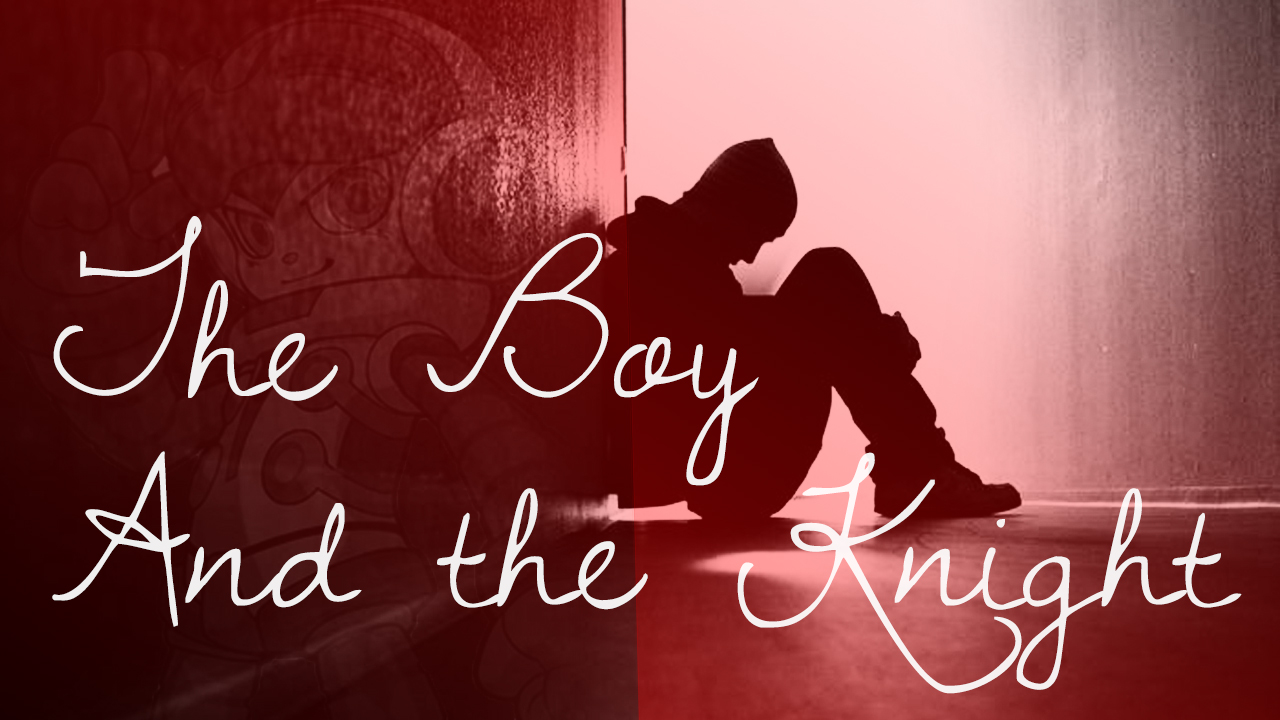
The fighter breathed in slowly in the darkened locker room.
His eyes drew to the hallway down which the arena loomed.
He’d trained for this very moment for innumerable days.
He let his breath out slowly as he also dropped his gaze.
His past had come to haunt him; or rather, his father’s did.
It was in the old man’s shadow that up ‘til now he hid.
He rose from the wooden bench as he slammed the locker door.
His mind was clear and focused as he slowly crossed the floor.
His father was a great man; one of the best there’d ever been.
He’d proudly held the people’s flag for years and years on end.
The women and children’s love he kept, the men’s respect he’d earned.
But even a champion’s fire burns out; a lesson he finally learned.
And now his boy had come of age, his turn had come at last
To earn the title for himself, to honor his father’s past.
Any time he’d walk the street the people called his name.
They smiled as they recalled his dad and said “You’ll do the same!”
He heard them calling for him as he traveled down the hall.
His pace was slow and steady as cheers echoed off the walls.
But as he plodded down the corridor that led down to the ring,
The distance to his destination got further, so it seemed.
He started to jog faster ‘til he ran as if he fled.
The image of his father was burned into his head.
As he neared the final door that led to the battleground,
He’d realized he could no longer hear the cheering of the crowd.
He swung the door wide open and he stepped into the light.
Instead of the cheering fans expected he saw a very different sight.
The crowd was filled with anger, spitefulness, and scorn.
The faces that used to smile at him now a scowl wore.
The booing increased with every step as he approached the field.
He looked across at his opponent who rose up from his kneel.
The enemy wore full armor and a horned helmet on his head.
He lifted his oddly-shaped sword. “I’ve looked forward to this”, he said.
The warrior that stood before him was the one who’d succeeded his Pa.
The boy took his battle stance, he set his eyes and jaw.
“I’ll prove them wrong,” he determined, “Today’s my day to shine!”
The crowed fell deadly silent ‘til they heard the air horn whine.
The boy immediately charged the knight, his weapon flashed to life.
The knight was ready for the attack and deflected with his knife.
“Is that all you have?” The knight laughed. “I expected more from you.”
The knight lunged with his weapon aloft, the boy’s head which to hew.
The boy quickly dodged the strike with blindingly quick speed.
“One thing you didn’t count on: my Pa wasn’t quick like me!”
He continued to rush around the ring, too fast to keep track,
Until the knight took a well-aimed swing that knocked him on his back.
Light was all that he could see as he lay there on the floor.
The knight drew near and placed his blade upon the boy’s core.
He kneeled down next to him, and with a look of sadness in his eyes,
He said, “I’m… disappointed.” And then began to rise.
The air was still in the Colosseum and the knight just turned and walked.
The seats were slowly emptied. No one dared to talk.
The boy just lay there on the mat. He knew everybody’d left.
One word stuck in his heart, and like a foil it cleft.
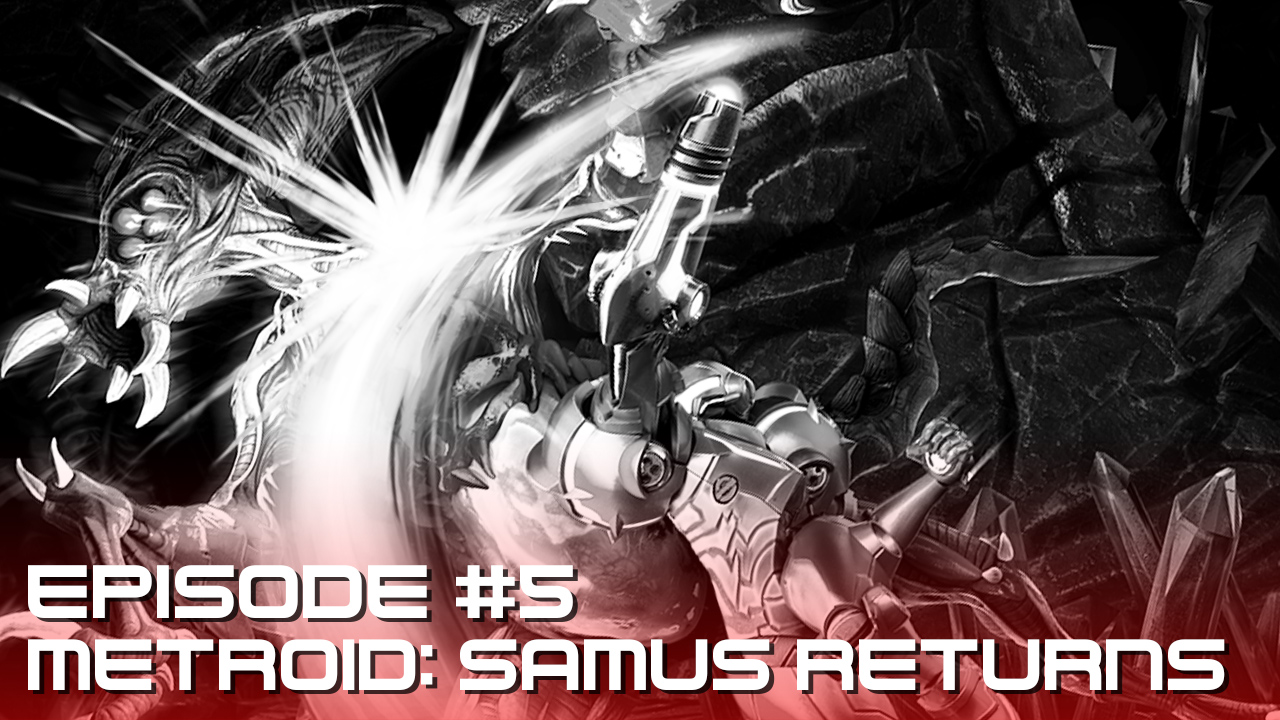
Samus is making a comeback! After a decade of misfires, the bounty hunter has returned to the starring role. This 3DS exclusive came out of the blue at E3, and a few short months later, was delivered to us along with amiibo figurines and special editions. After all the surprises and fanfare, how does the game hold up? The Two Button Crew hosts are here to discuss the controls, music, challenge, gameplay, and progression. Ready for more TBC Podcast? We are an ad-free show, and you can support us on Patreon: http://patreon.com/twobuttoncrew Get Your Daily Nintendose of Fandom on our YouTube channel: https://www.youtube.com/TwoButtonCrew “Escape the Premises” Kevin MacLeod (incompetech.com)
Licensed under Creative Commons: By Attribution 3.0
http://creativecommons.org/licenses/by/3.0/
Our August 2017 podcast lands closeby the release of some key remakes – Metroid: Samus Returns, and Mario & Luigi for 3DS. This is the perfect opportunity to take some time and examine the practice of remastering and rereleasing old games. What do we think of the process? What’s important in a remake? And what are the best ones? We wrap up with some requests specifically for Nintendo to bring back some of our favorites with a fresh coat of paint. Ready for more TBC Podcast? We are an ad-free show, and you can support us on Patreon: http://patreon.com/twobuttoncrew Get Your Daily Nintendose of Fandom on our YouTube channel: https://www.youtube.com/TwoButtonCrew “Escape the Premises” Kevin MacLeod (incompetech.com)
Licensed under Creative Commons: By Attribution 3.0
http://creativecommons.org/licenses/by/3.0/
Nintendo revealed several 2018 games, as well as made announcements for 2019! Animal Crossing? Luigi’s Mansion? Who would have made those predictions?!
“Exit the Premises” Kevin MacLeod (incompetech.com) Licensed under Creative Commons: By Attribution 3.0 http://creativecommons.org/licenses/by/3.0/
With my recent completion of Shantae and the Pirate’s Curse, I am proud to say I’ve finally gotten all caught up on WayForward’s Shantae series. From the first game via the 3DS Virtual Console, to ½ Genie Hero on the Switch, I’ve played every game in the series all the way through (not counting bonus modes for the half genie’s latest title that is). Those of you who’ve seen my review of ½ Genie Hero know I greatly enjoyed that game, as I do the rest of the series, but that doesn’t mean I don’t take issue with some elements of the games’ design. Read more Shantae and the Pirate’s Curse and Shantae: ½ Genie HeroSpit Shine ›
This last June, Kirby: Planet Robobot was released state-side, quickly receiving praise from critics and fans alike. Needless to say—being the avid Kirby fan that I am—I jumped on it six months after the fact because I wanted to complete Mario & Luigi: Paper Jam first. What? Grad school doesn’t leave me with much time to spend on getting through my backlog, okay? Regardless, I’d say, without hesitation, that this is the best of the “modern-style” Kirby games that started with Return to Dreamland. Great music, enough of a plot to keep things interesting, lots of fan-service, and a gimmick that actually meshes with the core gameplay instead of being an intrusive pace-killer. And as with any Kirby game, it features new powers! And they…kind of suck, to be honest.
And as with any Kirby game, Planet Robobot features new powers! And they kind of suck, to be honest.
Okay, now that I’ve gotten the requisite suck pun out of the way, let’s talk powers. Kirby’s copy abilities were first introduced in Kirby’s Adventure, released in 1993 for the Famicom and NES. These abilities gave Kirby a single attack that imitated the ability of an enemy character. The concept remained much the same until Kirby Super Star in 1996 when most—but not all—copy abilities were given a variety of techniques the pink protagonist could perform based on what button combination the player inputted. Some abilities have traditionally had very few individual attacks, while others let the player revel in a vast array of possibilities. For the most part, entries in the franchise have followed one of the two aforementioned schemes, with the Super Star style being more prevalent as well as what the recent titles use.
So, let’s examine how the evolution of this system effects powers individually and each game’s gameplay as a whole.
Number of Attacks
As stated before, the number of available moves in each ability’s repertoire has increased from the copy mechanic’s introduction. In Kirby’s Adventure, each power only had one attack (though one could argue backdrop and U.F.O. are exceptions). This allowed players to easily pick their favorites and avoid those they didn’t like. This also, unfortunately, meant that powers easily got stale and that few, if any, abilities stood out as particularly fun. Strangely, I’d argue that the game made it work; since no one power (or at the least, commonly available one) stood out as “the fun one” the player wasn’t inclined to become attached to what he currently had, meaning he would be more willing to part with it, making for more dynamic gameplay.
Kirby’s Adventure only provided one page for it’s copy ability descriptions, most of it flavor text.
Kirby Super Star changed this by assigning multiple attacks to most copy abilities. This drastically changed the dynamic as now each power became far less situational. Copy abilities on average had somewhere between four and seven attacks and a list of them was conveniently provided on the pause screen. I must commend the designers, as most of the abilities are fun to use with only a handful of duds. That said, the expanded move set does mean players are going to find some abilities more fun than others, meaning they’ll be less willing to part with them which ultimately discourages the varied gameplay Kirby’s Adventure had.
Then there’s the current generation of Kirby games. For brevity’s sake, I’m only going discuss the current gen powers featured in Kirby: Planet Robobot (and probablytotally not because I’m too lazy to switch cartridges on my 3DS or boot up my Wii). The number of moves for this new set of powers typically weighs in around eight to eleven, with a few of the attacks being variations of or similar in function to others. This produces a state of decision paralysis when trying to learn the new abilities, especially when two attacks are similar. For the majority of new abilities, I would look at the move list and think to myself, “surely there’s a proper time or context for this attack.” Unfortunately, there often isn’t, at least not that I can see. Notably, most of the older abilities are similar to their previous iterations, if not completely untouched. In my opinion, this makes the classics more approachable gameplay-wise as most of them are easier to learn with attacks that have a clear and easily understood purpose. The one new copy ability in the game I genuinely liked, ESP, happened to be the one with the simplest move set.
Coincidentally, this ability’s costume also resembles one of my favorite powers from Kirby Super Star.
Copy Ability Versatility and Variety
So what does having a wide array of moves do for Kirby’s copy abilities? In short, more moves theoretically increases the versatility of the ability. If one move allows Kirby to easily dispatch a foe in front of him and another move defeats opponents above him, the player is equipped to handle two different scenarios. There are two main factors in determining a copy ability’s versatility: range and what I like to call “angle of attack”, with the presence of a defensive ability making for a third factor of nominal importance.
There are two main factors in determining a copy ability’s versatility: range and what I like to call “angle of attack”.
Range is self-explanatory; it’s simply how far the attack reaches. Short range attacks require Kirby to be near his target to be effective; long range allows Kirby to rain cute death upon his foes from a safe distance. Simple. Angle of attack isn’t much more complicated. Heck, I’ve already given an example of it in the previous paragraph. It simply determines where the opponent has to be for the attack to hit him. In the context of Kirby, there four basic angles of attack: upwards, sideways, downwards, and radius attacks—the last of which refers to attacks that strike in all directions (they’re common enough to warrant their own classification). Of the two, angle of attack has the most influence over an ability’s versatility.
As I’m sure you’ve already figured out, the copy abilities in Kirby’s Adventure provide only one angle of attack of set range. High-jump attacks opponents above Kirby at close-range (though Kirby covers a long distance in the process), while spark attacks enemies within a short radius of Kirby. Kirby Super Star expands the role of most copy powers, allowing Kirby to make use of multiple angles of attack with a single ability. That said, most powers are still limited in range or angle of attack, requiring the player to plan around his ability’s limitations or find one more suited for the situation at hand. For the ones that do provide good coverage of all angles, they are usually rare or have some sort of drawback, like yo-yo’s long attack animations.
Here’s where my second issue with more recent copy abilities comes into play: they’re too well rounded. Most of the new abilities include attacks for every angle and often times multiple ranges too. Lacking weaknesses actually makes them less fun, not necessarily because it makes the game too easy (it’s Kirby; it’s always easy) but because they all feel very samey. Even some of the older powers have received similar revisions, like the unnecessary addition of an upward attack to the stone ability’s move list. Admittedly, this is a rather technical complaint and probably doesn’t apply to everyone.
Lacking weaknesses actually makes copy abilities less fun.
Refinement is a Subtractive Process
Despite most of its new powers not being particularly interesting, Planet Robobot actually does adhere to the limited copy ability design that I’m advocating, specifically the robobot powers. Each robobot copy ability has a very limited moveset, and as a result, each one feels unique. And just so it’s clear that I’m not being a nostalgia-blind curmudgeon, I like most the ideas for each ability (leaf and archer were long overdue), and I think if Hal streamlined the abilities so that they fulfilled a unique niche, instead of every niche, they would have some real winners.
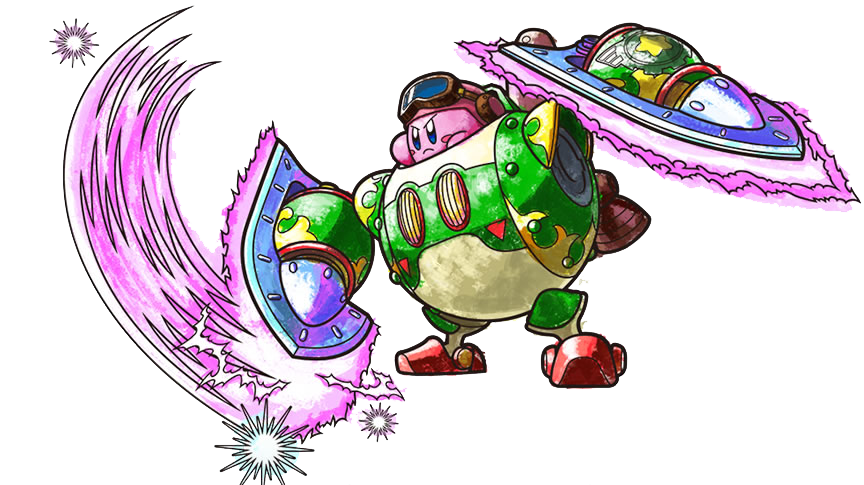
The robobot armor’s sword ability only has three attacks. Three incredibly satisfying, easy-to-use attacks.
For those familiar with my previous work, these points probably sound quite similar to my second article, The Streamlined Turnabout. While feature-rich games and mechanics are great (especially from a marketing perspective), continually adding ideas runs the risk of producing bloat. Much like cutting and polishing a diamond to make it shine, video games can greatly benefit from the occasional trim.
About the Author: Glen is a lifelong Nintendo fan whose love of video games has inspired him to pursue a career in computer programming. He is currently studying for his masters in Computer Science at Oklahoma State University. His first Kirby game was Kirby 64, which led to a lot of confusion when trying to figure out how to make combo abilities in Kirby Super Star.
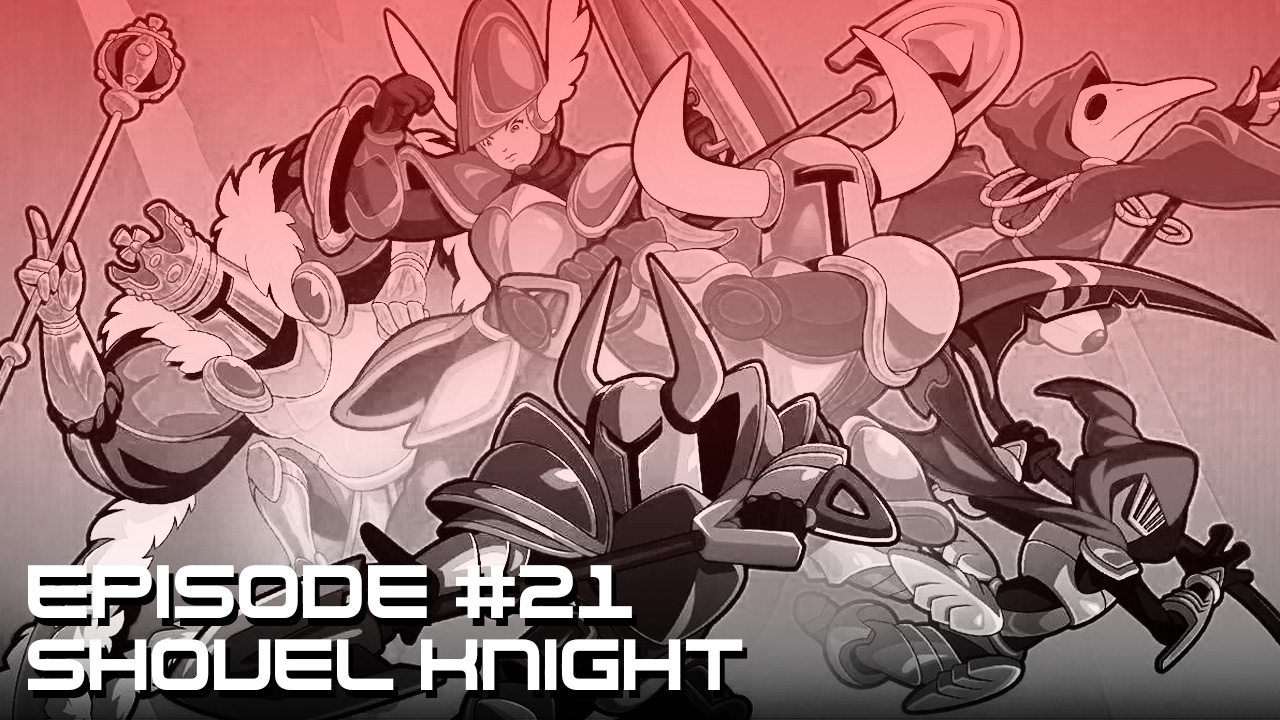
Now that Shovel Knight: Treasure Trove is finally complete, it’s time for the TBC team to get their opinions on the record. Join us as we discuss Shovel of Hope, Plague of Shadows, Scepter of Torment, King of Cards, and all things SHOVEL KNIGHT!
Ready for more TBC Podcast? We are an ad-free show, and you can support us on Patreon: http://patreon.com/twobuttoncrew
Get Your Daily Nintendose of Fandom on our YouTube channel: https://www.youtube.com/TwoButtonCrew
“Exit the Premises” Kevin MacLeod (incompetech.com)
Licensed under Creative Commons: By Attribution 3.0
http://creativecommons.org/licenses/by/3.0/