LABO Kits have been on the market for over a week now, but how are they holding up to the wear & tear of real life? It looks like they are faring well, and Nintendo is prepared to get replacements into the hands of consumers that need them.
“Exit the Premises” Kevin MacLeod (incompetech.com)
Licensed under Creative Commons: By Attribution 3.0
http://creativecommons.org/licenses/by/3.0/

TBC 011: How Reviewing a Game Works


Podcast: Play in new window | Download
Subscribe: RSS
Video game reviews are a big part of the industry. Release dates are anticipated, embargoes are established, and review scores land around the internet simultaneously. Gamers can’t wait to see what the hot new title will score. But how does it all work? What’s the history of game reviews, and what do they really mean? How does one become a game reviewer? We answer all that, and more, in this month’s edition of the Two Button Crew podcast.
Ready for more TBC Podcast? We are an ad-free show, and you can support us on Patreon: http://patreon.com/twobuttoncrew
Get Your Daily Nintendose of Fandom on our YouTube channel: https://www.youtube.com/TwoButtonCrew
“Exit the Premises” Kevin MacLeod (incompetech.com)
Licensed under Creative Commons: By Attribution 3.0
http://creativecommons.org/licenses/by/3.0/
How Graceful is Graceful Explosion Machine?
Graceful Explosion Machine was one of the first Nindies to launch on Switch, and it’s still one of the best. This is an arcade schmup game that puts your skills to the test while treating you to a visual spectacle!
“Exit the Premises” Kevin MacLeod (incompetech.com)
Licensed under Creative Commons: By Attribution 3.0
http://creativecommons.org/licenses/by/3.0/
DKC2 – Diddy’s Kong Quest (It’s a Pun)
Each week, Patrons of Two Button Crew vote on which classic game we will play live on our stream. This time, DKC2 was the winner! Simeon and Scott have played the original on a previous video, and weren’t too taken with the game’s weird graphics. Will the sequel win them over? Will patron’s feelings be hurt? Watch and find out!
“Exit the Premises” Kevin MacLeod (incompetech.com)
Licensed under Creative Commons: By Attribution 3.0
http://creativecommons.org/licenses/by/3.0/
RANT: Video Game SCORES Can Die
Simeon and Scott don’t agree on everything, but here’s one issue where they come down on the same side: scores in video games are useless. Point systems are a relic of the arcade days and need to be completely wiped from the face of planet gaming. Agree? Disagree? Sound off in the comments!
“Exit the Premises” Kevin MacLeod (incompetech.com)
Licensed under Creative Commons: By Attribution 3.0
http://creativecommons.org/licenses/by/3.0/
5 Ways Smash for Switch Should Be the SAME
Last week, Simeon and Scott outlined a handful of ways that Super Smash Bros. needs to change things up on Nintendo Switch. This week, we’re examining the other side of the coin: what should stay exactly as it is right now?
“Exit the Premises” Kevin MacLeod (incompetech.com)
Licensed under Creative Commons: By Attribution 3.0
http://creativecommons.org/licenses/by/3.0/
Saturn & Dreamcast Wishlist for SEGA Ages
SEGA will be bringing some of their classic titles to Nintendo Switch, and they’ll be downloadable on the eShop along with all the indie titles and Arcade Archives. Which games do we want to see make the jump onto Switch? And what does this service imply for the state of the Virtual Console?
“Exit the Premises” Kevin MacLeod (incompetech.com)
Licensed under Creative Commons: By Attribution 3.0
http://creativecommons.org/licenses/by/3.0/
Do NOT Buy “Deep Ones” for Switch
Sometimes You is a video game publisher that’s been making a name for themselves on Nintendo Switch… a name known for publishing poorly made, cheap games to the eShop. Well, Deep Ones is no exception and we’re here to demonstrate exactly why we recommend you skip this game.
“Exit the Premises” Kevin MacLeod (incompetech.com)
Licensed under Creative Commons: By Attribution 3.0
http://creativecommons.org/licenses/by/3.0/
Post Tournament Distress Disorder

“Oh, there’s a Smash Bros. tournament? I’m totally going to win—I beat my friends every time!” said many newcomers to competitive gaming. The rude awakening swiftly followed, as the wide-eyed casual was introduced to brackets and tournament organizers and double elimination and commentators and fist-bumps.
eSports is an entirely different world from the living room rivalries of old. A world where most people lose.
I’ve been losing in Super Smash Bros. competitions for the better part of decade now. I attend tournaments, get beaten, learn a few lessons, and wake up the next day experiencing post tournament distress disorder, a phrase that I coined to describe how it feels inside the crushing cycle of defeat.
Clearly, I must be getting some enjoyment out of these events or else I wouldn’t keep coming back for more. I’m not a glutton for punishment—am I?
After talking to many fellow competitors, it’s safe to say I’m not alone. “I should just quit this game.” “I’m not coming back next month.” “I’m such a scrub.” “This is just a big waste of time and money.” All fairly common remarks to be heard as setups are unplugged and venues packed up.
PTDD normally dissipates in the weeks between big tournaments (or “monthlies”) as Facebook events are created, alliances are formed, top-ranked players make travel plans, and hype rises. But the funk waits to greet you at the threshold of your next elimination. And the cycle repeats.
Expectations Matter
If you are looking to curb the nasty effects of Post Tournament Distress, there are some techniques you can employ. Adjusting your expectations is a good place to start. Realize that your odds of winning the whole thing are slim, and remind yourself that winning isn’t what it’s really about.
Look for ways to improve. Don’t lose hope when your name is called along with someone who outclasses you; be in a constant state of downloading information. See if you can take more ground in the second match, even if you just 25% extra damage.
Set smaller goals. Over three tournaments, you can improve your overall rank if you maintain the right attitude and keep learning.
Choose your Battles
My miniature claim to fame was Ranked 7th best in Eastern WA. It was a lot of hard work to obtain that position, and I was proud of it. But you know what? It was even harder to keep it.
Players in my region really stepped up their game. Multiple weekly practice sessions sprung up all over, and the serious competitors were dedicating half their evenings to invest in their Smash skills.
I decided that this wasn’t my battle to fight. I had gotten married young, accepted a full time job, started side-projects like a daily YouTube channel and writing my own novel. In order to minimize the effects of PTDD, I had to realize that I simply can’t match the effort these other guys are putting in. Their situations are different than mine. I could practice as much as them to try and claw my way up to the #1 spot, but I’d be sacrificing other things in my life that I’m not willing to give up.
Fun on the Sidelines
It’s amazing how much I enjoy everything at the tournament… except for the tournament. The main attraction isn’t the most attractive to me anymore.
Oftentimes there will be crazy side-events, like Crew Battles or Smashketball (a weird mash-up of Smash Bros. and basketball using a custom stage) that are way more fun. These things cost $0 or $1, so the pressure is off and it’s easy to get into the team spirit and cheer people on.
Commentating is also a blast, especially when you’ve built a rapport with your co-host. Sometimes, it’s actually a relief to get booted out of bracket so you can sit down with a headset and help make an awesome live-stream.
If you want to be the very best (like no one ever was), it’s a long and hard road and I wish you good luck.
Otherwise, find every opportunity to release the tension, lower the stakes, and enjoy video gaming for what it is: a reprieve from the grind.
Mindblown by Metal Storm for NES
Metal Storm is a hidden gem of a game. It came out late in the NES’ lifecycle, so it may have been overlooked by many. But this game deserves some attention!
“Exit the Premises” Kevin MacLeod (incompetech.com)
Licensed under Creative Commons: By Attribution 3.0
http://creativecommons.org/licenses/by/3.0/
Why all the Wii U PORTS to Switch?
Switch is sure getting a lot of Wii U ports – have you noticed? What’s the deal with that, and will it ever stop?!
“Exit the Premises” Kevin MacLeod (incompetech.com)
Licensed under Creative Commons: By Attribution 3.0
http://creativecommons.org/licenses/by/3.0/
5 Ways Smash for Switch Should CHANGE
Super Smash Bros. 4 may have perfected the formula. Now, is it time for Nintendo to innovate in a big new way?
“Exit the Premises” Kevin MacLeod (incompetech.com)
Licensed under Creative Commons: By Attribution 3.0
http://creativecommons.org/licenses/by/3.0/
Let’s Play… Jelly Mario?
Jelly Mario. You read that right! Somebody transformed the laws of physics in Super Mario Bros… and this was the result.
“Exit the Premises” Kevin MacLeod (incompetech.com)
Licensed under Creative Commons: By Attribution 3.0
http://creativecommons.org/licenses/by/3.0/
Flinthook for Switch
Flinthook is a new indie rougelite for Nintendo Switch. We’re going to jump into Infinite Raid mode and give it a try!
“Exit the Premises” Kevin MacLeod (incompetech.com)
Licensed under Creative Commons: By Attribution 3.0
http://creativecommons.org/licenses/by/3.0/
How “Plan 9” Ruined Video Games for Me ... and the arduous journey back.

I hate art. Well, to be more correct, I hate the concept of art. I am (as many of you reading this are) a man who likes concrete answers. Numbers. Black and white. Objectivity. Things that escape exactness vex me. With much art (especially of the abstract variety) not only do I not understand it, but I do not understand why I do not understand it. Why can it not be like math: “It is right (or wrong), and this is the reason why it is right (or wrong)”. At least give me a scale of one to ten to deal with, please!
Many of you can sympathize with my pain. Some of you are probably shaking your head, thinking, “You poor, lost soul.” Indeed, today I will tell you the tale of how this poor soul became lost, and how it found its way home. And I promise you that I will tie it back into video games in the end.
Bliss:
This story opens, as many others do, with a small child, happy in his home. He loves video games, movies, and sharing these experiences with his friends and family. This child… was me. I’ve watched comedies from the ‘30’s, the latest Disney releases, and all sorts in between. Of course, some movies I liked better than others and had my favorites, but I always recognized that a film was built to entertain me.
And entertain me they did; I hardly ever remember being bored while watching a movie as a kid. Other children would play, goof off, or run into the other room when a movie was playing. I do not know whether it was some etiquette I learned or a part of my nature, but once the screen flickered on, my eyes were glued. I was mystified at the thought that someone would get up to go to the bathroom or to get snacks in the theater. I still am, actually.
When you are a child things are bigger, magical, and you cannot see the little imperfections. This age of blissful ignorance lasted for some time: years, in fact. I still remember that fateful day when it all changed.
Innocence lost:
My oldest brother brought home a VHS tape from the video rental store (obligatory age joke here) and showed me the box. A phrase akin to “Winner of the Golden Turkey Award!” was displayed across the back. It was a film called Plan 9 from Outer Space, a 1959 b-movie about aliens and zombies. As I held it in my hands he told me, “This is the worst movie ever made.”
My eyes grew wide as he popped it in the VCR and pressed play. I was met by acting so bad I could hardly believe and pie tins held up by fishing line to be passed off as UFO’s. I strained to follow the plot as well as keep my eyes from closing or from looking at the clock. I never did finish the movie, but it had left its forever impression on me.
Of course, we laughed at how horrible it was. Eventually, though, the laughter subsided, and I was left with the question echoing in my head: “How could something be ‘the worst’?” Quite a simple question on its face, but it carries a lot of weight with it. By calling something “the worst”, you admit that a movie can be “bad”. From here all that needs to be decided is the metric which one uses to determine what is good and what is bad, and to what extent either is displayed. If you have watched “Dead Poets Society”, you may have already caught my fallacy. Unfortunately for me, my propensity to measure in finite terms took me for a longer drive than would be pleasant.
The Cynic:
For some years I tried in vain to measure the virtue of each art piece I consumed: movies, books, and especially video games. Not only did I point out why things I liked were great, but I could tell you as a fact why your choice was inferior. It did not help me that often my choice of company had similarly staunch opinions. If my knowledge ever fell short, they would be sure to educate me on what was the “best”.
It was during this period that Two Button Crew was in its primordial stages. It may or may not have had the same name, but Scott and I had started game journalism and reviews. We did not really have any “in” with Nintendo (or any following to speak of, for that matter), but that never kept us from producing content. We made blogs, podcasts, and even let’s-plays of Nintendo’s most recent. Scott’s frequent trips to Game Stop also got us a sweet deal: one of the managers let Scott take home a review copy of some recent games for a time. We would scrutinize them, looking for each imperfection in any jewel we were handed. Every new game became a performer, and we sat as the audience with a handful of tomatoes should it have any slip-ups. I even went so far so as to draw up a formula to determine a game’s definitive score in search, not of the best game, but of the perfect game. My philosophy told me that a perfect game could only come from one of two genres. Does all of this seem a little pretentious?
Needless to say, the search for a perfect game was a futile exercise. Video games became homework instead of leisure. Critics are supposed to expose errors, I thought. I had mistaken a critic for a cynic.
Surrendering the Yardstick:
Eventually, Scott noticed that playing video games no longer made us happy. It had become a chore. I remember him asking me, “Why aren’t video games fun anymore?” We both breathed a sigh and admitted our error. We were so focused on the negative. Video game reviews are meant to help others have fun, not to make a statement of truth to be etched into the obelisk of morality. We made a pact to each other to have fun playing games again.
And it worked! Over the next years I began not only enjoying games more, but my movies, too (I stopped reading books for fun. School can do that to you, kids). Every time I watch a movie I try to identify the things I like as well as things I dislike. It drives my wife nuts when I tell her that I like a movie, and then spend a half hour explaining the problems I had with it. Critical thinking, not cynicism, enhances my enjoyment of media. I see criticism, discerning consumption, like eating a meal: sure I could scarf down my steak, but I will enjoy it much more if I chew each bite, taking in the texture and smell as I appreciate the unique situation around me. Whether you find me in a fancy restaurant or a dive, I hope you see a smile on my face as I take in that one-of-a-kind moment. The same goes for media. Even from the two movies I hate most I picked out a few things I liked.
Does this mean that I think that video game reviews are pointless? No. Do I think we should throw out rating scales? No, I don’t. My hope is that this journey has made me a better reviewer with a better rating scale. What I do think, however, is that each game is an experience. That experience will leave you with a memory. Don’t let anyone take that memory from you.
Smashin’ It Old-School (Smash 64)
It’s episode #700 of Two Button Crew! For Let’s Play Classics on this special occasion, we’re going to enjoy one of our favorites from the olden days. Smash 64. Almost everyone has some good memories with this title!
“Exit the Premises” Kevin MacLeod (incompetech.com)
Licensed under Creative Commons: By Attribution 3.0
http://creativecommons.org/licenses/by/3.0/
LABO in Smash 5: Character? Items?
It seems like a given that Sakurai and co. will include LABO in the new Super Smash Bros. for Nintendo Switch… but how? Will LABO be a playable character, or simply a stage? Will it be kept to only an Assist Trophy, or could the carboard Toy-Con actually appear as items?
“Exit the Premises” Kevin MacLeod (incompetech.com)
Licensed under Creative Commons: By Attribution 3.0
http://creativecommons.org/licenses/by/3.0/
What was “EVR Race” by Nintendo?
EVR Race is quite possibly the first arcade game Nintendo ever made! It’s likely you’ve never heard of it, so sit back and receive yourself an education about this whacky horse-racing game made by the Big N in 1975.
“Exit the Premises” Kevin MacLeod (incompetech.com)
Licensed under Creative Commons: By Attribution 3.0
http://creativecommons.org/licenses/by/3.0/
Limited Run Games for Switch!
Limited Run Games brings popular downloadable indie games to your shelf. That’s right—eShop titles are being printed on real Switch cartridges, and it’s starting now! We give you all the info you need to get involved with expanding your physical game collection.
“Exit the Premises” Kevin MacLeod (incompetech.com)
Licensed under Creative Commons: By Attribution 3.0
http://creativecommons.org/licenses/by/3.0/
My Nintendo Vs. Club Nintendo
Nintendo clearly loves its fans. Of the three current heavy hitters in the console wars, Nintendo is the only one to offer a Loyalty Program at no charge, as a reward to longtime and frequent customers. Sony offers PlayStation Plus, which is a marvelous program, but at a monthly cost – same with the revamped Games with Gold for the Xbox 360/Xbox One.
Club Nintendo closed in 2015. It’s replacement – dubbed My Nintendo – has received a very lukewarm reception, and the recently unveiled way of using earned coins (reward currency) for Nintendo Switch games has further frustrated many fans. One thing is clear to me… while it was hip to complain about Club Nintendo down the stretch, it was head and shoulders above what is being offered now. Let’s take a look back at what made Club Nintendo so special.
Inception
Club Nintendo was launched seemingly everywhere else in the world before it finally hit North America in 2008. Registration for the new program was marred by frequent website crashes and whatnot – something Club Nintendo users would frequently encounter towards the end of the program, making it a full circle-like of website woes. Long, mysterious PIN codes began to show up in game cases for Wii and DS games, as well as hardware. In America, you would get “coins” for registering your products and taking a survey – in other regions, you could obtain “stars”, and you would save them and cash them in on exclusive merchandise.
Rewards R Us
At fiscal year end (which would be normally in late Spring), Club Nintendo would reward you with a bonus item, free of any deduction in coins/stars as a thank you for those who reached a certain level of buying throughout the year.
The Elite Awards usually amounted to a $10 eShop game, a $5 Virtual Console game or, in later years, a nice desk calendar with original artwork. But the Platinum Awards were where it was at! For those who earned 600 coins in the year (a user could get up to 50 coins per game purchased/survey filled out, and 100-150 for a console purchase) you would be at the exclusive level to get something really special.
The first rounds of Platinum Awards were amazing. Among the first was a wearable Mario hat, a Super Mario statue (which fetches a good amount on eBay today), a badge set, limited edition posters and more. Club Nintendo was great. 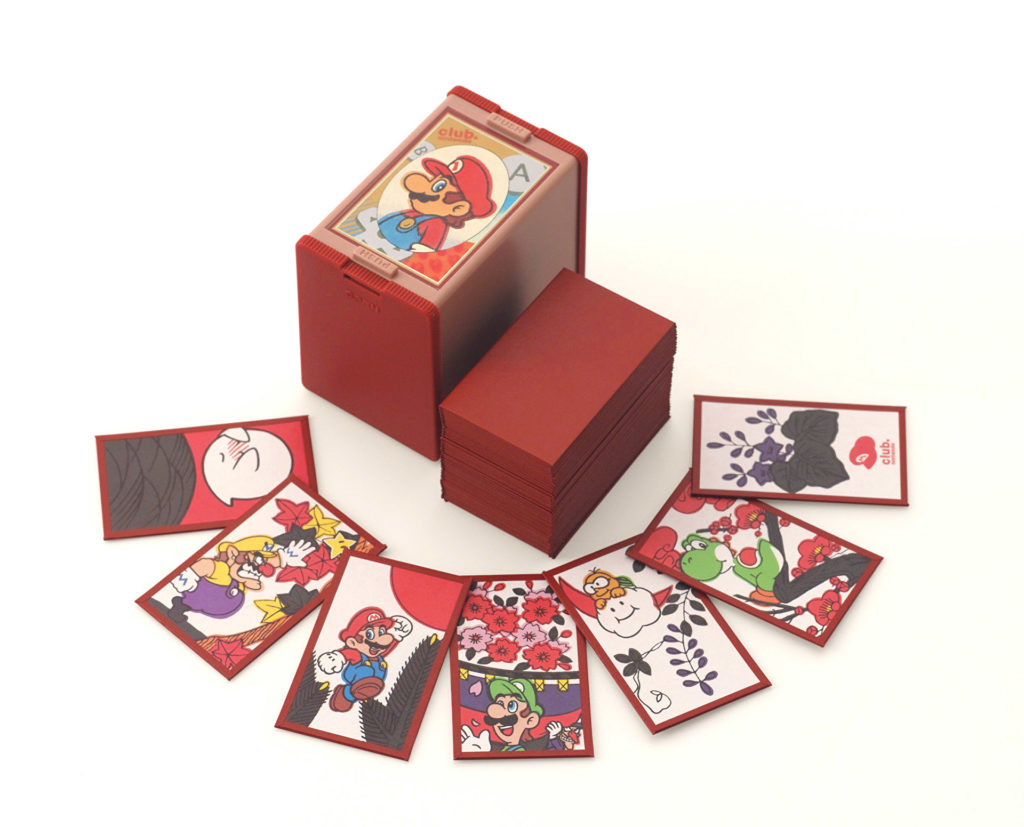
But the real meat of the program was free games and random merchandise that would be offered throughout the year. Free games would be offered for coins every month – although the available titles would be selected by Nintendo, and many would end up repeating as time went on. But the merchandise often would be exciting and one-of-a-kind. I personally scored a Super Mario Starman Messenger Bag, decks of Animal Crossing and Mario Party playing cards, Animal Crossing and Mario 3DS carrying pouches, the Super Smash Bros soundtrack 2-CD set, Pikmin tote bag, History of Mario T-Shirt, Wii Remote holder, Animal Crossing DS card game case, Super Smash Bros posters, Animal Crossing posters, etc. I cashed in a lot, and you could probably get the feeling that I like Animal Crossing. Other rare items were offered including a couple great Game and Watch collection games for the Nintendo DS, unique styluses, and other items ranging from other T-Shirts to a much sought after Luigi’s Mansion figurine.
And, did I mention the shipping on everything offered down the line was also free?
Club Nintendo seemed like a dream.
Anger, Resentment, and Counterpoint
People can never seem to be happy, and the complaints held some merit. Users began to “grumble grumble” about filling out repetitive surveys after their purchases that Nintendo never seemed to take into consideration. People were frustrated with the forced selection of free games every month. And people began to write off Club Nintendo as a joke when rewards stopped being refreshed in a frequent manner.
Personally, I always found people complaining about a free program to be a little absurd. Club Nintendo was a completely free program. Some would say that we earn the coins to get the “free” stuff, so we are in a sense paying for it – but that is a backward way of thinking. I didn’t buy games to get Club Nintendo coins… I bought games to play the games. The Club Nintendo stuff was a bonus, which is what it was meant to be. People would say we paid in the time we spent answering surveys and stuff… but again, I can’t get mad about spending two minutes or less to earn coins that would get me free games and merchandise. I spent more time on the toilet each day and it is a far less rewarding experience! Sure I got tired of the sameness of their offerings, but I couldn’t complain – how could I whine about something that was free… and by free I mean didn’t cost me extra out of pocket money. Club Nintendo was always meant to be a rewards program bonus, and I never looked at it as anything more than that.
Decline and Closure
The decline in Club Nintendo became apparent in North America around 2012 when the same old rewards would be present and fresh offerings were few and far between. Tired old merchandise like Mario and bland Nintendogs postcards and cheap screensavers would always greet me when I would log in to check which free games were offered. Gone were the days when CN would break out something special every other month it seemed. The Platinum Rewards also took a hit, dwindling from
amazing Mario statues to a deck of Mario Party playing cards.
In its final two years, the year-end rewards went to all digital download games, with the Platinum members getting a choice of a selection of full-priced retail games (ranging from a value of $15-$50). When it happened in 2014, red flags were raised, and when the ending of Club Nintendo was announced in 2015, at least we were prepared for the end of the line.
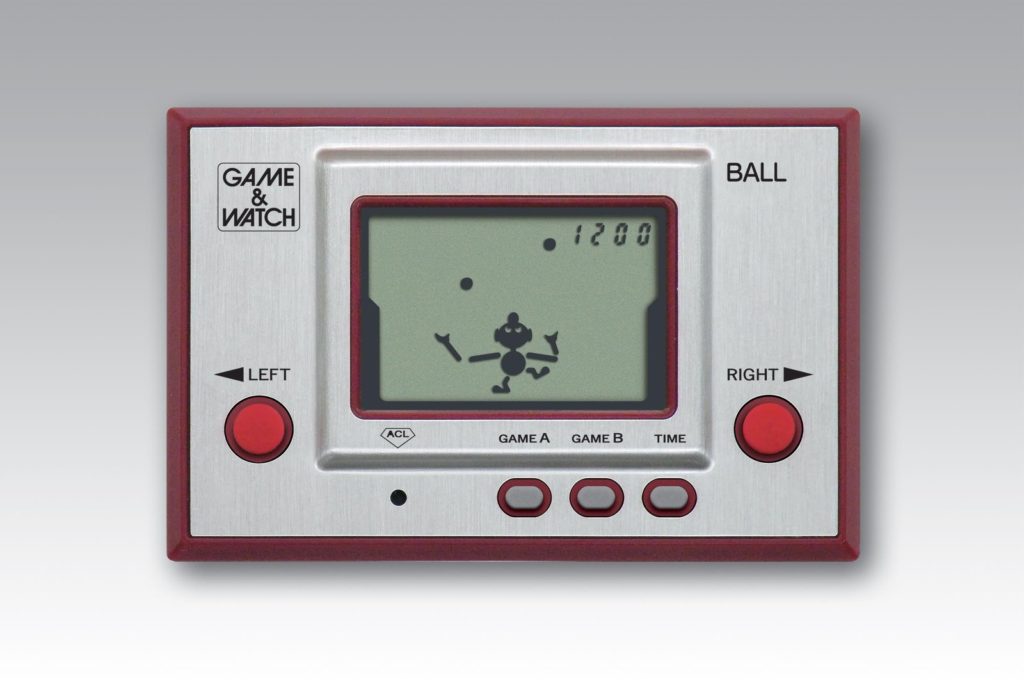
To its credit, Club Nintendo of America trotted out some of its best merchandise at the end, including a Majora’s Mask messenger bag, sleek Duck Hunt posters, an 8-bit Mario T-Shirt, the aforementioned 2-disc Super Smash Bros Soundtrack CD and more. And they practically unloaded every digital game they ever offered in one lump selection sum. The final Elite/Platinum awards featured downloadable games up to a monstrous $50 in value. So, Club Nintendo went out with a bang – and offered up rewards that I wish the program did more often.
In Moratorium and the Future
Club Nintendo provided me with a lot of great collectible merchandise that I couldn’t get through any other means. Being a huge Animal Crossing fan, I cashed in on everything from decks of playing cards to posters to game card holders and more. I used my Starman messenger bag in New York when I visited the Nintendo World Store, like the proud Nintendo Nerd that I am. When I open up games now and they don’t come with a Club Nintendo code, I still weep a little inside. It was like losing a good friend who would pat me on the back and tell me thanks for supporting him. My Nintendo debuted in March of 2016, and it was met with a big resounding thud. It was clear from the beginning that the program was set to be heavy on rewarding people who bought digital games over physical ones, rewarding more coins for those purchases over boxed copies. Whereas Club Nintendo put an emphasis on digital content, My Nintendo does the same, but specializes in disappointing discounts on the retail eShop prices of games as opposed to actually offering free content as rewards – unless you count a parade of mobile and PC wallpapers as a thrill. Cashing in coins for dollars off of new Nintendo Switch (downloadable) games is good in theory until you realize that one coin equals one penny, so a stash of 700 gold coins from hundreds of dollars of purchases only nets you a paltry $7 off – and even then on a “select” title.
I mentioned that it was absurd to complain about a program that is free. It was true for Club Nintendo, and it is true for My Nintendo. But it just feels a little frustrating for a rewards program to start off so well in the form or the former, and end up so lackluster in the form of the latter.
One thing that My Nintendo has done, though, is make people realize just how good Club Nintendo was when it was around, proving that we really can take things for granted – until it’s gone.
Related: Swag Haul from Club Nintendo